Magnesium Deficiency on Jade Plant: Causes, Checks & Fixes
Quick answer
True magnesium deficiency on jade plant shows yellow tissue between green veins on older lower leaves-not uniform yellowing from wet roots. Rule out overwatering rot first, then apply one dilute Epsom salt soil drench if the interveinal pattern, firm roots, and exhausted mix history all align.
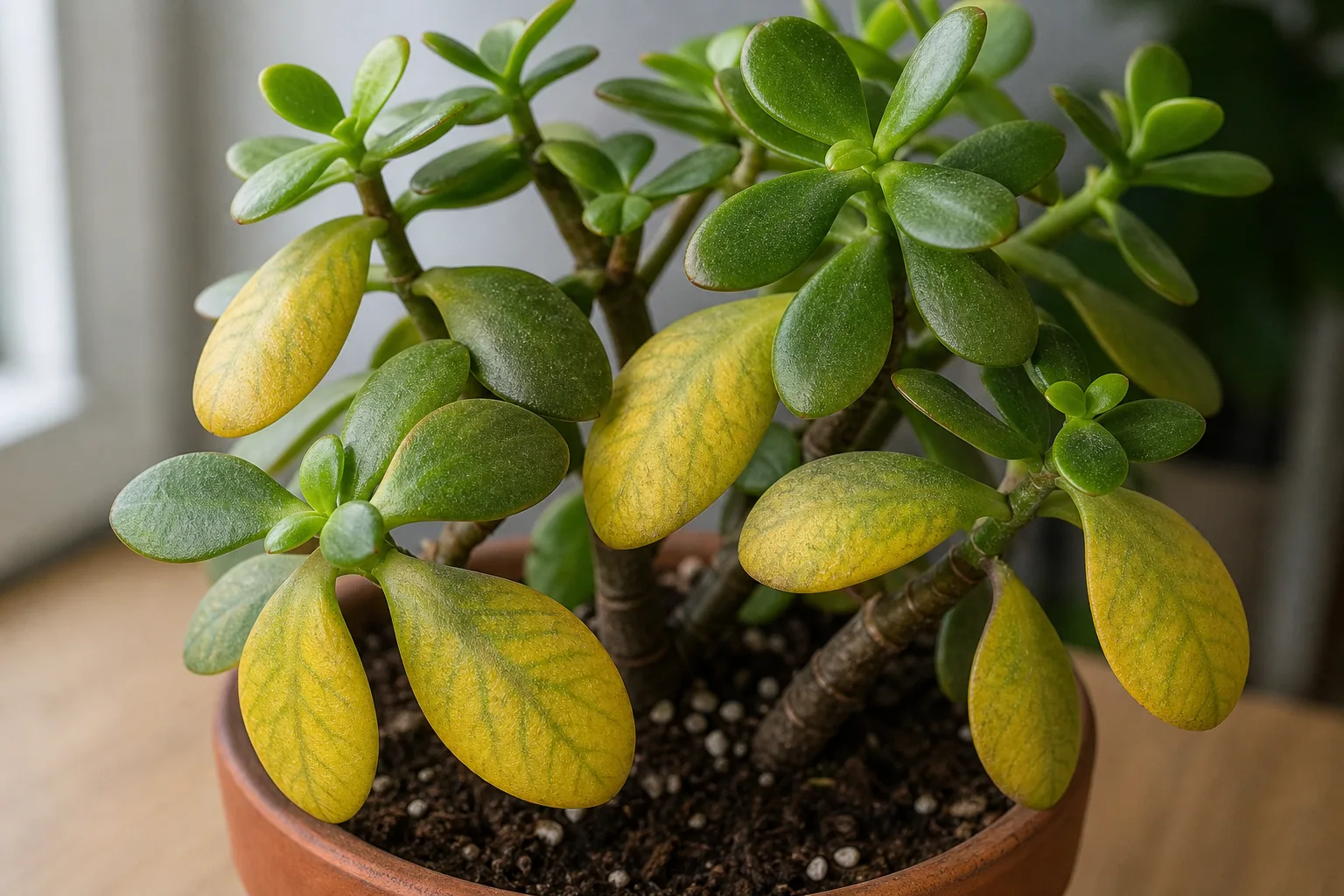
Magnesium Deficiency on Jade Plant: Causes, Checks & Fixes
This guide covers magnesium deficiency on Jade Plant. See also the general Magnesium Deficiency guide, watering, and light pages for this plant.
Magnesium Deficiency on Jade Plant: Causes, Checks & Fixes
Quick answer
Magnesium deficiency on jade plant (Crassula ovata) appears as interveinal chlorosis-yellow tissue between green veins-on older lower leaves, while newer pairs at branch tips often stay plump and normal for weeks. It is uncommon on jade kept in fresh gritty mix with occasional lean feeding, but possible after years in exhausted substrate or when excess potassium limits magnesium uptake.
First step: rule out overwatering rot by checking pot weight, soil moisture at depth, and stem firmness. If roots are firm, the mix is appropriately dry between drinks, and the leaf pattern matches true magnesium lack, apply one dilute Epsom salt soil drench-not weekly foliar sprays and not alongside repotting, pruning, and fertilizer on the same day.
What magnesium deficiency looks like on Jade Plant
Interveinal chlorosis on older lower leaves
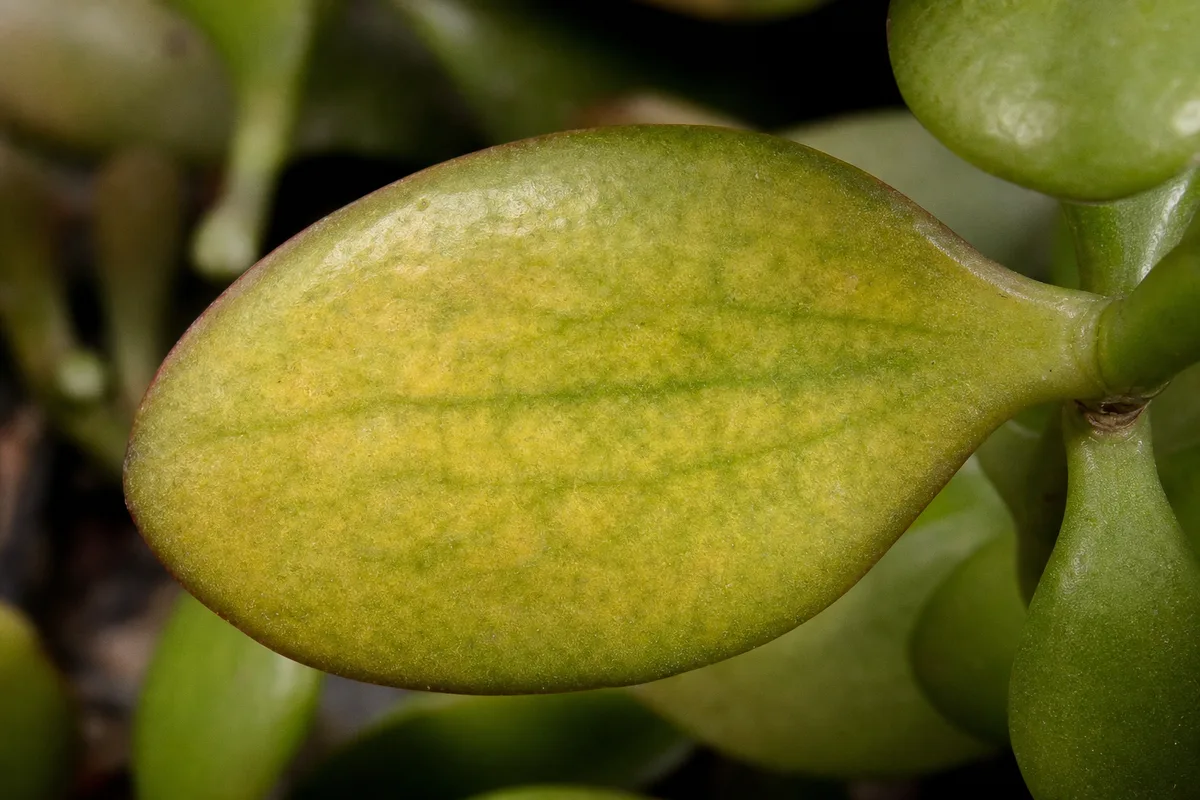
Magnesium Deficiency symptoms on Jade Plant - compare with healthy tissue on the same plant.
The hallmark on jade is yellow or pale green lamina between dark green veins on mature leaves low on the trunk or main branches. Because magnesium is a mobile nutrient, deficiency symptoms appear first on older, lower leaves as the plant moves magnesium toward newer growth. On Crassula ovata, those older leaves are thick and oval; the contrast shows as a marbled or striped yellow-green pattern rather than an even fade across the whole leaf.
Newest leaf pairs at stem tips often stay glossy green initially. That age pattern separates magnesium lack from iron deficiency, which typically hits young leaves first, and from nitrogen deficiency, which more often pales new growth before older foliage.
Advanced symptoms and what old leaves will not do
Mild shortage may look like lighter green patches between veins before full yellowing. In prolonged depletion, older leaves may develop brown necrotic spots in the chlorotic zones, curl slightly, or drop after the plant sheds them naturally-jade slowly loses lower leaves as stems mature even when healthy.
Do not expect old interveinal-yellow leaves to fully re-green. Damaged chlorophyll in mature tissue rarely repairs. Recovery shows up as firm new leaf pairs at branch tips, not as older leaves flipping back to solid green.
Wet-root yellowing looks different: leaves often yellow uniformly, feel soft or translucent, and the pot stays heavy. That pattern belongs under overwatering and root rot triage-not magnesium correction.
Why Jade Plant shows magnesium deficiency
Exhausted mix, potassium excess, and pH effects
Jade evolved on dry, rocky slopes in South Africa and tolerates lean nutrition far better than wet roots. In containers, magnesium depletion usually traces to years of watering through the same gritty mix without repotting or light feeding, not to a single missed fertilizer week.
Excess potassium can reduce magnesium uptake at root surfaces-even when magnesium is technically present-so heavy bloom fertilizers or repeated high-potassium feeds in old mix can induce magnesium shortage. Very acidic or imbalanced substrates can also limit availability, though most jade mixes target pH 6.0–7.5 per soil guidance.
Why it is uncommon in correct jade culture
Slow-growing jade in terracotta, fast-draining succulent mix, and conservative dry-down watering rarely shows magnesium lack unless the root zone has been mineral-starved for multiple seasons. Missouri Botanical Garden notes jade is easily grown with moderate watering and well-drained loamy mix indoors-most yellowing on this species still traces to water and light, which the yellow leaves guide covers in depth.
If your plant matches typical overwatering cues-heavy pot, sour smell, soft stem base-treat that first. Magnesium supplements on rotting roots add salts without fixing the killer problem.
Magnesium deficiency vs. other yellowing on Jade Plant
| Cause | Which leaves first | Vein pattern | Pot / stem clues | First branch |
|---|---|---|---|---|
| Magnesium deficiency | Oldest lower leaves | Yellow between green veins | Firm stems; dry-down OK; old mix | One Epsom drench after rot ruled out |
| Overwatering / rot | Many leaves at once; lower drops | Uniform yellow or translucent; not classic interveinal | Heavy wet pot; soft stem base | Stop water; inspect roots - overwatering |
| Nitrogen deficiency | Often affects overall pale look; new growth thin | General pale green, less vein contrast | May follow long no-feed stretch in bright light | Half-strength succulent feed in growing season - fertilizer guide |
| Iron / manganese issues | Younger / newest leaves | Interveinal on new growth | Often pH or root-stress linked | Fix culture first; do not guess with Epsom salt |
| Natural aging | One lower leaf at a time | Even green fade then drop | Firm plant; dry appropriate mix | None-normal on mature jade |
How to confirm the cause
Work through this order before any supplement:
- Pot weight and moisture - Lift the pot. Push a skewer to the bottom. Wet heavy mix with soft stems means rot triage, not magnesium.
- Leaf age and vein pattern - Are the oldest leaves showing yellow between green veins while tips stay normal?
- Root firmness - Unpot if unsure. Firm pale roots support nutrient correction; brown mush means root rot rescue first.
- Fertilizer history - Has the plant had no feed for 12+ months in the same pot, or repeated high-potassium products?
- Mix age - Same substrate two to three years without refresh? Depletion is more plausible.
- New growth color - Tips still plump and green makes magnesium more likely than severe root failure; pale stretched tips suggest light or nitrogen overlap.
Interveinal chlorosis with green veins is the classic magnesium signature on older foliage across many species; on jade, always pair that pattern with firm roots and appropriate dry-down before treating.
First fix for Jade Plant
Rule out overwatering rot first
Hold all Epsom salt until stems are firm, soil dries on your normal schedule, and roots pass inspection. Clemson HGIC lists root rot from poorly drained mix and overly frequent watering as a primary jade problem-magnesium will not restore oxygen-starved tissue.
If rot is present, follow the overwatering workflow: stop water, trim mushy roots, repot into dry gritty mix, and wait weeks before any feed.
One dilute Epsom salt drench - dose and timing
When interveinal older-leaf chlorosis is clear and roots are healthy:
- Dissolve 1 teaspoon Epsom salt (magnesium sulfate) in 1 gallon of room-temperature water.
- Water the jade with enough solution to moisten the root zone until a little drains from the bottom-typically 1–2 cups for a 4–6 inch pot, scaled up modestly for larger containers. Extension guidance for potted houseplants stresses small amounts-roughly 1 teaspoon per 3-gallon pot as a reference ceiling rather than heavy repeated doses.
- Apply once. Do not repeat weekly. University of Minnesota Extension warns that Epsom salt can harm soil and plants when magnesium is not deficient, and excess magnesium can block calcium uptake.
- Empty the saucer after draining. Resume normal dry-down watering-allow soils to dry between waterings-without adding balanced fertilizer for two to four weeks unless your regular lean summer schedule already calls for it.
Skip foliar Epsom sprays on jade’s waxy leaves unless you have no other option; soil drench after confirmation is safer and matches how container succulents are usually corrected.
Make one change at a time. Do not stack repotting, hard pruning, pesticide, and Epsom salt on the same day-you will not know what helped.
Step-by-step recovery
- Photograph the oldest affected leaves and note vein pattern for comparison in three weeks.
- Unpot only if root health is unknown. Mushy roots → rot path; firm roots → continue.
- Apply the single Epsom drench as above during active growth (spring through early fall), not during winter rest.
- Wait four weeks before judging. Hold watering to your normal dry-down rhythm from the watering guide.
- Inspect newest leaf pairs at branch tips for even green color and firm thickness.
- If yellowing spreads to new leaves or soil stays wet, stop supplements and re-diagnose toward rot, light, or pests-not more magnesium.
- Plan mix refresh at next repot if deficiency appeared on very old substrate-see soil and repotting timing on the care hub.
Recovery timeline
On a firm plant with a true magnesium pattern, new leaf pairs at stem tips should look evenly green within three to six weeks after the single drench and stable culture. Older interveinal-yellow leaves may persist until jade sheds them naturally.
No improvement on new growth after six weeks with firm roots suggests misdiagnosis-return to yellow leaves triage for water, light, and salt buildup rather than repeating Epsom salt.
What not to do
Do not apply Epsom salt while roots are rotting or soil is chronically wet. Do not use Epsom salt as routine “plant tonic”-magnesium is needed in minimal quantities and excess can injure container plants. Do not foliar-spray strong Epsom solutions on sunny jade leaves; spraying Epsom salt solutions on leaves can cause leaf scorch.
Do not confuse magnesium with manganese-manganese deficiency typically shows interveinal chlorosis on younger leaves, not the classic older-leaf pattern described here.
Wear gloves when handling cut tissue or repotting-jade plant is toxic to cats and dogs. Keep treated pots off pet-accessible floors until the saucer is emptied and the surface is dry.
How to prevent magnesium deficiency next time
Refresh gritty succulent mix every two to three years before it compacts and leaches out minerals. Feed lightly at half-strength succulent fertilizer every four to six weeks in summer only, per the fertilizer guide-jade is a slow-growing light feeder compared with tropical foliage plants.
Avoid potassium-heavy bloom formulas as your only feed year after year. After repotting into fresh mix, wait several months before resuming liquid feed so salts do not stack.
Reserve Epsom salt for a confirmed interveinal older-leaf recurrence on an otherwise firm plant-not as seasonal prevention.
When to worry - rot and pest escalation
Treat as urgent if yellowing pairs with stem bases softening, sour soil smell, or rapid leaf drop on wet mix-that is decline, not magnesium tweaking. Follow root rot and overwatering guides immediately.
Magnesium correction alone is appropriate only when the plant is stable: firm woody stems, neutral-smelling mix, dry-down working, and the sole issue is patterned older-leaf chlorosis after long lean culture.
Related Jade Plant problems
- Yellow leaves - first stop for most jade yellowing (water and light)
- Overwatering and root rot - wet-soil lookalikes that mimic hunger
- Pale leaves - general fade from low light or stress
- Underwatering - wrinkled firm leaves on light pots
- Jade plant overview - baseline light, water, and soil expectations
When to use this page vs other Jade Plant guides
- Jade Plant watering guide - Use for routine moisture checks before assuming magnesium deficiency is the main issue.
- Jade Plant problems hub - Browse all 49 common issues on this species.
- Yellow Leaves on Jade Plant - Different entry point when symptoms overlap with magnesium deficiency.