Aphids on Fiddle Leaf Fig: Causes, Checks & Fixes
Quick answer
Aphids on Fiddle Leaf Fig feed on soft new leaves at the top of the plant. First step: move the plant away from others and rinse the newest growth and leaf undersides with lukewarm water in a shower or sink.
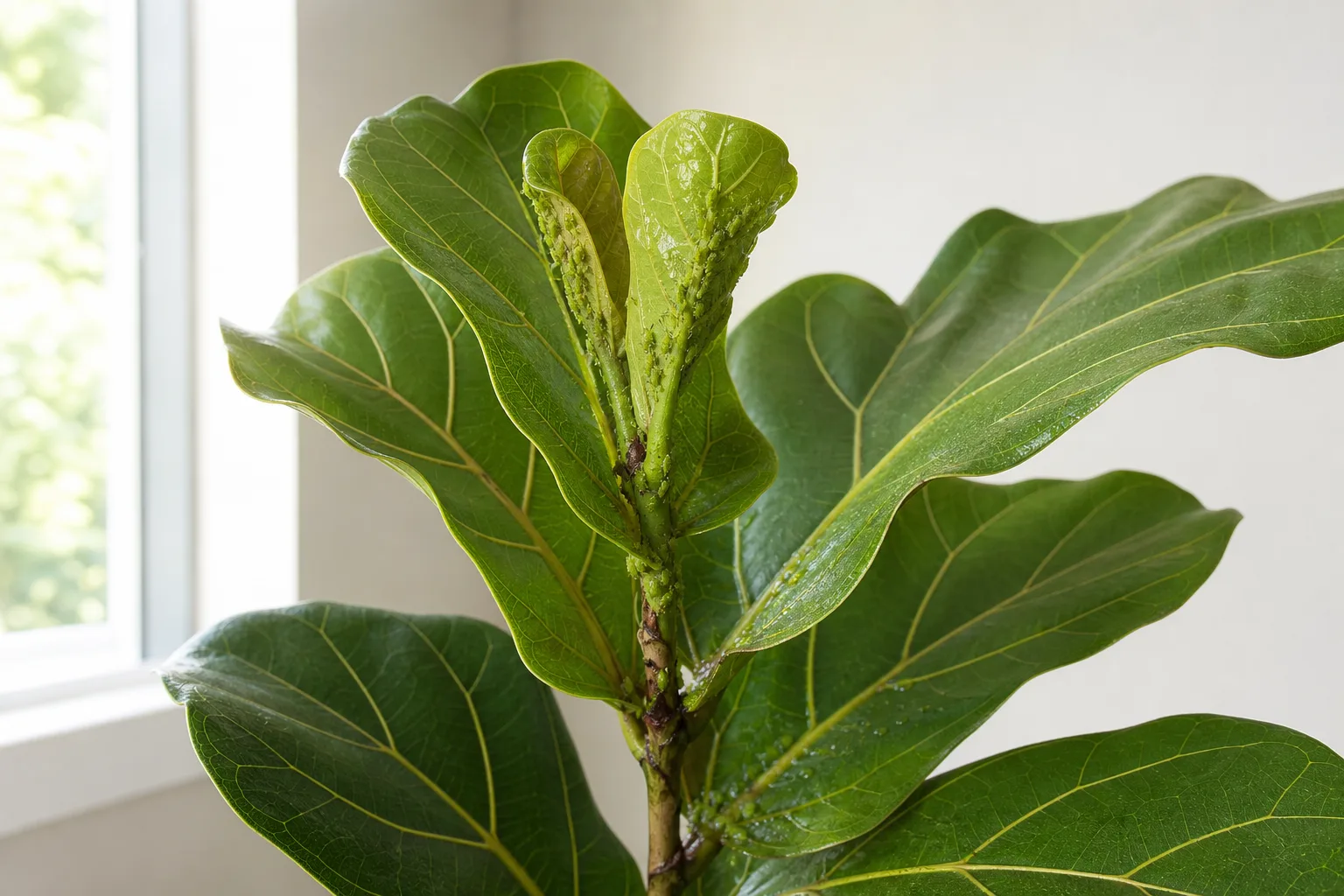
Aphids on Fiddle Leaf Fig: Causes, Checks & Fixes
This guide covers aphids on Fiddle Leaf Fig. See also the general Aphids guide, watering, and light pages for this plant.
Aphids on Fiddle Leaf Fig: Causes, Checks & Fixes
Quick answer
Aphids on Fiddle Leaf Fig (Ficus lyrata) are small sap-sucking insects that colonize tender new growth at the crown-exactly where this tree puts out its next large leaf. You may notice clusters of green, black, or tan insects, sticky honeydew on glossy foliage, or young leaves curling before they fully expand.
First step: isolate the plant and rinse the newest leaves and their undersides with lukewarm water. Use a shower or sink spray strong enough to knock aphids loose but not so hard that it tears soft tissue. Confirm live insects are gone before reaching for sprays. Aphids reproduce quickly on fast spring and summer growth, so early rinsing beats waiting until honeydew coats half the plant.
What aphids look like on Fiddle Leaf Fig
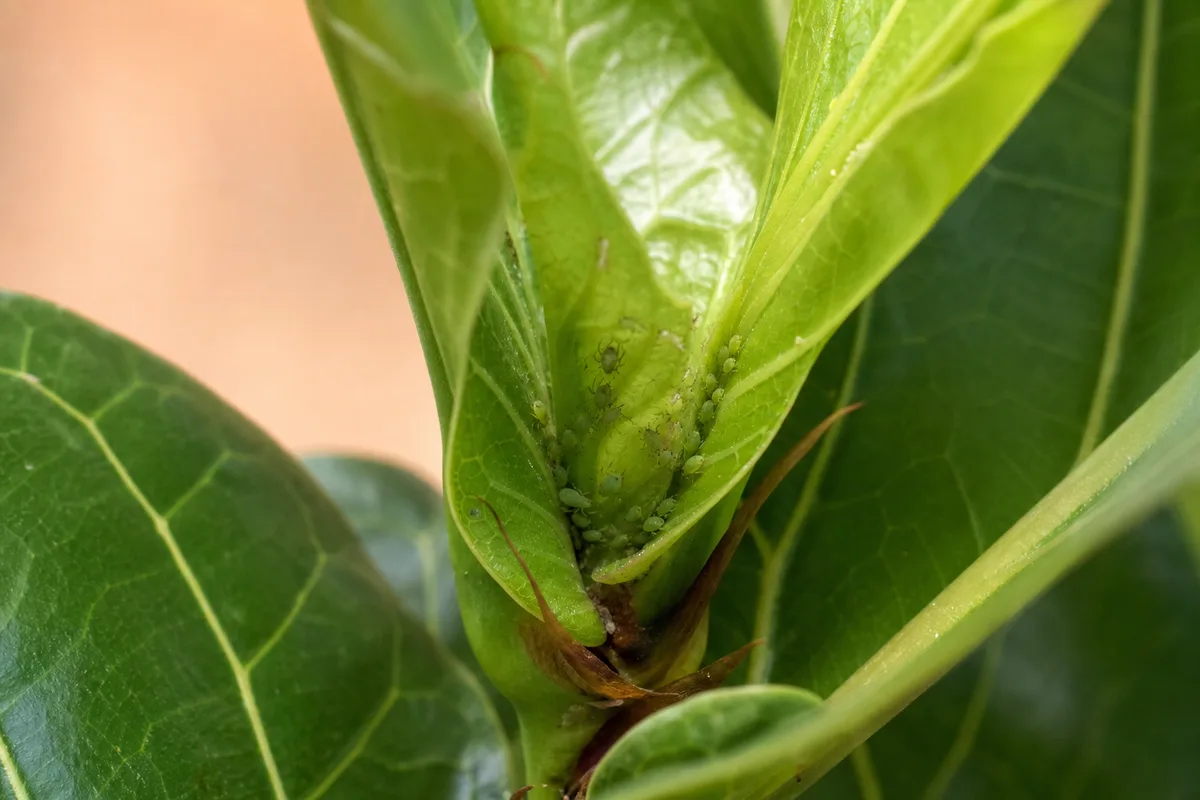
Tiny green aphids clustered on tender new fiddle leaf growth at the crown - check buds, petioles, and leaf undersides before colonies spread to lower foliage.
Aphids are small, pear-shaped, soft-bodied insects roughly 1/16 to 1/8 inch long. Most are green, but species on houseplants can also appear black, brown, pink, or yellow. They gather in dense groups rather than scattering across the whole tree.
On a Fiddle Leaf Fig, check these spots first:
- New leaf buds and unfurling leaves at the top of the stem
- Petioles where the leaf stalk meets the trunk or branch
- Undersides of the uppermost leaves, especially near the midrib
- Axils where a new side shoot is forming
Early signs before you see obvious bugs:
- Shiny, sticky honeydew on leaf surfaces or the floor below
- Black sooty mold growing on dried honeydew (cosmetic on large leaves but signals an active colony)
- Ants on the pot, trunk, or nearby wall-ants often farm aphids for honeydew
- Curling, puckering, or stunted new leaves while older leaves still look normal
- White flecks that are shed skins, not live insects
Fiddle Leaf Fig leaves are large enough that honeydew and mold show up clearly-do not mistake sticky residue for normal leaf shine. A healthy leaf is glossy; honeydew feels tacky and collects dust.
Why Fiddle Leaf Fig gets aphids
Fiddleleaf figs are popular houseplants that are prone to insect infestations, and aphids are among the most common soft-bodied pests indoors. They rarely arrive from nowhere.
Most common entry routes:
- New plants without quarantine - aphids hitchhike on nursery stock and spread to your collection within days
- Open windows or outdoor summer stays - winged adults can drift in or return on leaves after patio season
- Infested neighbors - colonies jump from a nearby pothos, hibiscus, or herb pot to fresh Ficus growth
Why Fiddle Leaf Fig overview is a good host:
- Fast flush growth in spring and summer produces the soft shoots aphids prefer. Aphids cluster on stems just below newly opening leaf buds.
- Large leaf surface area offers plenty of feeding sites before you notice damage.
- Indoor conditions lack predators - lady beetles, lacewings, and parasitic wasps that control aphids outdoors rarely reach houseplants, so populations can explode unchecked.
- Nitrogen-rich fertilizer pushes tender, succulent growth. High nitrogen levels let aphids reproduce faster.
Stress alone does not create aphids, but a tree in weak light, overwatered soil, or recent shock from moving may grow slowly while still putting out a few soft shoots-enough for a colony to establish on the only active bud.
How to confirm the cause
Work through these checks before treating:
- Location on the plant - Aphids concentrate on new growth at the top. Lower-leaf spotting alone suggests something else.
- Movement - Gently brush a cluster with a finger or cotton swab. Aphids move slowly. Scale stays fixed; mealybugs smear white wax.
- Body shape - Pear-shaped, soft bodies with visible legs and antennae confirm aphids. Cornicles-small tubes on the rear-distinguish aphids from other insects.
- Honeydew test - Sticky residue that glues dust to the leaf and attracts ants points to sap feeders, not edema or mineral deposits.
- Leaf age - Distortion on leaves still unfurling fits aphid feeding. Brown crisp edges on mature leaves alone more often trace to dryness or light stress.
- Collection scan - Inspect every plant within a few feet. Aphids on one Fiddle Leaf Fig usually mean at least one other pot needs checking.
If you find hard brown bumps, white cottony clusters, or fine webbing instead, switch diagnosis-scale, mealybugs, and spider mites need different first steps.
First fix for Fiddle Leaf Fig
Isolate the plant and rinse aphids off the newest growth with lukewarm water.
- Move the tree away from other plants-ideally a separate room, not just a few inches.
- Place it in a shower, bathtub, or large sink. Support the pot so it does not tip; wet soil is heavy.
- Spray top-down, targeting new buds, petioles, and leaf undersides. A forceful water spray can control aphids when coverage is thorough.
- Let foliage drain and the plant dry in Fiddle Leaf Fig light guide-not hot direct sun on wet leaves.
- Inspect with a hand lens or phone macro camera after 30 minutes. If live aphids remain, plan a follow-up spray treatment in five to seven days-do not skip straight to multiple chemicals on day one.
Wear gloves if you wipe leaves by hand. Fiddle Leaf Fig sap is irritating and the plant is toxic to pets; keep rinsed plants off the floor where dogs or cats can chew fallen leaves.
Step-by-step recovery
If rinsing alone does not clear the colony within a week, add treatments in this order:
Repeat water rinses
For light infestations, washing with water every few days may be enough. Focus on the crown where reinfestation starts.
Insecticidal soap on contact
Use a product labeled for houseplants-not homemade dish soap, which can burn leaves. Insecticidal soaps kill only on direct contact and have no residual effect, so coat aphids on new growth and undersides until runoff. Repeat every five to seven days for at least three cycles to catch nymphs from eggs you missed.
Neem oil or horticultural oil
Oils smother soft-bodied insects. Apply in evening or away from hot windows so wet leaves do not scorch. Repeat applications are usually necessary because oils do not kill hidden aphids inside tightly curled young leaves-prune off severely curled, heavily infested tips if you cannot reach the insects inside.
Alcohol for spot touch-kills
Dab visible clusters on petioles with a cotton swab dipped in 70% isopropyl alcohol. Useful on thick stems where soap runs off. Avoid soaking large leaf areas in alcohol on a hot day.
Clean honeydew and sooty mold
Wipe sticky leaves with a damp cloth once aphids are gone. Sooty mold is cosmetic on mature Fiddle Leaf Fig foliage but indicates you missed a colony-recheck the crown.
Do not repot, fertilize, or aggressively prune healthy mature leaves during active treatment. Stabilize pest control first.
Recovery timeline
Expect a realistic pace:
- After first rinse - Live aphids should drop sharply within 24 hours if coverage was good.
- Week 1–2 - Continue rinses or soap at five- to seven-day intervals. Honeydew should stop appearing on new leaves.
- Week 3–4 - Most indoor colonies collapse with three consistent treatments. Aphid populations can increase rapidly in warm weather, so do not stop after one good-looking day.
- Next 1–2 months - Judge recovery by clean new leaves emerging from the crown, not by old distorted foliage straightening.
Signs you are winning:
- No live insects on twice-weekly checks
- New leaves unfurl flat and full-sized
- Honeydew and ant traffic stop
- Stem remains firm; no widespread yellowing beyond affected young leaves
Signs the problem is worsening:
- Winged aphids appearing (colony preparing to spread)
- Active bud at the top stunted or blackening
- Sooty mold spreading faster than you can wipe
- Same pest showing up on multiple plants
Lookalike symptoms
| What you see | Likely cause | How to tell apart |
|---|---|---|
| Sticky leaves + slow-moving clusters on new growth | Aphids | Soft pear-shaped bodies; clusters move when disturbed |
| White cottony masses in leaf axils | Mealybugs | Waxy coating; pink smear when crushed |
| Hard brown bumps on stems | Scale | Does not move; scraping reveals a shell |
| Fine stippling + webbing | Spider mites | Paper-tap test shows moving specks; prefers dry heat |
| Brown papery patches on mature leaves | Sunburn or dryness | No insects; damage on exposed side, not just new tips |
| Clear raised bumps on leaf surface | Edema | No stickiness, no insects; linked to uneven watering |
Mistakes to avoid
- Treating once and stopping - Aphid nymphs hatch on a cycle; one spray rarely finishes the job indoors.
- Using harsh household soap - Do not mix homemade soap products; they can burn plants.
- Soaking the whole tree in oil on a sunny window - Wet leaves in direct sun scorch easily on Ficus.
- Moving the plant repeatedly - Fiddle Leaf Fig drops leaves when relocated; pick an isolation spot and leave it there through treatment.
- Fertilizing to “help recovery” - Fresh nitrogen pushes soft shoots aphids prefer. Wait until two weeks of clean new growth.
- Ignoring ants - Ants protect aphids from predators; control ant trails or colonies will rebound.
- Composting pruned infested tips indoors - Crawlers can spread from the bin.
Fiddle Leaf Fig care cross-check
While treating pests, keep baseline care steady-big changes stress the tree and mimic pest damage:
- Light - Bright indirect light supports recovery. Weak light slows replacement leaves.
- Watering - Water when the top 2 inches of mix dry; soggy soil adds stress on top of sap loss.
- Airflow - Gentle circulation helps foliage dry after rinses; avoid cold drafts below 13°C (55°F).
- Humidity - 30–65% is fine; you do not need tropical humidity to clear aphids.
- Handling - Support large leaves when wiping; cracked petioles invite secondary problems.
How to prevent aphids next time
- Quarantine new plants for at least two weeks before placing them near your Fiddle Leaf Fig.
- Inspect the crown weekly during spring and summer growth-aphids are easiest to rinse off when colonies are small.
- Rinse dust from leaf surfaces occasionally so new colonies show up early on glossy foliage.
- Avoid excess nitrogen during peak growing season if the tree already pushes soft shoots quickly.
- Check plants after outdoor time - even a shaded patio can pick up winged aphids.
- Isolate at first sign on any houseplant in the same room; aphids are not Ficus-exclusive.
When to worry
Most aphid problems on indoor Fiddle Leaf Figs are manageable with isolation, rinsing, and repeated contact sprays. Escalate if:
- The only active growing tip is heavily infested and collapsing
- Multiple plants in the collection show colonies simultaneously
- Winged aphids appear and you cannot isolate effectively in a small space
- You have treated consistently for four weeks and still find live colonies on every check
A mature tree with firm wood and several healthy leaves below the infestation almost always survives aphids once insects are controlled. Loss is rare unless the crown bud is destroyed or the plant was already severely weakened by root rot on Fiddle Leaf Fig or chronic overwatering on Fiddle Leaf Fig.
Conclusion
Aphids on Fiddle Leaf Fig announce themselves on new growth-sticky honeydew, curled young leaves, and slow-moving clusters at the top. Isolate first, rinse thoroughly, then repeat contact treatments until inspections stay clean for two weeks. Old distorted leaves may not flatten, but clean replacement foliage from the crown tells you the tree is back on track. Keep quarantine habits tight and the crown on your weekly checklist during warm months when this species grows fastest.
When to use this page vs other Fiddle Leaf Fig guides
- Fiddle Leaf Fig watering guide - Use for routine moisture checks before assuming aphids is the main issue.
- Fiddle Leaf Fig problems hub - Browse all 17 common issues on this species.
- Mealybugs on Fiddle Leaf Fig - Different entry point when symptoms overlap with aphids.
- Spider Mites on Fiddle Leaf Fig - Different entry point when symptoms overlap with aphids.
- Yellow Leaves on Fiddle Leaf Fig - Different entry point when symptoms overlap with aphids.