How to Prune Ficus Tineke: When, Where & What to Cut
How to Prune Ficus Tineke: When, Where & What to Cut
How to Prune Ficus Tineke: When, Where & What to Cut
Quick answer
First, remove only dead, damaged, or scorched leaves with clean, sharp scissors. Follow each affected petiole to where it meets the stem and cut cleanly at the base. Do not start by topping the main trunk or pinching the growing tip until urgent cleanup is done and you have chosen a healthy node for any planned structural cut.
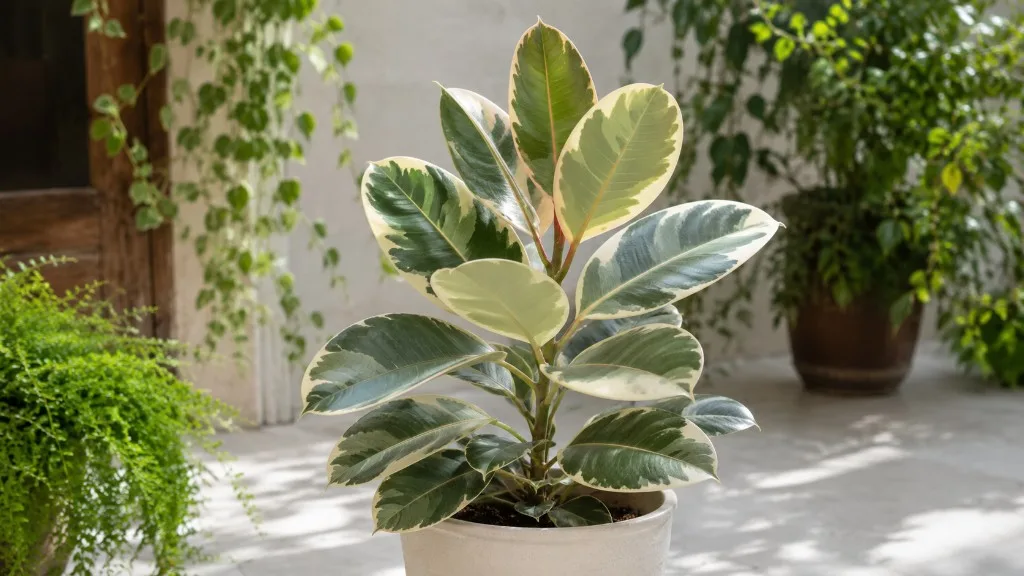
Ficus Tineke - the cream-and-green cultivar of Ficus elastica - grows as an upright, architectural indoor tree in the Moraceae family. Most pots hold a single vertical leader with large variegated leaves spaced along the trunk. Pruning redirects that upward habit toward side branches, controls height, and removes failing tissue. The cut itself is straightforward rubber plant mechanics; the extra variable on Tineke is that every new leaf after a cut reflects current light quality, not just genetics.
What pruning does for Ficus Tineke
Pruning on Tineke solves four jobs that show up in almost every home:
Cosmetic cleanup removes brown cream margins, yellowing petioles, or pest-coated leaves whenever you see them. Tip pinching shortens soft new growth during active seasons to slow vertical stretch without a dramatic height change. Branch shortening cuts individual side stems above nodes to balance an uneven canopy. Topping removes the terminal bud on the main trunk so dormant buds below can break into new branches.
Each structural job uses the same anatomical rule: new shoots emerge from nodes - the slightly swollen points where leaves attach. NC State Extension describes rubber plant as a large-leaved tree that responds to pruning for size control. Tineke does not sprout reliably from smooth internode tissue between nodes, so cut placement decides whether you get branching or a dying stub.
Pruning also gives you a close view of scale along midribs, mealybugs in leaf axils, and stem damage that is easy to miss from across the room. A clean cut heals faster than a torn petiole, and removing compromised tissue early limits pest spread.
Inspect the plant before you cut
Before any structural cut, read the whole plant from soil line to crown:
- Stem firmness: A soft, water-soaked base suggests root rot on Ficus Tineke - address watering and roots before topping.
- Node health: Look for plump rings along the trunk; dormant buds often appear as small bumps beside old leaf scars.
- Variegation pattern: Cream sectors that are browning at the edges may be sun scorch or low humidity - note whether the problem is light-related before you cut healthy tissue.
- Light exposure: A Tineke in chronic dim light will stretch again after topping unless you improve placement first.
- Recent stress: Leaf drop after a move, repot, or draft exposure means the plant is reacting to change - wait until it holds leaves steadily before hard cuts.
Temporary pink flush on emerging leaves is normal on Tineke and not a reason to prune. Cut for structure, damage, or size - not because new growth looks briefly rose-tinted.
When to prune Ficus Tineke
The best window for structural pruning and topping runs from late spring through early summer, when lengthening days and warmer room temperatures support fast callusing and bud break. Clemson HGIC recommends spring and summer for rubber plant pruning when the plant is actively growing. During that window, new shoots commonly appear within a few weeks after a hard cut on a healthy indoor specimen.
Avoid heavy cutbacks in autumn and winter unless you have no choice. Shorter days and cooler rooms slow metabolism, so replacement foliage may emerge less variegated and more green in dim conditions. A Tineke topped in November may sit nearly dormant for two months before meaningful regrowth appears.
Year-round cleanup vs. seasonal shaping
Remove dead, scorched, yellow, or pest-damaged leaves whenever you see them. That tissue is not helping the plant and can harbor insects or fungal spores. Snip at the petiole base where the leaf stalk meets the stem.
Save topping, hard cutbacks, and major shaping for the active growth window. If your Tineke is severely leggy in November, you can wait until spring or provide supplemental grow lighting and stable warmth above 65°F (18°C) before making a hard cut. Emergency exceptions - a cane snapping under its own weight, active stem rot, or concentrated pest infestation in the upper canopy - justify immediate removal regardless of season, with slower regrowth accepted as the trade-off.
Sap, gloves, and pet precautions
All Ficus elastica parts release milky latex sap when cut. NC State Extension notes this sap as a defining characteristic of rubber plant. It irritates skin and eyes and can trigger allergic reactions in sensitive people. Wear nitrile or waterproof gardening gloves for every pruning task, even small leaf removals. People with rubber latex allergy should note that ficus latex can cross-react in some individuals.
The ASPCA lists fig species as toxic to cats and dogs, and the Pet Poison Helpline cites oral irritation and vomiting from ingestion. Cover floors and furniture - sap stains fabric and hard surfaces. Do not confuse Tineke with the non-toxic baby rubber plant (Peperomia obtusifolia), which has similar leaf shape but no milky sap.
Dispose of trimmings in a closed bin. Keep children and pets away during the task. If sap contacts skin, wash with soap and running water.
The first cut to make
Start with dead, damaged, or diseased leaves only. Follow each affected petiole to the stem and cut cleanly at the base. Tearing leaves strips bark and opens a larger wound than necessary.
Only after cleanup should you decide whether the plant needs height reduction, branch balancing, or tip pinching. Stacking a hard top, multiple branch cuts, and Ficus Tineke repotting guide on the same day overloads a ficus that already reacts strongly to change. Tineke often drops leaves after abrupt environmental shifts - give it one major intervention at a time.
Where to cut on the stem
Rubber plant stems bear nodes at each leaf attachment point. For structural cuts, place the blade 5–10 mm above the chosen node at a slight angle (~45°). That removes the terminal bud while leaving the node tissue intact so lateral buds can activate.
Cutting through the node or leaving a long bare stub above it both reduce sprouting success. Cutting mid-internode leaves a dying tip that will not branch and must be removed later.
For height reduction on a single-stem Tineke, cut the trunk above a node at the desired height. Two latent buds often flank the node; one or both may grow into new branches over weeks. For bushier pots, cut multiple stems at different heights to vary architecture rather than shearing all leaves at one level.
Nodes, apical dominance, and branching
Indoor Tineke usually grows as one vertical leader with leaves spaced along the trunk. The terminal bud produces auxin that suppresses lateral buds - a process called apical dominance. Remove the tip above a node and dormant buds below often break within weeks during active growth. Each lateral shoot can be tip-pruned again next season for a fuller canopy.
Variegation and light after cuts
New leaves unfurl with color influenced by current light intensity, not by where you made the cut. Cream sectors burn in hot direct sun but fade toward mostly green in deep shade. RHS guidance on Ficus elastica notes that variegated forms need bright conditions to maintain their pattern.
Schedule major pruning when Tineke will sit in Ficus Tineke light guide for the recovery period - east-facing windows or several feet back from south/west glass. Too dim: long internodes and greener replacement leaves. Too harsh: brown cream margins on new foliage.
Wipe leaves gently once a month so pale panels can photosynthesize efficiently. Variegated rubber plants store less energy per leaf than all-green forms, so light quality after pruning matters more than on Burgundy cultivars.
Tools and blade sterilization
Use sharp bypass pruners or scissors for stems up to pencil thickness; a sharp knife works for thicker trunks. Dull blades crush tissue and increase sap flow.
Sterilize blades with 70% isopropyl alcohol before and between cuts, especially if you removed diseased tissue. Iowa State Extension recommends alcohol wipes or a 10-second dip between plants to limit pathogen transfer.
Have a damp cloth ready to dab sap from fresh cuts and tool blades. Do not use wound sealant - clean cuts dry and callus naturally indoors.
Step-by-step pruning routine
- Set up: Gloves, sterilized bypass shears, damp cloth, floor cover, closed bin for trimmings.
- Cleanup pass: Remove dead, scorched, yellow, or pest-damaged leaves at the petiole base.
- Choose the cut line: Identify the node where you want new branches to emerge. Step back and assess balance.
- Structural cut: Place the blade 5–10 mm above the node at a slight angle. One confident cut - do not saw.
- Dab sap: Blot the wound and any drips on the stem. Wipe tools.
- Secondary branches: If shortening side stems, repeat at different heights for natural architecture.
- Final check: Remove any crossing branches that rub cream margins raw.
Work in good light so you can see node placement clearly. Photograph the plant before your first structural cut - ficus architecture is hard to undo once removed.
How much you can safely remove
Cap healthy foliage removal at one-third of total leaf area per session. A Tineke with twelve leaves should lose no more than four in one sitting. Variegated rubber plants photosynthesize less per leaf than solid green forms because cream sectors contain less chlorophyll.
Stage tall-plant renovation across two spring sessions spaced six to eight weeks apart if the plant is sparse or recently stressed. Hard topping that removes most of the canopy on a weak specimen often triggers prolonged leaf drop without proportional branching.
After pruning care and recovery
Water when the top 2–3 cm of mix dries - fewer leaves transpire less moisture, so the old schedule may leave roots too wet. Hold fertilizer for two to three weeks after a hard cut; resume lightly only when new growth is visible.
Avoid repotting the same week as a major top. Avoid moving Tineke to a new room immediately after structural pruning - ficus reacts to change before it settles.
Expect temporary leaf drop on some specimens after major cuts or concurrent environmental shifts. That is a stress response, not necessarily failure. Recovery signs include firm stem tissue, new buds swelling at nodes below the cut, and fresh leaves unfurling within two to four weeks during active growth.
Using pruned stems for propagation
Stem sections from pruning can root if handled correctly. Take a 10–15 cm cutting from healthy tissue, cut just below a node, and remove lower leaves. Let the milky sap stop oozing before placing the stem in moist potting mix or water. Clemson HGIC lists stem cuttings and air layering as standard rubber plant propagation methods.
Variegation is generally maintained in Tineke cuttings, but new plants need the same bright indirect light as the parent to hold cream patterning. Propagation is optional - you do not need to root every trimming.
Mistakes to avoid
Pruning into winter dimness - replacement leaves emerge greener and grow slowly until spring. Flat horizontal cuts that pool moisture - use a slight angle instead. overwatering on Ficus Tineke after a hard prune - reduced transpiration means slower drying; check soil before every watering. Shearing multiple leaves without node logic - rubber plants do not respond like hedges. Pruning a newly purchased Tineke before acclimation - leaf drop after shop-to-home moves is common; let the plant stabilize first. Confusing pink new growth with a problem - temporary rose flush on emerging leaves is normal.
When not to prune
Delay structural cuts when the plant is actively dropping leaves after a recent move, repot, or light change. Wait if roots are compromised - soggy mix, sour smell, or soft stem base. Skip heavy pruning during active pest outbreaks until treatment stabilizes the infestation. Do not prune frozen or cold-shocked tissue; wait until warmth returns and firm growth resumes.
If Tineke is merely slightly tall but healthy, increasing light and rotating the pot may reduce stretch without a cut. Pruning cannot fix chronic underwatering on Ficus Tineke, root rot, or scale - correct the underlying condition first.
Conclusion
Ficus Tineke pruning starts with damaged-leaf cleanup, then moves to node-based structural cuts during spring and early summer when the plant can branch within weeks. Place cuts 5–10 mm above healthy nodes, cap removal at one-third per session, and protect cream variegation by keeping Tineke in bright indirect light throughout recovery. Handle milky sap with gloves, keep trimmings away from pets, and accept that ficus may drop a few leaves after major change before new shoots appear. Scissors shape the architecture; light quality paints the variegation on every leaf that follows.
When to use this page vs other Ficus Tineke guides
- Ficus Tineke overview - Start here for whole-plant context before deep-diving this topic.
- Ficus Tineke problems hub - Jump to symptom-specific fix guides when this care topic does not resolve the issue.
- Leggy Growth on Ficus Tineke - Escalate here when pruning adjustments are not enough.
- Slow Growth on Ficus Tineke - Escalate here when pruning adjustments are not enough.
- Brown Tips on Ficus Tineke - Escalate here when pruning adjustments are not enough.