Overwatering on Ficus Elastica Ruby: Causes, Checks & Fixes
Quick answer
Overwatering on Ficus Elastica Ruby shows up as wet heavy soil, limp pink-and-cream leaves, and yellow lower foliage-not thirst. First step: stop watering until the top 2 inches of mix feel dry and lift the pot to confirm weight has dropped.
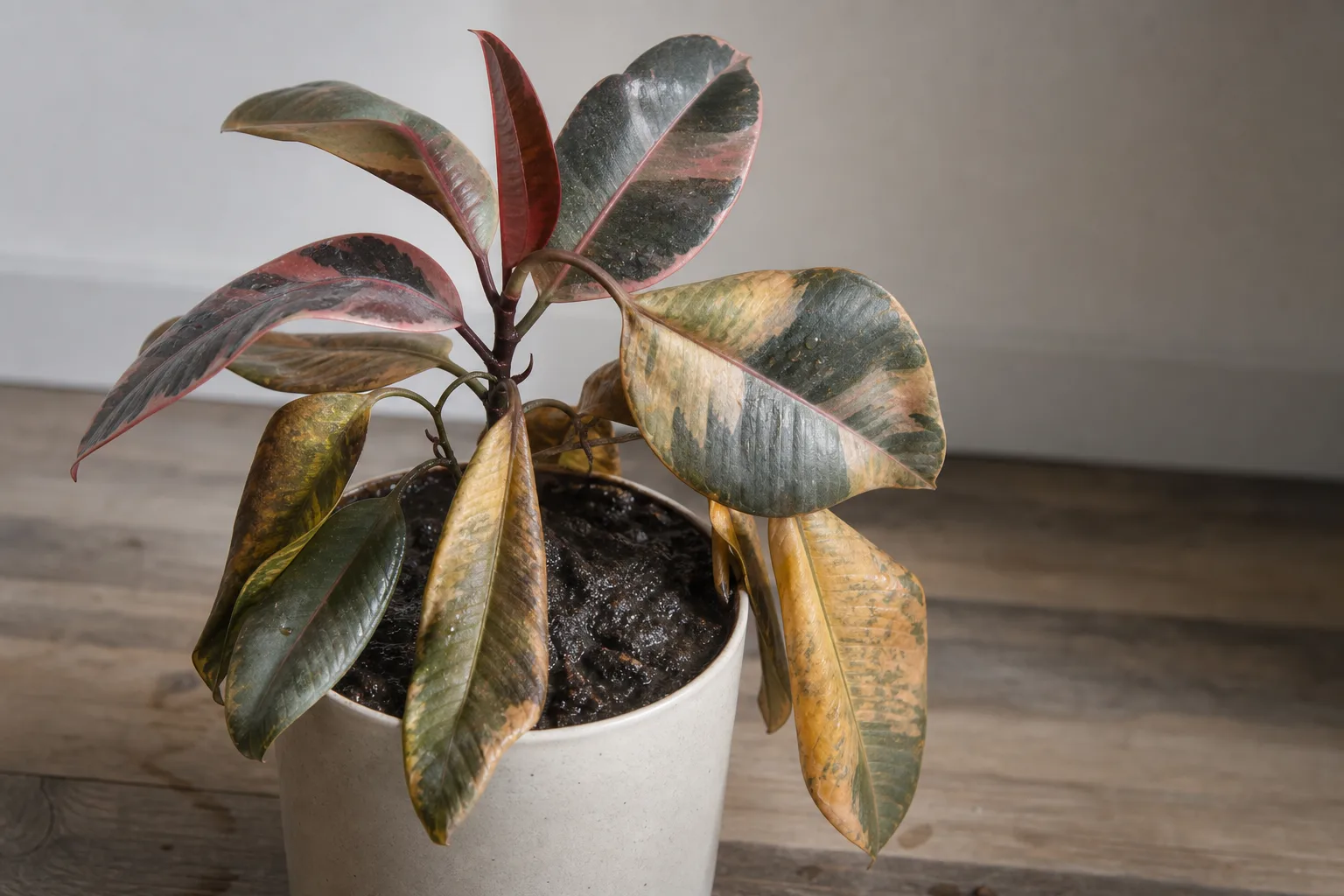
Overwatering on Ficus Elastica Ruby: Causes, Checks & Fixes
This guide covers overwatering on Ficus Elastica Ruby. See also the general Overwatering guide, watering, and light pages for this plant.
Overwatering on Ficus Elastica Ruby: Causes, Checks & Fixes
Quick answer
Overwatering on Ficus elastica ‘Ruby’ means the root zone stays wet too long. This variegated rubber plant stores water in its thick stem, so limp pink-and-cream leaves on damp heavy soil trick growers into watering again while roots suffocate.
That is the wet-wilt paradox: leaves wilt while soil stays moist because damaged roots cannot absorb water-the plant looks thirsty in a pot that is already drowning. Pale variegated sections collapse before solid green midribs because they have less chlorophyll buffer when uptake fails.
First step: stop watering until the top 2 inches of mix feel dry. Lift the pot-if it still feels heavy days after the last drink, you are overwatering. Full wet-vs-dry rhythm: Ficus Elastica Ruby watering guide.
Overwatering vs. other Ficus Elastica Ruby problems
| Pattern | Pot weight | Soil at 2 inches | Stem base | What it usually means |
|---|---|---|---|---|
| Overwatering | Heavy | Wet, clings | Firm or softening | Root failure on saturated mix |
| Underwatering | Light | Dry, crumbly | Firm, limp leaves | Drought wilt - see underwatering |
| Low light slow dry-down | Medium-heavy | Damp for weeks | Firm | Overwatering risk - see not enough light |
| Variegation sun burn | Normal | On schedule | Firm | Too much direct sun, not rot |
| Acute whole-canopy collapse | Very light or very heavy | Dry or wet | Firm or soft | See wilting wet-vs-dry fork first |
Ruby’s pale leaf sections show stress faster than solid green rubber plants-brown patches on variegation can mean sun burn, not overwatering, when soil is dry and stem is firm. Species-level overwatering patterns shared with Burgundy and Robusta: overwatering on Rubber Plant.
What overwatering looks like on Ficus Elastica Ruby
Ruby announces chronic wetness through pot weight and leaf turgor before every root dies. Large 8 to 12 inch glossy tricolor leaves hang limp while mix stays damp-the opposite of the light dry pot you would expect from thirst.
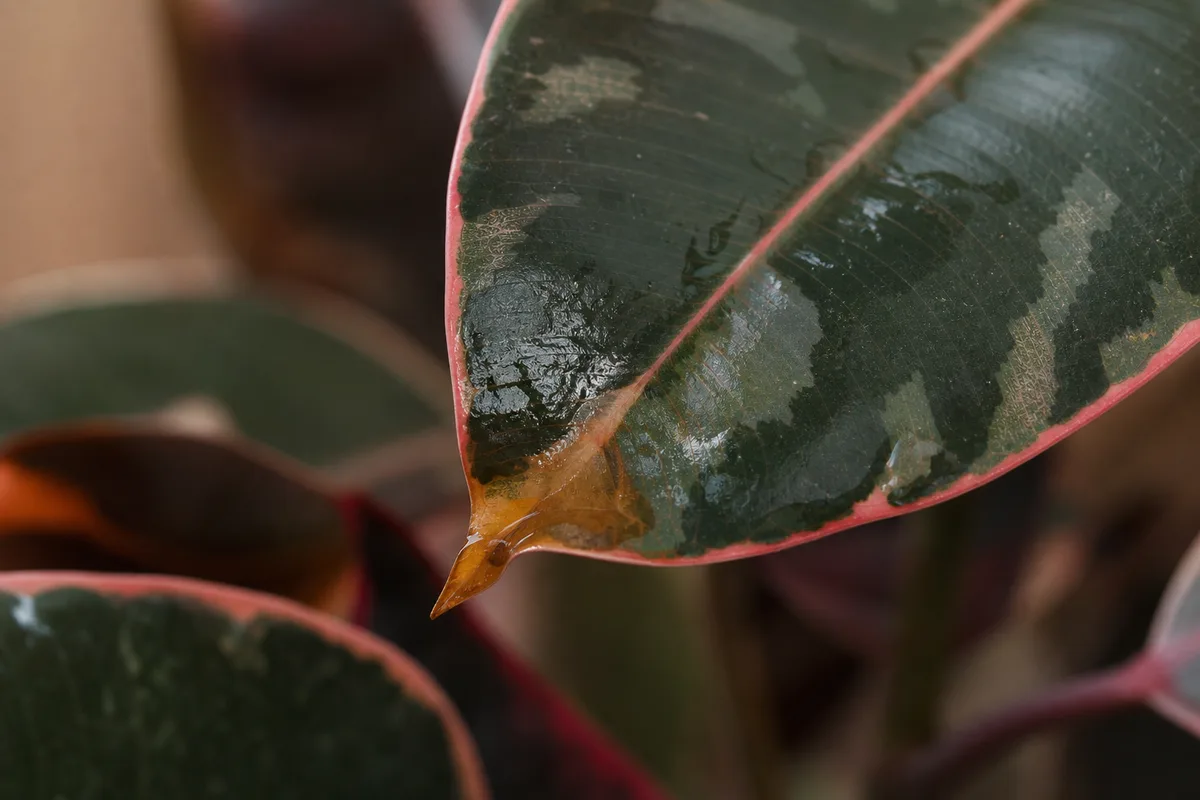
Overwatering symptoms on Ficus Elastica Ruby - compare with healthy tissue on the same plant.
Early signs
- Limp glossy leaves while soil is wet at 2 inches depth
- Yellow lower leaves on damp mix-not one slow-aging leaf at the bottom
- Heavy pot that does not lighten for many days between drinks
- Musty or sour smell from the drainage hole or lifted cachepot
- Fungus gnats hovering over the soil surface - see fungus gnats on Ficus Elastica Ruby when adults persist after dry-down
- Stalled new growth at the top-new leaves may emerge small or drop early
- Corky bumps on leaf undersides on some variegated rubber plants when roots take up water faster than pale tissue transpires-edema from excess moisture, not a separate disease
Advanced signs
- Soft stem base at the soil line-the trunk dents when pressed
- Leaf drop on multiple leaves despite moisture
- Brown mushy roots on inspection-healthy Ficus roots are firm and pale
- Canopy collapse spreading to new tricolor tips while mix stays wet - escalate to root rot on Ficus Elastica Ruby
Compare with underwatering: light pot, dry soil at 2 inches, leaves that droop but recover after thorough watering.
Why Ficus Elastica Ruby gets overwatered
Ruby wants consistent moisture with dry-down between drinks-water thoroughly when the top 2 inches dry, not on a calendar. Common failure modes:
Calendar watering. Weekly watering without checking the 2-inch depth-especially in winter or dim corners when growth slows and the plant uses less moisture.
Cachepots without drainage. Decorative outer pots trap runoff; Ruby roots sit in stale water that re-soaks the bottom within hours even if you emptied the saucer once.
Heavy peat mix. Root rot usually results from mix that does not drain quickly or overly frequent watering-dense soil without perlite holds water at the root ball center while the surface looks merely damp.
Low light slowing dry-down. Ruby needs bright indirect light for variegation; dim placement slows evaporation while owners keep the same summer schedule. See not enough light when the pot stays damp for weeks despite “correct” watering volume.
Misreading wilt. The thick stem stores water, so leaves lag behind root damage-limp tricolor foliage on wet mix is the classic feedback loop where owners water more and deepen rot. For acute collapse within hours, run the wet-vs-dry fork on wilting before assuming thirst.
Oversized pots after Ficus Elastica Ruby repotting guide. Extra wet soil around a small root ball never dries at the center-one of the fastest paths to chronic sogginess on variegated rubber plants.
How to confirm the cause
Work through these checks in order before repotting or trimming:
- Two-inch finger test - Wet clinging soil at depth with limp leaves?
- Pot weight - Still heavy 5+ days after watering?
- Stem firmness - Press base at soil line. Soft = escalate same day.
- Yellowing pattern - Multiple lower leaves on wet soil?
- Smell - Sour odor from drainage hole confirms anaerobic decay when oxygen-starved roots fail.
- Root spot-check - Partial unpot if decline continues despite dry-down.
Check soil moisture before watering again-Clemson recommends allowing rubber plants to dry slightly between waterings.
Mild vs. moderate vs. severe overwatering
| Severity | Pot weight | Stem at soil line | Leaf pattern | Urgency | First fix path |
|---|---|---|---|---|---|
| Mild | Heavy | Firm | Few yellow lower leaves, limp canopy | Low - dry-down over days | Stop watering until top 2 inches dry |
| Moderate | Heavy | Firm but yellowing spreads | Multiple limp leaves, gnats, stalled new growth | Medium - inspect within a week | Dry-down + improve light and drainage |
| Severe | Heavy | Soft or dented | Rapid leaf drop, sour smell, wet-wilt spreading to new tips | High - same day | Unpot, trim rot, repot - see root rot guide |
If the pot is light, top 2 inches are dry, and stems are firm, suspect underwatering instead.
First fix for Ficus Elastica Ruby
Stop watering until the top 2 inches of mix feel dry. Move to brighter indirect light if the plant sits in deep shade-slow evaporation worsens wet soil.
Mild overwatering (firm stem, no sour smell)
- Skip all watering until the top 2 inches read dry and crumbly-often seven to fourteen days.
- Empty saucers and lift the inner pot out of any cachepot after every future drink.
- Resume one moderate watering when 2 inches are dry per the watering guide.
- Watch for firm new variegated leaves at the top within two to three weeks.
Do not fertilize a waterlogged plant.
Moderate overwatering (firm stem, spreading yellow on wet mix)
- Complete the mild dry-down steps above.
- Confirm drainage holes are open and mix is not dense peat-only.
- If soil stays wet more than a week at room temperature after you stop watering, plan a repot into perlite-amended mix once stems stay firm-do not repot while tissue is still soft.
- Set yellow sticky traps if fungus gnats appeared; fix moisture before reaching for sprays.
Severe overwatering (soft stem or mushy roots)
When stems soften, mix smells sour, or roots are brown and slimy on spot-check, mild dry-down alone is not enough. Open the root rot on Ficus Elastica Ruby guide and follow its numbered trim-and-repot workflow:
- Stop all watering and empty cachepots immediately.
- Unpot gently; rinse away wet mix.
- Trim all mushy roots to firm pale tissue with sterilized scissors.
- Air-dry cut surfaces several hours, then repot into fresh well-drained mix with ~20% perlite in a pot sized to the remaining root mass-not a larger decorative container.
- Hold water five to seven days, then resume the top-2-inch dry cycle.
Do not repot into a larger pot hoping extra soil will absorb moisture.
Recovery timeline
Minor overwatering with firm stems: leaves may firm within one to two weeks after dry-down. Recovery is measured by stable new growth-firm new Ruby leaves with intact pink variegation within three to six weeks.
Moderate cases with some root trimming may need four to eight weeks before steady top growth returns. Old yellowed or limp leaves rarely re-green; judge success by apical growth and firm stems.
Severe root loss may take two to three months before consistent new tricolor leaves unfurl. When the base is soft through multiple nodes, stem-cuttings salvage from the root rot guide may be the realistic path.
Lookalike symptoms to rule out
Underwatering - Light pot, dry soil at 2 inches, leaves that perk within hours after a deep soak. Opposite fix from wet-wilt. See underwatering on Ficus Elastica Ruby.
Acute wilt from either extreme - Whole canopy collapse within a day needs the wet-vs-dry fork on wilting before you treat.
Variegation sun burn - Brown crisp patches on pink-cream sections with dry soil and firm stem-move out of direct afternoon sun, do not stop watering entirely.
Low light weak growth - Stretched pale stems and slow dry-down without sour smell. Improve light per not enough light; reduce watering frequency in dim winter rooms.
Gradual droop without wet soil - Firm stems, normal moisture, sag after a move fits drooping leaves better than overwatering.
Surface mold without root failure - White fuzz on damp top layer with firm stem-scrape and dry the surface per mold on soil; escalate to root rot only when stems soften.
Normal lower leaf drop - One older yellow leaf on an otherwise upright Ruby with on-schedule dry soil is not the same as multiple lower leaves yellowing on wet mix.
What not to do
Do not keep watering limp leaves on wet soil-the wet-wilt trap causes more Ruby losses than underwatering.
Do not repot into a larger pot while correcting overwatering.
Do not fertilize a waterlogged or freshly trimmed plant.
Do not confuse sun scorch on variegated sections with overwatering when soil is dry and stem is firm.
Do not mist or bottom-water daily hoping to “revive” a heavy wet pot-pause and dry down first.
How to prevent overwatering next time
Water on moisture, not calendar days. Check the top 2 inches of mix before every major drink per the watering guide.
Use well-drained perlite-amended mix in a pot sized to the root ball with open drainage holes. Empty saucers and cachepots within 30 minutes after every watering.
Reduce frequency from fall through late winter when growth slows in cool dim rooms-reduce watering from fall to late winter when Ruby uses less moisture.
Keep Ruby in bright filtered light so variegated tissue photosynthesizes and pots dry predictably-see light requirements when placement is dim.
Scout weekly: lift the pot, probe 2 inches down, and watch for gnats before yellowing spreads. Baseline care: Ficus Elastica Ruby overview.
When to worry
Treat as urgent same day when the stem base softens or dents, multiple leaves drop daily on soggy mix, the pot smells sour, or wet-wilt spreads to new tricolor tips despite paused watering. Those patterns mean root failure-not thirst-and the numbered rescue workflow on root rot applies.
Lower urgency applies when a few lower leaves yellow on heavy wet soil but the stem stays firm and smell is neutral. Dry-down and drainage fixes often suffice without immediate unpotting.
If decline continues two weeks after corrected dry-down with firm stems, unpot and inspect roots before the base softens. When roots are mostly mushy, take stem cuttings as backup per the root rot guide before the last viable node fails.
Conclusion
Overwatering on Ficus Elastica Ruby always starts with the same question: is the root zone staying wet too long while leaves look thirsty? Lift the pot, check 2 inches down, and press the stem base. Wet heavy soil with limp tricolor leaves means pause-not another drink. Mild cases recover on dry-down; soft stems and sour mix mean open the root rot guide the same day. Ruby’s pale sections may collapse first, but pot weight and stem firmness tell the truth.
When to use this page vs other Ficus Elastica Ruby guides
- Ficus Elastica Ruby watering guide - Use for routine moisture checks before assuming overwatering is the main issue.
- Ficus Elastica Ruby problems hub - Browse all 16 common issues on this species.
- Root Rot on Ficus Elastica Ruby - Different entry point when symptoms overlap with overwatering.
- Yellow Leaves on Ficus Elastica Ruby - Different entry point when symptoms overlap with overwatering.
- Wilting on Ficus Elastica Ruby - Different entry point when symptoms overlap with overwatering.
Related Ficus Elastica Ruby guides
- Ficus Elastica Ruby overview
- Ficus Elastica Ruby watering
- Ficus Elastica Ruby light
- Ficus Elastica Ruby soil
- Root Rot on Ficus Elastica Ruby
- Yellow Leaves on Ficus Elastica Ruby
- Wilting on Ficus Elastica Ruby
- Fungus Gnats on Ficus Elastica Ruby
- Mold on Soil on Ficus Elastica Ruby
- Drooping Leaves on Ficus Elastica Ruby
- Ficus Elastica Ruby problems