Watering Ficus Elastica Ruby: Schedule, Soil Checks &
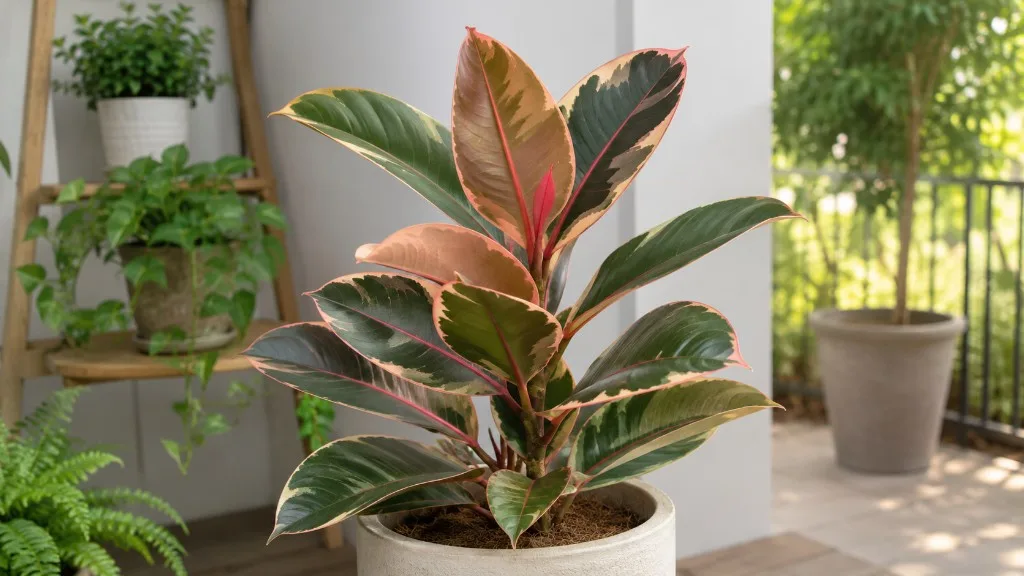
Watering Ficus Elastica Ruby: Schedule, Soil Checks & Mistakes
Watering Ficus Elastica Ruby: Schedule, Soil Checks & Mistakes
Ficus Elastica Ruby rewards a steady root-zone rhythm-not a fixed calendar. The pink-and-cream variegated leaves want consistent moisture in the root zone, the roots want air, and the plant will punish both extremes with yellowing, leaf drop, or a soggy stem base. The fix is a short routine: check whether the top 2 inches of soil are dry, water deeply when the root zone is ready, let the pot drain completely, and adjust for season, pot size, and light. Ficus elastica ‘Ruby’ is a cultivar of the Indian rubber plant - a broadleaf evergreen from warm tropical regions that Missouri Botanical Garden notes should be watered regularly during the growing season while avoiding overwatering, with reduced watering from fall through late winter. (Missouri Botanical Garden) Ruby needs more light discipline than the Burgundy form because its pale leaf sections burn easily, which also means a bright spot dries the pot faster than a dim corner. Full species context: Ficus Elastica Ruby overview.
Why Ficus Ruby Watering Confuses Even Experienced Growers
Ficus plants send mixed signals by design - or at least it feels that way. Leaves can droop when the soil is fine. They can also droop because the roots are drowning. Yellow lower leaves can mean too much water, but they can also mean the plant is adjusting to a new spot, reacting to a draft, or dropping older foliage naturally. That overlap is why growers either water on autopilot or freeze up and underwater until the mix turns dusty and the leaves go crispy at the edges.
The core confusion comes from treating Ficus Ruby like a drought-tolerant succulent or like a moisture-loving fern. It is neither. Clemson University’s Home & Garden Information Center describes rubber plants as needing thorough watering with the soil allowed to dry slightly to the touch between sessions - not bone dry, not permanently wet. (Clemson HGIC) Root rot, the guide notes, usually results from a mix that does not drain quickly or from overly frequent watering. That single pairing - drainage plus dry-down - already explains why your decorative cachepot and your neighbour’s terracotta pot follow different rules even when both hold the same plant.
Ficus elastica also reacts to change before it reacts to gradual care mistakes. Move the pot, change the water volume, or switch from top watering to sporadic sips and you may see leaf drop that looks like a watering crisis but is actually shock. The watering decision still starts with soil moisture, but you interpret symptoms more carefully on a Ficus than on a forgiving pothos. Ruby adds another layer: variegated tissue is less forgiving of both drought stress and rot because the pale sections show damage faster than solid green leaves.
What Consistent Moisture Actually Means for Ficus Elastica Ruby
Consistent moisture does not mean the soil should stay wet all the time. It means the root zone should stay evenly hydrated between waterings - neither swinging from dust to mud nor sitting in stale water for days. Think of it as a rhythm: full drink, partial dry-down in the upper layer, full drink again. The roots access water throughout the cycle without losing oxygen to saturation.
For Ficus Elastica Ruby indoors, consistent moisture pairs with well-draining potting mix amended with perlite - roughly twenty percent perlite in a standard houseplant blend is a practical starting point for this site (see soil guide for mix details). The mix should hold enough water for roots to drink, release excess quickly through drainage holes, and stay open enough for air to reach the root surface. When the mix compacts or the pot lacks drainage, you can water on a perfect schedule and still create root rot because the lower zone never dries enough to breathe.
Clemson HGIC states that rubber plants should be watered thoroughly but allowed to dry slightly between waterings, with saucers emptied after each session. (Clemson HGIC) “Slightly dry” in practice maps to the top 2 inches approaching dry while the deeper root ball still holds usable moisture - not a fully desiccated pot that cracks away from the walls. Underwatering is safer than overwatering for Ficus in the short term, but repeated drought damages fine roots and makes the plant drop leaves when water finally returns. Consistency is the goal: predictable checks, predictable dry-down, predictable deep watering.
The Top 2 Inches Dry Rule Explained
The most reliable trigger for watering Ficus Elastica Ruby is simple: water when the top 2 inches of soil feel dry. Insert your finger, a wooden skewer, or a chopstick to that depth near the pot edge - not pressed against the stem where moisture lingers longest. If the material comes out with damp particles clinging at depth, wait. If it feels dry and crumbly at 2 inches and the pot feels lighter than after your last watering, it is time for a full drink.
Why 2 inches and not the surface alone? Peat-based and coco-based mixes often dry on top while the center stays moist - especially in a large pot or after repotting into fresh mix. Surface colour lies. A dry-looking top layer can hide wet roots below, which is how growers add water on schedule and still cause rot. The 2-inch depth approximates the zone where evaporation has pulled moisture away enough that the root ball is ready for replenishment without being waterlogged.
The rule is a check, not a timer. A Ruby in a bright east window during summer may hit the 2-inch dry point every 7–10 days. The same plant in a cool north room in January may take 14–21 days or longer. NC State Extension and other rubber plant references converge on the same principle: test before you pour, then water until drainage runs clear. (NC State Extension) Your home’s interval is valid only after you confirm it against your pot, mix, and light - not against a blog chart.
Finger Test, Skewer Probe, and Pot Weight
The finger test is the fastest weekly check. Press into the mix 2 inches deep in two spots - near the edge and halfway between edge and stem. Both should feel dry at depth before you water. If one spot is damp, wait. Ficus roots spread outward; edge checks catch dry-down earlier than stem-adjacent soil, which is why checking only beside the trunk misleads beginners.
The pot weight test is the most reliable signal once you learn your container. Lift the pot right after a thorough watering and notice the heft. Lift it every few days. A pot that feels dramatically lighter has lost much of its available moisture. Combine weight with the finger test when unsure: light pot plus dry top 2 inches equals water; heavy pot plus limp leaves equals trouble, not thirst.
A wooden skewer or chopstick works as a low-tech backup. Insert to mid-pot depth, wait sixty seconds, pull it out. Damp stick means wait; dry stick with a light pot means water. A moisture meter can help in very large pots, but it is optional - finger and weight together cover most indoor Ruby plants.
How Often to Water Ficus Elastica Ruby Indoors
Indoor Ficus Elastica Ruby usually needs watering roughly every 7–10 days during active warm growth and every 14–21 days in cooler, dimmer months, but the honest answer is always “when the top 2 inches of soil feel dry.” A bright filtered window in summer may push you toward the shorter end of that range. A cool room with less light in winter may stretch toward three weeks. A small nursery pot in dry, heated air can surprise you by drying faster than a wide ceramic planter.
Check Ruby at least once a week year-round, and every three to four days during peak summer if the pot sits in strong indirect light. Do not water by default. Run the moisture checks first, then water or walk away. After two weeks in the same spot, you will know whether your plant behaves like a seven-day Ruby or a twelve-day Ruby. That personal baseline is more accurate than any schedule because it accounts for your pot material, your perlite-amended mix, and your light level.
Indoor humidity between 40 and 60 percent suits Ficus Ruby well. Very dry winter air below thirty percent pulls moisture from leaves and soil faster, which can shorten the interval - but do not compensate by leaving the soil constantly wet. High humidity plus soggy mix and weak airflow invites fungal problems at the root zone. Humidity trays and grouping plants help leaf tissue; they do not replace the dry-down check.
Seasonal Watering Schedule for Ficus Ruby
Ficus elastica tracks temperature, day length, and growth speed more closely than the day of the week. A seasonal framework helps you anticipate change without locking into bad habits.
In spring, as light strengthens and new leaves emerge, water use rises. Expect to move from winter intervals toward the 7–10 day range for many indoor pots. New growth on Ruby often arrives vivid pink-red before settling to softer tones - active push is a signal that the root zone is working and using water.
In summer, peak warmth and long days maximize demand. Bright indirect light with some morning direct sun - the range Ruby needs to hold variegation - also increases evaporation from the pot surface. Many indoor Ruby plants land on a 7–10 day rhythm if checks confirm dry-down at 2 inches. Outdoor patio pots in heat may need attention sooner; always verify with soil, not memory.
In fall, cooler nights and shorter days slow growth. Stretch the interval between waterings and verify with checks. Overwatering becomes the bigger risk as evaporation drops and pots stay wet longer - the classic mistake is maintaining summer frequency into October while the plant has already downshifted.
In winter, indoor Ruby in cool, dim rooms may need water only every 14–21 days, sometimes longer. Growth slows, but dry heating air can still pull moisture quickly from small pots. Reduce frequency, not thoroughness - when you do water, water fully until drainage runs. Missouri Botanical Garden explicitly recommends reducing watering from fall to late winter for Ficus elastica. (Missouri Botanical Garden)
Summer Active Growth and Winter Slowdown
Summer mistakes cluster around two extremes: forgetting the bright-window pot during a heat wave, and watering every week out of habit even when the mix is still wet from the last session. Heat increases evaporation and transpiration; it does not suspend the need for drainage. If Ruby wilts at midday in extreme heat and recovers by evening without your intervention, that may be temporary heat stress, not drought. If it stays wilted into the next morning despite wet soil, suspect root damage.
Winter slowdown does not mean neglect. Ficus dislikes cold wet feet. A pot that took eight days to dry in July may take eighteen in January. Adjust by check, not by memory of summer frequency. If you run heating constantly and the air is very dry, a small pot may still dry on a shorter winter cycle - the soil tells the truth, not the calendar.
Watering After Repotting and Pot Size Changes
Pot size changes the schedule immediately, often more than season. After repotting Ficus Elastica Ruby into a larger container, expect slower dry-down until roots fill the new volume - many growers overwater freshly repotted Ficus because they keep the old schedule while the extra mix holds moisture longer.
Choose only one pot size up at repotting. An oversized pot surrounds roots with wet, unused mix that stays saturated while the plant tries to grow into it - one of the fastest paths to root rot on variegated rubber plants. Water after repotting when the top 2 inches dry, which may mean a longer wait than before even though the plant looks fine. Full repot protocol: repotting guide.
A small four-inch nursery pot dries fast and may need checks every four to six days in summer sun. A ten-inch floor pot holds more buffer and may go ten to fourteen days between sessions in the same room. Terracotta breathes and dries faster than glazed ceramic or plastic. Match your check frequency to the container, not to what worked on your last plant.
The Right Way to Water Ficus Elastica Ruby Cleanly
Technique matters because half-measures create shallow root habits and uneven moisture. Water slowly and evenly across the soil surface until moisture exits the drainage holes - not a quick splash that runs down the inside wall and out the bottom while the center stays dry. Dry peat or coco sometimes hydrophobes; water runs around the root ball and drains without rewetting the core. If that happens, water in two passes five minutes apart, or bottom-water the pot in a tray until the surface darkens, then drain fully.
Always empty the saucer within thirty minutes of watering. Standing water re-saturates the bottom root zone, blocks oxygen, and causes the classic paradox: wilting plant, wet soil. If you use a decorative cachepot, lift the inner nursery pot to water, drain completely, then return it - never let the outer shell hold runoff indefinitely. Blocked drainage holes, gravel-filled double pots that still hold saucer water, and outer shells with no exit recreate the same rot risk at different scales.
Use room-temperature tap water for most indoor Ruby plants; let heavily chlorinated water sit overnight if pale leaf margins brown despite good light and soil checks. Avoid flooding the crown or repeatedly wetting variegated leaves - aim the stream at the soil, not the foliage. Morning watering gives incidental splashes time to dry during the day, though consistent soil checks matter more than clock time for indoor Ruby plants.
Signs You Are Overwatering Ficus Elastica Ruby
Overwatering is the silent killer because the plant can look thirsty while the roots are failing. Watch for these patterns together, not in isolation:
Yellow lower leaves that drop without crisp dryness often point to root stress. On Ficus, yellowing frequently precedes drop when roots cannot absorb nutrients in waterlogged soil. Soft or mushy stems near the soil line suggest advanced trouble. Sour or stagnant smell from the mix means anaerobic conditions - roots are losing oxygen even before every leaf shows it. Wilting with wet soil is the hallmark confusion: damaged roots cannot move water upward, so leaves droop while the mix stays damp.
Clemson HGIC notes that too much water plus poor drainage is the main path to root rot on rubber plants indoors. (Clemson HGIC) Variegated Ruby may show dull, greenish new leaves when light is too low - but if light is adequate and yellowing spreads with wet soil, water is the prime suspect. Edema or brown spots on leaves can appear when roots take up water faster than leaves transpire in cool, low-light, overwatered conditions.
If several signs appear together, pause watering, confirm drainage holes are clear, empty any cachepot, and inspect the top of the root ball if you can gently brush mix away. Do not feed a struggling wet plant - fertilizer cannot fix drowning roots. For full wet-soil triage, see overwatering on Ficus Elastica Ruby.
Early Warnings Before Root Rot Sets In
Root rot symptoms lag behind damage by days or weeks. Early warnings include soil that stays wet beyond your usual interval, slowed new growth despite warm conditions, and leaves that feel soft and dull rather than firm and glossy. A pot that never feels lighter between sessions is a red flag - either the mix is too dense, the pot is too large, or you are watering before the top 2 inches dry.
Pythium and Phytophthora - water molds common in houseplant root rot - thrive in prolonged wet conditions. University of Maryland Extension documents that degraded roots may separate from their core when gently pulled. You may not see that without unpotting, which is why catching chronic wetness early matters more than heroic rescue later. Poke aeration holes into compacted surface mix with a clean chopstick if water pools on top - a temporary aid, not a substitute for proper mix and drainage.
Signs Ficus Ruby Is Thirsty or Underwatered
Underwatered Ficus Elastica Ruby usually shows drooping leaves that feel thin rather than turgid, dry compacted mix that pulls away from the pot walls, and sometimes crispy brown edges on older leaves - especially in very dry air. A single dry episode is often recoverable with one thorough watering and full drainage. Repeated drought damages fine roots and triggers leaf drop when water finally returns because the plant cannot handle the sudden shift.
The pot weight test clarifies thirst quickly: very light pot plus dry 2-inch depth equals water now. If leaves perk up within a few hours after a deep watering, thirst was the issue. If they stay limp with wet soil afterward, the problem is root health, not volume.
Underwatering is less immediately destructive than overwatering on Ficus, but chronic neglect produces sparse, stressed growth and faded variegation. Ruby in bright light without enough water loses pink intensity faster than Burgundy loses colour because the pale sections stress visibly. Do not interpret every droop as drought - check soil first, then water fully if dry at depth. See underwatering on Ficus Elastica Ruby when the pot is light and mix is dusty throughout.
Root Rot Prevention for Ficus Elastica Ruby
Root rot prevention for Ficus Ruby rests on a short list of non-negotiables: drainage holes in the pot, well-draining mix with perlite, the top 2 inches dry rule before each watering, empty saucers after every session, and pot size matched to the root ball - not the dream of future tree height.
Never let the plant sit in standing water in a saucer or cachepot. Never use dense garden soil in a small indoor container. Never maintain summer watering frequency into a cool dim winter without checks. Never repot into a dramatically oversized pot hoping for faster growth - extra wet mix around unused space is an invitation for rot.
Airflow around the pot base helps the lower zone dry. Crowding pots on a saturated tray or placing Ruby directly on a cold windowsill where condensation collects can keep the bottom wet even when you water correctly from the top. Elevate the pot slightly or use a dry saucer that you empty reliably.
Rotate watering responsibility through checks, not assumptions: if someone else cares for the plant while you travel, leave written instructions to test the top 2 inches - not “water every Monday.”
What to Do If You Suspect Root Rot
If you suspect root rot, stop watering immediately and let the top 2 inches dry completely before any next session. If decline continues - spreading yellow leaves, mushy base, foul smell - unpot the plant gently. Healthy Ficus roots are firm and pale; rotted roots are brown, black, or mushy and may smell sour. Trim damaged roots with clean, sharp scissors sterilized with rubbing alcohol or dilute bleach, and discard contaminated mix.
Repot into fresh well-draining mix with perlite, using a clean pot with drainage holes sized appropriately for the remaining root mass - not the original oversized container. Water lightly after repotting to settle mix, then resume the top 2 inches dry rule once the plant stabilizes. Expect some leaf drop from shock; stable new growth is the recovery signal. Do not fertilize until the plant shows firm new leaves and the watering rhythm is re-established. Escalation guide: root rot on Ficus Elastica Ruby.
Soil Mix and Drainage as Hidden Watering Factors
Your watering schedule is only as good as the soil system beneath it. Well-draining potting mix with roughly twenty percent perlite dries on a predictable curve that matches the top 2 inches rule. Heavy peat-only mix without amendment compacts over months, slows drainage, and keeps the center wet while the surface looks ready - the recipe for silent overwatering.
Clemson HGIC recommends a well-drained houseplant mix for rubber plants and ties root rot directly to mix that does not drain quickly. (Clemson HGIC) Refresh mix when it compacts, smells sour, or dries in odd patterns - crusty top, wet core. Rocks at the bottom of the pot do not fix poor mix; they reduce usable soil volume and can create a perched water table. Fix the blend, not the folklore.
After a full watering, excess water should leave the pot within minutes. If water sits on the surface or runs instantly down the sides without wetting the center, the mix needs aeration - repot or top-dress with perlite and work gently into the upper layer, understanding that full correction may require repotting.
How Light and Humidity Change Water Needs
Light drives water use on Ficus Elastica Ruby more than beginners expect. Ruby needs bright indirect light with some morning direct sun to hold pink and cream variegation - brighter than Burgundy - which also means faster transpiration and shorter dry-down cycles. A Ruby moved from a dim corner to a bright filtered window may need water twice as often until you recalibrate checks. Move light gradually; Ficus drops leaves when conditions shift abruptly. Placement details: light guide.
Too little light slows water use but increases overwatering risk because the mix stays wet longer while growth stalls. Dull greenish new leaves often mean “more light,” but if you add light without adjusting watering downward during the transition, you can still rot roots in a pot that used to dry slowly.
Humidity between forty and sixty percent supports healthy leaves without replacing root-zone moisture. Mist is a poor substitute for proper watering - it briefly wets leaves, barely affects root moisture, and can spot pale variegation. Focus on soil checks and drainage; use a humidifier or grouping if dry air stresses leaf edges in winter.
Temperature comfort roughly 18°C to 28°C (65–82°F) aligns with steady water use. Cold drafts below fifteen degrees Celsius can damage roots and leaves together; a plant near a winter window may look underwatered while the mix is actually too cold for uptake. Protect from cold glass and heat vents alike - both distort the watering picture.
Common Ficus Ruby Watering Mistakes and Quick Fixes
Mistake: Watering every Sunday without checking. Fix: Use the top 2 inches dry rule. Calendar is a reminder to check, not a command to pour.
Mistake: Small sips daily. Fix: Water deeply until drainage runs, then wait for dry-down. Daily dribbles keep the surface wet and the habit shallow.
Mistake: Leaving the pot in a full saucer or cachepot. Fix: Empty saucers within thirty minutes; lift nursery pots out of decorative shells to water and drain fully. Wilting with wet soil often starts here.
Mistake: Using a cachepot with no drainage exit. Fix: Never return the inner pot until runoff stops dripping; stale water in the outer shell re-soaks roots within hours.
Mistake: Repotting into a pot three sizes larger. Fix: One size up, perlite-amended mix, longer interval until roots grow.
Mistake: Ignoring winter slowdown. Fix: Stretch toward 14–21 days with checks; reduce volume only by watering less often, not by giving less per session when you do water.
Mistake: Misting instead of watering. Fix: Check soil at 2 inches and water the root zone. Humidity helps leaves; it does not hydrate roots.
Mistake: Moving the plant and changing water, light, and pot at once. Fix: Change one variable at a time. Ficus drops leaves from shock; stabilize watering first.
Building a Simple Weekly Watering Routine
You do not need a spreadsheet. You need a repeatable loop that respects how Ficus Elastica Ruby actually behaves.
Every three to four days in warm bright weather: Finger-test the top 2 inches. Lift the pot if unsure. Water deeply only when dry at depth. Empty saucers.
Every seven days in cooler months: Same checks, longer intervals. Do not assume winter means “barely water” - small pots near heating vents still dry.
Once a week: Step back and evaluate growth. Are new leaves firm with good variegation? Is lower yellowing increasing with wet soil? Adjust interval by a few days based on what the plant shows.
Pair watering with light reality: Ruby in bright filtered light uses more water than Ruby in a dim hall. If you move the pot for variegation, reset the routine from scratch for two weeks of checks.
Ruby vs Burgundy dry-down at matched placement
| Factor | Ficus Elastica Ruby | Ficus Burgundy |
|---|---|---|
| Light demand | Brighter to hold variegation | Moderate bright indirect |
| Typical summer interval | Often 7–10 days when top 2 inches dry | Often 7–10 days; may dry slower in same spot |
| Winter interval | Often 14–21+ days with checks | Similar; both slow in cool dim rooms |
| First wilt signal | Pale sections fade before solid green | Lower leaves yellow on wet soil |
At the same windowsill, Ruby in bright variegation-holding light often dries faster than Burgundy-check both pots independently. Compare routines: watering Ficus Burgundy.
Related Ruby care guides
- Overview - species hub and seasonal care
- Light - variegation and dry-down acceleration
- Soil - perlite mix and drainage
- Repotting - one-size-up rule after water changes
- Overwatering - wet-soil wilt triage
- Underwatering - light dry pot checks
- Root rot - mushy root rescue
- Wilting - move shock vs root failure
Conclusion
Watering Ficus Elastica Ruby well comes down to top 2 inches dry before each drink, deep watering with full drainage, and seasonal adjustment-not a calendar. Root rot prevention is the same project as good watering: drainage holes, perlite-amended mix, appropriate pot size, and empty saucers. When symptoms confuse you, use the related problem guides above before changing multiple variables at once.