Wilting on Ficus Elastica Ruby: Causes, Checks & Fixes
Quick answer
Wilting on Ficus Elastica Ruby can mean underwatering or overwatering-lift the pot and stick your finger 2 inches into the mix before you water. A light dry pot with limp tricolor leaves needs a deep drink; a heavy wet pot with limp leaves means damaged roots, not drought.
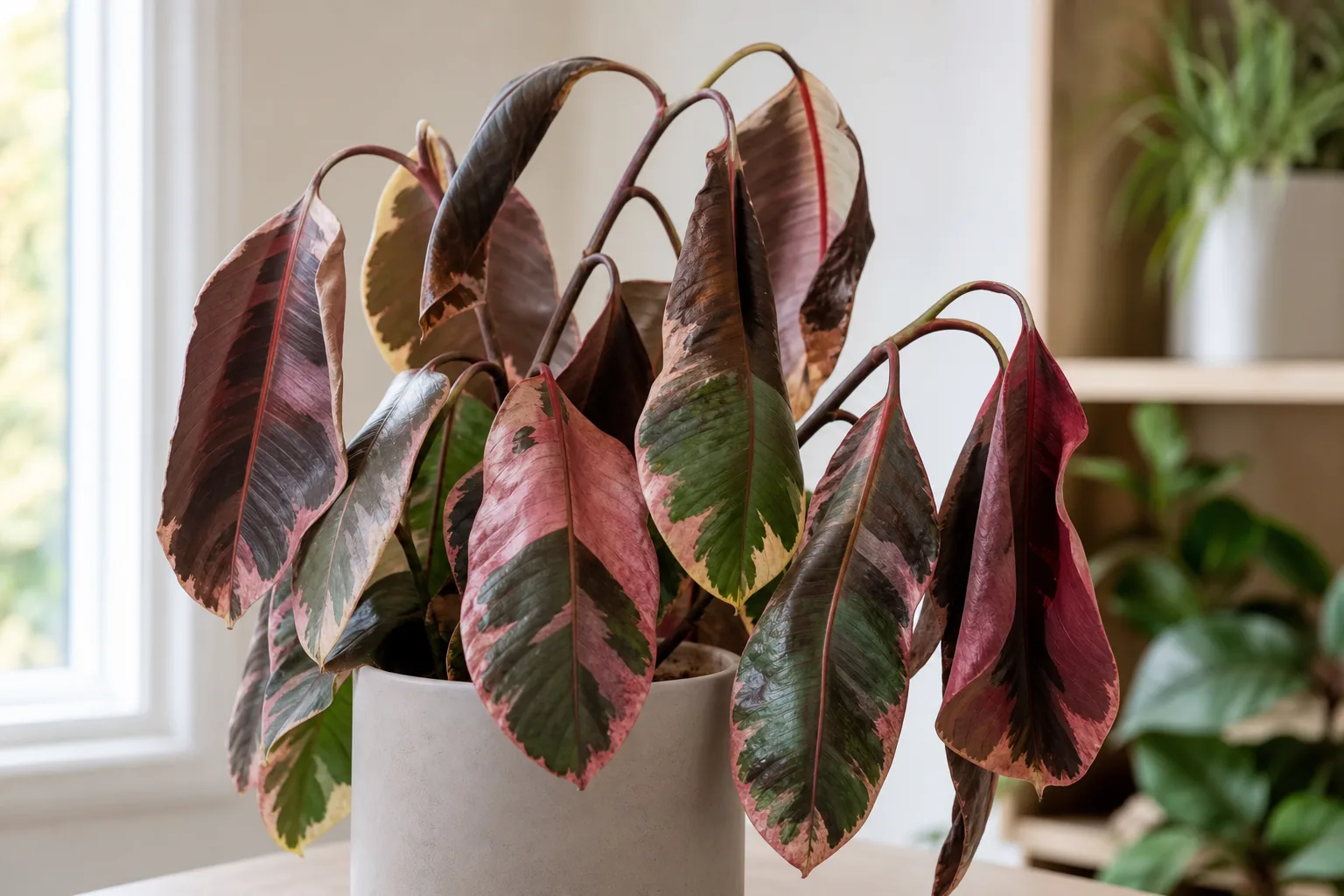
Wilting on Ficus Elastica Ruby: Causes, Checks & Fixes
This guide covers wilting on Ficus Elastica Ruby. See also the general Wilting guide, watering, and light pages for this plant.
Wilting on Ficus Elastica Ruby: Causes, Checks & Fixes
Quick answer
Wilting on Ficus elastica ‘Ruby’ is misleading because opposite problems look nearly identical. Large tricolor leaves-deep green centers framed by pink and cream margins-hang limp whether roots are too dry or too wet and rotting. That is the classic wilt paradox where saturated soil still produces a thirsty-looking plant.
First step: lift the pot and check the top 2 inches of soil before you water. A light, dry pot needs a thorough drink. A heavy, wet pot with limp leaves means damaged roots cannot move water upward-adding more water makes rot worse, not better. Full wet-vs-dry rhythm: Ficus Elastica Ruby watering guide.
What wilting looks like on Ficus Elastica Ruby
Ruby leaves are thick, glossy, and tricolor-8 to 12 inches long on mature plants-so when turgor drops, the whole blade droops visibly. Pale pink and cream sections often collapse before the solid green center, making variegated tissue look wrinkled or folded while green areas still hold some firmness.
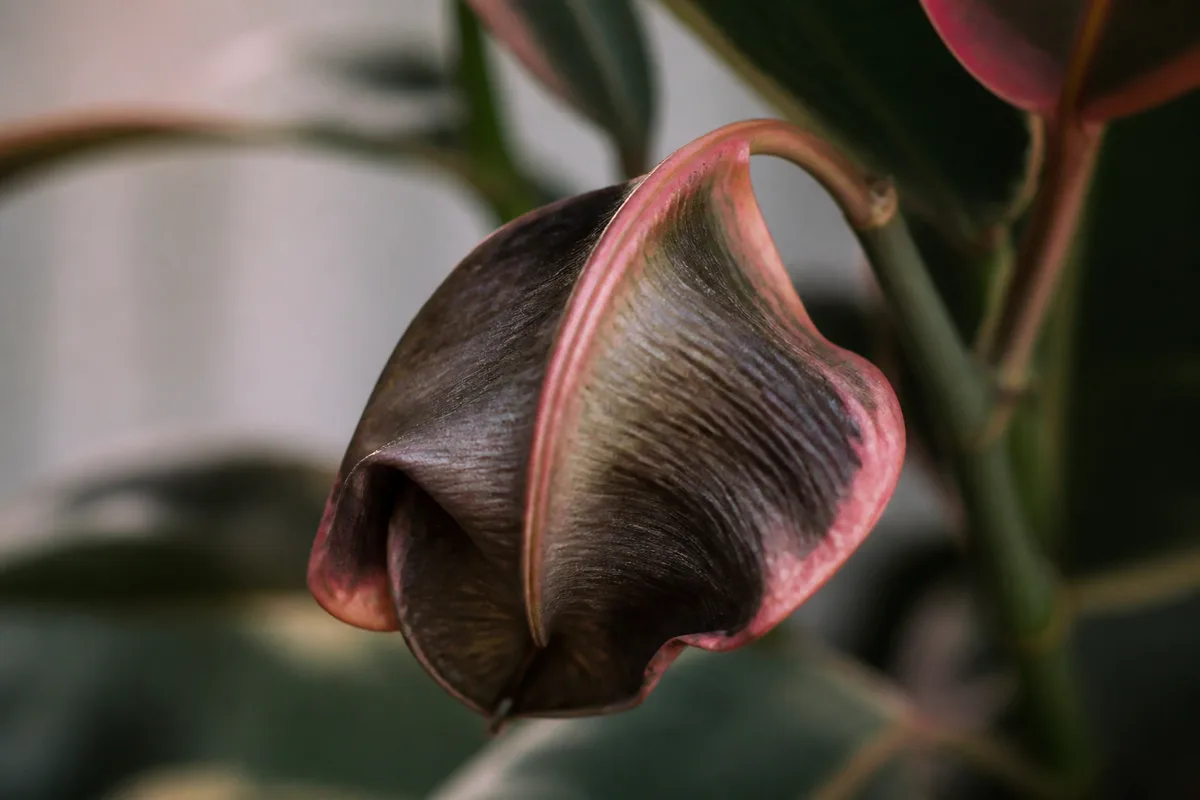
Wilting symptoms on Ficus Elastica Ruby - compare with healthy tissue on the same plant.
Dry-wilt pattern (underwatering on Ficus Elastica Ruby):
- Pot feels light for its size
- Top 2 inches of mix are dry; lower mix may be barely moist
- Pink-cream margins curl or fold inward before full collapse
- Lower leaves yellow and drop if drought persists
- Stems stay firm when you bend them gently
Wet-wilt pattern (overwatering or root rot):
- Pot feels heavy; soil surface may look dark and stay damp for days
- Leaves limp despite wet mix-often with yellowing on pale sections first
- Soft or mushy stem tissue near the soil line
- Sour or musty smell from the pot
- Brown patches on leaf undersides in advanced cases
Temporary stress wilt:
- Follows a recent move, repot, or cold draft exposure
- Often affects the whole canopy at once, then partial recovery within 24–72 hours if conditions stabilize
- Soil moisture may be normal; stems remain firm
Afternoon limpness that recovers by evening can indicate heat stress near a sunny window rather than a root crisis-Ruby’s pale sections scorch easily in direct sun, but heat-driven wilt usually eases overnight. Check whether the pattern repeats daily in the same spot.
Wilting vs. drooping on Ficus Elastica Ruby
These slugs overlap in search, but the symptoms differ in speed and context. Wilting is acute turgor loss-the canopy can look dramatically collapsed within hours when roots fail or the pot goes bone dry. Drooping is a slower sag: petioles hang while tissue still feels partially hydrated, common after relocation or in dim corners.
If the whole plant looks collapsed and the pot is either feather-light or noticeably heavy, treat it as wilt and run the wet-vs-dry fork below. If stems are firm, soil moisture is normal, and only some leaves hang after a recent move, see drooping leaves on Ficus Elastica Ruby for the gradual-stress branch. Species-level wilt patterns shared with Burgundy and Robusta: wilting on Rubber Plant.
Why Ficus Elastica Ruby wilts
Ruby evolved as a tropical tree with large leaves that transpire heavily in warm bright conditions. Indoors, that leaf surface area-especially on variegated tissue with less chlorophyll-makes water loss visible fast when roots cannot keep up, or when roots are dead and cannot supply water despite wet soil.
Underwatering dries the root zone until fine roots lose function and leaves lose internal pressure. Ruby stores some moisture in thick tissue, but extended drought still collapses blades starting from pale margins and the lower canopy. A Ruby in bright filtered light dries pots faster than a dim solid-green Burgundy in the same room.
Overwatering and root rot are the most dangerous cause because they mimic drought. Saturated mix displaces air from the root zone; oxygen-starved roots die and cannot absorb water. The plant wilts while sitting in wet soil-a feedback loop where owners water more and deepen the damage. See overwatering on Ficus Elastica Ruby and root rot when wet-wilt signs stack.
Ruby is especially vulnerable in winter, when growth slows and the same summer watering rhythm leaves unabsorbed moisture around roots for weeks-reduce watering from fall to late winter when the plant uses less moisture.
Environmental shock triggers wilt without a watering error. Ficus elastica does not tolerate repeated moves, cold drafts, or sudden temperature drops well. A Ruby shifted from a nursery bench to a drafty hallway may droop for days while roots are fine.
Heat and light stress near a south or west window can outpace root supply on hot afternoons, especially if soil was already trending dry. The wilt often eases overnight when transpiration drops.
Recent Ficus Elastica Ruby repotting guide disturbs roots temporarily. Wilting for several days after repotting is common if the plant was watered immediately, roots were damaged, or it was moved to a new light level at the same time.
How to confirm the cause
Work through these checks in order before treating:
- Pot weight - Lift the container. Light and dry suggests underwatering; heavy and wet suggests oversaturation or rot.
- Finger test at depth - Insert your finger 2 inches into the mix. Dry at that depth with firm stems fits drought. Wet at depth with limp leaves fits uptake failure.
- Stem firmness - Gently press the main stem above the soil line. Firm tissue with dry soil points away from rot; soft, dented tissue with wet soil confirms serious root trouble.
- Smell - A sour or swampy odor from the drainage hole strongly suggests decay in the root zone.
- Recent changes - Note moves, repotting, heater vents, or open windows in the last week. Stable soil with a recent relocation often means shock, not rot.
- Time of day - Afternoon-only wilt that recovers by morning may be heat stress; all-day wilt that worsens over days needs root-zone investigation.
- New growth check - Firm, glossy emerging tricolor leaves suggest the plant still has functional roots. Wilt spreading to new tips while soil stays wet is an urgent rot signal.
- Variegation pattern - Pale-section collapse with firm green midribs often tracks water stress; uniform collapse with wet soil and soft stems points to root failure.
If the pot is heavy, soil is wet several days after the last watering, and stems feel soft, unpot and inspect roots before watering again.
First fix for Ficus Elastica Ruby
Lift the pot and check whether the top 2 inches of soil are dry or wet-then act on that reading, not on how limp the leaves look.
- If dry: water thoroughly until excess drains from the bottom, empty the saucer, and wait 24 hours before reassessing.
- If wet: stop watering immediately. Do not mist, fertilize, or repot until you know whether roots are firm or mushy.
This single diagnostic step prevents the most common mistake-watering a wilted Ruby that is already drowning.
Step-by-step recovery
For confirmed underwatering
- Water deeply once so the entire root ball rehydrates; dry pockets in an oversized pot can leave one side wilted.
- If water runs straight through without soaking, bottom-water for 30–45 minutes, then drain fully.
- Move the plant out of harsh direct sun until leaves firm up-stressed roots recover faster in Ficus Elastica Ruby light guide.
- Resume normal checks: water only when the top 2 inches of soil are dry.
For overwatering without confirmed rot
- Stop watering and improve airflow around the pot.
- Confirm drainage holes are open and the saucer is empty after every drink.
- If the mix stays wet more than a week in normal room temperatures, the soil may be too dense-plan a repot into well-draining mix once the plant stabilizes, not while stems are still soft.
For root rot
- Unpot and rinse away wet mix gently.
- Trim all brown, mushy, or foul-smelling roots back to firm pale tissue with clean scissors; sterilize blades between cuts.
- Let the root ball air in bright indirect light for several hours so cut surfaces callus.
- Repot into fresh well-drained houseplant mix in a clean pot with drainage holes-use a slightly smaller container if the root mass shrank significantly.
- Wait five to seven days before the first light watering, then let the top 2 inches dry between drinks.
- Hold fertilizer until new growth looks healthy for two weeks.
For draft or move shock
- Place the plant in bright indirect light away from AC vents, open doors, and cold windows.
- Keep soil evenly moist but not wet-do not compensate for wilt with extra water if the mix is already damp.
- Avoid moving it again for several weeks; stability matters more than a perfect decorative spot.
Recovery timeline
Mild underwatering often shows firmer leaves within hours to one day after proper rehydration. Moderate overwatering without rot may take one to three weeks for turgor to return once the mix dries on a corrected schedule.
Root rot recovery is slower-expect two to six weeks before new firm tricolor leaves appear, depending on how much healthy root tissue remains. Old wilted leaves may stay slightly curled or dull even after the plant stabilizes; judge recovery by new top growth and firm stems, not by perfect old foliage.
Temporary shock wilt from a move usually improves within three to seven days if drafts are removed and watering stays consistent.
Lookalike symptoms to rule out
Normal lower leaf drop - Ficus elastica sheds older bottom leaves occasionally-it is normal for some bottom leaves to turn yellow and drop. A single yellowing leaf on an otherwise upright plant is not the same as whole-canopy collapse.
Gradual drooping without collapse - Slow petiole sag after a light change or move fits drooping leaves better than acute wilt. Stems stay firm and soil moisture reads normal.
Leggy growth from low light - Stretched stems and pale mostly-green new leaves can look weak but stems stay firm and soil dries on a normal schedule. The fix is more light, not emergency watering.
Spider mites or scale - Heavy infestations stress plants and cause leaf drop, but you will see stippling, webbing, or raised bumps-not typically whole-plant wilt in hours unless feeding is severe and soil is also wrong.
Fertilizer burn - Crisp brown leaf margins after recent feeding point to salt stress, not drought. Stop feeding first; flushing is secondary.
Mistakes to avoid
Do not water a wilted Ruby without checking soil moisture first-the wet-wilt trap causes more losses than underwatering.
Do not move a wilting plant repeatedly trying to find the perfect spot; each move adds stress on top of the original problem.
Do not repot on day one unless roots are clearly mushy or mix is failing. Unnecessary repotting during shock can worsen wilt.
Do not fertilize a stressed plant hoping to perk it up. Salt on damaged roots slows recovery.
Do not place a recovering plant in direct afternoon sun. Bright indirect light supports root repair without scorching pale variegation.
Do not assume winter wilt means thirst. Reduced growth in cold months means less water use-the same summer schedule keeps roots wet too long.
Ficus Elastica Ruby care cross-check
Wilting often exposes a mismatch between how fast the pot dries and how often you water. Ruby wants bright indirect light-more than solid-green Burgundy to hold variegation-well-draining mix with perlite, and water when the top 2 inches of soil are dry. Many indoor pots need water roughly every 7–10 days in active summer growth and every 14–21 days in slower winter months.
If the pot stays wet longer than expected, improve light or loosen the mix before increasing water frequency. If it dries in two days in a small pot under a bright window, the schedule may be too sparse-or the plant may be root-bound and need repotting once stable. Baseline care: Ficus Elastica Ruby overview.
Temperature comfort runs about 65–85°F; avoid sustained exposure below 55°F and cold drafts that trigger sudden leaf drop alongside wilt.
How to prevent wilting next time
Water on moisture, not calendar days. Check the top 2 inches before every major watering.
Reduce frequency from fall through late winter when growth slows-overwatering can cause loss of leaves and this is when overwatering wilt most often starts.
Keep Ruby in one stable location with bright filtered light rather than rotating it weekly.
Use pots with drainage holes and empty saucers after watering.
Repot every one to two years while young into fresh well-draining mix before roots circle tightly and water runs through without soaking.
Scout leaf undersides during weekly care so pest stress does not compound a watering mistake.
When to worry
Treat as urgent when multiple leaves collapse while soil stays wet, stems soften at the base, the pot smells sour, or wilt spreads to new growth despite corrected watering. Advanced root rot can hollow the base within days once decay reaches the stem.
Lower urgency applies when one older leaf droops on an otherwise firm plant, or when mild afternoon wilt resolves overnight in a sunny window-adjust placement and moisture, but do not panic-repot.
If roots are mostly mushy after inspection and the stem base is soft, take a firm cutting above healthy tissue as backup before the last viable node fails-Ruby stem cuttings can root once callused.
Conclusion
Wilting on Ficus Elastica Ruby always starts with the same question: is the root zone too dry or too wet? Lift the pot, check 2 inches down, and match your first action to that reading. Dry gets one deep drink; wet gets a pause and possible root inspection-not another watering cycle. Ruby’s pale sections may collapse first, but pot weight tells the truth. Get that fork right and most Ruby plants recover; get it wrong and a thirsty-looking plant drowns in soil that never dries.
When to use this page vs other Ficus Elastica Ruby guides
- Ficus Elastica Ruby watering guide - Use for routine moisture checks before assuming wilting is the main issue.
- Ficus Elastica Ruby problems hub - Browse all 16 common issues on this species.
- Underwatering on Ficus Elastica Ruby - Different entry point when symptoms overlap with wilting.
- Overwatering on Ficus Elastica Ruby - Different entry point when symptoms overlap with wilting.
- Root Rot on Ficus Elastica Ruby - Different entry point when symptoms overlap with wilting.
Related Ficus Elastica Ruby guides
- Ficus Elastica Ruby overview
- Ficus Elastica Ruby watering
- Ficus Elastica Ruby light
- Ficus Elastica Ruby soil
- Underwatering on Ficus Elastica Ruby
- Overwatering on Ficus Elastica Ruby
- Root Rot on Ficus Elastica Ruby
- Drooping Leaves on Ficus Elastica Ruby
- Yellow Leaves on Ficus Elastica Ruby
- Ficus Elastica Ruby problems