Yellow Leaves on Ficus Elastica Ruby: Causes, Checks & Fixes
Quick answer
Yellow leaves on Ficus Elastica Ruby usually mean overwatering, underwatering, acclimation stress, or normal lower-leaf aging-not a single disease. First step: lift the pot-heavy wet soil with yellow lower leaves calls for dry-down; a light dry pot with limp yellowing calls for a deep soak.
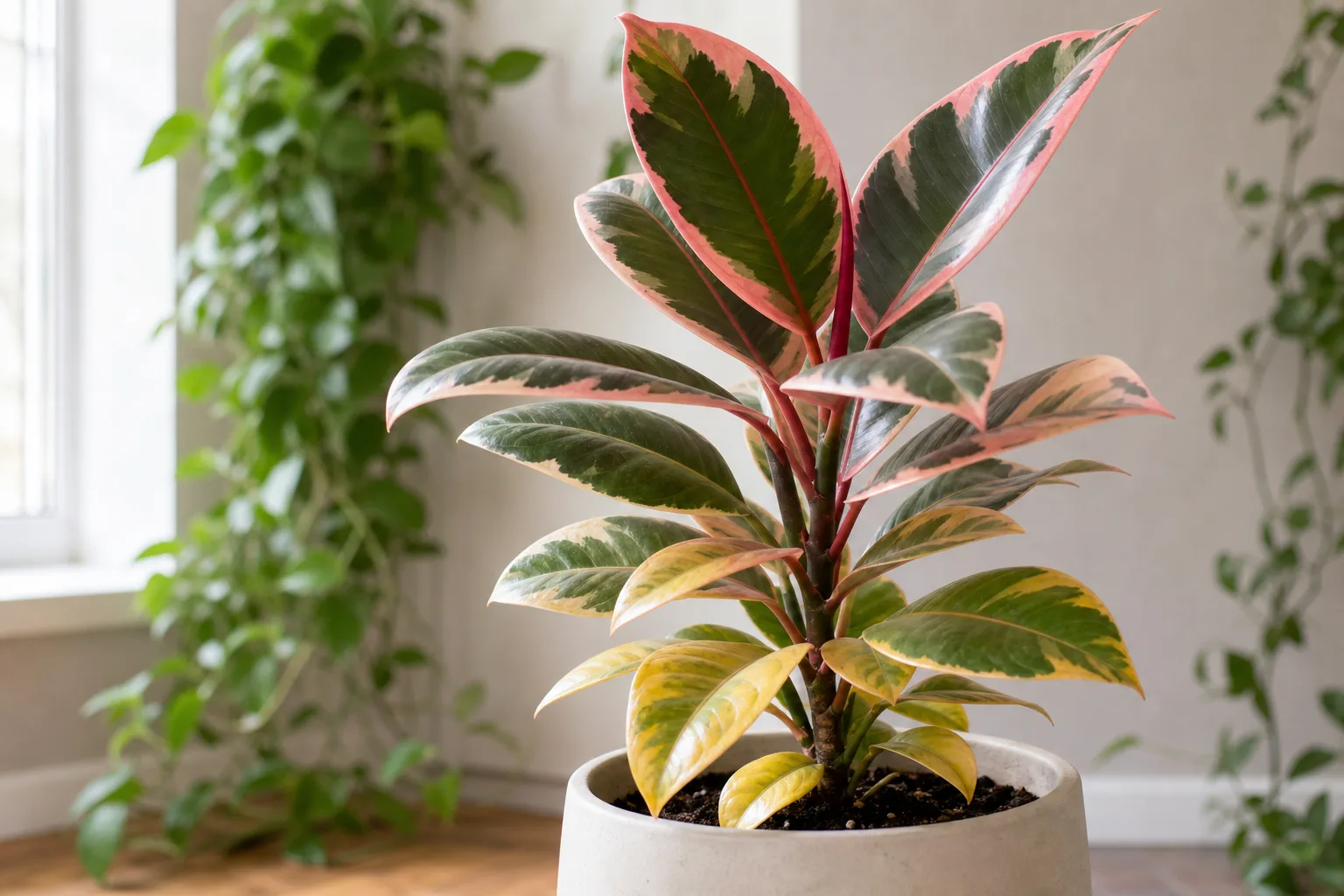
Yellow Leaves on Ficus Elastica Ruby: Causes, Checks & Fixes
This guide covers yellow leaves on Ficus Elastica Ruby. See also the general Yellow Leaves guide, watering, and light pages for this plant.
Yellow Leaves on Ficus Elastica Ruby: Causes, Checks & Fixes
Quick answer
Ficus Elastica Ruby (Ficus elastica ‘Ruby’) carries thick, glossy leaves with pink and burgundy variegation. Yellow leaves on this rubber plant cultivar almost always trace to water rhythm (too wet or too dry), light stress (variegation fades before green tissue yellows), recent move or repot shock, or normal lower-leaf senescence as the tree grows upward-not a mystery leaf disease.
Variegated tissue has less chlorophyll, so Ruby often shows stress on pink zones before solid green areas-a clue many generic yellow-leaf guides miss.
First step: lift the pot and probe the top inch of mix. A heavy, cool, wet pot with yellow lower leaves means stop watering until the mix dries. A light, dry pot with limp yellow foliage means one thorough soak until runoff. If moisture is normal but pink variegation dulls and new leaves stay small, improve bright indirect light before fertilizing.
What yellow leaves look like on Ficus Elastica Ruby
Ruby yellows through placement, pot weight, and variegation pattern together.
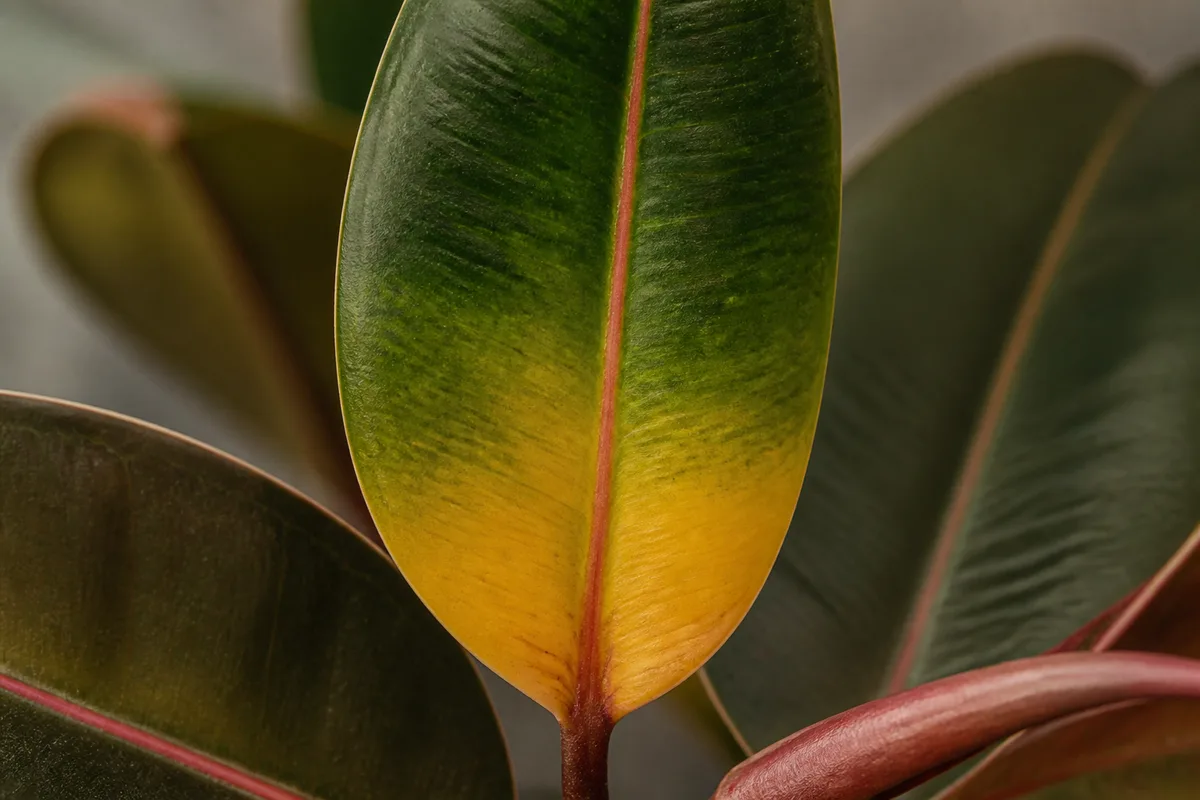
Yellow Leaves symptoms on Ficus Elastica Ruby - compare with healthy tissue on the same plant.
Overwatering pattern (most common indoors):
- Yellow lower leaves while mix stays damp one inch down
- Limp leaves on wet soil that do not firm after watering-wilting with moist soil often means roots cannot absorb water
- Heavy pot days after you watered
- Brown spots with yellow halos on lower foliage in advanced cases
- Often pairs with fungus gnats-see overwatering and root rot
Underwatering pattern:
- Limp yellow-green leaves on a very light pot
- Crisp brown edges progressing to full yellow on outer leaves
- Dull variegation-pink fades to tan before leaves drop
- Recovery within hours after deep soak if stems are firm-see underwatering
Light stress pattern:
- Pale yellow-green new leaves at branch tips with weak pink color
- Leaf drop from lower branches while upper growth looks thin
- Soil may stay wet longer in dim corners because the plant uses less water
Acclimation / shock:
- Sudden yellowing one to two weeks after repot, move, or delivery
- Often affects lower leaves first; stems stay firm if roots were not damaged
Normal aging:
- One or two oldest lower leaves yellow and drop on mature upright stems
- Firm green stems, normal pot weight, vivid new leaves at tips
Why Ficus Elastica Ruby gets yellow leaves
Overwatering in cool, dim months. Rubber plants prefer evenly moist but not soggy soil. When light drops in winter, the same watering frequency keeps mix wet for weeks. Overwatering decreases oxygen available for root growth and yellows lower leaves first.
Underwatering in bright summer windows. Ruby in direct sun transpires heavily. A dry root ball yellows outer leaves while you assume thick foliage means drought tolerance.
Variegation and light demand. Pink sections produce less energy. Ruby in north windows or deep interior rooms fades variegation and yellows new growth long before a solid green rubber plant would struggle.
Natural upward growth. Mature Ficus elastica sheds lower leaves as the canopy rises. One yellow bottom leaf on an otherwise healthy tree is often normal-not a crisis.
Salt buildup from over-fertilizing. Heavy feeding without flushing can yellow leaf margins on rubber plants already stressed by water imbalance.
How to confirm the cause
- Pot weight and moisture at one inch - Heavy and damp suggests overwatering. Light and dusty suggests underwatering.
- Which leaves yellow - Lower old leaves only often mean aging. Widespread yellow on wet mix suggests roots.
- Variegation check - Pink fade on multiple leaves without wet soil may mean light or drought.
- Stem firmness at soil line - Soft black tissue on wet mix escalates toward rot.
- Recent changes - Repot, move, or heat vent placement within two weeks explains shock yellowing.
- New growth quality - Vivid pink on new unfurling leaves means the core issue may be isolated bottom-leaf aging.
| Pattern | Pot weight | Soil at 1 inch | New leaf color | Likely cause |
|---|---|---|---|---|
| Lower yellow, limp | Heavy | Wet, cool | May be pale | Overwatering |
| Limp yellow overall | Light | Dry | Dull pink | Underwatering |
| Tip pale yellow | Medium | Stays damp weeks | Weak variegation | Low light |
| 1–2 bottom leaves | Normal | Normal schedule | Vivid pink tips | Normal aging |
First fix for Ficus Elastica Ruby
Match your first action to the pot check.
- Wet heavy pot: Stop watering until the top inch dries. Empty saucers. Do not fertilize until yellowing stops spreading.
- Light dry pot: Deep soak until runoff, drain fully, then wait for the top inch to dry per the watering guide.
- Normal moisture but pale new growth: Move to brighter indirect light with some morning sun over one week.
Make one targeted correction first. Stacking repot, prune, and feed on the same day hides what helped.
Step-by-step recovery
Overwatering recovery
- Skip watering until the top inch is dry-often one to two weeks.
- Remove fully yellow leaves; they will not recover.
- If stems soften or mix smells sour, unpot and inspect roots.
- Resume watering only when the top inch dries.
Underwatering recovery
- Deep soak the root ball; repeat once if mix was hydrophobic.
- Trim fully crisp yellow leaves.
- Reduce direct afternoon sun until turgor returns.
Light recovery
- Relocate to east or filtered south/west exposure.
- Reduce watering to match slower growth in the brighter spot.
- Accept that old pale leaves may drop; new leaves carry better variegation.
Recovery timeline
- Underwatering: Perk-up within 24–48 hours; new leaves in two to three weeks.
- Overwatering (mild): Yellowing stops spreading in one to two weeks once dry-down holds.
- Light stress: Better variegation on new leaves in three to six weeks.
- Normal aging: Single leaf drops; no further spread.
Judge success by firm stems and vivid new pink leaves at tips.
Lookalike symptoms
- Brown tips - Salt or dry air, not whole-leaf yellow.
- Cold draft drop - Sudden leaf fall near AC; soil moisture may be normal.
- Pest damage - Mealybugs and scale cause localized yellow patches, not uniform lower-leaf pattern.
Mistakes to avoid
- Do not fertilize yellow Ruby before fixing water and light.
- Do not increase watering on a wet pot because leaves look limp.
- Do not assume variegation fade always means nutrient deficiency.
- Do not repot on day one unless roots are clearly rotting.
How to prevent yellow leaves next time
Water when the top inch of mix dries-not on a calendar. Give bright indirect light so variegation stays strong and the plant uses water predictably. Empty saucers within 30 minutes. Flush salts occasionally if you feed heavily during active growth. For full context, see the Ficus Elastica Ruby overview.
When to use this page vs other Ficus Elastica Ruby guides
- Ficus Elastica Ruby watering guide - Use for routine moisture checks before assuming yellow leaves is the main issue.
- Ficus Elastica Ruby problems hub - Browse all 16 common issues on this species.
- Overwatering on Ficus Elastica Ruby - Different entry point when symptoms overlap with yellow leaves.
- Underwatering on Ficus Elastica Ruby - Different entry point when symptoms overlap with yellow leaves.
- Not Enough Light on Ficus Elastica Ruby - Different entry point when symptoms overlap with yellow leaves.