Root Rot on Ficus Elastica Ruby: Causes, Checks & Fixes
Quick answer
Root rot on Ficus Elastica Ruby starts when soil stays wet too long-stop watering immediately if leaves wilt while the top 2 inches of mix are still damp. Unpot, trim mushy roots, air-dry cuts, and repot into well-drained mix before fertilizing.
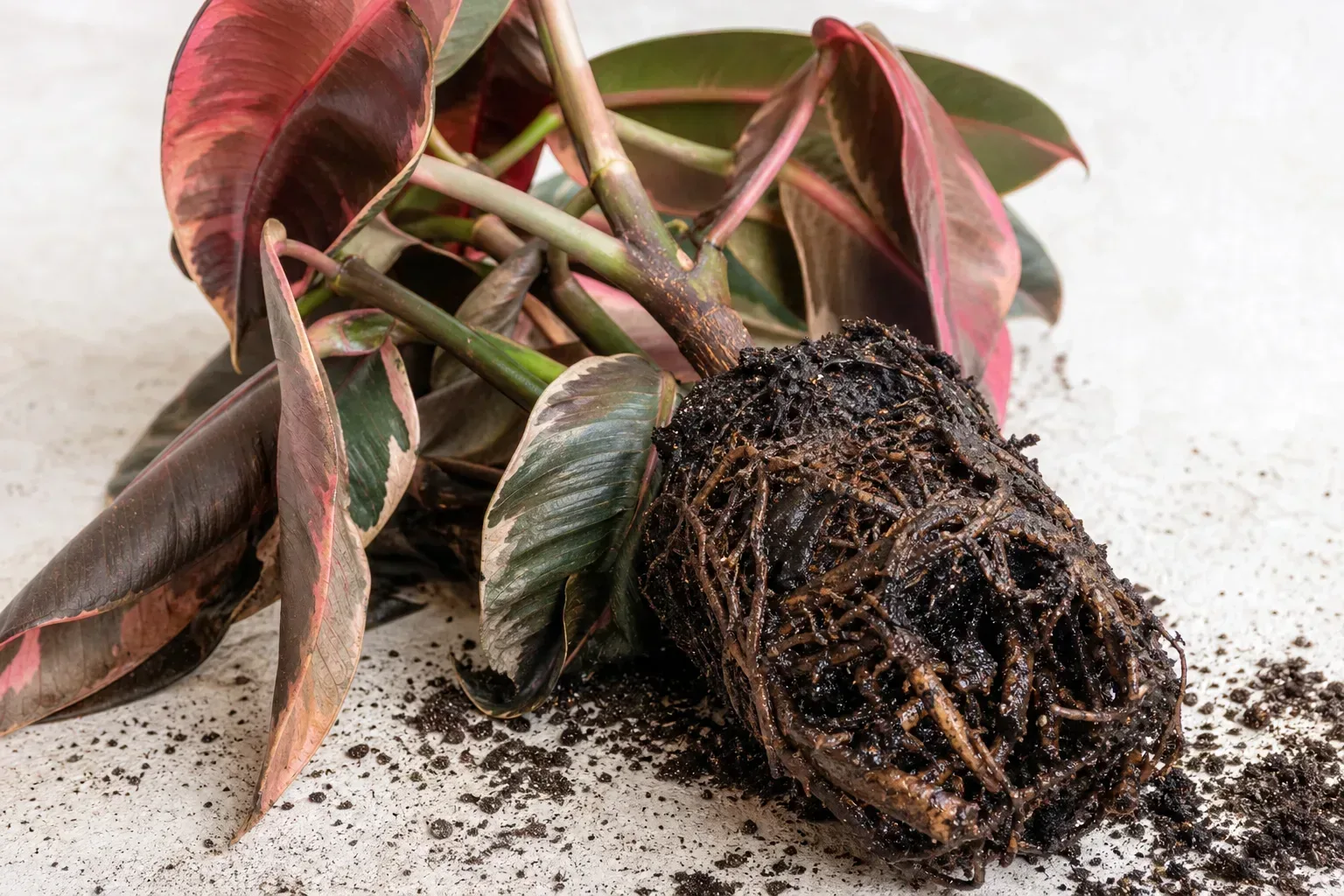
Root Rot on Ficus Elastica Ruby: Causes, Checks & Fixes
This guide covers root rot on Ficus Elastica Ruby. See also the general Root Rot guide, watering, and light pages for this plant.
Root Rot on Ficus Elastica Ruby: Causes, Checks & Fixes
Quick answer
Root rot on Ficus elastica ‘Ruby’ is almost always a drainage and watering failure-not a mysterious fungus you treat with sprays. This upright tropical rubber tree stores moisture in thick, glossy tricolor leaves, so the canopy can look fine while roots suffocate in stale wet mix for weeks. The tell that separates rot from thirst: leaves wilt while the top 2 inches of soil are still damp-wilting with moist soil often means roots cannot absorb water-and the pot feels heavy days after your last drink.
First step: stop watering immediately. Do not repot, fertilize, or mist until you confirm whether roots are firm or mushy. Lift the pot, press the main stem above the soil line-firm tissue with wet mix means pause and inspect; soft dented tissue at the base means urgent rescue. Full prevention rhythm lives on the Ficus Elastica Ruby watering guide.
Root rot vs. other Ruby problems - why wilt on wet soil matters
Ruby owners lose plants because rot mimics underwatering. Large 8 to 12 inch waxy leaves hang limp in both scenarios, and pale pink-cream sections collapse first because variegated tissue loses turgor faster than solid green midribs. The fork is soil moisture and pot weight-not leaf appearance alone.
| Sign | Root rot (wet failure) | Underwatering (dry failure) |
|---|---|---|
| Pot weight | Heavy for days | Light, often pulls away from walls |
| Top 2 inches | Damp or wet | Dry and crumbly |
| Stem at soil line | Soft or mushy in advanced cases | Firm |
| Smell | Sour or stagnant from drainage hole | Neutral or dusty |
| Leaf pattern | Yellowing on pale sections, widespread limp canopy | Crispy margins, thin droopy blades |
| Recovery after water | Stays limp; may worsen | Perks within hours |
Move shock can yellow and drop lower leaves after relocation, but stems stay firm and soil moisture reads normal-see drooping leaves on Ficus Elastica Ruby when the sag is gradual, not a wet-soil collapse. Low light dulls variegation and slows growth but rarely produces sour-smelling mix unless you keep summer watering frequency into a dim winter room.
What root rot looks like on Ficus Elastica Ruby
Early signs
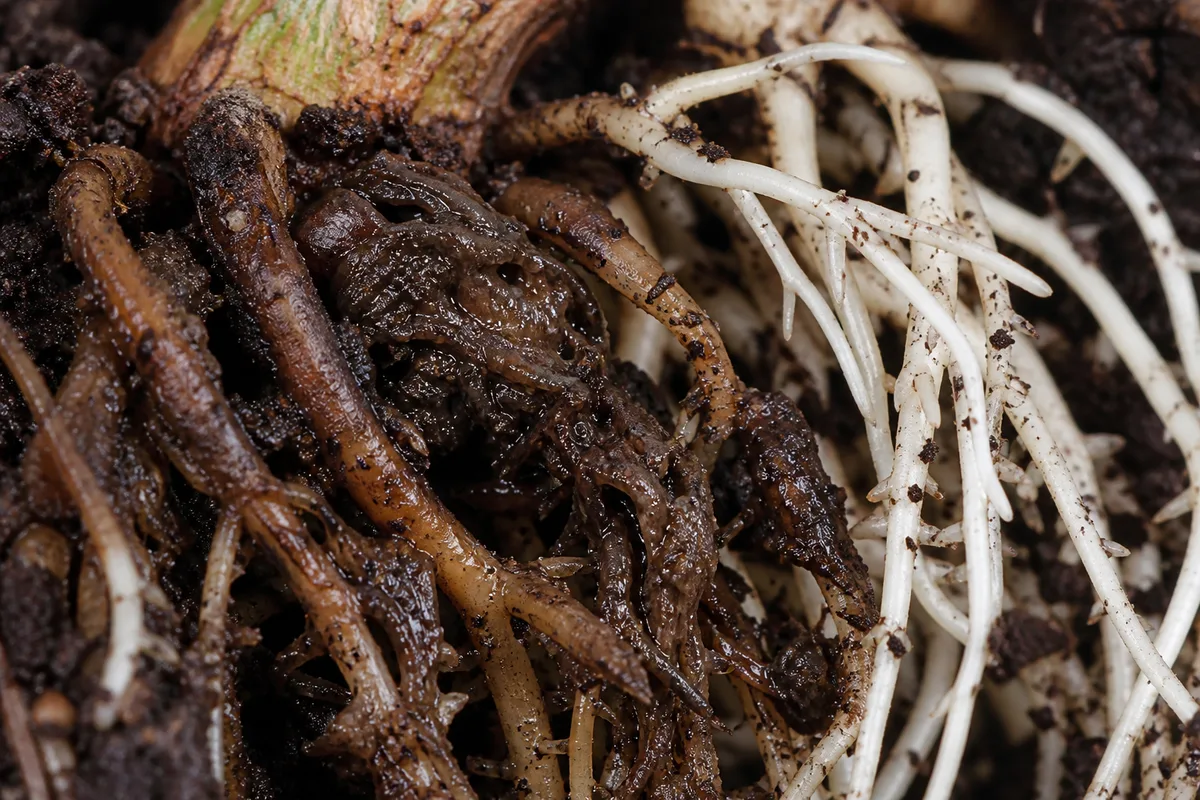
Root Rot symptoms on Ficus Elastica Ruby - compare with healthy tissue on the same plant.
Chronic wetness shows up before every root dies. Watch for these patterns together:
- Soil that stays dark and cool at the surface long after neighboring pots have dried
- Yellow lower leaves dropping while mix remains moist-Clemson HGIC ties leaf yellowing to soil that stays too wet on rubber plants
- Limp tricolor leaves despite wet mix-pale sections wrinkle before green centers
- Slowed or stalled new growth at branch tips even in warm bright conditions
- Fungus gnats hovering over the pot-chronically wet soil breeds them; see fungus gnats on Ficus Elastica Ruby
- Pot never feels lighter between your usual watering days
Ruby’s semi-succulent leaves mask early root stress. An upright floor tree can look structurally fine while fine roots decay below-then several large leaves collapse within days once uptake fails.
Advanced signs
- Soft or mushy stem tissue at the soil line-the trunk base dents when pressed
- Sour or swampy odor when you lift the inner pot from a cachepot
- Brown or black roots that pull away from their core when tugged gently
- Canopy collapse spreading to new tricolor leaves at branch tips while mix stays wet
- Stem dieback moving upward from the base
At this stage, salvage depends on how much firm stem and root tissue remains-not on saving every old leaf.
Why Ficus Elastica Ruby gets root rot
Ficus elastica ‘Ruby’ is a broadleaf evergreen tree grown indoors as a 2 to 10 foot upright specimen with stiff coriaceous leaves-not a moisture-loving rosette. Roots need both water and oxygen. When mix stays saturated, air leaves the root zone, tissue dies, and pathogens common in houseplant root rot thrive in prolonged wet conditions.
Overwatering on a calendar is the most common trigger. Watering every Sunday without checking whether the top 2 inches dried keeps Ruby wet in winter when growth slows and evaporation drops-reduce watering from fall to late winter when the plant uses less moisture.
Poor drainage stacks the damage: dense peat-only mix without perlite, blocked drainage holes, gravel layers that create perched water, or cachepots that hold runoff indefinitely. A decorative outer shell with no exit re-soaks roots within hours even if you water correctly in the inner nursery pot.
Oversized pots after repotting surround roots with wet unused mix that never dries at the center-one of the fastest rot paths on variegated rubber plants. Choose only one pot size up; details on Ficus Elastica Ruby repotting.
Low light plus cool rooms slows transpiration while you maintain summer frequency-the mix stays wet longer while growth stalls. Ruby needs bright filtered light to hold pink variegation; dim corners extend dry-down unpredictably.
Clemson HGIC states plainly that root rot usually results from mix that does not drain quickly or overly frequent watering on rubber plants indoors.
How to confirm the cause
Work through this checklist before repotting or trimming:
- Top 2 inches dry test - Insert a finger or skewer 2 inches deep near the pot edge. Wet at depth with limp leaves strongly suggests rot, not thirst.
- Pot weight - Heavy pot days after watering confirms slow dry-down; compare to how the container felt after your last thorough drink.
- Stem firmness - Press the main trunk above the soil line. Soft dented tissue with wet mix is an urgent rot signal.
- Drainage check - Confirm holes are open, saucers empty, and cachepots are not holding stale water.
- Smell - Sour odor from the drainage hole or lifted inner pot confirms anaerobic decay.
- Recent care context - Note repotting, moves, winter slowdown, or switch to a larger decorative pot in the last month.
- Root inspection - If three or more wet-soil signs stack, unpot gently. Healthy Ficus roots are firm and pale; rotted roots are brown, black, translucent, or slimy.
If the pot is light, top 2 inches are dry, and stems are firm, suspect underwatering on Ficus Elastica Ruby or wilting from drought-not rot.
First fix for Ficus Elastica Ruby
Stop watering immediately and do not add more water because leaves look wilted. That single pause prevents the most common fatal mistake on Ruby.
Numbered rescue workflow
- Stop all watering. Empty saucers and lift the inner pot out of any cachepot so standing water cannot re-soak the bottom.
- Stabilize light and temperature. Place the plant in bright indirect light away from cold drafts-NC State notes Ficus elastica does not tolerate cold drafts or repeated moves well during stress.
- Unpot gently when stems soften, smell turns sour, or yellowing spreads on wet mix. Brush away wet soil and rinse roots with room-temperature water.
- Trim all mushy tissue. Cut brown, black, or slimy roots back to firm pale sections with clean sharp scissors. Sterilize blades with rubbing alcohol between cuts. Wear gloves-milky latex sap irritates skin and Ficus elastica is toxic to cats and dogs if ingested; keep trimmed debris away from pets.
- Air-dry cut surfaces for several hours in bright indirect light so wounds callus before repotting.
- Repot into fresh well-drained mix with perlite-see Ficus Elastica Ruby soil guide. Use a clean pot with drainage holes sized to the remaining root mass, not the original oversized container.
- Wait five to seven days before the first light watering to settle roots, then resume the top-2-inches-dry rule from the watering guide.
- Hold fertilizer until firm new tricolor leaves appear at branch tips and the watering rhythm holds steady for two weeks.
When to try stem-cutting salvage
If roots are mostly gone but the stem above mushy tissue is still firm with healthy leaves, take cuttings before the base fails completely. Rubber plants propagate from stem or tip cuttings; cut above soft nodes, let latex callus, and root per Ficus Elastica Ruby propagation. When the trunk base is soft through multiple nodes, focus on salvaging the highest firm section-recovery from a hollow stem rarely succeeds.
Recovery timeline
Mild rot caught early-some mushy tips trimmed, majority of root mass firm-may stabilize within two to three weeks once wet cycles stop and fresh mix drains properly. Expect some lower leaf drop from repot shock; that is normal.
Moderate rot with significant root loss typically needs four to eight weeks before you see firm new tricolor leaves emerging at branch tips. Old yellowed or limp leaves rarely re-green; judge success by new apical growth and firm stems, not by perfect lower foliage.
Severe base mush through multiple nodes is often fatal for the original plant-stem cuttings become the realistic salvage path. Do not interpret a single surviving leaf as full recovery if the trunk base still dents under pressure.
What not to do
Do not keep watering because leaves look wilted when soil is already wet-the classic wet-wilt trap deepens rot.
Do not fertilize a waterlogged or freshly trimmed plant. Salt on damaged roots slows recovery.
Do not repot into an even larger pot hoping extra soil will “absorb moisture”-unused wet mix around shrinking roots accelerates decay.
Do not use dense garden soil or a pot without drainage holes.
Do not mist foliage instead of fixing root-zone drainage-leaves stay wet while roots stay suffocated.
Do not assume every yellow lower leaf means rot; some bottom leaf yellowing and drop is normal on Ficus elastica when soil moisture is appropriate and stems are firm.
How to prevent root rot next time
Prevention is the same project as correct watering on Ruby:
- Water when the top 2 inches of soil feel dry-not on a fixed calendar. Many indoor pots need water roughly every 7–10 days in active summer growth and every 14–21 days in cooler winter months, always confirmed by soil checks.
- Use perlite-amended well-drained houseplant mix in a pot with open drainage holes.
- Empty saucers within thirty minutes and never return an inner pot to a cachepot while runoff is dripping.
- Repot one size up when needed-not three sizes ahead of the root ball.
- Reduce frequency from fall through late winter when growth slows in dim rooms.
- Match light to water use-Ruby in bright filtered light dries faster than a dim corner; adjust checks, not just volume.
Pair this page with overwatering on Ficus Elastica Ruby for early wet-soil signs before rot sets in, and yellow leaves when discoloration appears without full collapse.
Conclusion
Root rot on Ficus Elastica Ruby comes down to wet roots losing oxygen-not bad luck. When tricolor leaves wilt on damp mix, stop watering and inspect before you pour again. Trim mush, air-dry cuts, repot into draining mix sized to the remaining roots, and measure recovery by firm new leaves at branch tips. Get the wet-vs-dry fork right early and most Ruby plants recover; miss it and the toughest-looking leaves collapse while the pot still feels heavy.
When to use this page vs other Ficus Elastica Ruby guides
- Ficus Elastica Ruby watering guide - Use for routine moisture checks before assuming root rot is the main issue.
- Ficus Elastica Ruby problems hub - Browse all 16 common issues on this species.
- Overwatering on Ficus Elastica Ruby - Different entry point when symptoms overlap with root rot.
- Yellow Leaves on Ficus Elastica Ruby - Different entry point when symptoms overlap with root rot.
- Wilting on Ficus Elastica Ruby - Different entry point when symptoms overlap with root rot.