Not Enough Light on Ficus Elastica Ruby: Causes, Checks &
Quick answer
Insufficient light is the main reason Ruby rubber plants fade to green and stretch. First step: move the pot closer to your brightest filtered window, or add a full-spectrum grow light for 12–14 hours daily.
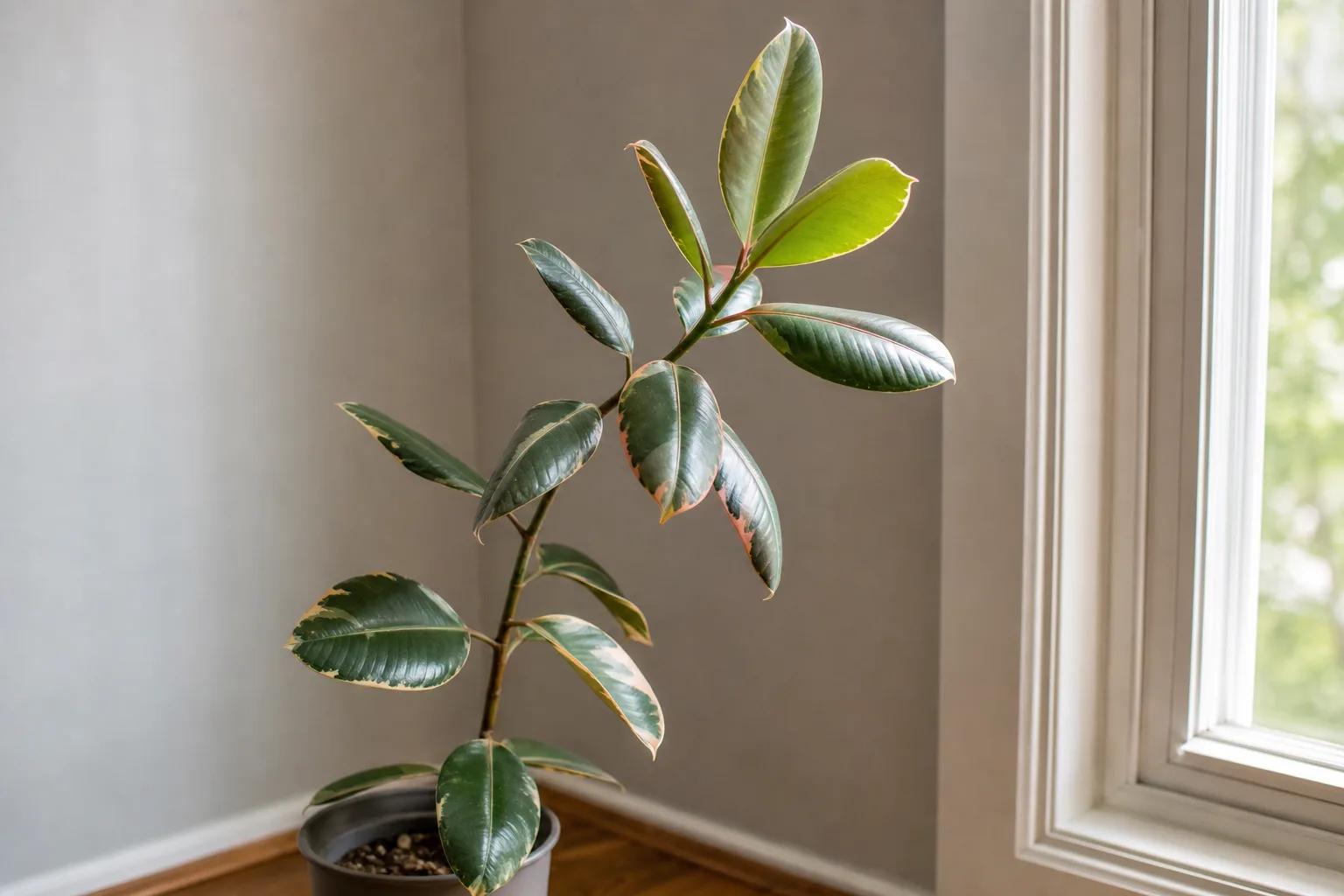
Not Enough Light on Ficus Elastica Ruby: Causes, Checks & Fixes
This guide covers not enough light on Ficus Elastica Ruby. See also the general Not Enough Light guide, watering, and light pages for this plant.
Not Enough Light on Ficus Elastica Ruby: Causes, Checks & Fixes
Quick answer
Ficus Elastica Ruby (Ficus elastica ‘Ruby’) is sold for pink, cream, and green foliage-but that color is light-dependent. When photons are scarce, the plant survives by pushing chlorophyll-heavy green leaves with longer stems between them. The cultivar does not “die in a dim corner” quickly; it quietly stops looking like Ruby.
First step: increase filtered brightness in one move. Shift the pot to your brightest safe indoor spot-typically within 0.5–1 m of an east window, or a few feet back from a south or west window with a sheer curtain-or hang a full-spectrum LED 30–60 cm above the canopy on a 12–14 hour timer. Do not repot, fertilize, or drench the soil on the same day. Wait for one new leaf to judge whether light was the limiter.
What not enough light looks like on Ficus Elastica Ruby
Low light on Ruby shows up in new growth first. Older leaves may still carry pink from a brighter past; the plant you are diagnosing is the leaf currently unfurling, not the one from last season.
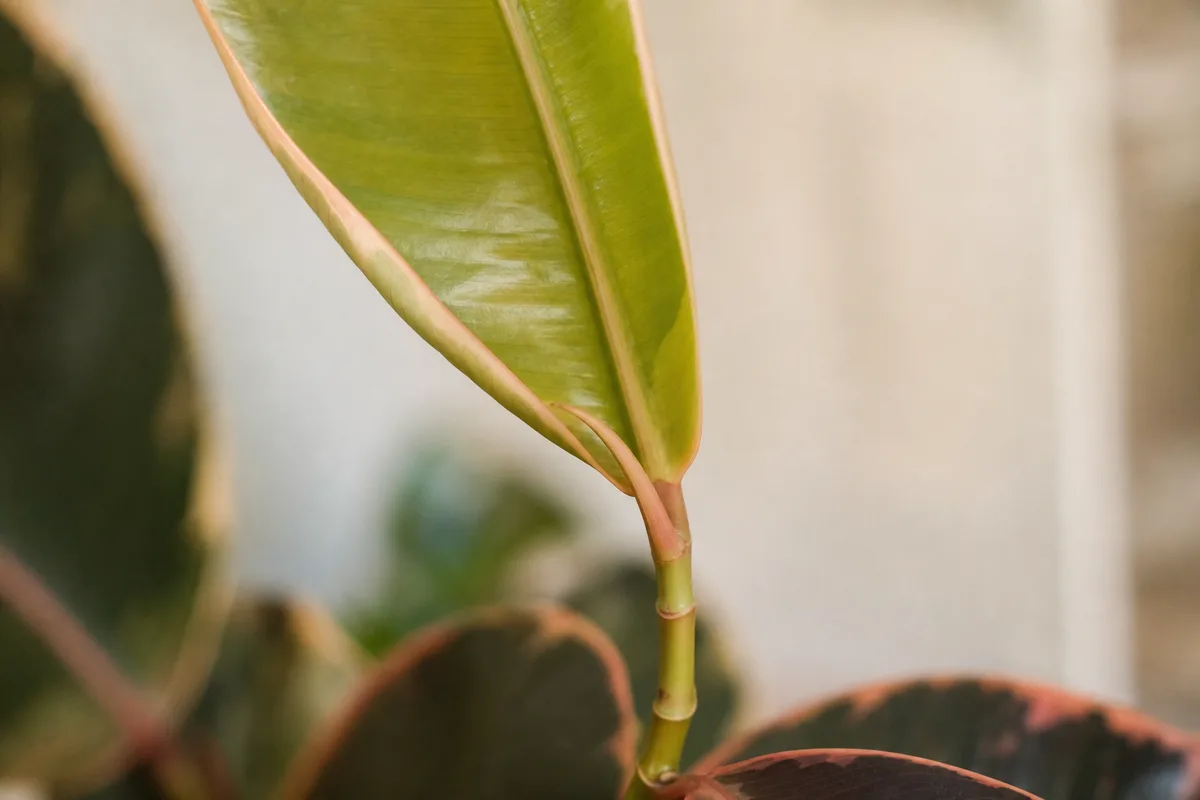
Green-dominant new leaf with weak faded pink margins on a leggy Ficus Elastica Ruby stem - read the currently unfurling blade, not older leaves that still carry color from brighter placement.
Typical patterns:
- Green reversion on new leaves - successive blades open mostly deep green, with smaller cream windows and weak or absent pink. The ruby-red leaf sheath may fade before the leaf hardens.
- Leggy, stretched stems - internodes lengthen so the plant looks tall and sparse instead of bushy. Indoor plants stretch toward light when intensity is too low. Stems may feel soft or bend toward the brightest direction.
- Canopy lean - the whole pot tilts toward one window; one side keeps color while the shaded side dulls.
- Smaller leaf size - new blades are noticeably narrower or shorter than leaves from when you bought the plant.
- Slow or stalled growth - little or no new foliage through the warm months while peers in bright rooms push leaves monthly.
- Dull, flat color - gloss remains, but pink and cream look washed out compared with nursery photos.
- Lower leaf yellowing with wet soil - dim Ruby uses water slowly; the same Ficus Elastica Ruby watering guide that worked in a bright kitchen keeps the mix soggy in a hallway, and lower leaves yellow and drop.
Ruby is not a low-light plant that merely grows slower in shade. Variegated rubber cultivars need more total light than solid-green Burgundy because cream and pink zones carry less chlorophyll and depend on green tissue to feed the leaf.
Why Ficus Elastica Ruby runs out of light indoors
Ficus elastica evolved as a canopy tree in warm, humid forests, receiving bright, filtered light-not deep shade and not all-day blazing sun. Ruby adds a retail constraint: large pale sections photosynthesize less efficiently than solid green leaves, so the plant needs higher brightness to maintain pink pigment and healthy growth at the same time.
Common setups that fail Ruby:
- North-facing windows without supplemental lighting-often too dim to hold variegation long term.
- “Bright room” placement far from glass-your eyes adapt to ambient scatter; the canopy receives a fraction of sill intensity.
- Heavy curtains, tinted glass, porch roofs, or neighboring buildings cutting hours of usable light.
- Winter day-length drop in the same summer spot-same window, fewer photons; green reversion accelerates from late autumn onward.
- Competition for the best window-Ruby loses the seat to a more forgiving plant and sits in secondary shade.
Because dim Ruby transpires and drinks less, growers often misread the cascade as overwatering on Ficus Elastica Ruby alone. Wet soil plus yellow lower leaves in a dark corner usually means light is throttling the whole system, not that the plant suddenly hates your mix.
How to confirm the cause
Work through these checks before buying grow gear or pruning heavily:
- Read the last three new leaves in order. Progressive greening on each newest blade strongly implicates light. Random spots on old leaves alone suggest pests, physical damage, or watering stress instead.
- Measure distance to glass. Light intensity drops quickly as distance from the window increases. If the pot sits more than 1–1.5 m from the window or in a corner that never sees sky, assume light is low until proven otherwise.
- Note direction and season. North exposures and short winter days rarely sustain Ruby pink without LED help. South glass that was perfect in February may still be acceptable; the issue is more often too little light than too much in off-season complaints.
- Shadow test at midday. Hold your hand between the leaves and the window. A faint, soft shadow means moderate light; no shadow means too dim for Ruby; a sharp dark shadow means direct beam-useful data, but not the same problem as chronic shade.
- Check soil dry-down. Stick a finger 2–3 cm into the mix. If it stays damp for two weeks while growth is slow, the plant is not using water at the rate your brighter-window routine assumed-pair any watering cutback with a light increase, not a darker shelf.
- Rule out lookalikes (below). Confirm there are no sticky residue, webbing, or crisp brown sun-scorch patches on cream zones-those point to pests or too much direct sun, not shade.
If you are unsure, run a two-week placement trial: move Ruby one step brighter (closer to the same window or add a lamp), change nothing else, and watch the next leaf that opens.
First fix for Ficus Elastica Ruby
Move the plant to brighter filtered light-or add a grow light-before any other intervention.
Practical targets:
- East window: often the best default; one to two hours of cool morning sun is usually fine when the plant was not coming from a dark back room.
- South or west window: keep Ruby behind a sheer curtain or 30–60 cm back from hot glass so cream tissue does not scorch while you fix the dim problem.
- No usable window: use a full-spectrum LED 30–60 cm above the canopy, 12–14 hours daily on a timer.
Move in one step, not a leap from a dark hallway to unfiltered south glass. Ruby’s pale patches burn easily after long shade. Increase exposure gradually over one to two weeks if you are crossing more than one light tier.
After the move, pause fertilizer until a healthy new leaf opens. Do not increase watering to “help” a stressed plant-match water to how fast the pot actually dries in the new spot.
Step-by-step recovery after you add light
Once brightness improves:
- Wait for the next leaf - color and spacing on that blade are your scorecard.
- Rotate the pot a quarter turn weekly so all sides see similar exposure and the lean corrects slowly.
- Adjust watering - brighter light speeds dry-down; recheck the top 2–3 cm before each drink instead of keeping a calendar from the dim corner.
- Prune only if a stem has produced several solid-green leaves in a row - cut back to a node below a leaf that still shows clear pink or cream to redirect growth. Old green leaves do not need removal for recovery.
- Clean dusty leaves - grime filters light; wipe with a damp cloth when dry.
If two healthy variegated leaves open in a row, the placement is working. If new growth stays green, step brightness up again or extend LED hours by one hour, then reassess.
Lookalike symptoms and causes to rule out
Overwatering in low light - soil wet for days, sour smell, widespread yellowing, soft lower leaves. Fix: brighter light and less water; inspect roots only if the base stays soft after dry-down improves.
underwatering on Ficus Elastica Ruby - pot light, mix pulled away from the sides, leaves dull and slightly folded but not producing extra-green new growth. Fix: water thoroughly; if new leaves still emerge greener and farther apart, light was still too low.
Sun scorch (too much direct sun) - papery tan or crisp brown patches on cream and pink zones, often on the glass-facing side after a sudden move. Fix: diffuse or pull back; do not confuse scorch with “more light will fix everything.”
Spider mites or mealybugs - stippling, webbing, or cottony clusters in leaf axils; sticky leaves. Fix: pest treatment; mites also favor stressed, dusty plants in hot dry air near windows-inspect undersides before blaming light alone.
Normal leaf drop after a move - Ficus species often shed leaves when light conditions change. Temporary drop with firm stems and improving new color is adjustment; repeated drop with wet soil in shade is a culture problem.
Recovery timeline and what improves
Expect two to three weeks to see the first new leaf after a light increase during active growth. That leaf should show clearer pink and cream and shorter internodes than the previous one if light was the main limiter.
What can recover
- Color and pattern on new leaves
- Compact spacing between future leaves
- Growth rate and water use
- Overall gloss and vigor
What cannot recover
- Pink on leaves that already opened green
- Length of old stretched stems-only new growth is compact
- Sun-scorched cream patches from a bad acclimation jump
Judge success by new growth only, not by waiting for old foliage to re-pinken.
What not to do
- Do not jump from a dark corner to harsh midday sun to “force” color back-cream zones scorch before green areas show stress, and direct sunlight can damage leaves on rubber plants.
- Do not fertilize a dim, stressed Ruby hoping to restore pink-unused salts can damage roots when the plant is not actively growing.
- Do not keep watering on a bright-window schedule after the plant moves to shade or after light drops in winter.
- Do not stack Ficus Elastica Ruby repotting guide, heavy pruning, and light moves on the same day-Ficus often drops leaves when multiple variables change at once.
- Do not assume Ruby is fine because it is still alive-slow green reversion is the usual failure mode, not sudden collapse.
When to worry
Escalate if three or more mostly green leaves open in a row, stems become weak enough to flop, soil stays wet beyond two weeks with yellowing lower leaves, or leaf drop continues for more than a month after a gradual light increase. Those patterns suggest light has been too low long enough to stress roots and structure, not just fade color.
Ruby is rarely saveable if the entire canopy has reverted to solid green on every active stem and the base is soft with rotting roots-but that is usually months of dim placement plus overwatering, not two pale new leaves alone.
How to prevent low-light stress next time
- Give Ruby the brightest filtered seat in the home-ahead of Burgundy, pothos, or snake plants if you must choose.
- Keep the pot within about one meter of glass, not merely in a room that “has a window.”
- Add 12–14 hours of supplemental LED on north exposures or during winter greening.
- Rotate weekly and clean windows seasonally-film and screens cut intensity more than people notice.
- Scan each new leaf for color; catch reversion when only one leaf greens, not after six.
- Adjust watering when light changes-more light means faster dry-down; less light means slower.
Get brightness right and Ruby stays the plant on the tag. Miss it and no amount of fertilizer, misting, or repotting brings pink back without more photons.
When to use this page vs other Ficus Elastica Ruby guides
- Ficus Elastica Ruby watering guide - Use for routine moisture checks before assuming not enough light is the main issue.
- Ficus Elastica Ruby problems hub - Browse all 16 common issues on this species.
- Leggy Growth on Ficus Elastica Ruby - Different entry point when symptoms overlap with not enough light.
- Slow Growth on Ficus Elastica Ruby - Different entry point when symptoms overlap with not enough light.
- Yellow Leaves on Ficus Elastica Ruby - Different entry point when symptoms overlap with not enough light.