Slow Growth on Ficus Elastica Ruby: Causes, Checks & Fixes
Quick answer
Ficus Elastica Ruby normally adds about 1–2 feet per year in bright warm conditions and often pushes one new variegated leaf per month in active season. Zero new leaves through spring and summer usually means insufficient light-not fertilizer. First step: count new leaves since March, note window distance, and check whether soil dries within about a week before repotting or feeding.
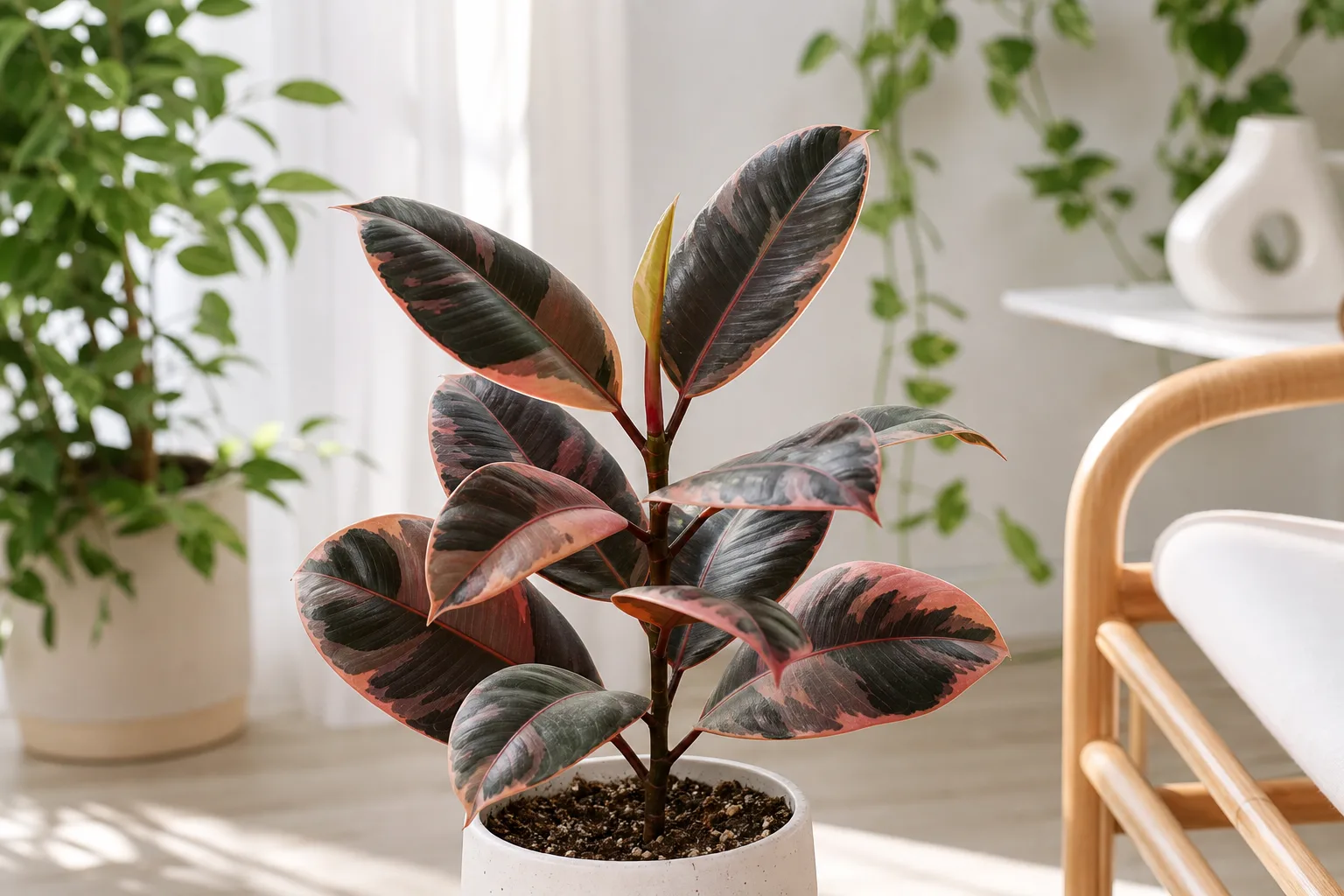
Slow Growth on Ficus Elastica Ruby: Causes, Checks & Fixes
This guide covers slow growth on Ficus Elastica Ruby. See also the general Slow Growth guide, watering, and light pages for this plant.
Slow Growth on Ficus Elastica Ruby: Causes, Checks & Fixes
Quick answer
Ficus elastica ‘Ruby’ is a moderate grower indoors-often 1 to 2 feet (30 to 60 cm) per year in bright, warm conditions, with roughly one new variegated leaf per month through the active season when light and roots support it. That pace is slower than solid-green Burgundy because cream and pink leaf zones carry less chlorophyll and depend on green tissue to feed the whole leaf.
Winter quiet is normal. From late fall through early spring, many Ruby plants push little or no new foliage while metabolism drops-pair that rest with reduced watering, not repotting and fertilizer.
Warm-season stall is not. If your plant adds no new leaves from spring through summer in a warm room, or new blades arrive smaller with long gaps between them, something is limiting growth-usually insufficient light, then root restriction, chronic overwatering on Ficus Elastica Ruby, nutrient depletion, or cool drafts.
First fix: audit season, new-leaf count, and window distance before changing pots or bottles. Count how many leaves have opened since March, measure how far the canopy sits from glass, and check whether the top 2–3 cm of mix dries within about a week in warm months. If light is clearly low, move to brighter filtered placement before repotting or feeding.
What slow growth looks like on Ficus Elastica Ruby
Healthy Ruby growth means a ruby-red leaf sheath at the stem tip that opens into a firm tricolor blade-deep green, cream, and pink-on a rhythm of roughly one leaf every three to five weeks during spring and summer in good light. Slow growth is the absence of that pattern, or new tissue that looks weaker than older leaves.
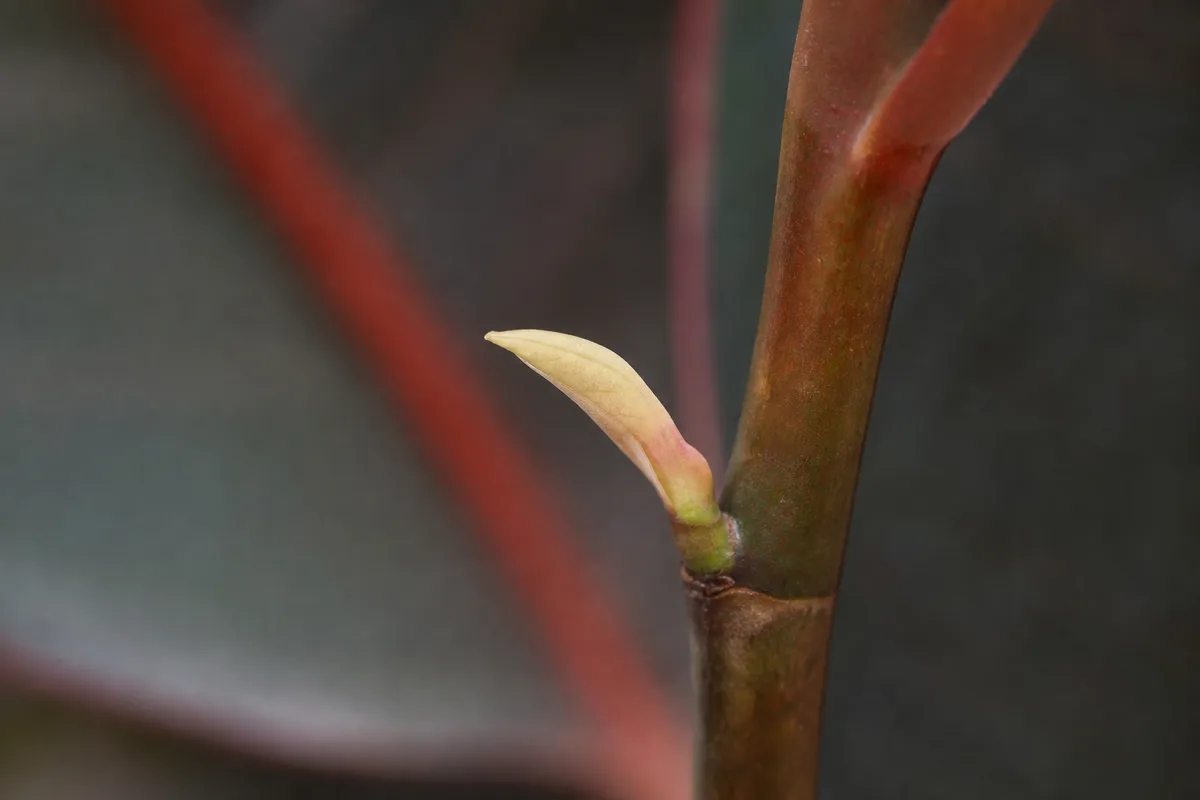
Slow Growth symptoms on Ficus Elastica Ruby - compare with healthy tissue on the same plant.
Typical signs of pathological stall:
- No new sheath at the apex for months during warm active months
- Smaller new leaves than the baseline on the same stem
- Dull or mostly green new leaves without the pink flush Ruby is known for
- Long internodes-visible gaps climbing the stem (often overlaps with leggy growth)
- Static height while soil stays wet for two weeks or more-dim Ruby transpires less, so the same watering rhythm from a bright kitchen keeps mix soggy in a hallway
- Canopy lean toward one window without upright new tips
- Top-heavy wobble in the same pot for years-possible root-binding
What is often normal, not a problem:
- Little or no new growth November through February when light drops and the plant rests
- Two to four quiet weeks after repotting or a room move while roots re-establish-see repotting recovery
- Slower pace than Burgundy in the same window-variegated cultivars grow more slowly than solid-coloured types because less efficient leaf area limits carbohydrate surplus for new tissue
Ruby stores momentum in thick stems and waxy leaves. A plant can look glossy and stable while barely adding height if light barely covers maintenance photosynthesis-a common pattern in north-facing rooms and on coffee tables far from glass.
What’s normal: baseline growth rate and winter dormancy
Use these benchmarks before diagnosing a problem:
| Signal | Normal for Ruby | Worth investigating |
|---|---|---|
| Annual height gain | ~1–2 ft (30–60 cm) in bright warm conditions | Zero gain through a full warm season |
| New leaf frequency | ~1 leaf per 3–5 weeks spring–early fall | No new leaf from April–August indoors |
| Winter (Nov–Feb) | Pause or very slow; firm existing leaves | Yellowing + wet soil + no spring rebound |
| After repot | 2–4 week pause | Stall beyond 6 weeks with sour soil |
| New leaf color | Pink-red sheath; tricolor blade | Successive mostly green leaves |
Ficus elastica slows naturally when days shorten. Clemson HGIC notes rubber plants prefer stable warmth and morning light from an east window for best growth; metabolism drops below about 55°F (13°C) or in cold drafts near glass.
Expecting summer leaf frequency in January leads to unnecessary fertilizer and repotting. Resume growth expectations when multiple new sheaths appear as daylight lengthens-usually mid-spring in temperate homes.
Why Ficus Elastica Ruby stops growing
Insufficient light - the primary indoor limiter
Ruby needs bright indirect light for most of the day-roughly six to eight hours of strong filtered brightness-because variegated sections photosynthesize less per square inch than solid green leaves. In dim placement, the plant survives by pushing chlorophyll-heavy green leaves with longer stems between them, or it stalls entirely while old foliage looks fine.
Low light also slows transpiration, so soil stays wet longer. Wet mix plus minimal photosynthesis compounds the stall-many growers misread this as overwatering alone when light is throttling the whole system. Full light diagnostics: not enough light on Ficus Elastica Ruby.
Root-bound container or spent mix
Roots circling drainage holes, water running straight through without soaking in, or a root ball holding a perfect pot-shaped mold restrict uptake. Ruby may dry out in two to three days yet add no height when the root mass cannot access fresh mix. Growth stalls despite watering because crowded roots cannot expand.
Soil that has compacted or decomposed over two to three years holds water unevenly and releases nutrients poorly-even when light is adequate. Repotting guidance: Ficus Elastica Ruby repotting.
Nutrient depletion during active season
Depleted substrate can limit leaf size after light and water are correct. Ruby in the same pot three or more years without refresh may push pale, small new leaves in bright light. Fertilizer helps only on a healthy, actively growing plant-not as a rescue for dim or root-stressed specimens. Feeding details: Ficus Elastica Ruby fertilizer.
Chronic overwatering and root stress
Ruby is more prone to overwatering when uptake is low-common in winter or in dim rooms. Root rot from poor drainage or overly frequent watering kills fine roots first. The apical bud stalls while old leaves remain because damaged roots cannot supply water and nutrients for expansion-even when mix feels damp.
underwatering on Ficus Elastica Ruby and drought stall
Repeated drought stress damages fine roots and pauses new growth. A very light pot, mix pulled away from pot walls, and dull folded leaves suggest thirst-not the same pattern as dim stall with wet soil.
Cool temperatures and seasonal slowdown
Growth near stops in rooms below about 55°F (13°C), on winter windowsills touching cold glass, or under AC vents. Even adequate light cannot drive monthly new leaves when metabolism is suppressed.
Relocation, repot, or draft shock
Ficus elastica prefers to remain in one location and reacts to moves and repotting before it reacts to slow neglect. A growth pause after change is normal for two to four weeks if light and watering stay stable afterward.
Lookalike symptoms to rule out
| Pattern | Likely cause | Differentiating check |
|---|---|---|
| No leaves Nov–Feb; firm plant | Winter rest | Resumes spring flush without intervention |
| Long stems, green new leaves | Low light / etiolation | Internodes stretch; see leggy growth |
| Wet soil, yellow lower leaves | Overwatering in dim light | Sour smell; soft base-inspect roots |
| Very light pot, crispy edges | Underwatering | Deep soak once; new leaves still green and sparse if light low |
| 2–4 weeks after repot only | Transplant pause | Firm stems; resumes if light stable |
| Sticky leaves, webbing | Pests | Sap feeders drain vigor without obvious collapse |
Slow growth vs. leggy growth: True stall keeps compact spacing but adds few or no leaves. Leggy low light produces long gaps and reaching stems-often still technically “slow” in height gain but architecturally different. Both need more light; leggy plants may also need selective pruning after recovery.
How to confirm the cause
Work through this numbered workflow:
- Season and temperature - Is it late fall through winter, or is the plant near a cold draft? Quiet growth may be normal. Warm spring with no new tips is not.
- New-leaf count since March - Zero leaves through June in a warm room is pathological. One small leaf confirms the bud is active but limited.
- Read the last three new leaves - Progressive greening and shrinking pink zones implicate light. Firm tricolor leaves with no tip growth suggest roots or water.
- Window distance and direction - Light intensity drops quickly with distance from glass. More than 1–1.5 m from an unobstructed window, or north exposure without LED, often cannot sustain Ruby’s growth rate.
- Soil dry-down - Insert a finger 2–3 cm deep. In warm months, healthy Ruby in appropriate light usually needs water roughly every 7–10 days. Soil wet beyond two weeks while growth stops points to low light reducing uptake, overwatering, or oversized pot.
- Pot weight and roots - Lift the pot. Very light with limp leaves suggests underwatering. Slide the plant out if growth stalled all season-look for circling white roots, compacted sour mix, or brown mushy tissue.
- Recent changes - Repot, move, or heat/AC season within the last month? Pause expectations before escalating care.
- Pest check - Inspect leaf axils and undersides for mealybugs, scale, or sticky residue.
If light is clearly inadequate and roots are firm and pale, you have a light diagnosis-not a repot emergency.
First fix for Ficus Elastica Ruby
Increase filtered brightness before repotting, pruning hard, or fertilizing.
Practical targets:
- East window: within 0.5–1 m of glass; one to two hours of cool morning sun is usually fine when acclimated
- South or west window: behind a sheer curtain or 30–60 cm back from hot glass
- No usable window: full-spectrum LED 30–60 cm above the canopy, 12–14 hours daily
Move in one step, not from a dark hallway to unfiltered midday sun-cream zones scorch before green areas show stress. After the move, match water to new dry-down speed; brighter light speeds transpiration. Do not fertilize until a healthy new leaf opens.
If light is already strong and roots circle heavily, schedule spring repotting one size up instead-but never stack repot + feed + heavy prune on the same day.
Step-by-step recovery by cause
After light increase (most common):
- Wait for the next leaf-color and spacing on that blade are your scorecard
- Rotate the pot a quarter turn weekly
- Adjust watering when the top 2–3 cm dries-see watering guide
- Clean dusty leaves so variegated tissue captures available light
If root-bound or mix is spent:
- Repot in early spring one pot size up with airy well-draining mix
- Trim only mushy roots; keep firm white tissue
- Water lightly the first week; expect brief leaf drop
- Hold fertilizer four to six weeks until new growth appears
If chronic overwatering:
- Stop watering until top half of mix dries
- Confirm drainage holes are open; empty saucers
- Inspect roots if lower leaves yellow on wet mix
- Pair dry-down correction with light increase if the plant was in shade
If nutrient depletion (light and water already correct):
- Apply half-strength balanced liquid feed to moist soil once monthly through active season
- Flush salts every two to three months with plain water
- Judge by new leaf size and color, not old foliage
If underwatering:
- Water thoroughly until drainage runs clear
- Resume dry-down schedule; do not keep a dim-corner calendar in brighter light
Recovery timeline
During active warm months with corrected light, many Ruby plants produce a visible new sheath within two to four weeks. Tighter internodes and restored pink on the opening leaf confirm the fix is working.
Winter corrections may show little above-soil change until March or April even if roots are healthier-track progress by spring flush, not December expectations.
Post-repot pauses of two to four weeks are normal. Stall beyond six weeks with sour soil or soft stems requires root inspection.
Old leaves do not enlarge retroactively. Judge success by new growth only-a small leaf from a dim period stays small; the next blade tells the story.
What not to do
- Do not fertilize a dim, stalled Ruby hoping to force growth-unused salts damage roots when the plant is not actively building tissue
- Do not repot on day one without checking light and moisture pattern; unnecessary repotting triggers another pause on a change-sensitive Ficus
- Do not keep a summer watering calendar in winter while the plant rests; wet cold soil stalls spring growth
- Do not stack repotting, heavy pruning, and fertilizer on the same day-make one care correction at a time so you can read the plant’s response
- Do not confuse winter rest with failure-reduce water and wait for longer days
- Do not jump from deep shade to harsh south glass-acclimate over one to two weeks to avoid scorch on pale variegation
How to prevent slow growth on Ficus Elastica Ruby
- Give Ruby the brightest filtered seat in the home-ahead of Burgundy or pothos if you must choose. Overview of baseline care: Ficus Elastica Ruby care hub
- Keep the pot within about one meter of glass, not merely in a room that “has a window”
- Repot every one to two years or when roots circle and growth stalls despite good light
- Match watering to season and light-slower dry-down in winter and dim corners
- Feed only during active growth on healthy plants at half strength
- Track new-leaf frequency monthly rather than expecting daily change on a tree-like houseplant
- Add supplemental LED hours in winter on north exposures to prevent green reversion and stall
When to worry
Escalate beyond light and watering adjustments if:
- Three or more mostly green leaves open in a row while stems weaken
- Multiple leaves yellow and drop while soil stays wet and smells sour
- Stem bases soften or black patches spread-possible rot, not dormancy
- No apical bud activity by mid-spring after a full season of corrected bright light and firm roots
- Sticky leaves with crawling insects persist after isolation and rinse
A firm Ruby with no winter leaves but no decline is usually fine. A warm-season plant that looks worse while standing still needs root or pest inspection-not more fertilizer.
When to use this page vs other Ficus Elastica Ruby guides
- Ficus Elastica Ruby watering guide - Use for routine moisture checks before assuming slow growth is the main issue.
- Ficus Elastica Ruby problems hub - Browse all 16 common issues on this species.
- Not Enough Light on Ficus Elastica Ruby - Different entry point when symptoms overlap with slow growth.
- Leggy Growth on Ficus Elastica Ruby - Different entry point when symptoms overlap with slow growth.
- Yellow Leaves on Ficus Elastica Ruby - Different entry point when symptoms overlap with slow growth.