Slow Growth on Duckweed: Causes, Checks & Fixes
Quick answer
Slow growth on duckweed usually means cold water, weak light, nutrient-poor water, or a mat shading itself-not a houseplant watering problem. First step: confirm water temperature is in the active range and extend full-spectrum surface lighting to 10–14 hours daily before adding fertilizer.
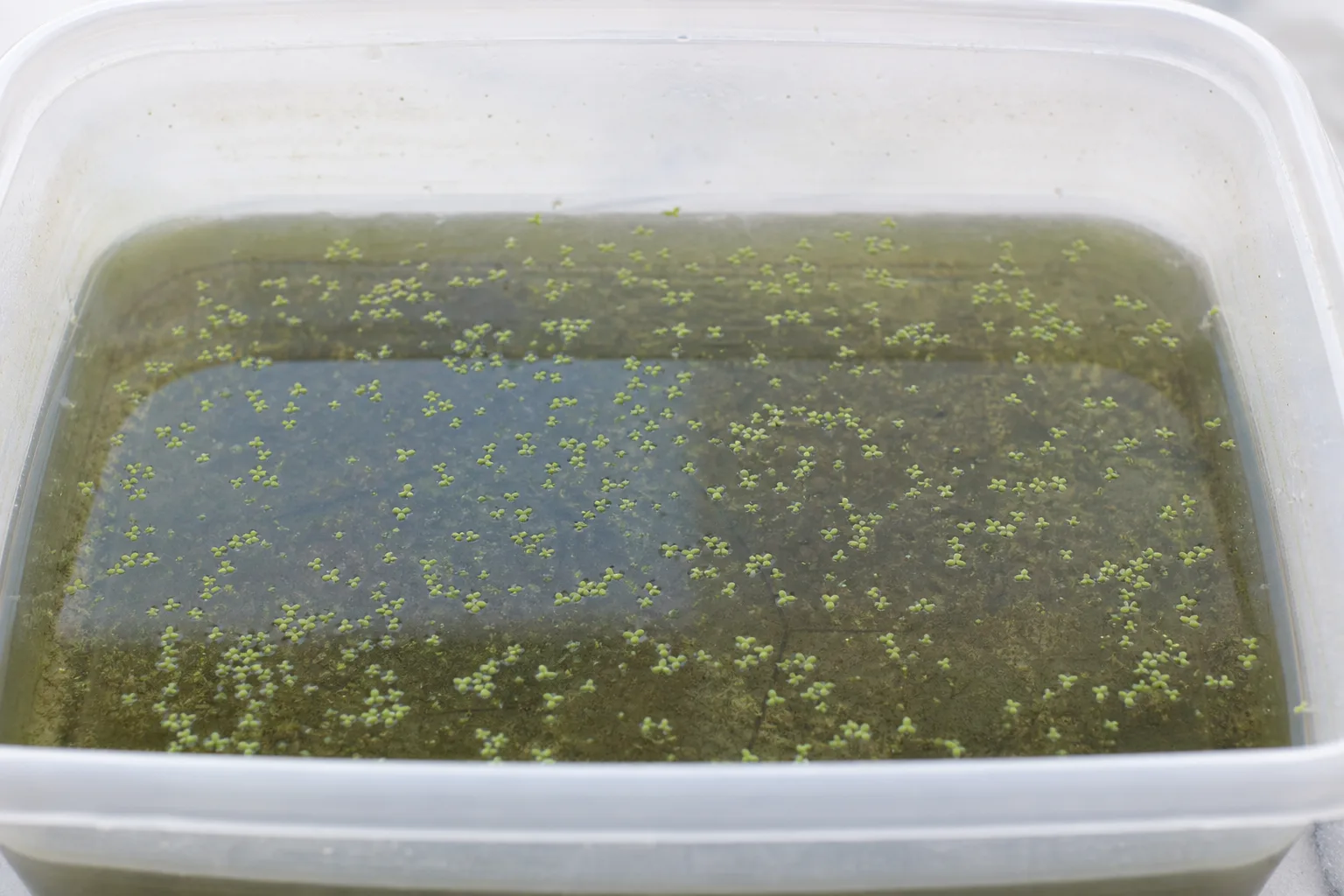
Slow Growth on Duckweed: Causes, Checks & Fixes
This guide covers slow growth on Duckweed. See also the general Slow Growth guide, watering, and light pages for this plant.
Slow Growth on Duckweed: Causes, Checks & Fixes
Quick answer
Duckweed (Lemna, Spirodela, Landoltia, and related floating species) is sold as one of the fastest plants in freshwater culture, yet many keepers end up with a pale, thin scatter that barely expands over weeks. That stall is almost always an aquatic limiting factor-cold water, short photoperiod, nutrient-poor water, self-shading from an over-dense mat, filter splash burying fronds, or a post-introduction acclimation pause-not a soil, pot, or “water when dry” problem.
First step: confirm water temperature sits in the active growth band and extend full-spectrum surface lighting toward 10–14 hours daily before you dose fertilizer or overhaul filtration. Duckweed floats at the air-water interface and multiplies vegetatively; when temperature, photons, and dissolved nutrients align, cultures commonly double every two to three days. Glacial spread in warm bright water is a diagnostic red flag, not normal behavior for healthy Lemna minor.
This page covers multi-cause growth stalls-cold, nutrients, light, self-shade, and acclimation together. For pale sparse mats where insufficient photons are the primary limiter, see not enough light on duckweed. For baseline culture parameters, see the duckweed care overview.
What slow growth looks like on duckweed
Slow growth reads on spread velocity, frond color, and mat density-not on stem length or leaf size in the houseplant sense, because duckweed has no stems and fronds are millimeter-scale disks.
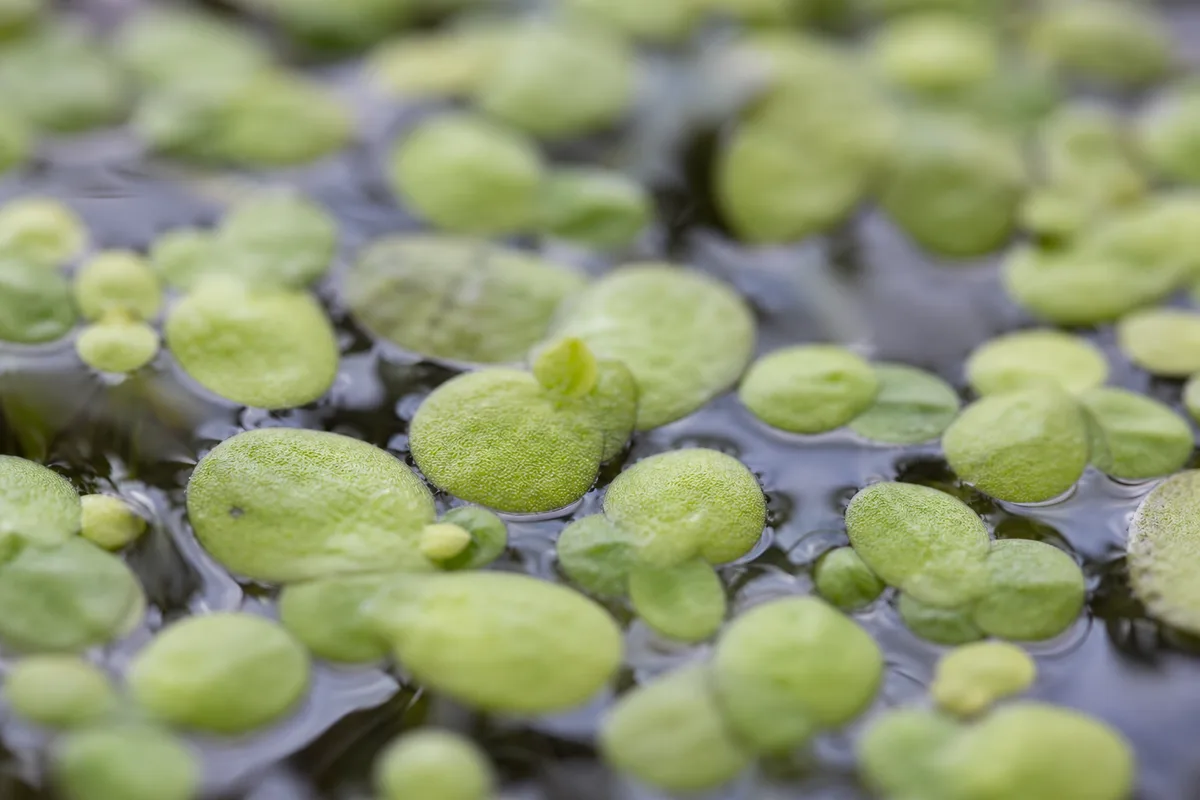
Slow Growth symptoms on Duckweed - compare with healthy tissue on the same plant.
Typical signs:
- Barely expanding coverage - tape a zone on the glass and photograph weekly; unchanged bare glass after two weeks in summer strongly suggests a stall
- Pale lime-green or yellow-green fronds - healthy cultures under good light run deeper green; washed-out color on most of the mat signals low energy for chlorophyll production
- Thin, see-through scatter - individual specks persist without merging into a cohesive carpet
- Small daughter fronds - new buds form lighter and smaller than older disks on the same cluster
- Growth only at mat edges - a dense center stays static while spread happens only at open perimeter zones
- Persistent thin film after purchase - acclimation melt should stabilize within 7 to 10 days; ongoing thinness points to ongoing limits
- Survival without production - a few pale specks remain while you expected harvest-grade density for turtles or nutrient export
Benchmark: Under favorable conditions, duckweed can double its biomass every two to three days. If your culture takes weeks to add visible coverage in warm water, treat that as slow growth worth diagnosing-not as “duckweed is just slow.”
Why duckweed growth stalls
Duckweed tolerates marginal conditions better than many aquatics, which creates a trap: it persists as a pale film while you assume care is adequate. Stalls usually come from one or more of these aquatic limits stacking together.
Cold water below the active range
Duckweed prefers stable freshwater roughly 60 to 90°F (15 to 32°C), with fastest multiplication in the upper half of that band. Growth slows noticeably below about 60°F (15°C); unheated room tubs in winter, garage cultures, and early-spring outdoor ponds often hold fronds alive while cloning nearly stops. In very cold water, some species form turions-dormant buds that sink and resume growth when water warms-so a cold stall can look like permanent slow growth until temperature rises.
Weak light or short photoperiod
Even when fronds look green, too few daily photons caps spread rate. Stock viewing LEDs, timers below roughly six hours, murky turtle water, and hood shadows all limit usable light at the surface. Duckweed grows and spreads fastest in full sun outdoors; indoors, pale thin mats with stalled spread often need longer photoperiod or a stronger fixture-see the dedicated not enough light guide and duckweed light guide for photon-specific troubleshooting.
Nutrient-poor water in clean tanks
Duckweed absorbs ammonium, nitrate, and phosphate directly from the water column-no soil, no root tabs. Well-fed turtle tubs and stocked aquariums usually carry enough nitrogen and phosphorus from waste. Ultra-clean display tanks, quarantine setups, and rainwater-filled tubs can stall spread despite adequate light because dissolved nutrients are near zero. Pale fronds plus slow spread in a brightly lit, lightly stocked tank points here before you add another bulb.
Self-shading from over-dense mats
Ironically, success can cause stall: when surface coverage exceeds roughly 50 to 70%, upper fronds shade lower layers and spread concentrates at open edges. Dense colonies also block sunlight penetration to submerged plants and can reduce gas exchange at the water line. A mat that looks thick and green on top but sparse underneath is often self-shading, not nutrient-deficient.
Filter splash and submerged fronds
Duckweed evolved in still or slow-moving freshwater. Strong returns, cascade filters, and bubblers push fronds underwater where photosynthesis drops sharply. Fronds trapped in churned zones stay pale and multiply slowly while calm corner patches thicken-placement stress layered on top of fixture strength.
Post-introduction acclimation pause
Newly introduced duckweed commonly sheds fronds during the first week after shipping or a large parameter swing. That temporary melt is not chronic slow growth unless thinness persists after water stabilizes and surface light is adequate.
How this differs from not enough light and nutrient deficiency
These problems overlap, but the search intent differs:
| Pattern | Likely primary limiter | Where to read next |
|---|---|---|
| Pale thin scatter, growth only under the bulb, short timer | Insufficient light | Not enough light |
| Pale fronds, slow spread, nitrate near zero in a bright clean tank | Nutrient poverty | Duckweed fertilizer |
| Stall in unheated winter tub, fronds persist but barely clone | Cold water / dormancy | This page - warm first |
| Thick green top, sparse underneath, edge-only spread | Self-shading | Skim mat; see pruning/harvest |
| Heavy loss week one after purchase | Acclimation melt | Wait; then recheck light and temperature |
Slow growth on this page means subnormal spread rate with multiple aquatic causes in play. Not enough light is the photon-specific branch when pale color and shaded placement dominate the picture.
How to confirm the cause
Work through these checks before stacking fertilizer, moving turtles, or replacing the whole culture:
- Temperature - Confirm water sits in the 60–90°F (15–32°C) active band. Below ~60°F (15°C), warming often unlocks spread more than another light upgrade alone.
- Photoperiod and fixture - Note timer hours. Production cultures need at least six hours as a floor, with 10–14 hours of full-spectrum supplemental lighting for dense indoor mats. Compare fronds under the fixture to fronds in shadow.
- Spread velocity test - Mark a small zone on the glass; photograph weekly. Visible expansion within days under warm water and good light is normal; unchanged bare glass after two weeks signals a stall.
- Surface turbulence map - Note where filter return or turtle activity churns the surface. Calm patches that thicken while churned zones stay pale confirm placement stress.
- Water clarity - Cloudy, tea-stained, or algae-green turtle water blocks usable light before it reaches fronds. Clarify water before judging nutrients or bulbs inadequate.
- Nutrient context - In lightly stocked, brightly lit tanks, consider whether waste input is minimal. Pale thin mats with ongoing but slow spread may need dilute aquatic fertilizer per the fertilizer guide-but only after light and temperature are stable.
- Coverage percentage - If the mat seals most of the surface, skim to 30–50% and watch whether edge growth accelerates-self-shading is a common hidden limiter.
Do not inspect soil moisture, pot drainage, crown firmness, or leaf undersides-duckweed has no substrate culture. Match parameters to the duckweed watering guide for dechlorination and top-off rhythm instead.
First fix for duckweed
Stabilize water temperature in the active range and extend photoperiod on full-spectrum surface lighting before adding fertilizer.
If water reads below ~65°F (18°C) in an indoor culture, move the tub to a warmer room or add a controlled aquarium heater until temperature holds in the 68–86°F (20–30°C) sweet spot for fastest doubling. Skim healthy green fronds into the brightest calm surface zone-directly under your aquarium LED or into open sun on a protected outdoor shallow tray-and run 10–14 hours of full-spectrum lighting on a timer.
Do not fertilize, split every frond, change multiple tank parameters, or add pond chemicals the same week. Duckweed responds best when you change one variable and read new frond color and spread rate over the next 7 to 10 days.
If temperature and calm-surface placement under your strongest fixture still produce pale buds after two weeks, upgrade tank lighting per the light guide rather than assuming duckweed needs no photons. If light and temperature are already solid in a clean low-stock tank, add half-strength liquid aquatic fertilizer after a partial water change-never terrestrial houseplant products or root tabs.
Step-by-step recovery
After the first temperature and light correction, follow this order:
- Warm before you brighten further - Cold-limited cultures may show no response to added light until water temperature rises.
- Reduce surface turbulence - Aim returns below the waterline or corral duckweed away from outflows so fronds stay floating.
- Clarify turbid water - Partial water changes and detritus removal in turtle tanks so light reaches the surface layer.
- Thin self-shading mats - Skim excess to 30–50% coverage before blaming nutrients or bulbs.
- Hold fertilizer two weeks in stocked tanks - Turtle and fish waste often supplies enough nitrogen once light and temperature improve.
- Dose dilute aquatic fertilizer in clean tanks - Only when temperature, light, and calm placement are confirmed and fronds stay pale; see the fertilizer guide.
- Skim decaying fronds promptly - Remove pale sinking debris before it fouls filters or clouds water further.
- Judge new daughter fronds - Success shows on deeper green color and faster local spread on newly budded disks, not on old pale fronds.
Skip stacking light changes with copper treatments, major rescapes, and large chemistry swings the same week-you will not know which stressor caused the next die-off.
Recovery timeline
Expect visible greening on newly budded fronds within one to two weeks after meaningful temperature and light correction during active growth. Local patches should start merging into a visible carpet within that window when water quality is stable.
Dense harvest-grade mats can return in three to six weeks in warm, stocked aquariums with corrected conditions-duckweed can double every two to three days when light, nutrients, and calm surface conditions align. Cool water or short winter days may slow the response even after you fix placement.
Old pale fronds do not darken in place. Washed-out disks stay light until skimmed. Recovery is forward-looking: the next daughter fronds tell you whether temperature, light, and nutrients are correct.
Worsening signs during adjustment: continued melt with foul water after corrections-decay overload or chemical exposure; green patches under the bulb but persistent bare zones elsewhere-still insufficient or uneven light, turbulence, or self-shading; or rapid whole-surface disappearance after copper or algaecide-water change and carbon filtration, not just brighter light.
Lookalike symptoms
- Post-purchase melt - temporary frond drop in the first 7 to 10 days; should stabilize if calm surface fronds stay green and new buds form
- Not enough light alone - pale scatter with growth only under the fixture; see not enough light
- Nutrient deficiency - yellow new fronds in very clean, lightly stocked tanks with already moderate light; see yellow leaves and fertilizer
- Chemical damage - rapid whole-surface loss after copper medication or algaecide
- Turtle browsing - irregular bare zones where animals graze; damage follows feeding traffic, not uniform stall
- Overcrowding decay - slimy brown collapse under a sealed mat; overlaps self-shading but emphasizes foul rot-see root rot / mat decay
What not to do
Do not treat duckweed like a houseplant-there is no pot to repot, no soil moisture to check, and no drainage layer to fix. Focus on water temperature, surface photons, dissolved nutrients, and mat thickness.
Do not add potting soil, terrestrial fertilizer, or pesticides meant for potted plants. Duckweed absorbs chemistry from the water column only.
Do not over-fertilize a dim or cold tank to force spread. Excess nutrients with marginal light or low temperature often fuel algae without thickening duckweed mats.
Do not leave filter returns crashing through the mat if fronds sink and pale. Calm surface placement beats stronger nutrients.
Do not let a dense mat seal the entire surface without skimming-self-shading stalls growth and can stress dissolved oxygen overnight.
Do not release trimmings into ponds, streams, or storm drains-duckweed is invasive in many regions and illegal to dump in natural waterways in some areas.
Do not stack repotting, pruning, pesticide, and major water chemistry changes on the same day-change one variable and read spread rate over the next week.
How to prevent slow growth next time
Keep water in the 60–90°F (15–32°C) active band for cultures you want to multiply quickly. Run 10–14 hours of full-spectrum aquarium lighting on a timer year-round for production setups, adding supplemental hours in short winter days rather than accepting thin scatter as seasonal normal.
Skim before duckweed forms a solid ceiling that blocks light to submerged plants and reduces surface gas exchange-target 30–50% coverage in mixed aquariums. Keep turtle tank water clear enough that the surface layer receives usable light.
Dechlorinate every water addition per the watering guide. In clean low-stock tanks, dose dilute aquatic fertilizer only after light and temperature are stable. Maintain a backup propagation jar so one stall does not eliminate your only culture.
When to worry
Slow spread alone rarely kills established duckweed quickly-it persists as a thin pale film. Treat as urgent when rapid frond melt, foul-smelling water, or copper or pesticide exposure accompany disappearance; those combinations need water-quality and chemical review, not just warmer water or a brighter bulb.
If newly budded fronds stay pale and spread remains glacial after two weeks in warm, calm water under your strongest fixture, assume the setup still misses a limiter-upgrade lighting, clarify water, thin the mat, or add dilute nutrients in clean tanks rather than replacing duckweed with another species.
Related duckweed guides
- Duckweed care overview - biology, growth benchmarks, and turtle-tank context
- Duckweed light - photoperiod, full sun, and fixture upgrades
- Duckweed fertilizer - when clean tanks need nitrogen and phosphorus
- Duckweed propagation - backup jar cultures after a stall
- Not enough light on duckweed - pale sparse mats when photons are the primary limiter
- Yellow leaves on duckweed - nutrient and light pale-color patterns
Conclusion
Slow growth on duckweed is a temperature, light, nutrient, and surface-management problem-not a houseplant watering puzzle. The species stalls when water is too cold, photoperiod is too short, dissolved nutrients are too low, mats shade themselves, or filter splash buries fronds underwater. Confirm it by measuring spread rate against the two-to-three-day doubling benchmark, checking temperature and timer hours, and comparing calm bright zones to churned or shaded areas. Warm the water and extend surface lighting first; add dilute aquatic fertilizer only in clean tanks after those basics are stable. Judge recovery on new green daughter fronds and faster local spread, not old pale disks. For photon-specific pale-mat troubleshooting, pair this page with not enough light and the overview.