How to Prune Duckweed: Thinning, Timing & Safe Coverage
How to Prune Duckweed: Thinning, Timing & Safe Coverage
How to Prune Duckweed: Thinning, Timing & Safe Coverage
Quick answer
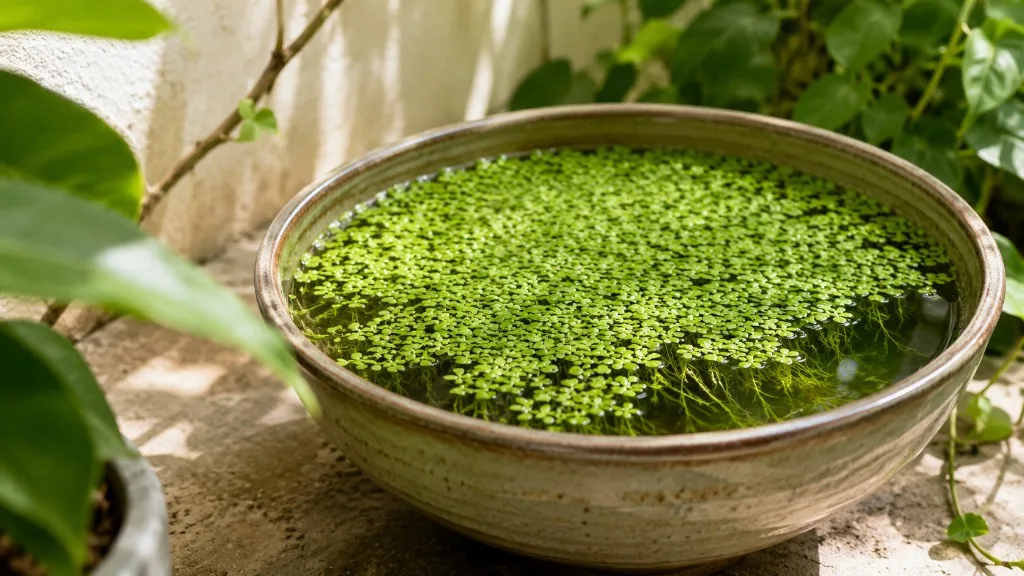
Duckweed - mostly Lemna minor, Spirodela polyrhiza, and related floating genera - is not pruned at nodes like a pothos or basil stem. Each tiny frond buds new plants from a pouch on the parent, and warm, nutrient-rich water can double the population in a few days. Your first move is mechanical: estimate surface coverage from above, and if duckweed covers more than about 70% of the water, skim flat with a fine-mesh net - removing decaying brown fronds first, then 30–50% of the green mat until open water shows in several spots. The goal is controlled partial cover (roughly 30–70%), not a bare tank.
Why duckweed is harvested, not cut like a stem plant
How Lemna and Spirodela spread without nodes
Common duckweed (Lemna minor) is among the smallest flowering plants on Earth. Each frond is a flat oval, typically 1/16 to 1/8 inch long, often with a single root hair trailing into the water. New fronds bud from the parent and detach - there is no central stem, no apical meristem to pin back, and no wound-healing pause after you remove material. Whatever you leave keeps multiplying.
That biology defines the entire job. Duckweed pruning is surface skimming: you export biomass and reopen gaps in the canopy so light reaches submerged plants and the water surface can contact air. Every scoop removes nutrients bound inside those fronds and stops a continuous mat from sealing the tank.
What “pruning” means for floating fronds
Houseplant pruning redirects energy and shapes branching. Duckweed has no hierarchy to steer with selective cuts. Remove half the mat on Monday and, in a warm aquarium, you may be back to similar density within days. Success is measured by never letting coverage reach the danger zone, not by permanent reduction from one session. Treat harvesting like water changes - a recurring habit, not a one-time cleanup.
Pruning cannot fix chronic overfeeding, copper exposure, or poor filtration. It controls density and exports nutrients on healthy green fronds; it does not revive rotting tissue left under a sealed mat.
When to thin duckweed
Coverage triggers vs calendar dates
Timing follows surface density and livestock stress, not a seasonal dormancy. Indoor tanks in steady light and temperature stay in active growth year-round, so the calendar is secondary to what you see.
Use these practical defaults, then adjust:
- Warm, nutrient-rich community aquarium: thin weekly during water changes
- High-nutrient turtle tanks or outdoor ponds in summer: every 3–5 days
- Cooler, low-nutrient setups: every 10–14 days may suffice
The hard trigger is coverage: when estimated surface cover exceeds 70%, harvest regardless of when you last scooped. Below 30%, you lose most shade and nutrient-uptake benefits unless you are deliberately shrinking the population.
Emergency signals that mean thin today
Some signs override the schedule:
- Near-complete surface cover - the mat moves as one sheet when nudged with a net
- Fish gasping at dawn or congregating at filter outflow
- Submerged plants pale, leggy, or melting under the canopy
- Filter intake clogging or reduced flow from sucked-in fronds
- Brown, slimy, or foul-smelling material trapped under the mat
Texas A&M AquaPlant guidance on common duckweed notes that colonies covering the pond surface can cause oxygen depletion and fish kills. Daytime green fronds can hide nighttime hypoxia - photosynthesis stops after dark while respiration continues, and warm water holds less dissolved oxygen to begin with.
What to assess before you scoop
Run a 60-second inspection before the net touches the surface:
- Coverage estimate - mentally quarter the surface; if you cannot see open water without pushing fronds aside, you are overdue
- Frond color - green and firm is harvestable; yellow-brown or slimy fronds are priority removal
- Livestock behavior - dawn surface-hanging or lethargic shrimp means open water today, even if cover looks moderate
- Equipment - note filter intake clogging; protect or pause intake during heavy skimming so removed fronds are not immediately re-sucked in
- Submerged plants below - pale growth confirms light stress from the floating layer
If you are harvesting during a water change, skim first while the tank is full - draining first makes surface collection harder. During medication or treatment, check product labels; some require reduced plant biomass or increased surface agitation.
The first scoop to make
First, skim decaying brown or slimy fronds from the thickest zones with a fine-mesh net held flat against the surface. Rotting material under a mat adds ammonia and fuels more growth; removing it improves water quality faster than taking healthy green biomass alone.
Only after decay is cleared should you assess whether the remaining green canopy still exceeds your target band. If open water is still scarce, continue with broader passes - still flat across the surface, not deep plunges that stir substrate and capture fry hiding in root hairs.
How to prune duckweed step by step
Tools and technique
The core tool is a fine-mesh net with a shallow bag - brine-shrimp nets and small aquarium nets work because fronds stay in the mesh. Move the net in smooth horizontal strokes across the surface. Duckweed floats; deep scoops cloud water, stress livestock, and pull up fry.
Designate one net or cup exclusively for duckweed. A single frond on dry mesh can colonize another tank. Rinse the tool in system water after use and let it air-dry. Label it “duckweed only” if you run multiple displays.
Optional but useful: a floating containment ring from joined airline tubing creates a permanent open zone for feeding and gas exchange. Duckweed accumulates outside the ring while the interior stays clear. This does not replace harvesting - the exterior patch still grows - but it buys margin if you miss a session by a few days.
For ponds, a long-handled skimmer reaches from the bank; wind that pushes the mat to one side is your ally - harvest the concentrated edge first.
How much to remove per session
For routine maintenance, remove 30–50% of current coverage per session until you land in the 30–70% band - enough to drop from an overgrown 85% cover to a safer 40–55% without stripping the system bare.
Work in passes:
- Pass one: thickest zones and all decay
- Pass two: level remaining canopy toward target coverage
- Pass three (optional): stragglers at glass edges, filter corners, and plant stems where fronds collect
Pause between passes and look from above - open water should appear in multiple areas, not one tiny gap. If you accidentally removed too much, surviving fronds on glass, filter housings, or plant leaves repopulate within days in warm conditions. The opposite mistake - a token handful from a 95% mat - does not restore meaningful gas exchange.
Dispose of wet fronds immediately into compost or trash. Do not leave clumps beside the tank where dried pieces can blow or drain toward stormwater.
Safe surface coverage and what not to remove entirely
There is no single mandated percentage, but most mixed aquarium and pond setups stay healthiest with roughly 30–70% surface coverage. At 50–70%, duckweed still provides shade, fry shelter, and nutrient uptake while leaving enough open water for light penetration and atmospheric exchange. 100% coverage is risky in community livestock tanks - especially overnight - even if daytime oxygen readings look fine.
For deliberate eradication, you may remove everything visible, but expect weeks of daily scooping: a single surviving frond can restart the population within days. Routine maintenance should leave a controlled remnant unless eradication is the explicit goal.
Do not dump harvested duckweed into streams, lakes, or storm drains. Never release removed plants into natural waterways - duckweed is a prolific invasive in many regions.
Recovery after harvesting
Duckweed does not need a healing period. Recovery is immediate density rebound, not new leaf unfurling from cut nodes. In warm, nutrient-rich water, remaining fronds often refill open gaps within 2–7 days. Cooler or low-nutrient tanks may take 1–2 weeks to reach prior density.
Signs harvesting worked:
- Visible open water in several surface zones
- Submerged plants below begin holding color within days as light returns
- Filter flow improves after intake clogging stops
- Livestock stop dawn surface-gasping once oxygen margins widen
Signs you harvested too little or waited too long:
- Coverage climbs back above 70% before the next scheduled session
- Persistent pale or melting submerged plants
- Repeated overnight livestock stress despite aeration alone
Pair harvesting with realistic feeding and filter maintenance. Removing duckweed while overfeeding simply returns nutrients that fuel faster regrowth.
Maintenance routine by tank type
Community aquariums with submerged plants and shrimp need disciplined canopy control. Aim toward the lower half of the 30–70% band if carpeting or stem plants show shading stress. Check net contents for accidentally scooped fry before disposal.
Turtle and tortoise tanks benefit from duckweed as graze and cover, but heavy waste loads fuel explosive growth. Harvest on the aggressive end of the schedule and use a containment ring so basking and swimming zones stay clear. Tortoises should receive duckweed only in small supplemental amounts - high protein and low fiber make it a snack, not staple forage per grower notes for Duckweed overview.
Outdoor ponds add wind, rain, and runoff. Harvest after wind concentrates mats along one bank. Reduce fertilizer runoff near the pond; harvesting treats density, but nutrient input controls underlying growth rate. Do not assume winter kills duckweed permanently in mild climates.
Aquaponics setups treat duckweed as a crop: harvest 30–50% every few days, rinse removed biomass if feeding fish, and apply the same coverage rules in the fish-tank portion to prevent oxygen crashes.
Add aeration as backup during heat spells or while dialing in harvest frequency - submersed diffusers and surface agitation improve margins, but they do not replace opening a sealed mat.
Disposal and spread prevention
Harvested duckweed is alive until fully dry. Appropriate disposal paths: contained compost, feeding to livestock that actually consume it, or sealed municipal trash. Dry fronds in Duckweed light guide before disposal if your waste stream might reach water.
Cross-contamination between tanks is the home aquarist’s biggest spread vector. Dedicated nets, hand-washing after handling, and avoiding splash transfer during water changes protect duckweed-free displays. If duckweed appears in an unwanted tank, assume equipment transfer and begin daily scooping until no fronds return for several weeks.
Common pruning mistakes
- Waiting until 100% coverage - oxygen and light problems compound silently until livestock stress appears
- Token harvests - removing a spoonful from a solid mat does not restore gas exchange
- Wrong net mesh - large holes let fronds through and waste time
- Deep scoops - stir substrate, cloud water, and capture fry; stay at the surface
- Shared equipment - the most common way duckweed invades clean tanks
- Assuming daytime health equals nighttime safety - open more surface before heat waves if in doubt
- Stripping 100% in one routine session - removes nutrient-export capacity and triggers rapid rebound from hidden fronds
- Ignoring decay under the mat - rotting material spikes ammonia; remove brown and slimy fronds first
- Illegal disposal - never release into natural water bodies
Conclusion
Duckweed pruning succeeds when you treat it as scheduled surface management. There are no nodes to cut - only fronds to skim. Estimate coverage from above, remove decay first, then harvest 30–50% whenever cover exceeds 70%, keeping 30–70% in most mixed systems. Use a dedicated fine net, skim flat, dispose responsibly, and pair harvesting with feeding and nutrient discipline. Get the routine right and duckweed stays a manageable ally - shade, fry cover, and nutrient export - without the suffocating blanket that turns the world’s smallest flowering plants into one of freshwater keeping’s loudest headaches.
When to use this page vs other Duckweed guides
- Duckweed overview - Start here for whole-plant context before deep-diving this topic.
- Duckweed problems hub - Jump to symptom-specific fix guides when this care topic does not resolve the issue.
- Leggy Growth on Duckweed - Escalate here when pruning adjustments are not enough.
- Slow Growth on Duckweed - Escalate here when pruning adjustments are not enough.
- Brown Tips on Duckweed - Escalate here when pruning adjustments are not enough.