Brown Fronds on Duckweed: Causes, Checks & Fixes
Quick answer
Brown frond margins on duckweed usually trace to chlorine or chloramine in fresh tap water, light or heat shock, decay in an overcrowded mat, or mechanical damage from filter flow-not dry soil or pot stress. First step: if you added untreated tap water in the last 48 hours, dechlorinate a partial water change immediately before thinning the mat or adjusting light.
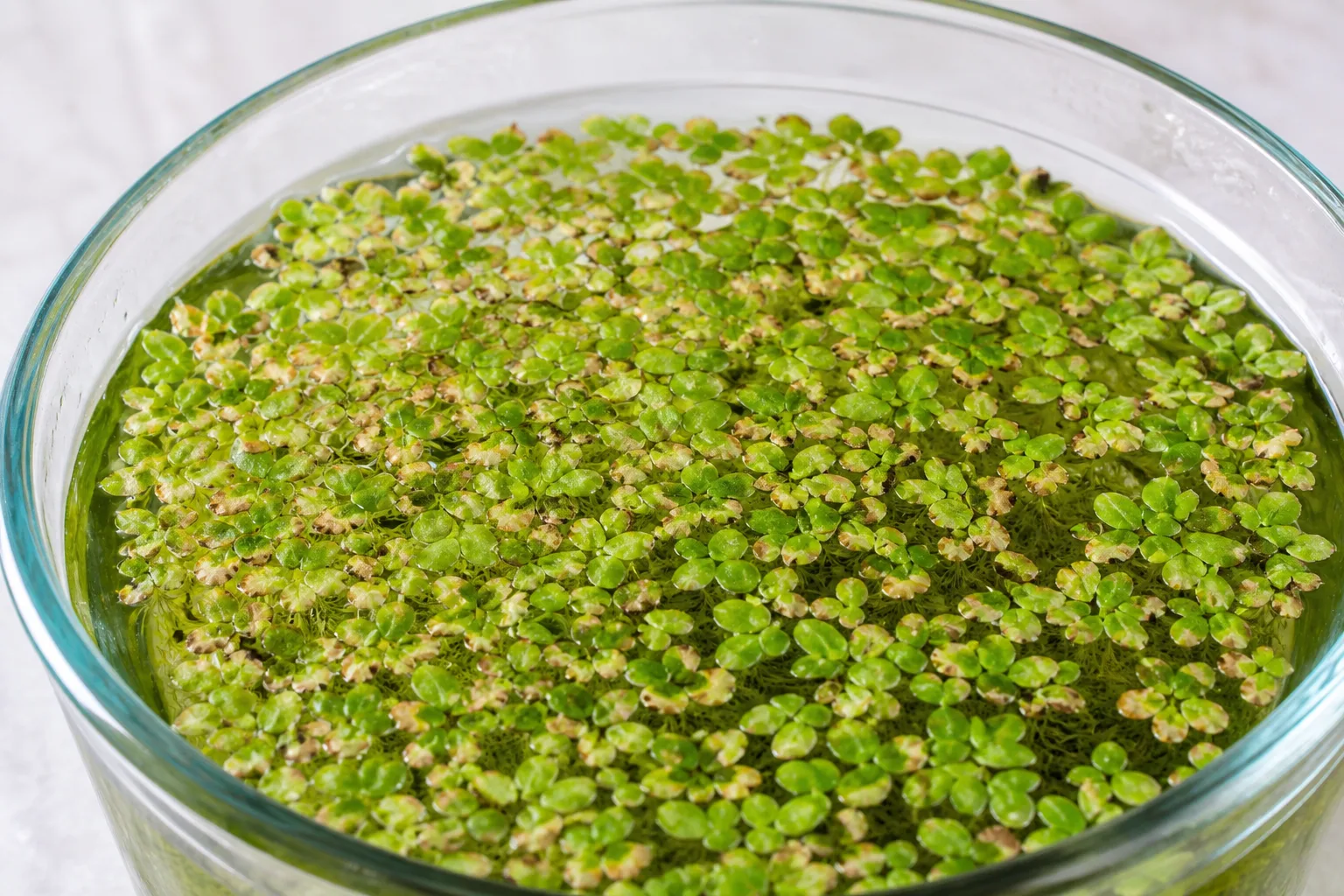
Brown Fronds on Duckweed: Causes, Checks & Fixes
This guide covers brown tips on Duckweed. See also the general Brown Tips guide, watering, and light pages for this plant.
Brown Fronds on Duckweed: Causes, Checks & Fixes
Quick answer
Brown frond margins on duckweed (Lemna, Spirodela, Landoltia, and related floating species) are aquatic stress signals-not houseplant tip burn from dry air or salt buildup in potting mix. Free-floating Lemnoideae live at the air-water interface with no soil, no pot, and no meaningful relationship to “water when the top inch dries.” When keepers search “brown tips,” they usually mean tan-to-dark necrosis on frond edges, bleached-then-brown disks after light shock, or slimy brown layers under a dense mat-patterns that map to water chemistry, light intensity, surface coverage, and flow instead.
First step: if you added untreated tap water, a large top-off, or a partial change in the last 48 hours, dose dechlorinator for the volume added and perform a 20–30% dechlorinated partial water change before you thin the mat, move the tank, or dose fertilizer. Municipal tap water commonly carries chlorine or chloramine disinfectants that damage delicate aquatic tissue within hours. Chloramine does not reliably dissipate with overnight aeration alone. If no recent water addition occurred, skip straight to surface-coverage and light checks per the confirmation workflow below.
Duckweed is not a houseplant. For the full floating-plant context-including why soil checks do not apply-see the duckweed care overview.
What brown fronds look like on Duckweed
On common duckweed (Lemna minor), healthy fronds are small oval disks roughly 1 to 8 mm across, light to deep green, and nearly flat on both sides. Brown-frond problems show up in distinct visual bands:
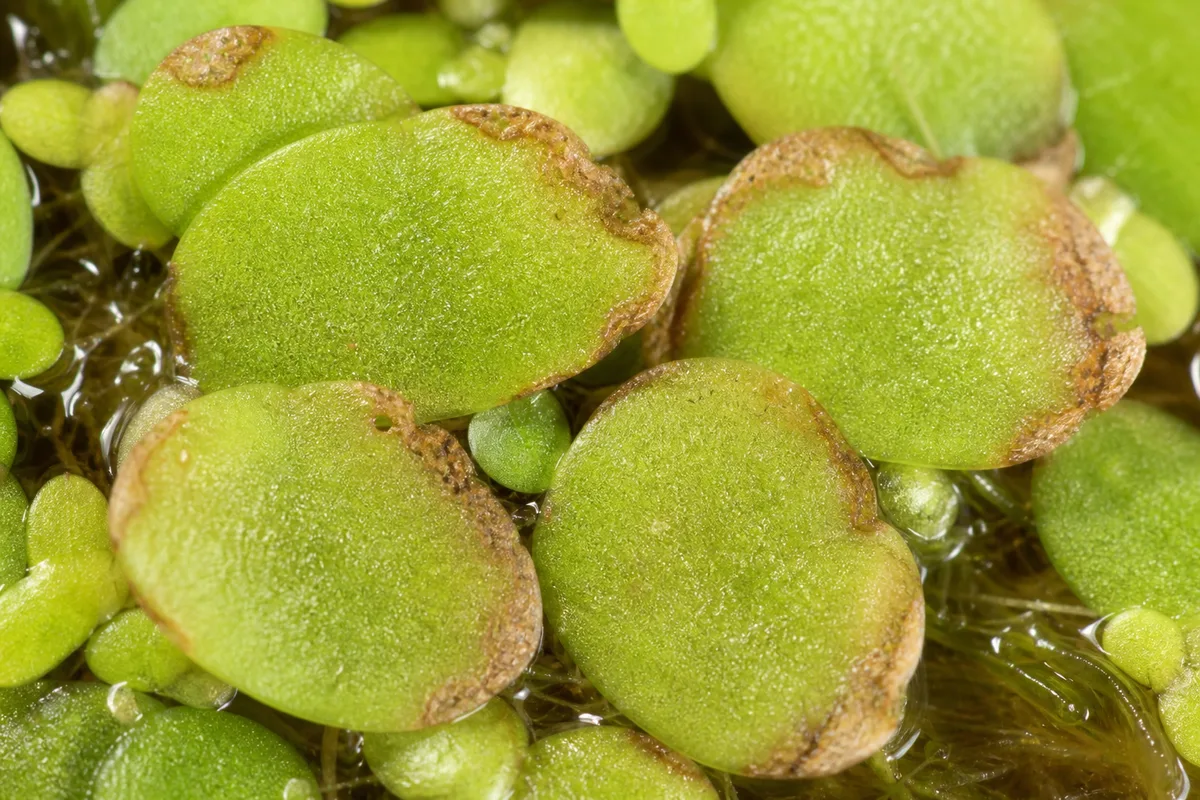
Brown Tips symptoms on Duckweed - compare with healthy tissue on the same plant.
- Margin necrosis - dry tan-to-brown edges on otherwise green disks, often uniform across the mat after a water change
- Whole-frond browning - disks turn brown or copper-colored and stop budding; may coincide with chlorine, ammonia, or medication exposure
- Bleach then brown - fronds pale white or yellow-green first, then brown at edges after sudden intense sun or LEDs mounted too close on shallow water
- Lower-layer decay - top of the mat looks green while fronds underneath are brown, slimy, and breaking apart when skimmed
- Torn brown patches - irregular damage along filter outflow lanes or where fronds were submerged by surface turbulence
- Purplish-brown undersides - stress pigmentation on the lower frond surface under high light or oxidative stress; differs from uniform lime-green nutrient paleness
Not the same as nutrient deficiency. Pale lime-green or yellow-green fronds across a thin mat usually signal low nitrogen or weak light-see yellow leaves on duckweed and not enough light. Brown necrosis is more often chemical, light-burn, decay, or mechanical.
Not the same as turtle grazing. Grazing leaves ragged edges and bare zones where animals feed, not uniform margin burn after a water change.
Why Duckweed fronds turn brown
Duckweed evolved in still or slow-moving freshwater with stable chemistry. It responds to aquatic insults within hours because fronds absorb water and dissolved compounds directly-there is no soil buffer.
Chlorine and chloramine shock
The fastest whole-mat browning often follows untreated tap water. Chlorine and chloramine are added to municipal supplies to kill microbes; even trace residual disinfectant can injure floating plant tissue. Chlorine may off-gas if water stands aerated 24–48 hours, but chloramine persists and requires a dechlorinator that neutralizes both chlorine and ammonia components. A “quick cup of tap” for topping off an established tank still adds disinfectant if unconditioned.
Light and heat burn
Duckweed tolerates bright light and grows fastest in full sun outdoors, but sudden exposure jumps-moving a dim indoor culture to unfiltered midday sun, or placing shallow tubs under hot LEDs inches from the water-can bleach fronds and brown margins through photoinhibition and surface heat. Research on duckweed stress responses documents darker brown or purplish pigmentation on frond undersides under high light intensity as protective pigment accumulation-not the same as simple nutrient paleness.
Dense mat self-shading and decay
When surface coverage exceeds roughly 50–70% for extended periods, upper fronds shade lower layers. Those buried fronds yellow, brown, and decay, adding organics back to the water. Dense colonies also block sunlight and reduce gas exchange at the surface-lower layers suffocate even while the top stays green.
Mechanical damage from flow
Strong filter returns, powerheads aimed at the surface, and cascade overflow designs push fronds underwater, shred them, and drive them into intakes. Damaged tissue browns at torn edges. Duckweed survives poorly in strong surface currents-practical translation: calm sponge-filtered zones work; river-tank outflows do not without a corral.
Cold and heat water stress
Growth slows below about 60°F (15°C); combined stress can brown margins in unheated winter rooms. Shallow outdoor tubs above 90°F (32°C) under full sun can brown fronds from heat and low dissolved oxygen under sealed mats.
Ammonia, copper, and chemical exposure
High ammonia or nitrite, copper-based fish medications, and algicides brown or melt fronds rapidly. Treat sick fish in a hospital tank and keep duckweed out until the main system is confirmed copper-free.
How to confirm the cause
Work through these checks in order. Change one variable at a time so you can read the culture’s response over the next week.
- Water-change timeline - Did browning begin within 24–48 hours of tap top-off, partial change, or pond refill without dechlorinator? If yes, treat as chlorine/chloramine first.
- Dechlorination audit - Confirm conditioner dose matched volume added, not just tank total. Products must handle chloramine if your municipality uses it.
- Surface coverage percent - Peel back the mat with a net. Green top with brown slimy bottom confirms overcrowding and decay, not a light deficiency on the upper layer.
- Flow map - Note whether brown fronds cluster at filter returns or circulate endlessly. Calm-corner green patches with outflow-lane browning confirm mechanical damage layered on other stress.
- Light and heat context - Did you move the culture, add a brighter bulb, or place a shallow tray in full sun within the last week? Bleach-then-brown edges under intense exposure support light or heat burn.
- Water temperature - Measure with a thermometer. Cold-room stall or summer tub heat above the active band explains browning that does not follow a water change.
- Chemical exposure - Recent copper, algicide, or pesticide near the tank? Rapid whole-surface browning with livestock stress points here before fertilizer diagnosis.
- Newest daughter fronds - If only oldest fronds brown while bright green buds continue, senescence or localized decay is likely-not tank-wide chemistry failure.
| Symptom pattern | Likely cause | First confirmation |
|---|---|---|
| Uniform browning 1–2 days after tap water added | Chlorine/chloramine | Dechlorinate; partial change; watch new buds |
| Bleached centers, brown edges after sun or LED move | Light or heat shock | Shade or raise fixture; acclimate over 5–7 days |
| Green top, brown slimy bottom layer | Mat overcrowding | Skim to 30–50% coverage |
| Brown tears along outflow lane | Mechanical flow damage | Redirect return; corral plants |
| Pale lime-green whole mat, slow spread | Low light or nutrients | See yellow-leaves and not-enough-light guides |
| Ragged bare zones | Turtle or fish grazing | Grazing pattern, not margin necrosis |
First fix for Duckweed
If you added untreated tap water in the last 48 hours: dose dechlorinator for the volume you added and perform a 20–30% dechlorinated partial water change matched to tank temperature.
Remove the disinfectant stressor before you stack other treatments. Skim obviously necrotic brown fronds so they do not decay in the filter. Do not fertilize, relocate to full sun, or overhaul filtration the same day.
If no recent water addition: your first fix is skim the mat back to roughly 30–50% surface coverage in a calm zone away from filter outflows. That addresses the most common chronic cause-self-shaded decay under an overgrown mat-without chemical or light swings.
If browning followed a sudden light increase: move the culture to bright indirect light or shorten photoperiod by two hours, then acclimate toward target intensity over 5 to 7 days.
Match secondary steps to confirmed cause after the first correction; see the duckweed watering guide for dechlorination rhythm and the light guide for photoperiod targets.
Step-by-step recovery
After the initial dechlorinated change or mat thinning:
- Corral or redirect flow - Float duckweed in a quiet corner with airline tubing or a floating ring; aim filter returns below the surface.
- Skim decaying biomass - Remove brown slimy layers; compost or discard-do not return them to the water.
- Hold fertilizer two weeks - Stocked turtle tanks and aquariums usually carry enough nitrogen and phosphorus once stress is removed. Dosing into a recovering culture can spike algae.
- Maintain backup culture - Keep a cup of healthy fronds in a jar of dechlorinated water under a cheap LED per the propagation guide so one shock does not eliminate your only source.
- Test ammonia and nitrate if whole-mat browning persists after dechlorination - export water if ammonia is elevated.
- Judge new buds only - Success appears on daughter fronds budding green within days; old brown disks do not green up in place.
Recovery timeline
Chlorine or chloramine shock: new green daughter fronds often appear within three to seven days after dechlorination and skimming, if temperature and light are already adequate.
Mat decay after thinning: surface should look fresher within one week; full 30–50% coverage of healthy green can return in two to three weeks when duckweed doubles every few days in warm bright water.
Light-burn adjustment: bleached fronds may stay cosmetically damaged; stop further browning within one to two weeks after acclimation. Trim worst disks when skimming.
Old brown fronds do not heal. Recovery is forward-looking-watch budding pockets, not necrotic margins.
Worsening signs: foul smell with rising ammonia after skim; entire mat brown despite dechlorination-test for copper or medications; green buds absent for more than ten days-review light and temperature per the overview troubleshooting section.
Lookalike symptoms
- Yellow leaves - uniform lime-green to yellow paleness with ongoing spread; nutrient or light limitation, not edge necrosis
- Not enough light - thin pale scatter, slow doubling; rarely crisp brown margins unless combined with other stress
- Root rot / mat decay - slimy brown collapse under sealed cover; overlaps overcrowding but emphasizes foul rot and oxygen stress
- Overwatering - foul water and high TDS from export failure; browning is secondary to chemistry overload
- Underwatering - crispy dry fronds stranded above a dropped waterline; not submerged margin burn
- Turtle grazing - irregular missing patches, not uniform post-change browning
- Normal senescence - isolated older fronds brown while vigorous green budding continues nearby
What not to do
Do not check soil moisture, drainage holes, or repot-duckweed has no pot and no substrate. Those steps belong to terrestrial houseplants and will not fix floating fronds.
Do not mist the mat or run a room humidifier as a brown-tip fix. Ambient humidity does not hydrate fronds; water chemistry and surface conditions do.
Do not let tap water sit overnight as your only dechlorination method if your utility uses chloramine. Use a conditioner labeled for chloramine neutralization.
Do not fertilize heavily on a browned culture hoping to force green color. Fix chlorine, coverage, or light first.
Do not move a dim indoor mat to full midday sun in one afternoon-step exposure over a week to avoid bleach-then-brown shock.
Do not apply terrestrial fungicides or leaf sprays meant for potted plants over an open aquarium.
Do not return skimmed brown slime to the tank-it reloads organics and ammonia.
How to prevent brown fronds next time
Dechlorinate every addition-top-offs and partial changes alike-per the water management guide. Maintain 30–50% surface coverage in mixed planted aquariums so lower fronds do not decay under a green ceiling. Run calm surface water; contain duckweed away from filter outflows. Acclimate light changes over five to seven days when moving between indoor and outdoor culture. Skim weekly in warm bright conditions before mats self-shade. Keep a backup propagation jar so chemical or chlorine accidents do not leave you starting from zero.
When to worry
Brown margins on a few older fronds while green buds continue are routine after minor stress. Treat as urgent when the entire mat browns within 24 hours of a water change, when brown slime pairs with ammonia spikes or foul odor, or after copper or algicide exposure in a stocked tank. Those cases need immediate water export, chemical review, and livestock monitoring-not another top-off of untreated tap water.
Related duckweed guides
- Duckweed care overview - biology, turtle tanks, and why houseplant logic fails
- Duckweed watering - dechlorination, top-offs, TDS, and partial changes
- Duckweed light - photoperiod, full sun, and bleach prevention
- Duckweed propagation - backup culture jars after shock
- Yellow leaves on duckweed - pale fronds vs brown necrosis
- Not enough light on duckweed - sparse pale mats without margin burn
Conclusion
Brown fronds on duckweed are an aquatic diagnostic problem, not houseplant tip burn. The title “brown tips” maps imperfectly onto millimeter-scale floating disks, but the keeper’s real question is why frond margins necrose, bleach, or rot-and what to do first. In most aquarium and turtle-tank shocks, dechlorinate before anything else if tap water entered recently; for chronic decline, thin overcrowded mats and calm surface flow fix more cases than fertilizer. Confirm with a water-change timeline, coverage check, and flow map; recover on new daughter fronds; prevent with conditioned water, weekly skimming, and light acclimation. For baseline parameters and harvest rhythm, pair this page with the overview and watering guide.