Underwatering on Calathea Rattlesnake: Causes, Checks &
Quick answer
Underwatering on Calathea Rattlesnake shows as a light pot, dry mix, and narrow leaves curling tight during the day. Bottom-water thoroughly with filtered water, then water when the top 2 cm begins to dry.
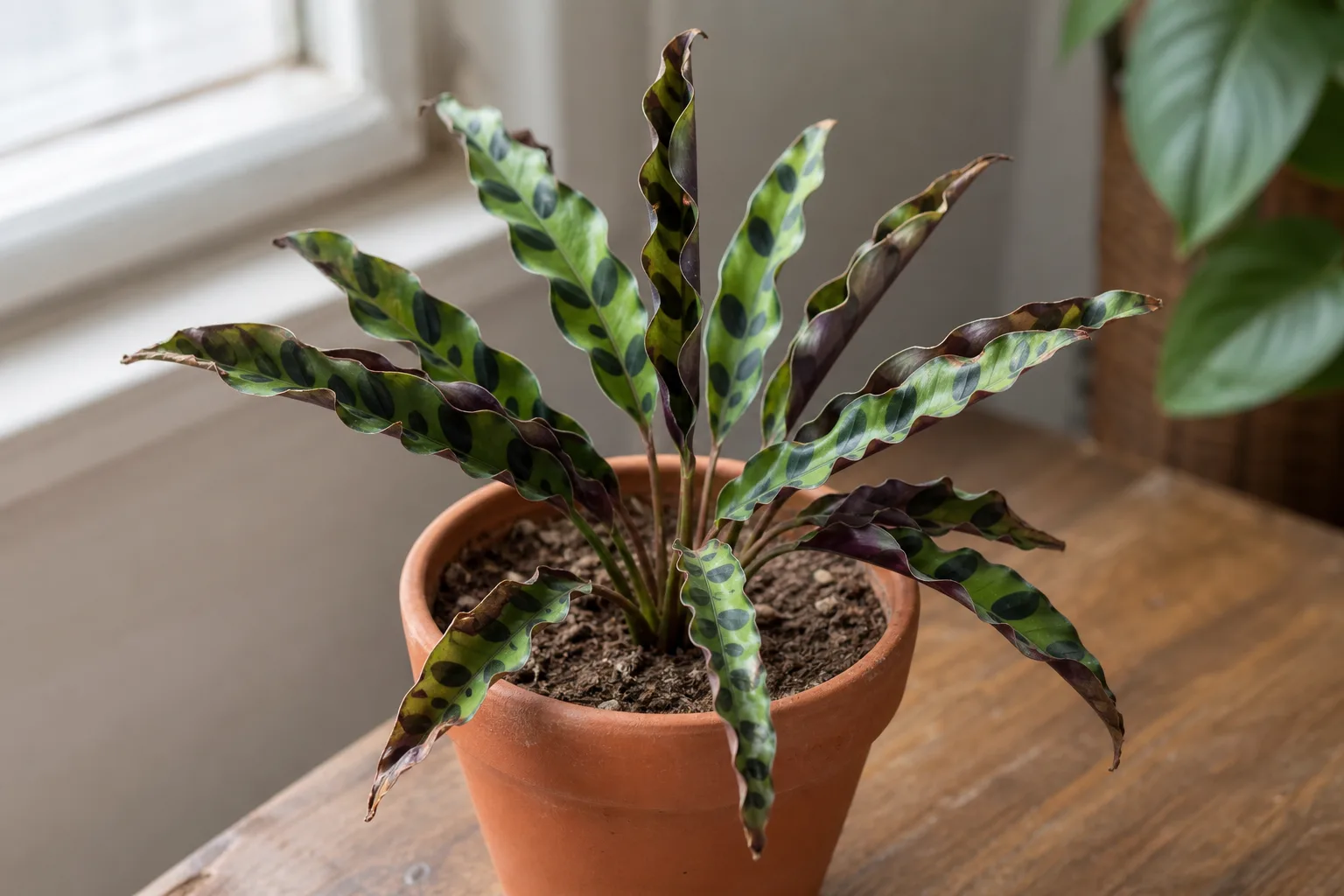
Underwatering on Calathea Rattlesnake: Causes, Checks & Fixes
This guide covers underwatering on Calathea Rattlesnake. See also the general Underwatering guide, watering, and light pages for this plant.
Underwatering on Calathea Rattlesnake: Causes, Checks & Fixes
Quick answer
Underwatering on Calathea Rattlesnake (Goeppertia insignis) shows up as a lightweight pot, dry soil through the top few centimeters, and narrow wavy leaves curling tight during the day. The plant is not a drought-tolerant succulent-it wants steady moisture in a well-drained, organic mix and reacts fast when the root zone runs dry.
First step: bottom-water once with room-temperature filtered or rainwater until the surface feels evenly moist, then drain fully. Do not mist the leaves, fertilize, or repot until you have confirmed the mix was actually dry and the plant perks up after the soak.
What underwatering looks like on Calathea Rattlesnake
Rattlesnake Calathea has long, narrow, rippled blades with dark oval markings. That shape makes water stress easy to read once you know what normal movement looks like.
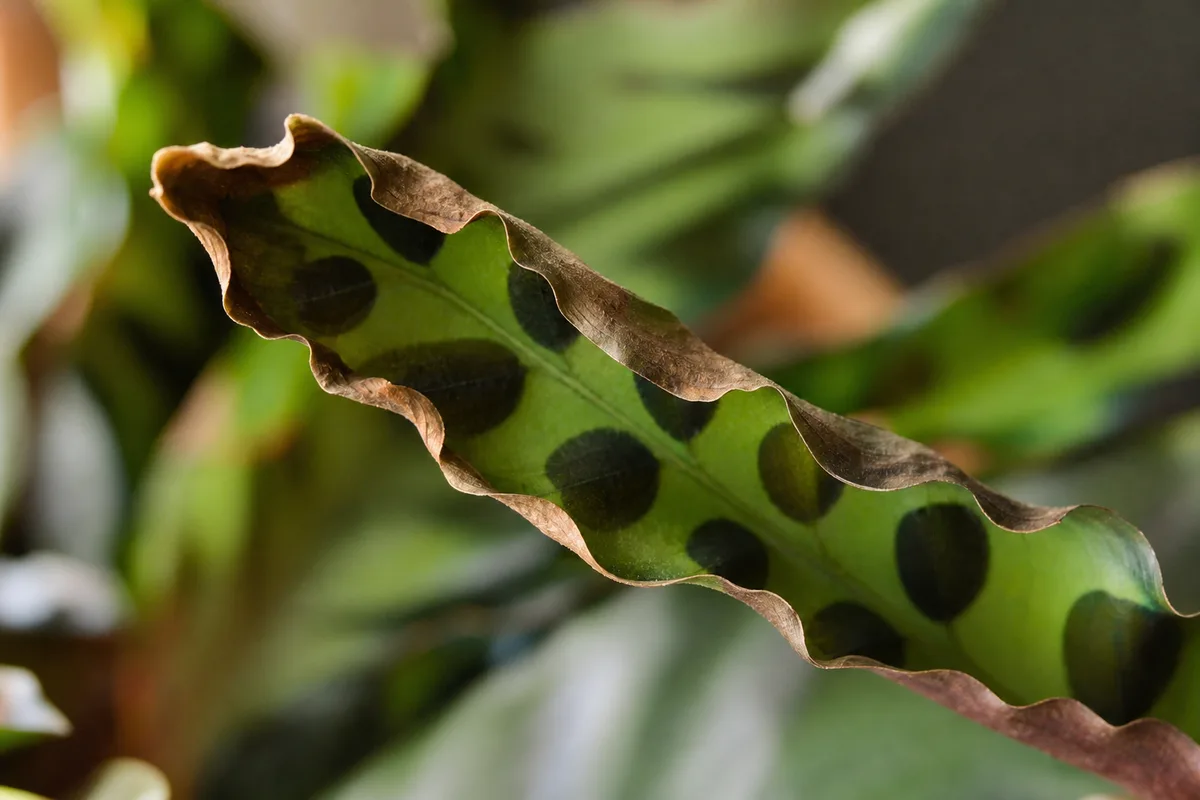
Tight inward roll along a narrow Rattlesnake leaf with brown crispy wavy margins - distinguish from normal nightly prayer-plant folding.
Normal vs distress: Healthy Rattlesnake leaves rise at night and lower by day-that nyctinasty “prayer” motion is expected. Underwatering adds tight inward rolling through the afternoon, especially on the outer leaves. The curl looks like the blade is folding shut along its length, not just lifting at night.
Common underwatering signs on Calathea Rattlesnake overview:
- Pot feels noticeably light compared with right after watering
- Soil dry 2–3 cm down, sometimes dusty on top and pulled slightly from the pot wall
- Leaves curl inward and feel thinner or less springy than usual
- Wavy leaf edges turn crisp and brown on the narrow margins-the thinnest tissue dries first
- Outer leaves droop while newer center rolls may still look smaller but firm
- Growth slows and new leaf unfurling stalls mid-roll
What underwatering usually does not look like on Rattlesnake:
- Soil wet or cool at depth with a heavy pot
- Lower leaves yellowing while mix stays damp for days
- Soft, mushy stems at the soil line
- Fungus gnats hovering over constantly wet surface
Those patterns fit overwatering on Calathea Rattlesnake or root rot on Calathea Rattlesnake better than simple thirst.
Why Calathea Rattlesnake gets underwatered
Rattlesnake is often sold as a slightly easier Calathea because narrow leaves hide damage better than broad round types-but it still needs consistently moist, well-drained soil and high humidity. NC State Extension notes that Goeppertia insignis wants uniformly moist potting mix indoors, with reduced watering only in winter when growth slows.
Plant-specific triggers:
Fear of overwatering. Calatheas are famous for rotting in soggy peat. Many owners swing too far the other way and let the root ball go fully dry between rare drinks. Rattlesnake tolerates brief dry-down at the surface, but not long drought through the whole pot.
Calendar watering in changing seasons. In bright warm months the narrow leaf surface loses water quickly and the pot may need water every five to seven days when the top 2 cm dries. In cool short-day winter, the same weekly schedule can be too much-but skipping water for two or three weeks while central heat runs can still dry the mix completely.
Heat and airflow near the pot. Low humidity and heat stress from placement above radiators, HVAC vents, or sunny glass dries the narrow blades unevenly. The soil can read slightly moist at the surface while roots deeper in a crowded ball are starved.
Hydrophobic old mix. Peat-heavy soil that has dried out hard may repel water from the top. You think you watered, but water channels down the pot sides and the center stays dry-classic chronic underwatering with a briefly damp surface.
Small pots and dense roots. A root-filled container dries in a day or two. Rattlesnake works in tighter spaces than larger Calatheas, but a crowded pot still needs more frequent checks, not less.
Tap water avoidance taken too far. This species prefers filtered or rainwater because minerals brown edges-but skipping water because only tap is available leaves the plant drier longer. Use filtered water when you can; do not let the plant wilt for days waiting for rain.
How to confirm the cause
Work through these checks before you change anything else:
- Pot weight - Lift the container. A thirsty Rattlesnake feels light; a well-watered one has obvious heft.
- Moisture at 2 cm depth - Check soil moisture before watering by pushing your finger into the top 2 cm. Dusty dry confirms need; cool dampness below a dry crust may mean hydrophobic mix or recent surface splash only.
- Time of curl - Leaves that uncurl overnight but roll tight again by afternoon often point to drying between drinks. Leaves curled 24 hours after a thorough soak suggest low humidity, cold drafts, or root damage-not simple thirst.
- Soil at the drainage hole - Peek underneath. If the bottom is dusty dry while you have been watering lightly from the top, water has not been reaching the core.
- Leaf pattern - Whole-blade inward curl with flexible green tissue fits underwatering. Only edge crisping with flat leaf centers fits low humidity. Yellow lower leaves on wet soil fits overwatering.
- Recent care - Travel, a new “water every two weeks” rule, or Calathea Rattlesnake repotting guide into very chunky mix without adjusting frequency are common setup causes.
Confirmed underwatering is dry mix several centimeters down, light pot, inward leaf curl, and clear improvement within hours after one deep soak. If the plant stays limp on wet soil, stop adding water and inspect roots instead.
First fix for Calathea Rattlesnake
Bottom-water the pot once with room-temperature filtered or rainwater.
Set the container in a basin so water reaches one-third to halfway up the pot sides. Bottom-water in a tray until the surface feels evenly moist-usually 20 to 45 minutes for a standard houseplant pot. Remove it, let excess drain fully for 30 minutes, and empty the saucer.
This single step re-wets a dry root ball more evenly than a quick top pour, which often runs down the sides of shrunken peat. Do not leave the plant sitting submerged for days.
After the soak, place it back in Calathea Rattlesnake light guide away from heat vents. Check again in four to six hours-Rattlesnake leaves often relax and uncurl once turgor returns.
Step-by-step recovery
If one bottom-water fixes the curl, adjust routine care only:
- Resume the dry-down check - Water when the top 2 cm begins to dry during spring and summer active growth. In winter, stretch toward seven to ten days only if the pot stays cool and growth is slow-but do not let the entire ball go bone dry.
- Water thoroughly each time - Add water until a little drains from the bottom, then discard saucer water. Light sips that never reach depth cause repeat drought.
- Use filtered or rainwater - Reduces mineral edge burn that can mimic drought damage on wavy margins.
- Group or humidify - Target 60% relative humidity or higher so narrow leaves lose less moisture while roots recover. Dry air can keep edges crisp even after soil moisture is fixed.
- Hold fertilizer - Skip feed until new center growth looks firm for two weeks. Salts on drought-stressed roots add stress.
- Trim only fully dead tissue - Snip crispy brown edge sections if they bother you aesthetically. Living green tissue may still uncurl; brown is permanent.
If water runs straight through and the pot lightens again within a day, the mix may be hydrophobic. Repeat bottom-watering once or twice over a week, or plan a repot into fresh moisture-retentive, well-drained mix when the plant is stable-not on the same day as the rescue soak.
Recovery timeline
Hours: Mild dehydration often shows leaf uncurling within four to twelve hours after a proper bottom-water. Stems regain tension first; outer blades follow.
Days: Crisp brown edge tissue does not green up. Newly emerging center rolls should look plump within three to seven days if moisture and humidity are steady.
Weeks: A Rattlesnake that was repeatedly drought-cycled may shed older outer leaves while pushing new patterned blades. That is normal salvage growth if the crown stays firm.
Worsening signs: Leaves stay tightly curled 24 hours after a confirmed full soak, stems soften at the base, or yellowing spreads on damp soil-those point to root rot, severe prior overwatering, or low humidity masquerading as thirst. Re-diagnose before the next drink.
Lookalike symptoms
- Low humidity - Browning or curling of leaf edges with otherwise flat leaves; soil moisture can be fine. Fix humidity first.
- Overwatering - Yellow lower leaves, heavy wet pot, fungus gnats, limp stems despite damp mix.
- Heat or draft stress - Uneven crisping on the side facing a vent or window; soil may be moist.
- Normal nyctinasty - Leaves lift at night and lower by day without tight inward rolling or crispy margins.
- Mineral burn from tap water - Brown edge pattern on otherwise turgid leaves in evenly moist soil; switch water source rather than watering more.
What not to do
Do not drench daily after one dry spell-that swings Rattlesnake into the overwatering zone where rot is common. Avoid misting instead of soaking roots-brief leaf moisture does not rehydrate a dry root ball. Do not use cold tap water on stressed roots. Skip repotting, pruning, and fertilizing the same day you rescue a dry plant. Never let it sit in a full saucer after a recovery soak.
How to prevent underwatering next time
Match watering to how fast your pot dries, not a generic calendar. For most homes in active growth, check every few days and water when the top 2 cm begins to dry-roughly every five to seven days in warm bright conditions, longer in cool winter.
Keep Rattlesnake in filtered light away from heating vents and sunny glass that accelerates leaf water loss. Use moisture-retentive but well-drained mix with enough organic matter to hold water without staying soggy.
Refresh peat-heavy soil that has gone hydrophobic, and upsize or divide when roots circle and the pot dries in under 48 hours. Pair steady watering with 60%+ humidity so the narrow wavy leaves do not lose moisture faster than roots can replace it.
Judge long-term health by new center rolls with crisp pattern and firm arch-not by whether every old wavy edge stays perfect.
When to use this page vs other Calathea Rattlesnake guides
- Calathea Rattlesnake watering guide - Use for routine moisture checks before assuming underwatering is the main issue.
- Calathea Rattlesnake problems hub - Browse all 16 common issues on this species.
- Wilting on Calathea Rattlesnake - Different entry point when symptoms overlap with underwatering.
- Brown Tips on Calathea Rattlesnake - Different entry point when symptoms overlap with underwatering.
- Yellow Leaves on Calathea Rattlesnake - Different entry point when symptoms overlap with underwatering.
Related Calathea Rattlesnake guides
- Calathea Rattlesnake overview
- Calathea Rattlesnake watering
- Calathea Rattlesnake light
- Calathea Rattlesnake soil
- Wilting on Calathea Rattlesnake
- Brown Tips on Calathea Rattlesnake
- Yellow Leaves on Calathea Rattlesnake
- Overwatering on Calathea Rattlesnake
- Drooping Leaves on Calathea Rattlesnake
- Calathea Rattlesnake problems