Calathea Rattlesnake Propagation: Division Guide
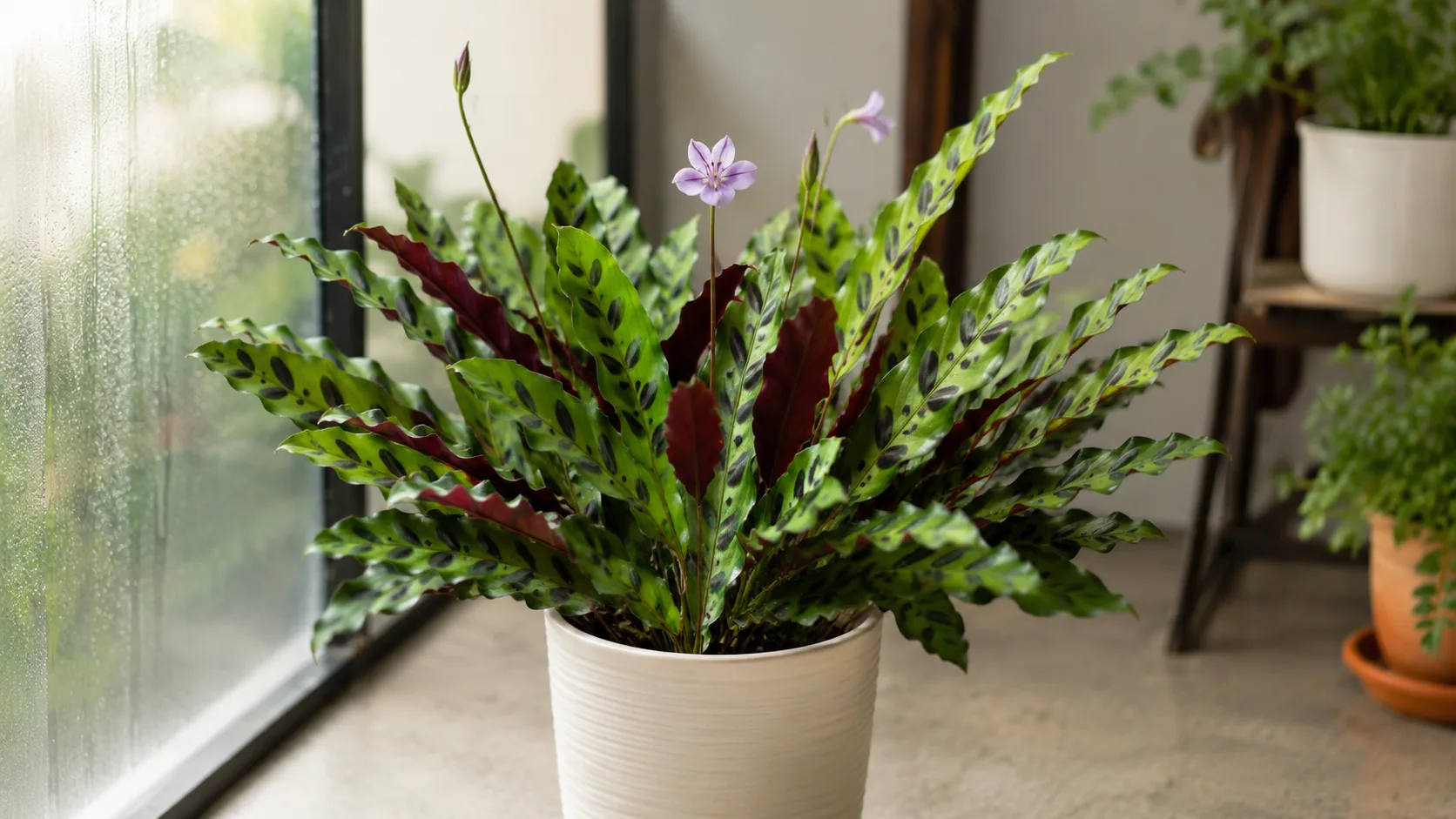
Calathea Rattlesnake Propagation: Division Guide
Calathea Rattlesnake Propagation: Division Guide
Why Division at Calathea Rattlesnake repotting guide Is the Only Reliable Method
If you want more Calathea Rattlesnake plants, there is one method that actually works at home: division during repotting. You take a mature plant with multiple growth points, separate the natural clumps attached to underground rhizomes, and pot each section as its own plant. That is the entire propagation toolkit for Calathea Rattlesnake overview. Leaf cuttings, stem cuttings, and water propagation look tempting because they work on pothos and philodendrons, but they fail on Rattlesnake every time for reasons rooted in how prayer plants grow.
The practical advantage of tying division to repotting is that you disturb the root system once instead of twice. Calathea Rattlesnake - botanically Goeppertia insignis, still widely sold under the former name Calathea lancifolia - is a rhizomatous perennial in the Marantaceae family. Its energy storage and regrowth capacity live in thick horizontal stems just below the soil surface, not in detached leaf petioles or bare stem segments. The Missouri Botanical Garden lists division as the recommended propagation strategy for this species, and the North Carolina Extension Gardener Plant Toolbox confirms division as the recommended propagation method for Goeppertia insignis. Seed propagation exists in theory but is impractical indoors because Rattlesnake rarely flowers in typical home conditions.
Division does have a real limitation: you need a mature, multi-crowned plant. A young Rattlesnake in a 4-inch pot with a single tight rosette is not a propagation candidate yet. You are not creating new tissue from nothing; you are reallocating existing crowns, rhizome segments, and root mass into separate containers. When done at the right time with adequately sized pieces, the mother plant and each division recover within four to eight weeks and resume pushing the long, wavy, patterned leaves that make this plant worth the effort.
How Rattlesnake Grows: Rhizomes, Crowns, and What Cannot Regenerate
Understanding Rattlesnake anatomy prevents the most common propagation mistake: treating it like a node-bearing vine. A rhizome is a fleshy underground stem that stores starch and produces shoots. On Calathea Rattlesnake, rhizomes run horizontally just below the soil line. Each shoot that emerges from a rhizome segment becomes a crown - a cluster of petioles and lanceolate leaves sharing a connected base. When you divide the plant, you are separating these rhizome-linked crowns, not cutting random leaves or stems.
Each viable division must function as a miniature version of the whole plant. That means it needs three things working together: at least two to four mature leaves for photosynthesis, a rhizome segment with an active growth point where new leaves can emerge, and a root cluster substantial enough to absorb water while the division heals. A leaf pulled off at the petiole, even with an inch of stem attached, lacks the meristematic tissue required to generate new rhizomes or adventitious roots. The petiole is essentially a leaf stalk, not a propagation organ.
Rattlesnake’s narrow, rippled blades with dark oval markings make stress visible in specific ways. Edge crisping along the wavy margin, tight daytime leaf curl, and pattern fading in weak light all signal that conditions have shifted. That sensitivity is not a reason to avoid division; it is a reason to divide carefully, keep pieces large enough to sustain themselves, and provide stable aftercare. In its native southeastern Brazilian rainforests, Goeppertia insignis spreads vegetatively through rhizomes - exactly the growth habit you are working with when you split a crowded pot.
When to Divide Your Calathea Rattlesnake
Timing matters more than the calendar date on its own. The best window is spring through early summer, when Rattlesnake is actively pushing new leaf rolls from the center and indoor temperatures hold steady between roughly 65 and 80 °F (18 to 27 °C). During this phase, root cells regenerate quickly, new spears have the energy to unfurl, and the plant tolerates the brief disruption of having its root ball handled. Missouri Botanical Garden recommends regular watering and monthly balanced fertilizer during the April through August growing season - the same months when division recovery is fastest.
Combine division with repotting whenever possible. The usual repot triggers - roots circling the pot bottom, water running straight through dry mix, or visible crowding with multiple offset rosettes - are the same signals that the plant is mature enough to split. Most Rattlesnake plants need repotting every one to two years. Doing both jobs in one session reduces cumulative stress. Water the plant lightly the day before so the root ball holds together but is not soggy. Moist, workable soil lets you brush away the outer layer and see rhizome connections without shattering fine roots.
Avoid dividing in late fall or winter unless you have no choice. Rattlesnake slows growth when days shorten and indoor heating dries the air. A division made in November can sit static for months, losing older leaves to dehydration while roots repair slowly. If your plant is severely root-bound and showing decline, a careful division in winter beats leaving it choked - but expect a longer recovery and plan extra humidity support. For most growers, waiting until the first new spring spear appears is the smarter call.
Signs the Plant Is Mature Enough to Split
Not every Rattlesnake is ready to divide, and forcing a split on an immature plant produces weak pieces that struggle for months. Look for multiple distinct rosettes at the soil surface, each with its own group of narrow leaves emerging from a shared rhizome network below. A single centered rosette in a small pot needs more time. Crowded specimens in 6- to 8-inch pots often show two to four natural clumps once you remove the pot and loosen the outer soil.
Root mass is the other half of the readiness check. When you slide the plant out, healthy roots should be white to pale tan, firm, and numerous enough that you can see clear clusters attached to each crown. If the root ball is sparse, soft, or smells sour, fix the underlying watering or rot problem before you divide. Propagation is not a rescue tool for a failing plant; it is a way to multiply a healthy one.
Leaf quality tells you whether the plant has energy to spare. The newest Rattlesnake leaves should be opening with the characteristic pale green blades, dark elliptic blotches, and purple undersides. If the pattern fades while the plant stays otherwise healthy, light is probably too weak. If leaves curl tightly during the day, check water stress and heat before you add division stress on top. A good propagation candidate looks full, slightly tight in its pot, and visibly composed of separable sections rather than one lonely stem.
Tools, Soil, and Pre-Division Preparation
Good tools reduce damage, and reduced damage is the difference between a division that settles in two weeks and one that limps for two months. Gather a sharp knife or pruning shears, sterilized with 70 percent isopropyl alcohol; a hand trowel; clean pots one size smaller than you might expect for each division; and fresh, well-draining potting mix. Calathea roots need air as much as moisture, so a blend of peat-based indoor mix, perlite, and orchid bark in roughly equal parts works well. The mix should feel like a damp sponge, not wet compost. NC State Extension lists acidic to neutral soil pH (below 6.0 through 8.0) with consistent moisture but never waterlogging.
Each new pot needs a drainage hole. Rattlesnake divisions are especially vulnerable to anaerobic root zones while their cut surfaces heal. Plastic, glazed ceramic, or nursery pots in the 4- to 6-inch range suit most divisions; the mother plant typically moves up only 2 to 5 cm in diameter. Have a spray bottle of lukewarm filtered or rainwater, a clear plastic bag or humidity dome, and optionally a pebble tray ready before you make the first cut. Setting up aftercare gear in advance matters because the divisions should be moved to stable conditions immediately after potting.
Prepare the workspace itself. Lay down newspaper or a clean tarp, keep tools within reach, and plan where each division will sit for the establishment phase. Bright, indirect light with no direct sun is non-negotiable for the first month. If you use tap water for irrigation, let it sit overnight or switch to filtered water; Rattlesnake is sensitive to fluoride and chlorine during stress recovery.
Step-by-Step: Dividing Calathea Rattlesnake During Repotting
Division is methodical work, not forceful tearing. The goal is to follow the plant’s natural architecture so each piece keeps maximum root length and an intact rhizome node. Rushing this step is how growers end up with divisions that have plenty of leaves but almost no roots.
Removing the plant and exposing the root ball
Tip the pot on its side and support the base of the stems with one hand. Tap or squeeze the pot gently to loosen the root ball, then slide the plant out. If it resists, run a clean knife around the inside rim rather than yanking the stems. Rattlesnake petioles snap easily, and a broken crown is harder to recover than a patiently freed root ball. Once the plant is out, brush or shake away loose soil from the outer third of the root mass. You want to see where rhizomes connect crowns without bare-rooting the entire plant.
Rinse lightly with lukewarm water from a spray bottle if the center is still opaque with old mix. Cold water shocks tropical roots; a heavy hose blast destroys fine root hairs. Work slowly, holding the root ball in both hands and letting soil fall away until natural clumps become visible. Well-grown Rattlesnakes often reveal two to four sections, each with its own stem cluster and radiating roots. Leave some original soil on the roots rather than stripping it all away - fine root hairs that absorb water are more valuable intact than a visually clean root ball.
Finding natural separation points on the rhizome
Study the exposed rhizome network before you cut anything. Natural separation points appear where rhizomes narrow between crowns or bend at a visible angle. These are the low-risk zones. Each section you plan to remove should already look like a small plant: leaves above, rhizome segment at the junction, and roots below. If two crowns share a thick rhizome bridge that will not pull apart by hand, that bridge becomes your cut location.
Mark mentally - or with a loose twist tie - which clump goes to which pot. Divisions that lose track of their orientation still grow, but organizing upfront prevents accidentally leaving one section with almost all the roots. The rhizome is the energy reserve; a division with leaves but a severed or missing rhizome segment rarely survives. On Rattlesnake, look for the short erect stems rising from rhizome tissue just below soil level - that junction is the crown you must preserve.
Making clean cuts and sizing each division
When hand separation fails, use your sterilized blade to make one decisive cut perpendicular to the rhizome. Sawing or twisting crushes tissue and invites rot. Each division should retain at least two to four healthy leaves, one intact rhizome node with visible shoot potential, and four or more firm roots at least an inch long. Smaller pieces sometimes survive but often stall, dropping leaves until they fail entirely.
Trim only what is necessary: black, mushy roots cut back to firm white tissue, and broken leaf tips that will brown anyway. Do not strip healthy roots to fit a small pot. If a natural clump is large, keep it large. A slightly oversized division establishes faster than a tidy but undersized one. Wounds on rhizomes and roots air-dry for a few minutes before potting if you made significant cuts, though Calathea does not require the long callusing that succulents do. If some roots resist gentle teasing, use pruning shears to selectively snip connecting roots rather than tearing them.
Potting divisions and resetting the mother plant
Place each division in its prepared pot so the rhizome sits just at soil level, with the crown neither buried nor perched too high. Burying the crown is a common cause of rot on newly potted prayer plants. Add mix around the roots, tapping the pot gently to settle voids without compacting. Water lightly until a small amount drains from the bottom, then stop. The first watering settles soil; it is not a deep soak. Keep the soil line at the same place on each plant’s base as it was in the original pot.
Return the remaining mother section to its original or slightly larger pot with fresh mix filling the space where you removed divisions. Both the parent and the new plants benefit from the same aftercare protocol for the next month. Optionally, loosely tent each division with a clear plastic bag that does not touch the leaves to support establishment in dry homes.
What to Do When You Have Only One Central Crown
Many growers buy a single-stem Rattlesnake and later wonder whether propagation is possible at all. If the plant is mature with a substantial root ball but only one visible crown, you can still divide - carefully. The technique is to slice the crown and root mass in half through the center, ensuring each half retains leaves, rhizome tissue, and roots. This is more stressful than separating natural offsets, so the plant should be healthy, well-hydrated, and actively growing before you attempt it.
Each half needs at least two mature leaves and a fair share of the root system. Asymmetrical halves where one side keeps 80 percent of the roots will show uneven recovery. Make the vertical cut cleanly and pot each half immediately. Expect more leaf curl and possible older-leaf loss than you would see with natural clump separation. Maintain elevated humidity for four to eight weeks and avoid any fertilizer until new growth appears.
If your single-crown plant is still young - under roughly a year old or in a pot smaller than 6 inches - the better move is patience. Grow it on until side shoots or a second rosette emerges naturally. Rattlesnake is not a fast multiplier, but a well-fed, humid, properly lit plant will eventually produce enough rhizome mass to make division worthwhile. Forcing a halving on a juvenile plant often yields two struggling halves instead of one strong specimen.
Aftercare for the First Two to Four Weeks
The division is only half the job. Aftercare determines whether each piece re-establishes or slowly declines. For the first 10 to 14 days, keep soil lightly moist but never waterlogged. Check moisture with your finger at an inch depth; if it feels cool and slightly damp, wait. Divisions with damaged roots cannot process a full soaking the way an established plant can, and soggy mix is the fastest route to crown rot.
Expect some transplant stress. Older leaves may curl during the day, develop crisp edges along the wavy margin, or yellow one at a time. That is the plant reallocating resources to root repair. Panic repotting, heavy watering, or moving the pot every day adds stress without helping. Stable placement matters. Pick a bright indirect spot and leave the plant there. New spear emergence - a tightly rolled leaf pushing from the crown - is the first reliable sign that roots are reconnecting with soil.
Hold off on fertilizer for at least four weeks, and longer if growth is slow. Fresh potting mix contains enough nutrients for initial recovery, and salt buildup from eager feeding burns roots that are still healing. When you resume feeding, use a diluted balanced liquid fertilizer at quarter strength during the active growing season. Rattlesnake is not a heavy feeder during establishment; the priority is root function, humidity stability, and gentle water quality, not pushing maximum leaf size.
Humidity, Light, and Temperature During Establishment
Calathea Rattlesnake is a humidity-sensitive prayer plant, and divided specimens need more atmospheric moisture than mature ones. Aim for at least 60 percent relative humidity for the first two to three weeks. UF IFAS notes that Calatheas maintain appearance better when relative humidity is kept between 40% and 60% indoors; many growers target 60% or higher during establishment. A pebble tray, grouped plants, or a clear plastic bag tent with daily airing works in most homes. Avoid letting the plastic touch leaves; condensation on Rattlesnake foliage encourages fungal spotting on stressed tissue.
Light should be bright and indirect. An east-facing window or several feet back from a south or west window is ideal. NC State Extension recommends limited sun to bright shade and notes the species does not tolerate Calathea Rattlesnake light guide. Low light slows recovery and can fade the characteristic dark blotches on new leaves. Direct sun scorches narrow blades that already cannot regulate water loss. Temperature stability matters as much as humidity. Nighttime drops below 60 °F (15 °C) slow root metabolism; cold windowsills in winter are a common hidden cause of stalled divisions.
Do not mist as a substitute for humidity. Surface misting evaporates quickly and can leave mineral spots on Rattlesnake’s patterned leaves. If your home is consistently dry, a small humidifier near the plants is more effective than twice-daily spritzing. Watch the newest leaf as your humidity gauge: if spears open cleanly and lie relatively flat, your air is probably adequate. If unfurling leaves tear or stick, humidity is too low or temperature swing is too wide.
Watering and Fertilizer Rules After Division
Watering discipline separates successful Rattlesnake propagators from those who lose divisions to rot. Use room-temperature filtered, distilled, or rainwater when possible. Cold water shocks roots; high-chlorine tap water can tip stressed Calathea into edge burn along the wavy leaf margins. Water when the top inch of mix feels dry, then add enough that a small amount drains out. Empty the saucer within 30 minutes so the pot is not sitting in standing water.
Reduce watering frequency compared with your established Rattlesnake. Divisions have fewer intact root tips per leaf and process water more slowly. A division that wilts while the mix is still wet usually has root damage or rot, not thirst. The finger test at mid-depth is more trustworthy than leaf appearance alone.
Resume a normal Calathea Rattlesnake watering guide when new leaves open without damage and the plant survives a full dry-down cycle without wilting. That typically happens around week four to six in spring divisions. Fertilizer follows the same gate: wait for active new growth, then start at quarter strength every four weeks through the growing season.
Why Leaf Cuttings and Stem Cuttings Fail on Rattlesnake
This section exists because the internet is full of generic propagation advice that does not apply to Calathea. Leaf cuttings - a single Rattlesnake leaf with petiole placed in water or soil - cannot produce a new plant. The leaf may stay green for weeks, which creates false hope, but without rhizome meristem tissue it will never generate roots capable of supporting new shoots. NC State Extension lists division as the only recommended propagation method for Goeppertia insignis. Eventually the petiole rots or the leaf yellows and collapses. Success rate for leaf cuttings on Rattlesnake is effectively zero.
Stem cuttings fail for the same structural reason. What looks like a stem on Rattlesnake is a cluster of leaf petioles emerging from a crown on a rhizome, not a node-bearing vine. Cutting a petiole or a bare section above the rhizome removes display foliage but leaves no regeneration engine. Water propagation does not change the biology; it only keeps doomed tissue hydrated longer.
The following comparison summarizes what home growers can expect:
| Method | Works for Rattlesnake? | Typical outcome |
|---|---|---|
| Rhizome division at repotting | Yes | High success with adequate piece size |
| Leaf cutting | No | Petiole rots; no new plant |
| Stem cutting | No | No adventitious roots form |
| Water propagation | No | Leaf persists briefly, then fails |
| Seed sowing | Rarely indoors | Impractical for most home growers |
If you want more Rattlesnakes, invest in growing the parent plant well until division is possible. Buying a second plant is also a valid option - sometimes more practical than forcing a premature split or experimenting with cuttings that cannot succeed.
Common Division Mistakes and How to Recover
The most frequent mistake is making divisions too small. A single leaf with a few roots looks efficient but lacks the photosynthetic and rhizome reserves to sustain itself. If you already potted undersized pieces, cluster them under a humidity dome, keep temperatures warm, and do not fertilize. Some will recover; many will not. Learning point: next time, keep pieces bigger even if you get fewer new plants.
overwatering on Calathea Rattlesnake is the second killer. Stressed roots in wet, airless mix rot within days. If you smell sour soil or see blackening at the crown, unpot immediately, trim rotten tissue with sterile tools, and repot into fresh, barely moist mix. A humidity tent helps after emergency repotting. Burying the crown too deep produces similar crown rot symptoms; if you suspect this, lift the plant slightly so the rhizome junction sits at the soil surface.
Dividing at the wrong time - winter, during active pest infestation, or right after shipping - produces long, unhappy recoveries. Stabilize the plant first. For pests, treat and verify clean new growth before splitting. For post-shipping stress, give the plant two to three weeks of stable care. Aggressive bare-rooting strips fine root hairs that absorb water. Keep some original soil around each division’s core when possible; refresh the outer mix rather than washing every root clean. Fertilizing newly divided plants too soon is another common error that shows up as pale new growth and brown leaf edges within days.
Signs Your Division Is Thriving or Failing
Success and failure have distinct signatures if you know what to watch. A thriving division shows a new spear emerging within two to four weeks in spring, followed by a leaf that unfurls with minimal tearing along the wavy margin. Older leaves may still develop minor edge crisping, but the plant holds its overall upright form and does not collapse. Roots, if you gently tip the plant out after four to six weeks, should be white to cream and spreading into the new mix. You can test anchoring by giving the base a very gentle tug - firm resistance suggests roots are establishing.
A failing division loses turgor on multiple leaves at once, develops black mushy tissue at the crown, or produces no new growth after six to eight weeks while existing leaves yellow sequentially. Persistent leaf curl with wet soil suggests root rot on Calathea Rattlesnake. One yellowing lower leaf during recovery is normal; four yellowing leaves and a soft base is not.
Use a simple decision rule at week six. If new growth is visible and the plant handled its last watering cycle without wilting, transition gradually to normal Rattlesnake care. If growth is absent and leaf loss is accelerating, salvage what firm tissue remains or discard the division and focus on the mother plant. Trying to save a rotting rhizome for months rarely ends well and risks contaminating nearby pots.
When Not to Divide Your Calathea Rattlesnake
Division is not the answer to every Rattlesnake problem. Do not divide a plant with active root rot, mealybugs, spider mites, or widespread fungal leaf spotting until the underlying issue is resolved. Splitting a sick plant spreads stress across more pots and makes treatment harder. Do not divide purely because growth is slow if the real issue is low humidity, inconsistent watering, or insufficient light. Fix the care environment first; you may find the plant fills out without surgery.
Do not divide a brand-new purchase in its first month at home. Retail plants need acclimation time, and immediate division stacks transplant shock on top of environmental change. Wait at least one full growing cycle unless the pot is clearly defective or root-bound to the point of decline. Do not divide into more than two or three pieces at once unless the mother plant is exceptionally large. Each additional cut multiplies recovery risk.
If your motivation is rescuing a dying plant by “starting over” with a small piece, division is the wrong tool. Stabilize or discard. Propagation rewards healthy plants with spare crowns, not desperate salvage attempts on tissue that lacks reserves.
Conclusion
Calathea Rattlesnake propagation is straightforward once you accept what the plant will and will not do. Division during spring repotting is the only reliable home method because Rattlesnake spreads through rhizomes, not through leaf or stem cuttings that root in water. A mature, multi-crowned plant with firm white roots gives you natural separation points; each new piece needs leaves, rhizome tissue, and roots enough to stand alone.
Do the work when the plant is actively growing, use clean tools and airy soil, pot divisions with crowns at the correct depth, and commit to elevated humidity, filtered water, and restrained watering for the first month. The reward is a second or third Rattlesnake that matches the parent - same rippled blades, same dark oval markings, same arching growth habit - without gambling on methods that fail by design. Grow the parent well, split it when the pot is ready, and treat the weeks after division as establishment care rather than normal maintenance. That is the full playbook for turning one healthy Rattlesnake into several without a single doomed cutting in water.
When to use this page vs other Calathea Rattlesnake guides
- Calathea Rattlesnake overview - Start here for whole-plant context before deep-diving this topic.
- Calathea Rattlesnake problems hub - Jump to symptom-specific fix guides when this care topic does not resolve the issue.
Related Calathea Rattlesnake guides
- Calathea Rattlesnake overview
- Calathea Rattlesnake watering
- Calathea Rattlesnake light
- Calathea Rattlesnake soil
- Calathea Rattlesnake fertilizer
- Calathea Rattlesnake repotting
- Calathea Rattlesnake problems
Related tool
Try the Propagation Success Calculator with calathea-rattlesnake pre-selected to estimate needs for your setup.