Best Soil for Calathea Rattlesnake: Mix, Drainage &
Best Soil for Calathea Rattlesnake: Mix, Drainage & Repotting
Best Soil for Calathea Rattlesnake: Mix, Drainage & Repotting
Why Soil Matters More Than Most Rattlesnake Care Guides Admit
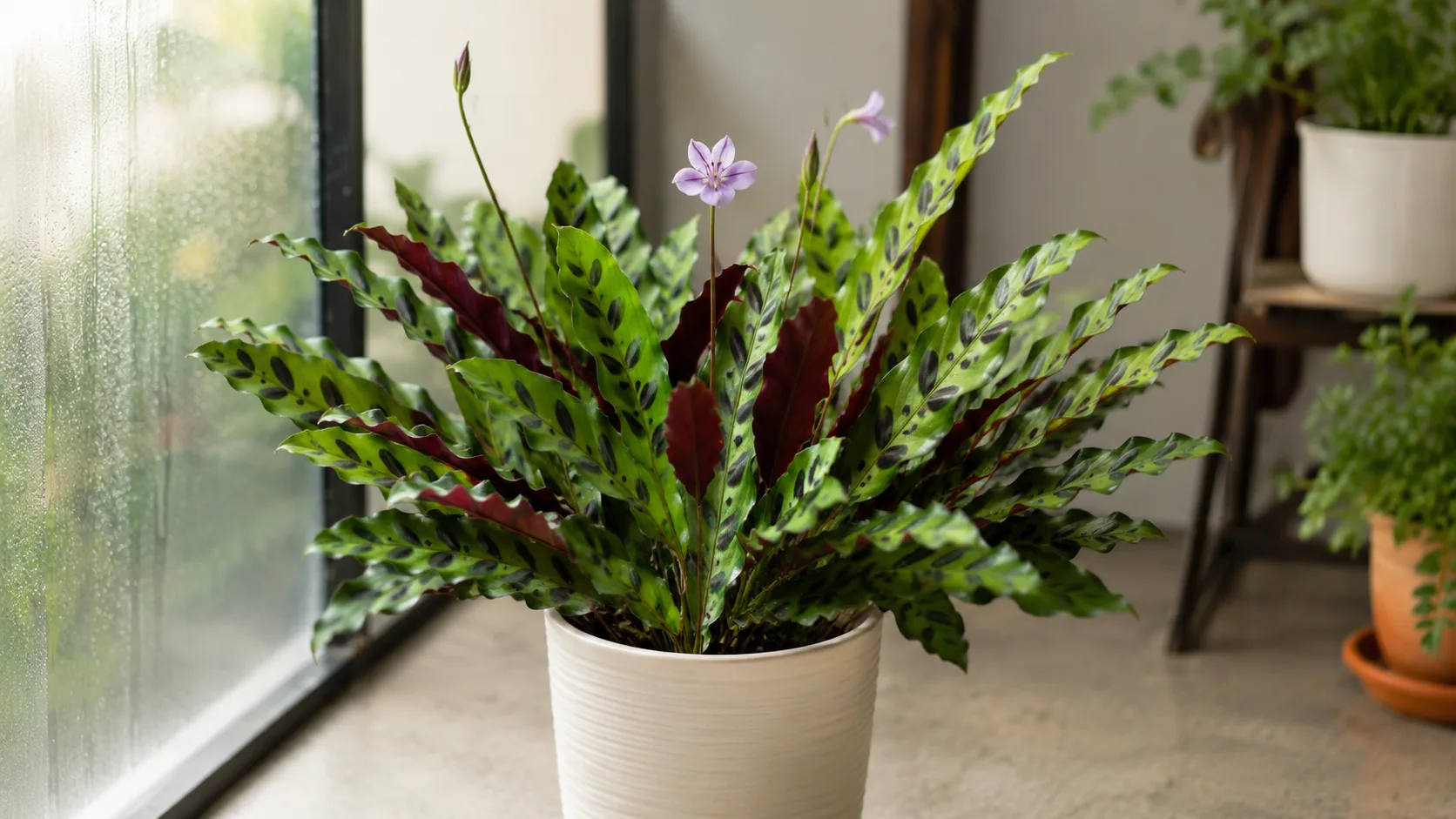
Calathea Rattlesnake (Calathea lancifolia, now widely classified as Goeppertia insignis) is the narrow-leaf prayer plant with long wavy blades, dark oval markings, and purple undersides that fold at night. Growers often focus first on humidity, filtered water, and keeping it out of direct sun - all important - but the root zone is where those other care choices either hold together or fall apart. Soil is not inert filler. It decides how fast water moves through the pot, how much oxygen reaches fine roots between waterings, how minerals accumulate over months, and how quickly the plant recovers after a missed drink or an overenthusiastic pour.
The Rattlesnake Plant is a humidity-sensitive prayer plant in the Marantaceae family. Its leaves react quickly to dry air, harsh tap water, and light swings, but many of those symptoms start underground. A mix that compacts, stays waterlogged, or dries into a hard brick forces roots into a cycle of suffocation and drought stress. Getting the best soil for Calathea Rattlesnake right means building a medium that holds light, even moisture while still draining predictably.
Rattlesnake is slightly more forgiving than broad-leaf Calatheas like Calathea orbifolia, but that tolerance is not permission to use dense potting soil. Its narrower leaves tolerate a slightly faster dry-down, yet soggy mix at the pot bottom still causes leaf curl within days. If a Rattlesnake Plant declines despite careful watering, inspect the soil texture before changing light or fertilizer.
What Goeppertia insignis Needs From Its Root Zone
Goeppertia insignis is an evergreen herbaceous perennial native to the tropical rainforests of Brazil, where it grows as an understory plant in warm, shaded, humid conditions. The plant spreads from a horizontal rhizome with fine feeder roots that need continuous access to moisture without stagnation and open pore space for oxygen between waterings. Missouri Botanical Garden recommends growing it indoors in uniformly moist, well-drained, peaty potting mixtures with high humidity, warm air temperatures around 65 to 75 °F (18 to 24 °C), and bright shade rather than direct sun.
Indoors, you are not recreating a Brazilian rainforest in a pot. You are giving the rhizome and its fine roots a stable, airy, moisture-retentive environment in a container that is a fraction of the plant’s natural scale. NC State Extension lists high organic matter, good drainage, and moist - not wet - soil as the cultural targets, with soil pH ranging from acidic through neutral (below 6.0 to 8.0), though most growers aim for the slightly acidic middle of that range. Heavy garden soil, dense peat-only blends, and oversized pots all work against the rhizome’s architecture. The goal is consistently moist, well-aerated soil that dries down gradually rather than swinging between mud and dust.
The Rainforest Floor Model
On the forest floor, the Rattlesnake Plant grows in loose, organic-rich material - decomposing leaf litter, fine humus, and open structure from bark fragments - not in compacted clay. Rain arrives frequently, but the upper layer drains while deeper organic matter holds moisture.
Your indoor mix should mimic the function of that floor: organic matter for moisture, chunky amendments for air pockets, and a pot sized to the root ball so unused mix does not stay wet at the bottom. Target moisture like a wrung-out sponge, not a sealed wet towel. Rattlesnake tolerates the sponge drying slightly further than a Peacock Plant, but fails when the lower half of the pot stays anaerobic.
Four Jobs Your Mix Must Do
Every ingredient in a Calathea Rattlesnake soil recipe should serve at least one of four jobs. First, moisture retention: the mix must hold enough water that fine roots do not desiccate between waterings, especially in homes with forced-air heat or air conditioning. Second, drainage and aeration: excess water must exit the pot freely, and air must remain in pore spaces after watering so roots can respire. Third, structure over time: the mix should resist collapsing into a dense, oxygen-poor block within a single growing season. Fourth, chemical compatibility: the medium should stay in a slightly acidic to neutral pH range and not accumulate salts that interact badly with mineral-sensitive foliage.
If your mix fails any of those jobs, the plant may develop curling leaves, brown edges, yellow lower foliage, or stalled growth - symptoms that overlap with watering and humidity problems. Rattlesnake’s narrow leaves sometimes hide early root stress, so inspect the mix before symptoms become obvious.
Signs Your Current Soil Is Wrong
Soil problems on Rattlesnake Plant often announce themselves indirectly before roots fail completely. Water sits on the surface for minutes after you pour, then runs down the gap between the root ball and pot wall. That usually means the mix has become hydrophobic from drying too hard or from peat breakdown. The pot stays heavy for a week after a single thorough watering while the top inch looks merely damp - a sign the lower zone is holding too much water, especially common in dense commercial mixes or oversized containers. New leaves emerge small, distorted, or slow to unfurl, or the plant stops producing new foliage during active season despite adequate light and humidity. A sour or stagnant smell from the drainage hole points to anaerobic conditions and possible root decline even before leaves yellow.
Watch for persistent daytime leaf curl paired with soil that never dries at depth - water stress from oxygen-poor wet mix looks identical to drought. Brown tips along wavy margins plus slow-drying soil often means struggling roots and mineral buildup from tap water.
If symptoms return after adjusting watering, inspect mix texture and pot size before changing light or fertilizer. Healthy roots are pale, firm, and white to tan. Dark, mushy roots mean failure; a rock-hard root ball means compaction - both need fresh, airier mix.
Best Soil Mix for Calathea Rattlesnake
The best soil for Calathea Rattlesnake is a moisture-retentive, well-draining potting mix with high organic matter and enough coarse amendment to keep the root zone open. Because Rattlesnake is somewhat more drought-tolerant than broad-leaf Calatheas, many experienced growers add slightly more drainage material than they would for Calathea orbifolia, while still keeping the mix from drying out in a day. NC State Extension recommends a uniformly moist, well-drained peaty potting mixture for indoor culture.
You are aiming for a medium that feels light and springy when moist, not sticky or purely gritty. When you squeeze a handful lightly, it should hold shape briefly and crumble apart. If it forms a tight mud ball, add perlite and bark. If water runs through instantly and the plant wilts within two days, you have gone too coarse or the pot is too small for the root mass relative to leaf demand.
The Quick-Answer Recipe
A dependable Calathea Rattlesnake soil mix you can blend at home:
| Ingredient | Proportion | Role |
|---|---|---|
| Quality peat-based or coir-based potting soil | 40% | Organic base, moisture, nutrients |
| Coarse perlite (#2 or larger) or pumice | 30% | Drainage channels, air space |
| Medium orchid bark (1/4 inch) | 20% | Structural aeration, slow moisture release |
| Worm castings or fine compost | 10% | Gentle nutrition, microbial activity |
A widely used alternative equal-parts recipe also works well: 2 parts peat moss or coco coir, 1 part perlite, and 1 part orchid bark. For a plant that dries too slowly in a plastic pot, shift to 35% base mix, 35% perlite, 20% bark, 10% coir. For a plant in terracotta that dries too fast, use 50% base mix, 20% perlite, 20% bark, 10% worm castings. Optional additions include a small handful of horticultural charcoal per gallon of mix to help buffer impurities, though charcoal is not required for a healthy plant.
Moisten dry peat or coir slightly before blending so ingredients combine evenly. Dry peat can repel water at first, creating the false impression of good drainage while the center of the root ball stays dry. After mixing, the finished medium should pass the fist test: squeeze a moist handful and it holds loosely, then falls apart when you poke it with a finger.
Core Ingredients Explained
Understanding what each component does helps you adjust the recipe without starting from scratch every time a plant behaves differently in your home.
Peat Moss or Coconut Coir
Sphagnum peat moss is lightweight, holds moisture evenly, and supports the slightly acidic conditions Calatheas prefer. Missouri Botanical Garden specifically recommends peaty potting mixtures for rattlesnake plant indoors. The downside is compaction and hydrophobicity within 6 to 12 months indoors - a common hidden cause of root rot on Calathea Rattlesnake when the bottom of the pot turns dense and oxygen-poor while the surface looks acceptable.
Coconut coir is the leading peat alternative. It rewets more easily than aged peat, holds moisture well, and typically has a near-neutral pH around 5.8 to 6.8, which sits comfortably inside the range Goeppertia insignis tolerates. Choose low-salt, horticultural-grade coir; poorly rinsed coir can carry salts that accumulate in the root zone over months of watering. Coir holds more water than perlite-heavy mixes, so pair it with generous aeration amendments rather than using coir alone.
Either peat-based or coir-based potting soil works as the 40 to 50% foundation as long as perlite and bark are added. The choice is environmental preference and rewetting behavior, not a dramatic health difference when the recipe is balanced.
Perlite, Orchid Bark, and Other Aerators
Perlite is expanded volcanic glass. Its job is to create non-decomposing air space and drainage channels. Use coarse perlite rather than fine dust-grade material; larger particles resist packing and maintain porosity longer. Perlite does float upward over time with heavy top watering, which is annoying but not harmful. It simply means the mix may need refreshing at Calathea Rattlesnake repotting guide rather than endless top-ups of the same dense layer.
Orchid bark adds chunkier structure that mimics forest-floor debris. It releases moisture more slowly than fine peat, which helps prevent the bottom of the pot from staying saturated while the top dries. Pumice performs a similar role to perlite with slightly more weight and less floating. Vermiculite holds moisture and can replace part of the coir or compost fraction in very dry homes, but use it sparingly in cool rooms or cachepots because it increases water retention at the expense of air space. Worm castings at 5 to 10% improve nutrient content and microbial activity without turning the mix heavy.
Avoid sand as the main drainage amendment indoors unless you know your watering habits lean dry. Sand increases weight and can settle, reducing aeration in small pots. Avoid garden soil entirely for container Rattlesnake Plants; it compacts, introduces pathogens and weed seeds, and rarely drains predictably in a pot. Avoid pure African violet mix without amendment - it often retains too much water and breaks down into a dense, hydrophobic mass within a year.
pH, Minerals, and Water Quality
NC State Extension lists acidic to neutral soil pH (below 6.0 through 8.0) as acceptable for Goeppertia insignis, with high organic matter and good drainage as the more practical targets for home growers. Most experienced Calathea growers aim for pH 6.0 to 6.5 because that range supports nutrient availability in peat- and coir-based mixes.
Rattlesnake Plant is sensitive to fluoride and tap-water minerals, which cause brown spots and crisp edges - sometimes mistaken for soil deficiency. Minerals accumulate in the root zone over months, especially with fertilizer salts. White crust on the soil surface or worsening tip burn after feeding suggest flushing or repotting into fresh mix.
Flush every four to six weeks with plain water if using tap water, and do not reuse salt-laden mix at repotting. Fresh medium plus filtered water addresses two stressors at once.
Drainage Speed and the Wrung-Out Sponge Test
Drainage for Calathea Rattlesnake does not mean “dry.” It means excess water leaves the pot quickly while the mix retains even moisture throughout the root ball. After a thorough watering, water should exit the drainage hole within minutes, not pool in the bottom for hours. The root ball should feel heavier and evenly moist, not sodden.
Use this one-minute drainage check after watering: pour until water runs from the hole, then lift the pot. Excess should stop streaming within 30 to 60 seconds. If water keeps dripping for many minutes and the saucer fills repeatedly, the mix is too dense, the pot lacks sufficient hole area, or the plant is in a cachepot that traps runoff. Empty saucers and cachepots after 15 minutes - roots should never sit in standing water overnight.
The wrung-out sponge test describes target moisture between waterings. Stick a finger or bamboo skewer into the top 2 cm (about 1 inch). It should feel barely beginning to dry when you water during active growth, not bone dry and not cool-wet. Deeper in the pot, the mix should still feel lightly moist. Rattlesnake can tolerate the top drying slightly further than a Peacock Plant before stress shows, but if the top is dry while the bottom stays wet for days, you have a density or pot-size problem, not a watering-frequency problem.
| Observation | Likely soil issue | First adjustment |
|---|---|---|
| Top dry, bottom wet for days | Dense or degraded mix; oversized pot | Repot with airier recipe; reduce pot size |
| Water beads on surface | Hydrophobic peat | Bottom-water once, repot, or pre-moisten mix |
| Wilting with wet soil | Root rot from past overwatering on Calathea Rattlesnake | Inspect roots, repot into rescue mix |
| Wilting with hard dry soil | underwatering on Calathea Rattlesnake or compacted mix | Rehydrate thoroughly; refresh mix |
| Salt crust on surface | Mineral/fertilizer buildup | Flush or repot; switch water source |
Pot Choice and How It Changes Soil Behavior
The same Calathea Rattlesnake soil mix behaves differently depending on the container. Plastic and glazed ceramic retain moisture longer, which suits growers who underwater or live in dry climates. Terracotta breathes through the walls and pulls moisture from the mix, speeding dry-down - helpful for overwaterers, risky in winter when the plant already slows. Cachepots (decorative outer pots without holes) are fine only if the inner nursery pot drains freely and you never let runoff accumulate in the outer shell.
Every pot for long-term indoor care needs a drainage hole. A layer of gravel at the bottom does not fix poor mix; it reduces usable root volume and can create a perched water table that keeps the lower root zone wetter, not drier. Missouri Botanical Garden recommends uniformly moist, well-drained peaty potting mixtures for container culture of tropical houseplants like rattlesnake plant.
Pot size matters as much as mix. Rattlesnake Plant typically reaches roughly 9 to 20 inches tall and 9 to 18 inches wide in cultivation per NC State Extension. Match the pot to the root ball, not the leaf spread. Rattlesnake’s arching narrow leaves can make the plant look wider than its roots actually are. When repotting, move up only 2 to 5 cm (1 to 2 inches) in diameter. An oversized pot holds a large volume of mix the roots cannot colonize quickly; that unused mix stays wet and invites rot. Slightly snug roots are preferable to swimming in empty soil.
Commercial Mixes vs. DIY Blends
Commercial tropical or aroid houseplant mixes can work well if they are genuinely chunky and not peat-only. Read the label and feel the bag if possible. A good store mix contains visible perlite and bark, feels light, and does not clump into mud when moistened. Many standard all-purpose potting soils are too dense for Calathea Rattlesnake on their own; treat them as the 40% base and add 30 to 35% extra perlite plus 15 to 20% orchid bark.
Can you use regular potting soil without amendment? Only temporarily, and only if you watch dry-down closely. Regular mix in a small plastic pot under moderate light often stays wet too long for Rattlesnake roots. If that is what the plant came in from the nursery, plan to refresh or repot within the first few months rather than waiting for obvious decline.
Cactus or succulent mix alone is usually too fast-draining for Calathea Rattlesnake unless you blend it 50/50 with coir or peat-based potting soil. Straight cactus mix dries in a way that forces repeated drought cycles on fine roots, showing up as curling leaves and brown tips that mimic low humidity. A 50% cactus mix, 30% coir, 20% perlite blend can work for growers who tend to overwater in plastic pots, but monitor wilting closely in the first month.
DIY mixing costs less at scale, lets you tune aeration for Rattlesnake’s slightly faster dry-down preference compared to other Calatheas, and guarantees freshness. Commercial mixes save time and often include starter fertilizer - useful, but remember to dilute feeding because Calatheas are moderate feeders and salt buildup shows quickly on sensitive leaves.
Adjusting the Recipe for Your Home
No single recipe is perfect for every room. Adjust based on how fast the pot dries, not on a calendar. If the mix is still wet at depth after 10 days in spring and the plant shows yellow lower leaves, increase perlite and bark by 10% at the next repot or refresh. If the plant wilts every three days in a terracotta pot and the skewer comes out dry halfway down, increase the base mix and coir fraction or move to a plastic inner pot.
Seasonal shifts change soil behavior. In winter, lower light and cooler rooms slow evaporation; the same mix that worked in August stays wet longer in January. Water less often, but also consider holding repotting until spring unless the mix is clearly degraded. In summer, active growth pulls water faster; check the top 2 cm more frequently without assuming the whole root ball dried evenly. Missouri Botanical Garden notes that watering should be regular during the growing season (April through August) to keep soils moist but not wet, with reduced watering in winter when growth slows.
Humidity above 50 to 60% helps foliage but does not replace an open mix. Grow lights dry pots faster; heat vents can make you overwater - check the root zone, not just leaf surfaces. Compared to Calathea orbifolia, Rattlesnake needs slightly more aeration; compared to Calathea roseopicta, slightly less moisture retention.
When to Refresh or Replace the Soil
Peat-based mixes decompose and compact over time even when the plant is not root-bound. Plan to refresh soil every 12 to 18 months for a healthy Rattlesnake Plant in active growth, or sooner if you see performance decline. Full repotting is not always required; top-dressing - removing the top 3 to 4 cm of old mix and replacing it with fresh aerated blend - can extend the life of the root zone between major repots.
Repot into entirely fresh mix when roots circle the pot bottom, emerge from drainage holes, or push the plant upward; when water runs straight through without absorbing because structure has collapsed; when the mix smells sour or looks muddy despite careful watering; when salt crust persists after flushing; or when the plant stalls in active season with no other clear cause. Spring and early summer are the safest windows because the plant can grow new roots quickly. Avoid winter repotting unless you are rescuing root rot or severe compaction.
Even if the plant fits its pot, soil age alone justifies refresh. Old mix loses pore space, holds water unevenly, and accumulates minerals. Rattlesnake rewards fresh medium with cleaner new leaves, stronger pattern contrast on emerging blades, and steadier prayer-plant movement. Most Rattlesnake Plants need repotting every one to two years when growing actively indoors.
Repotting into Fresh Mix: Step-by-Step
Repotting is the practical moment when soil theory becomes root health. Done correctly, it solves compaction, salt buildup, and pot-size mismatch without shocking the plant.
Water 24 hours before repotting so the root ball holds together. Choose a clean pot one size up with a drainage hole and prepare fresh mix. Inspect roots: healthy ones are pale, firm, and white to tan; trim dark, mushy roots with sterilized scissors. Loosen only the outer 1 to 2 cm - Rattlesnake fine roots tear easily. Set the rhizome at the same depth as before, fill with fresh mix, water lightly, and place in Calathea Rattlesnake light guide for one to two weeks. Hold fertilizer for four to six weeks.
Some leaf curl or droop for a few days is normal. For overwatering recovery, use a rescue mix of 35% base soil, 40% perlite, 25% orchid bark in a pot matched to the trimmed root mass.
Soil Mistakes That Lead to Root Rot
Root rot on Calathea Rattlesnake is almost always prevention failure, not bad luck. The most common soil mistakes are easy to avoid once you know what they look like.
Using unamended dense potting soil in a large plastic pot is the top error. The mix stays wet at the bottom while the surface looks acceptable, so growers water again. Oversized pots multiply the problem by adding unused wet volume. No drainage hole, or a plugged hole, traps water regardless of mix quality. Gravel layers give a false sense of security while reducing root space. Reusing old, compacted mix at repotting imports pathogens and salt problems into a fresh container. Burying the rhizome too deep places sensitive tissue in a zone that stays wetter longer.
Another subtle mistake is repotting into fresh mix but keeping a waterlogged cachepot habit - the inner pot drains, but the outer pot holds an inch of stale water. Rattlesnake roots experience the same anaerobic stress as if the mix itself were swampy. Self-watering pots can work for experienced growers who monitor moisture closely, but they increase overwatering risk for beginners because the wick or reservoir keeps the lower zone constantly available to water.
If you suspect rot, unpot immediately. Trim affected roots, repot into airy fresh mix in an appropriately sized pot, and adjust watering to the top-2-cm dry-down rule. Do not fertilize until you see stable new growth. Leaf damage already present on Rattlesnake blades will not reverse - those narrow leaves keep their scars - but clean soil stops the cycle from continuing and new leaves emerge unmarked.
Conclusion
The best soil for Calathea Rattlesnake balances two demands that sound opposite but are not: hold even moisture for fine rhizome roots and drain fast enough that oxygen never disappears from the mix. Build around 40% peat- or coir-based potting soil, 30% coarse perlite, 20% orchid bark, and 10% worm castings, then adjust perlite up or down based on how your pot actually dries in your room. Keep pH near 6.0 to 7.0, pair the mix with a drainage hole and correctly sized pot, and refresh the medium every 12 to 18 months or when compaction, salt crust, or root crowding appears.
Rattlesnake will still need filtered or rainwater, steady humidity, and bright indirect light - soil does not replace those needs. What good soil does is make watering readable, reduce root rot risk, and give the plant a stable foundation so the wavy patterned leaves and nightly folding stay vivid. When in doubt, check the mix before buying another humidifier or moving the pot again. More often than not, the fix is lighter, fresher, and better drained - not more complicated.
When to use this page vs other Calathea Rattlesnake guides
- Calathea Rattlesnake overview - Start here for whole-plant context before deep-diving this topic.
- Calathea Rattlesnake problems hub - Jump to symptom-specific fix guides when this care topic does not resolve the issue.
- Root Rot on Calathea Rattlesnake - Escalate here when soil adjustments are not enough.
- Mold on Soil on Calathea Rattlesnake - Escalate here when soil adjustments are not enough.
Related Calathea Rattlesnake guides
- Calathea Rattlesnake overview
- Calathea Rattlesnake watering
- Calathea Rattlesnake light
- Calathea Rattlesnake propagation
- Calathea Rattlesnake fertilizer
- Calathea Rattlesnake repotting
- Root Rot on Calathea Rattlesnake
- Mold on Soil on Calathea Rattlesnake
- Calathea Rattlesnake problems
Related tool
Try the Soil Mix Calculator with calathea-rattlesnake pre-selected to estimate needs for your setup.