Root Rot on Calathea Rattlesnake: Causes, Checks & Fixes
Quick answer
Root rot on Calathea Rattlesnake starts when peat-heavy mix stays saturated around the rhizome-fine Marantaceae roots lose oxygen and decay. First step: stop watering, unpot, trim all mushy brown roots with sterilized scissors, and repot into fresh well-drained mix before the crown softens.
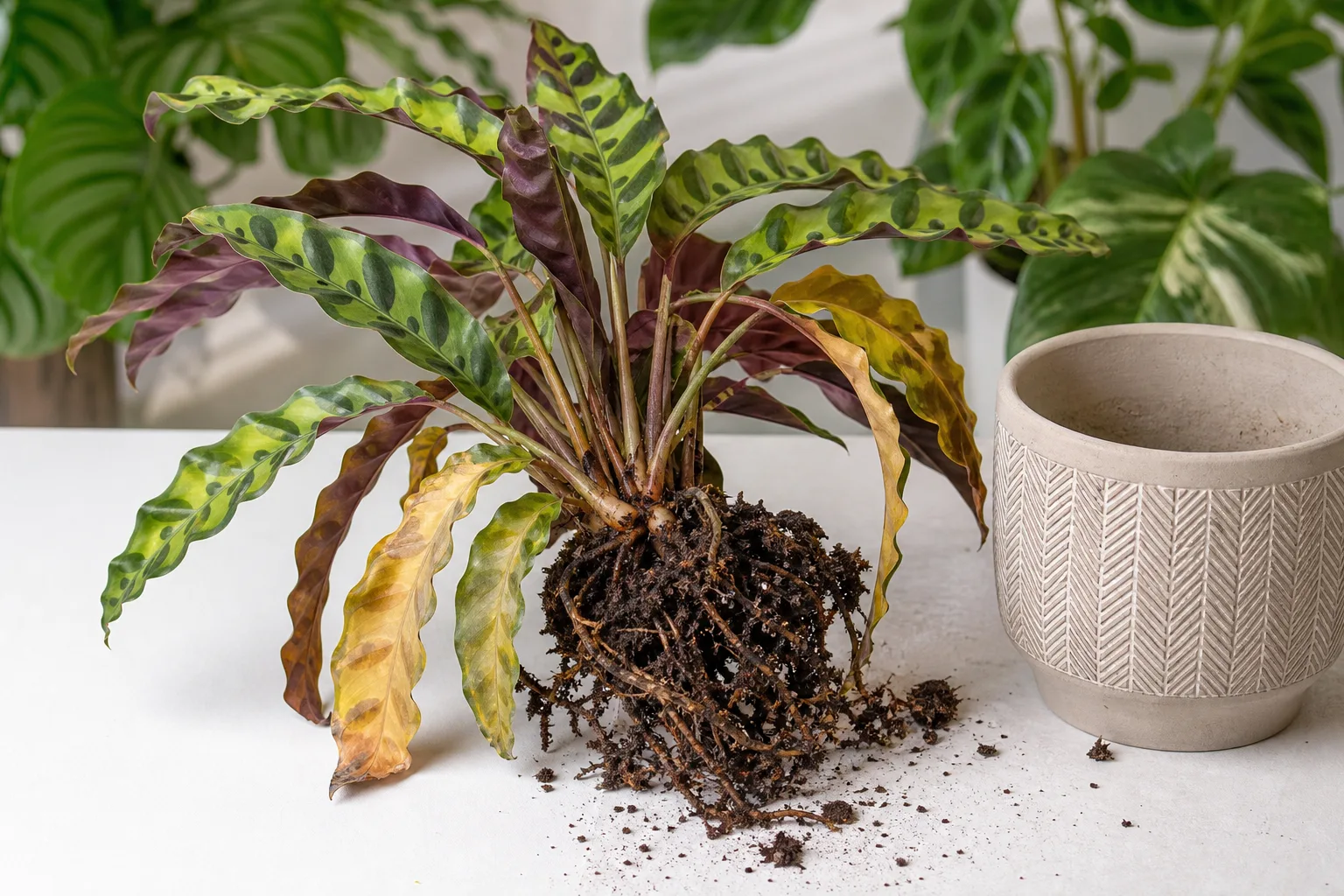
Root Rot on Calathea Rattlesnake: Causes, Checks & Fixes
This guide covers root rot on Calathea Rattlesnake. See also the general Root Rot guide, watering, and light pages for this plant.
Root Rot on Calathea Rattlesnake: Causes, Checks & Fixes
Quick answer
Root rot on Calathea Rattlesnake (Goeppertia insignis, formerly Calathea lancifolia) means fine Marantaceae feeder roots have decayed in soil that stayed wet too long-overwatering can result in root rot when a peaty nursery mix holds water around the rhizome without draining. The classic trap: limp narrow blades on a heavy wet pot. Damaged roots cannot move water, so leaves wilt even though the mix is saturated-owners often add more water and accelerate decay.
First step: stop watering, unpot the plant, and trim all brown or mushy roots with sterilized scissors until only firm pale tissue remains. Repot into fresh airy mix in a clean pot with drainage, water lightly once, then let the top 2 cm dry before the next drink. Do not fertilize until new rolled leaves appear.
This page is the rattlesnake unpot-trim-repot deep-dive. For early wet-soil stress before you inspect roots, see overwatering on Calathea Rattlesnake. Related guides: watering, soil, wilting, yellow leaves, and fungus gnats.
What root rot looks like on Calathea Rattlesnake
Rattlesnake has long, narrow, wavy blades with dark oval markings and purple undersides that fold upward at night-nyctinastic movement is normal on healthy prayer plants. Root rot disrupts that rhythm before the whole plant collapses.
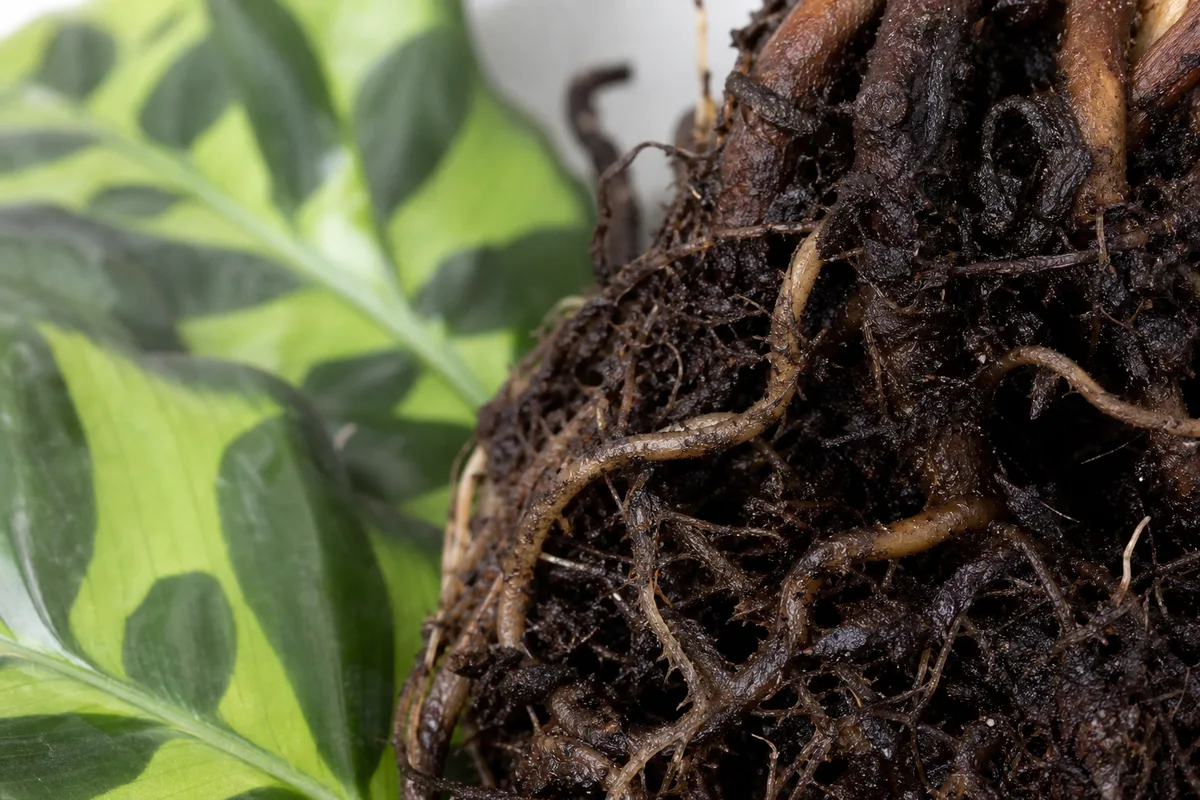
Root Rot symptoms on Calathea Rattlesnake - compare with healthy tissue on the same plant.
Early signs:
- Limp or drooping narrow leaves while soil stays wet - petioles lose stiffness even though the pot feels heavy and cool
- Yellowing lower leaves spreading upward while mix remains damp
- Loss of nightly leaf rolling - blades stay limp through the day and fail to rise cleanly after dark
- Sour or swampy odor from the drain hole or when you lift the pot
- Fungus gnats hovering near the soil surface - wet anaerobic mix supports their larvae
Advanced signs:
- Soft stem tissue at the soil line where the rhizome crown stayed wet
- Brown, translucent, or slimy roots when you unpot - healthy Marantaceae roots are firm and pale
- Whole-plant collapse within days on saturated mix despite no pest webbing
Rattlesnake’s narrow leaves can mask early damage-each blade is less visually dominant than on broad-leaf Calatheas-but once root failure builds, the pattern stacks clearly. Compare with underwatering on Calathea Rattlesnake: a lightweight pot, dry mix 2 cm down, and crispy leaf edges with firm roots point away from rot.
Why prayer plants get root rot
Rattlesnake evolved on Brazilian rainforest floors where organic soil stays lightly moist but drains freely after rain. Indoors, that translates to a narrow band: moist does not mean wet. NC State Extension recommends a uniformly moist, well-drained, peaty potting mixture at room temperatures from about 65 to 75°F. Fine feeder roots need oxygen as much as water-when peat-based mix stays waterlogged, roots in saturated soil lose oxygen and decay begins.
Several habits push Rattlesnake into chronic sogginess:
Rhizome crown wetness after top-watering. Rattlesnake spreads from a horizontal rhizome with shallow roots. Do not allow water to stand on crowns-pooled water in the leaf cluster keeps the stem base anaerobic and rot spreads upward faster than on single-stem houseplants.
Dense nursery peat in oversized pots. Six-inch nursery Rattlesnake often arrives in moisture-retentive blends that dry slower in home conditions than in a greenhouse. A pot too large for the root ball holds water in the center long after the surface looks dry.
Calendar watering through winter. Growth slows from autumn onward. Mix that dried in five to seven days in summer may stay wet for two weeks in a cool, dim office. Reduce watering when plant growth typically slows down-but do not stop checking entirely.
Cachepots and standing saucers. Decorative outer pots without drainage trap runoff. Water collects at the bottom, the mix stays anaerobic, and the plant declines while top leaves still look green for a while.
Low light slowing evaporation. Rattlesnake in a shaded corner transpires less. Water applied on the same schedule as a bright-window plant accumulates in the root zone.
Lookalike symptoms to rule out
| Pattern | Likely cause | First direction |
|---|---|---|
| Limp blades, heavy wet pot, sour smell | Root rot | Unpot, trim, repot - this guide |
| Wet soil, yellow lowers, roots still firm | Early overwatering | Stop watering; see overwatering guide |
| Light pot, dry mix 2 cm down, crispy edges | Underwatering | Thorough soak; see underwatering |
| Curl at night only, firm stems, normal soil | Normal nyctinasty | No action needed |
| Limp midday on wet soil, no sour smell yet | Advancing root stress | Pause water; inspect roots within 48 hours |
| Small flies near soil on constantly damp mix | Fungus gnats + wet soil | Dry top layer; see fungus gnats |
| Yellow leaves, firm roots, no sour odor | Cold draft or transplant shock | Check placement; roots intact |
How to confirm the cause
Work through this checklist before Calathea Rattlesnake repotting guide:
- Wilting vs. moisture - Wilting with moist soil often means roots cannot absorb water because they are decaying, not because the plant is thirsty.
- Pot weight - A heavy, cool pot days after watering supports rot over drought.
- Smell - Sour or swampy mix is a strong rot clue; dry underwatering rarely smells.
- Root inspection - Gently slide the plant out. Healthy roots are firm and pale; rotting roots are brown, translucent, or slimy.
- Crown firmness - Press the stem base gently. Soft tissue at the soil line means advanced decay.
- Drainage history - Blocked holes, cachepots holding water, or watering into a full saucer?
- Night movement - Healthy Rattlesnake leaves rise after dark. Persistent limp blades on wet soil suggest root failure.
If roots are mostly firm, mix smells neutral, and the crown is solid after you let the top 2 cm dry for a week, you may be dealing with early overwatering rather than full rot-follow the overwatering guide first.
First fix for Calathea Rattlesnake
Unpot, trim rotted roots, repot in fresh draining mix-then reduce watering frequency.
Slide the plant out and rinse away old wet mix. Cut brown or mushy roots with sterilized scissors until only firm tissue remains. Discard saturated soil entirely-do not reuse it. Repot into a clean pot with open drainage using 60% peat- or coir-based potting compost, 20% perlite, and 20% coco coir (or fine orchid bark). See the Calathea Rattlesnake soil guide for chunkier long-term recipes.
Choose a pot sized to the trimmed root mass, not dramatically larger. Plant at the same depth and keep crowns dry when watering-aim the stream at the inner pot edge, not into the leaf cluster. Water lightly once after repotting, then let the top 2 cm dry before the next thorough drink. Keep in Calathea Rattlesnake light guide without strong direct sun while recovering.
Step-by-step recovery
- Stop all watering and remove standing water from saucers and cachepots immediately.
- Unpot gently - support the root ball; do not yank by the leaves.
- Rinse roots in room-temperature water to see firm versus mushy tissue clearly.
- Trim decay - cut all soft brown or black roots back to firm white or cream tissue. Sterilize scissors between cuts with rubbing alcohol if rot is extensive.
- Discard old mix - saturated peat harbors pathogens; start fresh.
- Repot into airy mix (ratio above) in a pot with drainage, matched to root size.
- Water lightly once - enough to settle mix around roots, not a flood.
- Hold fertilizer until new rolled leaves unfurl cleanly for two weeks.
- Raise humidity to 60% or higher with a humidifier - stressed prayer plants lose moisture through damaged roots faster in dry heated air.
- Monitor nightly folding - restored nyctinastic movement is an early recovery signal.
If crown tissue is already soft but healthy stem sections remain above the rot line, consider division from firm rhizome pieces-see the propagation guide for prayer-plant division timing.
Recovery timeline
Mild rot with most roots intact and a firm crown may show firm new rolled leaves in 14 to 21 days at warm room temperatures above 18°C (65°F). The first sign is often restored night folding on a new narrow blade, not re-greening of yellow lower leaves.
Moderate rot with 30 to 50% root loss may need three to five weeks before consistent new growth. Judge progress by pot weight normalizing on schedule and the crown staying solid-not by saving every old leaf.
Severe crown rot with soft stem bases at the soil line often kills the clump. Salvage is unlikely once decay reaches the growing point. If any firm rhizome sections remain, divide and pot them separately rather than repeat rescue on a collapsed plant.
Causes to rule out
- Underwatering - Light pot, dry mix, crispy edges, firm roots.
- Low humidity curl - Margins crisp while soil moisture is normal; see low humidity.
- Cold shock - Yellow leaves without sour smell; roots firm on inspection.
- Transplant shock - Temporary wilt one to two weeks after repotting; roots intact, no odor.
- Pest collapse - Spider mite stippling with fine webbing on undersides; roots usually firm.
What not to do
Do not keep watering because leaves look wilted when soil is already wet-watering a wilted plant with rotting roots makes the problem worse. Do not repot into dense garden soil, pure peat without perlite, or a pot without drainage. Do not allow water to stand on crowns during recovery watering. Do not reuse sour-smelling mix after trimming roots. Do not fertilize damaged roots-it pushes growth the plant cannot support. Do not assume every limp leaf means rot-confirm with root inspection first.
How to prevent root rot next time
Use pots with open drainage; empty saucers within 30 minutes after every watering. Water when the top 2 cm (about 1 inch) of mix feels beginning to dry-not on a fixed calendar. Match frequency to season: reduce watering in winter when growth slows. Use an airy peaty mix with perlite and bark as described in the soil guide. Keep Rattlesnake in bright indirect light so mix dries predictably. Maintain 60% or higher humidity with a humidifier rather than overwatering to compensate for dry air. Inspect for fungus gnats as an early wet-soil warning. Review the full watering routine for filtered water and seasonal schedules.
When to worry
Act within 24 hours if the crown softens, the mix smells sour while staying wet, or most roots are mushy on inspection. Those patterns mean decay is advancing toward the growing point.
Lower urgency if only lower leaves yellow while the crown is firm, roots are mostly pale and firm after unpotting, and the mix dries appropriately once you stop watering. Trim any clearly damaged roots, refresh mix if it smells off, and monitor for two weeks.
Consider replacing the plant when crown tissue collapses, all roots are gone, and no firm rhizome sections remain for division. Prayer plant root rot at the crown stage is often fatal-starting fresh with a healthy nursery plant and corrected drainage is sometimes the practical choice.
Conclusion
Calathea Rattlesnake root rot begins with soggy, poorly aerated mix around a moisture-sensitive rhizome-not a mysterious disease. Confirm by inspecting roots, trim all decay, repot into fresh airy substrate, and water only after the top 2 cm dries. Judge recovery by firm new rolled leaves and restored night folding, not by saving yellowed lower blades. For wet-soil stress before roots fail, start with the overwatering guide; for mix recipes and long-term prevention, see soil and watering.
When to use this page vs other Calathea Rattlesnake guides
- Calathea Rattlesnake watering guide - Use for routine moisture checks before assuming root rot is the main issue.
- Calathea Rattlesnake problems hub - Browse all 16 common issues on this species.
- Overwatering on Calathea Rattlesnake - Different entry point when symptoms overlap with root rot.
- Yellow Leaves on Calathea Rattlesnake - Different entry point when symptoms overlap with root rot.
- Wilting on Calathea Rattlesnake - Different entry point when symptoms overlap with root rot.