Calathea Rattlesnake Light: Best Window & Signs
Calathea Rattlesnake Light: Best Window & Signs
Calathea Rattlesnake Light: Best Window & Signs
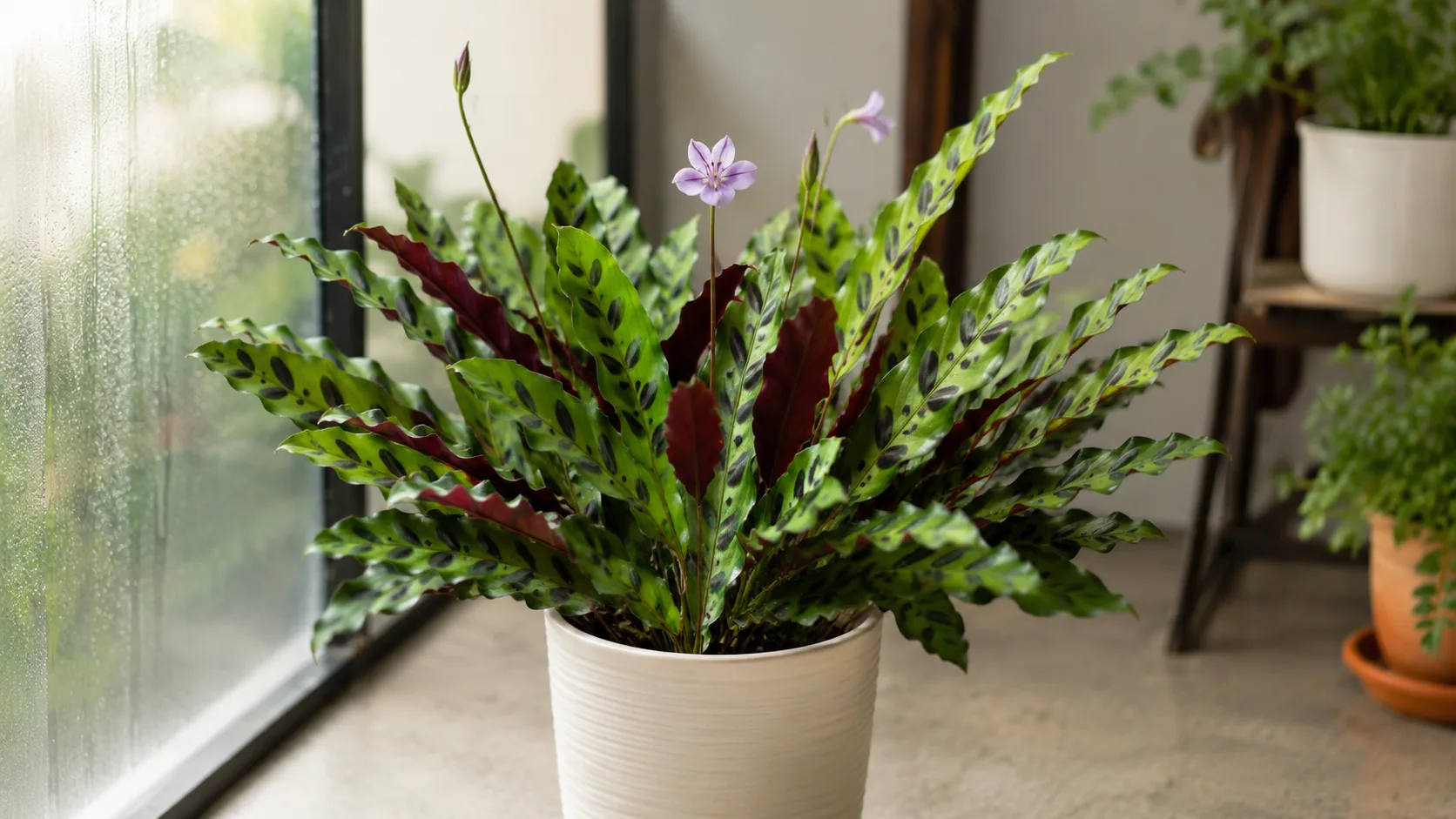
Calathea rattlesnake (Goeppertia insignis, formerly sold as Calathea lancifolia) is one of the more forgiving prayer plants indoors, but it is not forgiving about harsh sun or deep shade. The narrow, rippled leaves look tough; the tissue is not. Place it where the canopy receives bright to medium indirect light for most of the day, keep it out of unfiltered full sun, and judge success by new leaves - not by how bright the room feels to your eyes.
The Short Answer: How Much Light Calathea Rattlesnake Actually Needs
Calathea rattlesnake light requirements come down to filtered brightness, not darkness and not sunbathing. Indoors, the plant performs best in bright indirect light or medium indirect light - the kind you get a few feet back from an east window, on a bright north sill, or near a south or west window softened by sheer fabric. According to NC State Extension, Goeppertia insignis grows well in limited sun to bright shade and will tolerate early morning sun or diffused sun, but it does not tolerate full sun, drafts, or sudden temperature swings.
If you want a number to anchor placement decisions, many experienced indoor growers target roughly 100–250 PPFD at the leaf surface - bright enough to keep the dark oval markings sharp, low enough that direct rays through glass do not push into burn territory. You do not need expensive gear to start; hold your hand between the window and the plant. A soft, diffuse shadow with visible edges usually means usable indirect light. A hard, crisp shadow on the leaves themselves usually means you are too close to direct sun.
The rattlesnake plant can survive lower light for a while, and it can handle a sliver of gentle morning sun when acclimated. What it cannot do is sit on a hot south windowsill all summer or live in a hallway with no meaningful daylight and still look like the plant on the nursery tag. Healthy new growth - upright, well-patterned, opening cleanly - is the proof that your rattlesnake plant light setup is working.
Why Light Matters More for Rattlesnake Calathea Than Most Houseplants
Light is the engine behind every other care decision for Calathea Rattlesnake overview. Brighter exposure increases photosynthesis, which increases water uptake, transpiration, and the demand for stable humidity. Dim exposure slows everything down, which means soil stays wet longer and root stress becomes more likely even when you have not changed your Calathea Rattlesnake watering guide. That is why two rattlesnake calatheas in the same home can need completely different watering intervals based on nothing more than window direction and season.
Unlike succulents or many aroids, Goeppertia insignis did not evolve to harvest intense sun on open ground. It evolved to catch shifting pockets of light under taller trees, where leaves stay cool, humidity stays high, and the brightest moments are brief. Copy that logic indoors and the plant stops fighting you. Ignore it and you get the classic Calathea complaint cycle: crispy tips, washed-out pattern, curled leaves, and the feeling that the plant is “dramatic” when it is actually responding predictably to the wrong photon budget.
Rainforest Understory Biology Explains the Sweet Spot
Native to humid tropical forests in southeastern Brazil, rattlesnake calathea grows as an understory perennial in dappled shade. NC State Extension classifies the species for partial shade to deep shade indoors - filtered light beneath the forest canopy, which is exactly the exposure you are trying to recreate on a windowsill or plant shelf. The canopy filters ultraviolet intensity, shortens peak light duration, and keeps leaf temperatures lower than open-sky sun would allow.
That biology explains two practical rules. First, partial shade - NC State Extension classifies the species in the partial-shade to deep-shade range - does not mean “put it anywhere out of direct sun.” It means the plant wants enough photons to maintain pigment and structure without thermal stress on thin leaf tissue. Second, deep shade tolerance is real in classification terms but misleading in decorative terms. A rattlesnake plant may linger in a dim corner, but the wavy green blades and purple undersides are the whole reason you bought it. Low light steals that display slowly.
Humidity and water quality still matter, yet light is the variable that most often pushes a stable plant into visible decline after a move. Heat vents, air-conditioning drafts, and mineral-heavy tap water cause their own damage, but a sudden jump to afternoon sun through clear glass produces bleaching and crisp brown patches within hours. The leaf does not recover from that kind of scorch on the affected tissue; only new leaves replace the look.
Leaf Pattern and Prayer Movement as Quick Proof
Rattlesnake calathea is a prayer plant in the Marantaceae family. Its leaves rise and fall through the day via nyctinastic movement - leaves fold in half in the evening and reopen at sunrise at the pulvinus, the joint-like swelling where leaf meets petiole. Strong, consistent indirect light supports healthy turgor and visible daily movement. When light is wrong, movement often looks stiff, delayed, or exaggerated in ways that overlap with drought stress, so always read the newest leaf alongside soil moisture and room humidity.
The dark oval markings on lighter green blades are your best long-term light gauge because old cosmetic damage does not heal. If new leaves emerge with sharp contrast, wavy margins, and rich purple undersides, your placement is probably close to right even if an older leaf still shows past mistakes. If new leaves arrive paler, narrower, or with blurred pattern edges while the plant is otherwise watered carefully, insufficient light is the leading suspect. If new leaves bleach, curl tightly during peak sun hours, or show tan patches on the sun-facing side, pull the plant back immediately.
Compared with broader-leaf Calatheas like roseopicta cultivars, rattlesnake calathea is somewhat more architectural and shelf-friendly because each damaged leaf is less visually dominant. That does not mean it accepts harsh exposure. It means you may get away with slightly brighter ambient rooms if airflow and humidity are stable. Do not confuse structural forgiveness with sun tolerance.
Best Window for Calathea Rattlesnake Indoors
Window direction is the fastest way to translate “bright indirect light” into an actual spot in your home. The goal is not to find the brightest possible location. The goal is to find the brightest safe location - one where light reaches the leaf surface steadily through the day without hot direct beams.
| Window direction | Suitability | Practical placement |
|---|---|---|
| East | Excellent | 1–3 ft from glass; gentle morning sun often acceptable |
| North | Good | On sill or up to 2 ft back; may need grow light in winter |
| West | Moderate | 3–6 ft back or behind sheer curtain; watch summer afternoons |
| South | Moderate with filtering | 4–8 ft back or diffused; never unfiltered midday sun |
Rotate the pot a quarter turn every week or two so leaves do not lean hard toward the glass. Rattlesnake calathea looks best when leaves can arch sideways naturally; cramming it flush against a wall can shade its own lower foliage and make uneven growth look like a light problem when it is partly a display problem.
East-Facing Windows: The Easiest Default Placement
An east-facing window is the most reliable default for calathea rattlesnake light requirements in most homes. Morning sun is lower in intensity, shorter in duration, and cooler than afternoon sun. Many rattlesnake plants handle one to two hours of soft morning rays without damage, especially in spring and fall. If leaves look firm and pattern stays crisp, you can leave the plant where it is. If you see pale patches on leaves facing the glass by mid-morning, shift it back a foot or add a light curtain.
East light also matches how understory plants experience dawn in the wild - a brief brightness pulse, then diffuse daylight. That rhythm supports steady growth without the heat load that west and south windows carry in summer. If your east window opens onto a porch roof, neighboring building, or dense tree canopy, treat it as medium indirect rather than bright indirect and watch new leaf color for confirmation.
In small apartments, the east window may be the only spot that avoids both cave-dark corners and blazing afternoon glass. Use it. Pair the placement with stable humidity - a pebble tray alone rarely fixes dry air near HVAC - and keep the plant out of the direct path of air-conditioning vents. Light and airflow together determine how fast the soil dries, which is the hidden reason east-window rattlesnake plants often outperform south-window ones even when the south room “looks brighter.”
North-Facing Windows and Soft All-Day Diffuse Light
A north-facing window delivers consistent, soft light without direct sun in the Northern Hemisphere. That makes it one of the safest orientations for rattlesnake calathea if the window is unobstructed and the room is not deeply shaded by exterior walls or balconies. Many growers report healthy plants directly on north sills, especially when walls are light-colored and reflect additional brightness into the foliage.
The limitation appears in winter when day length and sun angle drop. Growth may slow, new leaves may take longer to unfurl, and existing leaves may look slightly less vivid even though nothing is “wrong” in a survival sense. If the plant sits more than a few feet from a north window in a large room, you are often in low light territory even when the space feels livable to you. Supplement with a full-spectrum LED in the darker months rather than pushing the pot closer to a south window in one drastic move.
North windows also teach an important distinction: surviving versus looking like the photos online. Rattlesnake calathea can persist in medium-low indirect light with reduced growth. Pattern fade and wider internodes - the stretched gaps between leaves - mean the plant is using etiolation to hunt for photons. That is your cue to add light, not to fertilize harder.
South and West Windows When You Need Filtering and Distance
South-facing and west-facing windows can work, but they demand distance, diffusion, or both. Clear glass intensifies sun, and afternoon west exposure combines strong light with heat - the combination that bleaches rattlesnake leaves fastest. Place the plant several feet back from the pane, use a sheer curtain, or sit it to the side of the window so it receives bright ambient light without beam contact on the foliage.
In winter, a south window at greater distance is often excellent because light intensity falls while the plant is growing more slowly. In summer, the same placement can become risky when sun angle rises and days lengthen. Watch the canopy during the brightest hour on a clear day. If you see leaves folding vertically, hot-to-touch surfaces, or sudden color wash on the window-facing side, increase filtering or move the pot deeper into the room.
West windows deserve extra caution from late spring through early fall. If the only bright spot in your home is a west sill, treat it as a seasonal location: closer in winter, farther in summer, always filtered. Rattlesnake calathea is not a candidate for “sun training” the way some succulents are. You are managing exposure, not chasing tan leaves.
Can Calathea Rattlesnake Take Direct Sun?
Direct sun means sunbeams hit the leaf surface. Bright indirect light means the room is well lit but those beams do not land on the plant. Rattlesnake calathea belongs in the second category almost all the time indoors. NC State Extension is explicit that the species does not tolerate full sun and should receive limited sun to bright shade instead, though it tolerates early morning sun or diffused sun.
That said, “no direct sun” is slightly softer in practice than on paper. A brief period of gentle early-morning sun through east glass is different from three hours of west-facing rays bouncing through unfiltered panes. The leaf thickness, prior acclimation, humidity, and whether the plant was grown in a greenhouse all change how fast damage appears. A nursery plant accustomed to shade cloth may burn in one afternoon on a sill; a plant gradually introduced to morning light may tolerate it for months.
Gentle Morning Sun vs Harsh Midday and Afternoon Rays
Morning sun is lower angle, cooler, and shorter. For many rattlesnake calatheas, especially in spring and autumn, a limited morning touch does not cause immediate scorch. Midday and afternoon sun are the danger zone. As the sun climbs, energy on leaf surfaces rises quickly, and prayer plants lack the protective wax and structural defenses that true sun lovers use to dissipate heat.
If you are unsure which kind of sun you have, test on a clear day. Place a white sheet of paper where the plant sits. If a sharp bright spot forms on the paper and moves across it, that is direct beam exposure. If the paper looks generally bright without a moving hot spot, you are closer to indirect conditions. Do this test seasonally; a spot that is indirect in December can become beam-struck in June.
Glass matters too. Modern low-e windows can behave differently from older single-pane glass, and proximity to the pane often matters more than orientation alone. A plant one foot from an east window may receive meaningful direct morning light; the same plant four feet away may receive only ambient brightness. Trust leaf response over room aesthetics.
How to Acclimate Without Scorched Leaves
Acclimation is a slow increase in light exposure, not a sudden move to the “best” window. If your rattlesnake calathea came from a shaded greenhouse bench or a dim shop corner, jump it straight to strong south exposure and you will likely see bleached patches, crisp edges, or tight curling within days. Move it back to softer light immediately and increase brightness over two to four weeks instead.
A simple acclimation schedule looks like this: week one, place the plant in its target room but three to six feet farther from the window than your final goal. Week two, move one foot closer if newest leaves look healthy. Week three, repeat. Week four, settle at the final distance or add limited morning exposure if desired. Skip weeks if any new leaf shows washout or scorch - that means you moved too fast.
Acclimate one variable at a time. Do not simultaneously repot, fertilize heavily, and chase brighter light. Rattlesnake calathea reads environmental change on new growth first; older leaves keep old damage as a record. During acclimation, keep humidity stable and avoid letting soil go bone dry, because transpiration stress plus light stress stacks badly on thin leaves.
Low-Light Limits and What Happens in a Dim Room
Low light does not kill rattlesnake calathea overnight. That is part of the problem. The plant can linger in a dim bathroom, office desk, or interior shelf while slowly losing the traits you bought it for. NC State Extension lists deep shade tolerance, but indoors the species still needs enough indirect light to maintain leaf pattern and compact growth.
Low light is any spot where the plant cannot maintain compact growth and strong leaf pattern without supplemental lighting. Hallways without windows, rooms with one small north window across fifteen feet of floor space, and shelves blocked by furniture often fall into this category even when they feel “fine” for human eyes. If you would need a lamp to read comfortably in that spot all day, your rattlesnake plant is probably hungry for photons.
When light is insufficient, reduce watering frequency to match slower metabolism. Soil that stayed appropriately moist in a bright east window may stay wet too long in a dim corner, leading to yellow lower leaves and root stress that looks like overwatering on Calathea Rattlesnake - because technically it is, even though your schedule never changed. Light and water must be adjusted together.
Faded Marks, Leggy Stems, and Slow New Growth
The earliest low-light warning signs are subtle. Pattern fade - lighter, muddier oval markings on new leaves - is often the first clue. Leggy stems follow as internodes stretch and the plant leans toward the brightest vector in the room. Slow or smaller new leaves mean the plant lacks energy to produce full-size foliage. You may also see older leaves dropping more readily because the plant cannot support as much canopy on limited photosynthate.
These symptoms overlap with nutrient deficiency and normal aging, so use timing to diagnose. If fade and stretch began after a move to a darker room, light is the primary cause. If they appeared while the plant stayed put through winter, seasonal light decline plus unchanged watering is a common combo. If only bottom leaves yellow while new growth looks strong, look at roots and moisture before blaming light.
Fix low light by moving the plant closer to a safe window, not by placing it in direct sun as an overcorrection. One foot closer to an east or north window, or six inches toward the center of a bright room, is often enough to sharpen pattern on the next leaf. If architectural constraints block natural light, add a grow light rather than accepting a permanently faded plant.
Grow Lights for Rattlesnake Calathea in Dark Homes
When natural rattlesnake plant light is weak - north rooms in winter, basement apartments, office cubes - a full-spectrum LED grow light is the most reliable fix. Choose a fixture labeled for houseplants or seedlings, not harsh purple bloom panels unless you enjoy the nightclub aesthetic. Full-spectrum white LEDs support foliage color better and make it easier to inspect leaves for pests and damage.
Mount the light 12 to 24 inches above the tallest leaf tips to start. Run it 10 to 14 hours daily, timed to roughly match daylight rhythm. Watch the canopy for two weeks. If leaves look heat-stressed or washed out, raise the fixture. If new growth remains pale and stretched, lower it slightly or extend duration by an hour. Rattlesnake calathea responds to intensity and photoperiod together; blasting it for eighteen hours at close range is not a shortcut.
Grow lights pair well with north windows: use the window for baseline diffuse light and the fixture to lift winter DLI. Avoid placing the lamp so close that it heats leaves - LED runs cooler than older bulbs, but enclosed fixtures near glass can still create hot spots. If you use a light meter app, aim for that same practical 100–250 PPFD range at the leaf surface rather than chasing numbers meant for fruiting crops.
One advantage of supplemental light is control. Seasonal swings become less dramatic, growth stays more even, and you can keep the plant on a stable shelf instead of shuffling it between windows. The trade-off is vigilance: a plant under a strong fixture dries faster and may need slightly more humidity as transpiration rises. Adjust watering when you add or remove a grow light, just as you would after a window move.
Warning Signs of Too Much or Too Little Light
Light stress on rattlesnake calathea shows on leaves first because the plant cannot hide tissue damage. The challenge is that curl, brown edges, and dull color also appear with low humidity, inconsistent watering, and fluoride-heavy tap water. Use a simple split test: check the newest leaf in the current location, note which direction faces the window, and compare symptoms on the sun-facing side versus the shaded side. Light problems are usually asymmetric; water and humidity problems are often more uniform.
Too much light tends to appear quickly after a move or season change. Too little light tends to creep in over weeks as pattern dulls and stems stretch. If you are unsure, do not guess with fertilizer or Calathea Rattlesnake repotting guide. Change placement modestly, wait for one new leaf to unfurl, and re-evaluate. Calatheas communicate on a leaf-by-leaf timeline, not a daily one.
Too Much Sun: Symptoms, Causes, and Recovery
Calathea rattlesnake sunburn and light overload show up as:
- Bleached or washed-out patches on the window-facing side of leaves
- Crisp tan or brown scorch on areas that received direct beams
- Tight daytime curling during brightest hours, relaxing overnight if heat load drops
- Sudden leaf collapse or crisping within days of a move to a brighter sill
- Faded purple undersides combined with dry, papery texture on exposed surfaces
Recovery starts with removal from the beam path, not with trimming every leaf immediately. Move the plant to bright indirect light one to two rooms away from the hot window if needed, keep humidity stable, and water normally once soil moisture warrants it. Scorched tissue will not green up again; new leaves must replace the look. Only remove leaves that are mostly dead or invite pest hiding places.
Prevent repeat scorch by filtering west and south glass, increasing distance in summer, and acclimating gradually after purchase. Remember that dust on leaves reduces photosynthetic efficiency; NC State Extension recommends wiping leaves with a clean cloth so the plant can use available light efficiently without needing stronger exposure that risks burn.
Too Little Light: What to Change First
Insufficient light symptoms include:
- Dull or fading snake-like markings on new foliage
- Longer spaces between leaves and leaning toward the brightest source
- Smaller new leaves that take longer to unfurl
- Reduced prayer movement when paired with weak overall turgor
- Slower soil drying leading to occasional yellow lower leaves from chronic wetness
Fix order matters. First, move the plant one meaningful step brighter within safe indirect range - closer to an east or north window, farther from obstructing furniture, or under a grow light. Second, adjust watering because brighter light increases uptake. Third, revisit humidity if leaf edges brown after the light fix; low humidity damage often pre-existed but became visible once growth accelerated.
Do not compensate for low light with fertilizer. Without adequate photons, extra nutrients cannot restore pattern. If a room is permanently dark, accept that a grow light is required for display-quality foliage. Rattlesnake calathea is worth the fixture if you want the plant to look like Goeppertia insignis rather than a green placeholder.
Seasonal Light Shifts, Rotation, and Safe Repositioning
Indoor light is not static. Winter lowers day length and sun angle; summer pushes intensity through the same glass. A rattlesnake calathea that thrived three feet from a south window in February may scorch in July without any move on your part. Seasonal checks - quick midday look at the canopy on a clear day - prevent predictable damage.
Rotation keeps growth symmetrical. Prayer plants naturally orient toward light; if one side always faces the window, you will see stronger lean and uneven leaf arching. A quarter turn weekly spreads exposure and makes early fade or scorch visible on multiple leaves rather than hiding it on the back side until damage is advanced.
When repositioning, treat winter and summer differently. In darker months, you can often move slightly closer to the window or add a grow light without risk. In brighter months, increase distance or filtering before leaves tell you it is too late. If you must move the plant to a new room for renovation or furniture changes, match light level first, then fine-tune distance. Jumping from a dim bedroom to a blazing west sill “because it needs light” repeats the most common rattlesnake calathea failure mode.
Link every light change to watering awareness. Brighter placement means check soil moisture a day earlier; dimmer placement means wait longer between drinks. Rattlesnake calathea rewards growers who treat light as the master variable and adjust everything else in proportion.
Conclusion
Calathea rattlesnake light needs are straightforward once you translate marketing language into placement: bright to medium indirect light, an east or bright north window as the first choice, filtered distance for south and west glass, and no unfiltered midday or afternoon sun on the leaf surface. The rattlesnake plant is more adaptable than many Calatheas, but thin, patterned leaves still burn fast and fade slowly in dark corners.
Use new leaves as your report card - sharp oval markings, healthy purple undersides, and steady opening mean the spot works. Bleach, scorch, stretch, and fade tell you to soften or add light, not to pile on fertilizer or panic-repot. When natural brightness falls short, a full-spectrum grow light at moderate distance restores pattern better than guessing with window shuffles alone. Get light right, adjust watering to match, and the plant stops looking mysterious and starts looking like what it is: a rainforest understory specialist that happens to live on your shelf.
When to use this page vs other Calathea Rattlesnake guides
- Calathea Rattlesnake overview - Start here for whole-plant context before deep-diving this topic.
- Calathea Rattlesnake problems hub - Jump to symptom-specific fix guides when this care topic does not resolve the issue.
- Not Enough Light on Calathea Rattlesnake - Escalate here when light adjustments are not enough.
- Leggy Growth on Calathea Rattlesnake - Escalate here when light adjustments are not enough.
Related Calathea Rattlesnake guides
- Calathea Rattlesnake overview
- Calathea Rattlesnake watering
- Calathea Rattlesnake soil
- Calathea Rattlesnake propagation
- Calathea Rattlesnake fertilizer
- Calathea Rattlesnake repotting
- Not Enough Light on Calathea Rattlesnake
- Leggy Growth on Calathea Rattlesnake
- Calathea Rattlesnake problems
Related tool
Try the Plant Problem Diagnosis Tool with calathea-rattlesnake pre-selected to estimate needs for your setup.