Not Enough Light on Calathea Rattlesnake: Causes, Checks &
Quick answer
Calathea Rattlesnake loses its bold leaf pattern and grows on long thin stems when light is too dim. First step: move it to the brightest spot in your home that still keeps direct sun off the narrow leaves.
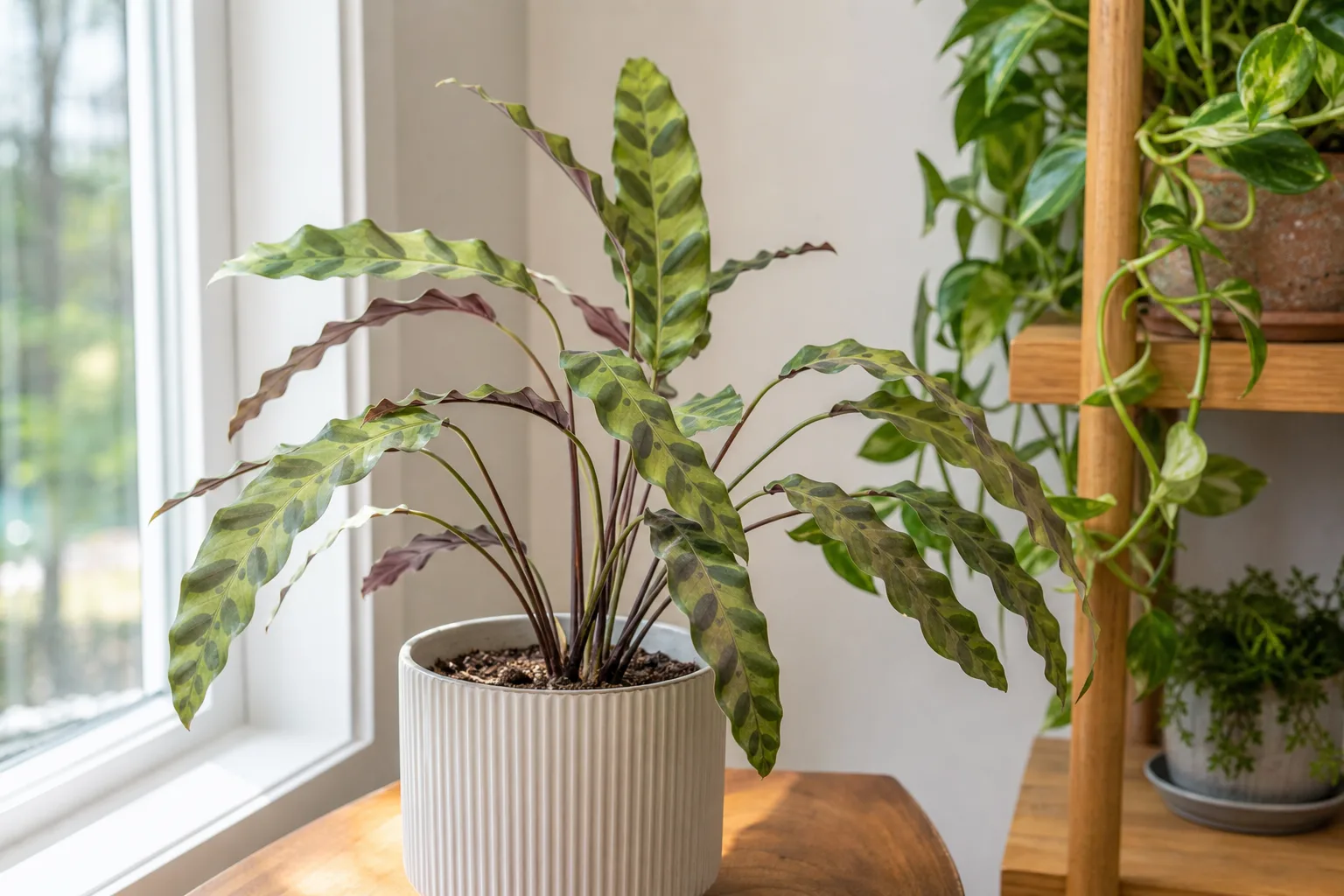
Not Enough Light on Calathea Rattlesnake: Causes, Checks & Fixes
This guide covers not enough light on Calathea Rattlesnake. See also the general Not Enough Light guide, watering, and light pages for this plant.
Not Enough Light on Calathea Rattlesnake: Causes, Checks & Fixes
Quick answer
Calathea Rattlesnake (Goeppertia insignis) is grown for its long, wavy leaves with dark oval markings on pale green blades. When light is too low, that pattern is the first thing to fade. New leaves open dull and flat, growth stalls, and petioles stretch toward whatever brightness they can find.
First step: move the plant to the brightest location in your home that still keeps direct sun off the leaves. An east-facing window, a spot several feet from a south or west window behind sheer curtains, or a shelf under a grow light usually fits Rattlesnake better than a far interior corner. Do not repot, fertilize, or increase watering until you have checked whether light-not another stressor-is the real problem.
What not enough light looks like on Calathea Rattlesnake
Low light on Calathea Rattlesnake overview rarely looks like a sudden collapse. It looks like the plant is slowly giving up on being decorative.
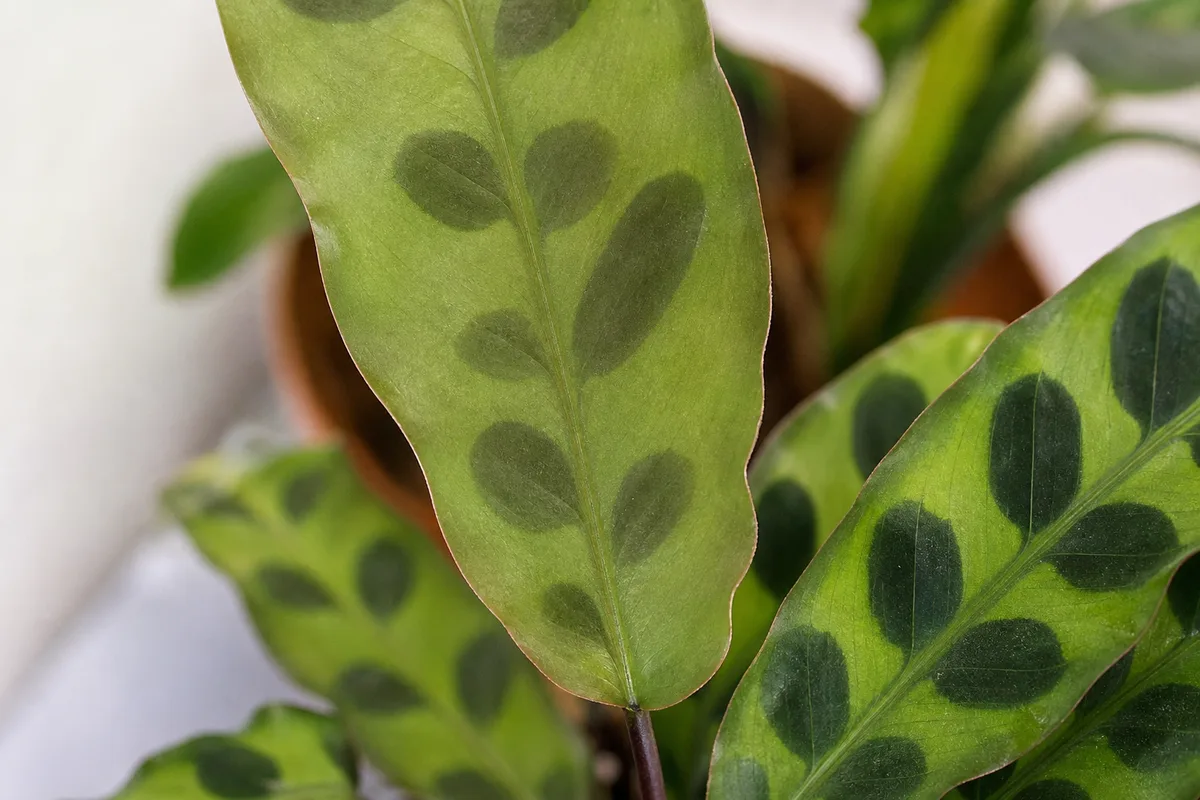
Faded rattlesnake blotches on a newest narrow leaf with a long thin petiole - compare with sharper dark markings on older blades.
Watch the newest leaves first. On a healthy Rattlesnake, fresh foliage should show crisp dark green elliptic blotches along each narrow blade, with wavy margins and purple-red undersides. In dim conditions, those markings wash out to muddy green or flat olive. The leaf may look darker overall because the plant is producing extra chlorophyll to capture scarce light-a common etiolation response in houseplants.
Other reliable signs include:
- Long, thin petioles between leaves, with wider spacing than when you bought the plant
- Leaning or reaching toward the brightest side of the room
- Slow or stalled growth-no new rolled leaves for weeks during spring or summer
- Smaller new leaves than older ones lower on the clump
- Reduced nightly leaf movement-leaves that no longer fold up noticeably at dusk
Rattlesnake is more forgiving on a shelf than broad round Calatheas, but its narrow blades still need enough filtered light to hold the rattlesnake-like pattern. When the markings fade while the plant otherwise looks healthy, light is probably too weak-not a nutrient shortage.
Why Calathea Rattlesnake struggles in dim rooms
In the wild, Goeppertia insignis grows on Brazilian rainforest floors with bright but filtered light-never harsh midday sun on the leaf surface. Indoors, it needs that same middle ground: enough energy for photosynthesis, without the scorch risk that hits thin leaf edges first.
Several home situations push Rattlesnake below that threshold:
- Far from windows-light intensity depends on distance; a spot that feels “bright” to you may be low light for a pattern plant
- North-facing rooms with no supplemental lighting, especially in winter
- Blocked glass-heavy curtains, tinted film, furniture, or dirty panes cut usable light more than owners expect
- Seasonal daylight loss-the same shelf that worked in June may be too dim by December
Low light also changes how the plant uses water. Rattlesnake in dim corners transpires slowly, so soil stays wet longer between waterings. That combination-dim light plus moist mix-is a common path to yellow lower leaves and fungus gnats, even when the owner is following a normal watering routine.
How to confirm the cause
Before moving the pot or buying a grow light, run a short diagnostic that separates light stress from lookalikes.
Check placement, not just symptoms. Stand at the pot and look toward the nearest window. If the plant is more than 6–8 feet from glass with no grow light, suspect low light first on Rattlesnake. Within about 2 feet of a window, most tropical foliage receives Calathea Rattlesnake light guide; farther back is usually medium or low.
Read the newest growth. Faded pattern on fresh leaves with firm roots and evenly moist (not soggy) soil strongly points to light. Yellowing lower leaves that keep appearing while the top 2 cm of mix never dries points to overwatering on Calathea Rattlesnake made worse by low light-fix both light and Calathea Rattlesnake watering guide.
Do a two-week placement test. Move Rattlesnake one step brighter-closer to the window or out from under a shelf overhang-while keeping watering tied to soil dryness, not the calendar. If the next leaf opens with sharper markings and a shorter petiole, you have confirmed insufficient light.
Rule out pests, humidity, and water stress. Fine pale stippling on leaf undersides suggests spider mites, not light. Crispy brown wavy edges with tight daytime curling often mean low humidity, heat, or fluoride-heavy tap water. Rattlesnake curls leaves during the day when water stress hits-but if the pattern is also fading and stems are stretching, light is still part of the answer.
The first fix to try
Move Calathea Rattlesnake to bright, filtered light-not direct sun.
Practical targets that work in most homes:
- East window-gentle morning light; usually safe without curtains if leaves do not touch hot glass
- South or west window-set the pot 3–6 feet back, or behind sheer curtains, so narrow blades never sit in direct rays
- Dark room fallback-a full-spectrum LED grow light 6–12 inches above the foliage, on 12–14 hours daily with a timer
Make the move over a few days if you are jumping from a very dark corner to a much brighter spot. Rattlesnake hates direct sun more than it hates dim light; scorched leaf edges do not recover. Increase exposure gradually rather than placing the pot in a south window with no filter.
Do not change three things at once. Keep the same pot, same filtered water source, and same humidity setup for the first two weeks. You want to see whether new leaves improve because of light-not because you also repotted, fertilized, and misted on the same day.
Step-by-step recovery
Once Rattlesnake is in brighter filtered light, support recovery in this order:
- Match watering to the new light level. Brighter spots dry the mix faster. Check the top 2 cm before every watering; in low light the plant may have needed water less often than you assumed.
- Rotate the pot a quarter turn weekly so leaves do not lean hard to one side.
- Wipe dust from leaf surfaces with a damp cloth. Dust blocks light on a plant that already has little to spare.
- Give leaves room to arch sideways instead of pressing the pot flat against a wall-crowding blocks light on the back side of the clump.
- Wait for two new leaves before judging success. The first leaf after a move can look stressed from the shift alone.
- Trim only fully brown or scorched leaves if they are unsightly. Do not cut healthy but faded leaves unless you need to reduce pest hiding spots-those old leaves will not regain their pattern.
If growth is still stalled after three to four weeks in a clearly brighter spot, then reassess humidity (target 60%+), water quality (filtered or rainwater), and whether spider mites are present on undersides.
Recovery timeline
Expect two to four weeks before a clearly brighter leaf opens from the crown. Petiole shortening is gradual-compare the length of the newest stem to the one below it, not to months-old stretched growth.
What recovers: new leaf pattern contrast, normal prayer movement at night, faster leaf production in warm months, more predictable soil drying.
What does not recover: faded pigment on old leaves, stretched petioles on mature foliage, sunburned brown patches from a too-sudden move into direct sun.
If lower leaves keep yellowing while soil stays wet even after light improves, inspect roots for rot before assuming the plant only needed brightness.
Lookalike symptoms
| What you see | More likely cause | Quick check |
|---|---|---|
| Dull markings, long stems, lean toward window | Not enough light | Newest leaves pale; improve placement |
| Yellow lower leaves, wet soil, gnats | Overwatering in low light | Top 2 cm stays wet; reduce water and improve light |
| Crispy wavy edges, daytime leaf curl | Low humidity or tap water | Edges dry before centers; humidity below 50% |
| Pale stippling on undersides | Spider mites | Fine webbing or moving specks with a magnifier |
| Bleached tan patches on exposed leaves | Too much direct sun | Damage on sun-facing side after a window move |
Rattlesnake in a dim bathroom may look like a humidity problem because leaves curl-but if the dark blotches are also fading and petioles are stretching, light is still part of the answer.
Mistakes to avoid
- Jumping to direct sun to “fix” legginess. Thin leaf edges scorch first; burned tissue is permanent.
- Over-fertilizing to force growth in a dark spot. Weak stretched stems plus salty mix stress roots without solving light.
- Watering on a calendar after moving to brighter light. Faster drying means the old schedule can underwater or, if you keep pouring, overwater.
- Judging the plant by old leaves. Faded mature foliage can make you think the fix failed when new growth is already improving.
- Ignoring winter. Short days alone can stall Rattlesnake; supplement with a grow light rather than moving the pot every few days.
- Stacking Calathea Rattlesnake repotting guide with a light move. Transplant shock on top of a placement change makes it harder to read whether light was the fix.
How to prevent low-light stress
Place Rattlesnake where you can see the leaf pattern up close-side table, plant stand, or shelf within a few feet of filtered daylight. It fits tighter spaces than larger Calatheas, but it is not a background filler for deep corners.
Seasonal habits that help:
- Clean window glass in fall before daylight shrinks
- Run grow lights from October through March if your brightest spot still feels dim at noon
- Rotate weekly for even growth
- Pair light with moisture awareness-when you improve light, recheck how fast the top 2 cm dries
Rattlesnake rewards stable, boring conditions: bright filtered light, even moisture, high humidity, and gentle filtered water. When the dark markings on the newest narrow leaf are sharp, light is usually in the right range.
When to worry
Escalate if lower leaves yellow in clusters while soil stays wet for a week, fungus gnats multiply, or the crown produces no new rolls for a month-even if the plant does not look dramatically stretched yet. Dim light slows metabolism and can trigger root trouble before legginess becomes obvious.
If you improve light and new leaves still open pale after six weeks, check for spider mites on undersides and confirm humidity stays above 50%. Persistent failure to push new growth with firm roots and good humidity may mean the spot is still too dim or the plant needs supplemental lighting year-round.
Conclusion
Not enough light on Calathea Rattlesnake is a placement problem more than a mystery disease. Confirm it by reading the newest leaf markings and petiole length, move to bright filtered exposure, and judge recovery on the next leaves-not old faded blades. Prevent it by keeping Rattlesnake within reach of real daylight or a timed grow light, and by matching watering to how fast the pot dries in that brighter spot.
When to use this page vs other Calathea Rattlesnake guides
- Calathea Rattlesnake watering guide - Use for routine moisture checks before assuming not enough light is the main issue.
- Calathea Rattlesnake problems hub - Browse all 16 common issues on this species.
- Leggy Growth on Calathea Rattlesnake - Different entry point when symptoms overlap with not enough light.
- Slow Growth on Calathea Rattlesnake - Different entry point when symptoms overlap with not enough light.
- Yellow Leaves on Calathea Rattlesnake - Different entry point when symptoms overlap with not enough light.