Slow Growth on Calathea Rattlesnake: Causes, Checks & Fixes
Quick answer
Healthy Calathea Rattlesnake pushes a new narrow rolled leaf from the center every two to four weeks in warm months and often rests with little new growth in winter-that is normal. Pathological slow growth means no center rolls for six or more weeks during spring or summer despite firm leaves. First step: confirm season, then check humidity (60%+), filtered water, and whether the top 2 cm of mix dries on a normal rhythm before repotting or feeding.
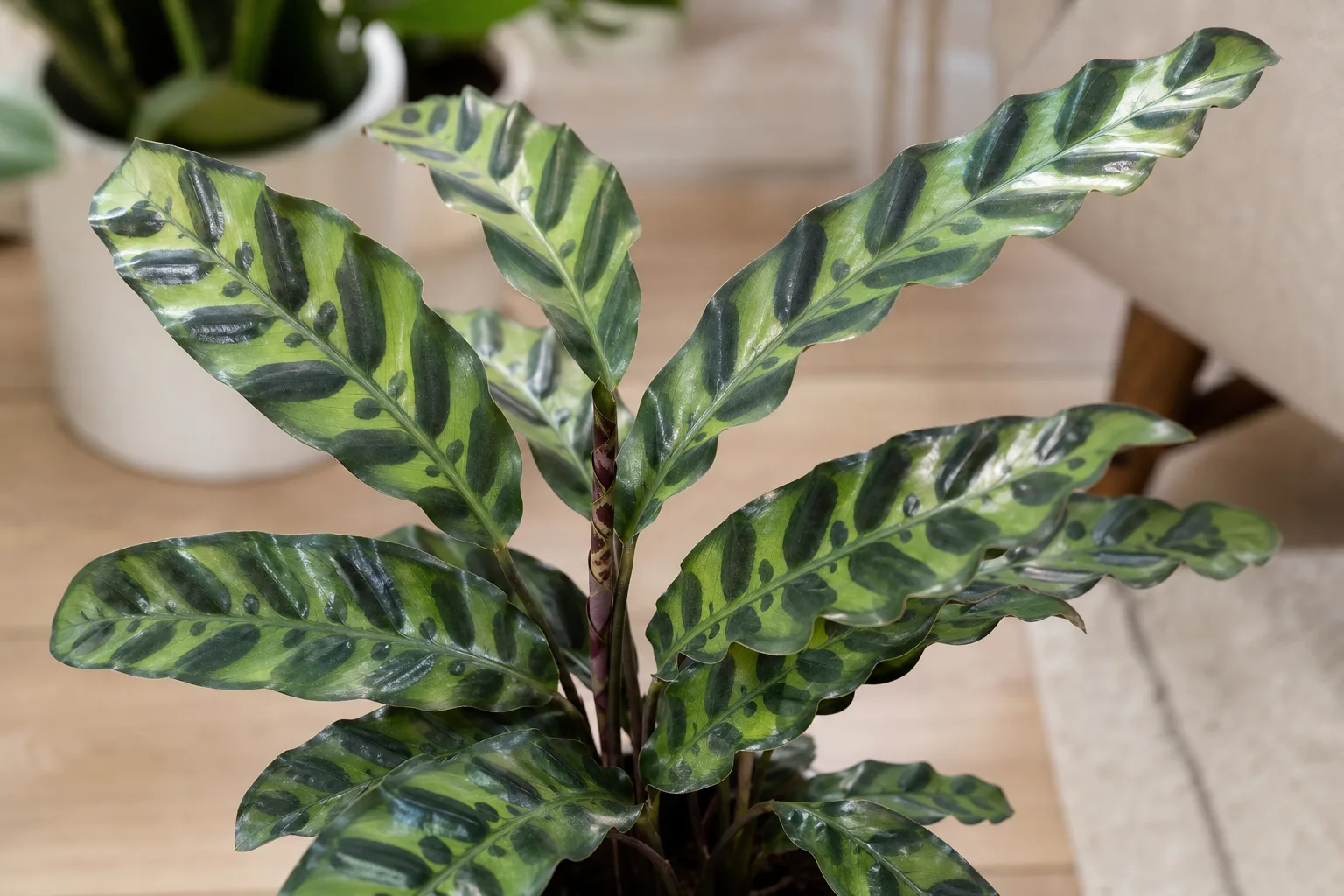
Slow Growth on Calathea Rattlesnake: Causes, Checks & Fixes
This guide covers slow growth on Calathea Rattlesnake. See also the general Slow Growth guide, watering, and light pages for this plant.
Slow Growth on Calathea Rattlesnake: Causes, Checks & Fixes
Quick answer
Slow growth on Calathea Rattlesnake (Goeppertia insignis) is stalled production of new rolled leaves from the rhizome crown-not the same as normal prayer-plant night folding or the stretched petioles of leggy growth. A healthy rattlesnake in warm months often opens a new narrow leaf every two to four weeks; mature indoor plants typically reach 9 to 20 inches tall with a clumping fountain habit.
First step: confirm the calendar. NC State Extension recommends reducing watering and fertilization in winter when plant growth typically slows-so six to eight weeks with no new center rolls from late fall through early spring is often normal rest, not a crisis. If growth stalls for six or more weeks during spring or summer while leaves stay firm and patterned, check humidity (aim for 60% or higher), switch to filtered or rainwater, verify the top 2 cm of mix dries on a normal rhythm, and inspect roots before Calathea Rattlesnake repotting guide or feeding.
This page focuses on stalled center rolls without obvious stretch. For dim-light pattern fade and elongated petioles, see not enough light and leggy growth. For crispy edges and humidity collapse, see low humidity and brown tips.
What normal growth looks like on Calathea Rattlesnake
Understanding baseline rhythm prevents panic during winter and catches real stress early in summer.
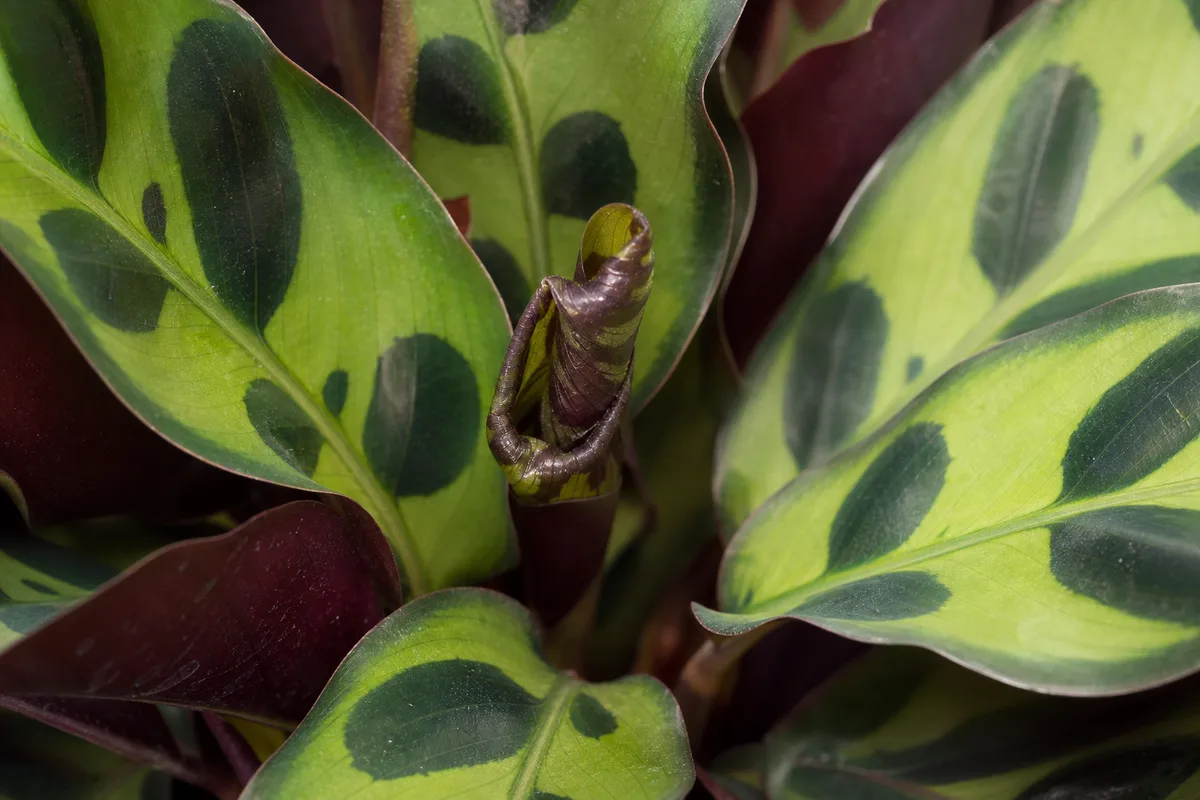
Slow Growth symptoms on Calathea Rattlesnake - compare with healthy tissue on the same plant.
On a thriving rattlesnake you should see:
- New rolled leaves emerging from the center of the rhizome clump every two to four weeks during active warm months
- Narrow wavy blades unfurling with crisp dark green elliptic blotches and purple-red undersides
- Nyctinastic movement-leaves folding up at dusk and reopening by morning-even when growth is slow; folding alone is not a stall signal
- Gradual increase in clump width as rhizome offsets push new shoots; mature indoor height is typically 9 to 20 inches per NC State Extension
- Moderate indoor pace-faster than a succulent, slower than a pothos in the same window; NC State lists a rapid growth rate in ideal greenhouse conditions, but typical homes land closer to steady moderate production when humidity and water quality are right
Winter rest is expected. When daylight shortens and room temperatures dip, rattlesnake metabolism slows. The plant may produce no new rolls for six to eight weeks while existing foliage stays firm. That pattern differs from summer stall, where the same pot that flushed leaves in June produces nothing in July despite warm air and long days.
Why Calathea Rattlesnake stops growing
Rattlesnake grows from a short rhizome crown-new shoots and rolled leaves push from the center, not from branching stems. Anything that limits rhizome energy, slows leaf unfurl, or damages fine roots shows up as fewer center rolls before dramatic yellowing or collapse.
Common causes on this species, ranked by how often they stall growth indoors:
Seasonal dormancy (often normal)
Tropical prayer plants slow cell division when light and warmth drop. NC State Extension directs growers to reduce watering and fertilization in winter when growth typically slows. If your stall aligns with November through February and leaves stay patterned, dormancy is the leading explanation-not root rot on Calathea Rattlesnake.
Low humidity (below ~50–60%)
Rattlesnake evolved in the humid forests of southeastern Brazil as an understory perennial. Dry heated air pulls moisture from thin wavy leaf edges faster than roots replace it. The plant may abort or slow unfurl of new rolls while older leaves still look acceptable. Low humidity can brown or curl leaf edges before the clump stops entirely-catch dry air early via a humidifier or grouped plants.
Tap-water minerals and fluoride
Municipal tap water carries fluoride, chlorine, and dissolved salts. On rattlesnake, minerals accumulate in leaf margins and root zone over months, stressing fine roots and slowing rhizome activity. Growth can stall before obvious brown tips appear-especially if you have been watering on schedule with unfiltered tap for a year or more. See brown tips when edges crisp; switch water first when growth alone slows.
Root stress from overwatering on Calathea Rattlesnake or root-bound pots
Soggy mix rots fine roots; the crown then lacks energy for new rolls even while a few old leaves stay green. Conversely, a tight rhizome clump circling drainage holes can exhaust available mix and stall flush until division or repotting in spring. Overwatering can result in root rot on this species-inspect before assuming the plant needs more water or fertilizer.
Insufficient light (early stage)
Dim light slows photosynthesis and stretches the gap between new leaves. Early dim stress may look like slow growth before petioles obviously elongate. If newest markings fade or petioles lengthen, read not enough light and the light guide-not just this page.
Cool drafts and temperatures below 65°F
Rattlesnake wants room temperatures from 65 to 75°F and does not tolerate drafts or sudden temperature changes. A pot on a cold winter windowsill or beside an AC vent can sit metabolically idle for weeks even when humidity and watering look fine.
Nutrient shortage (less common than the above)
Monthly balanced fertilizer at half strength during spring and summer supports active growth per NC State. Chronic underfeeding in bright humid conditions can thin new leaves-but do not fertilize a stalled stressed plant until you have ruled out roots, water quality, and season.
Slow growth vs. lookalikes
| What you see | Most likely issue | First action |
|---|---|---|
| No new rolls Nov–Feb, firm patterned leaves, normal night folding | Winter dormancy | Reduce water and pause feed; wait for spring |
| No new rolls 6+ weeks in summer, firm leaves, short petioles | Slow growth (this page) | Check humidity, filtered water, roots, light |
| Long petioles, faded blotches, lean toward window | Leggy growth | Improve light; see leggy-growth guide |
| Dull markings, stalled rolls, no stretch yet | Not enough light (early) | Move brighter; see not-enough-light guide |
| Wet top 2 cm for days, sour smell, yellow lower leaves | Root rot / overwatering | Stop water; inspect roots; see root rot |
| Crispy wavy edges, tight daytime curl | Low humidity or tap water | Raise humidity; switch water; see low humidity |
| New rolls start then abort, brown at unfurl | Humidity or mineral stress | Humidifier + filtered water together |
Nyctinastic folding at night is normal on healthy rattlesnake and does not by itself mean growth has stopped. Judge stall by center roll frequency across weeks, not by whether leaves stand upright at noon.
How to confirm the cause (six-step checklist)
Work through these in order before stacking repot, fertilizer, and humidity fixes on the same day:
- Mark the calendar. Note the date of the last fully opened center leaf. If you are in late fall or winter and the gap is under eight weeks, seasonal rest is likely-skip to step 6 for prevention only. If it is spring or summer and the gap exceeds six weeks, continue.
- Check humidity at the leaf level. Aim for 60% or higher around the canopy. Below 50% for weeks strongly points to humidity-limited unfurl-especially if wavy edges look dry even without full brown tips.
- Review water source. List whether you use tap, filtered, RO, or rainwater. If tap only, switch to filtered or rainwater for the next four weeks before any other major change.
- Test soil moisture and roots. Push a finger or skewer into the top 2 cm. Soggy cool mix for days suggests overwatering; hard dry block suggests drought. If wet soil pairs with no growth, gently tip the plant out and sniff-mushy brown roots need the root-rot workflow, not more fertilizer.
- Read light on the newest leaf. Sharp dark blotches and short petioles with slow rolls point to humidity, water, or roots-not light. Washed-out markings or stretch point to the light guides.
- Scan temperature and drafts. Confirm the pot is not on a cold sill, AC line, or heater blast. Night temperatures below 65°F for weeks can stall rhizome activity even when days feel warm.
Document your findings in one sentence-”summer stall, 50% humidity, tap water, firm roots, soggy top”-before choosing a single first fix below.
First fix for Calathea Rattlesnake (by confirmed cause)
Apply one primary correction, then wait two to four weeks for a new center roll before adding secondary steps.
If season = winter dormancy
Reduce watering toward the 7–10 day winter rhythm when the top 2 cm begins to dry. Pause fertilizer until you see the first spring center roll. Do not repot dormant plants unless root rot is confirmed.
If humidity is low (most common summer fix)
Run a humidifier near the plant targeting 60% or higher, or group it with other moisture-loving plants. Pebble trays help modestly; misting alone is unreliable for sustained unfurl. This single change often restarts rolls within three to four weeks when roots are healthy.
If tap water is the suspect
Switch to filtered, reverse-osmosis, or rainwater for every drink for at least one month. Flush the pot once with plain room-temperature water until it drains freely to wash surface salts. Judge success on the next opened center leaf, not old blade color.
If soil stays wet and roots smell sour
Stop watering. Empty the saucer. Unpot, trim mushy roots, and repot into fresh well-draining mix with perlite in a pot only one size larger with drainage holes. See overwatering and root rot for full root-rescue steps. Hold fertilizer until new growth resumes.
If roots circle the pot and mix is exhausted
Wait for early spring if possible. Divide or repot one size up with fresh tropical mix, keep humidity high, and water lightly once. Root-bound stall often clears after rhizome room and new mix-do not fertilize the same week you repot.
If light is marginal
Move one step brighter-east window or filtered south/west exposure per the light guide. Increase light without direct hot sun on narrow blades. Pair the move with rechecked watering because brighter spots dry faster.
If temperature is too low
Relocate away from cold glass and vents into stable 65–75°F air. Give two weeks before expecting a new roll.
Do not fertilize first. Salts on stressed roots worsen stall. Feed only after a new leaf opens on a normal watering rhythm in spring or summer.
Recovery timeline
Realistic expectations after the correct single fix:
- Humidity or water-quality correction: first new rolled leaf often appears in three to five weeks in warm months
- Winter dormancy: growth may not resume until day length and temperatures rise-sometimes eight or more weeks with no action needed
- Root rot recovery after trim and repot: four to eight weeks before a confident new center roll; longer if half the root mass was lost
- Light upgrade (early dim stress): two to four weeks to the next leaf if humidity and water were already adequate
- Spring repot or division: three to six weeks before flush; hold fertilizer four to six weeks after repotting
What recovers: frequency of new center rolls, speed of unfurl, sharper markings on new blades, normal night folding, more predictable soil drying in brighter corrected placements.
What does not recover: brown crispy tissue on old margins, length of any previously stretched petioles, sun-scorched patches from sudden direct sun.
A realistic case: rattlesnake stalled two months in summer on tap water at 45% humidity. After a humidifier and filtered water only, the first new rolled leaf often opens within four weeks; the second leaf confirms the trend.
If no center roll appears after six weeks in summer despite corrected humidity, water, light, and firm roots, inspect for spider mites on undersides and confirm the pot is not still waterlogged.
What not to do
- Fertilizing a stalled plant to “wake it up.” Salts stress sensitive roots; feed only after active growth returns.
- Repotting in winter on a healthy dormant clump. Transplant shock stacks on seasonal rest.
- Increasing watering because growth stopped. Wet stale mix rots rhizomes; check moisture before pouring.
- Stacking repot, prune, feed, and pesticide the same week. You will not know which change helped.
- Judging recovery by old leaves. Success is a new center roll with correct pattern, not greener lower foliage.
- Assuming slow growth means more light when petioles are already short and markings sharp-humidity or tap water is more likely.
- Misting instead of humidifying for aborted unfurls. Brief mist does not sustain the 60%+ rhizome needs for reliable flush.
How to prevent slow growth next time
Build a rhythm that matches rattlesnake biology from the overview:
- Filtered or rainwater as default-not emergency-only when tips brown
- Humidity 60% or higher year-round; do not let winter heating drop air below 50% for weeks
- Water when the top 2 cm begins to dry-roughly every 5–7 days in summer and 7–10 days in winter per the watering guide
- Medium bright indirect light-enough for sharp new blotches without scorch
- Monthly half-strength balanced feed only in spring and summer active flush
- Repot or divide every one to two years in early spring before the clump is root-bound
- Stable 65–75°F without drafts on the crown
Photograph the crown monthly in summer. A dated log-”new roll opened 18 June”-makes the next stall obvious early instead of surprising you in August.
Rattlesnake care cross-check
| Factor | Healthy range for steady growth | Stall signal |
|---|---|---|
| New leaf frequency (warm months) | Every 2–4 weeks | 6+ weeks in summer |
| Humidity | 60%+ ideal; 50% minimum if other factors right | Below 50% for weeks |
| Water | Top 2 cm dries between drinks; evenly moist, not soggy | Wet top for days, or hard dry block |
| Water type | Filtered, RO, or rainwater | Tap only for months |
| Light | Medium bright indirect; sharp new markings | Faded blotches or stretch |
| Temperature | 65–75°F stable | Below 65°F nights near glass |
| Fertilizer | Half strength monthly in active season | Feeding dormant or stressed plant |
| Roots | Firm, white-tipped; pot drains freely | Mushy smell, circling tight clump |
When to worry
Escalate if the crown softens, lower leaves yellow in clusters while soil stays wet, new rolls start then blacken at the base, or fine webbing appears on undersides. Those patterns point to root rot, crown rot, or spider mites-not passive slow growth.
Summer stall longer than two months after humidity, filtered water, light, and root checks usually warrants unpotting for a direct root inspection-even if foliage still looks acceptable.
Conclusion
Slow growth on Calathea Rattlesnake is usually seasonal rest, low humidity, tap-water buildup, root stress, or cool drafts-not a mystery disease. Confirm whether winter dormancy fits the calendar, run the six-step checklist, apply one targeted fix, and judge recovery on the next center roll opening with crisp rattlesnake markings. Prevent stalls by defaulting to filtered water, 60%+ humidity, and the top-2-cm dry rule year-round.
Related Calathea Rattlesnake problems
- Calathea Rattlesnake overview - baseline growth rate, humidity, and filtered-water biology
- Watering - top-2-cm dry rule and winter reduction
- Light - brightness for steady flush without scorch
- Low humidity - dry air slowing unfurl
- Brown tips - tap-water and mineral stress
- Leggy growth - stretch vs. stall
- Not enough light - dim light before obvious stretch
- Root rot - wet-soil stall
- Yellow leaves - watering imbalance signals
When to use this page vs other Calathea Rattlesnake guides
- Calathea Rattlesnake watering guide - Use for routine moisture checks before assuming slow growth is the main issue.
- Calathea Rattlesnake problems hub - Browse all 16 common issues on this species.
- Not Enough Light on Calathea Rattlesnake - Different entry point when symptoms overlap with slow growth.
- Leggy Growth on Calathea Rattlesnake - Different entry point when symptoms overlap with slow growth.
- Yellow Leaves on Calathea Rattlesnake - Different entry point when symptoms overlap with slow growth.