Watering Calathea Rattlesnake: Schedule, Soil Checks
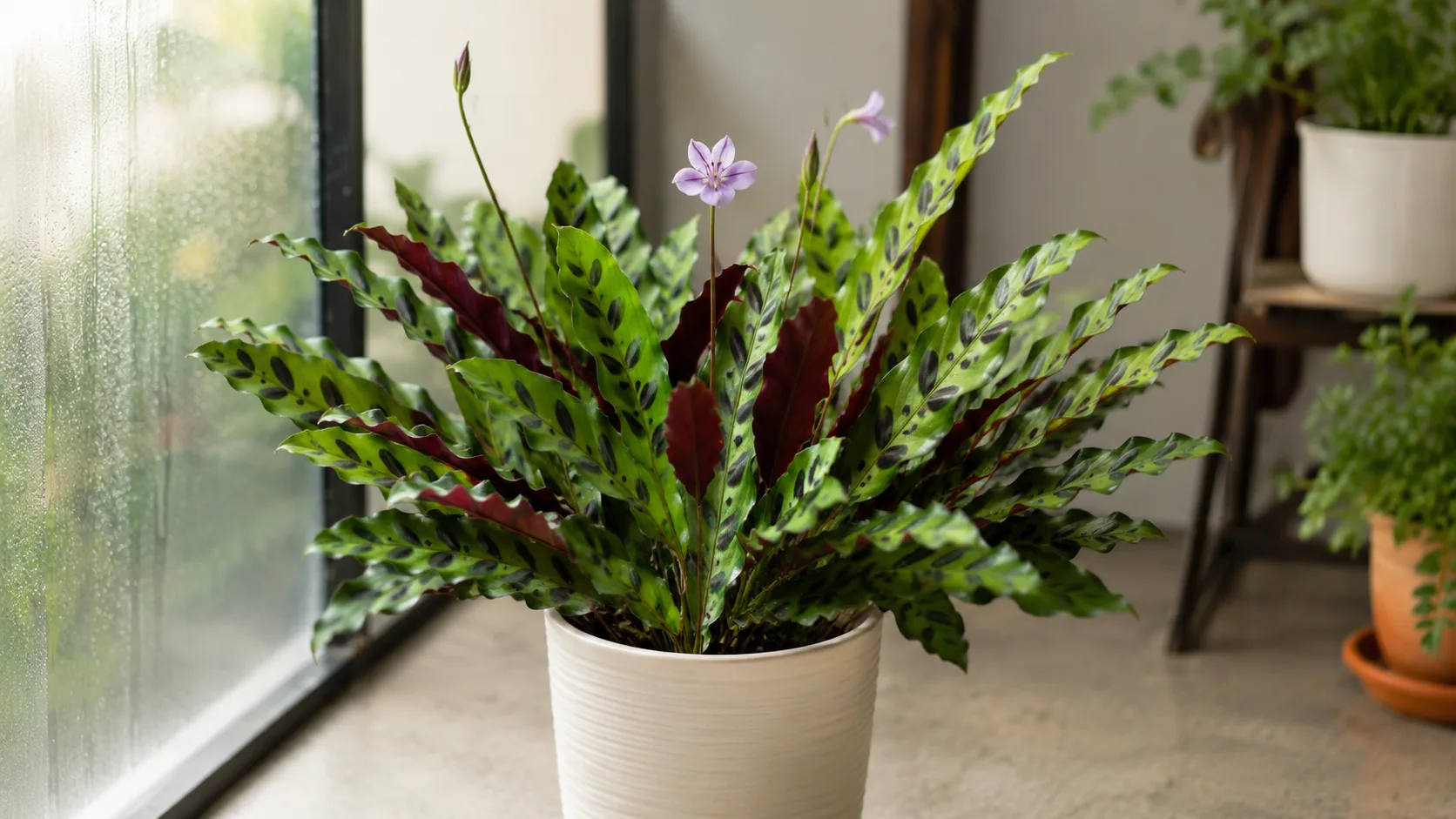
Watering Calathea Rattlesnake: Schedule, Soil Checks, and Common Mistakes
Watering Calathea Rattlesnake: Schedule, Soil Checks, and Common Mistakes
What Calathea Rattlesnake Actually Needs From Water
Calathea rattlesnake (Goeppertia insignis, formerly Calathea lancifolia) is one of the most popular prayer plants in the Marantaceae family, and watering is the habit that separates a plant with rippling, patterned leaves from one with crispy edges and stalled growth. In its native Brazilian rainforest understory, the plant grows in consistently moist but well-drained organic soil where water moves through after rain rather than pooling around the roots. Indoors, that translates to a simple target: the potting mix should hold even moisture around the root zone while still allowing air to move through the soil between drinks. Give it a swampy pot and fine roots rot. Let the mix go bone dry for weeks and the narrow, wavy leaves curl, crisp at the edges, and lose their movement.
North Carolina Extension Gardener Plant Toolbox notes that rattlesnake plant does best in a uniformly moist, well-drained peaty potting mixture at room temperatures from about 65 to 75°F in limited sun to bright shade. The same balance - even moisture, seasonal adjustment, and complete drainage - is the backbone of every good watering routine for Calathea Rattlesnake overview.
Light, pot size, mix texture, room humidity, and water chemistry all change how fast the container dries. Your job is to water thoroughly when the root zone is ready, let excess drain away, and wait until the top layer of mix has dried slightly before the next drink.
Prayer Plant Roots and Even Moisture Explained
Calatheas are often grouped with “moisture-loving” houseplants, which leads beginners to keep the soil wet at all times. That is the wrong reading. Moist does not mean wet. The mix should hold hydration without staying saturated for days. Roots need oxygen as much as they need water. When peat-based mix stays waterlogged, air spaces collapse, oxygen drops, and fine roots begin to fail. Once roots are damaged, leaves may wilt because the plant cannot move water properly, even while the pot feels heavy - the classic trap that sends growers toward more water when the plant actually needs less.
Rattlesnake is sometimes described as slightly more forgiving than broad-leaf Calatheas like Calathea roseopicta because each damaged narrow leaf is less visually dominant on the plant. That does not mean it tolerates neglect or soggy soil. The plant’s nyctinastic leaf movement - leaves folding up at night and opening by day - is normal behavior, not always a watering signal. Check the soil instead of pouring water every time leaves curl at night. The top 2 cm (about 1 inch) of mix should begin to dry between waterings, and the pot should never sit in a saucer full of runoff.
How Often to Water Calathea Rattlesnake Indoors
There is no single correct number of days between waterings, because frequency depends on pot size, pot material, mix composition, light, temperature, humidity, and season. For most indoor Goeppertia insignis plants in a moisture-retentive but well-draining mix with perlite, a practical starting range is every 5 to 7 days in spring and summer and every 7 to 10 days in fall and winter. Some plants in small terracotta pots in bright rooms dry in four or five days. The same plant in a deep plastic pot in a dim corner may need water only every two or three weeks in winter.
Treat those intervals as a reminder to check the plant, not as a command to pour. The soil is the authority. When results are ambiguous, waiting an extra day and checking again is usually the safer choice - the plant forgives one dry spell more easily than one week in stale wet mix.
A Realistic Summer and Winter Schedule
In spring and summer, when the plant is actively producing new rolled leaves from the center, most indoor rattlesnake plants in 6-inch pots need water roughly once a week, sometimes a little more often in very bright, warm conditions. Check the top 2 cm of mix every few days. When it feels beginning to dry, water thoroughly until excess runs from the drainage holes, then empty the saucer within 30 minutes. NC State Extension recommends watering regularly during the growing season to keep soils moist but not wet and applying balanced fertilizer monthly - which assumes you are checking moisture, not flooding on autopilot.
In fall and winter, growth slows, light drops, and the same pot stays wet longer. Most plants need water every 7 to 10 days, and some in cool rooms need even less. Reduce frequency, but do not stop checking. Let the top layer dry slightly, but do not let the entire root ball turn into a hard, shrunken block. Put a recurring reminder on your phone to check the plant, then decide based on soil moisture and pot weight - not the day of the week alone.
How to Check Calathea Rattlesnake Soil Moisture
The fastest way to know whether a calathea rattlesnake needs water is to check the root-zone moisture, not the appearance of the leaves alone. Yellow or brown leaf edges can come from overwatering on Calathea Rattlesnake, underwatering on Calathea Rattlesnake, low humidity, or salt buildup from tap water. Soil tells you which problem you actually have. Three checks work well together: the finger or skewer test, the pot weight test, and a quick look at drainage and recent care history.
The Finger Test and Skewer Test
Push a clean finger into the potting mix to the first knuckle, about 2 cm (1 inch) deep, near the pot edge rather than directly on top of the crown. If the material at that depth feels cool, damp, or clings to your skin, the plant is not ready. If it feels dry and crumbly, it is time to water. For deeper pots or if you prefer not to disturb surface roots, use a wooden skewer or chopstick. Insert it near the edge of the pot, leave it for a minute, and pull it out. Damp mix darkens the wood and may leave particles stuck to it. Dry mix leaves the skewer clean.
Peat can look dry on top while staying moist around the roots, especially in plastic or glazed pots. When results seem ambiguous, combine the finger test with pot weight rather than guessing. Moisture meters can help as a secondary tool, but they often read inaccurately in peat-heavy mix - trust your hands when the pot feels light and the top inch is clearly dry.
The Pot Weight Test
Lift the pot right after a thorough watering and notice how heavy it feels. Lift it again every day or two as the mix dries. A freshly watered calathea rattlesnake pot has a full, dense weight. As moisture leaves the mix, the pot becomes noticeably lighter. When it feels light and the top 2 cm is dry, water.
This test prevents a classic overwatering trap: watering because the surface looks dry while the lower root zone is still saturated. If the pot still feels heavy, wait another day and check again. Pot weight is especially useful after Calathea Rattlesnake repotting guide, when new mix dries unevenly, and in winter, when evaporation slows and the gap between “still damp” and “ready to water” can stretch an extra week. You do not need a scale. After a few watering cycles you will know the “wet” and “dry” feel for that specific container without thinking about it.
How to Water Calathea Rattlesnake the Right Way
A good calathea rattlesnake watering is a deep, even drink that wets the entire root ball, followed by complete drainage. Half-hearted top-ups keep the surface damp while leaving dry pockets deeper in the pot, which encourages uneven root growth and makes the plant look stressed even when you water often. The mechanics depend partly on your mix and pot, but the principles are the same: wet the whole root zone, drain fully, and never leave standing water.
Place the pot in a sink, tub, or saucer. Use room-temperature water and apply it slowly so it soaks in rather than running straight through dry channels in the mix. Keep watering until excess runs freely from the drainage holes. Let the pot rest and drain for several minutes. Empty the saucer or cachepot so the plant is never sitting in runoff. Standing water around the roots for hours is one of the fastest routes to rot indoors. NC State Extension warns that overwatering can result in root rot on Calathea Rattlesnake and that fungal leaf spots can occur from wetting the leaves when watering - so aim water at the soil, not the foliage.
Top Watering vs Bottom Watering
Top watering is the default for most calathea rattlesnake plants in standard peat-based houseplant mix with perlite. Pour slowly around the inner edge of the pot, moving the stream so water spreads through the mix. Water until runoff appears, then stop. Top watering flushes excess salts from fertilizer and hard tap water through the drainage holes, which matters because rattlesnake leaves are sensitive to mineral buildup on the edges.
Bottom watering works well for rehydration when the mix has gone too dry and water runs off the surface without soaking in. Set the pot in a shallow tray of room-temperature water for 15 to 30 minutes, remove it when the surface feels slightly moist, and let it drain fully. For routine care, top watering when the top 2 cm is beginning to dry is usually enough. Reserve bottom watering for drought recovery or hydrophobic, shrunken mix.
Drainage Rules and Why Standing Water Is Dangerous
Always use a pot with drainage holes. A decorative outer pot without drainage overrides good technique. Water collects at the bottom, the mix stays saturated, and the plant declines while the top leaves still look green for a while. If you use a cachepot, grow the plant in a plain inner pot with holes and lift it out to water, or water in the sink and return the plant only after draining. After watering, empty the saucer and keep cachepot bottoms above any pebble-tray water line. Aim water at the soil, not the leaves - wet foliage invites fungal spotting and does nothing meaningful for humidity.
Seasonal Watering Changes for Calathea Rattlesnake
Calathea rattlesnake watering changes through the year even indoors because light, temperature, and growth rate change. In spring, as new leaves unfurl from the center, gradually increase checking frequency. Soil dries faster, the plant uses more water, and roots are actively supporting new growth. Summer is usually the peak watering season: bright light, warm rooms, and optional time outdoors in shade all increase demand.
In fall and winter, reduce how often you water, but do not stop checking. NC State Extension recommends reducing watering when plant growth typically slows down. Let the top layer dry slightly and avoid keeping the mix constantly damp in a dim, cool room.
| Season | Typical indoor frequency | What changes |
|---|---|---|
| Spring | Every 5 to 8 days | New leaf growth, longer days, resume normal rhythm |
| Summer | Every 5 to 7 days | Heat, brighter light, faster transpiration |
| Fall | Every 7 to 10 days | Growth slowing, soil stays damp longer |
| Winter | Every 7 to 14 days | Lower growth, check before watering, never flood |
What Water to Use on Calathea Rattlesnake
The best water for calathea rattlesnake is room-temperature and relatively low in problematic salts and chemicals. Many plants tolerate ordinary tap water, but Calatheas are sensitive enough that fluoride, chlorine, and hard-water minerals can accumulate in the pot over months and show up as brown, crispy tips along the wavy leaf edges. Those tips look like low-humidity damage, which sends some growers toward more misting and more water when the real issue is water chemistry.
A practical priority list: rainwater is ideal where collection is easy. Filtered tap water improves chlorine taste and removes some impurities. Distilled or reverse-osmosis water helps plants with persistent tip burn despite good watering technique. Plain tap water at room temperature works for many homes, especially if you flush the pot regularly. Avoid softened water high in sodium, which damages roots over time.
Let cold tap water sit until it feels neutral to your hand before pouring. Rattlesnake plant grows best at roughly 65 to 75°F (18 to 24°C) per NC State Extension. If brown tips persist after you fix watering frequency and humidity, switch water sources for two months and flush the pot with plain water until it runs clear from the drainage holes.
Pot, Soil, and Humidity: What Affects Dry-Down Speed
Watering does not happen in isolation. Pot material, mix composition, and humidity determine how fast soil dries as much as how often you pour. Understanding those variables prevents the feeling that you are “doing everything right” while the plant still declines.
Terracotta breathes and speeds dry-down, which forgives slight overwatering tendencies in peat mix. Plastic and glazed ceramic hold moisture longer, which suits growers who tend to underwater but punishes heavy hands. Pot size matters after repotting: fresh mix in a larger pot stays wet longer until roots fill the space. Water less often after repotting even if the plant looks full on top. NC State Extension recommends a peaty, well-drained potting mixture - if your mix compacts or drains slowly, fix the soil system before chasing a new watering schedule.
Soil mix should be moisture-retentive but well-draining, typically peat or coco coir with perlite. A workable recipe is two parts peat moss or coco coir to one part perlite. Heavy garden soil or pure compost compacts, suffocates fine roots, and stays wet too long. If water sits on the surface or drainage slows, the mix - not your schedule - needs attention.
Humidity affects how fast leaves lose water but does not replace soil moisture. UF IFAS notes that Calatheas maintain appearance better when relative humidity is kept between 40% and 60% indoors; many growers target 60% or higher when possible. Below 40%, tips brown and the plant looks thirsty even when the pot is damp. A pebble tray or humidifier helps the foliage; misting does not. Keep rattlesnake away from heat vents and sunny glass that dry the narrow leaves unevenly.
Signs of an Overwatered Calathea Rattlesnake
Overwatering is one of the most common ways indoor calathea rattlesnake plants fail, and the symptoms stack together once root damage begins. The plant is not yellow because it needs more water. It is yellow because roots are failing in saturated mix, and the leaves cannot get oxygen or nutrients even while the pot feels wet.
Watch for these signs together:
- Yellowing leaves that look dull or limp, sometimes starting lower on the plant while the mix stays dark and wet.
- Soft stems or a sour smell from the soil surface, indicating anaerobic conditions in the root zone.
- A pot that stays heavy for many days after the last watering, with mix that looks waterlogged and may grow algae or white mold on the surface.
- Wilting or limp appearance despite wet soil. on Calathea Rattlesnake Damaged roots cannot move water properly, so the plant looks thirsty in a wet pot - the classic confusion point.
- Fungus gnats hovering near the surface, attracted to constantly damp organic mix.
- Root rot on inspection: brown, black, or slimy roots when you unpot.
NC State Extension lists yellowing of the leaves as a result of both underwatering and overwatering, which is why soil checks matter more than leaf color alone. If several overwatering signs appear together, stop watering, empty any saucer water, move the plant to medium indirect light with good airflow, and inspect the root zone before feeding or repotting into an even larger pot. Overwatering in low light is especially dangerous because evaporation is slow and the mix stays anaerobic longer.
Signs of an Underwatered Calathea Rattlesnake
Underwatering is less immediately fatal than rot on calathea rattlesnake, but repeated full dry-downs still stress roots and cause leaf damage that takes months to replace. One dry episode is often recoverable. Chronic neglect makes the plant sparse and slow to refill.
The clearest signs are:
- Leaves curling tightly during the day beyond normal prayer-plant movement, with papery or crispy edges along the wavy margin.
- Wilting or drooping leaves on Calathea Rattlesnake that feel dry when the mix is dry an inch down.
- Soil pulled away from the pot edge, shrunken and hard, with water running down the sides without soaking in when you try to water.
- A very light pot combined with dry mix at the top 2 cm.
- Slow or stalled new leaf growth despite good light, because the plant is conserving moisture.
- Faded leaf pattern when drought combines with low humidity, though pattern loss alone can also mean weak light.
When symptoms overlap, compare pot weight and soil moisture before you pour. Brown tips on old leaves will not fully revert even after recovery - judge success by healthy new growth from the center.
How to Save an Overwatered Calathea Rattlesnake
Root rot on calathea rattlesnake is serious but not always a death sentence if you act before the tissue is fully gone. The goal is to remove saturated, anaerobic mix, trim dead roots, and give the plant a smaller, well-draining home while it regrows from healthy tissue.
Start by stopping all watering and tipping the plant out of its pot. Shake or rinse away wet mix so you can see roots clearly. Healthy tissue is firm and pale to white. Rotted tissue is dark, soft, and may fall apart when touched. Trim all mushy roots with clean, sharp scissors or pruners. If more than half the root mass is gone, reduce the foliage burden by removing the most damaged leaves at the base so the remaining roots can support the plant.
Repot into fresh, well-draining mix with perlite - not the old soggy soil - in a pot only large enough for the trimmed root mass. One size smaller than the previous pot is often correct after a severe rot cleanup. Water lightly once to settle the mix, then let the top 2 cm dry before the next drink. Keep the plant in medium indirect light with stable humidity and no fertilizer until new leaves appear. Recovery can take several weeks. If all roots are fully mushy with no firm tissue left, the plant may not come back.
How to Revive an Underwatered Calathea Rattlesnake
An underwatered calathea rattlesnake usually needs one thorough rehydration, not a week of daily sips. Small amounts of water on crusty, shrunken peat often run down the sides and out the bottom without rewetting the root ball, which leaves the plant thirsty in a pot you think you watered.
Place the pot in a sink and water slowly from the top until the mix absorbs and runoff appears. If water channels away, bottom-water for 20 to 30 minutes, then top-water to flush. After rehydration, return to a check-based schedule - do not compensate for drought by keeping the soil constantly wet.
Common Calathea Rattlesnake Watering Mistakes to Avoid
Most calathea rattlesnake losses trace back to a short list of repeatable errors. Avoiding them is simpler than rescuing a plant after roots rot.
Watering on a calendar without checking soil is the top mistake. Use the calendar as a reminder, not a rule. Keeping the plant in a pot without drainage or leaving it in a full saucer defeats every other good habit. Daily small sips keep the surface damp and the center sour; water deeply instead. Misting instead of watering does not hydrate roots and can encourage leaf spot. Using cold or softened water stresses roots and builds sodium in the mix over time.
Overpotting, watering a declining plant without inspecting roots, ignoring humidity, and using dense soil without perlite all mimic or worsen watering problems. Reacting to nightly leaf folding confuses normal nyctinasty with drought stress. Fix watering first - check depth, drain fully, adjust seasonally - before repotting, moving windows, or feeding.
Conclusion
Watering calathea rattlesnake well comes down to a few clear habits: check the top 2 cm of mix before every drink, give a full watering with complete drainage, and adjust frequency by season, pot, mix, and room conditions rather than a fixed weekly rule. The plant’s rainforest roots forgive a missed watering more easily than they forgive a soggy pot, so when in doubt, wait and check again tomorrow.
Use the finger test, skewer test, and pot weight together until you know how your specific container dries. In summer, expect roughly every 5 to 7 days for many indoor plants in standard mix; in winter, stretch toward 7 to 10 days while still preventing a fully desiccated root ball. Match your water quality and humidity to the plant’s needs so brown tips and yellow leaves are not misread as thirst.
If you see yellow leaves with wet, heavy soil, stop watering and inspect the roots. If you see tight curling with hard, dry mix, rehydrate thoroughly with top watering or a short bottom soak, then resume a check-based rhythm. Calathea rattlesnake is not a succulent and not a maidenhair fern - it wants steady moisture with oxygen in the root zone. Get that balance right and the plant rewards you with rippling, patterned leaves that move through the day for years.
When to use this page vs other Calathea Rattlesnake guides
- Calathea Rattlesnake overview - Start here for whole-plant context before deep-diving this topic.
- Calathea Rattlesnake problems hub - Jump to symptom-specific fix guides when this care topic does not resolve the issue.
- Overwatering on Calathea Rattlesnake - Escalate here when watering adjustments are not enough.
- Underwatering on Calathea Rattlesnake - Escalate here when watering adjustments are not enough.
- Root Rot on Calathea Rattlesnake - Escalate here when watering adjustments are not enough.
Related Calathea Rattlesnake guides
- Calathea Rattlesnake overview
- Calathea Rattlesnake light
- Calathea Rattlesnake soil
- Calathea Rattlesnake propagation
- Calathea Rattlesnake fertilizer
- Calathea Rattlesnake repotting
- Overwatering on Calathea Rattlesnake
- Underwatering on Calathea Rattlesnake
- Root Rot on Calathea Rattlesnake
- Wilting on Calathea Rattlesnake
- Drooping Leaves on Calathea Rattlesnake
- Mold on Soil on Calathea Rattlesnake
Related tool
Try the Plant Watering Calculator with calathea-rattlesnake pre-selected to estimate needs for your setup.