Wilting on Calathea Rattlesnake: Causes, Checks & Fixes
Quick answer
Wilting on Calathea Rattlesnake means lost turgor-limp, collapsed narrow leaves that stay limp through the day. First step: lift the pot and check soil at 2 cm depth. Heavy wet soil with limp leaves means pause watering; light dry soil means bottom-water once. Do not water a wilted plant with already-wet mix.
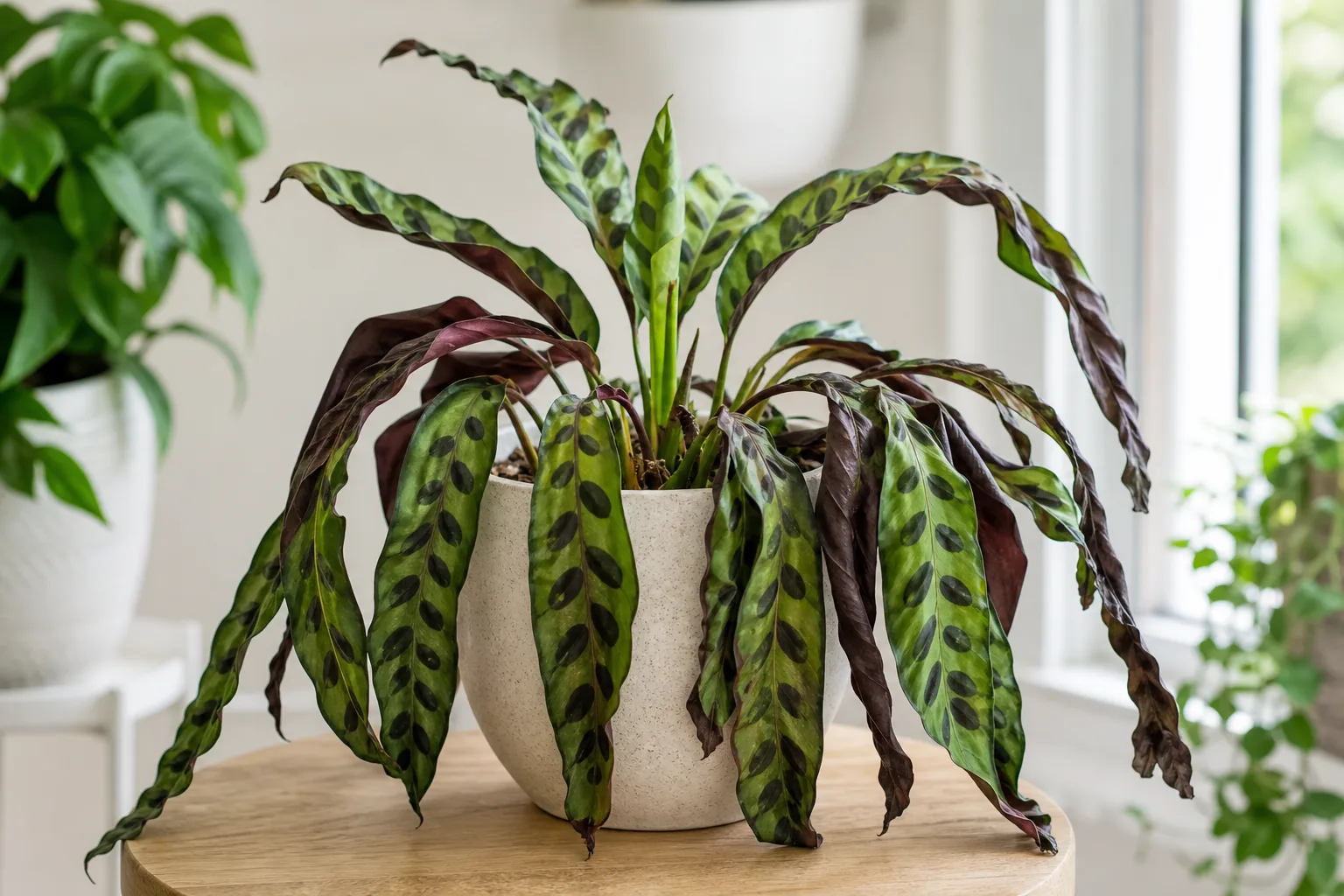
Wilting on Calathea Rattlesnake: Causes, Checks & Fixes
This guide covers wilting on Calathea Rattlesnake. See also the general Wilting guide, watering, and light pages for this plant.
Wilting on Calathea Rattlesnake: Causes, Checks & Fixes
Quick answer
Wilting on Calathea Rattlesnake (Goeppertia insignis) is lost turgor-narrow wavy blades that hang limp, feel thin or collapsed, and stay that way through the day. It is not the same as normal prayer-plant night folding or the slower posture change called drooping leaves.
First step: lift the pot and check soil moisture at 2 cm depth before you pour anything.
- Heavy wet pot + limp leaves → pause watering, empty the saucer, and read the overwatering branch.
- Light dry pot + limp curled leaves → [bottom-water once](/plants/calathea-rattlesnake/plant-problems/underwatering on Calathea Rattlesnake/) with room-temperature filtered or rainwater, then drain fully.
- Moist soil + limp leaves + crisp wavy edges in dry winter air → raise humidity per the low-humidity guide before adding more water.
Do not water a wilted Rattlesnake when the mix is already wet at depth-that is one of the fastest ways to push fine Marantaceae roots into rot.
What wilting looks like on Calathea Rattlesnake
Rattlesnake has long, narrow, rippled leaves with dark oval markings. That shape makes water stress visible quickly once you separate wilt from normal movement.
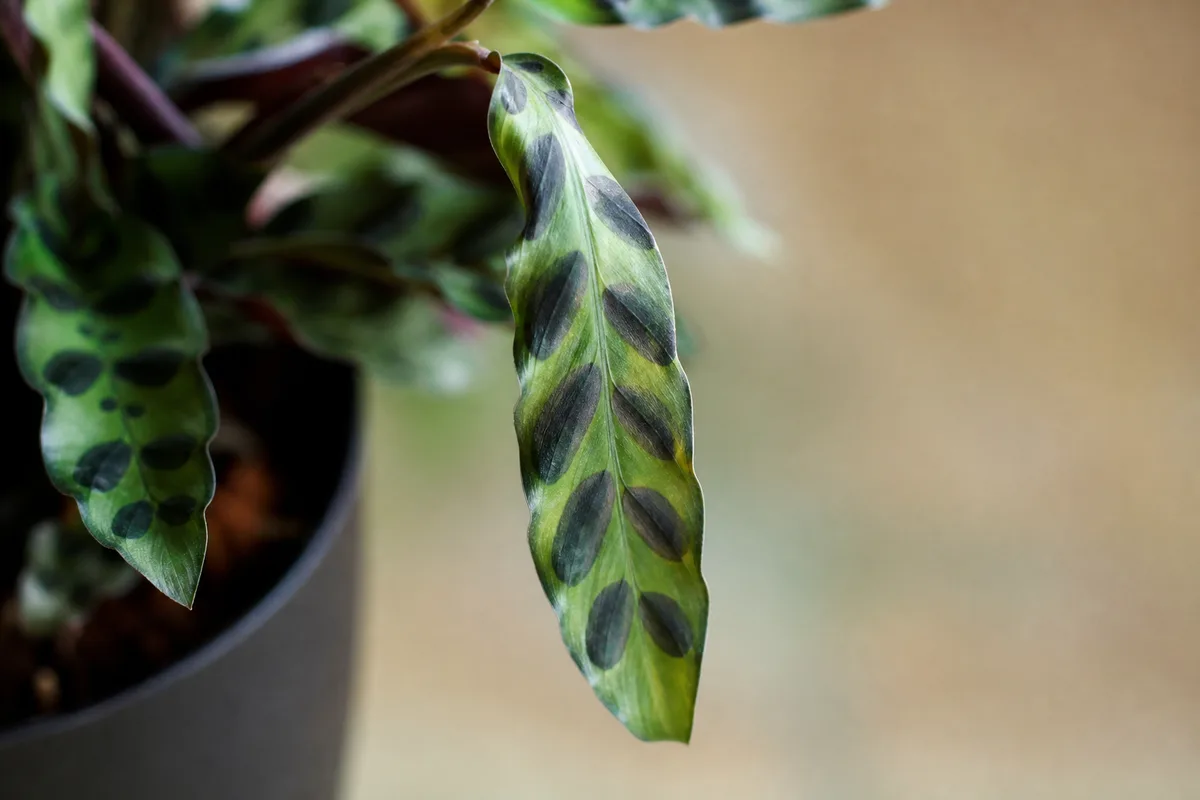
Wilting symptoms on Calathea Rattlesnake - compare with healthy tissue on the same plant.
True wilting on this plant looks like:
- Blades hang limp with little spring when you gently lift them-they feel deflated, not just lowered
- Collapse persists through midday, not only during the hottest afternoon hour
- Whole leaf length softens rather than only the wavy edge crisping
- Outer leaves droop first, while the center may still show small rolled growth
- Yellow lower leaves may appear when wet soil has damaged roots
- Pot weight matches the story-very light with dry mix, or heavy with damp mix for days
Compared with broad-leaf Calatheas like Calathea roseopicta, each damaged narrow Rattlesnake blade is less visually dominant on the plant-early wilt can look subtle until several outer leaves collapse at once. That does not mean Rattlesnake tolerates drought or soggy soil better; it means you should trust pot weight and soil moisture over how dramatic the limp leaves look.
Normal nyctinasty (not wilting): Healthy Rattlesnake leaves rise at night and lower by day in the prayer-plant family rhythm. Check soil at midday after leaves have reopened. A nightly vertical fold without daytime collapse is expected behavior, not a watering emergency.
Wilting vs. drooping on Rattlesnake: Drooping leaves describe posture-blades hanging lower while tissue may still feel somewhat firm. Wilting is turgor loss-the leaf feels limp and collapsed, like a deflated ribbon. Both can share causes, but wilting signals more acute water-pathway failure and needs the wet-vs-dry branch first.
Why Calathea Rattlesnake wilts
Rattlesnake evolved in Brazilian rainforest understory with consistently moist, well-drained organic soil and high humidity. Indoors, wilting almost always traces to a broken water pathway-too little water reaching leaves, or roots too damaged to transport water that is already in the pot.
Overwatering and wet-soil wilt
Overwatering can result in root rot, and yellowing leaves can follow both underwatering and overwatering-so soil checks matter more than leaf color alone. When peat-based mix stays saturated, fine roots lose oxygen, begin to fail, and cannot move water upward. The plant looks thirsty in a heavy wet pot-the classic Calathea trap that sends owners toward more water when the plant needs less.
Calendar watering, cachepots without drainage, and leaving saucers full after bottom-watering keep Rattlesnake roots anaerobic, especially in cool dim winter rooms where evaporation slows. A common repeat trigger: bottom-watering until the surface moistens, then leaving the nursery pot sitting in a full saucer for days-the mix reabsorbs standing water and the pot stays heavy while blades wilt anyway.
Underwatering and drought wilt
Rattlesnake is not drought-tolerant. When the root ball goes dry, narrow leaves lose turgor fast. Inward rolling, papery texture, and a lightweight pot with dusty dry mix at 2 cm depth fit thirst better than rot. One missed drink is often recoverable; weeks of drought damages fine roots and slows recovery.
Low humidity and midday collapse
UF IFAS interiorscape guidance notes that Calatheas maintain appearance better when relative humidity stays between 40% and 60% indoors; many growers target 60% or higher for Rattlesnake. Below that-common near heating vents or sunny glass in winter-narrow leaves transpire faster than roots replace moisture. Soil can read slightly moist while blades still collapse in the afternoon. Edge crisping without full limp collapse often fits low humidity more than simple thirst.
Heat, drafts, and cold shock
The rattlesnake plant does not tolerate drafts or sudden temperature changes. Hot air from HVAC, radiator blast, or cold window glass in winter can cause temporary afternoon wilt even when watering is average. Move the plant before you change the watering schedule.
Root rot escalation
When wet-soil wilt persists, roots may be actively decaying. Wisconsin Horticulture Extension describes gardeners noticing wilt even though soil is wet, with soft brown roots and sometimes a sour odor. See the root rot guide if limp leaves continue after the top inch dries, stems soften at the crown, or yellowing spreads on damp mix.
Lookalike symptoms to rule out
| Pattern | Likely cause | Key check |
|---|---|---|
| Limp all day, heavy wet pot | Wet-soil wilt / root stress | Pause water; inspect roots if no improvement |
| Limp with light dry pot, tight inward curl | Underwatering | One bottom-water; see underwatering |
| Limp midday only, moist soil, crisp wavy edges | Low humidity / heat | Humidity and placement; see low-humidity |
| Vertical fold at night, firm reopen by day | Normal nyctinasty | No emergency-check soil at midday |
| Lower posture, tissue still somewhat firm | Drooping, not full wilt | See drooping leaves |
| Yellow lower leaves, gnats, sour smell on wet mix | Overwatering / rot | Stop water; see overwatering |
How to confirm the cause
Work through these checks in order before you change anything else:
- Time of day - Inspect at midday after normal day opening. Night folding alone is not wilt.
- Pot weight - Lift the container. A light pot indicates dry mix; a heavy pot suggests moisture still present.
- Moisture at 2 cm - Push your finger or a skewer into the top 2 cm near the pot edge. Dusty dry confirms thirst. Cool dampness at depth with a heavy pot confirms wet-soil stress.
- Leaf texture - Limp, thin, collapsed blades fit wilt. Only edge crisping with otherwise flat centers fits humidity or mineral burn.
- Stem base - Soft crown tissue on wet soil is urgent-likely advancing rot.
- Recent care - Calendar watering, full saucers after bottom-watering, new cachepot without drainage, or heat-vent placement are common setup causes.
Confirmed wet-soil wilt: heavy pot, damp mix at depth, limp leaves, sometimes yellow lower foliage. Confirmed dry-soil wilt: light pot, dry 2 cm, limp inward curl, improvement within hours after one deep soak.
First fix for Calathea Rattlesnake
Lift the pot and branch on soil moisture-one action only.
If the pot is heavy and mix is wet at 2 cm
Stop watering immediately. Empty the saucer or cachepot. Move to Calathea Rattlesnake light guide with good airflow-not harsh sun. Let the top inch of mix begin to dry before the next drink. Do not water wilted plants when soil is already moist-that deepens root oxygen loss.
If leaves keep declining after the surface dries, unpot and inspect roots. Trim mushy tissue and repot only if rot is confirmed-see root rot.
If the pot is light and mix is dry at 2 cm
Bottom-water once with room-temperature filtered or rainwater until the surface feels evenly moist, then drain fully for 30 minutes. A quick top pour on shrunken peat often runs down the sides without rewetting the core. Full steps are in the underwatering guide.
If soil is moist but leaves collapse in dry afternoon air
Raise humidity first-pebble tray, grouping, or humidifier targeting 60% or higher at leaf height. Do not compensate with wetter soil. Follow the low-humidity page and keep the normal watering rhythm.
Hold fertilizer, Calathea Rattlesnake repotting guide, and heavy pruning until turgor stabilizes for at least one week.
Recovery timeline
Hours: True drought wilt on Rattlesnake often shows leaf firming within four to twelve hours after one proper bottom-water. Outer blades recover before the center.
Days: Wet-soil wilt may improve once oxygen returns to the root zone and the top layer dries-sometimes two to five days if roots are only stressed, not rotted. Yellow leaves rarely re-green.
Weeks: Root rot recovery takes longer. Judge success by firm new center rolls and a pot that returns to a predictable wet-dry weight cycle-not by old limp blades.
Recovery snapshot (March 2026, indoor grower): A 6-inch Rattlesnake in a decorative cachepot wilted over a long weekend-the outer nursery pot felt heavy and cool, bottom saucer still held runoff from a Friday bottom-water, and four narrow blades hung limp through Monday midday while the center roll stayed small but firm. Stopping all water, sliding the nursery pot out to drain standing water, and letting the top inch dry produced firmer outer petioles by day four. A clean new rolled leaf unfurled by day twelve. Yellow lower blades never re-greened; pot weight returning to a light-then-moderate rhythm after each drink confirmed the root pathway was healthy again.
Worsening signs: Limp leaves 24 hours after confirmed full soak on already-moist soil, spreading yellowing, soft crown, or sour smell-escalate to root inspection before the next drink.
What not to do
Do not pour water on a wilted plant with wet soil-the most common Calathea kill move. Avoid misting instead of root-zone hydration; brief leaf moisture does not fix turgor loss. Do not react to nightly leaf folding as automatic drought. Skip fertilizer on stressed roots, repotting the same day you rescue wilt, and leaving the plant in a full saucer after any soak. Do not move wilted Rattlesnake into direct sun to “perk it up”-that increases transpiration on already compromised tissue.
How to prevent wilting next time
Match watering to how fast your pot dries using the Calathea Rattlesnake watering guide: check every few days and water when the top 2 cm begins to dry-roughly every five to seven days in warm bright growth, longer in cool winter.
Use moisture-retentive but well-drained mix with perlite, pots with drainage holes, and empty saucers within 30 minutes. After bottom-watering, lift the nursery pot out of any cachepot and pour off trapped runoff-sitting in recycled water is a frequent wet-wilt trigger in winter when evaporation slows. Keep humidity at 60% or higher and place Rattlesnake away from heat vents and cold window glass. When in doubt between thirst and rot, wait and check pot weight again tomorrow-Rattlesnake forgives one dry day more easily than one week in stale wet peat.
Calathea Rattlesnake care cross-check
| Check | Healthy baseline | Wilting red flag |
|---|---|---|
| Top 2 cm of mix | Beginning to dry before next drink | Wet for many days while blades stay limp |
| Pot weight | Light when dry, moderate after watering | Stays heavy and cool between waterings |
| Midday leaf posture | Open blades with spring when lifted | Limp, thin, collapsed through midday |
| Night movement | Vertical fold, firm reopen by morning | Limp overnight on wet or dry soil |
| Humidity | 60% or higher at leaf height | Afternoon collapse with moist soil, crisp edges |
| Crown | Firm at soil line | Soft tissue on damp mix |
When to worry
Treat as urgent if the crown softens on wet soil, yellowing spreads while the mix stays damp for many days, wilting persists after a confirmed drought soak, or roots smell sour on inspection. Those patterns point to advancing root rot rather than a simple watering miss-follow the numbered unpot-trim-repot protocol on that page (stop water, inspect roots, trim decay, repot in airy mix) before the next drink.
For baseline care and seasonal rhythm, see the Calathea Rattlesnake overview.
Related Calathea Rattlesnake problems
- Overwatering - wet-soil wilt and yellow lower leaves
- Underwatering - dry-soil wilt and tight inward curl
- Low humidity - midday collapse with moist soil
- Root rot - limp leaves despite wet mix, soft crown
- Drooping leaves - posture change without full turgor loss
- Watering guide - top 2 cm dry rule and pot-weight checks
When to use this page vs other Calathea Rattlesnake guides
- Calathea Rattlesnake watering guide - Use for routine moisture checks before assuming wilting is the main issue.
- Calathea Rattlesnake problems hub - Browse all 16 common issues on this species.
- Underwatering on Calathea Rattlesnake - Different entry point when symptoms overlap with wilting.
- Overwatering on Calathea Rattlesnake - Different entry point when symptoms overlap with wilting.
- Root Rot on Calathea Rattlesnake - Different entry point when symptoms overlap with wilting.
Related Calathea Rattlesnake guides
- Calathea Rattlesnake overview
- Calathea Rattlesnake watering
- Calathea Rattlesnake light
- Calathea Rattlesnake soil
- Underwatering on Calathea Rattlesnake
- Overwatering on Calathea Rattlesnake
- Root Rot on Calathea Rattlesnake
- Drooping Leaves on Calathea Rattlesnake
- Yellow Leaves on Calathea Rattlesnake
- Calathea Rattlesnake problems