Slow Growth on Calathea Medallion: Causes, Checks & Fixes
Quick answer
Healthy Calathea Medallion pushes a new round leaf every few weeks in warm months; winter stalls are normal. If growth stops for months with no new spear, check humidity, light, soil moisture, and rhizome health before fertilizing. First step: log how long the crown has been static and measure humidity at leaf height.
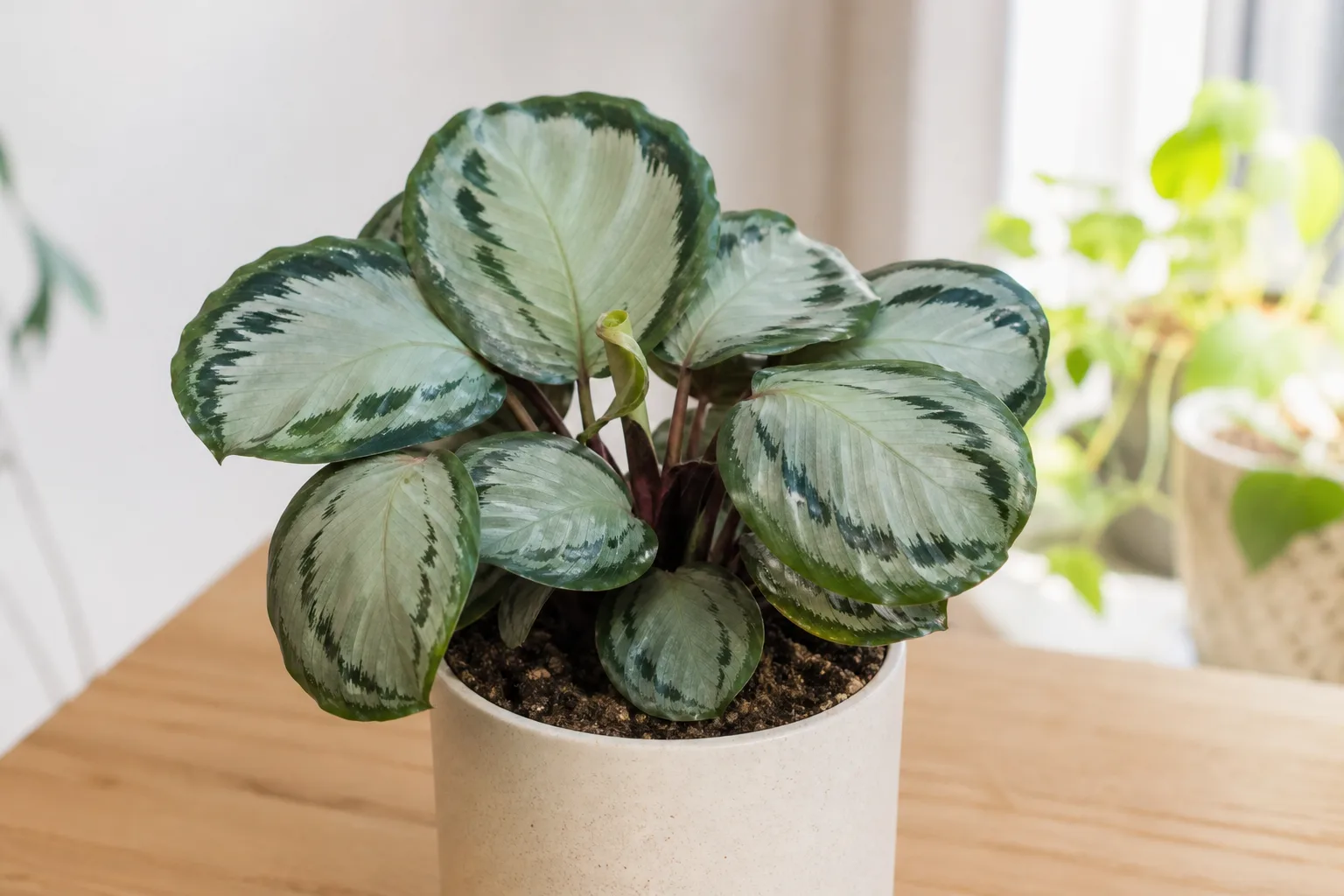
Slow Growth on Calathea Medallion: Causes, Checks & Fixes
This guide covers slow growth on Calathea Medallion. See also the general Slow Growth guide, watering, and light pages for this plant.
Slow Growth on Calathea Medallion: Causes, Checks & Fixes
Quick answer
Calathea Medallion (Goeppertia veitchiana ‘Medallion’) is a slow-growing, clumping Marantaceae houseplant that spreads by rhizomes at the soil surface. In good indoor conditions you should see a new round leaf unfurl every two to four weeks during spring and summer-not weekly like a pothos, but steady enough that the crown is rarely static for months. Winter slowdown or a complete pause in new spears from late fall through early spring is normal when light drops and heating dries indoor air.
Slow growth becomes a problem when no new spear appears for three or more months during warm weather, when new leaves arrive smaller and paler than older ones, or when the crown looks stuck while soil stays wet or humidity crashes. Those patterns usually trace to low humidity, insufficient light, watering imbalance, tap-water mineral stress, root-bound rhizomes, or cold drafts-not a missing fertilizer dose.
First step: note the date of the last successful unfurl, measure humidity at leaf height with a hygrometer, and feel whether the top 1 to 2 inches of soil are dry or wet before changing anything else. See our Calathea Medallion overview for baseline growth, humidity, and water-quality expectations.
What normal growth looks like on Calathea Medallion
Understanding what “slow” means for this cultivar prevents panic during winter and catches real problems in summer.
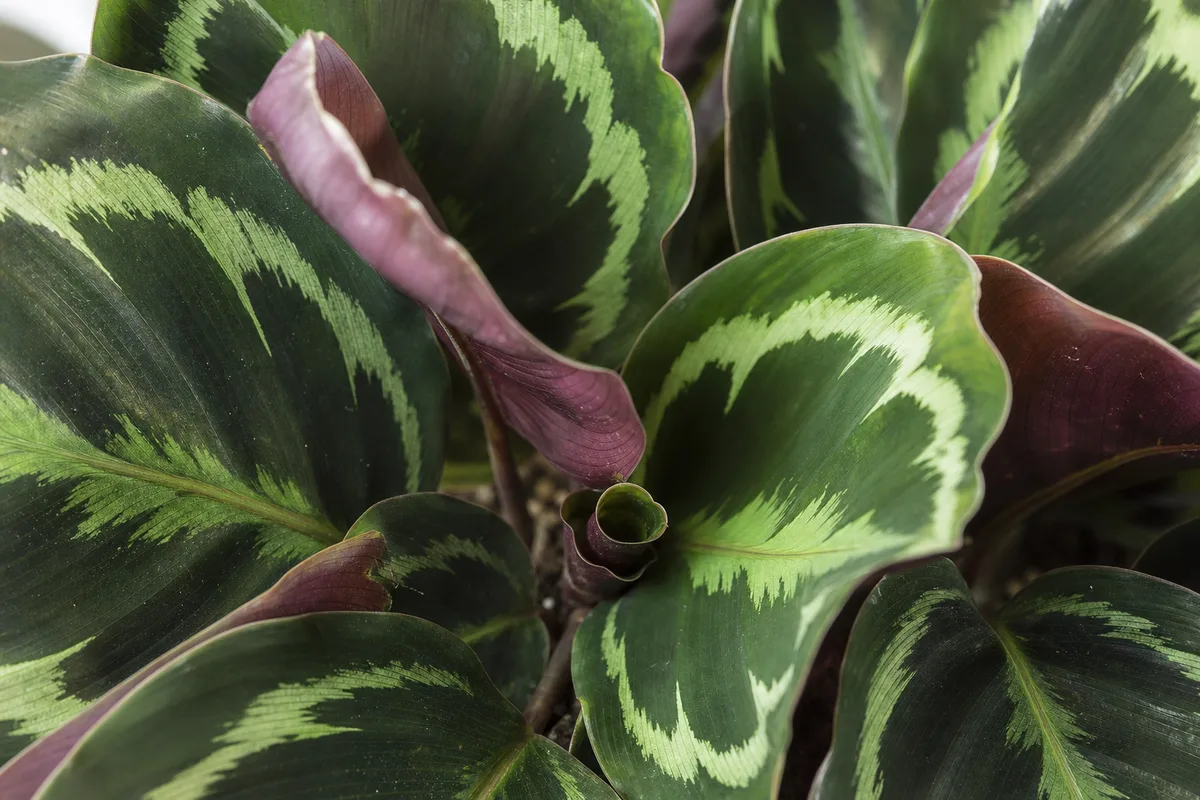
Slow Growth symptoms on Calathea Medallion - compare with healthy tissue on the same plant.
Healthy indoor benchmarks:
- New leaf every two to four weeks during active warmth when light, humidity, and moisture stay consistent
- Moderate overall pace-NC State Extension lists a slow growth rate for Goeppertia veitchiana, with mature plants reaching roughly 12 to 24 inches (30–60 cm) tall and wide over time
- Rhizome spread at the soil surface-new shoots emerge from thick horizontal rhizomes rather than a deep taproot
- Each new leaf unfurls from a central rolled spear over several days, opening into a round painted blade with burgundy undersides
- Seasonal rhythm-faster flush in spring and summer, little to no new growth in dim, cool winter months even when the plant looks otherwise green
Medallion does not fold its leaves at night the way many prayer plants do. A plant that stays open around the clock is normal for this species-not a sign that growth has stopped.
What is not normal during the warm season: a crown that produces no new spear for three or more months, new leaves that are dramatically smaller or washed-out compared to established blades, or spears that stall half-open for weeks while humidity reads below 40%.
Why Calathea Medallion stops growing
Growth stalls when photosynthesis, root function, or leaf expansion cannot keep pace with what this Ecuadorian understory plant expects. The most common indoor causes:
1. Winter dormancy and short days - Lower light and cooler room temperatures naturally slow metabolism. Many Medallions push little or no new growth from late fall through early spring without being sick.
2. Low humidity at the crown - NC State Extension recommends humidity above 60% for Goeppertia veitchiana. Broad round leaves lose moisture fast during unfurl. Dry air aborts or stalls new spears before yellowing appears elsewhere. See low humidity.
3. Insufficient light - Medallion needs bright, indirect light or partial shade. Dim corners produce poor, weak growth with smaller, paler new leaves and months without spears while older foliage still looks acceptable. Soil may stay wet because transpiration drops. See not enough light.
4. Overwatering and root stress - Wet, poorly drained mix suffocates rhizome roots. Growth stops before widespread yellowing. Sour smell, fungus gnats, and soft lower stems are escalation signs. See overwatering and root rot.
5. Underwatering and drought-damaged roots - Repeated dry cycles kill fine feeder roots. Recovery is slow on a species already rated slow-growing. See underwatering.
6. Tap-water fluoride and mineral buildup - Fluoride in tap water can brown leaf edges and tips on this species. Chronic mineral stress weakens rhizome activity and stalls unfurling before obvious tip burn spreads. See brown tips.
7. Root-bound rhizome congestion - Shallow rhizomes circle the pot; water runs through without wetting the center. New shoots have nowhere to expand. Repot every few years in spring or summer when the clump fills the pot-stalling often appears if this step is overdue.
8. Cold drafts and temperature swings - Room temperatures should stay between 65 and 85°F with no sudden drops from windows, doors, or AC vents. Chill stress pauses growth on tropical rhizomes.
9. Leggy stretch mistaken for healthy growth - Long petioles with weak new leaves mean the plant is reaching for light, not thriving. That is a light problem, not fast growth. See leggy growth.
Premature fertilizer rarely fixes stalled Medallion growth. Salt buildup from overfeeding can make the problem worse on stressed roots.
Slow growth vs. lookalikes
| Pattern | Likely cause | Key differentiator on Medallion |
|---|---|---|
| No new spears Oct–Feb, firm leaves, stable soil | Winter dormancy | Seasonal; resumes in spring with light and warmth |
| Stuck or torn central spear, crisp edges, firm petioles | Low humidity | Crown damage before older blades; near vents |
| Smaller pale new leaves, long petioles, wet soil | Not enough light | Old leaves look fine; crown stalled months |
| No growth, sour wet soil, yellow lower leaves | Overwatering / root rot | Soft tissue, gnats; not a dry-air pattern |
| Dry soil, limp curl, light pot | Underwatering | Whole-plant droop; see wilting |
| Long stems, faded pattern, plant leans to window | Leggy growth | Stretching-not the same as healthy slow flush |
| Brown tips, slow spears, tap water only | Mineral / fluoride stress | Water quality; see brown tips |
| Rhizomes on soil surface, water channels through | Root-bound | Spring repot candidate; not winter emergency |
How to confirm the cause
Work through these six checks before repotting, fertilizing, or buying new equipment:
- Season and light context - Note the calendar month and day length. No new growth in December in a north room is often normal. No new growth in June with adequate warmth is not.
- Last unfurl date - Mark when the newest full leaf opened. Fewer than one new leaf in four months during warm weather signals a problem; zero spears all winter may not.
- Hygrometer at leaf height - Readings below 40–50% support humidity as a growth limiter. Above 55% with stalled spears, look at light and roots next.
- Soil moisture and pot weight - Press the top 1 to 2 inches. Constantly wet heavy pots point to overwatering or poor drainage. Bone-dry, light pots with limp foliage suggest drought stress per our watering guide.
- New-spear inspection - A healthy rolled spear should progress toward opening over days. A spear stuck for weeks with brown edges implicates humidity or water quality. No spear at all for months implicates light, roots, or season.
- Rhizome and drainage check - Slide the plant partway from the pot if soil stays soggy or water races through. Healthy rhizomes are firm and pale; mushy, black, or sour-smelling tissue needs root intervention, not fertilizer.
If winter dormancy fits checks 1 and 2 and the plant is otherwise firm and green, wait until spring before aggressive fixes. If four or more checks point to environment or roots during the warm season, proceed to a targeted first fix.
First fix for Calathea Medallion
Make one care correction at a time so you can read the plant’s response over the next two to three weeks. Match your first action to the most likely confirmed cause:
Low humidity (readings below 50%, stuck spears, vent proximity): Move the pot at least one metre from heating vents and radiators, then run a humidifier targeting 60% or higher at leaf height. Do not increase watering to compensate for dry air.
Insufficient light (dim placement, pale small new leaves, wet soil that never dries): Move to bright, indirect light within one to three feet of an east or north window, or add a full-spectrum grow light on a 12- to 14-hour timer. Reduce watering frequency to match slower transpiration in the brighter spot.
Overwatering (wet soil, sour smell, gnats): Stop watering until the top 2–3 cm dry. Inspect roots if yellowing spreads. Repot only if tissue is mushy-see root rot.
Underwatering (dry soil, limp curl): Soak thoroughly until water drains, then resume check-based watering when the top 1 to 2 inches dry.
Tap-water stress (brown tips, mineral crust on soil): Switch to filtered, distilled, or rain water for the next four to six weeks before judging growth.
Root-bound rhizomes (spring only, firm plant, water channels through): Repot into a pot one size larger with fresh well-drained mix. Avoid winter repotting on a merely slow dormant plant.
Winter dormancy (seasonal pause, firm green foliage): Hold steady care-filtered water, stable humidity where possible, no fertilizer until new spring spears appear.
Recovery timeline
Medallion’s slow growth rate means recovery is measured in new spears, not overnight size gains.
- Humidity or vent relocation: Cleaner unfurling on the next one to two crown leaves within two to four weeks if roots were healthy
- Light correction: The first new leaf after a move shows whether contrast and petiole length improved-allow three to six weeks in the new spot before judging
- Watering fix: Firm petioles return within days for mild drought; root rebuilding after chronic overwatering may take four to eight weeks before a clean new spear
- Filtered water switch: Next unfurl often opens with fewer torn margins within two to three weeks when minerals were the main stressor
- Spring repot: Expect a one- to two-week pause, then new root growth before visible spears-four to six weeks total in warm weather
Old leaves do not enlarge or regain lost pattern intensity. Judge success by the next rolled spear opening compact, well-painted, and burgundy-backed-not by older blades catching up.
If no new growth appears six weeks after one clear environmental fix during the warm season, reassess the next most likely cause rather than stacking repotting, fertilizer, and pesticide on the same day.
What not to do
Do not fertilize a stalled Medallion before confirming light, moisture, humidity, and root health. Salt stress on recovering rhizomes worsens slow growth.
Do not repot during winter dormancy unless roots are rotting or the pot cannot hold moisture. Spring repotting aligns with active rhizome growth.
Do not stack repotting, heavy pruning, and pesticide on the same day. Stressed Medallion needs boring stability.
Do not interpret winter pause as death and discard a firm, green plant. Wait for spring light before major interventions.
Do not water more because growth is slow in a dim corner-soggy soil in low light is a common path to root rot on this species.
Do not expect leggy stretch to mean the plant is healthy because petioles are long. Stretching is a light deficit, not vigorous growth.
How to prevent slow growth next time
- Log new leaf dates each warm season so winter pauses do not trigger panic
- Run a humidifier before heating season drops room air below 50% at leaf height
- Keep Medallion in Calathea Medallion light guide year-round-supplement with a grow light before winter short days stall the crown
- Water when the top 1 to 2 inches dry, not on a blind calendar schedule per our watering guide
- Use filtered or rain water to reduce fluoride and mineral stress on rhizomes
- Repot every one to two years in spring when rhizomes crowd the surface-see repotting
- Fertilize monthly at half strength only during active spring and summer growth per our fertilizer guide-withhold feed in autumn and winter
- Wipe dust from broad leaves monthly; dust slows photosynthesis on large foliage surfaces
Medallion care cross-check
| Variable | Target for active growth | Quick check |
|---|---|---|
| Light | Bright indirect; east or filtered south/west | Soft hand shadow at canopy at midday |
| Humidity | 50–60% minimum; 60%+ for unfurling | Hygrometer at leaf height |
| Temperature | 65–85°F; no cold drafts | Away from winter window sills and AC vents |
| Water | Top 1–2 in dry before soak | Pot weight lighter before each drink |
| Water quality | Filtered, distilled, or rain | No chronic brown tip margins on new spears |
| Soil | Moist, well-drained; never soggy days | No sour smell or gnats |
| Feed | Monthly in spring–summer only | No fertilizer on winter-dormant plant |
When to worry
Seasonal winter stall with firm green leaves is low urgency. Escalate when:
- No new spear through an entire warm growing season despite corrected light and humidity
- Crown softens or collapses while soil stays wet-possible rot, not slow growth
- Multiple yellow leaves on Calathea Medallion spread from the base with wet mix-inspect roots immediately
- New spears emerge smaller and paler for three cycles in adequate light-possible chronic root damage or severe mineral stress
If the plant is merely slow by nature but pushing clean new spears on schedule in summer, you are meeting Medallion’s biology-not failing as a grower.
Conclusion
Slow growth on Calathea Medallion is often normal in winter and a care signal in summer. Expect a new round leaf every few weeks in warm months on a species NC State Extension rates as slow-growing with rhizomatous clumps. When the crown stalls for months, confirm humidity, light, soil moisture, water quality, and rhizome health before reaching for fertilizer. Fix one variable at a time, then judge the next spear-not old leaf size. For overlapping problems, see low humidity, not enough light, brown tips, root rot, and leggy growth on Calathea Medallion.
When to use this page vs other Calathea Medallion guides
- Calathea Medallion watering guide - Use for routine moisture checks before assuming slow growth is the main issue.
- Calathea Medallion problems hub - Browse all 16 common issues on this species.
- Not Enough Light on Calathea Medallion - Different entry point when symptoms overlap with slow growth.
- Leggy Growth on Calathea Medallion - Different entry point when symptoms overlap with slow growth.
- Yellow Leaves on Calathea Medallion - Different entry point when symptoms overlap with slow growth.