Root Rot on Calathea Medallion: Causes, Checks & Fixes
Quick answer
Root rot on Calathea Medallion follows chronically wet mix in a prayer plant that wants moist-not saturated-soil. First step: stop watering, lift the pot, and check whether the new center spear is firm and the top 1–2 inches have dried before you unpot or repot.
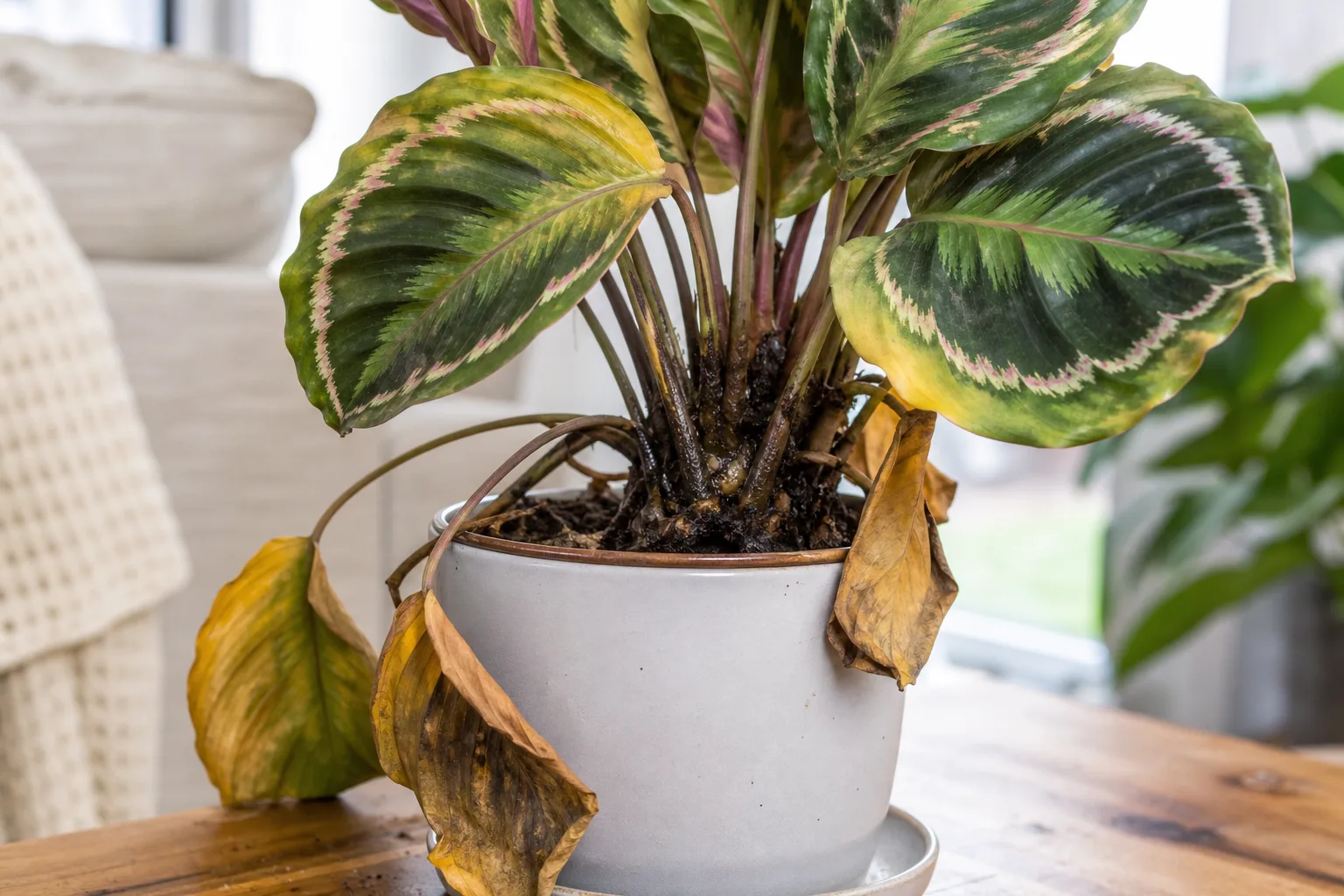
Root Rot on Calathea Medallion: Causes, Checks & Fixes
This guide covers root rot on Calathea Medallion. See also the general Root Rot guide, watering, and light pages for this plant.
Root Rot on Calathea Medallion: Causes, Checks & Fixes
Quick answer
Root rot on Calathea Medallion (Goeppertia veitchiana) is almost always a watering and drainage failure, not a mysterious disease. This Marantaceae prayer plant wants moist, well-drained potting mix-not permanently wet soil-so limp painted leaves on damp mix are the signature trap. Growers water again, and rotting roots lose even more function.
First step: stop watering immediately. Lift the pot. If the mix is wet and heavy, press your finger 1–2 inches deep near the pot edge. Wet clinging soil plus yellow lower leaves, a sour smell, or a stalled new spear means treat root rot as likely. Check whether the center spear feels firm before you unpot, trim, or repot.
Root rot vs. other Calathea Medallion problems
The wilt-on-wet-soil paradox separates root rot from thirst on Medallion better than any single leaf symptom. Underwatered Medallion curls leaves during the day on a light, dry pot and often perks after a thorough soak-see underwatering on Calathea Medallion for the dry-pot curl pattern. Root rot produces the opposite: collapse on heavy wet mix with no rebound after watering-wilting with moist soil often means roots cannot absorb water because they are decaying. The dedicated wilting guide covers the full wet-soil vs. dry-soil split.
| Pattern | Pot weight | Soil at 1–2 inches | Center spear | What it usually means |
|---|---|---|---|---|
| Root rot | Heavy | Wet, cool, clings to finger | Soft, brown, or stalled | Failed roots on saturated mix |
| Underwatering | Light | Dry and crumbly | Firm; leaf curl by day | Turgor loss from drought |
| Low humidity | Normal | Moist on schedule | Firm | Crisp edges, not base yellowing |
| Natural aging | Normal | Dry on schedule | Firm | One or two old lower leaves fade |
Fungus gnats hovering over the pot surface often appear alongside chronically wet mix-they signal that the top layer is not drying fast enough for healthy roots. Yellow lower leaves on damp soil overlap with early rot but can also follow tap-water stress or natural aging when the spear stays firm. For early wet-soil intervention before roots fail, see overwatering on Calathea Medallion and the watering guide.
What root rot looks like on Calathea Medallion
On this round-leaf prayer plant, rot rarely announces itself at the tips first. Large painted blades mask stress while roots decline in the center of the pot.
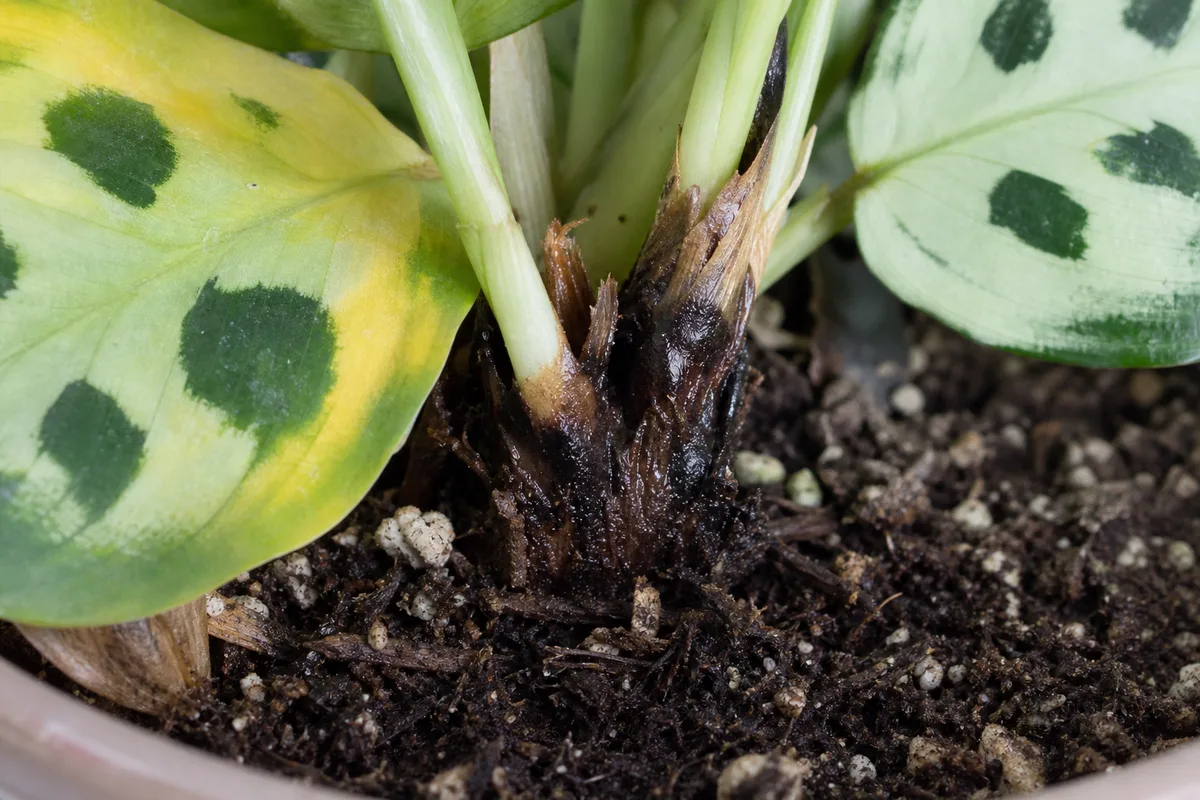
Root Rot symptoms on Calathea Medallion - compare with healthy tissue on the same plant.
Early signs
- Yellow lower leaves while the mix stays damp-not the gradual fade of a single old leaf aging out
- Stalled or browning new spear at the crown-the earliest rot warning on Marantaceae plants
- Limp foliage on wet soil that does not firm up after you water
- Sour or rotten smell when you lift the pot or press the surface
- Fungus gnats near the soil line in a pot that never dries down
- Daytime leaf curl that persists despite wet soil (different from drought curl on a dry pot)
Advanced signs
- Soft, mushy rhizome at or just above the soil line
- Brown or black tissue where stems meet wet mix
- Rosette collapse with leaves turning brown and papery despite moisture
- Roots that slip off when touched-healthy Medallion roots stay firm and pale tan
Compare with underwatering: a dry lightweight pot, crisp brown edges, and leaves that recover after a full soak point away from rot. Compare with low humidity: margin crisping without sour soil or mushy base tissue.
Why Calathea Medallion gets root rot
Medallion evolved in humid Ecuadorian rainforest understory. Indoors it tolerates missed waterings poorly when combined with constant sogginess, but its lush painted look tricks growers into watering on a calendar instead of checking soil moisture.
Overwatering on wet mix. Root rot is a common houseplant issue caused by overwatering or poorly draining soil. Watering while the top 1–2 inches are still damp keeps the root zone oxygen-poor-overwatering decreases oxygen available for root growth. The thick rhizome stores water, so wilting can lag behind root damage-firm leaves are not proof that roots are healthy when soil stays wet.
Poor drainage and standing water. Blocked drainage holes, dense peat-heavy mix without perlite, oversized pots with excess wet soil around a small root ball, and saucers left full after watering all keep the bottom of the root ball anaerobic. Decorative cachepots trap runoff the same way.
Low light and cool rooms. A Medallion on a dim shelf or in a cool winter room uses less water per week. The same five-day rhythm that worked in summer leaves mix wet for weeks-the RHS notes reduced watering in winter when growth slows.
Heavy painted leaves masking dry-down. Large round blades slow how fast you notice stress, while the center of the pot stays saturated. The surface may look acceptable while roots suffocate below.
Fungal pathogens in saturated mix. Soil-borne fungi such as Pythium and Phytophthora thrive in wet soil and accelerate decay once oxygen drops. Cultural rot from overwatering and pathogen-driven rot look the same at home-both require drying the root zone and fixing drainage.
Tap-water mineral stress compounding wet roots. NC State Extension notes that fluoride in tap water can brown Medallion leaf edges-a separate stress that weakens recovery when roots are already failing. Rainwater or filtered water during rescue reduces compound damage; see the watering guide for sensitivity notes.
How to confirm the cause
Work through these checks in order before repotting.
- Pot weight and smell - A heavy pot days after watering plus a sour odor strongly supports rot over drought.
- Finger test at 1–2 inches - Wet clinging soil at depth with yellow lower leaves means do not water again yet.
- Center spear check - Press the base of the newest rolled leaf. Firm and green is hopeful; soft, brown, or absent means crown involvement.
- Unpot and rinse roots - Gently knock the plant from its pot. Healthy roots are firm and pale; rotted roots are brown, translucent, or slimy and may smell.
- Cross-check light and drainage - Blocked holes, a pot with no drainage, or a plant in deep shade that never dries confirm why rot started.
You have likely confirmed root rot when multiple checks align: wet heavy mix, sour smell, mushy roots, and yellowing lower leaves without a dry pot alternative.
Firm-spear vs. soft-spear salvage decision
| Center spear | Root condition | Pot smell | Urgency | First action |
|---|---|---|---|---|
| Firm, green | Mostly pale with minor brown tips | Mild or none | Monitor | Dry-down in pot 5–7 days; no water until top 1–2 inches dry |
| Firm, green | Significant mushy brown roots | Sour | Same day | Unpot, trim rot, air-dry cuts, repot into fresh airy mix |
| Soft or browning | Any | Sour | Same day | Unpot to assess; crown rot is usually fatal |
| Stalled, blackening | Mushy throughout | Strong sour | Same day | Salvage unlikely; consider division if peripheral shoots remain firm |
First fix for Calathea Medallion
Stop watering immediately. Do not add more water because leaves look limp on already-wet soil-that deepens the damage.
If the center spear is still firm and roots are mostly pale with only minor brown tips:
- Let the root ball dry in the pot for 5–7 days in Calathea Medallion light guide with good air movement.
- Empty any saucer water and remove the plant from decorative cachepots.
- Resume watering only when the top 1–2 inches feel dry-one modest drink, then wait again.
If roots are clearly mushy or the spear is soft:
- Unpot and rinse roots under lukewarm water.
- Trim all brown, slimy tissue back to firm white or tan roots with clean scissors.
- Let cut surfaces air-dry for 2–4 hours on a paper towel in shade.
- Repot into fresh, airy well-drained mix-three parts peat or coir-based potting mix, two parts perlite, and one part medium orchid bark by volume (see the soil guide for adjustments)-in the same size or slightly smaller pot with open drainage. Do not upsize during recovery.
- Hold water for 7–14 days, then test with a small drink when the top inch is dry.
Division salvage: If the main crown is lost but multiple firm peripheral shoots remain on separate rhizome sections, division is the recommended propagation method for Goeppertia veitchiana. Cut away all mushy tissue, separate healthy shoots with their own roots, and pot each division in fresh airy mix. Each division needs its own firm spear and pale roots to stand a chance.
Do not fertilize until new growth resumes. Do not mist heavily onto wet soil-focus on stable humidity around the canopy instead. For seasonal repot timing during recovery, see the repotting guide.
Recovery timeline
Mild cases with firm spear and partial root damage may stabilize within one to two watering cycles after the root zone dries and damaged roots are trimmed. In active summer growth, that often means two to three weeks; in cool winter rooms, allow four to six weeks before judging failure.
Moderate cases with significant root loss take three to six weeks before steady new spear growth returns-judge progress by a firm crown and one clean new leaf, not by saving every old yellow blade.
Severe crown rot with a soft center spear is usually fatal. Prevention through correct dry-down and drainage is far more reliable than late rescue.
What not to do
Do not keep watering because leaves look wilted when soil is already wet. Watering a plant with rotting roots makes the problem worse. Do not repot into dense garden soil or a pot without drainage. Do not fertilize a waterlogged plant. Do not upsize the pot during recovery-the extra wet mix around a shrunken root ball invites repeat rot. Do not assume hydrogen peroxide drench alone fixes advanced rot without trimming dead tissue and fixing the wet cycle.
How to prevent root rot next time
Match watering to dry-down, not the calendar. Goeppertia veitchiana prefers moist, well-drained mix-water when the top 1–2 inches begin to dry, use rainwater or filtered water when possible, and empty saucers within 30 minutes.
Seasonal rhythm: In spring and summer active growth, most Medallions need water every 5–10 days depending on light and pot size-always confirm with a finger test. In fall and winter when growth slows, stretch to 10–21 days between drinks and expect the top layer to stay dry longer in cool, dim rooms. A summer weekly schedule left unchanged through winter is a common rot trigger.
Keep bright indirect light so the mix dries predictably between drinks. Review the full Calathea Medallion care overview for light, humidity, and pot setup.
When to worry
Treat root rot as same-day urgent when the center spear turns soft or brown, stems dent at the soil line, the mix smells sharply sour from drain holes, or multiple lower leaves yellow while the pot stays heavy after a week without water. Unpot that day-waiting while soil stays wet lets root rot fungi spread in saturated mix.
Routine monitoring is enough when the spear stays firm, only one or two lower leaves yellow, and the sour smell is absent. Dry-down in the pot for 5–7 days before deciding on repot.
Get outside help when you have trimmed rot, repotted into fresh airy mix, corrected watering for four to six weeks, and the plant collapses again with a heavy wet pot. Contact your local Cooperative Extension office or a master gardener helpline with photos of roots and the crown-persistent collapse after a clean repot can signal a drainage flaw, contaminated mix, or advanced pathogen load beyond home rescue.
Escalation summary: firm spear + minor root browning → dry-down in pot (routine). Mushy roots or sour smell with firm spear → same-day unpot and trim-repot. Soft center spear → assess for division salvage; crown rot alone is usually fatal.
FAQs
Why does my Calathea Medallion wilt when the soil is still wet?
Wilt on wet soil means roots are failing, not that the plant needs more water. Medallion stores moisture in its thick rhizome, so painted leaves can look thirsty while rotting roots cannot absorb. Check spear firmness at the crown and unpot if the mix smells sour or lower leaves yellow on damp soil.
How can I confirm root rot on Calathea Medallion?
Confirm when the pot feels heavy, the mix smells sour, roots are brown and mushy when rinsed, and leaves yellow or droop despite moisture. Healthy Medallion roots are firm and pale tan. A light dry pot with crisp leaf curl usually points to underwatering instead.
Can I save a Calathea Medallion if the center spear is soft?
A soft or blackening center spear is the earliest kill signal on prayer plants-salvage is unlikely once the crown rots. If the spear is still firm and some white roots remain after trimming, repot into dry airy mix and hold water for one to two weeks while humidity stays high.
When is root rot urgent on Calathea Medallion?
Act within days when the new spear stalls and turns brown, multiple lower leaves yellow while soil stays wet, or stems soften at the base. Mild yellowing with firm spear and mostly pale roots can wait for a careful dry-down before repotting.
How is root rot different from overwatering on Calathea Medallion?
Overwatering is the habit-watering before the top 1–2 inches dry, leaving saucers full, or using dense mix. Root rot is the result: mushy roots, sour smell, and wilt on wet soil. Catch overwatering early and you can often dry down without unpotting; once roots are mushy and the spear stalls, you are in root-rot rescue territory and need inspection the same day.
How do I prevent root rot on Calathea Medallion next time?
Water when the top 1–2 inches of mix begin to dry, use a light well-drained peaty mix, empty saucers within 30 minutes, and never let the pot sit in a cachepot full of runoff. See the Medallion watering guide for rainwater or filtered water to reduce compound stress.
Related Calathea Medallion problems
- Calathea Medallion overview - full care hub for light, humidity, and pot setup
- Overwatering - early wet-soil intervention before roots fail; root rot is the advanced escalation
- Wilting - wilt-on-wet-soil paradox and dry-pot differential
- Yellow leaves - lower-leaf yellowing on damp vs. dry mix
- Underwatering - dry lightweight pot and drought curl lookalike
- Fungus gnats - flies over chronically wet surface mix
- Low humidity - crisp edges without sour soil or mushy crown
- Repotting - seasonal timing and one-size-up rule during recovery
- Watering - dry-down rhythm, rainwater, and winter slowdown
- Soil - perlite-bark mix recipe and drainage checks
When to use this page vs other Calathea Medallion guides
- Calathea Medallion watering guide - Use for routine moisture checks before assuming root rot is the main issue.
- Calathea Medallion problems hub - Browse all 16 common issues on this species.
- Overwatering on Calathea Medallion - Different entry point when symptoms overlap with root rot.
- Yellow Leaves on Calathea Medallion - Different entry point when symptoms overlap with root rot.
- Wilting on Calathea Medallion - Different entry point when symptoms overlap with root rot.