Fungus Gnats on Calathea Medallion: Causes, Checks & Fixes
Quick answer
Fungus gnats on Calathea Medallion mean the top inch of mix stays damp too long-not that the plant needs more water. First step: pause watering until the top 1–2 inches feel dry, then empty any saucer or cachepot water.
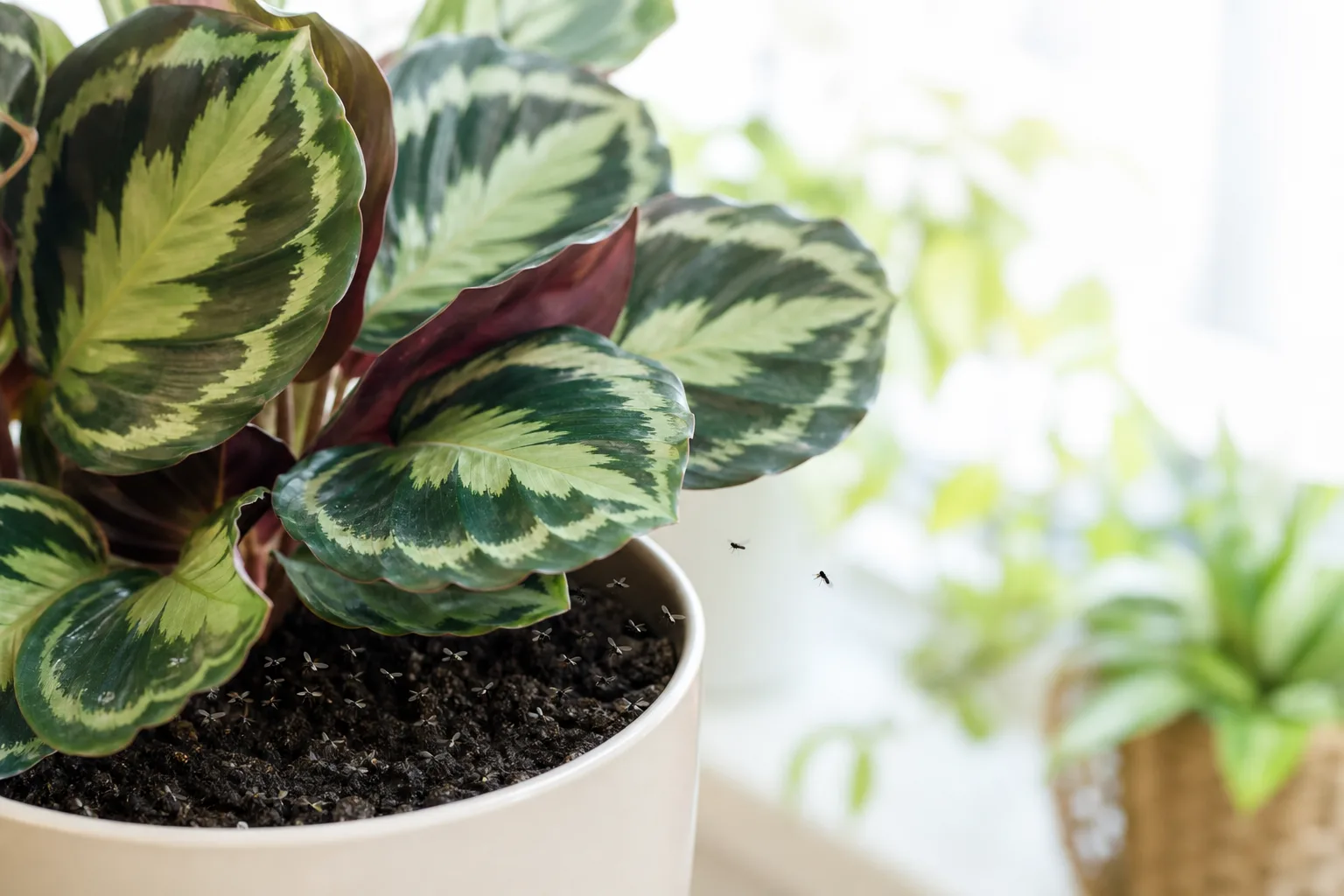
Fungus Gnats on Calathea Medallion: Causes, Checks & Fixes
This guide covers fungus gnats on Calathea Medallion. See also the general Fungus Gnats guide, watering, and light pages for this plant.
Fungus Gnats on Calathea Medallion: Causes, Checks & Fixes
Quick answer
Fungus gnats on Calathea Medallion (Goeppertia veitchiana) almost always mean the top layer of potting mix stays wet too long-not that your plant caught a random flying pest from nowhere. Medallion is marketed as moisture-loving, but it needs moist, well-drained mix with oxygen still moving through the root zone. When owners water on autopilot to “keep it humid,” the surface can stay damp for days while the dense round-leaf rosette shades the soil and slows evaporation in dim corners.
First step: stop watering until the top 1–2 inches of mix feel dry to your finger and any standing water is emptied from saucers or cachepots. That single dry-down breaks the habitat adult females need for egg-laying and reduces larval survival in the surface layer. Only after the mix passes that test should you water again-and thoroughly enough that excess drains freely.
Why Calathea Medallion gets fungus gnats
Fungus gnats are small flies whose larvae live in the top inches of consistently moist organic potting mix. On Medallion, they are a watering and drainage signal, not a leaf disease attacking the painted round blades above.
The moist-roots versus wet-surface tension. Medallion wants even moisture around its rhizome, but the top 1 to 2 inches should still dry slightly before the next drink-especially in autumn and winter when growth slows. Watering every seven days without checking lets the surface stay soggy while roots sit in stale mix. That is exactly where fungus gnat adults lay eggs in moist growing media rich in decaying organic matter.
Peaty mix and broken-down soil. Medallion performs best in moisture-retentive, well-draining peat-based mix. As peat ages, it holds water longer in the center and feeds larvae with decomposing particles. Gnats often appear months after Calathea Medallion repotting guide when the same watering schedule no longer matches how fast the pot dries.
Broad rosette shading the soil line. Medallion’s wide painted leaves hang over the pot rim. In medium or low indirect light, that canopy slows surface evaporation compared with narrow-leaf calatheas on the same shelf. Top watering without checking depth keeps the visible layer dark and damp even when you intended a modest drink.
Cachepots and full saucers. A nursery pot inside a decorative cover that traps runoff-or a saucer left full after watering-wicks moisture back into the mix. Roots lose oxygen while the surface never dries enough to break the gnat cycle. See our watering guide for cachepot drainage protocol.
Cool winter rooms. When day length drops and temperatures fall below typical room warmth, Medallion uses less water per week. If you keep summer watering volume through January, mix stays wet for two weeks while fungus gnat populations peak indoors during cooler months when watering is not reduced.
Overlap with mold and overwatering. Gnats frequently share the same wet habitat as white mold on soil and early overwatering. All three point to surface moisture outlasting what this rhizome can tolerate-not three separate mysteries.
What fungus gnats look like on Calathea Medallion
Healthy Medallion foliage should still show firm painted blades and a tight crown unless a separate stress is active. Gnats themselves live at the soil line, not on leaf surfaces.
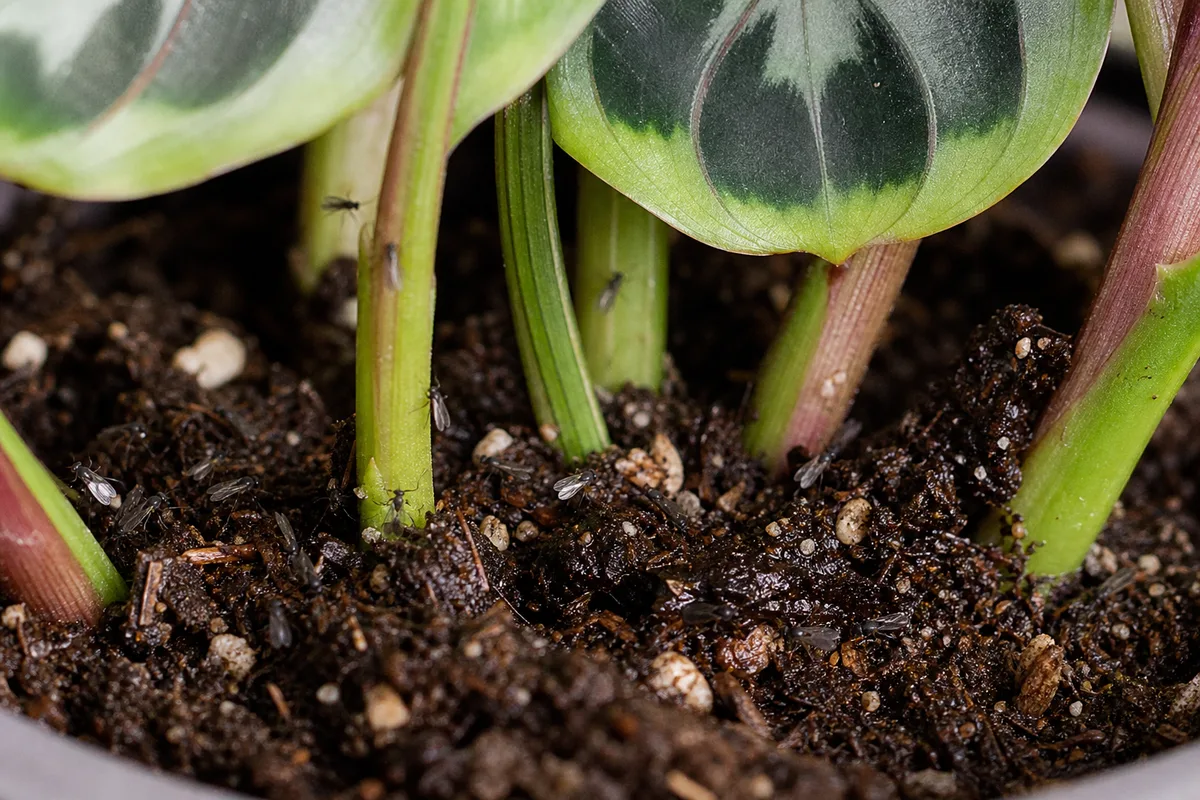
Fungus Gnats symptoms on Calathea Medallion - compare with healthy tissue on the same plant.
Adult flies:
- Tiny dark flies, roughly 1/8 inch long, with long legs and antennae
- Weak fliers that rise in short bursts when you water or brush the soil
- Often seen near the pot base under the round leaf canopy, at windows, or on yellow sticky traps
- Distinct Y-shaped wing veins when viewed with a magnifying glass-different from fruit flies
Larvae in the mix:
- Pale, translucent wormlike maggots with dark head capsules in the top 1–2 inches of mix
- Visible when you scrape the surface or flip a potato slice test wedge
- Feed on fungi, algae, and decaying organic matter in the mix, and fine roots when numbers are high
Plant damage on Medallion:
- Gnat damage alone is usually mild on established plants-painted upper leaves may look fine while flies swarm below
- Yellow limp lower leaves, stalled new spears, or sour-smelling wet mix suggest overwatering stress beyond cosmetic gnats
- Crisp brown edges on a light dry pot point to underwatering on Calathea Medallion or water quality-not gnats
How to confirm gnats versus other pests
Work through these checks before spraying foliage or repotting on day one:
- Flight pattern - Gnats hover near damp soil when you water. Fruit flies congregate around kitchen fruit, compost bins, or open drains-not exclusively under a Medallion pot.
- Potato slice test - Bury 1/4-inch slices of raw potato just below the surface. Check the underside after two to three days. Larvae migrate to potato and feed within a few days-confirming active larvae in the mix.
- Surface moisture - Push a finger into the top 2 cm. If it stays cool and clinging many days after watering, overwatering is driving both gnats and potential root stress.
- Pot weight - A heavy pot a week after you thought it dried confirms hidden saturation-common with bottom-watering overuse or cachepot trapping.
- Dry-down confirmation - If flies disappear after the surface stays dry for seven to ten days and return only after the next heavy soak, gnats are confirmed and watering rhythm is the primary fix.
If adults appear but the top inch is genuinely dry and the pot is light, look for another wet pot nearby or decaying organic matter in the saucer before treating Medallion aggressively.
Check rhizome health before you treat
Gnats do not always mean rot-but chronic wet soil can progress to root damage while flies are still the only visible sign.
Slide the rhizome partly out of the pot after a dry-down test (never pull a soggy plant apart on day one):
- Firm pale roots and a tight crown - Gnats are likely a surface-moisture problem. Dry-down plus traps or BTI should suffice.
- Mushy brown roots, sour odor, soft base - Escalate to root rot care. Trimming bad roots and refreshing mix matters more than sticky traps alone.
- Firm rhizome but yellow lower leaves on wet soil - Stop all watering until the top 1–2 inches dry, then reassess. Lower yellow tissue may not re-green; watch for clean new rolled leaves from the center.
Press gently at the soil line where new spears emerge. A spongy crown on damp mix is urgent regardless of gnat count.
First fix: dry the surface and break the life cycle
Pause watering until the top 1–2 inches of mix feel dry to your finger and the pot feels noticeably lighter than right after a thorough drink.
This is the one action that helps every other step work:
- Dry growing medium decreases survival of eggs and larvae and makes the surface less attractive to egg-laying females
- Matches the dry-down trigger Medallion uses for normal watering checks-about every 5–7 days in active growth, longer in winter
- Empty saucers and lift cachepots to drain any trapped runoff before the dry-down clock starts
During the dry-down window:
- Remove fallen Medallion leaf bits from the soil surface-they feed larvae and hold moisture
- Improve air movement slightly at the pot base without blasting heat directly on painted leaves
- Place yellow sticky traps just above the soil line under the leaf canopy to catch adult females and monitor population drop
Do not compensate for dry soil by misting foliage heavily-that adds humidity without fixing the wet surface larvae need.
When to escalate: BTI, traps, and top-layer refresh
If adults still appear two weeks after consistent dry-down and saucer discipline, target larvae directly while keeping the surface dry between drinks.
Bacillus thuringiensis israelensis (BTI) is a biological control that kills fungus gnat larvae in soil without harming people, pets, or the plant when used as directed. Products containing Bti applied as a soil drench filter through the mix to reach larvae; they do not affect eggs, pupae, or adults. Apply with enough water to move the treatment through the top inches, then repeat every five to seven days for three to four weeks to catch newly hatched larvae across overlapping generations.
Yellow sticky cards placed at the soil line catch adults and reduce the next generation, but traps alone never replace drying the mix.
Top-layer refresh - Scrape off the top half-inch of soggy peat, discard it, and replace with a thin layer of fresh dry mix if algae, mold, or decomposing debris fed the infestation. Pair with dry-down; do not water immediately after scraping unless the deeper mix is genuinely dry.
Skip hydrogen peroxide drenches and broad pesticide sprays as a first response-they stress Medallion roots without fixing the wet habitat that brought gnats back.
Recovery timeline and what success looks like
Adult counts on traps should drop within one to two weeks once the surface stays dry between waterings and standing water is eliminated.
Full larval control often takes three to four weeks because fungus gnat life cycles can complete in three to four weeks at room temperature with continuous reproduction on indoor plants. BTI repeats across that window catch each hatching wave.
Signs the fix is working:
- Fewer flies when you water or disturb the soil
- Top inch dries to your finger test within the expected 5–14 day window for your season
- Firm crown and new round leaves unfurling without brown tearing
- Sticky traps catching fewer adults each week
Signs the problem is worsening:
- Gnat clouds increase while soil never dries
- Yellow lower leaves multiply on heavy wet pots
- New center spear softens or stalls on damp mix
- Sour smell from drainage holes despite “cutting back” on water volume without checking depth
Old damaged lower leaves may not re-green. Judge recovery by reduced fly counts, appropriate dry-down rhythm, and clean new growth-not by every yellow blade reversing.
What not to do on Calathea Medallion
Do not keep the soil constantly moist to “help” a limp Medallion when gnats are present-limp foliage on a heavy wet pot means root stress, not thirst. See overwatering before adding water.
Do not spray pyrethroid or oil products on broad painted Medallion blades as a first response. Short-persisting foliar sprays do not control larvae in the mix and can leave water spots or residue on thin leaf tissue in bright light.
Do not repot into a much larger container hoping fresh soil alone fixes gnats. A bigger wet zone around a small rhizome extends dry-down time and invites gnats back.
Do not ignore gnats when white mold covers the surface-the same moisture drives both.
Do not bottom-water by leaving the pot submerged for hours. Brief bottom soaks with full drainage afterward work; standing water at the saucer re-wets the surface larvae need.
How to prevent fungus gnats next time
Water by dry-down, not calendar. Check the top 1–2 inches with finger, skewer, or pot weight before every major drink-the same protocol in our Calathea Medallion watering guide.
Match volume to season. Reduce how much you pour in late fall and winter when the pot dries slowly in cooler, darker rooms.
Use appropriate mix and pot size. Fresh well-draining peat-based mix in a container sized to the rhizome-not an oversized decorative pot holding excess wet soil.
Empty saucers and cachepots within an hour of watering. Never let Medallion sit in stale runoff.
Remove debris weekly. Fallen leaf fragments on wet soil feed larvae and hold moisture under the rosette.
Keep yellow sticky traps at the soil line during recovery and for a month after flies disappear-early warning if surface moisture slips again.
Bottom-water selectively if top watering keeps the surface soggy: brief tray soaks until the surface moistens, then lift, drain completely, and confirm the top layer dries before the next session.
When gnats mean root rot
Gnats alone on a firm crown and neutral-smelling mix are a moisture-habit problem. Escalate to root rescue when you also see:
- Clusters of yellow limp lower leaves while soil stays wet for ten or more days
- Soft petioles at the base or a spongy crown at the soil line
- Sour or rotten odor when you lift the pot
- Mushy brown roots on inspection after dry-down
- New spears dying before unfurling on heavy mix
Those patterns overlap root rot on Calathea Medallion more than a standalone gnat infestation. Dry the surface first, inspect rhizomes if multiple warning signs align, and repot into fresh mix only when roots-not just flies-fail the firmness test.
Conclusion
Fungus gnats on Calathea Medallion tell you the soil surface is staying wet longer than this moisture-sensitive prayer plant can tolerate-not that you need to shower the plant or spray its painted leaves. Let the top 1–2 inches dry, empty trapped runoff, and monitor with sticky traps while the life cycle breaks. Firm rhizomes and clean new rolled leaves mean you fixed the real problem; gnats plus sour soil and yellow lower leaves mean the root zone-not just the flies-needs deeper correction.
When to use this page vs other Calathea Medallion guides
- Calathea Medallion watering guide - Use for routine moisture checks before assuming fungus gnats is the main issue.
- Calathea Medallion problems hub - Browse all 16 common issues on this species.
- Overwatering on Calathea Medallion - Different entry point when symptoms overlap with fungus gnats.
- Mold on Soil on Calathea Medallion - Different entry point when symptoms overlap with fungus gnats.
- Root Rot on Calathea Medallion - Different entry point when symptoms overlap with fungus gnats.