Calathea Medallion Repotting: When, How, and Mistakes
Calathea Medallion Repotting: When, How, and Mistakes to Avoid
Calathea Medallion Repotting: When, How, and Mistakes to Avoid
Why Repotting Matters for Calathea Medallion
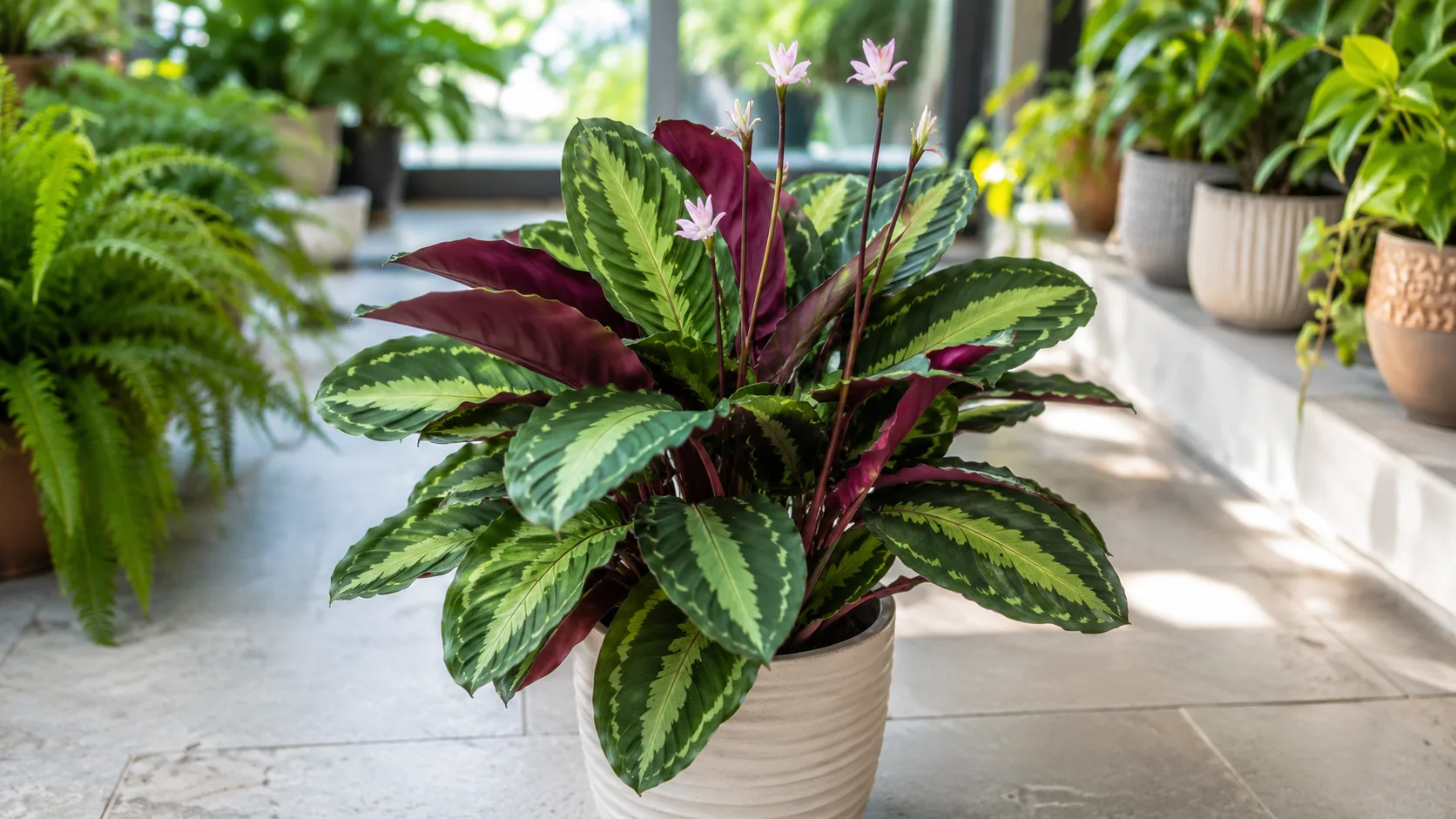
Calathea Medallion repotting is root-zone maintenance for a plant whose dramatic, round leaves depend on a shallow rhizomatous root system you rarely see until something goes wrong. Goeppertia veitchiana, the species sold as Calathea Medallion or medallion prayer plant, belongs to the Marantaceae family and grows from thick underground rhizomes that spread horizontally rather than plunging deep. NC State Extension describes it as a slow-growing, clumping houseplant with an upright habit and showy orbicular leaves marked in deep green, lime, and creamy white on top with burgundy undersides. The Royal Horticultural Society advises repotting calatheas every few years in spring or summer, moving up only one or two pot sizes. When the root zone gets overcrowded, predictable problems follow: water races through the pot without wetting the center of the root ball, fertilizer salts accumulate in the little soil that remains, new leaf growth stalls, and older foliage yellows or curls at the edges. Repotting resets that system. Done well, it gives rhizomes room to spread, replaces exhausted mix, and is often the easiest moment to divide an overgrown plant into smaller sections.
Medallion’s broad leaves show every stress - a crisp rim or torn unfurl is more obvious here than on narrow-leaf prayer plants. The job is straightforward: protect the rhizome, refresh the mix, and avoid a wet soil reservoir the roots cannot use. The ASPCA lists Calathea species as non-toxic to dogs, cats, and horses, though ingestion of any plant material can still cause mild gastrointestinal upset in pets.
When to Repot Calathea Medallion
The right time to repot Calathea Medallion is when the root system - not the calendar alone - demands more space or fresher soil. Many healthy plants need attention every one to two years, but slow growers in low-light rooms may stretch that interval. Two categories help: routine maintenance repotting and emergency repotting when the root zone is clearly failing.
Routine Repotting Every 1 to 2 Years
Routine repotting is for a plant that looks generally healthy but has been in the same container long enough that soil structure has declined or rhizomes have filled most of the pot. University of Wisconsin Extension notes that houseplants should be repotted when roots circle the pot or emerge from drainage holes, and generally into a pot only one size larger. Even when the plant is not dramatically root-bound, old peat- or coir-based mix compacts, loses air spaces, and holds water unevenly. A routine repot refreshes that environment before leaf curl, watering headaches, and stalled unfurls appear.
You do not always need a larger pot during routine repotting. If the mix is tired but roots still fit, return the plant to the same pot after loosening the outer root layer and replacing most of the soil. Top-dressing can bridge one season if the plant is not yet root-bound, but it does not solve a dense rhizome mass at the bottom of the pot.
Emergency Signs That Cannot Wait
Emergency repotting means the root zone is actively limiting the plant’s health. Repot soon - ideally in the next viable growth window - if you see multiple signs below:
- Roots emerging from drainage holes or circling tightly around the soil surface
- Water racing through the pot in seconds while the center of the root ball stays dry
- Soil drying out unusually fast despite a full-looking pot
- Stunted new leaf growth or leaves stuck in the unfurl stage despite adequate light and regular feeding during the growing season
- Soil that smells sour or stays wet for days despite careful watering
- A plant that looks top-heavy and unstable because the root ball is too small for the leaf mass
- Visible rhizome crowding when you lift the plant slightly from the pot rim
- Persistent leaf curl, drooping, or brown edges that do not respond to humidity or watering adjustments
One sign alone may not require immediate action. A single root peeking through one drainage hole on an otherwise healthy plant can wait until spring. Water channeling plus stalled growth plus a sour smell is a different story. That combination often means the mix has broken down and oxygen around the rhizomes is poor. Emergency repotting should also include root inspection. Trim mushy, brown sections with sterilized scissors and repot into fresh, well-draining mix rather than simply moving a rotting root ball into a bigger pot.
Best Season and Timing for Repotting
Spring is the best season to repot Calathea Medallion in most homes. As daylight lengthens and temperatures stabilize, the plant enters active growth and can rebuild feeder roots quickly in fresh mix. Early spring through early summer is the main window. The RHS and NC State Extension align on spring and summer as the preferred repotting season, when active growth helps roots re-establish quickly.
Fall can work in mild climates or warm indoor environments, but it is a second-choice season. As growth slows, the plant has less capacity to repair root disturbance before winter conditions arrive. Low winter light and dry heated air already stress many Calatheas, so adding repot shock on top is rarely ideal. Winter repotting should be reserved for emergencies such as severe root rot on Calathea Medallion, a plant so root-bound that normal watering is impossible, or a container whose structure is failing. If you must repot in winter, keep expectations modest: stable Calathea Medallion light guide, humidity above 60 percent if possible, slightly warmer room temperatures, and no fertilizer until you see new leaf growth in spring.
Timing within the day matters less than plant hydration and room stability. Repot when the plant is neither bone dry nor soaking wet. Avoid repotting on the same day you moved the plant or treated it for pests - stack one stress at a time.
Choosing the Right Pot Size and Material
Pot choice is where many repotting jobs succeed or fail. Calathea Medallion tolerates being somewhat snug, but it does not tolerate swimming in a large volume of wet soil. The container must match the current root mass and leave only modest room for new rhizome growth.
The One-Pot-Size-Up Rule
Move up only one pot size - roughly 1 to 2 inches (2 to 5 cm) wider in diameter than the current pot. The RHS recommends choosing a pot only one or two sizes larger than the rootball to avoid overpotting problems. University of Wisconsin Extension warns that excess soil holds water around roots and favors root rot. For Calathea Medallion, the risk is amplified by rhizomes that spread horizontally and may not quickly colonize a large new soil volume. The plant sits in wet mix, growth stalls, and growers often respond by watering more because the surface looks dry while the center remains soggy.
Depth matters too. Rhizomatous Calatheas spread shallowly. A pot slightly wider than deep often suits the horizontal growth habit better than a narrow, deep container that keeps the lower layer anaerobic. If your plant is in a decorative cachepot, keep the actual growing pot smaller with a drainage hole and lift it out to empty excess water after each watering.
Drainage, Depth, and Pot Material
Drainage holes are non-negotiable for long-term indoor culture. A hole-free decorative pot turns every watering into a gamble the plant cannot consistently survive. University of Wisconsin Extension emphasizes containers with drainage holes and warns against gravel layers that reduce usable root volume. Plastic nursery pots retain moisture longer, which suits humidity-loving Calatheas in dry rooms. Unglazed terracotta dries faster, which can help prevent soggy mix for growers who tend to water heavily, but it also demands more frequent attention in winter when indoor air is dry. Glazed ceramic with a single drainage hole works well as long as you monitor moisture at the root zone rather than only at the surface.
Do not treat a decorative upgrade as permission to jump three pot sizes. The one-size-up rule applies whether the plant sits on a shelf or in a grouped display.
Best Soil Mix for Calathea Medallion Repotting
The best soil for Calathea Medallion repotting is well-draining but moisture-retentive - not heavy garden soil and not straight cactus mix. NC State Extension lists loam, sand texture, and good drainage as cultural requirements, with soil pH in the acid to neutral range. The RHS recommends free-draining, moisture-retentive peat-free compost with about ten percent potting grit. In practice, that means a peat- or coco-coir-based indoor mix amended for both drainage and even moisture retention.
A reliable DIY blend for repotting:
- 2 parts quality indoor potting mix or tropical plant mix
- 1 part perlite or coarse horticultural sand
- 1 part coconut coir or peat moss for moisture retention
- Optional: a small amount of orchid bark or coco chips for extra chunk and airflow
The mix should hold moisture evenly without forming a dense, airless block. When you squeeze a handful, it should feel spongy and crumble apart - not form a tight, wet ball. Calathea Medallion likes consistent moisture during active growth, but rhizome roots still need oxygen. Dense, degraded mix is a common hidden reason growers think they are “overwatering on Calathea Medallion” when the real problem is poor soil structure that has compacted over one to two years in the same pot.
Do not reuse old mix from a plant with root rot or sour smell. Discard it, wash the pot, and start fresh. Do not use garden soil; it compacts in containers and rarely provides the airy environment Medallion expects indoors.
Tools and Supplies Before You Start
Gather everything before you disturb the root ball. Calathea Medallion recovers better when repotting is quick and the plant is not left bare on the counter while you hunt for soil. Broad leaves lose turgor quickly when roots are exposed and air is dry, especially in air-conditioned or heated rooms.
You will need:
- A new pot one size larger, or the same size if refreshing soil only
- Fresh potting mix prepared and slightly dampened
- Clean scissors or pruners for dead or mushy roots
- A chopstick or pencil for settling mix around rhizomes
- Newspaper or a tarp for mess control
- Optional: a clean sharp knife for dividing a severely root-bound rhizome mass
- Optional: gloves if you prefer not to handle peat mix directly
- Distilled or filtered water for the first post-repot watering if your tap water is hard
Sterilize cutting tools with rubbing alcohol if you are trimming rot or dividing multiple sections. Have a watering can ready for the first light watering after repotting, but do not pre-load fertilizer. The first four to six weeks after repotting are for root establishment, not feeding. The RHS advises avoiding regular liquid feeding for the first year when slow-release fertilizer is mixed in at repotting; hold liquid fertilizer for several weeks after repotting into lean mix. If you use a humidifier or pebble tray, set it up before you start so the plant returns to a stable environment immediately after repotting.
Step-by-Step: How to Repot Calathea Medallion
Repotting Calathea Medallion is methodical rather than forceful. The plant is tougher than individual leaves suggest, but rhizome roots and the crown still suffer if you yank, bare-root aggressively, or bury the plant too deep.
Pre-Watering, Removal, and Root Inspection
Water the plant lightly one to two days before repotting so the root ball holds together. University of Wisconsin Extension recommends repotting at the beginning of active growth when the root ball holds together. Do not soak it to mud; the goal is workable moisture, not saturation. To remove the plant, tip the pot on its side and slide the root ball out with gentle pressure on the base. If it resists, run a knife around the inside rim to loosen roots clinging to the pot wall. Never pull the plant by its leaves; Medallion leaves tear easily and damaged tissue browns at the edges.
Once out, inspect the roots in good light. Healthy rhizome roots are firm and pale, often white to light tan. Mushy, dark, or hollow sections indicate rot and should be trimmed back to solid tissue with sterilized scissors. Tease circling outer roots lightly with your fingers so they point outward into the new mix. NC State Extension lists division as the recommended propagation method, implying minimal root disturbance when possible. You do not need to destroy the entire root ball or remove every old soil particle. Aggressive bare-rooting strips fine feeder roots and extends recovery time by weeks.
If the plant is only slightly root-bound, loosen the bottom and sides and proceed. If rhizomes form a dense mat, score the bottom quarter-inch lightly or make a few shallow vertical cuts to interrupt circling. For severely bound plants, division may be easier than forcing one oversized root ball into a marginally larger pot.
Planting at the Correct Depth
Add a small layer of fresh mix to the pot bottom - enough to raise the root ball so the plant sits at the same depth it occupied before. The crown where leaves emerge should remain at or slightly above the soil line, not buried under an inch of fresh mix. Planting too shallow exposes rhizomes to rapid drying and instability; planting too deep encourages rot at the base where new leaves form.
Center the plant, then fill around the sides with fresh mix, working it in gently with a chopstick to remove large air voids without compacting the soil into concrete. Leave about half an inch to one inch of headspace below the rim for watering. Firm the mix lightly with your fingers, not heavy palm pressure. When finished, the plant should feel stable without wobbling. If it leans, adjust depth and support with mix around the base rather than pushing leaves downward.
Water lightly after repotting until a small amount drains from the bottom. This first watering settles the mix around roots. Empty the saucer or cachepot so the plant is not sitting in runoff. Place the Medallion in bright indirect light for a few days before returning it to its normal spot if that spot receives stronger light or any direct sun. NC State Extension recommends bright indirect light; keep the plant in stable bright indirect light for one to two weeks after repotting to allow recovery.
Dividing Calathea Medallion at Repot Time
Division is one of the best reasons to repot Calathea Medallion in spring. NC State Extension lists division as the recommended propagation strategy for Goeppertia veitchiana. The natural clumping habit means mature plants often contain several rhizome sections that can be separated into independent plants during repotting.
Choose division when the plant is too large for your space, when the rhizome mass is too dense to fit a reasonably larger pot, or when you want backup plants without buying new stock. Each division should include multiple leaves and a fair share of healthy rhizomes and roots - not a single leaf with a tiny root tuft unless you are experimenting. Two to four leaf clusters per division is a practical minimum for reasonable recovery speed.
Separate natural weak points in the rhizome mass with your hands when possible. Use a clean knife for tough centers, cutting through rhizomes rather than hacking randomly through leaf bases. Pot each division into its own container one size appropriate to that section’s root size, not the size of the original whole plant. Water lightly and keep divisions in bright indirect light with stable humidity above 60 percent. Expect some browning on older leaves; a new leaf unfurling cleanly is the success signal. Each new section may look slightly sparse initially, but Medallion fills in during active spring growth if humidity and moisture stay consistent.
Aftercare: Watering, Humidity, Light, and Fertilizer After Repotting
Aftercare is where repotting success is won or lost. For the first two to three weeks, protect the plant from harsh change. Keep it in bright indirect light, not direct sun. Calathea Medallion is sensitive to high light intensity even when healthy; after repotting, impaired roots uptake less water and sun-scorched leaves brown quickly along the broad margins.
Water lightly when the top inch or two of mix feels dry. Do not keep the soil soggy “to help it settle.” Wet, disturbed roots are prone to rot. Do not let the plant crash to bone dryness either; dehydrated rhizome roots plus damaged feeder roots can cause heavy leaf curl and drooping within days. The balanced approach is even, moderate moisture with good drainage. Because Medallion prefers 60 to 80 percent humidity, dry indoor air after repotting accelerates stress. A pebble tray, grouped plants, or a humidifier reduces post-repot desiccation, especially in winter heating. Misting leaves provides temporary relief but does not substitute for ambient humidity if your air is genuinely dry.
Hold fertilizer for at least four to six weeks, or until you see a new leaf unfurling cleanly. Fresh mix usually contains some nutrient reserve, and feeding too early can burn roots recovering from disturbance. During the first month after repotting, calatheas often redirect energy into new root growth before producing new foliage per RHS guidance. Resume normal feeding at half strength once active growth is obvious, then return to your usual schedule if the plant responds well.
Use distilled or filtered water if your tap water is hard or heavily chlorinated. Calatheas are sensitive to mineral buildup, and harsh water chemistry immediately after root disturbance adds an unnecessary variable.
Recovery Timeline and What Normal Stress Looks Like
Some transplant stress is normal. Mild wilting, slight yellowing of older leaves, or a brief pause in growth for one to two weeks often resolves without intervention if light, moisture, and humidity stay stable. Mild drooping or wilting for a couple of weeks after repotting can indicate transplant shock and should be monitored. Full root re-establishment typically takes four to six weeks in spring and summer. A new leaf unfurling without brown edges or tearing is the clearest recovery sign.
Damaged brown or yellow leaves do not green up again. Do not interpret persistent old damaged tissue as proof the repot failed. Watch for fresh growth. If new leaves appear firm and properly patterned while only older tissue declines, the plant is likely recovering on schedule. You can trim the worst damaged leaves once new growth is established, but avoid stripping the plant bare during the first recovery weeks.
Recovery is slower after winter repotting, emergency rot surgery, or aggressive division. Medallion’s slow growth rate means patience is part of the care model rather than a sign something went wrong.
Common Calathea Medallion Repotting Mistakes
Most repotting failures trace back to a short list of repeatable errors. Knowing them in advance is cheaper than rehabbing a declining plant later.
The most common mistakes:
- Choosing a pot far too large, creating a wet soil reservoir the rhizomes cannot use
- Bare-rooting or tearing the root ball aggressively, removing feeder roots the plant needs immediately
- Repotting into heavy garden soil or unamended cheap mix that compacts and suffocates rhizomes
- Burying the crown too deep, which encourages rot at the leaf base
- Fertilizing or overwatering in the first week after repotting
- Placing the plant in direct sun while roots are impaired
- Ignoring mushy roots and simply repotting into a bigger container
- Repotting in dry, low-humidity conditions without any humidity support afterward
- Using hard tap water immediately after repotting on a mineral-sensitive plant
Each mistake produces a recognizable pattern. Oversized pot plus overwatering leads to sour smell and soft stems. Bare-rooting plus dry air leads to heavy leaf curl within days. The most damaging single error is jumping to an oversized pot - if you already overshot, slip the plant back into a smaller pot with airy mix, trim any rot, and wait.
Troubleshooting Problems After Repotting
If the plant declines more than mildly after repotting, diagnose in this order: soil moisture, humidity, light intensity, root health, then pot size.
Heavy leaf curl with dry mix: underwatering on Calathea Medallion after root disturbance, or water running down the sides of new mix without wetting the root ball. Water slowly in several small passes, or bottom-water briefly until the surface darkens evenly.
Wilting with wet mix: Rot or oversize pot. Remove the plant, inspect roots, trim rot, and repot into a smaller pot with fresh airy mix if needed.
Brown, crispy leaf edges in bright window: Sun stress or low humidity. Move to bright indirect light, increase ambient humidity, and remove the worst damaged leaves later if they do not recover.
No new growth after six weeks in spring: Pot too large, mix too dense, or division sections too small. Adjust the weakest link rather than fertilizing harder.
Center of plant blackening: Crown buried too deep or rot from overwatering. Unpot, inspect the crown, trim affected tissue if firm growth remains above it, and replant at the correct depth in fresh mix.
New leaf stuck or torn during unfurl: Low humidity or inconsistent moisture while the leaf was forming. Increase humidity and keep moisture even; the next leaf will tell you whether conditions have improved.
Gradual decline in winter after repot: Low humidity and short daylight compounding transplant stress. Increase humidity, reduce watering frequency slightly while keeping the root zone from drying completely, and wait for spring before reassessing.
When troubleshooting, change one variable at a time. Calathea Medallion often looks worse before it looks better, but persistent decline past three weeks in spring usually means a concrete cultural problem, not patience alone.
Conclusion
Calathea Medallion repotting works best when you respect what the plant actually is: a slow-growing Marantaceae species with shallow rhizomatous roots and broad leaves that broadcast every stress, not a tough succulent that shrugs off rough handling. Repot every one to two years in spring when roots crowd the pot, water channels through too fast, or growth stalls. Move up only one pot size, use a well-drained peat- or coco-based mix with perlite and optional bark, and inspect rhizomes for rot before replanting. Spring division is optional but practical for oversized plants, and aftercare should emphasize bright indirect light, even moisture, high humidity, and a fertilizer pause until a new leaf unfurls cleanly.
Most failures come from oversized pots, dry air during recovery, and rough handling of the root ball - all avoidable once you know the pattern. If your plant looks stressed after repotting, check moisture and humidity first, then light and root health. A new Medallion leaf opening without crisp edges is the signal that matters. Get that, and the older curled leaves become history rather than a verdict.
When to use this page vs other Calathea Medallion guides
- Calathea Medallion overview - Start here for whole-plant context before deep-diving this topic.
- Calathea Medallion problems hub - Jump to symptom-specific fix guides when this care topic does not resolve the issue.
- Root Rot on Calathea Medallion - Escalate here when repotting adjustments are not enough.
Related Calathea Medallion guides
- Calathea Medallion overview
- Calathea Medallion watering
- Calathea Medallion light
- Calathea Medallion soil
- Calathea Medallion propagation
- Calathea Medallion fertilizer
- Root Rot on Calathea Medallion
- Calathea Medallion problems
Related tool
Try the Pot Size Calculator with calathea-medallion pre-selected to estimate needs for your setup.