Calathea Medallion Watering: Schedule & Mistakes
Calathea Medallion Watering: Schedule & Mistakes
Calathea Medallion Watering: Schedule & Mistakes
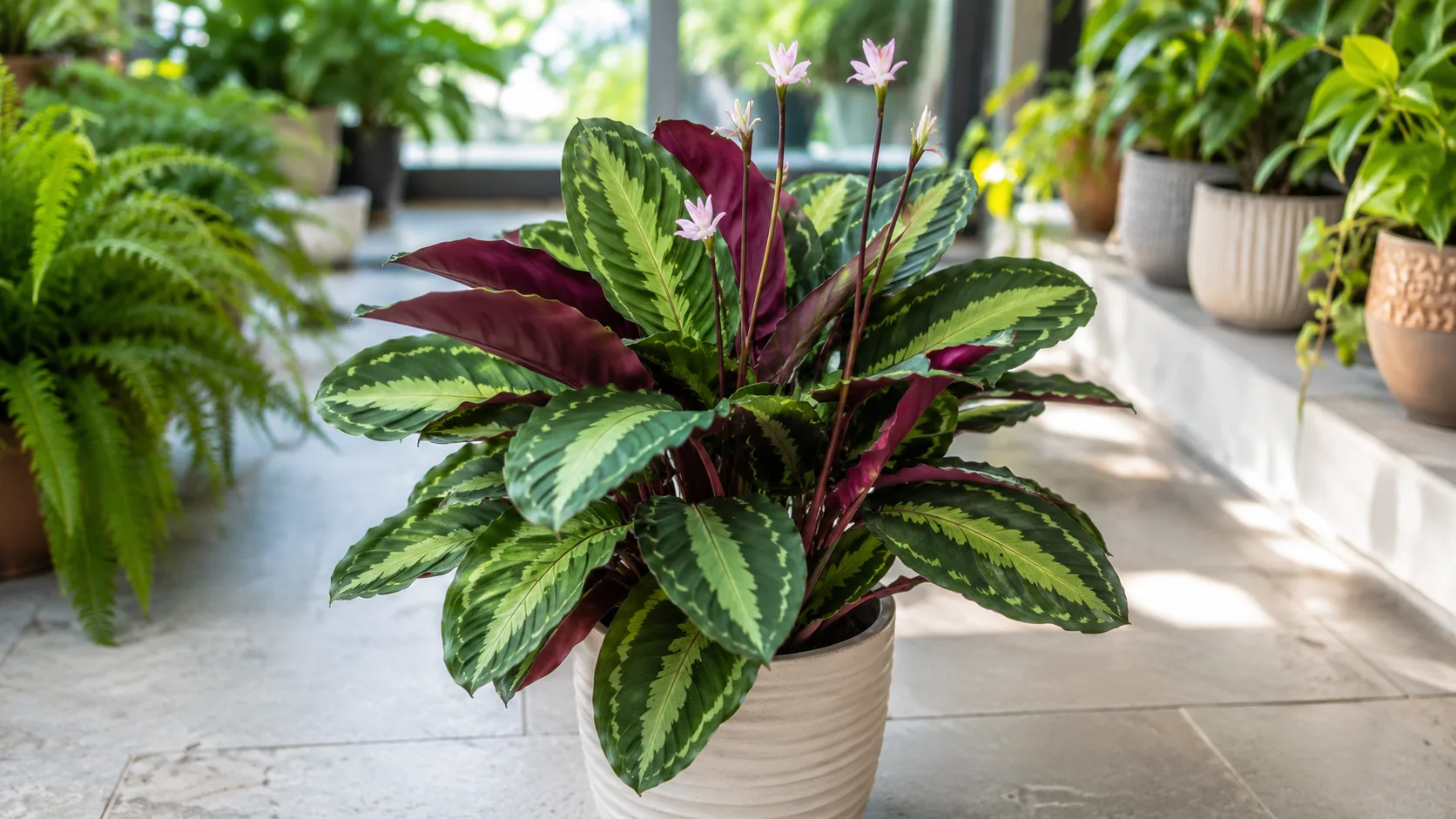
Calathea Medallion is one of the most visually rewarding prayer plants in the trade - and one of the fastest to show when watering goes wrong. The broad, painted leaves with burgundy undersides do not hide stress the way narrow-leaf calatheas sometimes can. A single crisp rim on a new unfurl, a sudden curl at dusk, or a yellow lower leaf after a week of good intentions usually traces back to moisture: too much, too little, too stale, or delivered with the wrong water chemistry. The fix is not a rigid calendar. It is a repeatable set of soil checks, a seasonal rhythm, and enough awareness to stop swinging between a soggy pot and a drought cycle that damages fine roots.
This guide covers the full watering picture for Medallion: when to water, how to read the potting mix, which water to use, how to water cleanly, what overwatering on Calathea Medallion and underwatering on Calathea Medallion look like on this cultivar, and the mistakes that turn an otherwise manageable plant into a chronic leaf-edge crisis.
The Short Answer: When to Water Calathea Medallion
Water Calathea Medallion when the top 1 to 2 inches (roughly 2 to 5 cm) of potting mix have begun to dry and the pot feels noticeably lighter than it did right after a thorough watering. In many homes during active spring and summer growth, that dry-down happens about every 5 to 7 days in a standard plastic nursery pot with a peaty, well-draining mix. In cooler, darker fall and winter months, the same plant may need water only every 7 to 14 days, because growth slows and the mix holds moisture longer. Those ranges are starting points, not rules - light, humidity, pot size, and pot material change the timeline within days.
The NC State Extension Gardener Plant Toolbox notes that Goeppertia veitchiana - the species sold as Calathea Medallion - prefers moist, well-drained potting mix and recommends watering with rainwater or distilled water, avoiding tap water because fluoride can brown the foliage. The goal is even moisture around the roots with oxygen still moving through the mix, not permanently wet soil and not a cycle that swings to bone-dry. Water thoroughly until excess drains from the bottom, then empty the saucer or cachepot so the roots are not sitting in stale runoff.
Why Calathea Medallion Watering Feels So Precise
Calatheas in general sit in an awkward middle ground between “moisture-loving tropical” and “rot-prone houseplant.” Medallion amplifies that tension because it wants steady root-zone moisture while also punishing waterlogged mix, cold water shocks, and mineral-heavy tap water on sensitive leaf tissue. NC State Extension describes Goeppertia veitchiana as needing moist, well-drained potting mix during the growing season, with reduced watering in winter when growth typically slows. That single sentence contains the whole challenge: moist, not wet; uniform, not soggy; and seasonally adjusted, not identical every Tuesday.
The plant’s native context explains why. Medallion (Goeppertia veitchiana) is native to humid rainforests of Ecuador. Outdoors it grows in shaded, humid conditions where soil drains freely but never bakes to dust between rain events. Indoors you are approximating that rhythm in a small pot with peat-based mix, dry furnace air, and water that may contain chlorine, fluoride, or salts. Small errors show on the leaves within days because Medallion invests heavily in large, thin blade surface area - excellent for display, unforgiving for diagnostics.
Watering also interacts with every other care variable. A Medallion in Calathea Medallion light guide transpires faster than the same plant in a dim hallway. A pot fresh from Calathea Medallion repotting guide stays wet longer in the center. A decorative outer pot without drainage turns one generous watering into a hidden bath. Humidity above roughly 60 percent reduces edge crisping but does not replace correct soil moisture - a plant can sit in wet mix with a humidifier running and still yellow from root stress. Good watering connects the plant’s current environment, not an internet schedule copied from a different home.
What Medallion’s Round Leaves Reveal About Moisture Stress
Medallion is the high-contrast, round-leaf calathea in most collections. That shape matters for watering because the newest leaf is the report card. Unlike many prayer plants, Goeppertia veitchiana does not fold its leaves at night; daytime curl, stiff rolled margins, or a spear that opens with torn or browned edges often means moisture failed while the leaf was forming. Allowing the mix to go fully dry while a new unfurl is expanding is one of the most common reasons Medallion owners see a perfect older leaf beside a damaged new one.
Edge crisping gets blamed on humidity alone, and low humidity does matter. But dry soil plus dry air produces sharper, faster browning than humidity stress alone on a well-watered plant. Conversely, chronic overwatering yellows lower leaves and softens the base while upper leaves may still look painted and pretty for a week - until root function collapses and the whole rosette droops. Learn to read which leaves are affected: oldest first often points to root-zone problems; newest edges point to recent drought, water quality, or unfurl-stage stress. That distinction saves you from misting a plant that actually needs less water, or pausing water on a plant that is limp from thirst.
How Often to Water Calathea Medallion
The honest answer to “how often” is as often as your pot dries to the right threshold, which is usually every 5 to 7 days in active growth and 7 to 14 days in winter for a medium-sized indoor pot - but only if your checks confirm readiness. A calendar can remind you to look, not to pour. Two Medallions in the same room can diverge by several days if one sits in terra cotta near a bright window and the other lives in a glazed cachepot across the room.
During spring and summer, when Medallion pushes new leaves and the room is warmer, the root zone uses water steadily. The top layer may look dry while the center is still appropriately moist - which is why surface color alone is unreliable. During fall and winter, the Royal Horticultural Society advises watering calatheas moderately in spring and summer while keeping compost evenly moist, then in autumn and winter allowing the surface of the compost to dry out before rewetting - while still never letting the compost dry out completely. That RHS wording is the seasonal key: more dry-down tolerance in winter, not abandonment.
If you have been watering on autopilot every seven days and the plant keeps yellowing with heavy soil, the frequency is not the primary problem - timing relative to actual moisture is. Slow down and verify. If you water only when the plant looks limp, you are already in recovery mode every time. Check before stress shows on the broad leaves whenever possible.
Growing Season vs. Winter Watering Rhythm
Think of the year as two moisture personalities for the same pot. Growing season (roughly spring through early fall for most indoor plants): shorter dry-down window, top 1 to 2 inches beginning to dry, full thorough drinks, active observation of new unfurls. Resting season (late fall through winter): longer dry-down window, surface can go drier before the next watering, same thorough technique when you do water, less panic about slightly slower growth.
Temperature swings matter as much as calendar month. A Medallion on a cold windowsill in January may sit in cool, wet mix for weeks even though you watered on a “summer schedule” before the holidays. A plant near a heating vent in March may dry in four days. NC State Extension recommends maintaining room temperatures around 65 to 85°F for Goeppertia veitchiana - within that band, metabolism and water use stay predictable; below or above it, adjust checks before adjusting volume.
The Best Soil Moisture Checks Before You Water
Reliable watering starts with two or three consistent checks, not one glance at the surface. Peaty mixes often look dark when partially dry and light when wet depending on additives, so color is a weak solo signal. The best growers combine touch, depth, and weight until they know their specific pot’s rhythm by feel.
Check one - the finger test: Insert a finger into the mix near the pot edge to the first knuckle, about 1 to 2 inches deep. If the mix feels cool and clearly damp, wait. If it feels barely moist or dry at that depth, the plant is likely ready. Do not punch the center of a small rosette and damage roots; work at the edge.
Check two - the skewer test: Push a dry wooden skewer or chopstick down near the edge, leave it for a minute, pull it out. Damp stick means wait. Dry stick with only surface crumbs means proceed. This helps when you suspect the top is dry but the core is still wet - common after overwatering or repotting into a larger volume.
Check three - pot weight: Lift the pot right after a proper watering and notice the heft. Lift it every day or two as it dries. A ready-to-water Medallion pot feels distinctly lighter than the post-watering baseline. Weight is especially valuable for plastic pots where the change is easy to feel and for confirming that “dry surface” is not hiding “soggy center.”
Moisture meters can help as a secondary tool, but they misread in loose peat and can give false confidence. Use them to support habit, not replace touch and weight.
Finger Test, Skewer Method, and Pot Weight
Each method catches a different failure mode. Fingers are fast for routine checks. Skewers reveal hidden wet cores when you are recovering from overwatering or diagnosing yellow leaves with wet soil. Pot weight stops you from watering because the top crust looks pale while the lower half is still saturated - the classic path to fungus gnats and soft stems.
Build a simple log for two weeks: date, which checks you used, whether you watered, and how the plant looked two days later. Medallion responds quickly enough that you will see the pattern - often every five days in warm bright conditions, every nine to twelve in winter - without ever treating that pattern as permanent law.
Best Water for Calathea Medallion
Medallion is more sensitive to water chemistry than a pothos or snake plant. NC State Extension explicitly recommends rainwater or distilled water and warns that fluoride in tap water can brown foliage, especially when humidity is low or light is strong.
The best default for most growers is room-temperature rainwater, distilled water, or filtered water with fluoride and chlorine reduced. Room temperature matters because cold water shocks roots that already prefer stable warmth. If you must use tap water, the RHS notes that calatheas prefer rainwater because mains tap water contains lime and chlorine, but they will tolerate tap water left to stand for at least 24 hours so chlorine can evaporate - with the caveat that chloramine in some municipal supplies does not dissipate as easily as chlorine alone.
Watch for white crust on the pot rim or soil surface - a sign salts are accumulating. An occasional flush with plain appropriate water, letting excess run through the mix and drain fully, helps if you fertilize regularly or use harder water.
Filtered, Rain, or Tap - What Actually Works
Rainwater is the gold standard when collection is practical and the storage container is clean. Distilled or reverse-osmosis water is excellent for sensitive collections and small pots where minerals concentrate quickly. Filtered pitcher or faucet filters that reduce chlorine and fluoride are a practical middle ground for one or two plants. Straight tap may work in soft-water regions with low fluoride, but Medallion’s broad leaf edges are the early warning system - if tips brown despite good moisture and humidity, switch water before chasing humidity gadgets alone.
Never use softened water intended for household pipes; sodium can accumulate in potting mix. Never water with hot water to “help” a stressed plant. If you store water in a jug, keep it at room temperature near the plant so winter watering does not deliver a cold shock to roots already chilled by a window.
How to Water Calathea Medallion Properly
When checks say the plant is ready, water thoroughly and evenly across the soil surface until water runs freely from the drainage holes. That full pass rewets the root zone, flushes stale pockets, and mimics the deep but free-draining drinks the plant evolved with. Partial splashes that only wet the top inch train shallow roots and leave the center dry - then the plant looks underwatered while the saucer never fills.
After watering, wait a few minutes and empty any saucer, tray, or decorative cachepot. Medallion hates standing in runoff more than it hates missing one check-in by a day. If you use a cachepot for aesthetics, lift the nursery pot out, water at the sink, drain completely, then return it - never pour into a pot-within-a-pot and assume the inner mix will drain somewhere safe.
Water the soil, not the foliage, when you can. NC State Extension notes that leaf spot can occur from wetting leaves while watering or from poor air circulation. Medallion’s wide blades hold droplets that can leave marks in bright light. If you rinse leaves for dust, do it with appropriate water when you have time for leaves to dry in stable conditions - not as a substitute for correct soil moisture.
Top watering is standard. Bottom watering can work for growers who want to avoid splashing leaves: set the pot in shallow water until the surface moistens, then remove and drain. Do not leave the pot soaking for hours. Either method succeeds when full root-zone rewetting is followed by full drainage.
Signs You Are Overwatering Calathea Medallion
Overwatering is the more dangerous failure mode because root rot on Calathea Medallion can progress while upper leaves still look acceptable. Watch for yellowing lower leaves, especially if they feel soft or drop with little tug; limp stems with wet, heavy soil; musty or sour smell from the mix; mushy brown roots if you inspect after slipping the plant from the pot; fungus gnats hovering near the surface; and new growth that stalls or spears that rot before opening.
Medallion in low light plus moisture-retentive mix plus no drainage is a predictable overwatering setup. The plant transpires slowly, the mix stays wet for weeks, and the first visible sign is often a yellow bottom leaf while the painted top leaves still look Instagram-ready. Do not interpret “prayer plant” as “needs constant water.” Prayer folding at night is normal; persistent daytime droop with wet soil is not.
Leaf spot and oedema - small water-soaked blisters on leaf margins - can also appear when roots are stressed and winter humidity is high. RHS specifically warns that careful watering is required in winter to prevent oedema on calatheas. If spots appear in cool wet conditions, reduce watering frequency before reaching for fungicides.
Recovering When the Root Zone Stays Too Wet
If several overwatering signs appear together, stop watering immediately and confirm drainage. Empty standing water. Move the plant to bright indirect light with good air movement - not harsh sun - so the mix can dry at a controlled pace. Skip fertilizer until new healthy growth returns.
If soil stays wet for more than a week without improvement, or stems soften at the base, inspect roots. Trim mushy material with clean scissors, repot into fresh airy mix if needed, and water lightly only when the new mix approaches the dry threshold - not on a rescue flood. Severe rot may not recover; catching early yellowing with heavy soil is the winnable stage.
Do not “fix” overwatering by giving tiny daily sips. That keeps the center anaerobic without flushing salts or rewetting evenly. Either let appropriate dry-down happen or repot if the mix is structurally compromised.
Signs You Are Underwatering Calathea Medallion
Underwatering usually announces itself faster on Medallion’s broad leaves. Look for daytime leaf curl beyond normal prayer movement; crisp brown edges or tips, especially on newest leaves; limp foliage with light, dry pot weight; soil pulling away from the pot wall; and slow or stuck unfurls that open damaged.
A single dry episode often recoverable with one full, draining drink. Repeated drought cycles damage fine roots and make the plant react badly when water finally returns - leaves may yellow oddly, edges stay crisp even after rewetting, and the next unfurl may tear. Rehydrate thoroughly, then resume check-based watering rather than panic-misting or daily micro-doses.
Compacted, hydrophobic peat that repels water is underwatering’s hidden partner. If water runs straight down the sides without soaking the root ball, break the surface gently with a fork, water slowly in passes, or bottom-water until the core moistens. Then fix the schedule so the mix never shrinks away again.
Seasonal Watering Adjustments Through the Year
Seasonal adjustment is not optional for Medallion - it is how you keep even moisture without constant wetness. In spring, as light strengthens and new leaves appear, shorten the interval between checks. Many plants move from a ten-day winter rhythm to a five-day summer rhythm without any change except longer days and warmer rooms.
In summer heat, a bright-window Medallion in terra cotta may need more frequent checks, not necessarily more water per session - still one full drink when dry. In air-conditioned rooms, soil may dry slower than outdoor heat suggests; trust the pot, not the weather app.
In fall, begin allowing more surface dryness before rewetting, matching RHS guidance for calatheas in autumn and winter. In winter, reduce volume slightly if you historically overwatered during holidays - but never let the entire root ball desiccate. The failure mode to avoid is alternating holiday neglect with guilt floods.
When you run heating, pair seasonal watering with humidity management. Dry air increases edge crisping and makes underwatering look worse than it is. A humidifier or pebble tray supports leaf quality but does not replace drainage discipline.
How Pot Size, Mix, and Drainage Change the Schedule
Pot size changes everything the day you repot. Fresh mix in a too-large pot stays wet in the center while roots occupy only a fraction of the volume - classic post-repot yellowing. Right-size pots dry predictably; oversized pots require longer waits between waterings even when the plant looks perky.
Mix texture determines how long moisture lingers. NC State recommends peaty, well-drained mix with perlite or vermiculite so soil stays moist but not soggy. Dense, all-purpose soil without amendment holds water too long for Medallion. Chunky aroid mixes dry too fast unless you check daily. Match watering frequency to the mix you actually use, not the bag you meant to buy.
Drainage holes are non-negotiable. A beautiful pot without holes is a cachepot only - plant stays in a liner with holes, or you drill holes. No exceptions for “I’ll be careful.”
Plastic, Terra Cotta, and Decorative Cachepots
Plastic nursery pots hold moisture longer and make weight change easy to feel - good for beginners learning dry-down speed. Terra cotta breathes and pulls water from the mix, so Medallion in clay often needs more frequent checks and may dry a day or two sooner in the same room. Glazed ceramic behaves between the two but still requires drainage.
The decorative cachepot trap is the number-one hidden overwatering cause: water drains from the inner pot into a sealed outer shell and sits. Always lift, drain, return. If you see algae or gnats in the gap between pots, you have found the problem.
| Pot setup | Typical dry-down speed | What to watch |
|---|---|---|
| Plastic with drainage | Moderate | Pot weight; surface may dry slower than core after repot |
| Terra cotta with drainage | Faster | More frequent checks in bright warm rooms |
| Cachepot without drainage | Risky | Standing water; lift and empty every time |
| Oversized pot, fresh repot | Slow | Yellow lower leaves; wait longer between waterings |
How Light and Humidity Affect Water Use
Light drives transpiration. A Medallion in bright indirect light - the condition NC State Extension recommends - uses water faster than one in a dim bathroom. When you move a plant to a brighter spot for better leaf color, shorten the check interval for two weeks and watch weight. When you move it away from a harsh window, lengthen the interval even if the calendar month did not change.
Humidity above roughly 60 percent reduces edge browning and supports healthy unfurls, but it does not mean you can keep soil soggy. High humidity with wet roots still produces yellow leaves and gnats. Low humidity with correct watering may still show minor edge tan on winter leaves - increase humidity and keep soil checks honest.
Temperature extremes change water uptake too. Cold roots in wet mix near a drafty window metabolize slowly and stay wet dangerously long. Hot dry air above a radiator pulls moisture from leaves faster than roots can supply if the mix is dry - curl and crisp edges follow. Place Medallion where temperature and light are stable, then tune water to that microclimate.
Common Calathea Medallion Watering Mistakes
Mistake 1 - Watering on a calendar without checking soil. Seven days means “look on day seven,” not “pour on day seven.” Mistake 2 - Treating daytime leaf curl as thirst without checking soil. Persistent daytime curl with wet soil is overwatering; curl with dry light pot is thirst. Mistake 3 - Using cold tap or softened water. Edge burn and root shock follow. Mistake 4 - Leaving the pot in a full saucer. Root rot follows even when top dressing looks fine. Mistake 5 - Small daily sips instead of full drinks. Shallow wetting trains weak roots and uneven moisture. Mistake 6 - Ignoring repot and pot-size changes. Fresh repot equals slower dry-down until roots grow. Mistake 7 - Blaming humidity alone for brown tips. Check soil, water quality, and light before buying a fourth humidifier.
The costliest mistake for Medallion specifically is letting soil go dry while a new leaf unfurls, then flooding repeatedly afterward. The damaged spear will not repair; you wait for the next leaf and fix the check routine. Prevention beats cosmetic rescue on round-leaf cultivars where every flaw is visible.
| Symptom pattern | Likely cause | First action |
|---|---|---|
| Yellow lower leaves, wet heavy soil, gnats | Overwatering / poor drainage | Stop watering; empty saucer; inspect roots if no improvement |
| Crisp edges, curl, light dry pot | Underwatering / hydrophobic mix | Full draining drink; fix dry-down checks |
| Brown tips, good moisture, good humidity | Water chemistry / salts | Switch to rain or filtered; flush mix |
| Limp leaves, wet soil | Root damage from past overwatering | Stop water; improve drainage and light; inspect roots |
| Stuck unfurl with brown tears | Drought during spear formation | Stabilize moisture; protect from drafts while next leaf forms |
Conclusion
Calathea Medallion watering comes down to a simple discipline dressed in tropical finery: check the top 1 to 2 inches of mix and pot weight before every drink, water thoroughly with appropriate room-temperature water, drain completely, and shorten or lengthen the interval as seasons, light, and pot type change. Growing season often lands near every 5 to 7 days for many indoor setups; winter often stretches toward 7 to 14 days with more surface dryness before rewetting - but your pot tells the truth faster than any schedule copied from a forum.
Read Medallion’s broad leaves as feedback, not decoration alone. New unfurls that open clean and flat mean moisture, humidity, and water quality are working together. Yellow bases with wet soil, gnats, or soft stems mean pause and fix drainage before the next splash. Crisp edges on a light dry pot mean a full drink and a better check habit - not another misting session. Get the soil checks right and Medallion becomes a manageable, stunning prayer plant; get them wrong and even perfect humidity will not hide soggy roots or repeated drought damage on the next painted leaf.
When to use this page vs other Calathea Medallion guides
- Calathea Medallion overview - Start here for whole-plant context before deep-diving this topic.
- Calathea Medallion problems hub - Jump to symptom-specific fix guides when this care topic does not resolve the issue.
- Overwatering on Calathea Medallion - Escalate here when watering adjustments are not enough.
- Underwatering on Calathea Medallion - Escalate here when watering adjustments are not enough.
- Root Rot on Calathea Medallion - Escalate here when watering adjustments are not enough.
Related Calathea Medallion guides
- Calathea Medallion overview
- Calathea Medallion light
- Calathea Medallion soil
- Calathea Medallion propagation
- Calathea Medallion fertilizer
- Calathea Medallion repotting
- Overwatering on Calathea Medallion
- Underwatering on Calathea Medallion
- Root Rot on Calathea Medallion
- Wilting on Calathea Medallion
- Drooping Leaves on Calathea Medallion
- Mold on Soil on Calathea Medallion
Related tool
Try the Plant Watering Calculator with calathea-medallion pre-selected to estimate needs for your setup.