Drooping Leaves on Calathea Medallion: Causes, Checks &
Quick answer
Calathea Medallion droop is almost always moisture, humidity, or root stress-not normal night movement, because Goeppertia veitchiana does not fold its leaves at night. First step: lift the pot and probe the top 1 to 2 inches of mix-heavy wet soil means pause watering; a light dry pot means one full draining drink.
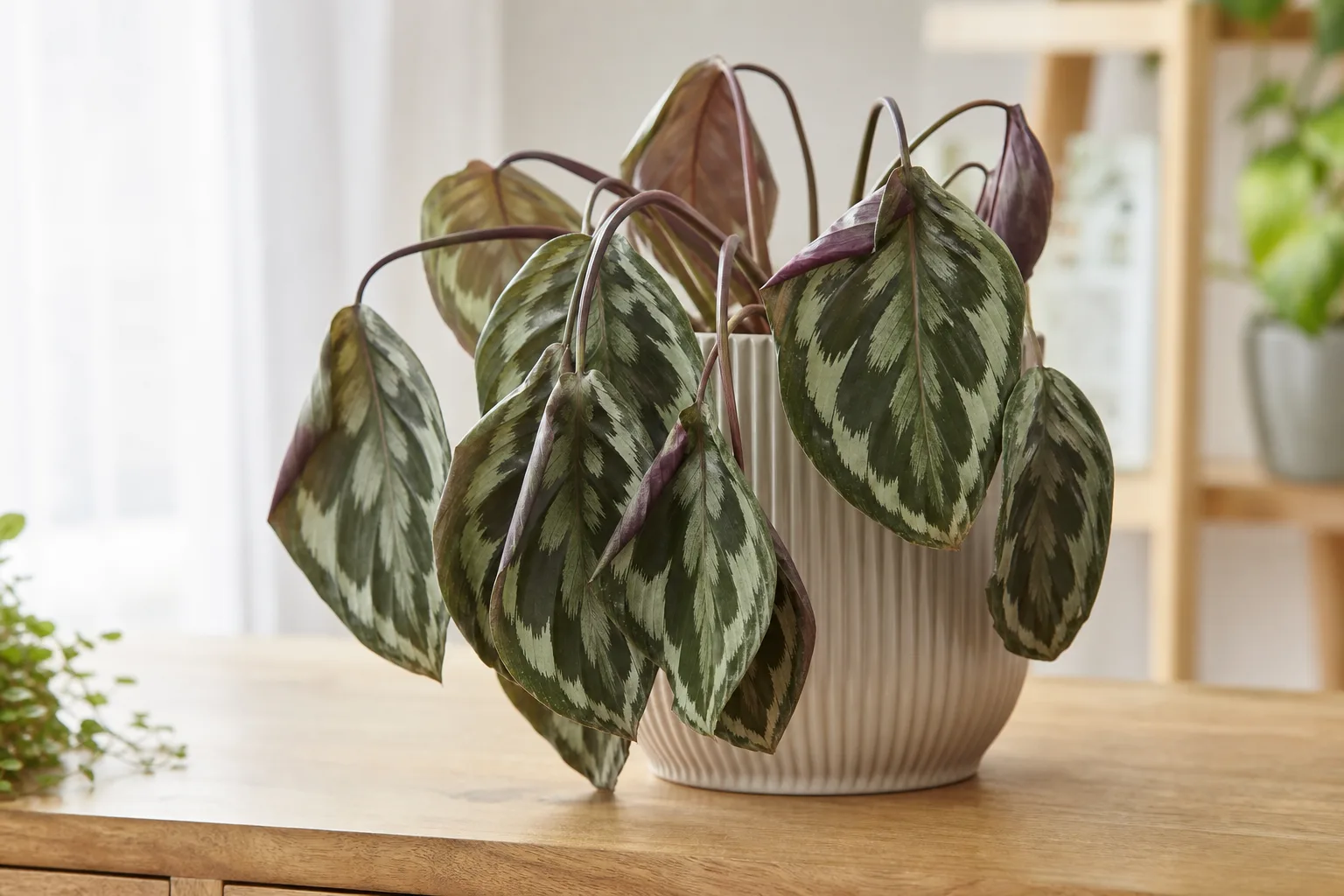
Drooping Leaves on Calathea Medallion: Causes, Checks & Fixes
This guide covers drooping leaves on Calathea Medallion. See also the general Drooping Leaves guide, watering, and light pages for this plant.
Drooping Leaves on Calathea Medallion: Causes, Checks & Fixes
Quick answer
Drooping leaves on Calathea Medallion (Goeppertia veitchiana) mean the broad round blades lost turgor-internal water pressure that keeps petioles stiff. On this cultivar that usually traces to too much or too little soil moisture, low humidity, cold or drafty air, root rot from past overwatering, or water quality stress on sensitive new unfurls-not a harmless prayer-plant habit.
Unlike many calatheas, Medallion does not fold its leaves at night. If foliage stays limp through the day, treat it as a care problem. First step: lift the pot and probe the top 1 to 2 inches of mix near the rim. A heavy wet pot with limp leaves means stop watering and suspect root-zone failure-see overwatering or root rot. A light dry pot with rolled margins means one full draining drink-see underwatering and the watering guide for the top 1 to 2 inch dry rule.
What drooping leaves look like on Calathea Medallion
Medallion’s painted round leaves make droop easy to spot. Chronic limp rosette - petioles hang downward, blades lose their usual flat posture, and the whole plant looks tired even in morning light. Daytime leaf curl - margins roll inward while the center spear is still expanding; tissue stays green but stiff-rolled rather than flat. This pattern often follows a missed watering window or dry furnace air.
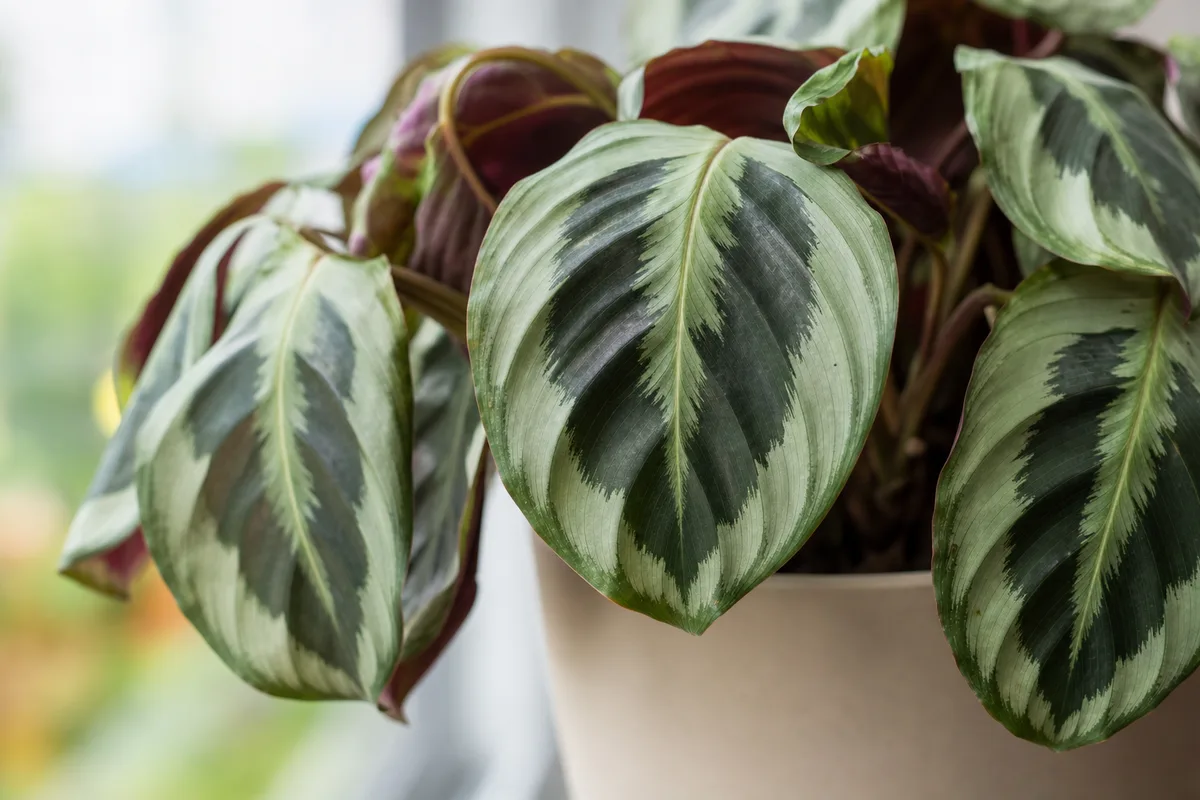
Drooping Leaves symptoms on Calathea Medallion - compare with healthy tissue on the same plant.
Overwatered droop keeps soil wet for days. Lower leaves yellow while upper painted leaves may still look fine briefly. The pot feels heavy. Fungus gnats may hover near the surface. Underwatered droop pairs a light pot, soil shrinking from the walls, and crisp brown edges-especially on the newest unfurl, which Medallion treats as the first report card.
Humidity droop shows limp blades with dry leaf edges in winter rooms without a humidifier. Soil moisture can be correct; edges still tan because Goeppertia veitchiana prefers humidity above 60 percent and dry air pulls moisture from broad leaf surface faster than roots replace it.
Cold-draft droop appears after nights on a chilly windowsill or direct AC airflow. Leaves limp overnight, sometimes with slight discoloration, even when you watered on schedule. Pest-linked droop from spider mites adds fine stippling on undersides and webbing in the crown-see spider mites if stippling accompanies limp foliage.
Why Calathea Medallion leaves droop
Overwatering and root stress
Medallion wants moist, well-drained potting mix-not permanently soggy soil. Calendar watering, cachepots holding stale runoff, oversized fresh repots, and low light that slows evaporation all keep roots anaerobic. Damaged roots cannot supply water to leaves, so foliage droops despite wet mix-the same paradox as wilt. Overwatering can cause root rot on this species; yellow lower leaves and soft stems at the base are warning signs.
Underwatering and unfurl-stage drought
Allowing the mix to go fully dry-especially while a new round leaf is unfurling-produces daytime curl and limp spears. Medallion’s large thin blades lose turgor fast. One dry episode often recovers after a single thorough drink; repeated drought damages fine roots and leaves the next unfurl torn or browned permanently.
Low humidity and dry air
Native to humid Ecuador rainforests, Medallion transpires heavily from broad leaves. Winter heating, AC, and bright windows without humidity support make blades limp and edges crisp even when soil checks look acceptable. Dry soil plus dry air damages edges faster than either stress alone-a pattern covered in depth on the low-humidity page.
Tap water and mineral stress
NC State Extension recommends distilled or rain water because fluoride in tap water can brown leaf edges and tips. Mineral burn weakens new tissue during unfurl. The plant may look limp and crispy at the margins while older leaves stay painted and pretty-misleading you toward thirst when water chemistry is the culprit.
Cold drafts and temperature swings
Medallion performs best between roughly 65 and 85°F. Cold windowsills, winter glass contact, and sudden AC blasts slow root function. Leaves droop because uptake stalls-not because you forgot a calendar watering. Move the pot before stacking other fixes.
Pests and advanced root rot
Spider mites thrive in dry air and attack leaf undersides, weakening tissue until blades hang. Advanced rot softens the crown; droop worsens daily despite your best guess at watering. That overlap is urgent-inspect before fertilizing or Calathea Medallion repotting guide on instinct.
Is nighttime droop normal on Medallion?
No. Many prayer plants raise and lower leaves on a day–night rhythm. Goeppertia veitchiana does not fold its leaves in the evening as other prayer plants do. Owners coming from Calathea ornata or Maranta leuconeura sometimes dismiss daytime limp foliage as “just praying.”
On Medallion, any persistent droop you notice in normal daytime viewing is abnormal. The only acceptable posture change is the subtle curl of thirst that firms after a correct drink-not a limp rosette that stays soft all day.
Lookalike symptoms you might confuse with drooping leaves
| What you see | Likely issue | Where to go next |
|---|---|---|
| Sudden soft collapse, wet soil, sour smell | Wilting from root failure | Wilting or root rot |
| Yellow lower leaves, heavy wet pot, gnats | Overwatering | Overwatering |
| Light pot, curl, crisp edges on new leaf | Underwatering | Underwatering |
| Limp blades, tan edges, correct soil moisture | Low humidity or tap water | Low humidity |
| Stippling, webbing, dusty undersides | Spider mites | Spider mites |
Drooping vs wilting on Medallion: Drooping is often a slower posture change-limp but still green petioles over days. Wilting is sharper collapse when turgor drops fast, common once roots are badly compromised. Both need the same first pot-weight and moisture check; wilting escalates faster.
How to confirm the cause
Work through this six-step Medallion checklist in order:
- Pot weight - Lift the pot. Heavy and wet after days without a drink points to overwatering or poor drainage. Noticeably lighter than your post-watering baseline points to thirst.
- Top 1 to 2 inch probe - Insert a finger or dry skewer near the rim, not through the crown. Damp at depth with limp leaves means root stress, not thirst. Dry at depth with curl means underwatering.
- Newest unfurl - Inspect the center spear. Torn, brown, or stuck unfurl often means drought or low humidity during leaf formation-not a problem you fix by misting alone.
- Leaf age pattern - Yellowing oldest leaves first with wet soil fits root-zone failure. Newest edge crisping fits recent drought, water quality, or dry air.
- Environment scan - Note cold windows, AC vents, heating registers, and humidity below 60 percent. The RHS notes calatheas need careful winter watering to prevent oedema-cool wet conditions plus limp leaves may mean reduce frequency, not add water.
- Pest check - Hold a leaf underside to light. Fine speckling or webbing means mites-treat pests before chasing moisture fixes alone.
One check rarely tells the whole story. Weight plus depth plus newest leaf separates the top three causes on Medallion faster than guessing from leaf color alone.
First fix by likely cause
Make one primary correction, then wait several days before stacking treatments.
If the pot is heavy and soil stays wet
Stop watering immediately. Empty any saucer or cachepot water. Move to Calathea Medallion light guide with gentle air movement so the mix can dry-not harsh sun. If soil stays wet more than a week without improvement, or stems soften at the base, unpot and inspect roots per root rot. Do not mist as a fix for waterlogged mix.
If the pot is light and mix is dry
Water thoroughly with room-temperature rain, distilled, or filtered water until excess runs from drainage holes; empty the saucer completely. Medallion needs a full root-zone rewet-not daily splashes. Resume check-based watering from the watering guide once blades firm.
If moisture is correct but edges are crisp and blades limp
Raise humidity above roughly 60 percent with a humidifier or pebble tray, and switch off straight tap if you use it. The RHS recommends rainwater for calatheas because mains water contains lime and chlorine. Fix air and water quality together; misting alone rarely restores flat Medallion leaves in heated rooms.
If cold drafts or heat spikes are obvious
Move the pot to stable 65 to 85°F with bright indirect light and no direct glass contact. Wait 24 to 48 hours before rejudging soil moisture-cold roots in wet mix metabolize slowly and can look like overwatering when placement is the trigger.
If mites or rot signs are present
Isolate and treat confirmed pests on undersides before adjusting water. For soft crown tissue on sour wet mix, escalate to root inspection-drooping is secondary to rot at that stage.
Recovery timeline
Simple thirst curl often firms within 6 to 24 hours after one proper drink. Overwatered limp foliage may take days to weeks once soil oxygen returns; judge progress by new spears opening flat, not old yellow leaves re-greening. Humidity and water-quality stress improves over one to two weeks after stable air and better water-existing edge burn stays cosmetic.
A damaged unfurl that opened limp, torn, or browned will not flatten retroactively. Success is the next leaf opening clean. If droop spreads to new growth while you hold watering on wet soil, or the crown softens, stop waiting-inspect roots.
What not to do while leaves are drooping
Do not fertilize a limp Medallion before you know whether soil is too wet or too dry. Do not repot, prune heavily, and spray pesticide the same day on a stressed rosette. Do not leave the inner pot sitting in a decorative cachepot full of runoff-hidden standing water is a common hidden cause of chronic droop.
Do not mist instead of checking soil when the mix is waterlogged. Do not assume nighttime movement will fix daytime limp on this species-it will not fold upright at dusk. Do not give small daily sips to an underwatered plant; shallow wetting leaves the core dry and the pot still light.
How to prevent drooping leaves next time
Build a check habit, not a calendar: top 1 to 2 inches beginning to dry plus lighter pot weight means water; otherwise wait. Use rain, distilled, or filtered water at room temperature. Keep humidity at or above 60 percent in winter. Maintain bright indirect light so the plant uses water predictably-dim corners stay wet too long and mimic overwatering droop.
Empty cachepots every time. Avoid letting soil go bone-dry while a new round leaf is unfurling. Review the full rhythm on the watering guide and cross-check seasonal shifts on the overview page.
When drooping is urgent
Treat as urgent if the crown feels soft, soil smells sour with worsening limp leaves, new spears rot before opening, or mite webbing spreads despite isolation. Those patterns overlap root rot and active pest pressure-not patience cases.
Low urgency: firm green tissue, light dry pot, curl that started yesterday-one drink and humidity check usually suffice. Medium urgency: wet soil over a week, yellow lower leaves, no crown softness yet-dry-down and drainage first.
Conclusion
Calathea Medallion drooping leaves are diagnosable once you accept two facts: this species does not normalize limp foliage with night folding, and broad new leaves show stress first. Lift the pot, probe the top inch, read the center unfurl, then apply one fix-pause water on a heavy wet pot, full drink on a light dry one, or humidity and water quality when moisture checks are already honest.
Link outward when the pattern is clear: chronic wet-soil limp to overwatering, dry curl to underwatering, crisp edges in heated air to low humidity, and sharp collapse to wilting. Judge recovery by the next clean round leaf-not by forcing old damaged blades flat.
When to use this page vs other Calathea Medallion guides
- Calathea Medallion watering guide - Use for routine moisture checks before assuming drooping leaves is the main issue.
- Calathea Medallion problems hub - Browse all 16 common issues on this species.
- Underwatering on Calathea Medallion - Different entry point when symptoms overlap with drooping leaves.
- Overwatering on Calathea Medallion - Different entry point when symptoms overlap with drooping leaves.
- Root Rot on Calathea Medallion - Different entry point when symptoms overlap with drooping leaves.