Not Enough Light on Calathea Medallion: Causes, Checks &
Quick answer
Calathea Medallion in too little light stretches toward windows, produces smaller pale leaves with weak pattern contrast, and grows slowly while soil stays wet. First step: move the pot within one to three feet of an east or north window-or add a full-spectrum grow light-before changing fertilizer or watering more.
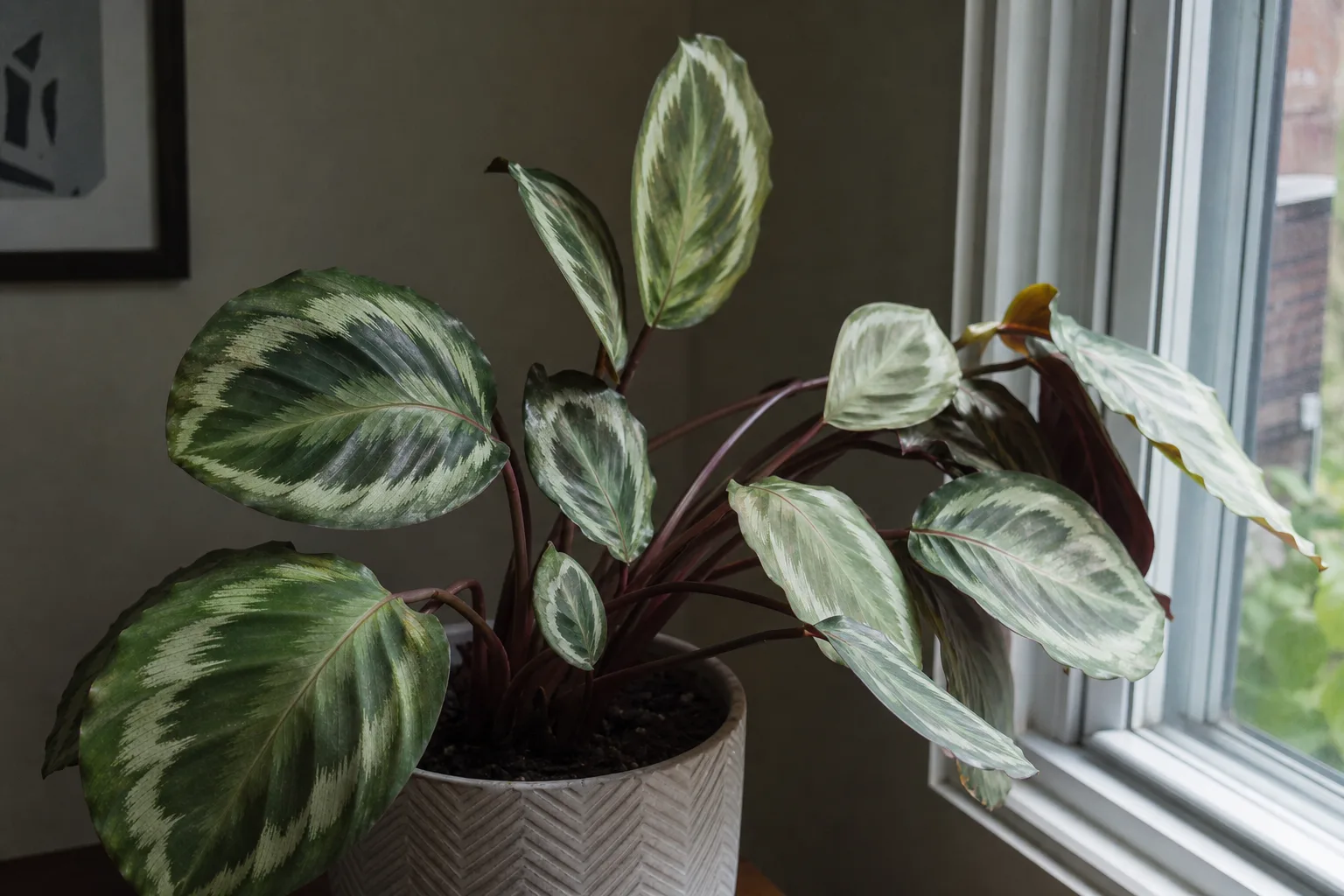
Not Enough Light on Calathea Medallion: Causes, Checks & Fixes
This guide covers not enough light on Calathea Medallion. See also the general Not Enough Light guide, watering, and light pages for this plant.
Not Enough Light on Calathea Medallion: Causes, Checks & Fixes
Quick answer
Calathea Medallion is a showpiece foliage plant, not a dim-corner survivor. When light falls below what Goeppertia veitchiana needs, the rosette stretches toward windows, new leaves arrive smaller and duller, and growth stalls for months while the painted pattern loses its crisp contrast. A Medallion parked on a hallway shelf or more than six feet from glass can look acceptable for a while-then yellow leaves, wet soil, and absent new spears tell you photosynthesis never kept up with watering.
First step: move the pot to bright, indirect light at the plant itself-within one to three feet of an east- or north-facing window in the Northern Hemisphere, or add a full-spectrum LED grow light if natural brightness is insufficient. Do not reach for fertilizer, Calathea Medallion repotting guide, or extra water until you have corrected light and watched how fast the mix dries in the new spot.
What not enough light looks like on Calathea Medallion
Low light on Medallion reads differently than on a snake plant or pothos because Calathea Medallion overview is judged by pattern quality on broad new leaves, not just whether old foliage stays green.
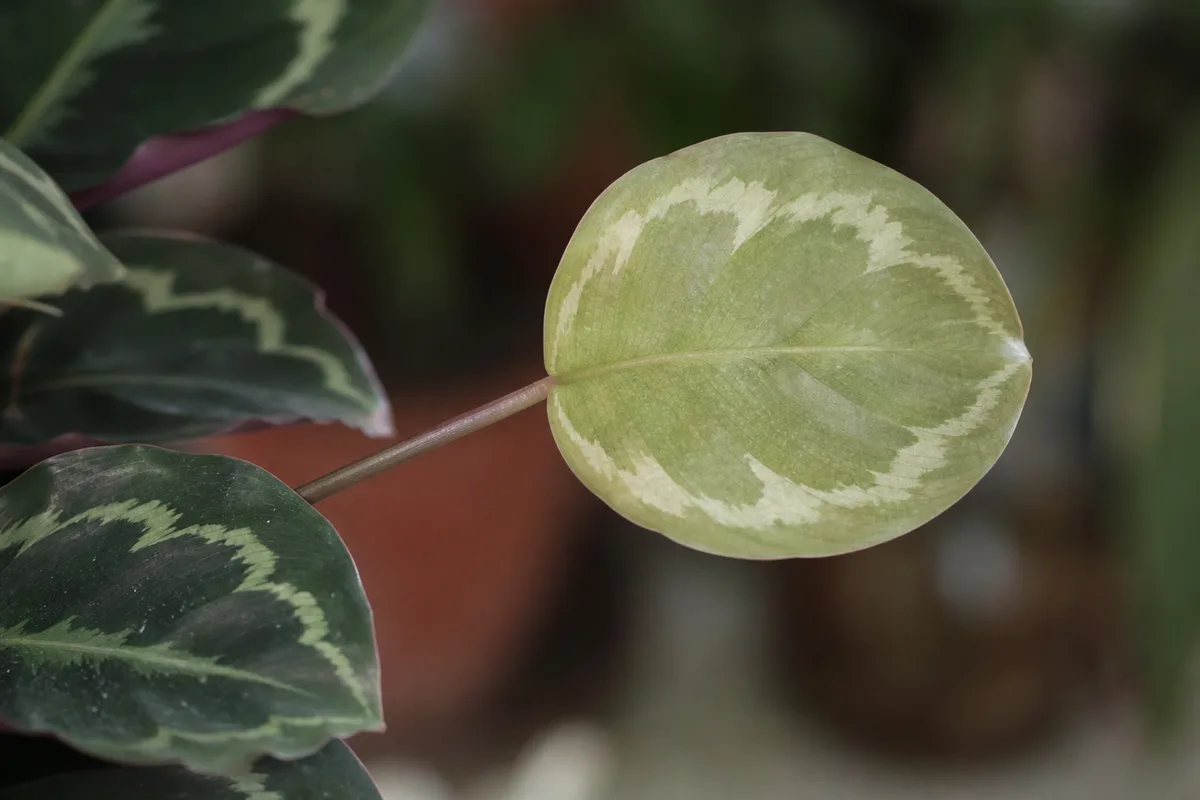
Washed-out pattern contrast on a new Medallion leaf with elongated petiole - older blades may still look acceptable while the crown quietly stalls.
Typical signs:
- Longer petioles with wider spacing between leaves as the rosette reaches toward brightness-classic etiolation on a prayer-plant rosette
- Smaller new leaves with washed-out pattern contrast between dark green, lime, and cream sectors; burgundy undersides look dull rather than rich
- Strong one-sided leaning toward the nearest window or lamp
- Slow or absent new growth through spring and summer when warmth and humidity should drive active unfurling
- Spears that unfurl slowly or stay partially rolled longer than usual
- Soil that stays wet for ten days or more because the plant transpires less in dim conditions
- Overall loss of the crisp painted look that makes Medallion worth the shelf space-older leaves may stay green while the crown quietly stalls
Medallion’s wide round leaves do not fold dramatically at night like some prayer plants, so reduced leaf movement alone is a weak signal. Pattern fade on new growth and petiole stretch are the reliable tells.
How Medallion differs from generic “low light” symptoms
On many houseplants, low light simply means pale leaves and slow growth. On Medallion, the first casualty is usually variegation contrast-the feathered green-and-cream design looks muddy before leaves turn yellow. You may also see perfectly green older leaves sitting above a crown that has not pushed a new spear in months. That split between acceptable old foliage and weak new growth is characteristic of light starvation on this cultivar, not a sudden nutrient crisis.
Why Calathea Medallion runs out of light indoors
Goeppertia veitchiana evolved on the rainforest floor in Ecuador, where canopy trees filter most direct sun before it reaches understory foliage. Indoors, that translates to bright, indirect light at the leaf surface-enough energy for vivid pigmentation and clean unfurls, but not a midday beam on the patterned tissue.
Several home conditions push Medallion below that threshold:
- Decorative placement on interior shelves, bathroom corners, or desks far from windows-rooms that look bright to human eyes often deliver less than 100 foot-candles at the plant
- Distance from glass-light intensity drops sharply with every foot; a pot six feet from an east window is not getting the same exposure as one on the sill
- Winter short days when the same north or east sill that worked in June delivers marginal brightness in December
- Filtered or obstructed windows-sheers, tint, porch roofs, neighboring buildings, and dirty panes all cut usable light
- Dust on broad leaves, which reduces the light tissue can absorb even when placement is otherwise correct
Medallion is often sold beside genuinely low-light-tolerant species. Unlike ZZ plants or cast iron plants, it will linger in shade without thriving-producing smaller leaves and weaker roots while appearing superficially fine until a secondary problem like soggy soil or yellowing exposes the underlying light deficit.
How to confirm the cause
Work through these checks before repotting, fertilizing, or ramping up humidity:
- Window distance and direction - Measure how far the pot sits from the nearest window and note exposure. More than three feet from east or north glass, or more than five feet from filtered south or west glass, is commonly insufficient for strong Medallion growth.
- Hand-shadow test at midday - Hold your hand between the plant and the window at canopy height. A soft, faint shadow suggests Calathea Medallion light guide. Almost no shadow means the spot is too dim. A sharp dark shadow means direct sun is hitting the plant-a different problem.
- New-growth read - Old leaves carry history; the newest spear tells the truth. If the latest leaf opened with strong pattern contrast and a firm burgundy underside, current light is probably adequate. If new leaves are smaller, paler, or absent for months, light is limiting growth.
- Soil dry-down speed - Press a finger into the top two centimeters. In dim light, Medallion uses water slowly; soil that stays wet two weeks after a thorough watering while growth is stalled points to low metabolism from insufficient light-not necessarily a heavy watering hand.
- Lean direction - Persistent tilt toward one window or lamp confirms the plant is actively seeking more brightness.
- Rule out lookalikes - Brown crisp tips with otherwise normal compact growth suggest low humidity or tap water, not light. Sudden yellowing with sour-smelling wet soil may be root rot on Calathea Medallion from overwatering on Calathea Medallion in shade. Curling with dry soil suggests underwatering on Calathea Medallion. None of those patterns replace the stretch-and-fade signature of true light starvation.
If four or more checks point to dim placement-and the plant is not receiving harsh direct sun that could also fade patterns-you have enough evidence to fix light first.
The first fix to try
Move the pot to bright, indirect light within one to three feet of an east- or north-facing window, or to the brightest filtered spot you can provide without direct midday sun on the leaves.
East exposure is the default for Medallion: gentle morning sun through glass, then bright indirect light the rest of the day. North windows work when unobstructed. If only south or west glass is available, sit the plant three to five feet back or behind a sheer curtain so patterned tissue never sits in a harsh beam.
Increase brightness gradually over seven to ten days if the plant has lived in deep shade for months-move halfway to the target window first, watch for bleaching or curl, then advance. Medallion moving from dim to bright indirect usually tolerates a careful step-up better than a jump into unfiltered south sun.
Do not change watering, fertilizer, or pot size on the same day. Wait at least two weeks after the light move, then adjust watering to match how fast the mix dries in the brighter spot-often every five to seven days in active growth rather than every ten to fourteen in shade.
If windows cannot deliver enough brightness
Add a full-spectrum LED grow light positioned 12 to 18 inches (30 to 45 cm) above the tallest leaf, run 10 to 12 hours daily on a timer, and combine it with the best natural window you have. A working setup produces new leaves matching older growth in pattern contrast and size within four to six weeks.
Step-by-step recovery after increasing light
Once the pot is in brighter indirect exposure:
- Hold watering until the top two centimeters of soil begin to dry-the plant will start using water faster as photosynthesis increases.
- Rotate the pot a quarter turn every week so the rosette does not lean permanently toward one source.
- Wipe dust from broad leaves with a damp cloth so tissue absorbs maximum light.
- Watch the next rolled spear in the crown. Firm unfurling with sharp pattern boundaries means the new placement is working.
- Trim only fully brown or dead leaves if they are unsightly. Do not prune healthy stretched petioles until new compact growth confirms the fix-premature pruning in still-dim conditions produces more weak shoots.
If no healthy new leaf appears after six weeks in improved light during the warm season, reassess whether the spot still falls below bright indirect at the canopy, or whether wet soil and root damage need separate attention.
Recovery timeline
Expect three to six weeks before you can judge whether light correction worked, measured by new growth from the crown, not by old leaves improving.
- Weeks 1–2: The plant may look unchanged. Soil should dry slightly faster. Avoid fertilizing.
- Weeks 3–4: A new spear may appear or an existing rolled leaf may unfurl with stronger contrast than the previous leaf.
- Weeks 5–8: Two compact new leaves with vivid patterning confirm recovery. Stretched older petioles remain long-they will not shorten.
Winter recovery takes longer because day length is short. A grow light often outperforms window light alone from November through February.
Lookalike symptoms to rule out
| What you see | Likely cause | Why it is not pure low light |
|---|---|---|
| Brown crisp tips on otherwise compact leaves | Low humidity or tap water minerals | Petioles are not stretched; pattern contrast may still be strong on new leaves |
| Yellow leaves with constantly wet, sour soil | Overwatering / root stress in shade | Light is the upstream cause, but roots need drying and inspection-not just a brighter window alone if rot is advanced |
| Bleached cream sectors on window-facing leaves | Too much direct sun | Damage is one-sided toward glass; petioles are often compact, not stretched |
| Curling leaves with dry, light pot | Underwatering | Soil pulls away from pot sides; stretch toward light is secondary |
| Uniform stickiness and speckled undersides | Spider mites or other pests | Inspect with a hand lens; pest colonies can weaken growth in otherwise adequate light |
Yellow leaves on Medallion in a dim corner with wet soil are a common overlap: low light slows water use, chronic wetness stresses roots, and foliage yellows. Fix light and reduce watering frequency together-not one without the other.
Mistakes to avoid
- Assuming Medallion is a low-light plant because it is labeled “tropical” or grouped with prayer plants in a shop display
- Moving straight into unfiltered south or west sun to “fix” stretching-direct sun scorches Medallion’s pattern and crisps margins faster than it solves etiolation
- Over-fertilizing to force growth in a dim spot-nutrients cannot replace missing photons and may burn stressed roots
- Watering on a bright-window schedule while the plant still sits in shade-soggy soil compounds the problem
- Repotting on day one when the real issue is placement; repot only if roots are genuinely failing after light and watering are corrected
- Judging success by old leaves-stretched, pale mature foliage does not revert; only new crown growth tells you the fix worked
Calathea Medallion care cross-check
Light drives how fast Medallion uses water, how cleanly new leaves unfurl, and how resistant the plant is to secondary stress. After improving brightness:
- Watering: Check the top two centimeters before every pour. Brighter indirect light usually means faster dry-down-often every five to seven days in warm months, seven to ten in winter.
- Humidity: Brighter placement increases transpiration; keep humidity at 50 to 60 percent or higher so new spears do not crisp at the edges while unfurling.
- Water quality: Continue filtered or rainwater-tap water issues cause brown tips independent of light and can confuse the diagnosis.
- Temperature: Maintain 18°C to 27°C (65–80°F); cold drafts near windows in winter can stall growth even when light is adequate.
Make one change at a time so you can read the plant’s response. Light comes first; adjust watering second after you see dry-down speed change.
How to prevent not enough light next time
- Place for the leaves, not the room-if the pot looks best on a bookshelf but the rosette receives no usable brightness, the placement is wrong for Medallion
- Reassess seasonally-move closer to glass or add a grow light before winter short days; pull back from intensifying west or south beams in late spring
- Rotate weekly and clean leaves monthly so every surface captures light evenly
- Read the next new leaf after any move-pale unfurls mean adjust light before touching fertilizer or humidity gadgets
- Pair light with realistic watering-a brighter Medallion dries faster; a dim one needs less water, not more attention in the wrong form
When to worry
Low light alone is rarely fatal quickly, but months in deep shade with wet soil can weaken roots beyond what a simple window move fixes. Escalate if:
- The crown feels soft or collapses
- Yellowing spreads to most of the rosette while soil stays waterlogged and smells sour
- No new growth appears through an entire warm season despite corrected placement and a grow light
- Fungus gnats persist because the mix never dries
In those cases, inspect roots after correcting light and drying the soil. Soft brown roots need trimmed and fresh well-draining mix-not another round of fertilizer in the same dim corner.
Conclusion
Calathea Medallion rewards bright indirect light at the plant itself with the painted foliage that justifies its reputation. Too little light produces a quieter failure mode than sun scorch-long petioles, pale small new leaves, stalled spears, and wet soil that never quite dries-but the fix is straightforward: move to an east or north window within one to three feet of the glass, or add a grow light, then adjust watering to match faster metabolism.
Judge recovery by the next one or two leaves from the crown, not by whether old stretched tissue regains its pattern, because it usually will not. Get light right and humidity, water quality, and Calathea Medallion watering guide become easier to manage; leave Medallion in a decorative dark corner and no amount of misting will restore the crisp medallion look you bought the plant to enjoy.
When to use this page vs other Calathea Medallion guides
- Calathea Medallion watering guide - Use for routine moisture checks before assuming not enough light is the main issue.
- Calathea Medallion problems hub - Browse all 16 common issues on this species.
- Leggy Growth on Calathea Medallion - Different entry point when symptoms overlap with not enough light.
- Slow Growth on Calathea Medallion - Different entry point when symptoms overlap with not enough light.
- Yellow Leaves on Calathea Medallion - Different entry point when symptoms overlap with not enough light.