Iron Deficiency on Blue Star Fern: Causes, Checks & Fixes
Quick answer
Iron deficiency on Blue Star Fern shows as pale yellow-green tissue between darker green veins (interveinal chlorosis) on the newest deeply lobed fronds unfurling from golden-scaled rhizome tips, while older blue-gray fronds may still look normal. First step: confirm that vein pattern on the softest new pinnae—not uniform dulling from underwatering—then check whether alkaline tap water, soggy bark mix, or skipped micronutrients blocked iron uptake before one dilute chelated iron drench during active growth.

Iron Deficiency on Blue Star Fern: Causes, Checks & Fixes
This guide covers iron deficiency on Blue Star Fern. See also the general Iron Deficiency guide, watering, and light pages for this plant.
Iron Deficiency on Blue Star Fern: Causes, Checks & Fixes
Quick answer
Iron deficiency on Blue Star Fern (Phlebodium aureum) shows as pale yellow-green tissue between darker green veins (interveinal chlorosis) on the newest deeply lobed fronds still unfurling from golden-scaled rhizome tips, while older blue-gray fronds on the same plant often keep their glaucous color. Iron is immobile in plants, so chlorosis appears on young expanding pinnae first—not on the lowest old fronds the way nitrogen deficiency does.
See our iron deficiency guide for general chlorosis mechanics. On Blue Star Fern, read the symptom on the soft frond opening at the rhizome lead—veins stay green while the wavy lobes between them bleach before the blue-gray coating returns.
First step: confirm green-vein yellowing on the newest rhizome-tip frond (not a uniform loss of blue tint from drought), then check whether alkaline tap water, waterlogged bark mix, or depleted micronutrients blocked iron uptake before one chelated iron drench during active growth.
When to use this page vs other Blue Star Fern guides
| Pattern | Read next |
|---|---|
| New rhizome-tip frond pale with green veins | Iron deficiency (this page) |
| Whole plant dull, losing blue cast, crispy edges | Underwatering or low humidity |
| Lowest / oldest fronds yellow first; no vein pattern | Nitrogen deficiency |
| Older mid-frond yellow between veins; new growth OK | Magnesium deficiency |
| Washed-out in a bright window | Pale leaves or too much direct sun |
| Yellow fronds on never-drying mix, mushy rhizomes | Overwatering or root rot |
| General yellowing without clear vein pattern | Yellow leaves |
What iron deficiency looks like on Blue Star Fern
Healthy Blue Star Fern spreads on fuzzy golden rhizomes that creep over a wide, shallow pot, sending up large, deeply lobed fronds in blue-green to gray-green tones with wavy margins. NC State Extension describes the species as a rhizomatous epiphyte with fronds that vary from bright green to blue-green in cultivars such as ‘Davana’. Iron stress interrupts that color on the frond still expanding at the rhizome tip.
Typical signs:
- Pale lime or yellow-green tissue between darker green veins on the youngest lobed frond, often still soft and slightly curled
- Older fronds on the same rhizome retain more blue-gray color while only the lead flush looks washed out
- Smaller or thin new pinnae when chlorosis is severe but rhizomes stay firm
- Firm golden scales on rhizomes and predictable dry-down when roots are functional—limp fronds on sour wet mix point to overwatering instead
Not iron deficiency:
- Even dulling of many fronds after the pot dried hard—NC State notes curling is a common symptom of low humidity and underwatering without classic interveinal pattern
- Whole-plant wash-out after a move to dim light—see not enough light
- Lowest fronds fading first—nitrogen deficiency
- Round orange-brown sori along pinna midribs on mature fronds—normal spore patches, not nutrient spots
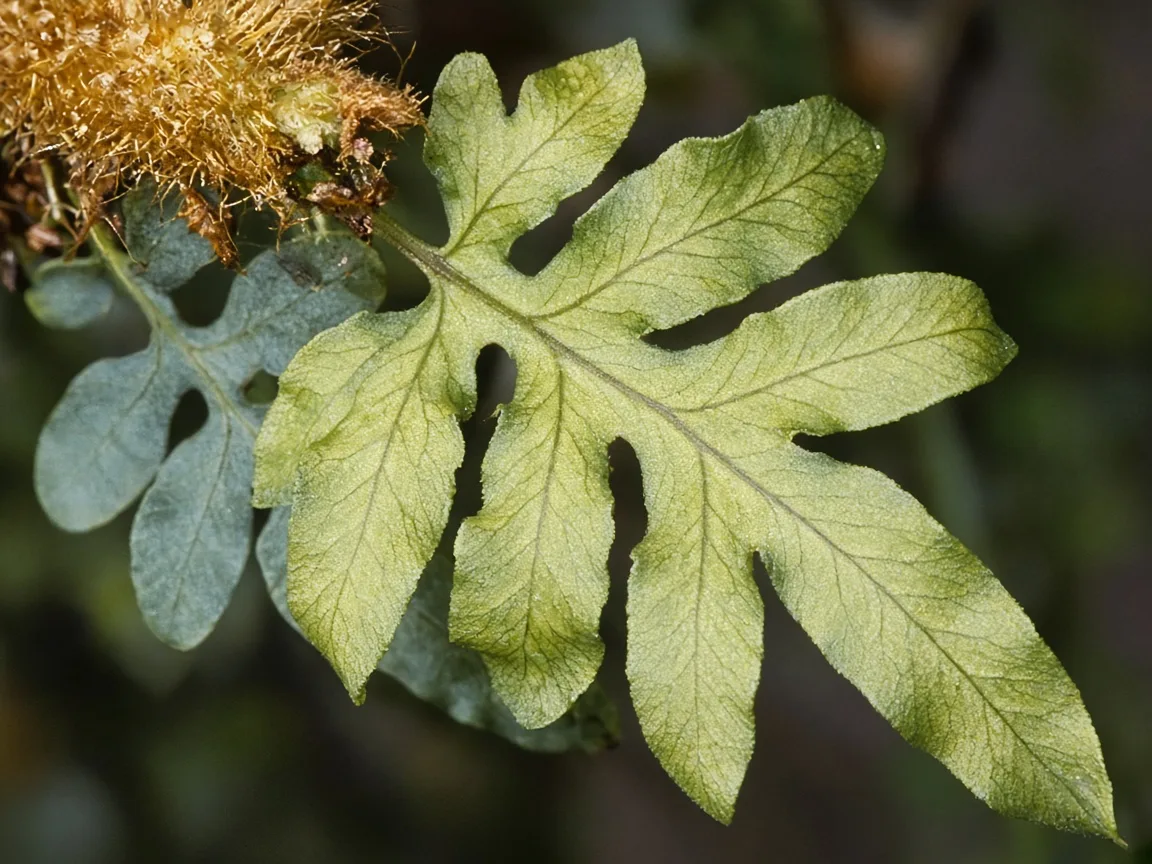
New frond at a golden rhizome tip: pale yellow-green tissue between dark green veins while older blue-gray lobes behind it still look normal—classic iron chlorosis on expanding fern foliage.
The classic symptom of iron deficiency is interveinal chlorosis where leaf tissue yellows while veins stay green. RHS guidance notes iron deficiency affects the youngest leaves first, unlike magnesium problems that more often start on older foliage. On this creeping fern, the youngest leaf is always the frond opening at the active rhizome tip, not a random mature blade halfway down the runner.
Why Blue Star Fern gets iron deficiency
Blue Star Fern wants a loose, organic, slightly acidic mix and steady moisture with oxygen—yet many indoor pots drift alkaline, stay too wet in the center, or receive nitrogen-heavy feeds without micronutrients. Iron chlorosis often results when roots cannot absorb iron even when it is present in fertilizer; high pH, salt crust, or poor drainage block uptake while rhizomes keep pushing new fronds.
Blue Star Fern–specific causes:
- Alkaline or hard tap water — Repeated watering raises container pH over time; high pH makes iron unavailable to plants even when you feed occasionally. The species prefers slightly acidic mix around pH 5.5–7.0 in home culture.
- Micronutrient depletion in shallow bark pots — Summer watering leaches iron from small volumes faster than slow rhizome growth replaces it unless you use a complete formula per the fertilizer guide.
- Waterlogged bark despite “moist fern” advice — RHS links waterlogging to chlorosis when air is displaced from the root zone. Blue Star Fern tolerates brief drying per NC State, but stagnant soggy mix still limits iron uptake and invites root rot.
- Salt crust from overfeeding — Ferns in open shallow pots show brown tips and rim deposits when salts build; flush before assuming more iron will help.
- Winter feeding on idle roots — Pale tips in a cool dim room are often cultural stall until spring fronds resume per light placement.
- Misread nitrogen deficiency — Nitrogen washes out older fronds first; iron hits the newest rhizome-tip flush with green veins.
Do not diagnose iron deficiency on soft, blackening rhizomes or sour-smelling wet mix—that is root failure until you confirm firm runners and appropriate dry-down per the watering guide.
Rhizome-tip chlorosis: read the lead frond, not the blue skirt
Blue Star Fern shows iron stress on the lobed frond still opening at the forward edge of a creeping rhizome—a pattern that would be meaningless on a rosette bird’s nest fern or an upright sword fern crown. Each golden-scaled runner adds fronds sequentially; the diagnostic blade is always the softest, newest one at the tip.
That tip-only pattern separates iron from nitrogen, which dulls older fronds farther back on the rhizome first as the plant scavenges mobile nitrogen. It also differs from losing the famous blue-gray cast everywhere after drought: underwatering tends to flatten color evenly and add crisp margins, without a sharp green-vein network on a single new frond.
Because fronds emerge from lateral rhizomes, compare two or three successive new leaves on the same runner rather than a random mature frond that may simply be aging out. One pale opener after repotting stress can be transient; repeated chlorotic lead fronds with firm rhizomes point to uptake failure.
Shallow epiphytic pots and the alkaline edge-water band
In nature, Blue Star Fern grows as an epiphyte on tree surfaces with rain washing the root zone. Indoors you often use a wide, shallow pot with bark and perlite per the soil guide, watering when the top 3–4 cm dries. That routine is correct—but months of the same hard tap hitting one side of a saucer can leave a high-pH, salty band while older fronds still look blue.
The diagnostic split:
- Functional roots — top 3–4 cm dries on schedule; pot weight drops predictably; new fronds appear from rhizome tips in medium indirect light. Chlorosis with green veins here points to pH, salts, or micronutrient depletion.
- Stalled uptake — mix stays dark and clings for many days; rhizomes soften; fronds wilt on wet soil. Fix drainage and dry-down before iron drenches.
Hanging baskets and mounted culture improve airflow around rhizomes as NC State notes for houseplant culture, but they still need occasional complete feeds when leaching is high.
Blue-gray glaze vs true interveinal chlorosis
Owners sometimes panic when the glaucous blue-green sheen fades—but drought or dim light can dull the whole frond without the vein-by-vein contrast iron shows. True iron chlorosis keeps midribs and veins darker green on the youngest lobes while tissue between them turns yellow-green symmetrically.
If several fronds across multiple rhizomes look uniformly olive and the pot was dry for days, rehydrate on schedule per watering before assuming micronutrient failure. If one lead frond on an otherwise blue plant shows vein contrast during warm growth, iron moves up the suspect list.
How to confirm iron deficiency
Work in this order:
- Find the active rhizome tip with a frond still unfurling.
- Check for interveinal pattern — pale tissue between veins on that same soft frond.
- Compare to older fronds on that runner — mature blue-gray lobes still normal strengthens iron over nitrogen.
- Moisture and rhizome firmness — top 3–4 cm dry-down on schedule; golden runners firm, not mushy.
- Feed history — complete micronutrients during last growing season, or only high-nitrogen doses?
- Water chemistry clues — white crust on rim or saucer, or known hard alkaline tap.
- Light context — recent move to harsh sun vs stable bright indirect placement.
If steps 1–3 fit and rhizomes are not rotting, iron deficiency is likely. If mix is waterlogged or rhizomes are soft, treat as overwatering first.
The first fix to try
Confirm green-vein chlorosis on the newest rhizome-tip frond and verify the top 3–4 cm of mix dries between waterings on firm golden rhizomes—then pause any extra fertilizer until you understand uptake.
Only after that checkpoint:
- Flush salts if crusty — Run room-temperature water through the pot until it drains freely twice over a week. Let dry-down return to normal before feeding.
- One chelated iron drench — During active spring or summer growth, apply chelated iron mixed per label at the dilute end for houseplants, poured across the mix surface so rhizomes are not buried deeper. NMSU Extension notes chelated forms are effective for iron chlorosis when roots can absorb nutrients.
- Resume light complete feed — After two weeks, return to half-strength complete liquid fertilizer with micronutrients per the fertilizer guide—not before new growth looks stable.
Do not bury soft rhizomes under fresh mix, do not stack repotting and iron on the same day, and do not repeat iron weekly on a fern that still sits in soggy bark.
Recovery timeline and what improves
The pale lobes currently unfurling may stay light. Recovery shows when the next frond from the same rhizome tip emerges greener and expands to normal size within three to six weeks after corrected watering, optional flush, and one iron drench on healthy roots.
Positive signs:
- Darker green veins with brighter tissue between them on new rhizome-tip fronds
- Return of blue-gray tone on maturing lobes after the frond hardens
- Predictable dry-down and steady pot weight cycle
- No new brown tip burn after feeding resumes at low strength
Warning signs:
- Successive lead fronds more chlorotic despite iron repeats
- Rhizome softness, sour smell, or fungus gnats on never-drying mix
- Widespread yellowing with wilting—escalate to root rot assessment
Mistakes to avoid
- Treating drought dulling as iron hunger — Rehydrate first when the whole plant lost its blue cast evenly.
- Heavy nitrogen feeds without micronutrients — Pushes frond count while iron stays locked out.
- Iron on waterlogged roots — Fix oxygen and drainage first; symptoms worsen on poorly drained soils.
- Expecting old fronds to re-blue — Only new rhizome-tip growth tells the story.
- Confusing sori with disease — Orange spore lines on mature pinnae are normal, not chlorosis.
How to prevent iron deficiency next time
- Feed complete micronutrient liquid fertilizer at half strength every four to six weeks in late spring and summer when rhizomes push new fronds.
- Water when the top 3–4 cm is dry; avoid leaving the shallow pot soggy for days—follow watering dry-down.
- Use rainwater or filtered water when hard tap repeatedly whitens the pot rim.
- Refresh airy, slightly acidic bark mix at repot when rhizomes circle and dry-down becomes erratic.
- Flush salts occasionally during the feeding season if you use tap water and synthetic fertilizer.
Related Blue Star Fern guides
- Overview
- Problems hub
- Watering
- Soil
- Light
- Fertilizer
- Nitrogen deficiency
- Magnesium deficiency
- Pale leaves
- Overwatering
Scope note: Use this page when new rhizome-tip fronds show green-vein yellowing during active growth. Use pale leaves for whole-plant wash-out after a light change, nitrogen deficiency when older fronds on the rhizome pale first, and overwatering when rhizomes soften on wet mix—regardless of frond color.
Related tool
Use the Fertilizer Dilution Calculator to narrow causes for iron deficiency on this plant before changing multiple variables at once.