How to Prune Bird's Nest Fern: When, Where & What to Cut
How to Prune Bird's Nest Fern: When, Where & What to Cut
How to Prune Bird's Nest Fern: When, Where & What to Cut
Quick Answer - Groom, Don’t Shape
First action: inspect the rosette, then remove only fronds that are fully dead, diseased, or clearly hazardous - cut each stipe flush at the base with sterilized scissors, without touching the crown or unfurling fiddleheads. Bird’s nest fern pruning is grooming, not shaping. Asplenium nidus does not branch from nodes, respond to tip pinching, or regrow from mid-frond cuts. New leaves emerge only as fiddleheads from the central crown. Most healthy indoor plants need occasional outer-frond removal and nest cleanup, not scheduled hard cutbacks.
What Bird’s Nest Fern Pruning Actually Means
For indoor growers, bird’s nest fern pruning means selective grooming: removing fronds that no longer photosynthesize, clearing decaying debris from the nest bowl, and optionally trimming brown edges on otherwise green blades. It does not mean shearing the rosette, thinning green leaves for fullness, or cutting back to force bushier growth.
Each mature frond is a single leaf that unfurled once from the crown. Remove a green frond and you remove that photosynthetic surface permanently until a new fiddlehead emerges - a process that can take weeks indoors. Clemson HGIC recommends grooming old brown fronds and avoiding water in the plant center, where trapped moisture commonly causes crown rot. UF/IFAS Gardening Solutions notes gardeners can occasionally groom old brown or yellow fronds on Bird’s Nest Fern overview. Pruning tidies spent tissue and improves airflow; it does not fix underwatering on Bird’s Nest Fern, low humidity, or sun scorch.
How This Fern Grows - and Why Cut Placement Matters
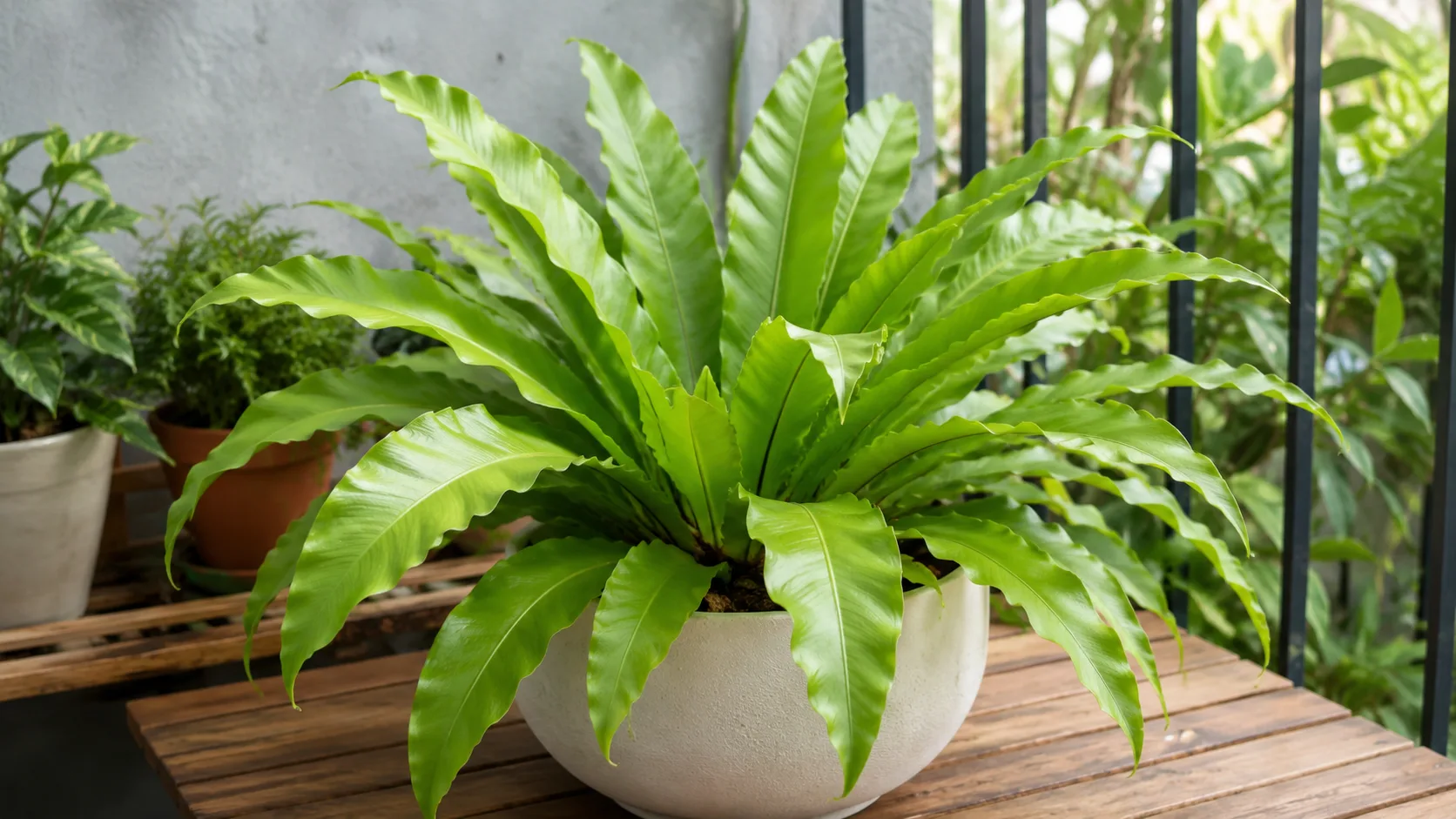
Bird’s nest ferns are epiphytic rosette ferns. In nature, Asplenium nidus grows on tree trunks across tropical Asia, Australia, and East Africa, catching debris in a funnel-shaped nest while roots anchor to bark. Indoors, the same architecture remains: a short stem hidden beneath frond bases, with all visible growth arranged in a rosette.
New leaves begin as fiddleheads - tightly coiled shoots that unfurl into wide, rippled fronds. NC State Extension describes bird’s nest fern foliage as fragile and best handled gently; emerging fronds scar easily if bumped or cut. There is no lateral bud behind a leaf joint and no stem tip to pinch. The meristem concentrates in the crown, and damage there can halt new frond production.
Older fronds senesce on the outer ring while the plant pushes energy toward crown growth. Expect slow to moderate growth indoors - NC State Extension lists the rate as slow. New fiddleheads may take weeks to months after grooming, not days. This biology is why vine-style pruning advice fails on bird’s nest fern.
When to Prune a Bird’s Nest Fern
Timing depends on why you are cutting. Fully dead or clearly diseased fronds can be removed whenever you see them. Routine batch cleanup of several spent outer leaves fits best in late spring through early summer, when warmth and longer days support fiddlehead emergence. Most indoor specimens have no strict dormancy, but growth visibly accelerates in the warm season.
Avoid heavy removal while the plant is wilting, recovering from Bird’s Nest Fern repotting guide, or showing crown softness or widespread yellowing from the base. In those cases, diagnose root or crown stress before cosmetic cuts.
Best Season for Routine Grooming
Late spring through early summer is the ideal window for removing multiple fully dead outer fronds on a healthy bird’s nest fern. Longer daylight and warmer room temperatures align with the plant’s natural growth push. Removing several spent fronds at once is easier on the plant in this window than in dim late autumn, when each remaining green frond carries more relative workload.
One fully brown frond can come off anytime. The seasonal note applies when catching up on several dead outer leaves after dry winter air. The same logic holds for Asplenium antiquum and wavy cultivars like ‘Crispy Wave’.
When Dead Fronds Can Come Off Immediately
Remove a frond as soon as it is fully dead - brown, dry, and no longer contributing green tissue - regardless of season. Fully dead leaves decay and can harbor pests or fungi against healthy growth. The same immediate rule applies to fronds with active leaf spot, mushy bases, or pest infestation along the stipe.
Distinguish dead from dying. A frond that is mostly green with brown tips is still dying slowly, not dead. A frond yellowing from the base due to crown rot is a symptom, not a grooming target you solve with scissors alone.
What to Check Before You Cut
Before picking up scissors, scan the rosette in good light. Note which fronds are fully crisp and brown, which are green with tip damage, and whether any fiddleheads are emerging from the crown. Check the nest bowl for damp debris, mushy stipe stubs, or pest residue. Confirm the crown sits above the soil line and has not been buried at repotting.
If many fronds yellow simultaneously from the base, or the crown feels soft, pause grooming and audit Bird’s Nest Fern watering guide, drainage, and light. Widespread decline usually reflects systemic stress, not a need for more cutting. If outer leaves are dry brown while the crown pushes new shoots, grooming is appropriate.
The First Cut to Make
Your first cut should target one fully dead outer frond - brown, dry, with no green tissue remaining. Sterilize sharp scissors with rubbing alcohol, gently lift the frond blade (not the stipe), trace the stalk down to its base near the crown, and snip flush through dead tissue only. Remove the frond in one piece and dispose of it away from other plants.
Do not start with tip trimming, green frond removal, or nest debris clearing until you have identified whether any fronds are truly finished. One careful base cut on dead tissue establishes safe access without crowding the crown with multiple tasks on day one.
How to Remove Dead Fronds Step by Step
- Inspect the rosette and mark only fully dead or hazardous fronds for removal today.
- Sterilize your cutting tool with rubbing alcohol and let it dry.
- Lift the target frond by the blade edge and trace the stipe to its attachment point.
- Cut at the base as close to the crown as practical without nicking adjacent green stipes or fiddleheads.
- Bag the frond immediately to limit spore or pest spread.
- Brush loose dry debris from the nest bowl with a soft brush or tweezers.
- Reassess before removing another frond - spread large cleanups across sessions if needed.
Work slowly when several outer leaves are dead. If the brown ring represents a large fraction of the plant, spread removals across two weeks unless leaves are fully desiccated and the plant is otherwise vigorous in spring growth.
Making the Cut at the Frond Base
The correct cut on a dead bird’s nest fern frond is flush at the base of the stipe, as close to the crown as practical without cutting living tissue. Follow the stalk downward until it meets the brown fuzzy mound where fiddleheads emerge; your cut stays on the dead side of that junction. A clean perpendicular snip through dry tissue separates easily; a ragged tear leaves fibrous stubs that hold moisture.
If the frond is only partially dead, do not base-cut yet. If the base is mushy while the blade is green, suspect crown or root rot on Bird’s Nest Fern rather than normal senescence - removal may still be necessary to limit spread, but the priority shifts to drying the nest and correcting watering.
When dead fronds overlap, cut the outermost first, then re-evaluate access. Forcing shears through green fronds to rush the job is how healthy leaves get sliced accidentally.
Should You Trim Brown Frond Tips?
You may trim brown tips on otherwise healthy fronds for appearance, but treat that as cosmetic grooming, not corrective pruning. Brown margins usually mean the leaf edges dried faster than the plant could supply water - common causes include low humidity, uneven watering, excess fertilizer, or too much direct sun.
Follow the natural leaf contour and cut only dead tissue. Tip trimming does not fix the cause - adjust humidity, watering, or light first. If tips keep re-browning after trims, wait for the whole frond to senesce before base removal. Never cut a frond in half as a shaping technique; remove the whole frond at the base only once it is fully spent.
When a frond is mostly green with minor edge browning, leaving it in place often preserves more photosynthetic area than base removal.
Crown Hygiene and Nest Cleanup
Crown hygiene matters as much as frond removal. The central nest collects brown fuzz, old stipe bases, dust, and dropped leaf fragments that can hold moisture against emerging fiddleheads. Use a soft paintbrush or tweezers to lift loose dry debris without cutting living tissue. Hold the pot tilted over a bin and tap gently if material is free-falling.
Do not blast the crown with compressed air or pour water into the nest indoors. Clemson HGIC warns that water entering the plant center can cause crown rot. Remove mushy stipe stubs with a sterilized blade and pause watering if rot is suspected. Confirm the crown sits above the soil line, not buried.
Asplenium nidus is listed as non-toxic to cats and dogs by the ASPCA - one of the safer ferns for pet households. Dispose of trimmings promptly if pets chew plant material.
How Much Foliage You Can Safely Remove
Limit each grooming session to fully dead outer fronds, and often less is wiser. NC State Extension notes foliage is fragile and should be handled gently. Removing too much green or borderline-green tissue at once can shock a slow-growing fern that cannot quickly replace photosynthetic area.
In practice, most sessions remove one to three fully dead outer fronds. Spread large cleanups across two to three weeks in the growing season. Small plants with only five or six green fronds have little spare capacity - remove only fully dead tissue and fix light or humidity before further grooming. Treat the one-third rule as a ceiling, not a target.
What Never to Cut
Never cut into the central crown, never remove unfurling fiddleheads, and never shear healthy green fronds for shape or size control. These boundaries protect the only growth engine the plant has. If the crown is damaged, new growth may not replace lost fronds because there is no backup meristem along older tissue.
Never apply node-based or tip-pinching advice from vining plants - fern fronds do not re-sprout from cuts. Avoid base-cutting partially green fronds just because margins look ugly; wait until senescence finishes. Skip wound sealants on dead stipe stubs.
Common Pruning Mistakes
The most damaging mistakes are crown injury, green frond removal for shaping, and over-clearing foliage during stress or wrong season. Secondary mistakes include dull tools, tip-trimming without fixing care, and leaving rotting debris in the nest.
Cutting into the crown or spearing an unfurling fiddlehead can halt frond production. This happens when someone trims emerging leaves, slips while cutting a stipe, waters into the nest, or buries the crown at repotting. Keep blades below the living crown line and use brushes for debris.
Removing too many fronds at once - especially green leaves - starves a slow fern and can leave soil wet longer as transpiration drops. Pause further grooming if the plant wilts or yellows widely after a heavy session.
When Pruning Will Not Fix the Problem
Pruning will not fix crown rot, chronic underwatering, root rot from overwatering on Bird’s Nest Fern, pest infestations, or direct sun scorch. Scissors address spent tissue; they do not rehydrate roots, raise humidity, or move the pot away from harsh glass.
Crown rot from watering into the nest is often fatal - change watering habits, not just trim blackened fronds. Widespread crispy tips, spider mites, and low light need environmental or pest fixes, not mass base cuts. Before cutting, ask: Will removing this tissue fix what caused the damage? If not, adjust care first.
Aftercare and Recovery
After grooming, aftercare is mostly steady routine, not intensive nursing. Continue bright, indirect light without sudden moves. Water into the soil around the pot perimeter, never into the nest, and let the top 2–3 cm of mix dry before the next thorough soak during active growth. Maintain humidity around 50–70% if home air is dry.
Hold off on fertilizer for two to three weeks after significant grooming. Avoid stacking repotting and pruning unless root rot demands it. Monitor for two to four weeks - success means firm fronds and a new fiddlehead emerging; failure means stipe mush, crown collapse, or widespread yellowing.
Conclusion
Bird’s nest fern pruning is grooming, not shaping. Remove fully dead or clearly diseased fronds at the base with sharp, sterilized tools, keep the nest bowl free of damp debris, and protect the crown and fiddleheads at all costs. Trim brown tips only when you understand they are cosmetic and that humidity, watering, and light still need attention. Never cut healthy green fronds, never follow vine-style pinching advice, and never clear more foliage than the slow-growing rosette can replace. A clean nest with occasional new fiddleheads emerging from the center is the goal - not a hard-pruned silhouette this species cannot regrow.
When to use this page vs other Bird’s Nest Fern guides
- Bird’s Nest Fern overview - Start here for whole-plant context before deep-diving this topic.
- Bird’s Nest Fern problems hub - Jump to symptom-specific fix guides when this care topic does not resolve the issue.
- Leggy Growth on Bird’s Nest Fern - Escalate here when pruning adjustments are not enough.
- Slow Growth on Bird’s Nest Fern - Escalate here when pruning adjustments are not enough.
- Brown Tips on Bird’s Nest Fern - Escalate here when pruning adjustments are not enough.