Aparajita Pruning: When, Where, and How Much to Cut
Aparajita Pruning: When, Where, and How Much to Cut
Aparajita Pruning: When, Where, and How Much to Cut
Quick answer
First, remove dead, damaged, or diseased stems on your Aparajita vine with clean sharp scissors or bypass pruners, cutting 5–10 mm above the nearest healthy leaf node. Once urgent tissue is gone, decide whether you need pinching for bushiness, deadheading for more blooms, or a heavier pre-season cut to reset an overgrown plant. Aparajita (Clitoria ternatea, butterfly pea) is a fast twining legume - it tolerates regular light trimming during warm active growth but stalls if you strip too much foliage during cold weather, deep shade, or root stress.
What pruning does for Aparajita
Pruning on butterfly pea is not one task. Pinching removes soft growing tips so side shoots break from lower nodes. Deadheading removes spent flowers before they become seed pods, keeping the plant in bloom mode rather than seed mode. Shaping cuts shorten selected stems so the vine stays inside a trellis or balcony frame. Rejuvenation is a heavier cutback of old bare stems before the strongest growth period.
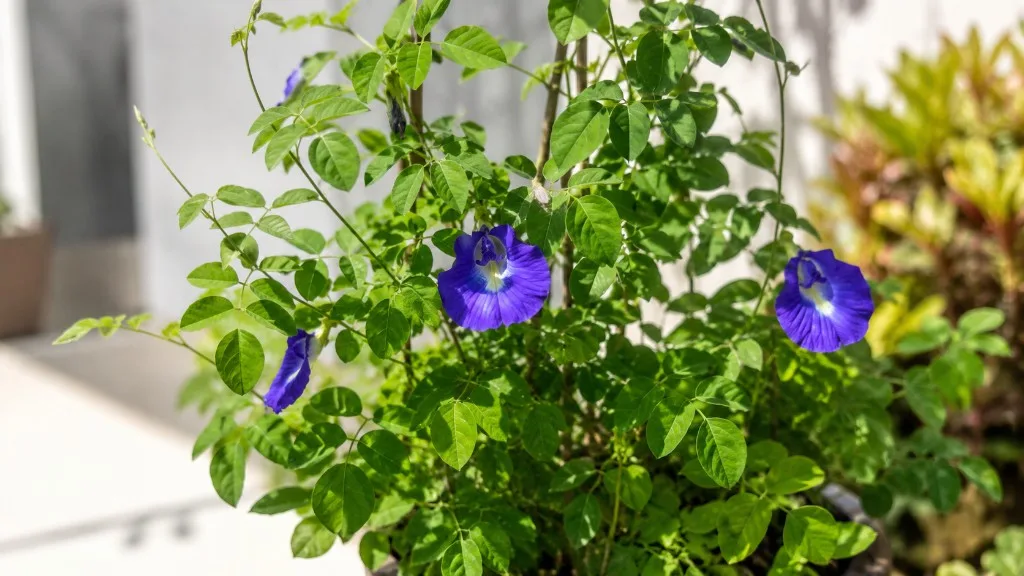
Unlike a rosette houseplant with a fixed crown, Aparajita climbs by twining slender stems that can reach 15 feet in a season when conditions are right. NC State Extension describes it as a rapidly growing trailing vine in the bean family with a long bloom season from spring through summer. Left untrained, the default habit is upward and outward extension - flowers cluster at the newest tips while lower stems go bare. Pruning redirects that energy toward lateral branches and more flowering sites along the stem you can actually see from the balcony.
Pruning also forces a close look at leaf undersides and stem joints, which helps you spot aphids, mealybugs, or fungal spots before they spread on tender new growth.
When to prune butterfly pea vines
Timing splits into maintenance during active growth and structural work aligned with the start of the growing season.
Light cuts during active growth
Pinching soft tips, deadheading wilted blooms, and snipping a stray leader belong in the window when the vine is visibly pushing new leaves - typically late spring through monsoon and into early autumn across much of India. In frost-free tropical zones, that active window can stretch nearly year-round whenever overnight temperatures stay warm and the plant receives full sun. Many balcony growers pinch every two or three weeks during peak summer flowering to prevent one stem from racing three metres past the trellis.
Hard rejuvenation before the main flush
Cutting long woody stems back hard - leaving 30–60 cm of framework with several nodes - fits late winter to very early spring, just before the strongest new flush. On a north-Indian balcony, wait until overnight lows stay consistently warm and you see buds swelling on lower nodes. Hard rejuvenation sacrifices immediate flowers for cleaner structure and vigorous new shoots. Do not combine it with Aparajita repotting guide, relocation, or corrective root work unless the plant is otherwise strong.
Emergency removal any time
Dead, blackened, mushy, or clearly diseased stems come off immediately regardless of season. Cut back to healthy green tissue, disinfecting blades between cuts if fungal or bacterial damage is present. Partially snapped stems from wind or grill friction also qualify - a clean cut above a node beats a torn hanging strip that invites rot. These sanitation cuts are not subject to the one-third foliage guideline.
What to check before you cut
Walk the plant once without cutting. Note which stems are alive versus brittle brown, whether flowers exist only at the far tip, and whether seed pods are forming. Check that the trellis or string support is in place - leggy Aparajita often means the vine is reaching for light or growing as a single leader without early pinching.
Feel the soil at root depth. Widespread yellow leaves with wet, sour-smelling mix signal root stress, not a pruning problem. A vine in deep shade will grow leggy again after you cut it unless light improves. Confirm the plant has had stable water and at least several hours of direct sun if flowering is the goal - pruning reallocates energy but does not create it.
The first cut to make
Start with sanitation only. Identify any stem that is dead, diseased, pest-ridden beyond washing, or partially broken. Cut each one back to healthy tissue, placing the blade 5–10 mm above a node on the living section. Bag diseased debris rather than composting it on a small balcony pile.
Do not pinch tips, deadhead flowers, or reshape the whole vine in the same breath until urgent tissue is removed and you have stepped back to assess the remaining framework. One clear first action prevents the common mistake of aggressive cosmetic trimming while a rotting stem still drains the plant from inside.
How to prune Aparajita step by step
After sanitation, work in order: deadhead if you want more blooms, shorten overlong leaders, pinch soft tips on stems you are keeping, then retie to support. Step back every few cuts to check overall shape. Stop while enough foliage remains - you can always trim more next week.
Pinching for bushier young vines
When a seedling or young container plant reaches about 10–15 cm on its main stem, remove the top 1–2 cm of soft growth just above a node. That early pin breaks single-leader apical dominance and encourages side shoots that become future flowering branches. Repeat on any lateral that races ahead of the rest during the first two active months after transplant.
Two or three pinching rounds in the first season often produce a small shrub-like clump on a trellis instead of one vertical string. Use snips rather than crushing firm stems between fingers - a clean cut heals more predictably on soft vine tissue.
Deadheading spent blue blooms
Butterfly pea flowers are short-lived but produced in succession during peak season. Once a bloom wilts, the plant shifts toward seed pod formation if the flower was pollinated. Snip the spent flower just below the bloom base, taking care not to damage the adjacent node where the next shoot may emerge.
If you want seeds for next season or culinary use, leave selected flowers to mature into pods and deadhead the rest. Letting every flower set seed on a small ornamental vine is the most common reason mid-season bloom drops off - the plant is doing what a legume should do, not failing. UF/IFAS Gardening Solutions notes that saving seeds at season end lets you restart butterfly pea vines without buying new plants - a deliberate choice, not the default for display pots.
Shaping and training on a trellis
Install support - string, bamboo, trellis mesh, or a balcony grill - before stems harden, because young Aparajita twines willingly while older stems resist redirection. As you prune, spread remaining stems horizontally along the support where possible; horizontal orientation often increases flowering sites compared with a single vertical leader.
Define a maximum footprint before cutting - for example, one metre wide and two metres tall on a wall trellis. Shorten any stem beyond that frame above an inward-facing node. Redirect with soft ties when you can rather than removing a stem that could flower along its length. Check ties every few weeks; stems thicken quickly and a tight wire can girdle tissue within a season.
Rejuvenation for overgrown plants
When a mature vine is a tangle of bare lower stems with growth only at the top, cut selected old stems back hard in late winter or early spring, leaving 30–60 cm of healthy stem with several nodes. The plant will look stark immediately. In warm sunny conditions, new shoots often emerge from those nodes within two to four weeks.
Scrape bark lightly with a fingernail on questionable wood - green tissue underneath suggests the stem can still resprout; dry brown wood needs cutting lower until you reach viable tissue. Skip rejuvenation on weak plants with chronic yellowing, sour soil, or recent transplant shock. Fix roots and environment first.
Where to cut - nodes, not mid-stem
Aparajita branches from leaf nodes - the slightly swollen points where a leaf petiole meets the stem - not from random mid-internode tissue. Place the blade 5–10 mm above a healthy node, with the high side of a slight angle facing away from the bud you want to encourage.
A cut far from any node leaves a stub that often dies back and looks untidy while the plant struggles to redirect growth. Missouri Botanical Garden lists Clitoria ternatea as a climbing plant commonly grown for vivid blue flowers on slender twining stems - precision at the node matters more on soft vines than brute force with large shears.
How much you can safely remove
For routine shaping, avoid removing more than one-third of the leaf-bearing growth in a single session. Leaves are the plant’s photosynthetic surface; stripping them aggressively during a cold spell, heat drought, or while roots sit in wet soil stalls recovery for weeks.
Deliberate rejuvenation on a healthy vine at the start of the active season can cut stems back to 30–60 cm above the base, but that is a once-per-season reset, not a monthly habit. Spread major reshaping across two sessions two weeks apart if the plant is large - remove some stems, wait for new shoots, then continue.
What not to cut
Do not remove the entire plant to soil level unless the base shows live green tissue and you are deliberately restarting from established roots. Avoid cutting all remaining foliage from a stressed vine hoping to “force” new growth - that usually deepens decline.
Skip discretionary shaping when the plant is wilting from drought, sitting in waterlogged soil, or showing widespread yellowing from overwatering on Aparajita. Do not shear Aparajita with hedge clippers into a formal block; the natural form is an arching twining vine, and ragged multi-wound shearing invites decay on soft stems.
Leave selected seed pods alone if seed saving is your goal, but do not wonder why ornamental bloom stopped when every flower was allowed to set pod.
Tools, sanitation, and pet-safe handling
Match the tool to stem size. Floral snips or sharp household scissors handle pinching and deadheading on young shoots. Bypass hand pruners suit stems up to about 1 cm diameter because the curved blade slices without crushing. Avoid anvil pruners on soft green tissue - they bruise the side opposite the blade.
Disinfect blades before you start and when moving between plants. Iowa State University Extension recommends wiping or dipping pruning equipment in 70% isopropyl alcohol; disinfect between cuts on the same plant when removing obviously diseased tissue.
Clitoria ternatea is not listed as toxic by the ASPCA and is widely grown as an edible and ornamental vine; large ingestions can still cause mild stomach upset in pets. Wear gloves if you prefer, keep cuttings and fallen pods off floors where pets roam, and bag pruned material promptly.
Aftercare and recovery timeline
After a moderate trim, check soil moisture at root depth before watering on autopilot. Fewer leaves transpire less water, so the pot may stay wet longer. Water when the top few centimetres are dry, let excess drain, and avoid saucers of standing water while new shoots emerge.
Keep light steady and strong. Do not move a freshly pruned vine into deeper shade to “rest” it - Aparajita needs several hours of direct sun for prolific flowering. Hold fertilizer for two to three weeks after moderate to heavy pruning; fresh nitrogen pushes weak floppy growth while the plant is still sealing wounds. Resume a light balanced feed once new shoots are visibly expanding.
Watch cut sites for ten days. Dry tan callus is normal. Blackening, oozing, or sour smell means cut lower to healthy tissue and review watering. New shoots from lower nodes are the best sign your session succeeded.
Signs pruning worked - or went too far
Success looks like: fresh green side shoots within two to four weeks during warm active growth; flowers forming along shortened stems, not only at the farthest tip; cleaner airflow through the vine interior; stable leaf color on remaining foliage.
Too far or badly timed looks like: slow or absent bud break for more than a month; new shoots that stay pale and weak; stem dieback below the cut line; continued wilting despite correct watering. If you already cut too much, stop trimming, stabilize sun and soil moisture, and wait for leaf area to rebuild before the next shaping session.
Mistakes to avoid
Pruning for appearance while ignoring the cause of poor form is the most common error. Leggy growth in shade, chronic wet roots, or a vine that reached three metres before its first cut all need environmental or staged fixes, not one dramatic hack.
Other frequent problems: dull tools that crush stems; mid-internode stubs; saving every pod while expecting continuous ornament bloom; hard pruning during cold or waterlogged stress; combining heavy cuts with repotting and fertilizer the same week. Pruning removes tissue - it does not replace better light, drainage, or support installed early.
When not to prune
Delay discretionary shaping when overnight temperatures drop near frost - Aparajita is perennial in USDA zones 10–12 but frost-sensitive elsewhere. Skip heavy work during peak heat drought if the plant is already wilting. Postpone rejuvenation on newly purchased or recently repotted vines until you see stable new growth for several weeks.
If the real problem is insufficient light, fix placement first. If soil stays wet for days, correct drainage and watering before cutting half the vine away.
Conclusion
Aparajita pruning works when the cut matches the plant’s habit as a fast twining tropical legume. Remove dead and diseased tissue first, then pinch for bushiness, deadhead for more flowers, shape during warm growth, and reserve hard rejuvenation for the pre-season moment when the vine can respond with vigorous new shoots. Cut always just above a node with sharp clean tools, respect the one-third guideline for routine foliage removal, and follow with stable sun, careful watering, and a brief fertilizer pause after heavier work. Regular light vine hygiene beats a once-a-year rescue cut - and keeps those indigo blooms along the stem you trained, not only at the tip chasing the sun.
When to use this page vs other Aparajita guides
- Aparajita overview - Start here for whole-plant context before deep-diving this topic.
- Aparajita problems hub - Jump to symptom-specific fix guides when this care topic does not resolve the issue.
- Leggy Growth on Aparajita - Escalate here when pruning adjustments are not enough.
- Slow Growth on Aparajita - Escalate here when pruning adjustments are not enough.
- Brown Tips on Aparajita - Escalate here when pruning adjustments are not enough.