How to Prune Aglaonema Maria: When, Where & What to Cut
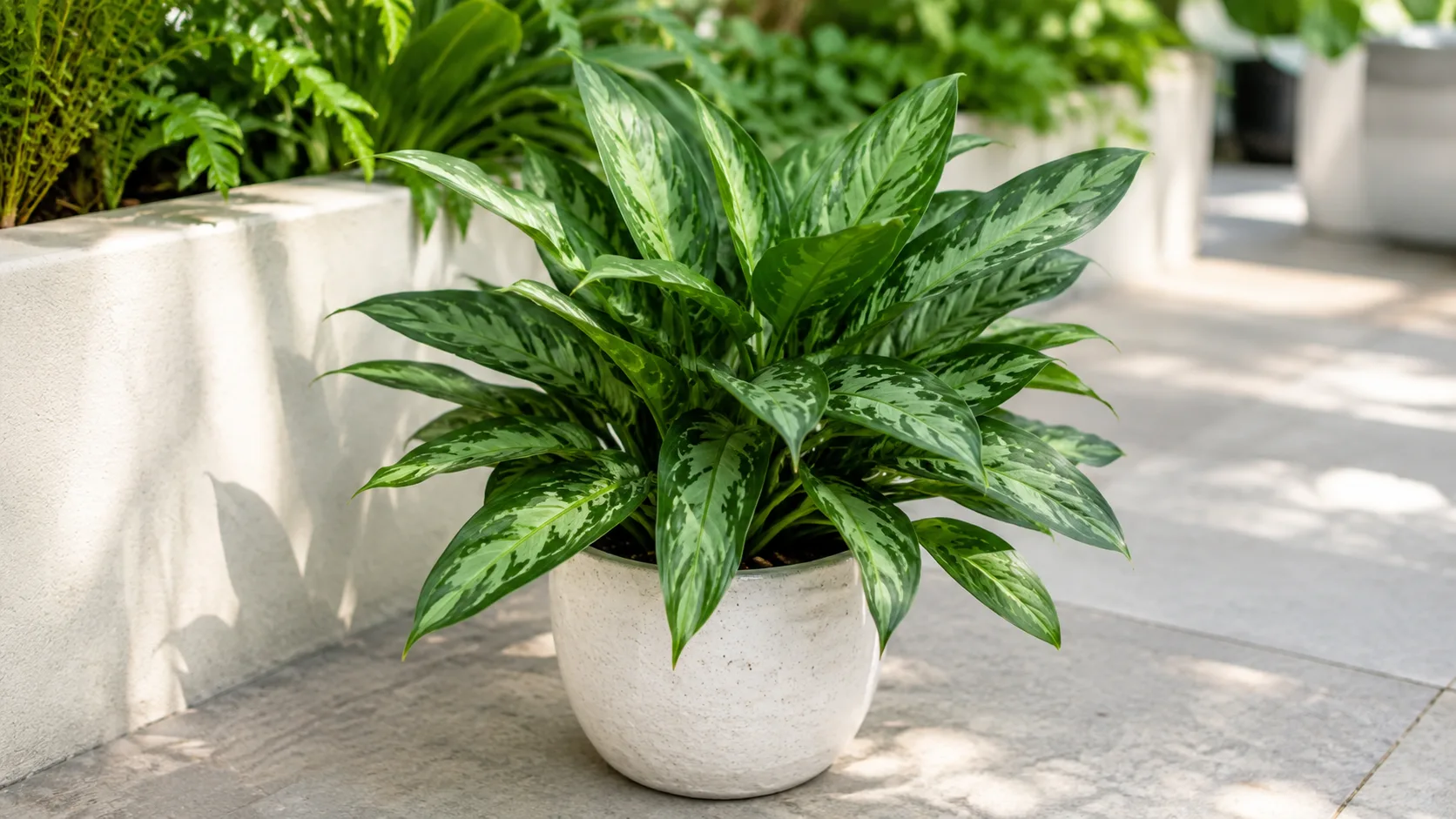
How to Prune Aglaonema Maria: When, Where & What to Cut
How to Prune Aglaonema Maria: When, Where & What to Cut
First, remove only dead, damaged, or clearly pest-infested leaves with clean, sharp scissors - cut each petiole at its base near the main stem rather than pulling tissue by hand. Aglaonema Maria (Aglaonema commutatum ‘Maria’) is a compact, silver-striped Chinese evergreen that grows slowly in low light and rarely needs scheduled shaping. For full care context - light, watering, and common problems - see the Aglaonema Maria overview.
Reviewed by LeafyPixels Review Board · Author: sai-ananth
Quick Answer
The Royal Horticultural Society lists no pruning required for Maria under normal conditions, and UF/IFAS notes that pruning is not necessary beyond removing dead or yellowing leaves. Under typical indoor conditions Maria needs little more than sanitation: trim fully yellow leaves, shorten a bare leggy cane if the silhouette bothers you, and snip optional flower stalks when you prefer foliage over blooms. When legginess is the real issue, improve indirect light before or alongside any structural cut - scissors alone cannot fix a plant stretching toward a dim corner. For genus-wide pruning comparisons, see the generic Aglaonema pruning guide.
What Pruning Does for Aglaonema Maria
Maria grows as an upright clump of stems, each carrying glossy dark green leaves brushed with silver. Lower leaves naturally senesce as the plant ages, especially in dim offices where Maria is often placed. On this cultivar, pruning usually means removing tissue that no longer helps the plant - dead lower leaves that hold moisture against the crown, a bare elongated cane you want shortened so foliage sits closer to the pot, or an optional flower stalk you would rather not maintain.
Pruning does not substitute for fixing chronically wet soil, cold drafts, or deep shade - the conditions that produce yellow leaves and stretched internodes in the first place. Every green leaf on Maria is valuable because variegated cultivars photosynthesize less aggressively than all-green types. Removing too many leaves at once reduces the plant’s energy reserves and can stall new growth for weeks on this slow-growing herbaceous perennial. Good pruning is the smallest cut that achieves a clear purpose.
Maria Compared to Genus and Silver Bay Pruning
Maria sits between plain-green Aglaonema and brighter variegated cultivars like Silver Bay in how pruning decisions feel day to day. All Chinese evergreens share the same basic cane structure and node placement, but Maria’s dark silver striping is stable variegation - not damage - and its recovery after structural cuts is slower than faster all-green types under the same indoor light.
| Trigger | Maria | All-green Aglaonema | Silver Bay (pale variegation) |
|---|---|---|---|
| Uneven leaf pattern | Stable silver striping - do not cut for symmetry | Rarely an issue | Pale sectors can look “washed” in low light - still not a cut trigger |
| Leggy bare cane | Shorten above node + improve light | Often recovers faster from tip cuts | Similar staged approach; pale leaves show stress sooner |
| Yellow lower leaf | Normal senescence; wait until mostly yellow | Same | Same, but yellow can be confused with pale variegation |
| Recovery after hard cut | Often 3–5 weeks to bud swell in warm bright conditions | Frequently quicker | Similar slow variegated pace |
This page owns Maria-specific placement and variegation handling. Use the genus pruning guide when you want cross-cultivar comparison tables and shared biology.
What to Check Before You Cut
Pause and inspect the whole plant before touching scissors. Walk through these checks in order:
- Leaf pattern - Is one lower leaf slowly yellowing (normal senescence), or are multiple leaves yellowing quickly (possible root or moisture stress)? See yellow leaves on Maria when the pattern is unclear.
- Stem firmness - Are canes upright and solid, or soft, dark, and foul-smelling near the soil? Soft stems with wet mix point to root rot - address roots before cosmetic pruning.
- Soil moisture - Does the pot feel heavy and stay wet for days? A sour smell from the drainage hole suggests root problems that pruning alone will not fix. Cross-check overwatering if several leaves yellow while soil stays saturated.
- Pests - Check leaf undersides, petiole bases, and crown crevices for mealybugs, scale, or sticky residue.
- Light placement - Maria tolerates low light, but stems stretch when the plant sits far from any window. UF/IFAS notes Aglaonema can survive at light levels as low as 25 foot-candles indoors, though growth slows and internodes lengthen in very dim conditions. Compare placement with the Maria light guide and leggy growth page when stretch is the main complaint.
If multiple leaves are yellowing while soil stays saturated, address watering and roots before structural pruning. Cutting removes symptoms while the underlying stress continues.
The First Cut to Make
Remove fully yellow, brown, collapsed, or pest-heavy leaves before considering any shaping cut. For each affected leaf, trace the petiole (leaf stalk) down to where it meets the main stem and snip cleanly at the base. Do not twist or pull firmly attached tissue - tearing damages the cane and opens a larger wound.
This single sanitation pass often finishes the job on a healthy Maria. A symmetrical plant with firm stems and mostly green foliage does not need further cutting. Only proceed to stem shortening or flower-stalk removal when a specific structural problem remains after cleanup.
Sanitation cut placement on Maria: Imagine the petiole as a short stalk emerging from the main cane. Your blade should meet the petiole at its junction with the stem - not mid-petiole, not through neighboring green tissue. On Maria’s dark canes the scar is small and heals quickly when the plant is warm and actively growing.
When to Prune Aglaonema Maria
Cleanup vs Structural Cuts
Cleanup cuts - dead, yellow, or pest-damaged leaves - can happen any time of year. Do not leave rotting tissue attached; it holds moisture against the crown and invites fungal problems.
Structural cuts - shortening a leggy cane, removing an awkward stem at its base, or taking off the leafy crown for tip propagation - belong in late spring through early summer when Maria is actively growing. Warmth and longer days support wound closure and bud activation on cut canes. Avoid major reshaping in autumn and winter when growth pauses; a stem cut in December may sit unchanged until March, and tip cuttings started in cold dim rooms root poorly.
Do not prune immediately after Aglaonema Maria repotting guide, shipping, or a cold shock. Let the plant stabilize for two to three weeks first.
Pruning becomes useful when several leaves are fully dead or pest-damaged beyond treatment, when a cane has stretched with bare tissue below a top-heavy foliage cluster, when brown tips on multiple leaves are stable and cosmetic after correcting watering or salt buildup, or when an optional arum-type flower stalk appears and you prefer foliage-focused display - UF/IFAS recommends removing inflorescences to aid plant longevity and keep the plant full. Leggy Maria shows elongated internodes and a crown far above bare cane. That silhouette usually means the plant needs slightly brighter indirect light in addition to a cut, not scissors alone.
Tools, Sanitization, and Sap Safety
Use fine pruning scissors for leaf tips and petioles. Bypass pruners handle thick mature stems cleanly. Dull blades crush succulent cane tissue and enlarge wounds.
Sterilize blades with 70% isopropyl alcohol before starting. Iowa State University Extension recommends wiping or dipping pruning equipment in ethanol or isopropyl alcohol. Disinfect between cuts when removing diseased tissue or moving between plants.
Aglaonema Maria contains insoluble calcium oxalate crystals. The ASPCA lists Chinese evergreen as toxic to cats and dogs, causing oral irritation, drooling, and difficulty swallowing if chewed. Wear gloves, avoid touching your face while handling sap, and bag trimmings securely if pets share your home. Maria should stay on elevated shelves or inaccessible displays - not floor pots where animals can reach cut debris. If a pet chews Maria or pruning trimmings, contact your veterinarian or the ASPCA Animal Poison Control Center immediately - do not wait for severe symptoms.
How to Prune Aglaonema Maria Step by Step
Work in good light so you can see stem nodes and petiole bases clearly.
- Inspect the plant from all sides. Note yellow leaves, brown tips, soft stems, and overall balance.
- Sterilize tools and put on gloves.
- Remove urgent tissue first - rot, disease, heavy pest damage - disinfecting between risky cuts.
- Cut dead leaves at the petiole base near the main stem.
- Trim brown tips by following the leaf contour, cutting just inside dead tissue only if cosmetic improvement is needed.
- Shorten leggy stems just above a node, or remove the top as a tip cutting per Clemson HGIC guidance if you want to propagate.
- Reassess shape before additional cuts. Stop if the plant looks sparse.
- Dispose of debris and wash hands and tools.
Where to Cut on Maria Stems
Nodes appear as slight ridges or rings where leaves attach to the cane. On Maria’s dark green stems they can be subtle - look for a faint horizontal line or a small bump where a petiole once emerged. For stem shortening, cut 5–10 mm above a healthy node at a slight angle, leaving firm tissue below. The cut should expose clean, pale-green or white pith - not dark, water-soaked tissue.
Node placement reference (Maria cane, side view):
     [ leafy crown ]
           |
    --------●--------  ← node (ridge where leaf attached)
           |
    .... cut here ....  ← 5–10 mm above node, angled blade
           |
    --------●--------  ← lower node (possible sprout site)
           |
      [ pot / soil ]
When several canes are leggy on one pot, shorten the most bare or weakest-looking stem first, wait for bud swell or new leaf emergence, then reassess the others. Staggering across weeks beats stripping every cane at once. Maria’s slow growth habit rewards staged rejuvenation over a single hard reset.
How Much You Can Safely Remove
Limit removal of healthy foliage to roughly one-quarter to one-third per session. Maria’s silver-variegated leaves contribute less photosynthetic capacity than all-green aglaonemas in very low light, so conservative cuts keep recovery predictable. Fully dead leaves do not count toward that limit.
Do not cut a cane back to bare soil unless the remaining tissue is firm and you are prepared to wait several weeks for new bud swell. Preserve at least one leafy stem on multi-cane plants while a cut cane recovers.
Pruning Yellow, Brown, and Dead Growth
Yellow leaves - Remove when mostly yellow and no longer firm. A single aging lower leaf is normal senescence. Multiple rapid yellowing leaves signal stress; fix moisture, light, or roots before trimming further. The yellow leaves guide walks through Maria-specific patterns when you are unsure whether senescence or stress is responsible.
Brown tips - Usually reflect watering inconsistency, fertilizer salts, or low humidity rather than a need for whole-leaf removal. The green portion of the leaf still benefits Maria. You may follow the natural leaf outline and trim only the dead edge with sanitized scissors, or leave tips unchanged while correcting care. See brown tips on Maria when margins keep returning after pruning.
Dead or rotting stems - Cut back to firm tissue, disinfecting the blade between each shortening pass. If the cross-section stays dark or soft, the rot extends further than visible foliage damage suggests. Unpot and inspect roots if stems collapse near the soil line - that is a root rot workflow, not a leaf-trimming task.
Silver Striping Is Not a Pruning Trigger
Do not cut Maria leaves because the silver pattern looks uneven. Stable silver brushstrokes on dark green tissue are normal cultivar coloration, not chlorosis. Chlorotic yellowing usually affects whole leaves or progresses quickly across several at once, often with soft texture or widespread wilt. When uncertain, photograph the leaf, compare it with newer crown foliage, and wait several days before making an irreversible cut. Maria’s dark variegation can mask early stress longer than pale cultivars - which makes patience before structural cuts especially valuable.
Pruning Leggy Stems and Optional Flower Stalks
When Maria sheds lower leaves and develops a bare lower stem, Clemson HGIC notes the top can be removed and rooted as a tip cutting while the rooted base may sprout from lower nodes. Take a section with several leaves and firm stem for rooting in moist, airy medium. Keep orientation consistent - the end that was lower on the parent plant should remain lower on the cutting. Full protocols live in the Maria propagation guide.
Move Maria gradually toward brighter indirect light after shortening a leggy cane. Cutting without improving light produces new shoots that stretch again within a few months. An east window or a few feet from a south or west window with sheer filtering works well - details in the light guide. When stretch is the primary symptom, read leggy growth on Maria before deciding how much cane to remove.
Optional flower stalks - a pale spathe with a central spadix - can be snipped near the base when they appear. UF/IFAS states that removing inflorescences aids plant longevity and keeps Maria full. Maria’s flowers are typically small and short-lived compared with other aglaonemas.
Tip propagation after pruning is optional, not automatic. In warm bright conditions rooted tip cuttings often succeed in soil or airy mix; water rooting is possible but rot risk rises when cuttings sit cold and dim in winter. If you are pruning only for shape, leaving the rooted base to sprout from lower nodes is the lower-effort path.
Aftercare and Recovery Timeline
Return Maria to bright indirect light after pruning - not harsh direct sun, which scorches leaves adapted to dim conditions. Water when the top half of soil dries, the same rhythm described in the watering guide. A smaller canopy uses less water; check moisture before assuming the old schedule still applies.
Hold fertilizer for two to three weeks after a substantial cut, then resume light feeding during active growth per the fertilizer guide. Expect a pause before new leaves appear. In warm, bright conditions, bud swell on a cut stem may show within three to five weeks. Out-of-season pruning can double that timeline on this slow cultivar - Maria often waits longer than all-green Aglaonema in the same room because variegated tissue rebuilds reserves more slowly in low light.
Signs pruning worked: new leaves emerge from nodes below a cut, yellowing stops after sanitation, and the plant maintains firm upright stems. Signs pruning was too aggressive or badly timed: prolonged stall with no bud activity, widespread wilt after a major session, or continued yellowing despite corrected care.
When Not to Prune Maria
Skip major pruning when:
- The plant was recently repotted, shipped, or moved to a colder room - wait two to three weeks
- Soil stays chronically wet and stems feel soft - address roots first
- Growth has simply paused in winter - patience, not scissors, is the correct response
- The plant looks healthy and balanced - Maria does not need preventive trimming
- You plan to fertilize heavily to “push” recovery - stabilize light and water first
Mistakes to Avoid
Pruning without fixing light is the most common long-term error. Maria in deep shade stretches after every cut. Improve indirect light first, then prune.
Removing too many leaves at once leaves a sparse plant with little energy for recovery. Spread major work across sessions spaced several weeks apart.
Pulling petioles by hand tears stem tissue. Always cut cleanly with sterilized blades.
Pruning during root rot or overwatering stress removes symptoms while damage continues. Unpot and inspect roots if multiple leaves yellow while soil stays wet.
Ignoring sap safety puts pets and sensitive skin at risk. Treat trimmings as seriously as the intact plant.
Cutting variegated leaves for uneven silver pattern wastes photosynthetic tissue. Silver striping is normal on Maria, not damage - see the callout above.
Shortening every leggy cane in one session on a multi-cane plant strips too much photosynthetic surface. Stagger structural work and keep at least one full leafy stem while others recover.
Conclusion
Aglaonema Maria pruning is restraint supported by precise action. Remove dead or dangerous tissue first, trim cosmetic brown edges only when they bother you, and shorten bare stems when a structural reset genuinely helps - always paired with slightly better indirect light when legginess is the underlying issue. Make clean cuts above nodes with sanitized tools, keep sap and trimmings away from pets, and let this slow, silver-striped cultivar rebuild at its own pace. A healthy Maria rarely needs a pruning calendar - inspect regularly, link out to the right care or problem page when symptoms point beyond scissors, and cut only with clear purpose.
When to use this page vs other Aglaonema Maria guides
- Aglaonema Maria overview - Start here for whole-plant context before deep-diving this topic.
- Aglaonema Maria problems hub - Jump to symptom-specific fix guides when this care topic does not resolve the issue.
- Leggy Growth on Aglaonema Maria - Escalate here when pruning adjustments are not enough.
- Slow Growth on Aglaonema Maria - Escalate here when pruning adjustments are not enough.
- Brown Tips on Aglaonema Maria - Escalate here when pruning adjustments are not enough.