Best Bathroom Plants - Humidity-Loving Picks
Plants that enjoy humidity from showers and tolerate bathroom light.
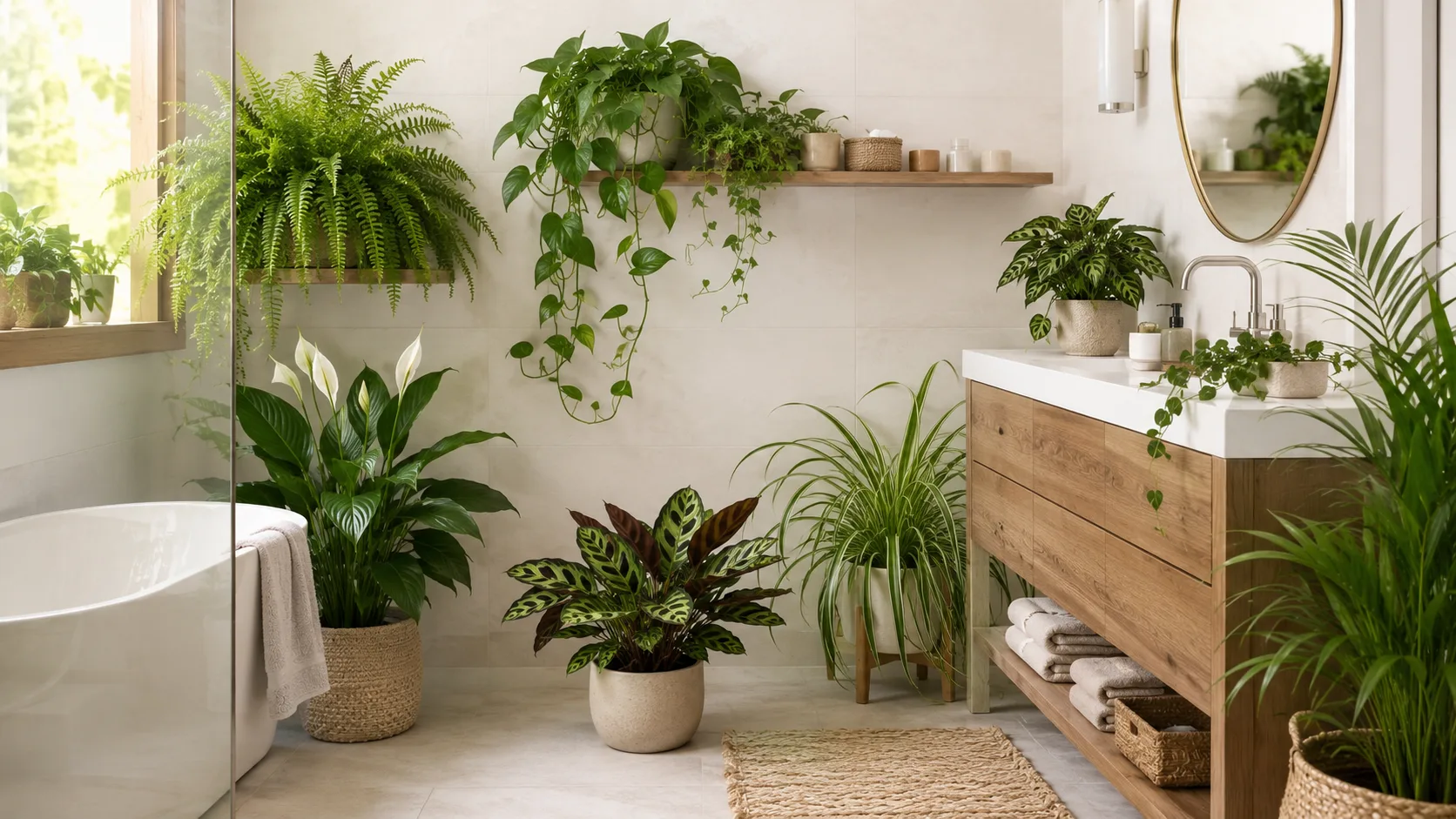
Best Bathroom Plants
Quick recommendation
Boston fern, pothos, and calathea love bathroom humidity.
Best Bathroom Plants - Humidity-Loving Picks
Plants that enjoy humidity from showers and tolerate bathroom light.
Quick recommendation
Boston fern, pothos, and calathea love bathroom humidity.
A bathroom plant should do more than look good on a shelf above the toilet. It should tolerate the humidity swings from showers, survive the light you actually get through frosted or small windows, and not turn into a brown, soggy mess because the room stays damp but the pot never drains. The best bathroom pick is rarely the plant with the prettiest nursery tag. It is the one whose moisture and light needs match your specific bathroom—not a Pinterest photo of a windowless spa.
If you want a filterable quick list from LeafyPixels plant metadata, this page’s featured plants appear in our database filters. This guide goes deeper: humidity reality checks, a comparison table by light and care level, pet-safety notes where relevant, and links to full species care on LeafyPixels.
The ten best bathroom plants for most homes are Boston fern, bird’s nest fern, maidenhair fern, calathea, prayer plant, philodendron, pothos, English ivy, spider plant, and parlor palm. They are not interchangeable—some need daily attention, some tolerate neglect, and some are toxic to pets.
Bathrooms feel humid because hot showers release water vapor. That extra moisture can reduce leaf crisping for ferns and prayer plants compared with a dry living room. University extension guidance on indoor plants consistently lists humidity among core success factors alongside light, water, temperature, and drainage. (University of Georgia Extension)
What steam does not do: replace watering, fix dark rooms, or compensate for pots sitting in saucers of stagnant water. A bathroom with no window still fails most plants regardless of humidity. A bathroom with a frosted window that gets several hours of diffuse daylight is a different story—pothos, spider plant, and parlor palm often do well there.
Editor note (drainage): In small bathrooms, the most common failure is not underwatering—it is a decorative pot with no drain hole sitting on a wet vanity. Lift the pot after showers; if the saucer holds water for days, add drainage or move the plant.
For the classic humid-bathroom fern look, choose Boston fern. It thrives when shower steam and consistent moisture align. It struggles in windowless or rarely used guest baths.
For the easiest trailing plant on a shower shelf, choose pothos. It tolerates moderate humidity, handles frosted-window light, and forgives missed waterings better than any fern on this list.
For patterned leaves without Boston fern’s constant thirst, choose prayer plant or calathea—but only if your bathroom gets real daylight and you will not let soil go bone-dry.
For a low-light windowless bathroom with only artificial light, skip the ferns and start with pothos or parlor palm. Add a small grow light before buying a third plant.
For pet-aware homes, prefer spider plant, parlor palm, Boston fern, and calathea (ASPCA non-toxic). Avoid pothos, philodendron, and English ivy within pet reach—they are toxic if chewed.
Judge each candidate against four factors: light, humidity fit, drainage, and your watering discipline.
A frosted bathroom window often delivers medium indirect light—enough for pothos, spider plant, and parlor palm. Maidenhair fern and calathea want brighter diffuse light; they decline in dim baths. If you shower with the door closed and the window is small, assume lower light than you think.
A daily hot shower helps ferns. A powder room used twice a week does not create greenhouse conditions. Bird’s nest fern and prayer plant benefit from humidity but still need you to water on schedule.
Bathroom air can be humid while soil stays waterlogged in a sealed cachepot. Use pots with drain holes, empty saucers after watering, and never let the pot sit in standing shower runoff.
These ten were chosen for humidity tolerance, realistic bathroom light fit, nursery availability, and LeafyPixels care coverage—not because they are the only plants ever placed in bathrooms.
We prioritized species that benefit from or tolerate elevated humidity, then ranked by how forgiving they are when bathroom conditions are imperfect: irregular showers, cool winter tiles, or frosted glass cutting light. We excluded succulents and cacti that rot in humid rooms, and large floor palms that outgrow typical bath layouts—see our large indoor plants guide for bigger spaces.
| Plant | Best For | Typical Size | Light | Care Level | Humidity Benefit | Main Trade-Off |
|---|---|---|---|---|---|---|
| Boston fern | Steamy daily-use baths | 12–24 in. arching | Bright–medium indirect | Medium | High | Needs steady moisture |
| Bird’s nest fern | Shelves, modern baths | 12–18 in. rosette | Medium indirect | Medium | High | Crown must stay dry |
| Maidenhair fern | Bright humid baths | 12–18 in. delicate | Bright indirect | Demanding | High | Unforgiving if soil dries |
| Calathea | Patterned leaves | 12–24 in. | Medium indirect | Demanding | High | Crispy tips in dry air |
| Prayer plant | Pattern without calathea fuss | 10–18 in. | Medium indirect | Medium | High | Fluoride-sensitive tips |
| Philodendron | Trailing shower corner | Vines 6–10 ft | Medium indirect | Easy | Medium | Toxic to pets |
| Pothos | Beginners, frosted windows | Vines 6–10 ft | Low–medium indirect | Easy | Medium | Toxic to pets |
| English ivy | Hanging, cool humid air | Trailing vines | Medium indirect | Medium | Medium | Toxic; pest-prone indoors |
| Spider plant | Family baths, bright window | 12–24 in. | Bright–medium indirect | Easy | Medium | Loves humidity, not wet soil |
| Parlor palm | Low-light bath corners | 2–4 ft | Low–medium indirect | Easy | Medium | Brown tips if air is dry |
Best for: daily-use bathrooms with a window, hanging baskets, owners who can water often.
Difficulty: Medium
Light: Bright to medium indirect
Water: Keep evenly moist; every 3–5 days in growth season
Best placement: Hanging basket near shower, not in direct water stream
Pet safety: Non-toxic to cats and dogs (ASPCA)
Typical indoor size: 12–24 inches of arching fronds
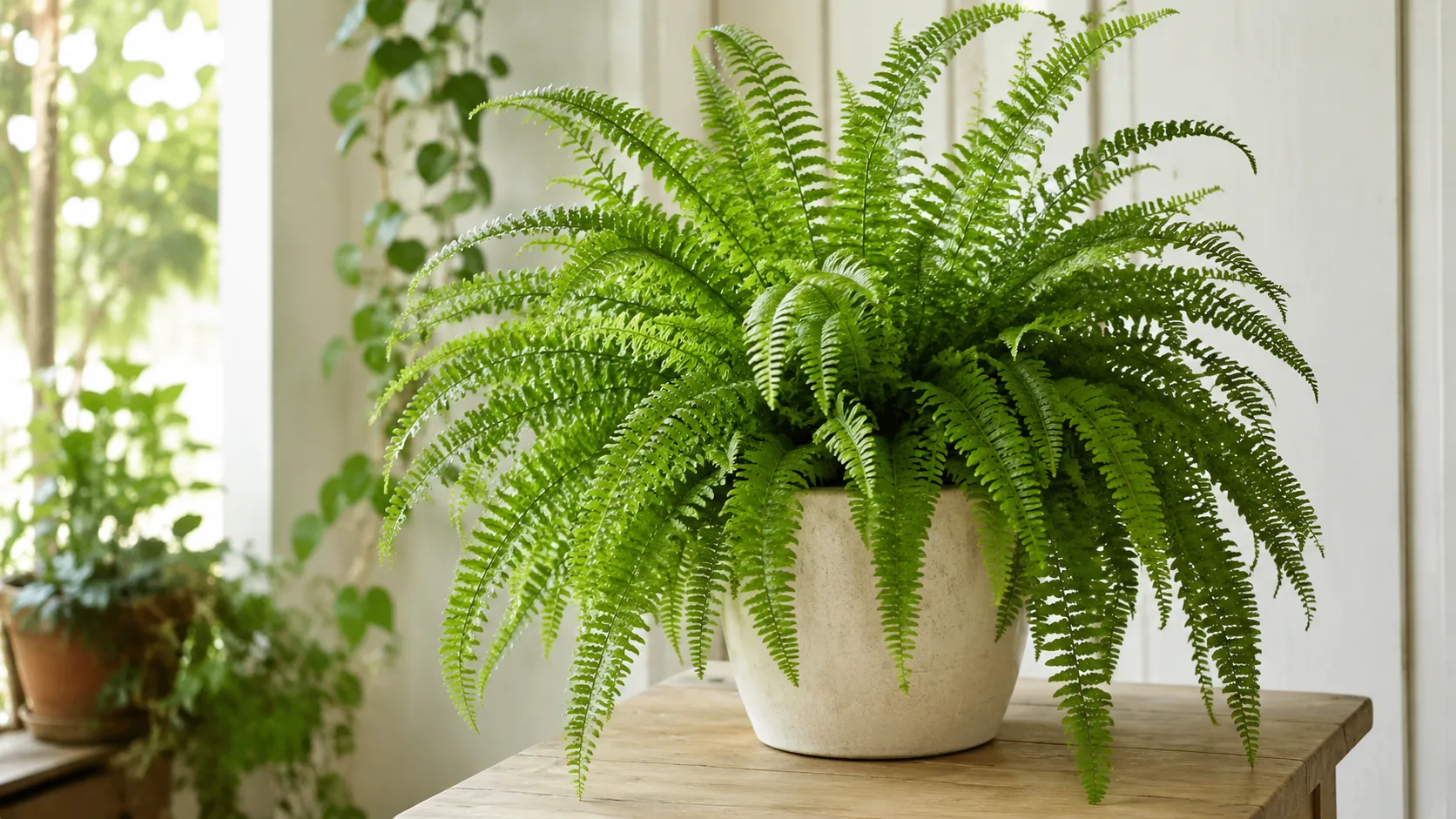
Boston fern (Nephrolepis exaltata) is the plant people picture for bathroom greenery—and for good reason. Shower steam reduces the chronic leaf-tip browning that plagues Boston ferns in dry living rooms. The care reality still demands evenly moist soil and drainage; humidity alone will not save a fern in a dark, unused bath.
Why it works: Lush true-fern texture that visibly perks up with bathroom humidity.
Who it is for: Growers who shower daily and have a bright enough window.
Care reality: Check soil every few days; fronds brown fast when roots dry or sit wet.
Common mistake: Placing in a guest bath with no window and rare showers.
Limitation: Not forgiving enough for windowless or low-traffic bathrooms.
Useful care guides:
Best for: modern bathrooms, shelf displays, owners who want fern look with less frond chaos.
Difficulty: Medium
Light: Medium indirect; avoid harsh sun
Water: When top inch dries; keep steady moisture
Best placement: Counter shelf away from splashing water
Pet safety: Non-toxic to cats and dogs (ASPCA)
Typical indoor size: 12–18 inch rosette
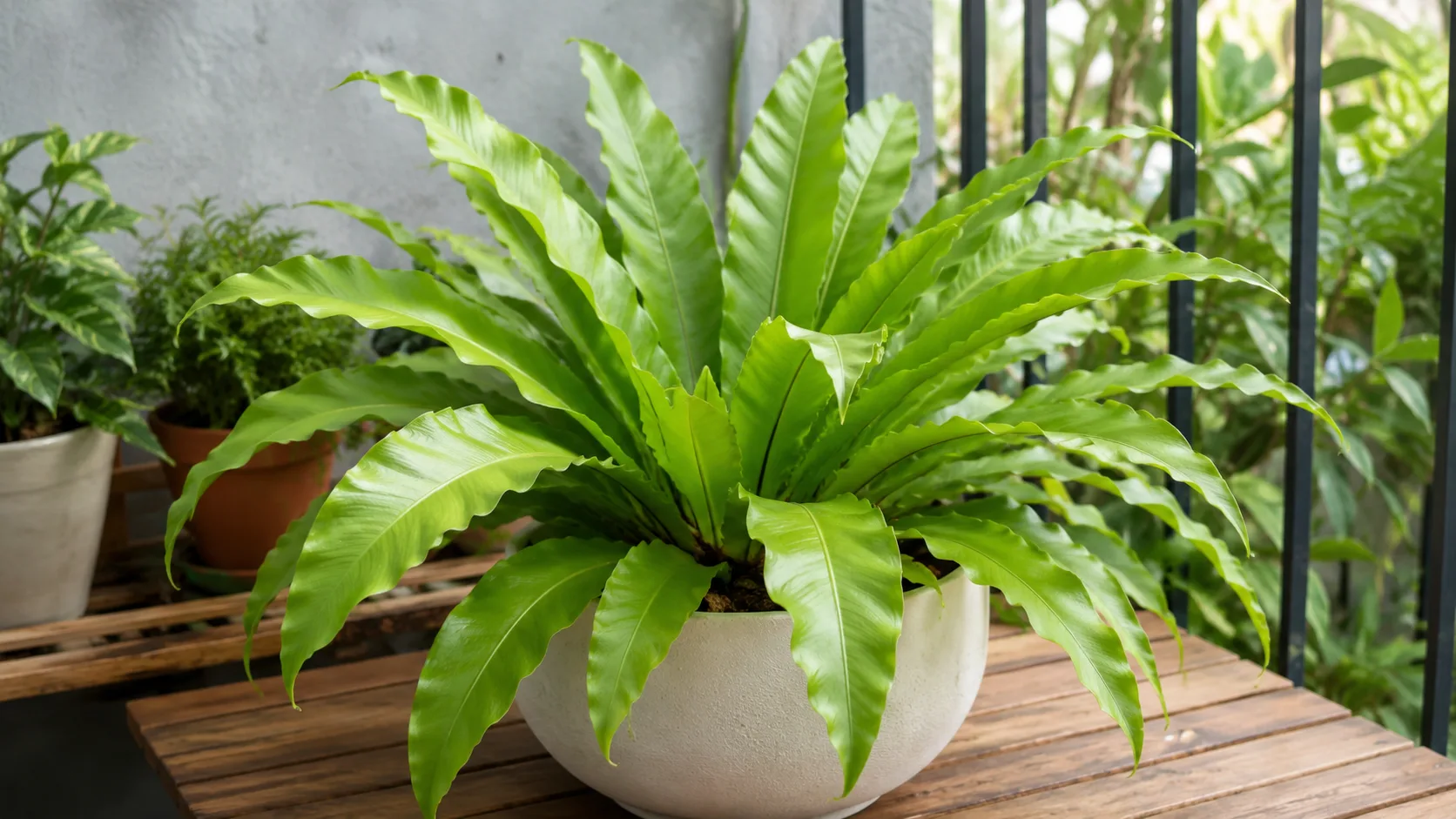
Bird’s nest fern (Asplenium nidus) grows from a central crown that must stay dry—water the soil, not the rosette center. Bathroom humidity keeps leaf edges supple, but splashing shower water into the crown causes quick rot.
Why it works: Sculptural rosette form fits small bath shelves better than sprawling Boston fern.
Who it is for: Design-focused baths with moderate light and careful watering.
Care reality: Likes humidity but hates waterlogged crowns and cold drafts.
Common mistake: Misting the center rosette instead of watering soil.
Limitation: Less tolerant of neglect than pothos or spider plant.
Useful care guides:
Best for: bright bathrooms, dedicated fern growers, high-humidity setups.
Difficulty: Demanding
Light: Bright indirect; weak in dim baths
Water: Keep soil consistently moist, never soggy
Best placement: Bright windowsill bath with daily shower use
Pet safety: Non-toxic to cats and dogs (ASPCA)
Typical indoor size: 12–18 inches of delicate fronds
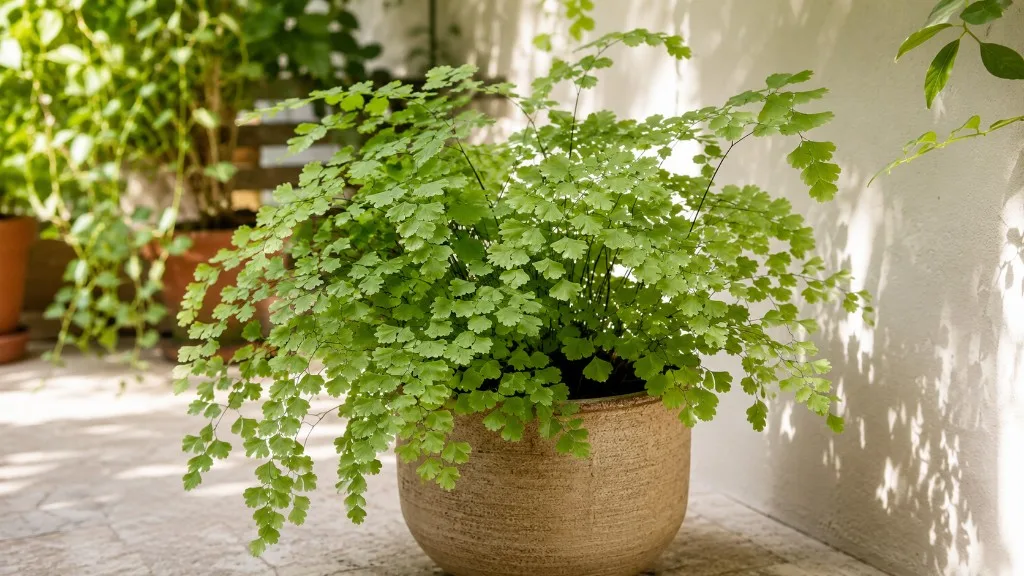
Few plants look as elegant in a bright bathroom—and few forgive mistakes as little. Maidenhair fern (Adiantum raddianum) wilts overnight when soil dries. Shower steam helps, but it is not a substitute for attentive watering.
Why it works: Fine texture unmatched by tougher bathroom candidates.
Who it is for: Experienced growers with bright bath windows.
Care reality: Treat as a high-maintenance resident, not a set-and-forget shelf plant.
Common mistake: Buying for a frosted-window bath with only medium light.
Limitation: Poor choice for beginners or rarely used bathrooms.
Useful care guides:
Best for: patterned leaves, warm humid baths, owners past their first easy plant.
Difficulty: Demanding
Light: Medium indirect
Water: When top inch dries; steady moisture
Best placement: Shelf with window light; avoid heating vents
Pet safety: Non-toxic to cats and dogs per ASPCA—chewing can still upset stomachs
Typical indoor size: 12–24 inches
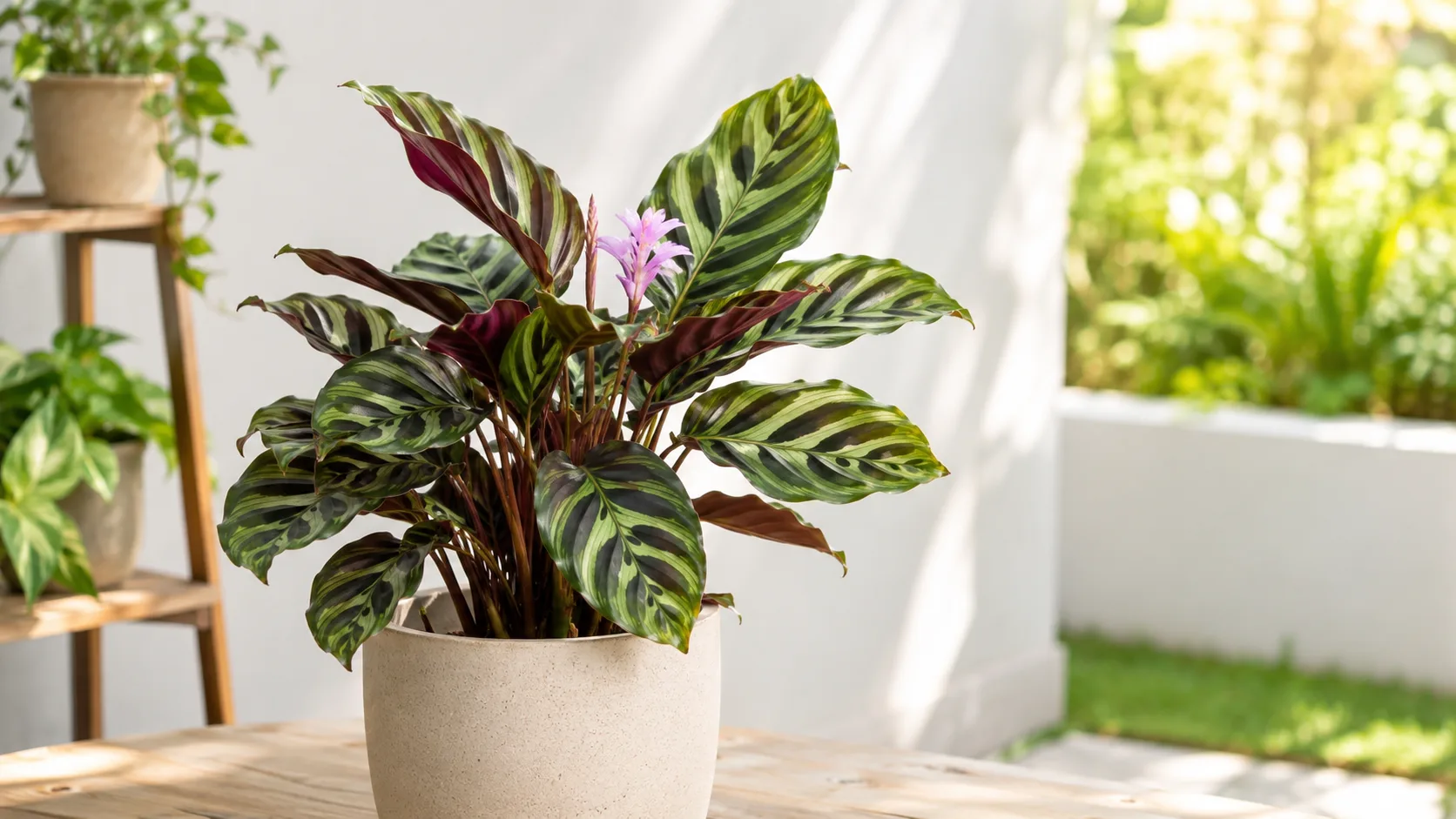
Calathea brings the graphic leaves people want in “jungle bathrooms.” Shower humidity reduces brown edge crisping, but calatheas still react to cold drafts, fluoride in tap water, and soggy soil.
Why it works: Bold patterns that benefit more from bathroom humidity than a dry bedroom.
Who it is for: Attentive growers with medium-light baths.
Care reality: Humidity helps; it does not eliminate sensitivity to water quality and temperature swings.
Common mistake: Overwatering because the room feels humid while soil stays wet.
Limitation: More demanding than prayer plant for many homes; not a low-maintenance humidity shortcut.
Useful care guides:
Best for: patterned foliage with easier temperament than calathea, medium-light baths.
Difficulty: Medium
Light: Medium indirect
Water: When top inch dries
Best placement: Counter near window, away from direct shower spray
Pet safety: Non-toxic to cats and dogs (ASPCA)
Typical indoor size: 10–18 inches
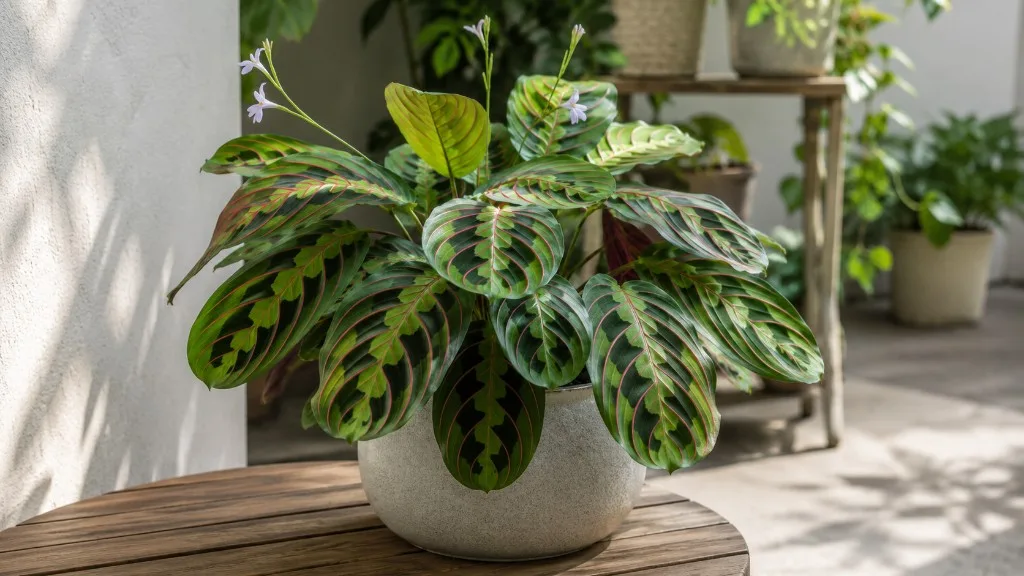
Prayer plant (Maranta leuconeura) folds leaves upward at night—normal, not distress. Bathroom humidity supports the steady moisture it wants without the constant fuss of maidenhair fern.
Why it works: Pet-safe pattern plant that genuinely uses bathroom humidity.
Who it is for: Growers who want calathea aesthetics with slightly more forgiveness.
Care reality: Still needs consistent moisture; dry winter heating defeats shower steam.
Common mistake: Ignoring brown tips from tap water fluoride.
Limitation: Declines in dark or rarely steamed bathrooms.
Useful care guides:
Best for: trailing corners, shower-adjacent hooks, moderate-light baths.
Difficulty: Easy
Light: Medium indirect; tolerates lower light than ferns
Water: When top 2 inches dry
Best placement: Hanging hook or high shelf with trailing vines away from towels
Pet safety: Toxic if ingested
Typical indoor size: Vines reaching 6–10 feet over time
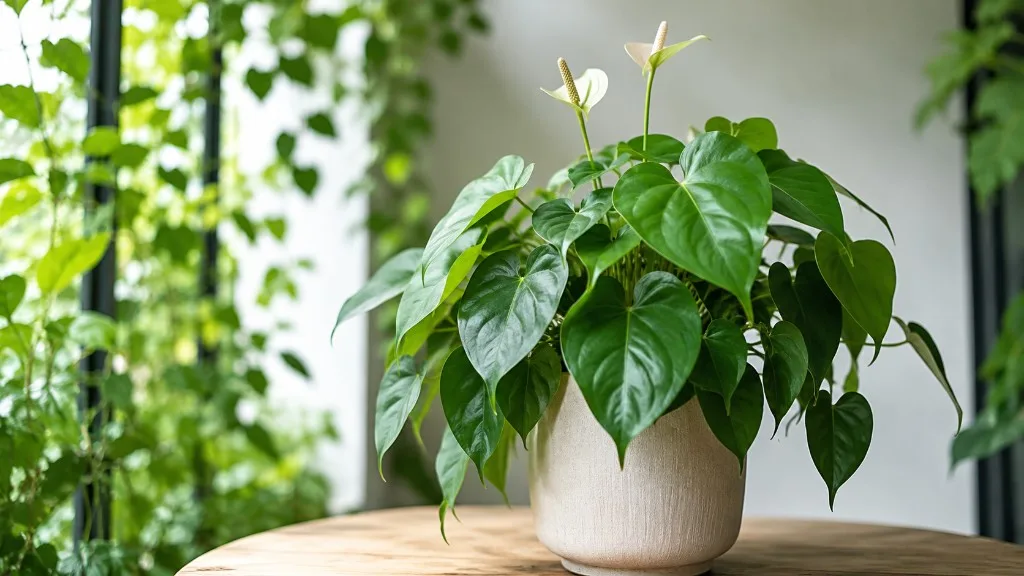
Philodendron handles bathroom life better than most tropicals because it tolerates moderate light and intermittent drying. Heart-leaf types stay manageable in small baths; humidity is a bonus, not a requirement.
Why it works: Trailing habit softens tile and glass without fern-level watering.
Who it is for: Beginners who want vertical green in a medium-light bath.
Care reality: Forgiving of missed waterings; less forgiving of dark, waterlogged pots.
Common mistake: Letting vines sit in wet towels or pooled shower water.
Limitation: Toxic to cats and dogs—choose spider plant for pet baths.
Useful care guides:
Best for: first bathroom plant, frosted windows, low-maintenance trailing green.
Difficulty: Easy
Light: Low to medium indirect
Water: When top 2 inches dry
Best placement: Shelf, windowsill, or hanging basket in medium-light bath
Pet safety: Toxic if ingested
Typical indoor size: Vines 6–10 feet; trim to control
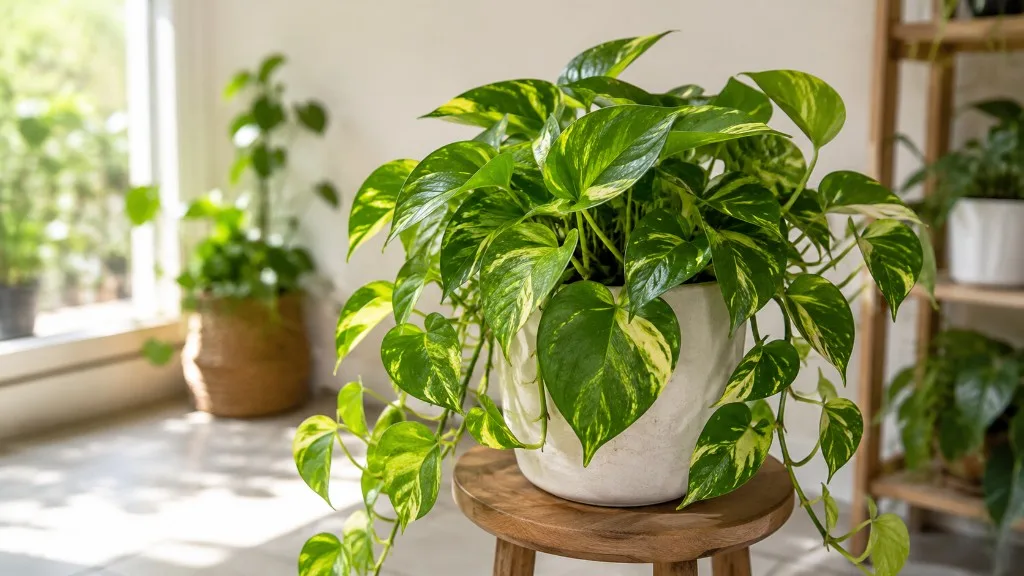
If you buy one bathroom plant and are unsure of your light, buy pothos. It survives frosted glass, tolerates humidity swings, and recovers from occasional overwatering better than ferns. It will not look as lush in a dark bath, but it will live—ferns may not.
Why it works: Highest forgiveness on this list for real-world bathrooms.
Who it is for: Renters, beginners, and low-light frosted-window baths.
Care reality: Grows slower in dim light; still needs drainage.
Common mistake: Assuming bathroom humidity removes the need to check soil.
Limitation: Toxic to pets; vines reach for towels and toothbrushes—trim often.
Useful care guides:
Best for: hanging baskets, cool humid air, experienced growers who accept pest vigilance.
Difficulty: Medium
Light: Medium indirect; cooler temps than tropicals
Water: When top inch dries; avoid constant sogginess
Best placement: Hanging basket with air circulation
Pet safety: Toxic if ingested
Typical indoor size: Trailing vines several feet
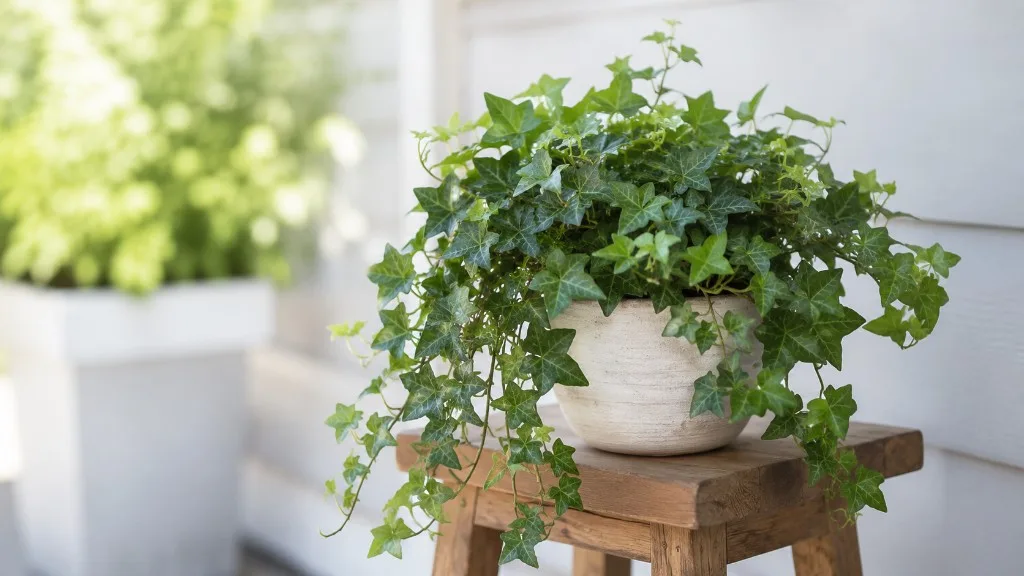
English ivy (Hedera helix) enjoys the cool, humid air of many bathrooms more than hot, dry living rooms. Indoors it attracts spider mites when air is stale—bathroom ventilation helps if you run the fan.
Why it works: Classic trailing form for shower-adjacent hanging displays.
Who it is for: Growers who inspect leaves monthly for pests.
Care reality: Humidity helps; poor airflow and wet soil still cause decline.
Common mistake: Keeping ivy in a dark bath—it needs decent daylight.
Limitation: Toxic to pets; mite-prone without airflow.
Useful care guides:
Best for: family bathrooms, pet-aware homes, bright frosted windows.
Difficulty: Easy
Light: Bright to medium indirect
Water: When top 2 inches dry
Best placement: Hanging basket or high shelf
Pet safety: Non-toxic to cats and dogs (ASPCA)
Typical indoor size: 12–24 inches with arching spiderettes
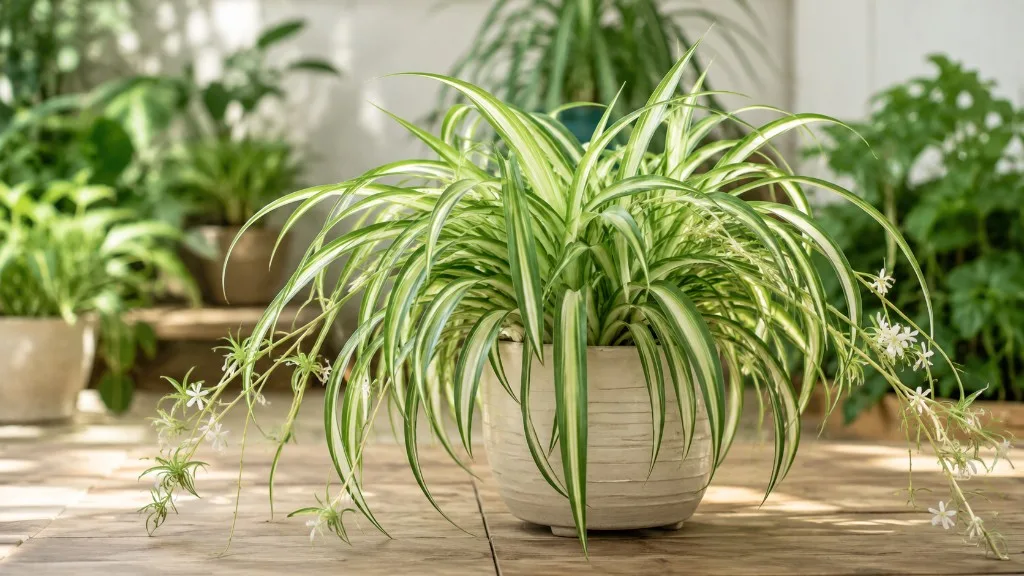
Spider plant is one of the few easy bathroom plants that is also pet-safe. It enjoys humidity but rots in waterlogged soil—common in overwatered bath pots.
Why it works: Combines beginner care with ASPCA non-toxic status.
Who it is for: Households with kids or pets and a reasonably bright bath.
Care reality: Likes steam; still needs dry-down between waterings.
Common mistake: Overwatering because the room feels damp.
Limitation: Spiderettes attract curious pets even when non-toxic.
Useful care guides:
Best for: low-light bath corners, floor pots, low-maintenance humidity bonus.
Difficulty: Easy
Light: Low to medium indirect
Water: When top 3–5 cm dries
Best placement: Floor corner with frosted window or transom light
Pet safety: Non-toxic to cats and dogs (ASPCA)
Typical indoor size: 2–4 feet indoors
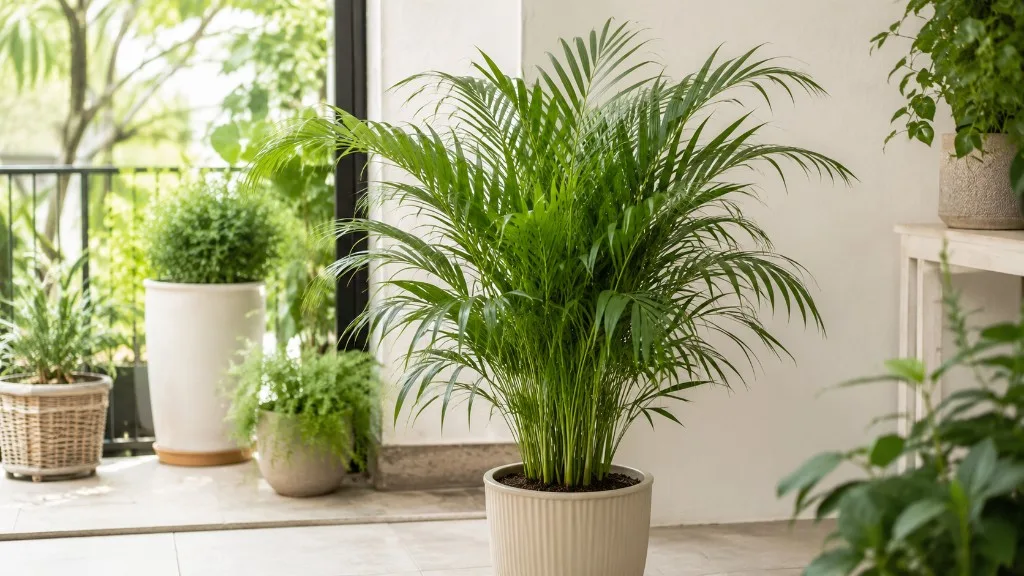
Parlor palm (Chamaedorea elegans) tolerates lower bathroom light better than ferns. Shower steam reduces brown tip frequency, though dry winter heating can still crisp fronds.
Why it works: Palm elegance in dimmer baths where ferns fail.
Who it is for: Owners who want floor-scale green without daily watering.
Care reality: Slow grower; declines slowly enough to correct watering mistakes.
Common mistake: Placing in hot direct sun through clear bath glass.
Limitation: Not a fast fix for a bare wall—growth is gradual.
Useful care guides:
Assuming steam replaces watering. Humid air reduces transpiration stress; roots still need a rhythm.
No drainage because “it is already wet in here.” Stagnant soil kills more bathroom plants than dry air.
Choosing ferns for windowless baths. Without supplemental light, start with pothos or parlor palm.
Ignoring pet toxicity. Many easy bathroom trailers—pothos, philodendron, ivy—are toxic if chewed.
Placing plants in the direct shower stream. Constant leaf wetting encourages fungal spots even in humidity-loving species.
The best bathroom plant matches your light, shower frequency, and watering habits—not just humidity marketing. Pothos and spider plant are the safest starting points for most baths. Boston fern and prayer plant reward daily hot showers and bright enough windows. Maidenhair fern and calathea are for growers who enjoy the challenge.
Start with one plant in a pot with drainage, observe it for two weeks, then expand. For species-level watering, light, and troubleshooting, follow the LeafyPixels care guides linked in each section above.
This Best Bathroom Plants plant list was researched and written by . Plant picks, rankings, and suitability notes for Best Bathroom Plants are checked against LeafyPixels plant metadata, care requirements, pet-toxicity references, and practical indoor suitability.
We prioritize sources that hold up under scrutiny:
The LeafyPixels editorial team then reviews the draft for clarity, step-by-step usefulness, and fit with real apartment and home conditions-not ideal greenhouse setups. When guidance changes materially, we update the page and note the revision date.