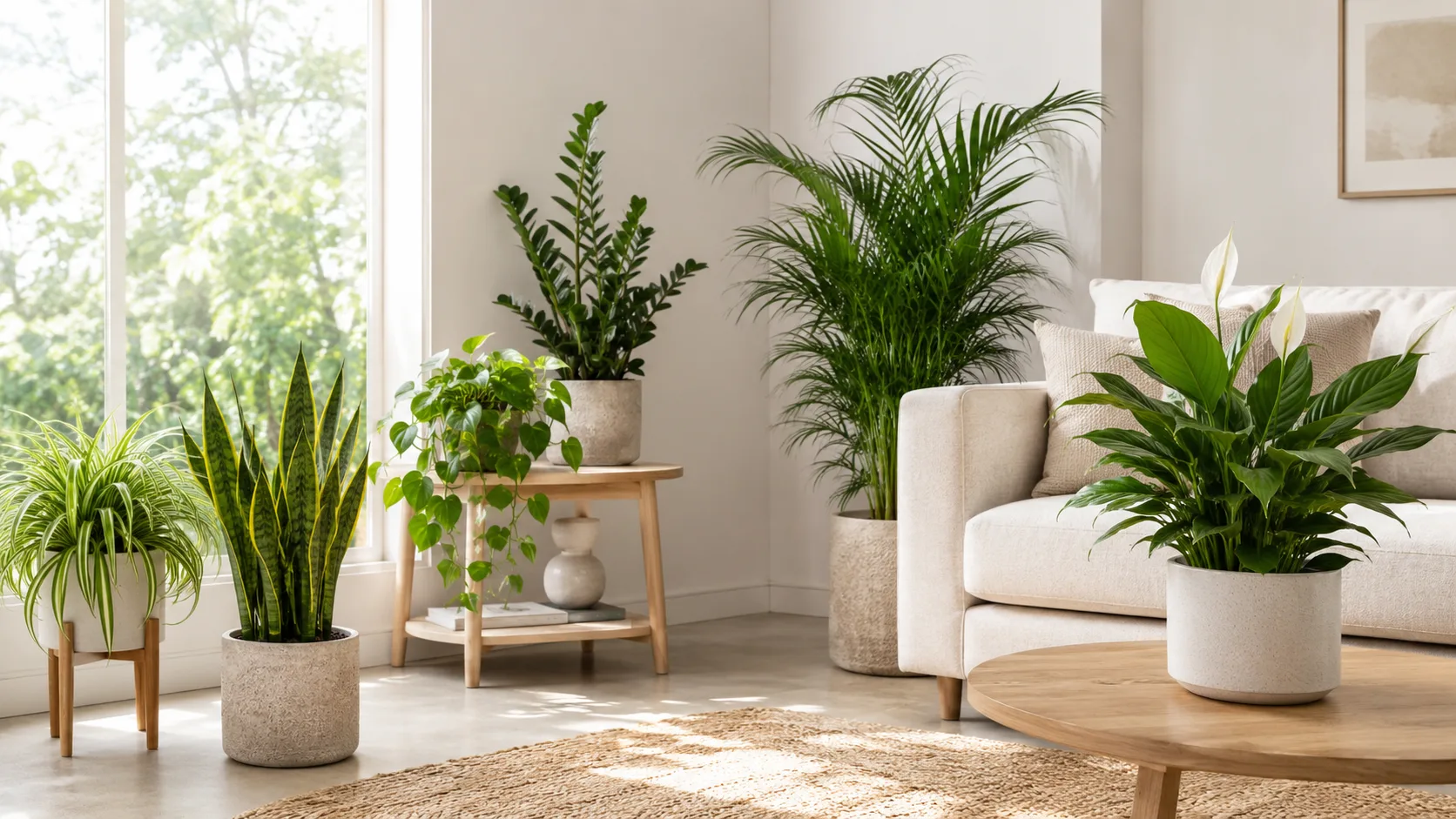
Houseplants are often sold as natural air purifiers—especially lists recycling NASA research from the 1980s. The better question is not “which plant removes the most formaldehyde in a sealed chamber?” but “which plants will I keep alive in my actual room, and what changes will I realistically notice?” Healthy plants can make spaces feel calmer, slightly more humid, and more lived-in. They should not be treated as replacements for ventilation, source control, or mechanical filtration.
If you want a filterable quick list from LeafyPixels plant metadata, this page’s featured plants appear in our database filters. This guide goes deeper: honest NASA context, a comparison table by real-world fit, and links to full species care on LeafyPixels.
The ten houseplants people most often choose for cleaner-feeling rooms are snake plant, spider plant, areca palm, Boston fern, rubber plant, peace lily, dracaena, pothos, ZZ plant, and English ivy. Several appeared in NASA’s chamber tests—but that is not the same as ranking them as home air filters.
What NASA Actually Showed—and What It Did Not
NASA’s widely cited 1989 study, “Interior Landscape Plants for Indoor Air Pollution Abatement,” tested potted plants in sealed chambers with activated-carbon soil filters and continuous VOC injection. Certain species removed measurable amounts of compounds like benzene and formaldehyde under those controlled conditions. (NASA Technical Reports Server)
Later researchers pointed out the gap between chambers and homes: realistic room volumes, ongoing pollutant sources, ventilation exchange, and the plant density required would mean dozens to hundreds of plants per room before approaching meaningful pollutant reduction at human scale. The EPA’s indoor air quality guidance emphasizes eliminating sources, improving ventilation, and using appropriate filtration—not relying on houseplants as primary treatment. (U.S. EPA Indoor Air Quality)
What plants can still do at home:
- Modestly increase local humidity near foliage
- Remove dust from leaf surfaces when you wipe them
- Improve perceived comfort and well-being (real, if subjective)
- Encourage better room habits (opening windows, reducing clutter)
What to do instead for air quality: ventilate, fix moisture problems, choose low-VOC furnishings, and use HVAC or portable filtration where needed.
Quick Pick: Best Plant for Your Situation (Not Your VOC Chart)
For the easiest plant you will actually keep healthy, choose snake plant or ZZ plant. Survivability matters more than chamber rankings if the alternative is a dead “air purifier.”
For pet-aware homes, choose spider plant or areca palm (ASPCA non-toxic). Many NASA-list plants—including pothos, peace lily, and dracaena—are toxic if chewed.
For noticeable humidity in dry rooms, choose Boston fern or areca palm—if you can meet their water and light needs.
For low-light offices and bedrooms, choose snake plant, ZZ plant, or pothos before buying a peace lily for a dark corner.
For a large bright living room, choose rubber plant or dracaena for visual impact—not because either replaces an air purifier.
How to Choose—Fit First, Claims Second
Rank candidates by light, care level, pet safety, and whether you will maintain them—then use NASA history as background, not a shopping list.
Healthy Leaves Do More Than Stressed Ones
A thriving pothos transpires and photosynthesizes; a declining one sheds leaves and invites mold in wet soil. Air-quality conversations often ignore that plant health is the prerequisite for any biological benefit.
Size and Leaf Surface Area
Larger canopies can modestly affect local humidity. They also need more space, light, and watering discipline.
Do Not Ignore Toxicity
Marketing lists rarely mention that peace lily, pothos, dracaena, English ivy, and rubber plant are toxic to pets. Choose spider plant or areca palm when cats or dogs chew foliage.
How We Selected These Ten
These ten appear repeatedly in air-quality plant lists and NASA-derived roundups. We reordered them by practical indoor fit and LeafyPixels care depth, not by chamber VOC removal rates—which do not map cleanly to living rooms.
We excluded species with weak nursery availability or thin care coverage, and we surface pet-toxicity limits honestly even when a plant is “classic” on air-purifying blogs.
Air-Quality Plant Comparison Table
Snake Plant
Best for: beginners, low light, set-and-forget rooms.
Difficulty: Easy
Light: Low to medium indirect
Water: Every 2–4 weeks typical
Best placement: Floor corner, office, bedroom nightstand
Pet safety: Toxic if ingested
Typical indoor size: 12–36 inches
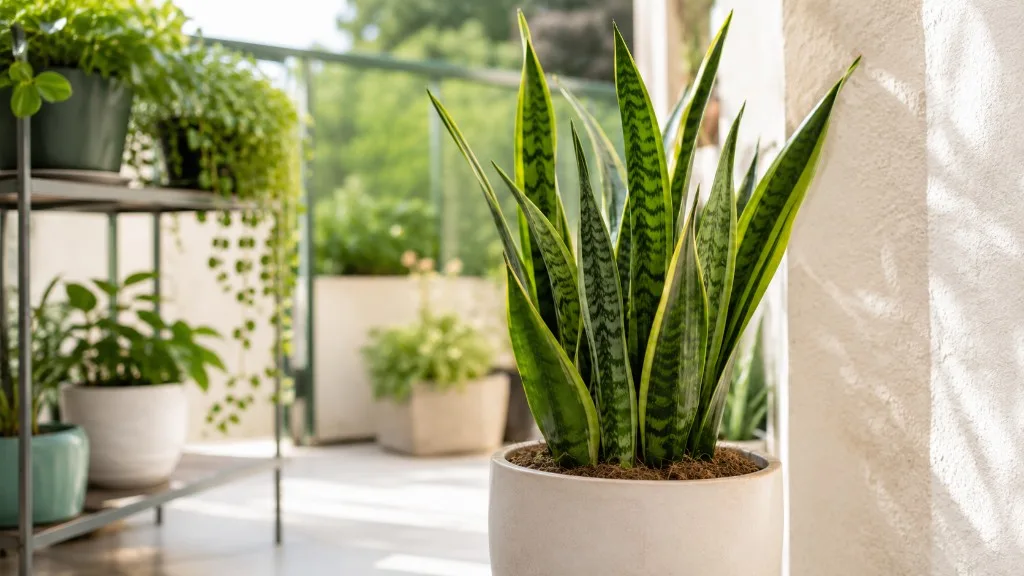
Snake plant appears on nearly every air-purifying list because NASA tested it—not because it outperforms ventilation. In real homes, its superpower is staying alive in conditions that kill fussier “purifiers.” A healthy snake plant contributes slightly to local humidity; a dead one contributes nothing.
Why it works: Highest survivability among commonly cited species.
Who it is for: Anyone told to “buy plants for clean air” without bright windows.
Care reality: Overwatering kills faster than underwatering.
Common mistake: Buying multiple snake plants for air quality in a windowless room without fixing ventilation.
Limitation: Not a substitute for source control or filtration.
Useful care guides:
Spider Plant
Best for: pet homes, hanging baskets, family rooms.
Difficulty: Easy
Light: Bright to medium indirect
Water: When top 2 inches dry
Best placement: Hanging basket or shelf with daylight
Pet safety: Non-toxic to cats and dogs (ASPCA)
Typical indoor size: 12–24 inches with spiderettes
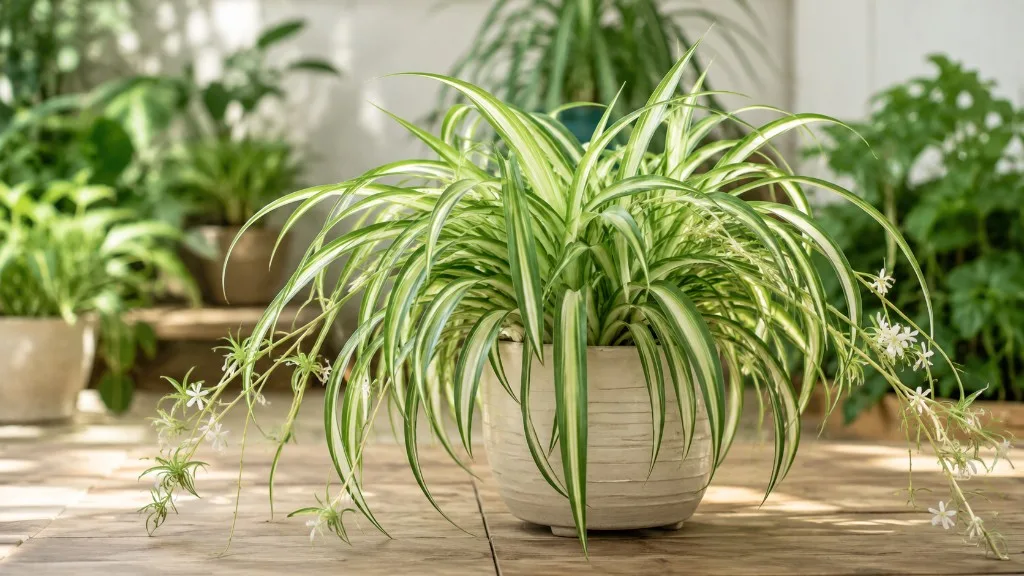
Spider plant is NASA-associated and actually easy in normal homes—a rarer combination than marketing suggests. Wiping dust from broad leaves may modestly help leaf gas exchange; the bigger win is a plant you keep healthy without heroic effort.
Why it works: Pet-safe, forgiving, and commonly available.
Who it is for: Households wanting low-risk greenery.
Care reality: Rot from overwatering is the main failure mode.
Common mistake: Equating non-toxic with “air purifier for kids’ rooms” while ignoring soil and fertilizer safety.
Limitation: Chamber VOC rates do not translate to measurable home filtration.
Useful care guides:
Areca Palm
Best for: bright living rooms, humidity support, pet-safe height.
Difficulty: Medium
Light: Bright indirect
Water: When top 1–2 inches dry
Best placement: Floor corner with window light
Pet safety: Non-toxic to cats and dogs (ASPCA)
Typical indoor size: 6–8 feet indoors
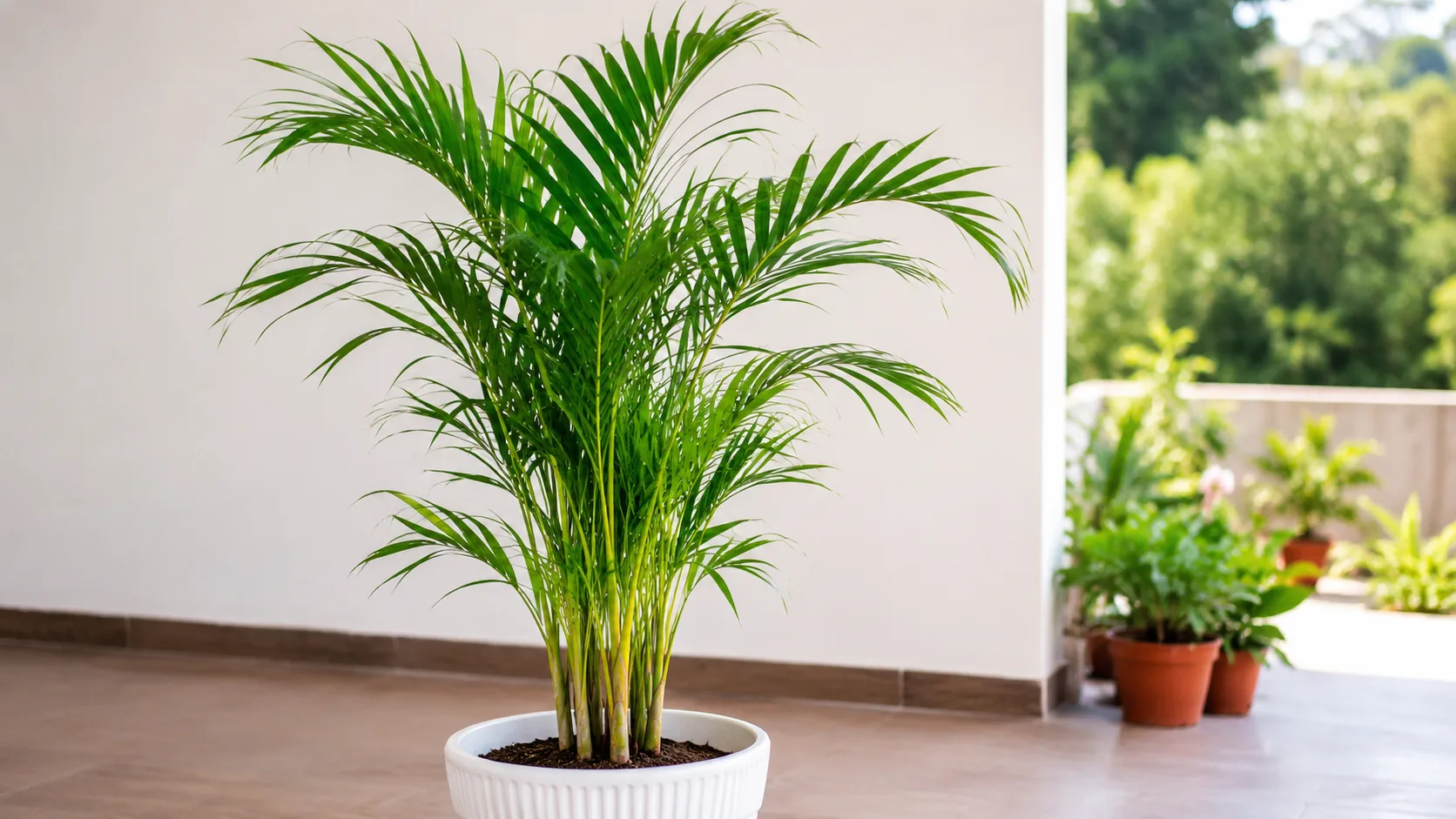
Bloggers cite areca palm for transpiration and humidity. That is plausible near the canopy when the plant is healthy—but it requires bright light, space, and consistent moisture. In a dim room, it becomes a slowly declining frond cluster, not a humidifier.
Why it works: Large pet-safe canopy that can support local humidity in bright rooms.
Who it is for: Spacious, well-lit living areas.
Care reality: Brown tips in dry, underwatered conditions.
Common mistake: Buying for air humidity in a dark apartment corner.
Limitation: Needs far more than one palm to meaningfully change whole-room humidity.
Useful care guides:
Boston Fern
Best for: humid rooms, bright bathrooms, dedicated waterers.
Difficulty: Medium
Light: Bright to medium indirect
Water: Keep evenly moist
Best placement: Bathroom with window or grouped humidity setup
Pet safety: Non-toxic to cats and dogs (ASPCA)
Typical indoor size: 12–24 inches arching
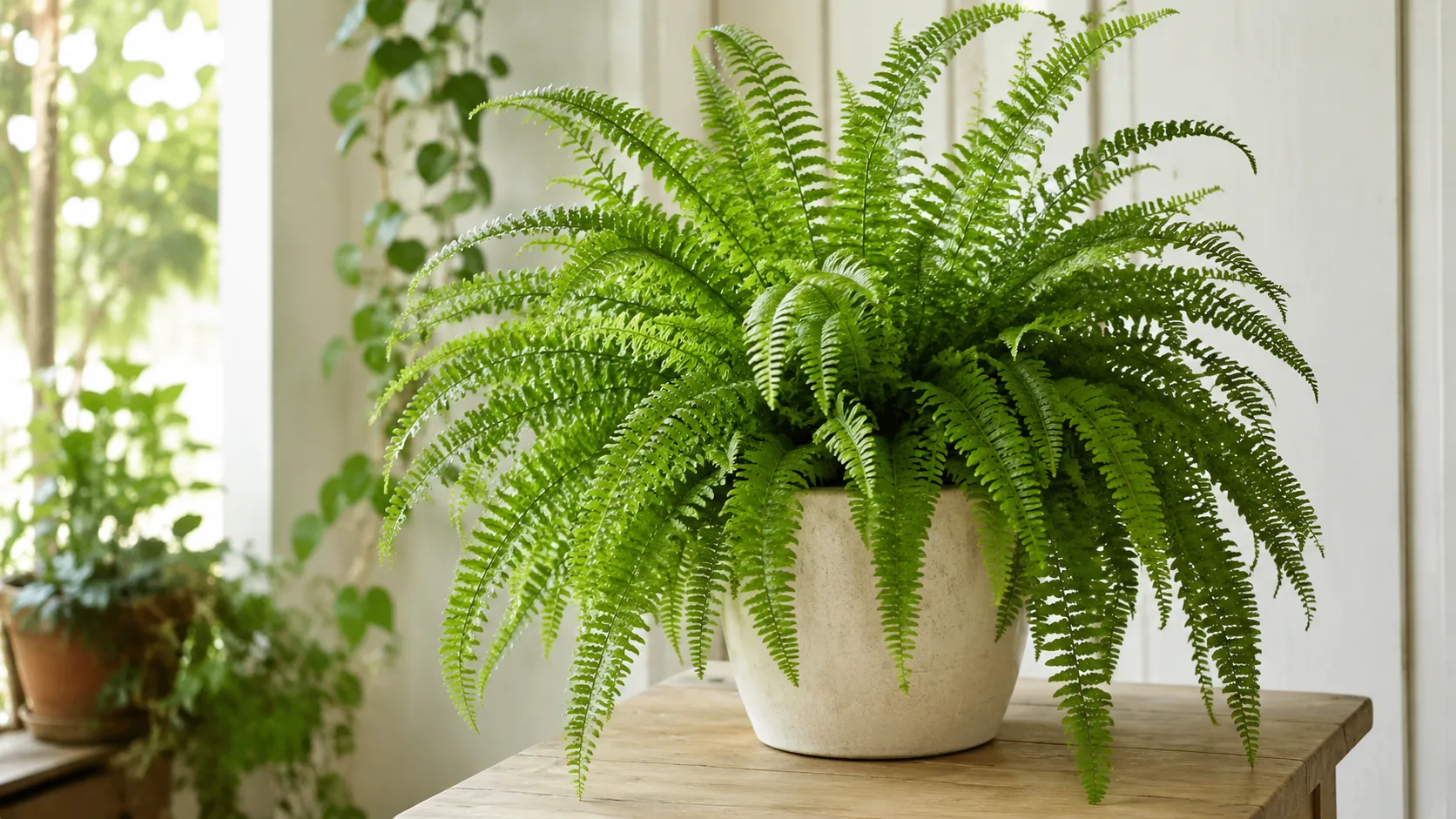
Boston fern is often marketed for air quality because of leaf surface area and humidity. True—but only while fronds stay green. Dry indoor air turns it into crisp brown debris faster than it “cleans” anything.
Why it works: Legitimate humidity contributor when healthy.
Who it is for: Growers who already maintain fern moisture routines.
Care reality: High water and humidity needs year-round.
Common mistake: Buying because of NASA lists without accepting fern maintenance.
Limitation: Poor fit for travelers or dry heated homes.
Useful care guides:
Rubber Plant
Best for: bright rooms, large leaf mass, design impact.
Difficulty: Easy to medium
Light: Bright indirect
Water: When top 2 inches dry
Best placement: Living room floor beside window
Pet safety: Toxic if ingested
Typical indoor size: 6–10 feet over time
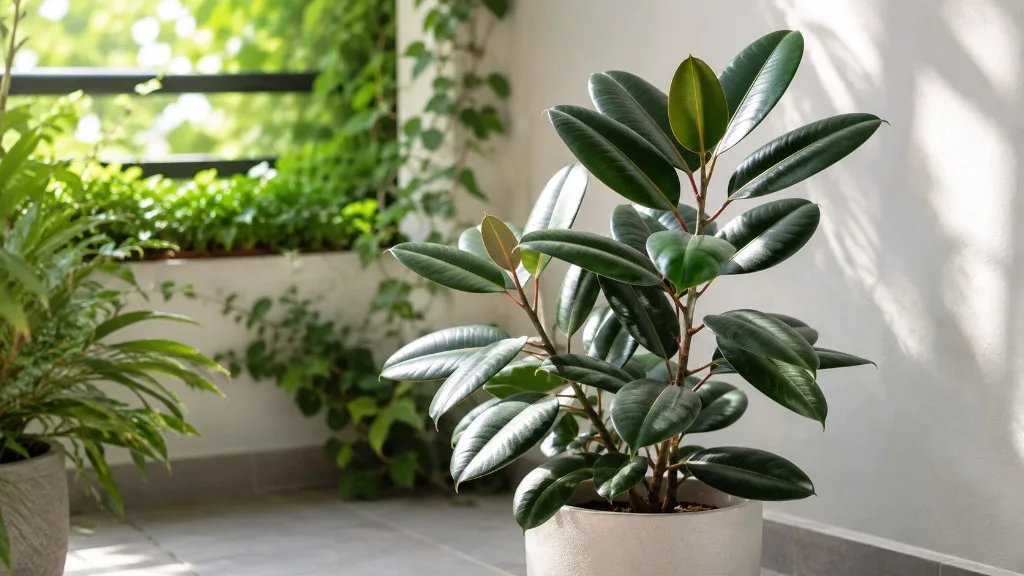
NASA tested rubber plant (Ficus elastica). Large leaves collect dust—wiping them helps the plant and removes settled particles from leaf surfaces, not whole-room VOCs.
Why it works: Substantial foliage in bright rooms where it will actually grow.
Who it is for: Design-led spaces with good light.
Care reality: Drops leaves when light or watering is inconsistent.
Common mistake: Treating leaf wiping as air purification strategy.
Limitation: Toxic; sap irritates skin when pruning.
Useful care guides:
Peace Lily
Best for: medium-light rooms, owners who respond to wilt cues.
Difficulty: Medium
Light: Medium indirect
Water: When soil surface dries; wilts when thirsty
Best placement: Living room side table with window light
Pet safety: Toxic if ingested
Typical indoor size: 12–24 inches
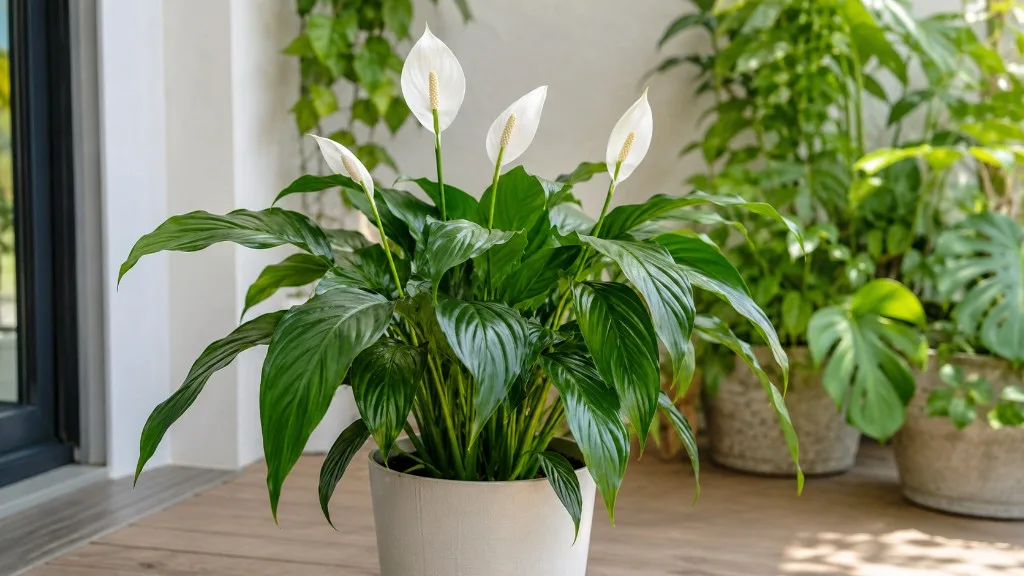
Peace lily is a NASA poster child—and one of the most misplaced plants in dark rooms “for air quality.” It needs medium light and steady moisture. When healthy, it improves room feel; when neglected, it becomes a wilted mess.
Why it works: Clear watering feedback; attractive when conditions match.
Who it is for: Attentive growers with medium-light rooms.
Care reality: Not a low-light snake plant substitute.
Common mistake: Gifted to beginners for “purifying” dim offices.
Limitation: Toxic to pets; air claims oversell chamber data.
Useful care guides:
Dracaena
Best for: upright floor plant, bright indirect light, vertical interest.
Difficulty: Easy
Light: Medium to bright indirect
Water: When top half of soil dries in large pots
Best placement: Living room corner, office floor pot
Pet safety: Toxic if ingested
Typical indoor size: 4–8 feet depending on species
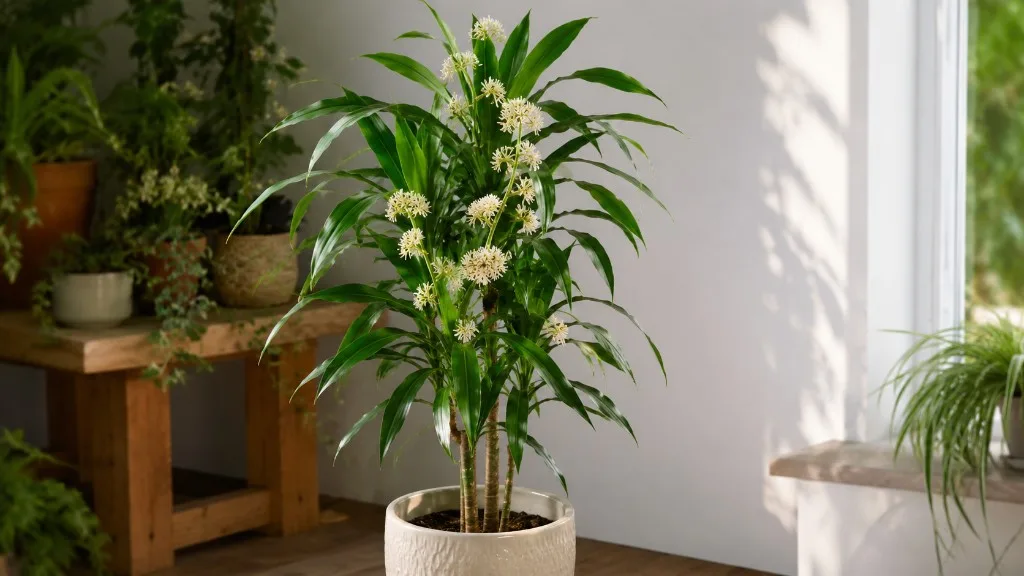
Dracaena (Dracaena spp., including corn plant and marginata types) appears in NASA materials and endless listicles. Indoors, it is a reliable upright grower in bright enough rooms—not a mechanical filter.
Why it works: Slim vertical habit for floor placement without palm spread.
Who it is for: Bright offices and living rooms with chewing-free pets.
Care reality: Tolerates average humidity; sensitive to fluoride in tap water on some species.
Common mistake: Confusing NASA chamber rank with whole-home performance.
Limitation: Toxic to cats and dogs.
Useful care guides:
Pothos
Best for: realistic homes, low-medium light, beginners.
Difficulty: Easy
Light: Low to medium indirect
Water: When top 2 inches dry
Best placement: Shelf, cabinet top, hanging basket
Pet safety: Toxic if ingested
Typical indoor size: Vines 6–10 feet
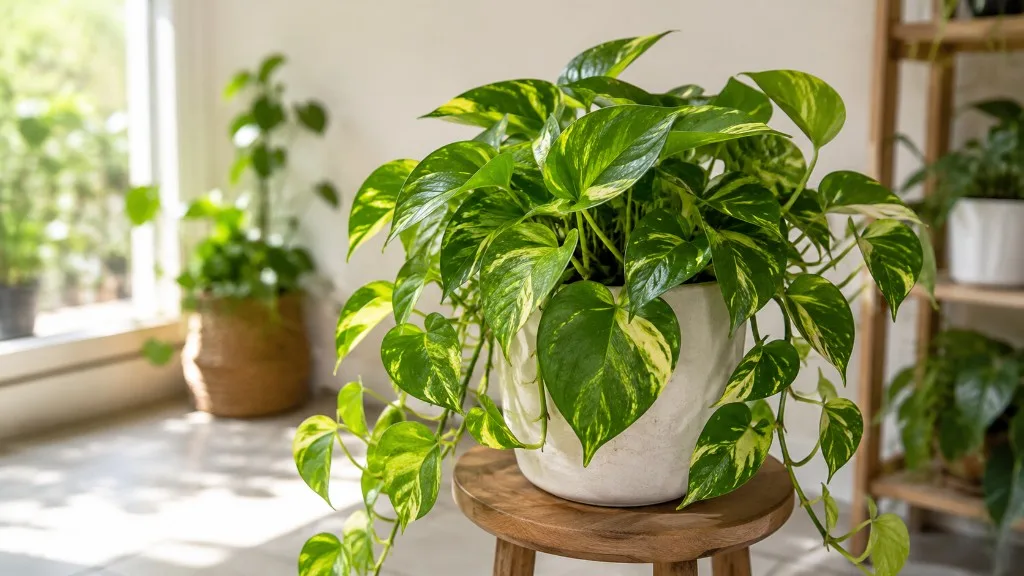
If chamber results were the only metric, pothos might look like a top pick. If survivability in apartments is the metric, it wins honestly. Healthy pothos adds greenery people actually maintain—the prerequisite for any biological effect.
Why it works: Forgiving growth in conditions where “purifiers” die.
Who it is for: Renters, offices, beginners.
Care reality: Grows fast in bright light; slower in dim corners.
Common mistake: Stocking a room with pothos instead of opening windows.
Limitation: Toxic to pets; not a VOC filter at home scale.
Useful care guides:
ZZ Plant
Best for: low light, infrequent watering, modern interiors.
Difficulty: Easy
Light: Low to medium indirect
Water: Every 3–4 weeks typical
Best placement: Office desk, dim corner, entryway
Pet safety: Toxic if ingested
Typical indoor size: 12–24 inches
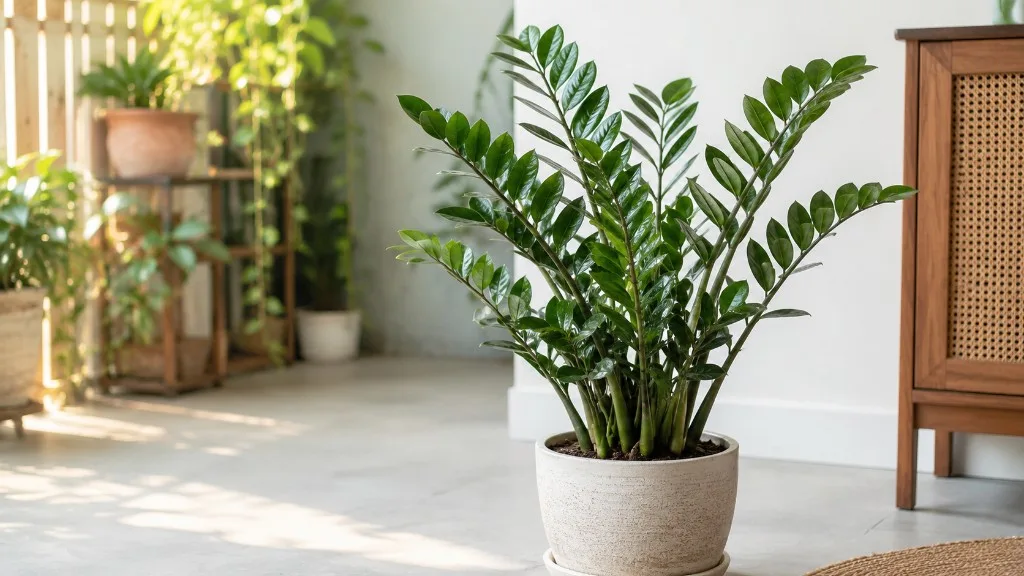
ZZ plant was not in the original NASA list but belongs on an honest modern roundup: the plant you keep alive matters more than the plant with the best lab chart. ZZ plant survives neglect that kills ferns and peace lilies marketed as purifiers.
Why it works: Survivability in low light—where people still want “clean air” plants.
Who it is for: Offices and homes without bright windows.
Care reality: Rhizomes rot if watered on a weekly calendar.
Common mistake: Ignoring it because it was not NASA-famous.
Limitation: Toxic; does not compensate for poor ventilation.
Useful care guides:
English Ivy
Best for: hanging baskets, cool humid air, experienced growers.
Difficulty: Medium
Light: Medium indirect
Water: When top inch dries
Best placement: Hanging basket with airflow
Pet safety: Toxic if ingested
Typical indoor size: Trailing vines several feet
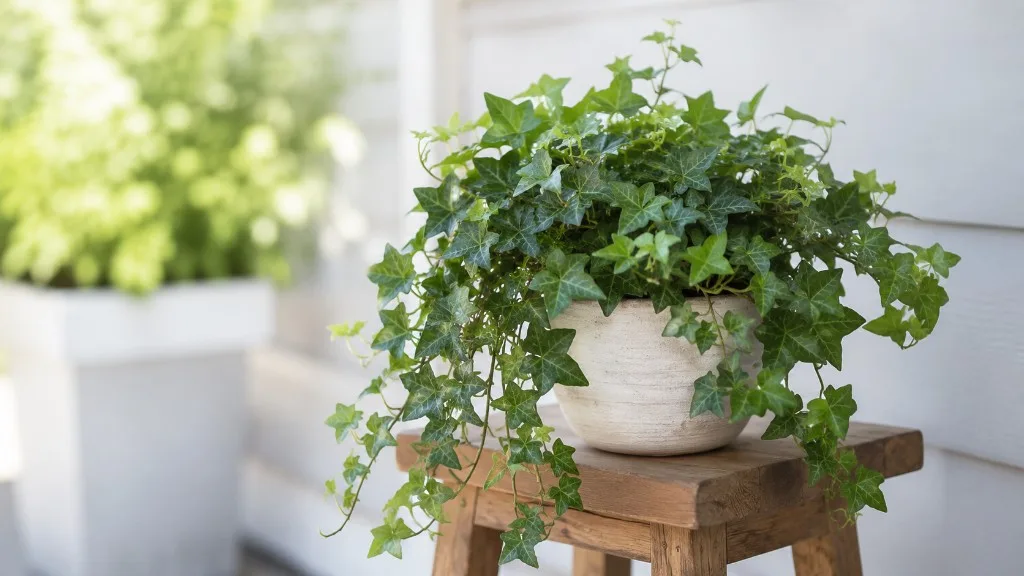
English ivy is NASA-associated and often recommended for bedrooms—problematic advice given toxicity and spider mite risk indoors. It can work with bright light, airflow, and pest vigilance.
Why it works: Trailing form with cool-humid preference.
Who it is for: Growers who inspect leaves monthly.
Care reality: Mites thrive in stale, dry air—ventilation matters more than plant count.
Common mistake: Buying for air quality in pet homes.
Limitation: Toxic; poor beginner “purifier.”
Useful care guides:
Common Mistakes with “Air-Purifying” Plants
Stocking up on plants instead of ventilating. Open windows and exhaust fans address air exchange; plants do not.
Believing one NASA chart equals home performance. Chamber tests used sealed environments and high plant-to-air ratios.
Choosing peace lily or fern for dark offices. Survivability beats theoretical VOC removal.
Ignoring pet toxicity on marketing lists. Many cited species are toxic if chewed.
Letting soil stay wet. Mold and gnats in overwatered “purifiers” worsen indoor air quality.
Conclusion
Choose houseplants you can keep healthy in your light and care routine—then enjoy calmer rooms and modest local humidity. Snake plant, pothos, spider plant, and ZZ plant are the most realistic fits for ordinary homes. Areca palm and Boston fern help humidity only when you meet their needs. NASA’s research is interesting history; ventilation, source control, and filtration are the practical air-quality tools.
For species-level care, follow the LeafyPixels guides linked in each section above.