Zebra Plant Fertilizer: When, How, and Mistakes to Avoid
Zebra Plant Fertilizer: When, How, and Mistakes to Avoid
Zebra Plant Fertilizer: When, How, and Mistakes to Avoid
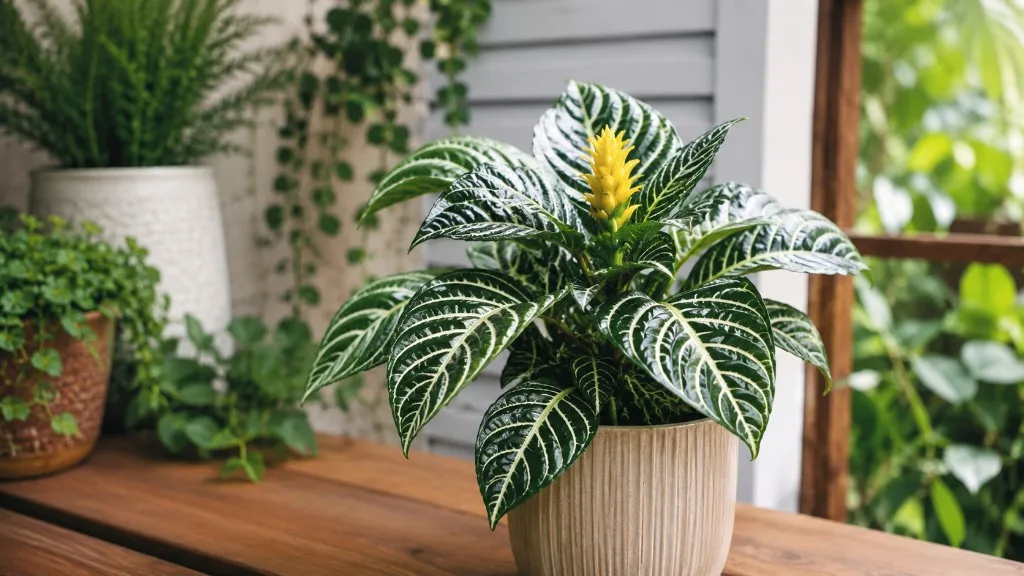
Zebra plant fertilizer decisions are simpler than the internet makes them sound - and more consequential than most growers realize. Aphelandra squarrosa, the true zebra plant (also sold as Saffron Spike), is grown for two shows at once: glossy dark green leaves laced with bold white veins, and the dramatic golden-yellow bracts that rise above the foliage like a torch. Both displays demand energy. Fertilizer does not create those stripes or bracts from nothing, but steady, appropriately timed feeding during active growth helps the plant push out firm new leaves and build the reserves it needs for flowering. Feed too much, too often, or at the wrong season, and you get the opposite: brown leaf tips, a white salt crust on the soil, wilted roots, and a plant that grows leaves all summer but never produces the golden spike you were hoping for.
The practical goal for most home growers is straightforward: use a balanced water-soluble fertilizer at half the label strength, apply it every two to four weeks from spring through summer while the plant is actively growing, switch to a higher-phosphorus formula when bracts begin forming, and reduce sharply in fall before stopping entirely in winter. Water onto moist soil, never onto dry roots. Flush accumulated salts every few months. After the bracts fade, give the plant its mandatory rest period with no fertilizer at all. Get those rhythms right and feeding becomes quiet maintenance. Get them wrong and you spend months troubleshooting burn, stalled growth, or a plant that looks healthy but refuses to rebloom.
This guide covers when to fertilize, how much to use, which products work best, when to shift phosphorus for flowering, how to read deficiency versus burn, and the mistakes that cause more damage than skipping a month ever would.
Why Fertilizer Matters for Zebra Plant
Zebra plant is a moderate-growing tropical that typically reaches 1 to 2 feet tall and wide indoors under good conditions. It belongs to the Acanthaceae family and is native to the forest understory of Brazil, where dappled light, warm temperatures, high humidity, and organically rich, well-draining soil supply a gentle, steady stream of nutrients through decomposition and rainfall. Indoors, that natural nutrient flow disappears. Every watering leaches minerals from the potting mix. Root growth and microbial activity consume what remains. Fertilizer replaces what the plant uses - but only up to the point its roots can absorb without salt damage.
NC State Extension recommends applying a weak fertilizer solution every few weeks as new growth resumes after winter semi-dormancy, and Missouri Botanical Garden describes Aphelandra squarrosa as a shrub grown for showy yellow bracts when cultural conditions align. That flowering habit matters for how you think about fertilizer. Zebra plant is not a lean-feeding succulent and not a heavy-feeding tomato, either. It sits in the middle: a foliage plant for most of the year that becomes an energy-intensive bloomer when bract development begins. Producing those golden structures - technically modified leaves, not the tiny white true flowers nestled inside them - pulls phosphorus, potassium, and trace elements at a higher rate than everyday leaf production alone.
Think of feeding as maintenance for a healthy, actively growing plant - not a rescue tool for a pale plant in too little light or soggy mix. Fix light, water, and humidity first. This article addresses Aphelandra squarrosa specifically - glossy paddle-shaped leaves and golden bracts - not Calathea zebrina or haworthias, which tolerate different feeding levels.
When to Fertilize Zebra Plant: Active Growth vs Rest
Timing is the first decision, and it follows the plant’s metabolism more than the calendar on your wall. Feed when zebra plant is actively producing new leaves and extending stems, and stop when growth slows sharply or when the plant enters its post-bloom rest. Outdoors in tropical climates, that rhythm tracks warm weather and long days year-round. Indoors in temperate homes, heated rooms and supplemental light can extend the window - but most zebra plants still slow noticeably in late fall and winter, and they require a deliberate rest after flowering if you want reliable reblooming.
A plant that keeps glossy leaves through December can look active while producing almost no new shoots. Summer feeding through short days stacks unused nutrients as salts. Skipping the six-to-eight-week post-bloom rest - cooler, dimmer, no fertilizer - is a main reason indoor zebra plants bloom once or not at all.
Spring and Summer Feeding Window
Start feeding when you see fresh growth at stem tips - new leaves unfurling with crisp white veining against deep green tissue, side shoots filling in, and roots visibly active if you gently check the drainage holes for white root tips. In temperate climates indoors, that usually means mid-spring through late summer, roughly April through August depending on your light setup and whether the plant sits in a bright east or south window.
During this active window, a half-strength balanced liquid feed every two to four weeks works for most container plants. Fast growers in bright light with high humidity may sit at the two-week end. Established plants in moderate light may need only monthly feeding. Both are reasonable if leaves stay deeply colored with sharp vein contrast, internodes stay reasonably short, and the soil surface stays free of heavy salt crust.
| Month (temperate indoor climate) | Growth phase | Feeding guidance |
|---|---|---|
| March–April | Waking up, new shoots | Start half-strength balanced liquid if active growth visible |
| May–August | Peak foliage and bloom prep | Every 2–4 weeks balanced; switch to higher phosphorus when bracts swell |
| September | Slowing slightly | Reduce to monthly at half strength, then taper off |
| October | Wind-down | Final light feed if still growing, then pause |
| November–February | Low growth / post-bloom rest | No fertilizer; mandatory rest after flowering |
The table is a framework, not a law. A zebra plant on a bright humidity tray in July may use nutrients faster than one in a north-facing window with dry air. Watch the plant: if it is building firm new leaves steadily, the timing is right. If it is static, solve light, water, and humidity before adding food. Blooming depends on Zebra Plant light guide sustained for months, consistent moisture, and warmth - fertilizer supports the process but cannot substitute for those conditions.
Fall Taper and Winter Reduction
Taper feeding in early to mid-fall as day length drops and indoor humidity often falls with heating systems running. One practical approach: give a final half-strength balanced feed in early fall if you still see new growth and no bracts are developing, then reduce to once monthly at most through September before stopping entirely from late fall through winter.
Most indoor zebra plants do fine with no fertilizer from November through February, especially in cooler rooms or lower light. Winter is not full dormancy like a deciduous outdoor tree, but metabolic demand drops sharply. University of Maryland Extension notes that excessive or frequent fertilizer use is a primary cause of high soluble salts in indoor plants, with symptoms including brown leaf tips and marginal necrosis (University of Maryland Extension - Fertilizer Toxicity). Winter feeding on a plant that is not using nutrients is an easy way to create exactly that problem.
After flowering, winter reduction becomes non-negotiable. Cut the spent bract, trim the stem back to one or two pairs of healthy leaves, and move the plant to a slightly cooler, dimmer spot for six to eight weeks. Reduce watering and stop all fertilizer during this rest. In late spring, return the plant to bright conditions and resume the normal feeding rhythm. That rest-and-reactivation cycle is what separates plants that rebloom annually from plants that look fine but never produce bracts again.
Exception: if you grow under strong supplemental grow lights and the plant keeps producing new shoots all winter without having recently bloomed, you can feed lightly - still at half strength - but extend the interval to six to eight weeks and watch closely for salt crust. Even then, skipping winter feeds is safer than forcing growth with nutrients the roots cannot process.
Best Fertilizer Type for Zebra Plant
The best zebra plant fertilizer for most homes is a complete, water-soluble, balanced houseplant formula with nitrogen adequate for leafy growth and phosphorus available for root function and eventual flowering. You want nitrogen for green tissue and crisp white veining, phosphorus for energy transfer and floral initiation at the right moment, and potassium for overall vigor, cell turgor, and stress tolerance. Micronutrients on the label - iron, magnesium, manganese - matter because pale new growth on otherwise well-watered plants sometimes traces to trace-element gaps rather than macronutrient hunger, especially in peat-based mixes that acidify over time.
Avoid shopping by the word “zebra” on the bottle unless you already trust the brand’s dosing guidance. A standard balanced indoor formula used conservatively outperforms most specialty products applied at label strength on sensitive tropical roots.
Balanced Liquid Formulas and NPK Ratios
A 10-10-10 or 20-20-20 water-soluble fertilizer diluted to half strength is the default recommendation across horticultural sources for zebra plant during vegetative growth. Equal ratios keep feeding simple when your main goal is steady foliage with bold vein contrast and compact stems. Some growers prefer a slightly nitrogen-leaning ratio such as 3-1-2 or 24-8-16 during the leaf-building phase because nitrogen supports the glossy leaf expansion that makes the white stripes pop. That slight nitrogen emphasis is reasonable for the months when the plant is pushing vegetative growth.
Liquid formulas win for control in small pots where shallow, fibrous roots cannot tolerate salt shocks. Mix at half label strength, apply until a little drains, and empty the saucer. Pick balanced or foliage-weighted water-soluble products with micronutrients listed. Skip slow-release pellets in small pots - they stack unpredictably with liquid feeds.
Higher Phosphorus for Flowering and Bract Development
When your zebra plant begins showing signs of bract initiation - a swollen bud at the stem tip, early yellow-green cone formation, or visible enlargement where the golden spike will emerge - shift from purely balanced feeding to a higher-phosphorus formula for a short window. Phosphorus (the middle number in NPK) plays a central role in energy transfer, root development, and reproductive tissue formation. During bloom preparation, the plant redirects resources from leaf expansion toward bract development, and a modest phosphorus emphasis supports that shift without the salt load of full-strength bloom products.
Practical approach: continue your half-strength balanced feed through spring and early summer while the plant builds foliage. When you see the tip swelling that precedes bract formation - usually late summer in many indoor setups - switch to a bloom-oriented formula with a higher middle number, such as 10-30-10, 15-30-15, or a labeled “bloom booster,” still diluted to half strength or weaker. Apply this higher-phosphorus feed for two to four applications spaced two to three weeks apart while the bract develops and holds its color. Then stop all feeding once the display peaks and begins fading.
Phosphorus alone will not force a bloom - sustained bright indirect light, consistent moisture, and humidity above roughly 60 percent are the primary triggers. After bracts fade, stop all fertilizer during rest. Resume balanced half-strength feeding only in late spring when fresh vegetative growth appears. The ASPCA lists Aphelandra squarrosa as non-toxic to dogs, cats, and horses (ASPCA - Saffron Spike Zebra), but concentrated fertilizer and soil salts are not safe to ingest.
How Much Fertilizer to Use on Zebra Plant
If you remember one number, make it half strength - never full label strength on a container-grown zebra plant unless you have experience leaching salts regularly and the label specifically targets sensitive tropical houseplants at a reduced rate.
Houseplant and garden fertilizer labels assume a range of species and pot sizes. Zebra plant sits in the moderate feeder category - more demanding than succulents during active growth and bloom prep, but still vulnerable to salt burn in the small pots most growers use indoors. Cutting the label rate to one-half is the safest default for liquid feeding during spring and summer. Quarter strength is reasonable for monthly feeding on a plant in moderate light with a history of tip burn, or when transitioning to the higher-phosphorus formula during bract development.
Example: if the bottle says 1 teaspoon per gallon for houseplants, use ½ teaspoon per gallon for routine balanced feeding. If it says 1 tablespoon per gallon for outdoor annuals, use 1½ teaspoons per gallon (half strength) for container zebra plant on a two- to four-week schedule. When you switch to bloom formula, consider quarter strength even if you were tolerating half strength on balanced feed - bloom boosters concentrate phosphorus and potassium more aggressively. Measure with a spoon or syringe. “Eyeballing” concentrates errors because different products use different scoops and because zebra plant punishes overdosing faster than it rewards generosity.
For a final fall feed before winter pause, half strength is enough. Go weaker still if you see salt crust, post-feed tip burn, or a pot that stays wet for days. Pale new foliage with green veins usually means iron or magnesium issues or - more often - too little light, not hunger. Stunted overall growth with older leaves still dark green usually means root stress from overwatering on Zebra Plant or cold, not a need for more fertilizer.
How Often to Fertilize Zebra Plant
Frequency should follow growth rate, bloom phase, and salt management - not guilt about whether you are “doing enough.”
For most container zebra plants indoors:
- Every 2 to 4 weeks with half-strength balanced liquid from mid-spring through summer during vegetative growth
- Every 2 to 3 weeks with half-strength (or weaker) higher-phosphorus formula for two to four feeds when bracts are actively developing
- Every 4 to 6 weeks if the plant is in rich mix, moderate light, or you also used slow-release at Zebra Plant repotting guide
- Once in early fall at half strength if growth is still visible and no bloom is underway, then taper
- No fertilizer from late fall through winter, and no fertilizer during the six-to-eight-week post-bloom rest
That biweekly-to-monthly range beats feeding at every watering for most owners because constant low-dose fertilizer stacks salts faster than the plant can use them, especially in 6-inch pots with peat-based mix that already holds moisture tightly. Zebra plant does better with a clear feeding schedule and plain water between feeds.
| Situation | Suggested frequency | Strength |
|---|---|---|
| Active vegetative growth, bright light | Every 2–3 weeks | Half label strength balanced |
| Active growth, moderate light | Every 3–4 weeks | Half label strength balanced |
| Bract swelling and development | Every 2–3 weeks, 2–4 times total | Half or quarter strength high-P |
| Early fall, still growing | Every 4–6 weeks | Half label strength balanced |
| Winter / post-bloom rest | None | - |
| After repotting into fresh mix | Wait 4–6 weeks | Then resume half strength |
Watch the response. Deep green leaves with sharp white veins and steady but not explosive stem extension mean your interval is working. Brown tips appearing within a week of feeding, or white crystals forming on the soil surface, mean stretch the interval and flush salts before the next application - regardless of what the calendar says.
Step-by-Step: How to Feed Zebra Plant Safely
Confirm you are in the active spring-summer window or the short higher-phosphorus bloom window - not winter slowdown or post-bloom rest. Run the pre-feed checklist below. Mix fresh solution at half strength (quarter strength for bloom formula) in room-temperature water. If the pot is fully dry, water with plain water first and feed the next day. Pour slowly at the soil surface, keeping liquid off glossy leaves - skip foliar feeding entirely. Water until a little drains, empty the saucer within thirty minutes, and log the date to avoid accidental double feeds.
Pre-Feed Checks and the Moist-Soil Rule
Before every application, run four checks in order:
Soil moisture: The top inch should be approaching dry, but the root zone should not be parched. If the pot is fully dry and lightweight, water with plain water first, let it drain, and feed the next day or at least several hours later. Fertilizer on dry roots is the fastest route to brown tips and wilt on zebra plant.
Salt crust: White or yellowish crystals on the soil surface mean pause feeding and flush with plain water before any new fertilizer. Feeding on top of crust is feeding on top of damage already done.
Plant stress: Skip feeding if the plant recently wilted from drought, dropped multiple leaves, suffered cold exposure below roughly 55°F (13°C), or shows active pest damage. Wait until new growth stabilizes.
Recent repotting: Fresh commercial potting mix often includes starter fertilizer. Wait four to six weeks after repotting before the first liquid feed unless you used a completely inert mix with no added nutrients.
The moist-soil rule is not optional for Zebra Plant overview. NC State Extension recommends keeping soil consistently moist but never allowing it to dry out completely - dissolved salts move into root tissue more aggressively when water is scarce in the mix. Zebra plant’s forest-floor roots expect steady moisture, not alternating flood and chemical drought.
Signs Your Zebra Plant Needs More Nutrition
Under-fertilizing is less common than over-fertilizing on zebra plant, but it happens - especially in the same small pot for two or more years without repotting or feeding, or when a plant pushes a heavy bloom and depletes its reserves afterward.
Signals that may point to genuine nutrient need - after you have confirmed adequate bright indirect light, even moisture, and humidity above roughly 50 percent:
- Pale new leaves with reduced contrast between green tissue and white veins, while older leaves still look normal
- Smaller new leaves than the previous flush, on an otherwise healthy stem
- Slowed internode extension in bright light during summer - not winter stall, but summer stagnation
- Weak bract development - small, pale, or short-lived golden structures despite good light and humidity
- Overall loss of gloss on new foliage, making leaves look dull rather than waxy
Rule out low light, inconsistent watering, and low humidity first - all three mimic deficiency. If culture checks out and the plant has not been fed in months, start half-strength balanced liquid every two to four weeks. Improvement should appear in the next one to two leaf flushes.
Signs of Over-Fertilizing and Salt Buildup
Over-fertilizing is the most common zebra plant feeding mistake, and the symptoms appear faster than growers expect because the root zone is small and the plant is sensitive.
Watch for:
- Brown or crispy leaf tips and margins, often appearing within days of feeding
- White, yellowish, or crusty deposits on the soil surface or pot rim
- Sudden leaf drop or wilting that does not match soil dryness
- Blackened or mushy root tips if you inspect after unpotting
- Stunted new growth despite feeding - roots too damaged to absorb
- Sour or chemical smell from the pot, indicating salt and anaerobic breakdown
- Leaf curling downward on newer foliage combined with tip burn - sometimes confused with light stress but paired with visible crust
Crust plus recent feeding almost always means fertilizer injury. University of Maryland Extension describes soluble salt injury as marginal necrosis progressing inward, often with soil surface crystallization (University of Maryland Extension - Fertilizer Toxicity).
How to Flush Zebra Plant After Over-Feeding
When you suspect burn or see crust, act immediately. Recovery is likely if roots are not fully rotted, but burned leaf tissue will not green up again - new growth tells you the salt load has dropped.
Stop all fertilizer for four to six weeks. Place the pot in a sink and run lukewarm plain water slowly through the soil for several minutes until it drains freely. Repeat two more times over the next hour. Keep the plant in bright indirect light without scorching sun. Resume half-strength feeding only after healthy new growth appears with no new tip burn. If crust returns within weeks, repot into fresh well-draining mix in spring and hold fertilizer four to six weeks after.
Seasonal and Situational Adjustments
Seasonal feeding includes transitions, not just on/off switches. In late summer, stretch the interval before stopping entirely. During bract development, shift phosphorus for a defined short window - not all summer. After bloom, enforce rest with zero nutrients.
After Repotting, Rest Period, and Post-Bloom Care
Wait four to six weeks after repotting into charged mix before the first liquid feed. Hold food after drought wilt, cold damage, or pest stress until stable new growth returns. Post-bloom rest is non-negotiable: cut faded bracts, trim to one or two leaf pairs, move to a cooler dimmer spot for six to eight weeks, reduce watering, and stop all fertilizer. Resume in late spring when new shoots appear. Propagation cuttings need no feed until rooted; then quarter to half strength at wide intervals. If slow-release granules are in the mix, skip liquid feeding for two to three months.
Fertilizer and Other Zebra Plant Care
Fertilizer only works when light, water, humidity, and soil are already in range. Zebra plant in bright indirect light uses nutrients faster than one in deep shade, where pale leaves and weak stems are usually light problems, not hunger. Consistently moist, well-drained mix keeps uptake steady - alternating drought and flood damages the shallow root system and blocks nutrient absorption even when you feed on schedule. Target soil pH roughly 5.8 to 6.5, which most peat-perlite African violet-style mixes approximate without adjustment.
Humidity below 40 percent yellows leaf margins independently of fertilizer - tip burn in dry air is often misread as salt injury. Cold drafts below 60°F (15°C) slow root uptake and stack unused salts. After bracts fade, rest - not extra fertilizer - is the reward.
Common Zebra Plant Fertilizer Mistakes
The failures that show up most often are predictable: full label strength in containers, feeding through winter on a plant that only looks active, skipping post-bloom rest while continuing monthly feeds, using higher phosphorus all season instead of only during bract development, fertilizer on dry soil, feeding immediately after repotting into charged mix, ignoring white salt crust, feeding stressed plants to force recovery, confusing Aphelandra with Calathea zebrina, and expecting bloom booster to replace bright light. Half strength on moist soil during real growth - with a short phosphorus switch at bloom time and a hard winter pause - prevents nearly all of them.
Conclusion
Zebra plant fertilizer success comes down to matching a conservative, season-aware feeding plan to real growth - not to a rigid calendar that ignores your light, humidity, and bloom cycle. Use a balanced water-soluble formula at half strength, feed every two to four weeks during active spring and summer growth, switch to a higher-phosphorus formula at half or quarter strength for two to four applications when bracts begin forming, and taper in fall before stopping entirely in winter. Honor the six-to-eight-week post-bloom rest with no fertilizer at all. Water onto moist soil, flush salts when crust appears, and pause feeding after repotting or stress.
When in doubt, less is more. Zebra plant tolerates a skipped month far better than it tolerates a double dose after pale leaves. Watch new growth: firm glossy leaves with sharp white veining mean your rhythm is working. Golden bracts that hold for weeks mean your bloom-phase phosphorus and cultural conditions aligned. Brown tips, white crust, and a plant that never reblooms mean pull back, flush, fix light and humidity, and respect the rest cycle before you reach for the bottle again. Get those pieces aligned and fertilizer becomes simple maintenance - the kind that supports one of the few bold, pet-safe flowering tropicals worth the extra attention indoors.
When to use this page vs other Zebra Plant guides
- Zebra Plant overview - Start here for whole-plant context before deep-diving this topic.
- Zebra Plant problems hub - Jump to symptom-specific fix guides when this care topic does not resolve the issue.
- Overfertilization on Zebra Plant - Escalate here when fertilizer adjustments are not enough.
- Fertilizer Burn on Zebra Plant - Escalate here when fertilizer adjustments are not enough.
- No Flowers on Zebra Plant - Escalate here when fertilizer adjustments are not enough.