Dry Hydrophobic Soil on Swedish Ivy: Causes, Checks & Fixes
Quick answer
Hydrophobic soil on Swedish Ivy means the mix repels water while the root ball stays dry inside-common after a basket dries out too long. First step: bottom-soak the pot in lukewarm water until the top inch feels moist, then drain fully before resuming normal care.
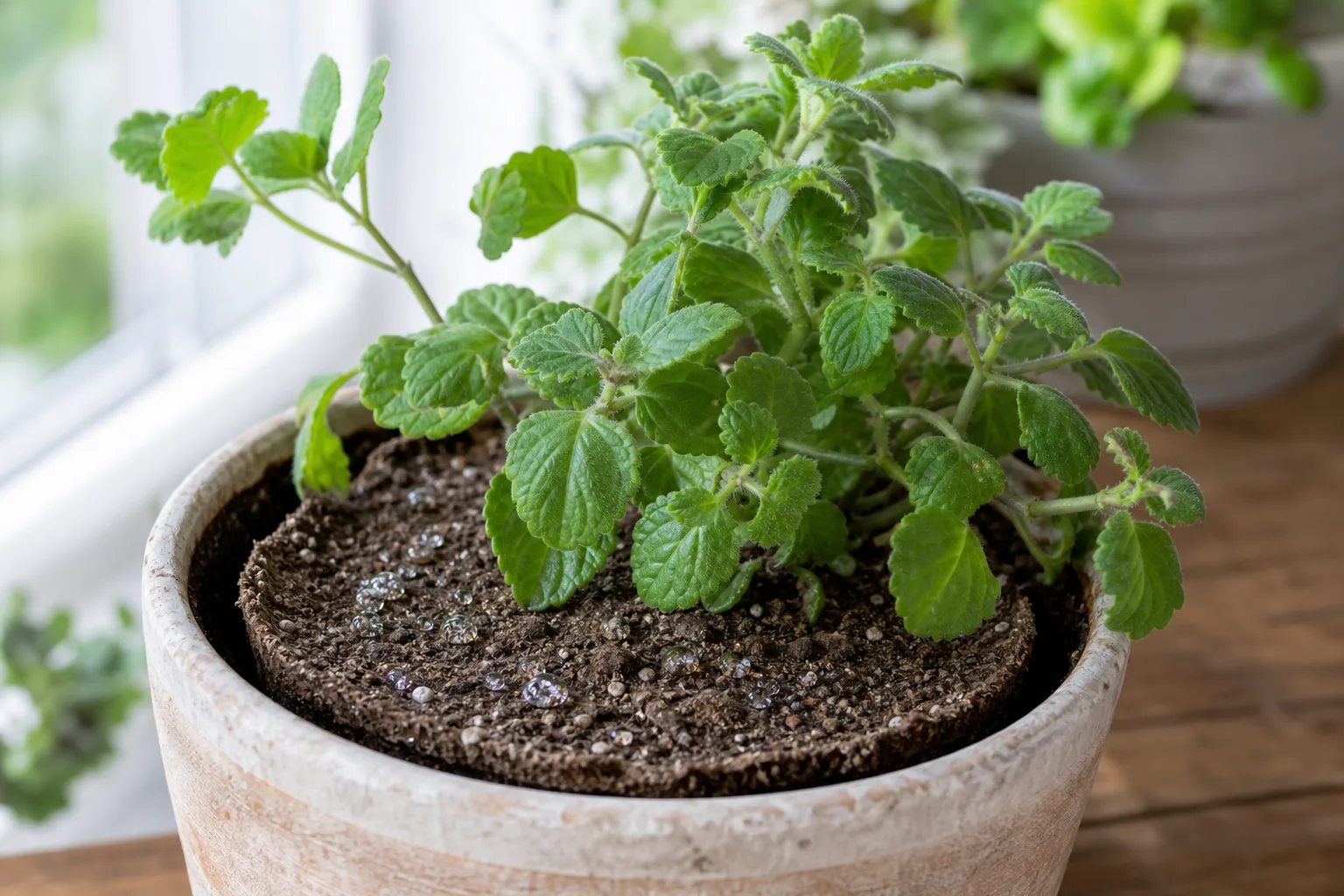
Dry Hydrophobic Soil on Swedish Ivy: Causes, Checks & Fixes
This guide covers dry hydrophobic soil on Swedish Ivy. See also the general Dry Hydrophobic Soil guide, watering, and light pages for this plant.
Dry Hydrophobic Soil on Swedish Ivy: Causes, Checks & Fixes
Quick answer
Dry hydrophobic soil on Swedish Ivy (Plectranthus australis) means the potting mix has dried so far that it repels water instead of absorbing it. You pour from the top, water races out the drainage holes, and you assume the trailer drank-while the center of the root ball stays dead dry. That mismatch is especially frustrating on Swedish Ivy because the species looks its healthiest with medium moisture in well-drained soils, even though it tolerates short drought spells better than many tropical houseplants.
First step: set the pot in a basin of lukewarm water so the mix wicks up through the drainage holes until the top inch feels moist. This bottom watering method slowly re-wets hydrophobic peat. Lift the basket out, let it drain completely, and empty the saucer. Do not keep adding top water to crusted mix; it will keep running off the sides.
What dry hydrophobic soil looks like on Swedish Ivy
Hydrophobic soil shows up in the pot before every leaf tells the story. On this fast-growing trailer, leaf stress often follows within a day because roots are shallow and close to the surface.
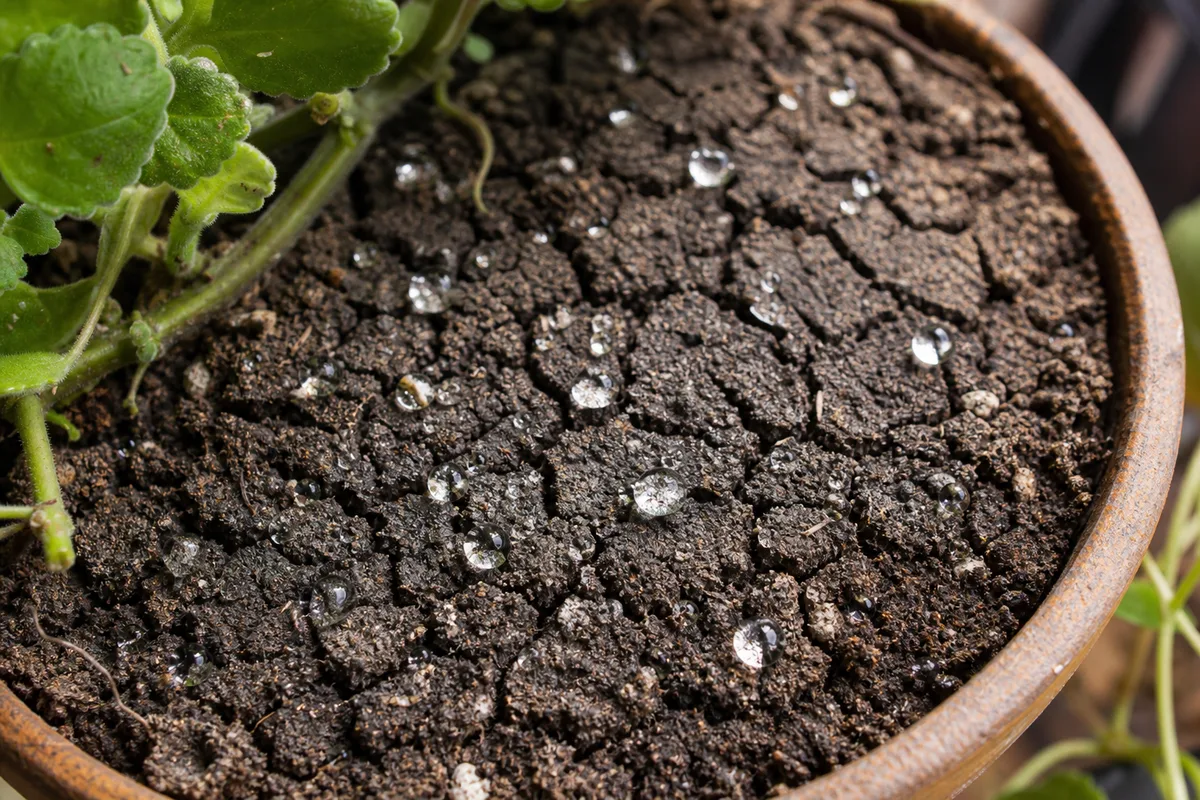
Dry Hydrophobic Soil symptoms on Swedish Ivy - compare with healthy tissue on the same plant.
Pot and mix signs:
- Water pools on the surface or races through in seconds with little absorption
- Dry mix has shrunk and pulled away from the pot wall, leaving a gap where water runs down
- Surface looks dusty, pale, or cracked while you have been “watering” regularly
- Hanging basket feels light when lifted despite recent watering
- A finger at 2.5 cm (1 inch) depth stays dry right after a top-water session
Leaf signs on Swedish Ivy:
- Limp, drooping trailing stems that resemble underwatering
- Thin, less plump glossy leaves losing turgor
- Dry, crispy brown edges on scalloped foliage
- Dull gray-green color instead of bright glossy green
- Slowed tip growth or yellowing on older leaves after repeated dry cycles
The key distinction: with simple underwatering, dry mix still accepts water when you pour slowly. With hydrophobic soil, water does not penetrate the root ball even when you try.
Why Swedish Ivy gets hydrophobic soil
Swedish Ivy is usually grown in peat- or coir-based houseplant mix with perlite for drainage. Peat holds moisture well when evenly damp-but when it dries completely, peat moss is very difficult to re-wet. Bags of potting soil can even dry out on the shelf. Swedish Ivy is somewhat drought tolerant, but a hard-dry root ball still cuts off water uptake to shallow roots faster than stem storage can compensate during active growth.
Common triggers in real homes:
Letting the pot go too dry. UF/IFAS recommends watering when the top inch feels dry and never letting the plant sit in standing water. A vacation, a busy week, or backing off water after a rot scare can leave the whole ball dry hard. Winter heating near a hanging basket accelerates surface drying while owners water less.
Watering too quickly from the top. A fast pour on crusted mix runs between the root ball and pot wall. You see drainage and think the job is done. Fine roots in the center never get water.
Old, compacted mix. Peat breaks down after one to two years, reducing air pockets and creating dense zones that dry into water-repellent clumps. Rootbound trailers in nursery peat are especially prone.
Salt and mineral crust. Tap water and fertilizer leave surface salts that crust over and shed water. This can coincide with crispy leaf margins that distract from the soil issue.
Bright light and small hanging baskets. More light means faster transpiration and quicker dry-down. A small basket in a sunny window can go from moist to hydrophobic in days if watering stops.
How to confirm the cause
Work through these checks before Swedish Ivy repotting guide or changing your whole routine:
- Runoff test - Add one cup of water slowly. If it channels to the sides or exits in under a minute, suspect hydrophobic mix.
- Gap check - Look for daylight between dry mix and the pot wall.
- Depth probe - After your normal watering, press a finger 2.5 cm (1 inch) deep. Still dry? The root ball did not hydrate.
- Weight check - A well-watered Swedish Ivy pot should feel noticeably heavier than a dried-out one.
- Smell and roots - Sour, swampy odor or black mushy roots mean overwatering or rot, not drought alone. Firm pale roots support a dry-core diagnosis.
- Stem base firmness - Pinch stems at the soil line. Firm bases with limp tips fit hydrophobic drought. Soft, mushy bases with wet mix suggest overwatering-do not soak again.
If top watering failed the probe test, hydrophobic soil is confirmed-move to bottom soaking.
First fix for Swedish Ivy
Bottom-soak the pot until the top inch of mix feels moist, then drain fully.
- Choose a basin, sink, or bucket that holds the pot and enough lukewarm water to reach halfway up the pot sides.
- Set the pot in the water so it enters through drainage holes. Small baskets may float at first; that is normal as air escapes.
- Soak until the top inch feels moist when pressed-often 30 to 90 minutes for a standard houseplant pot. Check hourly rather than leaving it submerged overnight.
- Lift the basket, let excess water drain for 15 to 30 minutes, and empty the saucer.
- Resume your normal rhythm: water when the top inch feels dry, soaking until drainage and discarding saucer water.
For severely repelling mix, a full pot submerge until bubbling stops works faster-acceptable for a healthy plant without a sour root smell. Do not let Swedish Ivy sit in standing water for days; crowns in slow-draining baskets can rot when water pools around stems.
Step-by-step recovery
After the initial soak:
- Verify hydration - Probe at 1 inch depth six hours later. If still dry, repeat a shorter bottom soak.
- One slow top pass - After the ball is moist, a gentle top watering helps settle the surface without flooding trailing stems.
- Trim only dead tissue - Remove fully brown, brittle leaves after the plant stabilizes, not during the first soak.
- Hold fertilizer - Rehydrate first. Feeding drought-stressed roots can burn tender tips; wait until you see firm new growth.
- Refresh mix if needed - If the same pot repels water again within two weeks, repot into fresh airy mix with perlite-well-drained houseplant media matched to Swedish Ivy, not dense straight peat.
- Scrape heavy salt crust - If white mineral crust covers the surface, scrape the top centimeter and flush with plain water at the next soak, or repot if buildup is thick.
Pinch tips after recovery if long bare runners developed during stress-that encourages the bushy shape Swedish Ivy is known for.
Recovery timeline
Leaves often perk within a few hours to one day once the root ball is truly wet. Crispy edges on existing foliage remain until replaced by new scalloped leaves over two to four weeks during spring and summer growth. Severe dry-down may drop older leaves over one to two weeks even after a successful soak.
Improvement signs: firmer stems, plump glossy new tips, mix that accepts water from the top again, and a pot that stays heavier for several days after watering. Worsening signs: stem bases softening, sour smell after soaking, or continued wilt with wet surface but light pot-inspect roots.
Lookalike symptoms
Simple underwatering - Mix is dry and accepts water when poured slowly. Bottom soaking still helps, but runoff channeling is not the main problem.
Overwatering or root rot - Pot stays heavy for days, soil smells sour, lower leaves yellow while mix is wet at 1 inch. UF/IFAS notes that wilting that does not recover after watering points to root rot on Swedish ivy. Hydrophobic soil feels light and repels water.
Too much direct sun - Bleached or scorched droopy leaves with soil that is not bone dry. Move to Swedish Ivy light guide.
Low humidity alone - Crispy edges with evenly moist soil at 1 inch and no runoff channeling. Swedish Ivy tolerates average household humidity; edge browning during hydrophobic cycles usually includes a light pot and dry probe.
Mistakes to avoid
- Pouring more top water onto crusted mix and trusting the saucer fill level
- Leaving the basket in a water basin for a full day-oxygen loss stresses shallow roots
- Misting leaves instead of rehydrating the root zone
- Repotting immediately into a much larger pot, which holds extra wet mix around a small root ball
- Fertilizing a drought-stressed plant to “wake it up”
- Assuming wilting means overwatering and withholding water further when mix repels every pour
- Overcorrecting into constantly wet soil after one dry scare-Swedish Ivy is more vulnerable to rot in waterlogged mix than to occasional dryness
How to prevent hydrophobic soil next time
- Check moisture at 1 inch depth before every drink; test the soil with your finger rather than relying on a calendar alone
- Never let the entire peat-heavy ball go bone dry for extended periods during active growth
- Use well-drained houseplant mix amended with perlite; refresh tired peat every one to two years
- Bottom-soak at the first sign of repelling mix rather than after runners collapse
- In winter, reduce frequency-not depth of drying; allow the top inch to dry, not the whole ball to harden
- Weigh the basket after watering and again when the top inch feels dry-muscle memory beats a schedule
- Keep trailers away from heat vents that bake the surface while roots stay neglected below
When to worry
Repot and inspect roots if the mix smells sour after soaking, stem bases soften, or rehydration fails twice with continued collapse. A plant that loses many leaves but keeps firm roots and healthy tip cuttings can recover over several weeks in fresh mix. Take stem tip cuttings from healthy runners if the parent plant shows rot-UF/IFAS recommends this approach when root rot is suspected. Discard only when roots are mostly mush and stems are soft throughout.
Conclusion
Dry hydrophobic soil on Swedish Ivy is a root-zone hydration failure, not a mysterious wilt. Water ran somewhere-but not through the root ball. Bottom-soak until the top inch is moist, drain well, restore your normal wet-dry rhythm, and refresh compacted peat before the next vacation dry-out turns your trailer’s mix into a water-repellent shell.
When to use this page vs other Swedish Ivy guides
- Swedish Ivy watering guide - Use for routine moisture checks before assuming dry hydrophobic soil is the main issue.
- Swedish Ivy problems hub - Browse all 18 common issues on this species.