Crispy Leaves on String of Pearls: Causes, Checks & Fixes
Quick answer
On String of Pearls, crispy tissue usually comes from too much direct hot sun or prolonged drought. First move the plant out of harsh afternoon sun, then check whether the mix is fully dry or still wet before you water.
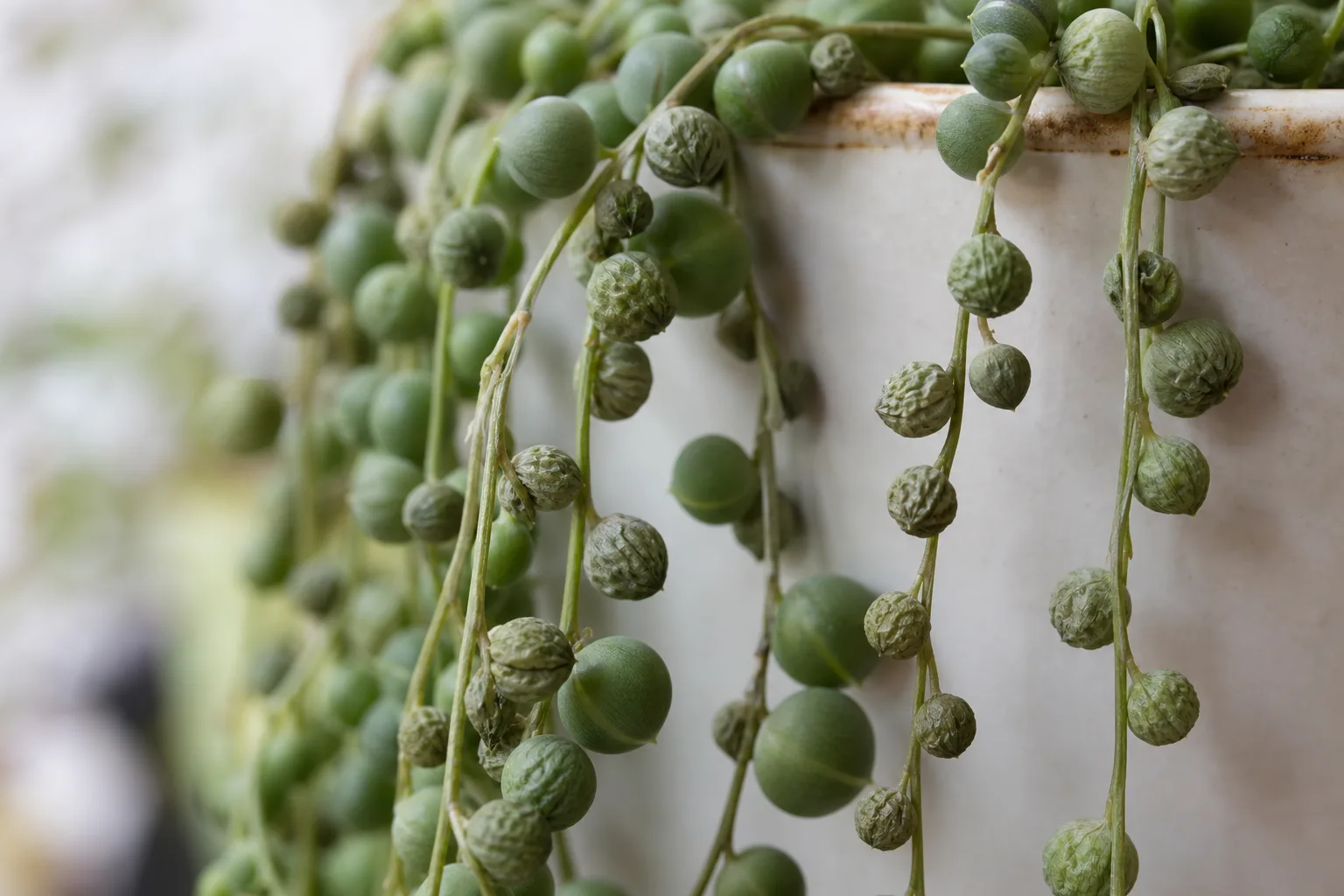
Crispy Leaves on String of Pearls: Causes, Checks & Fixes
This guide covers crispy leaves on String of Pearls. See also the general Crispy Leaves guide, watering, and light pages for this plant.
Crispy Leaves on String of Pearls: Causes, Checks & Fixes
Quick answer
Crispy pearls on String of Pearls are usually about environment, not infection. The two most common causes are direct hot sun and prolonged drought stress. On String of Pearls overview, tissue that has turned hard and papery does not recover, so the goal is to stop further damage quickly. NC State notes leaf scorch can occur from direct sunlight, while RHS emphasizes light watering with full dry-down between waterings.
What crispy leaves look like on String of Pearls
Sun scorch pattern
Sun damage is often one-sided: the window-facing pearls turn tan, brown, or papery first, while shaded pearls stay firmer. This lines up with String of Pearls light needs, which are bright but not harsh all-day direct rays. Missouri Botanical Garden describes part shade and shriveling under improper light.
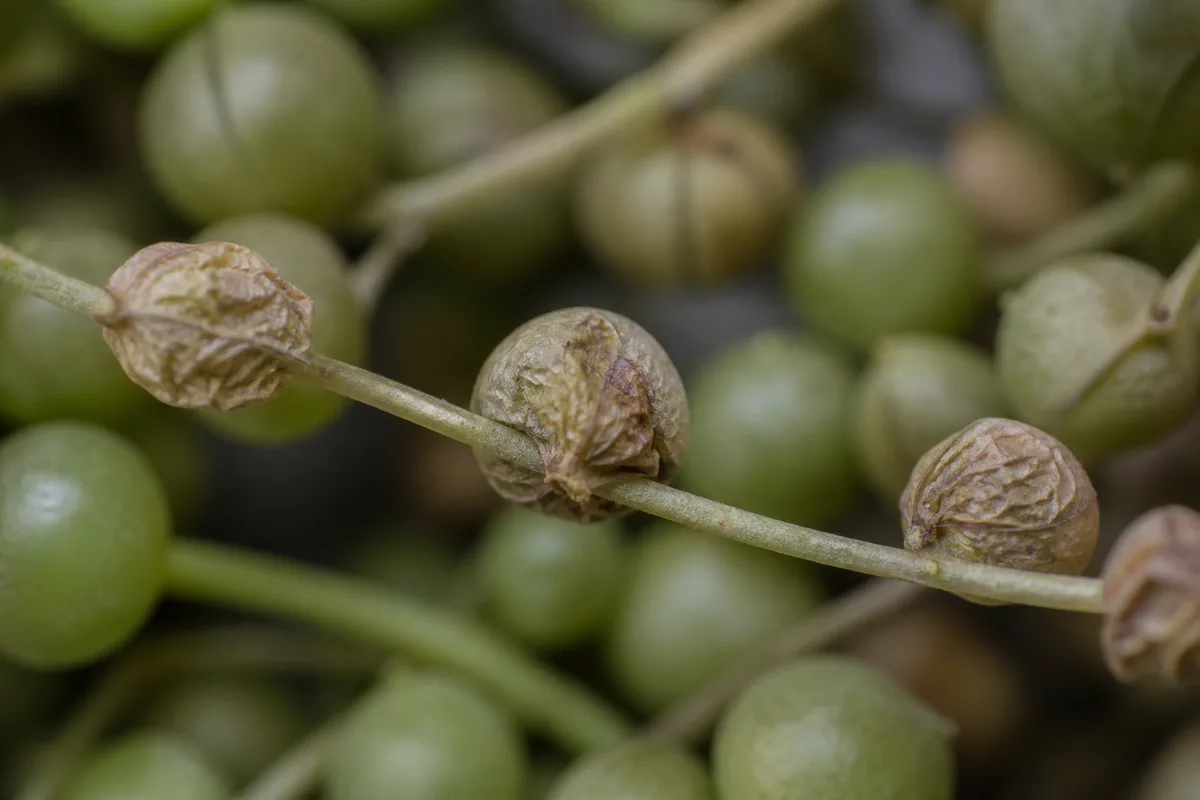
Crispy Leaves symptoms on String of Pearls - compare with healthy tissue on the same plant.
Underwatering crisp pattern
With underwatering, pearls usually wrinkle first, then become hard and dry across several strands. The pot feels very light, and the mix may pull away from the pot edge. This species stores water in its leaves, so it can survive drought for a while, but extended dry periods eventually cause permanent tissue loss. RHS explains these plants come from arid regions and are watered modestly with dry-down between drinks.
Rot lookalike pattern
Rot rarely looks crisp at first. You are more likely to see soft tissue, yellowing, collapse, or dark mushy stem bases while soil stays wet. UF’s Emerging Pathogens Institute notes that overwatering and low-oxygen wet media are classic root-rot conditions.
Why this happens on String of Pearls
String of Pearls is a trailing succulent adapted for bright conditions, free-draining media, and dry intervals. It struggles at both extremes: intense direct heat can scorch exposed pearls, while repeated deep drought can harden and desiccate them. It is also vulnerable to root stress when kept soggy. NC State and Missouri Botanical Garden both highlight this species as sensitive to overwatering, underwatering, and light mismatch.
How to confirm the cause in 5 checks
- Map the damage pattern. One-sided damage near a bright window points to scorch. Evenly spread crisping points more to drought stress.
- Check pot weight. Very light pot plus wrinkled pearls suggests delayed watering.
- Check media moisture 1-2 inches down. Bone dry supports drought diagnosis; wet mix with decline suggests root issues.
- Press the stem base near soil line. Firm is better; dark soft tissue is a red flag for rot.
- Review recent changes. Sudden move into stronger sun, missed water cycles, or a heavy mix in a low-airflow spot can explain the pattern.
First fix to try
Move the plant out of harsh afternoon direct sun first. Then reassess moisture before watering. This sequence matters: many plants are overwatered after sun stress because crispy tissue is mistaken for thirst. Place it in bright, indirect light or gentle morning sun while you diagnose.
Step-by-step recovery
If the cause is underwatering
- Water deeply once until excess drains, then let the mix dry again before the next watering.
- If the mix has become hydrophobic and water runs down the sides, bottom-water for 20-30 minutes once to rewet the root zone evenly.
- Resume a dry-down rhythm instead of fixed calendar watering.
If the cause is sun scorch
- Keep in bright, filtered light for 2-3 weeks.
- Remove only fully dead pearls; keep partially green strands that can still feed new growth.
- Reintroduce direct sun gradually, starting with gentle morning light only.
If the cause may be root stress
- Do not add more water until you inspect moisture and root condition.
- If soil stays wet for days and stems soften, unpot and inspect roots; trim only dead, mushy roots and repot in fresh fast-draining succulent mix.
- If the crown is fully soft and black, recovery is unlikely; salvage healthy cuttings above damaged tissue.
Recovery timeline
For mild scorch or mild drought stress, symptom spread usually stops within 5-10 days once conditions are corrected. Existing crispy pearls stay damaged, but new growth should look healthier over the next 2-4 weeks in active growth season. If crisping continues after two weeks of corrected light and watering, reassess for hidden root problems or persistent heat stress.
Lookalike symptoms to rule out
- Crispy pearls: hard, papery, dry texture.
- Brown tips: usually margin or tip burn rather than whole-pearl collapse; see String of Pearls brown tips guide.
- Underwatering (earlier stage): wrinkled or deflated pearls before they turn hard; see String of Pearls underwatering guide.
- Overwatering/rot: soft or translucent tissue with wet media; see String of Pearls overwatering guide and root rot guide.
Mistakes to avoid
- Watering immediately without checking if the mix is already wet.
- Moving from deep shade straight into intense afternoon window sun.
- String of Pearls repotting guide, heavy watering, and pruning all in one day while the plant is stressed.
- Treating humidity as the main fix; this species usually needs light and watering corrections first, not misting.
How to prevent crispy pearls next time
Keep String of Pearls in bright light with only gentle direct morning sun. Use a gritty cactus/succulent mix in a pot with drainage, and let the mix dry between waterings. RHS recommends a warm bright position with free-draining cactus compost, and NC State similarly recommends cactus-style media and warns soggy soil drives root rot. For wider care context, use the String of Pearls overview and watering guide.
When to worry
Escalate quickly if you see wet soil plus dark soft stem bases, foul smell, or sudden collapse. That is not typical sun scorch or simple drought stress. It can indicate active rot, and delay lowers the chance of saving the crown.
Diagnostic checklist
If you only do three things today:
- Move the plant out of harsh afternoon direct sun.
- Check moisture before watering.
- Confirm stem base is firm, not soft.
These three checks prevent the most common misdiagnosis loop: scorched pearls followed by unnecessary watering that triggers rot.
When to use this page vs other String of Pearls guides
- String of Pearls watering guide - Use for routine moisture checks before assuming crispy leaves is the main issue.
- String of Pearls problems hub - Browse all 17 common issues on this species.
- Brown Tips on String of Pearls - Different entry point when symptoms overlap with crispy leaves.