Transparent Leaves on String of Hearts: Causes, Checks &
Quick answer
Transparent leaves on String of Hearts mean leaf tissue lost turgor-most often because tuberous roots are failing in wet soil while you keep watering. First step: stop watering, check whether mix is damp at depth, and squeeze bead-like tubers for firmness before you trim or repot.
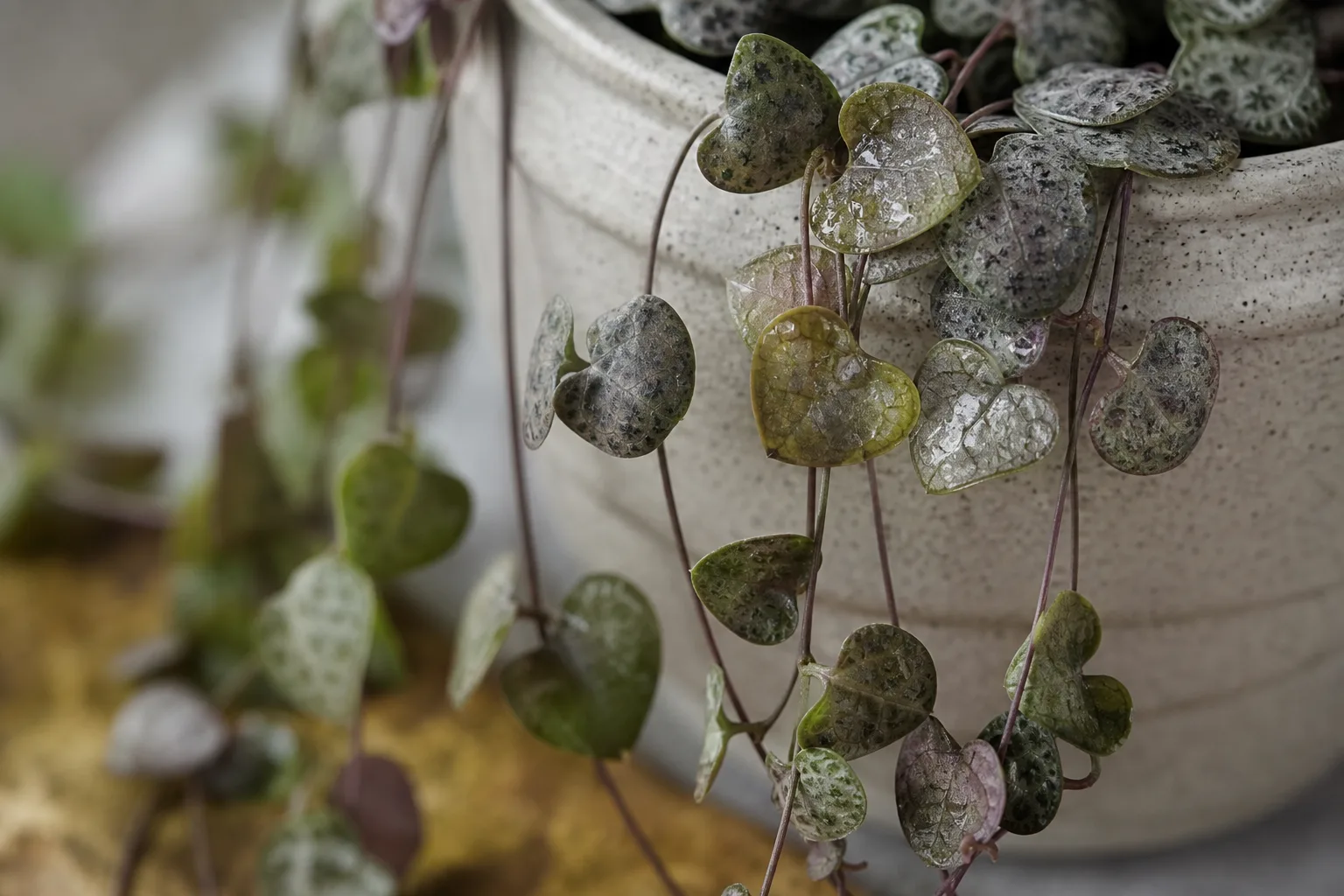
Transparent Leaves on String of Hearts: Causes, Checks & Fixes
This guide covers transparent leaves on String of Hearts. See also the general Transparent Leaves guide, watering, and light pages for this plant.
Transparent Leaves on String of Hearts: Causes, Checks & Fixes
Quick answer
Hold a strand of String of Hearts (Ceropegia woodii) to a window: healthy hearts are small, plump, and opaque. Transparent leaves mean tissue has lost normal turgor and become thin enough to see light through-not a fungal spot disease. On this semi-succulent vine, that look almost always traces to how water is moving between tuberous roots and heart-shaped leaves.
The most common trap: soil stays damp while roots fail from overwatering, yet leaves go soft and translucent instead of firm. Many growers water again because the vine looks thirsty-exactly the wrong move on a plant easily killed by overwatering.
First step: stop watering, confirm moisture at the bottom of the pot, and press bead-like tubers along the strands for firmness. For ongoing dry-down rhythm after you identify the cause, use the String of Hearts watering guide. If tubers are already mushy, escalate to root rot rescue instead of waiting on a dry-out alone.
Wet vs. dry vs. sun: quick comparison
| What you see | Leaf texture | Pot and mix | Tuber feel | Likely cause | Next step |
|---|---|---|---|---|---|
| Soft yellow hearts, limp strands | Water-soaked, jelly-like | Heavy, damp at depth | Spongy or soft | Overwatering / root stress | Stop water; dry out; see mild vs. severe below |
| Thin flat hearts when backlit | Dry, papery-not mushy | Light, dusty dry throughout | Firm beads | Underwatering | Underwatering guide |
| Bleached patches on sun-facing side | May crisp after water-soaked phase | Usually normal weight | Firm | Sun or heat stress | Sunburn guide |
| A few thin hearts at old strand tips | Slightly flat, not spreading | Normal for season | Firm | Normal aging | Monitor; no emergency |
| Wilt on wet mix with see-through tissue | Soft, not crisp | Heavy, never dries | Softening | Advancing rot | Root rot rescue |
Wilted leaves may indicate soil that is too dry or too wet-on string of hearts, wet soil with soft transparent hearts means failing roots, not thirst.
What transparent leaves look like on String of Hearts
Healthy hearts are dark green marbled with silver on top and purple underneath, spaced every few inches along wiry pink stems. Transparent damage stands out when you backlight a strand: light shows through patches that should be solid green.
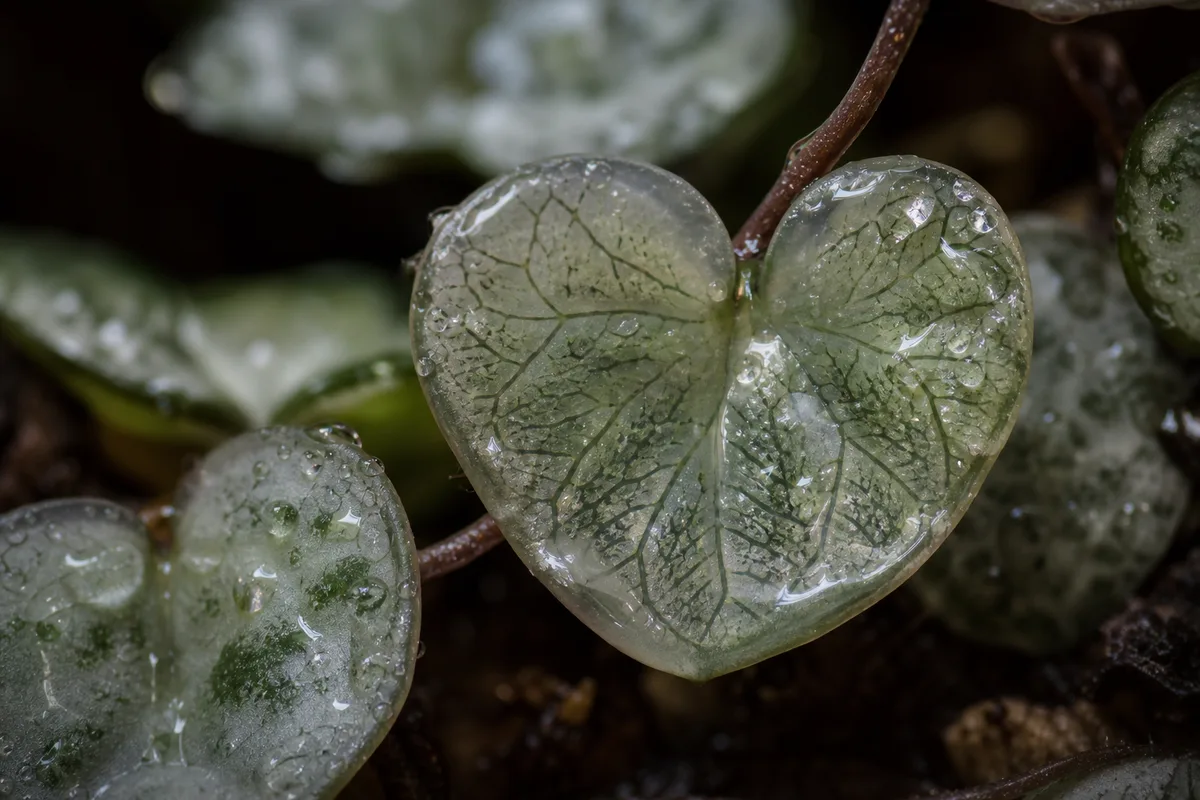
Transparent Leaves symptoms on String of Hearts - compare with healthy tissue on the same plant.
Overwatering and root-failure pattern (most common)
- Leaves feel soft, water-soaked, or jelly-like rather than succulent
- Yellow or pale wash spreads through affected hearts before they collapse
- Pot stays heavy for days; mix is damp at depth through drainage holes
- Bead-like aerial tubers and crown tubers may feel spongy or give when squeezed
- Strands may droop even though you watered recently-damaged roots cannot supply water (see wilting for the full wilt-on-wet-soil paradox)
- Sour or musty smell from the drainage hole suggests chronic wet mix; fungus gnats often appear in the same conditions
Underwatering pattern
- Leaves look thin, flat, and slightly see-through when backlit-but feel dry, not mushy
- Pot feels very light; mix is dusty dry throughout
- Tubers along the strand stay firm; the taco test shows leaves fold easily
- Vine may look limp overall until a deep watering returns turgor
- Transparency is even along many strands, not clustered only near wet soil
Sun or heat stress pattern
- Translucent or bleached patches on leaves facing the hottest window side
- Damage appears days after moving closer to glass or placing outdoors without acclimation
- Outer hanging strands show damage first; soil moisture and tubers are usually normal
- Tissue may crisp after the initial water-soaked phase-full differentiation lives on the sunburn page
Normal thinning during active growth
- Individual older hearts at the end of long strands thin slightly before dropping
- Rest of the vine pushes plump new leaves; tubers remain firm
- Not an emergency unless transparency spreads quickly on new growth
Why String of Hearts gets transparent leaves
String of Hearts evolved on rocky hillsides in southern Africa, storing water in a woody caudex at the base, bead-like aerial tubers, and fleshy leaves. Missouri Botanical Garden describes Ceropegia woodii as a tuberous South African perennial suited to bright light and well-drained conditions-the same foundation every watering decision should respect indoors.
That physiology explains why transparent leaves usually mean water is in the wrong place, not low humidity or a mysterious leaf disease.
Chronic overwatering keeps tuberous roots in oxygen-poor, saturated mix. As roots fail, they cannot move water up the vine-even when soil feels wet. Leaves lose internal pressure and go soft and translucent. Roots growing in waterlogged soil may die because they cannot absorb the oxygen needed to function normally. Watering again when you see limp transparent leaves accelerates rot. Early triage overlaps with the overwatering page.
Prolonged underwatering depletes leaf reserves until tissue thins enough to appear translucent when backlit. This is less common than the wet-soil version because tubers buffer drought-but a forgotten hanging basket in bright summer light can still thin leaves within days.
Winter overwatering is a frequent trigger. String of Hearts is dormant over winter and watering should be reduced even further. Cool dim rooms plus a summer watering schedule leave mix wet for weeks while growth stalls-transparency on lower leaves often appears before tubers go fully mushy.
Heavy peat mix or pots without drainage hold moisture around sparse tuberous roots. The surface may look dry while the core stays wet-classic setup for soft transparent leaves on an apparently “well cared for” plant. After drought-then-overwater cycles, hydrophobic dry mix can mask true moisture at depth.
Oversized pots sized for trailing canopy width while tuber mass stays small keep the root zone wet for weeks-a common reason transparency appears on lower leaves first.
Low humidity alone rarely causes water-soaked transparency on String of Hearts the way it does on tropical foliage plants. Fix water and roots before you mist or add a humidifier.
How to confirm the cause
Work through these checks in order:
- Soil moisture at depth - Insert a finger or wooden skewer through the drainage hole or deep into the pot. Damp throughout with soft translucent leaves points to overwatering. Bone dry with thin flat leaves points to underwatering. The watering guide explains seasonal depth targets.
- Pot weight - Lift the hanger. A heavy pot that stays wet for a week fits root stress; a very light pot fits drought.
- Tuber firmness - Press bead-like tubers between leaves and at the soil line. Firm tubers with dry soil suggest underwatering; soft spongy tubers with wet soil suggest rot.
- Leaf texture and taco test - Pick a mature heart halfway down a strand and fold it gently between thumb and finger. A hydrated leaf resists bending and feels firm; a thirsty leaf folds easily like a taco shell and may look slightly see-through when backlit. Mushy water-soaked tissue fits wet roots. Dry papery thinness fits drought. One-sided bleached patches fit sun.
- Watering history - Did you water in the last three to five days while mix was still damp? Did winter arrive without cutting back frequency?
- Light history - Recent move to hot south- or west-facing glass? Outer strand damage only on the sun side suggests scorch-see light requirements before you change watering.
- Smell check - Sour odor from drainage holes confirms chronic wet mix, not simple thirst.
If wet soil and soft tubers both check out, treat as overwatering even if leaves look “thirsty.”
First fix for String of Hearts
Stop watering immediately and confirm whether the potting mix is still damp at depth before you trim, repot, or give another drink.
Move the basket to bright indirect light with good airflow so evaporation can help a wet root zone dry-without harsh direct sun that adds scorch on already weakened leaves. This single pause prevents the most common mistake: watering transparent leaves while tubers are already drowning.
Do not repot on day one unless tubers are mushy and smell sour. Do not fertilize stressed vines. Do not mist leaves to “hydrate” them-that does not reach failing roots and can encourage fungal issues on wet foliage.
Step-by-step recovery
Once you know whether wet roots, drought, or sun drove the transparency, work in this order:
Overwatering and root stress (mild)
If tubers are still firm and only the mix is too wet:
- Withhold water until the mix dries completely throughout-often one to two weeks indoors depending on pot size and season (typical indoor range; cool winter rooms may take longer).
- Improve airflow and bright indirect light so the pot can dry predictably.
- Judge success by firm tubers and new opaque hearts along strand tips-not old translucent tissue greening up.
- Resume watering only when depth checks and pot weight match the seasonal rhythm in the watering guide.
For soft tubers, sour smell, or wet mix that will not dry, stop here and open the root rot rescue page for unpot, trim, and repot protocol-do not repeat full surgery steps on this symptom page.
Underwatering
- Water deeply so moisture reaches the whole root ball-not a light surface sprinkle on hydrophobic dry mix.
- Let excess drain fully; discard saucer water.
- Expect thin leaves to plump within one to two days if roots are healthy; already collapsed transparent tissue will not revert.
- Track how fast your pot dries in bright indirect sunlight before setting the next watering.
Sun or heat stress
- Pull the basket back from hot glass or filter intense afternoon rays-see the sunburn guide for acclimation steps.
- Acclimate gradually if you need brighter light for denser growth.
- Trim only fully collapsed leaves for appearance once new growth looks healthy.
Recovery timeline
Days 1–2 (underwatering): Thin leaves regain turgor after a proper deep watering if tubers stayed firm.
Week 1–2 (overwatering, mild): Withholding water and improved airflow should stop new transparency. Old damaged hearts remain marked.
Week 2–4 (overwatering, moderate rot): After trim and repot on the root rot page, new firm leaves along vines signal roots are recovering. No new mushy tubers is the key win.
Month 1+ (severe rot): Propagate from healthy aerial tubers or firm stem sections if the main caudex collapsed-see the propagation guide. Full strand refill takes a growing season.
Transparent leaf tissue does not heal back to solid green. Recovery always shows in new growth.
Field note: February hanging basket
In a monitored indoor case (February, cool north-facing room, 8-inch plastic hanging basket on an unchanged summer watering schedule), lower hearts turned soft and see-through while the pot stayed heavy and bead tubers near the soil line began to soften. After stopping water for ten days until a skewer from the lower third pulled out clean, tubers firmed again and new opaque hearts appeared at strand tips within three weeks-old translucent tissue did not re-green. Outcome markers: firm tubers, no sour smell, and plump new growth only.
Lookalike symptoms
Crispy leaves mean tissue dried out-edges and tips go papery and brown. Transparency is about lost turgor and water-soaked softness, not brittleness. Both can follow root failure, but check texture first.
Drooping leaves often overlap with transparency. Underwatering droop comes with dry soil and thin flat leaves. Overwatering droop comes with wet soil and soft yellow hearts-the wilting page walks through the full split.
Yellow leaves without transparency may be early overwatering, cold damage, or natural aging on the oldest hearts. Add the see-through water-soaked texture to confirm advanced turgor loss.
Spider mites cause stippling and fine webbing in warm dry winter rooms-not usually large translucent patches. Shake a strand over white paper to rule them out before assuming water stress alone.
Mistakes to avoid
- Watering because leaves look limp while soil at depth is still damp
- Keeping a summer watering schedule through winter dormancy
- Using dense peat-heavy mix without perlite, pumice, or coarse sand
- String of Hearts repotting guide into a much larger pot “to help recovery”-extra wet mass around tubers worsens rot
- Stripping every transparent leaf before fixing the root cause
- Fertilizing to “green up” stressed leaves-wait until new growth is steady
- Misting or overhead watering on a plant that needs dry foliage and dry roots
How to prevent transparent leaves next time
Match watering to how fast your pot dries in bright indirect light-not a fixed weekly calendar. During active growth, allow soil to dry completely between waterings; in winter, push dry-down deeper per the watering guide’s seasonal table.
Use fast-draining mix, pots with drainage holes, and empty saucers after every watering. String of Hearts likes to be somewhat crowded-avoid oversized pots that stay wet for weeks.
When transparency appears, fix water and light before reaching for fertilizer, humidity gadgets, or pest sprays. The small thin leaves along this vine telegraph root-zone problems faster than many larger houseplants-treat the soil, not just the foliage.
When to worry
Treat as urgent when transparency spreads quickly with mushy tubers, blackening stems at the soil line, or a sour smell from the pot. That combination suggests advancing rot-not cosmetic stress. Open the root rot rescue page immediately.
A few thin see-through leaves on firm tubers after a dry spell, or isolated sun-bleached hearts after a window move, can usually wait for a measured care adjustment.
If the main caudex is soft and strands collapse from the soil line up, propagate from the healthiest aerial tubers or stem sections via the propagation guide rather than waiting for the whole plant to rebound.
Related String of Hearts care
- String of Hearts overview
- String of Hearts watering
- Overwatering on String of Hearts
- Root rot on String of Hearts
- Underwatering on String of Hearts
- Sunburn on String of Hearts
- Wilting on String of Hearts
- String of Hearts propagation
- All String of Hearts problems
Conclusion
Use this page to confirm transparent leaves on String of Hearts by texture, pot weight, and tuber squeeze-not by treating every houseplant the same. When symptoms overlap with sibling pages, follow the linked guide for the matching cause before stacking fertilizer, repotting, or pesticide.
When to use this page vs other String of Hearts guides
- String of Hearts watering guide - Use for routine moisture checks before assuming transparent leaves is the main issue.
- String of Hearts problems hub - Browse all 45 common issues on this species.