Root Bound on String of Hearts: Causes, Checks & Fixes
Quick answer
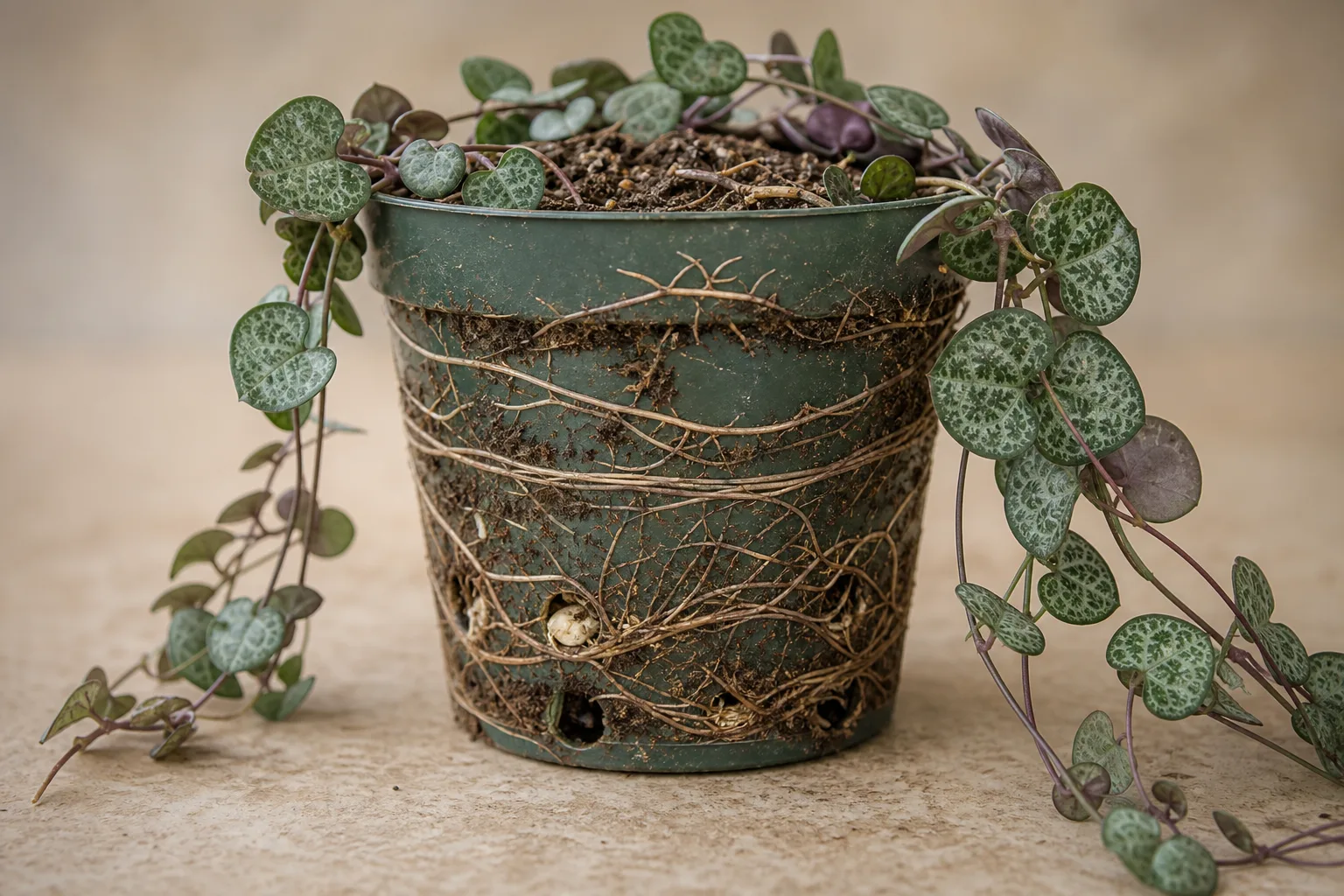
String of Hearts thrives slightly root-bound until soil volume collapses-then fast dry-down and wilt cycles mean repot. Slide the plant out: dense circling roots with little mix left confirm severe binding; firm crowded tubers with multi-day dry-down can wait until spring.
Root Bound on String of Hearts: Causes, Checks & Fixes
This guide covers root bound on String of Hearts. See also the general Root Bound guide, watering, and light pages for this plant.
Root Bound on String of Hearts: Causes, Checks & Fixes
Quick answer
Ceropegia woodii is a tuberous trailing semi-succulent that likes to be crowded-so “root bound” on String of Hearts is not automatically an emergency. A 4-inch hanging basket in String of Hearts light guide can hold a dense, healthy root ball for two to three years while vines push silver-marbled hearts and bead-like aerial tubers along pink wiry stems. Binding becomes a problem when the underground tubers and fine roots consume so much soil volume that water runs through without soaking in, the pot feels light again within 24 to 48 hours, and strands wilt between waterings despite your best schedule.
First fix: slide the plant out and inspect the root ball. Dense circling roots with a thin soil core and roots escaping drain holes mean severe binding-plan a spring one-size-up repot. A firm crowded ball with healthy new growth and multi-day dry-down can wait.
Routing: Mushy tubers on wet mix → root rot guide. Full repot workflow, shallow pot sizing, and aerial-tubercle depth → repotting guide. Roots through holes without binding symptoms → exposed roots page. Fast dry-down checks → watering guide.
What root bound looks like on String of Hearts
Early binding that still looks healthy
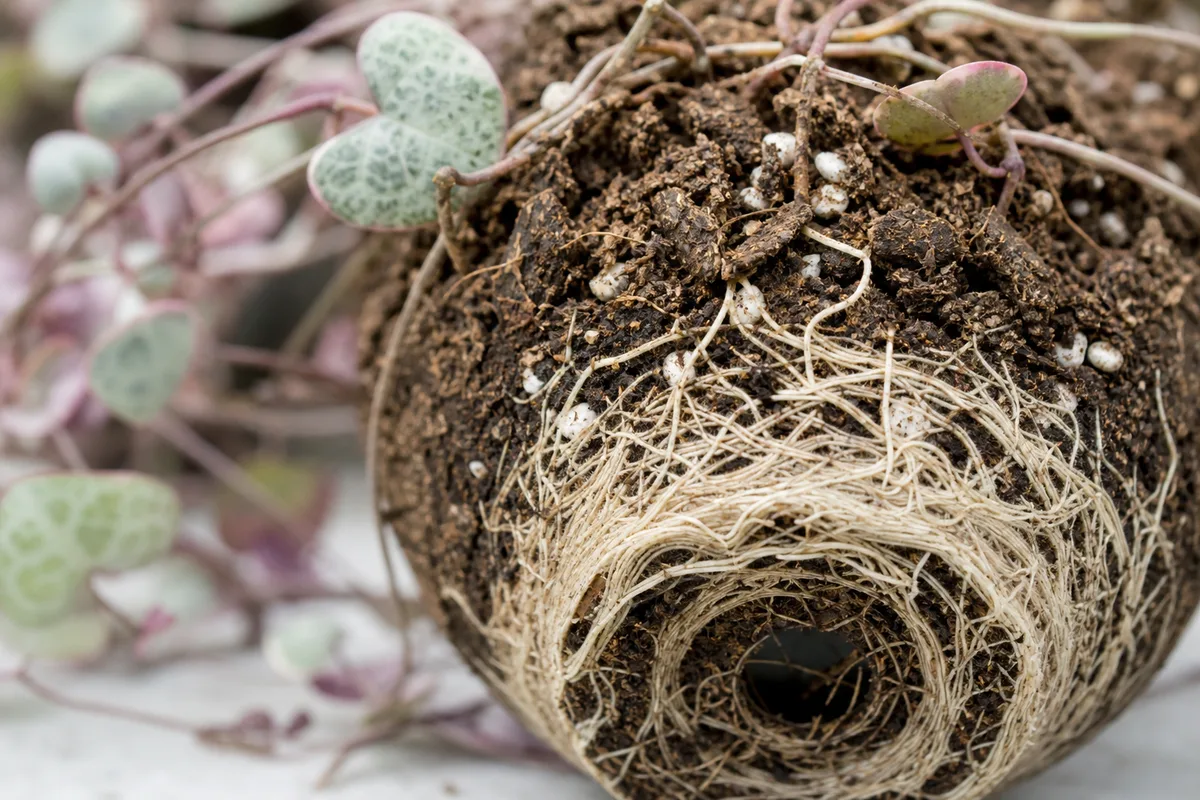
Root Bound symptoms on String of Hearts - compare with healthy tissue on the same plant.
Long purple stems, plump heart-shaped leaves, and aerial tubers along the vines can all look excellent while roots quietly fill the pot. NC State Extension describes bead-like tubercles that develop along the stem between leaves-normal Rosary Vine anatomy, not a distress signal. At this stage the mix may dry a day or two faster than it did six months ago, but watering still lasts several days and new leaves arrive at full size. The pot may feel slightly lighter between drinks. That is mild crowding, and for String of Hearts overview it is often ideal.
Severe binding: fast dry-down and wilt cycles
When binding crosses from comfortable to restrictive, symptoms shift quickly on a trailing succulent that stores water in tubers and leaves. Water channels straight through the pot after a thorough soak. The container is light again within a day in bright light-even though you watered yesterday. Strands droop and recover only briefly because there is too little soil left to buffer moisture around the tuberous root system. Growth stalls, new hearts arrive smaller, and lower leaves yellow or drop despite regular watering. White roots peek from drainage holes or circle tightly when you lift the rim. The pot feels top-heavy: trailing canopy width far exceeds what the shrunken soil volume can support.
On a typical 4-inch hanging basket in bright indirect light, that 24-hour dry-down trap is the clearest signal that soil-to-root ratio has collapsed-not that you are underwatering on purpose.
Why String of Hearts gets root bound
Fast growth in bright light fills small hanging baskets within one to two seasons. Underground tubers expand beyond what a standard 4-to-6-inch pot comfortably holds, and aerial tubers root easily when they contact soil-adding backup root mass along the vines. Because the plant tolerates missed drinks better than many thin-leaved tropicals, owners often delay repotting, which is fine until the mix-to-root balance tips.
Staying in the nursery pot too long is a common trigger: the plant looked perfect for months, then suddenly cannot stay hydrated. The opposite mistake-repotting into an oversized decorative pot sized for trailing length rather than tuber mass-invites rot. Extra wet soil around sparse roots is more dangerous than crowding on a species easily killed by overwatering. Many experienced growers keep String of Hearts slightly tight on purpose for that reason.
Crowded-pot tolerance vs. soil-volume collapse
There is a useful middle ground: roots fill the pot comfortably, circle lightly at the edges, and still access oxygen between waterings. Missouri Botanical Garden describes Ceropegia woodii as a tuberous South African perennial suited to well-drained conditions in bright light-a biology that favors compact root zones over empty wet mix. In that balanced state, internodes stay short and foliage stays dense.
Collapse happens when circling roots dominate the volume and almost no fresh mix remains to hold moisture evenly. Tuber and leaf storage delays visible wilt-so the plant can look fine until dry-down suddenly shifts from every 10 to 14 days to every one to three days. That rapid change is easy to misread as a watering-schedule problem if you never unpot.
How to confirm the cause
Pot-weight and unpotting checks
Lift the pot and compare weight before and after watering using a dry baseline from the watering guide. Push a dry skewer into the lower third: if water drains straight through and the skewer pulls out dusty within a day, inspect roots.
Gently tip the plant out. A solid cylinder of firm white or tan roots with a thin soil core confirms severe binding. Healthy roots feel firm and pale; black mushy tissue points to root rot instead. Plenty of mix visible around the perimeter with light circling at the drainage layer means mild crowding-monitor until spring.
Temporary stall after a recent repot is normal; binding builds gradually over seasons.
Lookalike comparison table
| What you see | Pot and mix | Root or tuber feel | Dry-down speed | Likely cause | Next step |
|---|---|---|---|---|---|
| Long healthy vines, firm beads on stems | Normal weight rhythm | Firm underground tubers; light edge circling | Every 7 to 14 days in active growth | Mild crowding - often ideal | Monitor; top-dress or repot in spring if mix degrades |
| Wilt between waterings, small new leaves | Light soon after watering | Firm circling roots; little visible mix | 24 to 48 hours in bright light | Severe binding | One-size-up repot; see repotting guide |
| Yellow wilting on damp mix | Heavy, wet throughout | Mushy, translucent tubers; sour smell | Stays wet for days | Root rot | Root rot rescue - not more water |
| Thin folding leaves, limp strands | Very light, dusty dry throughout | Firm tubers; no dense circling | Extended dry period | Underwatering | Underwatering guide |
| Beads on vines only; soil holds moisture | Steady weight rhythm | Firm; mix still present | Unchanged schedule | Normal aerial tubers | No repot needed; see exposed roots if confused |
Wilted leaves can result from underwatering-but on String of Hearts, repeated wilt on a light pot that dries within a day while roots circle densely is binding, not thirst.
First fix for String of Hearts
Slide the plant out and assess severity before you reach for a bigger pot.
If roots circle densely, little soil remains, and you see wilt-dry cycles or roots escaping drainage holes: plan a repot into a container only one size larger with fresh fast-draining mix. Do not size the pot for trailing canopy length.
If the root ball is crowded but firm, vines are growing, and watering still lasts several days: hold off. Mild binding often suits this plant better than an early upsize. Consider top-dressing-replacing the top inch of degraded mix-rather than a full transplant when binding is mild and growth is active.
If tubers are mushy on wet mix: stop-this is rot overlap, not binding alone. Follow the root rot guide before repotting.
Do not jump to a large pot; that increases rot risk more than crowding does on tuberous semi-succulent roots.
Repot summary when binding is confirmed
When inspection confirms severe binding, repot in late spring through early summer if possible-roots colonize fresh mix fastest in warm, lengthening days. Choose a shallow, wide pot only one to two inches wider in diameter than the current container, with drainage holes sized to the tuber mass-not the trailing vine length. Use well-drained sandy potting soil amended with perlite or coarse sand.
Loosen the outer root mat gently; trim only mushy or dead tissue. Set underground tubers at the same depth they occupied before. Keep aerial tubers at or slightly above the soil line-burying bead-like stem tubercles invites the same rot that kills cuttings planted too deep. Water lightly once, keep in bright indirect light, and skip fertilizer for four to six weeks.
The repotting guide covers shallow-pot geometry, gritty mix recipes, winter emergency exceptions, and step-by-step transplant technique in full-this page owns binding confirmation and triage, not the complete workflow.
Recovery timeline and signs of improvement
After repotting, expect one to two weeks of adjustment-some leaf drop or limp strands are common while roots settle. New plump leaves along vine tips within roughly two to four weeks-in most home climates with moderate light and warm spring conditions-signal roots are accessing fresh mix. That window stretches longer in cool winter rooms or after an oversized pot mistake; treat the range as a home-climate heuristic, not a guarantee.
Watering intervals should lengthen compared with the old crowded pot. Worsening yellow leaves on wet soil, soft tubers, or collapsing stems at the base mean rot, not binding-stop watering and inspect immediately per the root rot guide.
Lookalike symptoms
Underwatering also causes thin, drooping leaves, but the pot stays very light, roots are not circling the pot wall densely, and tubers feel firm. Overwatering and root rot show wet heavy mix, sour smell, and mushy tubers-not a dry cylinder of firm roots. Leggy pale growth usually means low light, not crowded roots. Repotting stress can mimic binding for a few weeks; wait and watch whether new growth resumes before repotting again.
Roots visible through drain holes alone may be exposed roots from mix erosion or normal tight growth-not always a binding emergency. Hydrophobic crust after drought-then-overwater cycles can mimic fast surface dry-down; a skewer from the lower third reveals whether the core is actually dry.
Mistakes to avoid
Do not repot into a huge decorative pot because the vines are long-the canopy size does not dictate pot width for tuberous roots. Do not water more often to compensate for fast dry-down without checking roots; that can rot tubers in a still-bound pot-see the overwatering page if mix stays wet while strands wilt. Do not tease apart every root aggressively; String of Hearts tolerates some circling. Avoid elective winter repotting unless binding is severe and the plant is actively failing. Do not fertilize right after repotting to “boost” a stressed vine.
How to prevent root-bound problems next time
Track dry-down speed seasonally using pot weight and skewer depth from the watering guide. When summer watering shifts from every two weeks to every few days without hotter light or a smaller pot, roots likely need space-or mix has degraded and needs top-dressing.
Repot on symptoms, not a rigid calendar: every two to three years is typical for moderate growers in bright light. When you do repot, increase pot size gradually and refresh mix around the root ball. Keep bright light so growth stays manageable and you notice stall early.
When to worry
Act soon if soil dries within a day, repeated wilting continues after thorough watering, or roots are packed so tightly you cannot slip a finger between the ball and pot wall. Mild crowding without wilt or leaf loss can wait until spring.
If inspection reveals mostly mushy roots instead of firm tubers, pivot to a root-rot protocol-binding and rot can overlap when old mix stays too wet in a crowded pot. Repotting should be deferred until necessary unless symptoms like these demand it.
String of Hearts care cross-check
Root-bound triage sits upstream of repotting mechanics and downstream of watering rhythm. This page owns crowded-vs.-severe-binding confirmation; the repotting guide owns full transplant workflow.
- Water: Dry-down protocol - pot weight, skewer depth, taco test
- Repot: Shallow pot, mix recipe, tuber depth
- Rot: Mushy tuber rescue when wet mix pairs with soft tissue
- Exposed roots: Aerial tubers vs bare crown
- Overwatering: Wilt-on-wet-soil trap in crowded pots
Related String of Hearts care
- Repotting guide - shallow pot, mix, tuber depth, full workflow
- Watering guide - dry-down checks that confirm fast dry-down
- Root rot - mushy tubers on wet mix
- Exposed roots - aerial tubers vs soil-line roots
- Overwatering - chronic wetness in crowded pots
When to use this page vs other String of Hearts guides
- String of Hearts watering guide - Use for routine moisture checks before assuming root bound is the main issue.
- String of Hearts problems hub - Browse all 45 common issues on this species.