Exposed Roots on String of Hearts: Causes, Checks & Fixes
Quick answer
Bead-like bumps on String of Hearts vines are usually normal aerial tubers-not a problem. If underground roots or tubers sit bare at the soil surface and feel firm, top-dress with dry gritty mix first; mushy exposed tissue means rot and needs inspection.
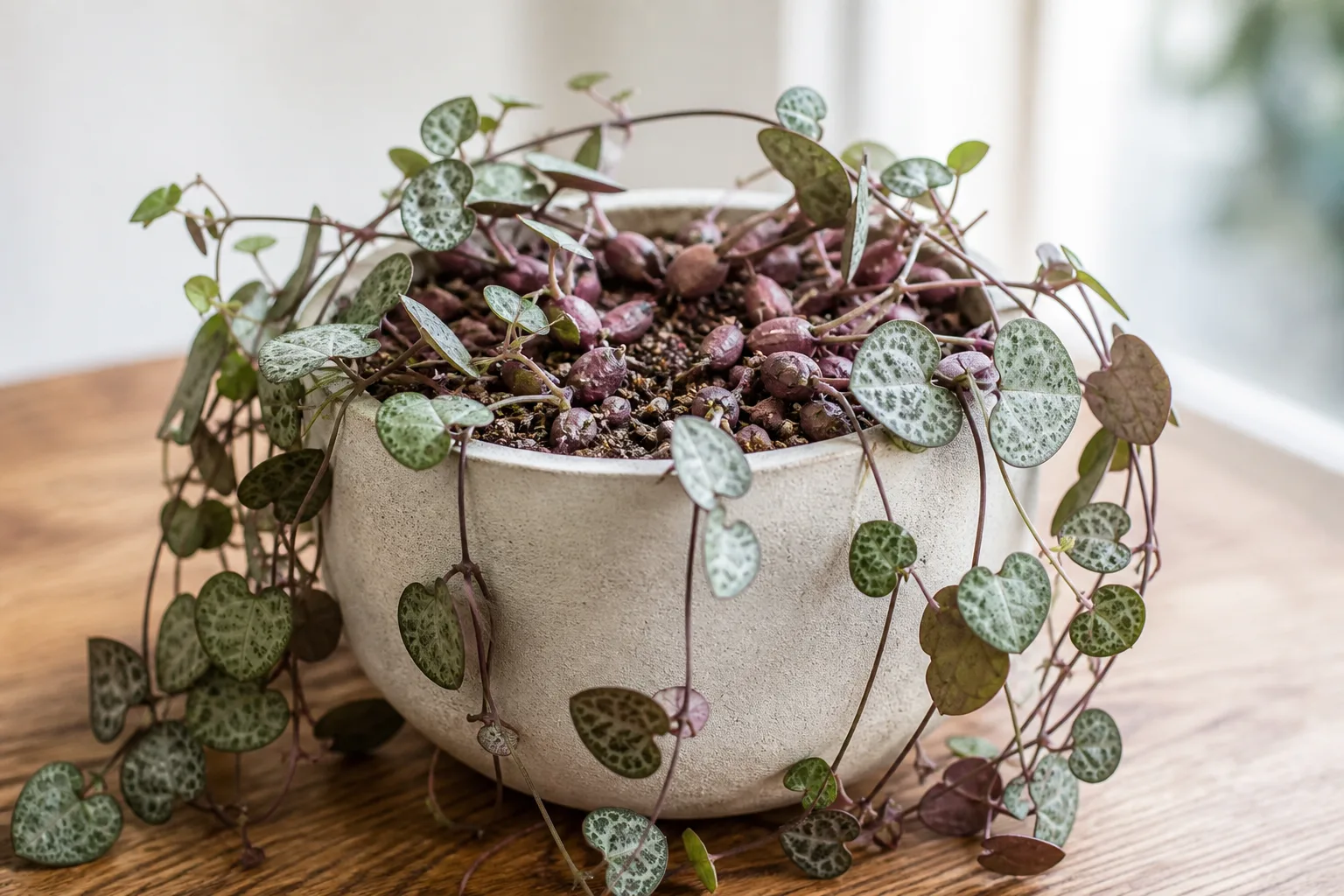
Exposed Roots on String of Hearts: Causes, Checks & Fixes
This guide covers exposed roots on String of Hearts. See also the general Exposed Roots guide, watering, and light pages for this plant.
Exposed Roots on String of Hearts: Causes, Checks & Fixes
Quick answer
Exposed roots on String of Hearts (Ceropegia woodii) often confuse owners because this plant shows roots in two very different places. Bead-like aerial tubers between the heart-shaped leaves on trailing vines are normal Rosary Vine anatomy-not damage. The problem starts when underground tubers or fine roots sit bare at the soil surface, poke from drainage holes, or feel mushy after mix erodes, settles, or rots away.
First step: touch what you see. Firm pale tissue at the pot edge gets a light top-dress of dry gritty mix. Soft black roots with sour-smelling soil need unpotting and rot treatment-not more water.
What exposed roots look like on String of Hearts
Two patterns look like “exposed roots” but mean different things.
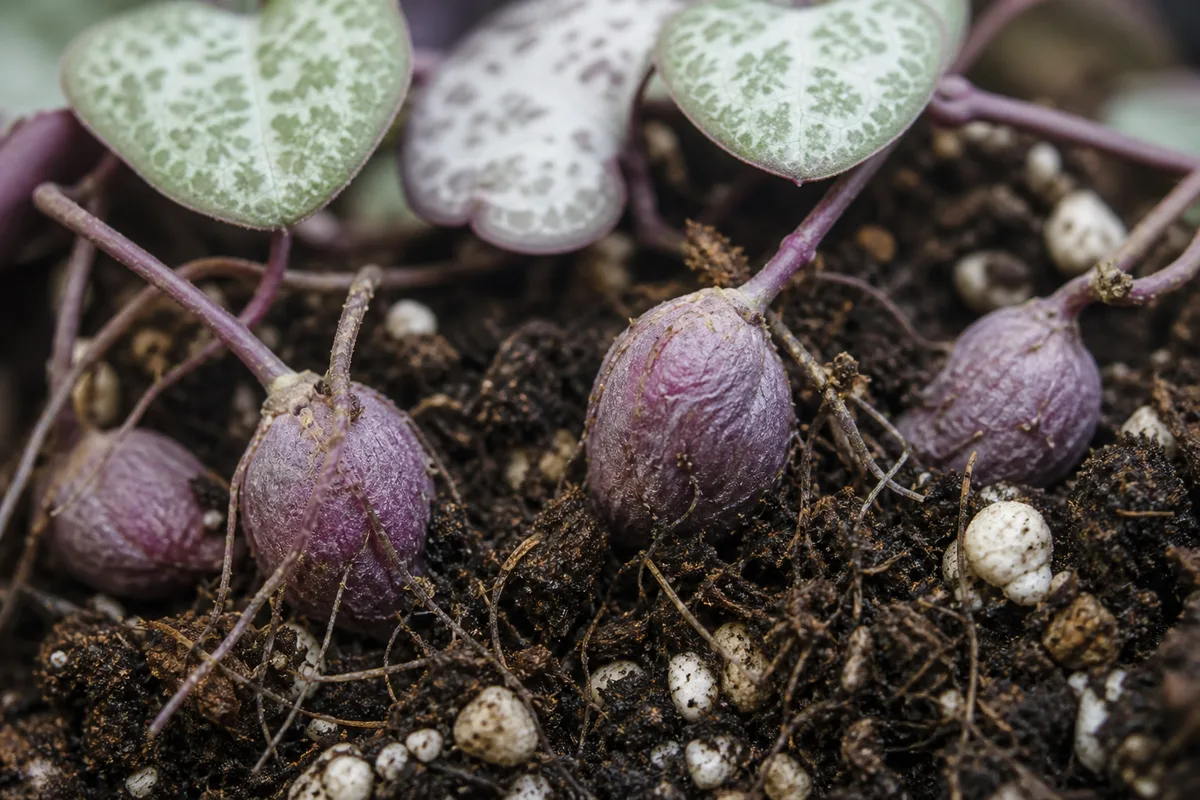
Exposed Roots symptoms on String of Hearts - compare with healthy tissue on the same plant.
Normal aerial tubers on the vine. Small round or potato-like bumps form at stem nodes between leaves, about every few inches along wiry pink strands. NC State Extension describes these as bead-like aerial tubers that develop along the stem between leaves-the feature behind the common name Rosary Vine. They may be white, tan, or slightly cracked. Healthy aerial tubers feel firm, stay attached to living vines, and are not a sign of pests or disease.
Bare roots or tubers at the soil line. Here the issue is substrate loss or root stress. You may see woody grey tubers, pale feeder roots, or tangled mats sitting above where mix used to be. After watering from above, gritty mix can wash toward drain holes and leave a hollow around the crown. In tight pots, circling roots push soil upward until only a thin dusting covers the tuber mass.
Unhealthy exposed tissue turns brown, translucent, or mushy and may smell sour. Strands may droop even when surface mix feels damp, because damaged roots cannot take up water.
Why String of Hearts roots become exposed
Ceropegia woodii is a caudiciform succulent with tuberous storage at the base and along stems. That design suits dry South African hillsides but leaves the root zone sensitive when container mix moves or stays wet too long.
Mix erosion and settling are common in hanging baskets. Fast-draining cactus blends shift when you water from above, when fine perlite floats, or when peat in the blend breaks down over seasons. Lightweight grit collects at drain holes faster than the crown area, exposing upper tubers.
Root binding displaces soil as dense tuber masses fill the pot. String of Hearts likes to be crowded and tolerates tight roots better than many houseplants-but when roots dominate the volume, even small settling leaves tubers visible. Signs include roots circling at the pot wall, emerging from holes, and the pot drying within a day or two of watering.
Chronic overwatering exposes roots indirectly. Wet anaerobic mix breaks down, fine roots rot, and repeated flushing washes away collapsed substrate. Overwatering can cause root rot and yellowing leaves; mushy decay at the surface often coincides with bare tubers and a heavy, sour-smelling pot.
Repotting or rough handling can leave tubers sitting higher than before. String of Hearts expects underground tubers at a stable depth-not buried deeply like a tree. Disturbing the root ball without replacing lost mix quickly exposes storage organs to dry air.
How to confirm the cause
Work through these checks before repotting or flooding the pot:
- Location - Bumps on hanging vines between leaves are aerial tubers. Bare tissue at the pot rim or drain holes is a soil-line problem.
- Texture - Firm beads or pale roots vs. brown mush that slips off when touched.
- Soil history - Recent repot, years without top-dress, or mix washing out of a hanging basket?
- Pot weight and smell - Heavy wet pot with sour odor suggests rot; light pot with firm bare tubers suggests erosion or binding.
- Wilting pattern - Limp strands on wet mix point to root damage; slight limpness on dust-dry mix may be underwatering instead.
- Vine health above soil - Silver-marbled hearts and firm pink stems vs. collapsing bases or blackening crowns.
- Light level - Dim rooms slow drying and extend stress on any exposed tissue after washout.
If aerial tubers are firm on healthy vines and underground roots stay covered, you likely have normal anatomy-not an emergency.
First fix for String of Hearts
For firm underground roots or tubers bare at the soil surface: gently top-dress with fresh dry gritty mix-a cactus blend with extra perlite or pumice-keeping the crown and main tubers at the same depth, not buried deeper under wet compost.
Brush away algae or crust only if tissue stays firm. Trim only black mushy sections with clean scissors. Add mix around exposed tubers and across bare roots, tapering so the main crown sits at its original line. Water once lightly to settle grit, then let the pot dry completely before the next drink.
For normal aerial tubers on vines: leave them alone, or press a firm tuber onto moist mix in a second pot for propagation while still attached to the parent vine-the tubercles will root and produce another plant if the stem contacts soil. Do not bury aerial beads deep-they rot when moisture lingers around them.
Make this one change first before stacking repot, fertilizer, or fungicide.
Step-by-step recovery
- Inspect at drainage holes and the soil edge before unpotting-note color, firmness, and smell.
- If only surface erosion: top-dress bare firm tubers; skip full repot unless more than one-third of the root ball was exposed.
- If roots are circling tightly or mix is exhausted: repot in spring into a pot only one size larger with fast-draining mix.
- When repotting, keep underground tubers at their prior depth; leave aerial tubercles at or slightly above the mix line.
- Trim mushy tubers back to firm tissue; air-dry cut surfaces 24–48 hours before repotting if rot was present.
- Place in bright indirect light with some morning sun so the plant uses water predictably after cover.
- Hold fertilizer until new firm leaves or vine tips appear.
- If the main root mass fails but firm vines and aerial tubers remain, propagate from healthy strands as backup.
Recovery timeline
Firm tubers covered before they dry out often stabilize within a few days once mix is reset and watering follows a dry-down rhythm. Erosion fixed early may show new compact growth at vine tips within one to three weeks in bright light. Rot trimmed at the surface needs two to four weeks before strands regain their plump heart-shaped leaves. Crispy dried feeders rarely regrow-judge success by firm new growth at tips and stable tuber texture, not old leaf color alone.
Lookalike symptoms
- Normal aerial tubercles - Bead-like bumps on strands between leaves; firm, attached, on otherwise healthy vines. This is expected Rosary Vine growth.
- Root rot from overwatering - Mushy texture, sour smell, yellow wilting on wet mix; may expose dead roots as soil collapses.
- Underwatering - Light pot, dry mix throughout, thin flat leaves that plump after one thorough drink-roots not visibly bare at the surface.
- Repotting stress - Symptoms start days after transplant, not gradual erosion over weeks.
- Root-bound drying - Pot empties fast and roots circle inside, sometimes pushing mix up until tubers show-overlaps with exposure but needs repot, not only top-dress.
Mistakes to avoid
Do not panic over aerial tubers on hanging vines-they are a feature, not a flaw. Do not bury pink stems or aerial beads deep to hide them; that traps moisture and invites rot. Do not cover mushy rotted tubers without trimming first. Do not keep watering because strands look limp when soil is already wet. Do not repot into oversized deep pots-excess wet mix around sparse tuberous roots is a common trigger for the rot that exposes roots in the first place. Ceropegia woodii is easily killed by overwatering.
How to prevent exposed roots on String of Hearts
Water at the pot edge or use a gentle stream-not a hard flush on the crown that washes grit away. Refresh or top-dress cactus mix each year rather than letting peat collapse in place. Repot before roots displace nearly all soil volume, but avoid upsizing early; this plant does best when crowded until binding becomes restrictive. Allow soil to dry completely between waterings so mix structure lasts longer. Keep aerial tubers at or slightly above the surface where they can root on contact without sitting in soggy compost.
String of Hearts care cross-check
Exposed roots often signal a substrate maintenance gap on a plant whose tuberous anatomy needs stable gritty volume around storage organs-not confusion between normal stem beads and failing soil-line roots. If the pot stays heavy for days after top-dress, improve light and drainage before increasing water.
When to worry
Same-day action if bare tubers at the soil line bake dry while vines wilt sharply, or if exposed tissue is black and slimy with a soft stem base. Stable winter exposure on a firm plant is lower urgency if you top-dress before warm growth resumes. Aerial tubers on healthy cascading vines alone are not a worry call.
Conclusion
Exposed roots on String of Hearts usually means one of two things: normal bead-like aerial tubers on the vines, or displaced gritty mix around underground tubers-not instant plant death. Confirm location and texture, top-dress firm soil-line roots, repot if bound or rotted, and keep aerial structures where this semi-succulent expects them-at or just above the mix, not buried in wet soil.
Related String of Hearts guides
- String of Hearts overview
- String of Hearts watering
- String of Hearts light
- Root Bound on String of Hearts
- Overwatering on String of Hearts
- Underwatering on String of Hearts
- All String of Hearts problems
Conclusion
Use this page to confirm exposed roots on String of Hearts by pattern and pot checks-not by treating every houseplant the same. When symptoms overlap with sibling pages, follow the linked guide for the matching cause before stacking fertilizer, repotting, or pesticide.