Slow Growth on Staghorn Fern: Causes, Checks & Fixes
Quick answer
Slow growth on Staghorn Fern is often normal-Platycerium bifurcatum is a slow-growing epiphyte that may add only a few antler fronds per warm season. If nothing new emerges through a full spring despite good care, move to brighter indirect light first, confirm soak-and-dry rhythm with the weight test, then feed lightly in season.
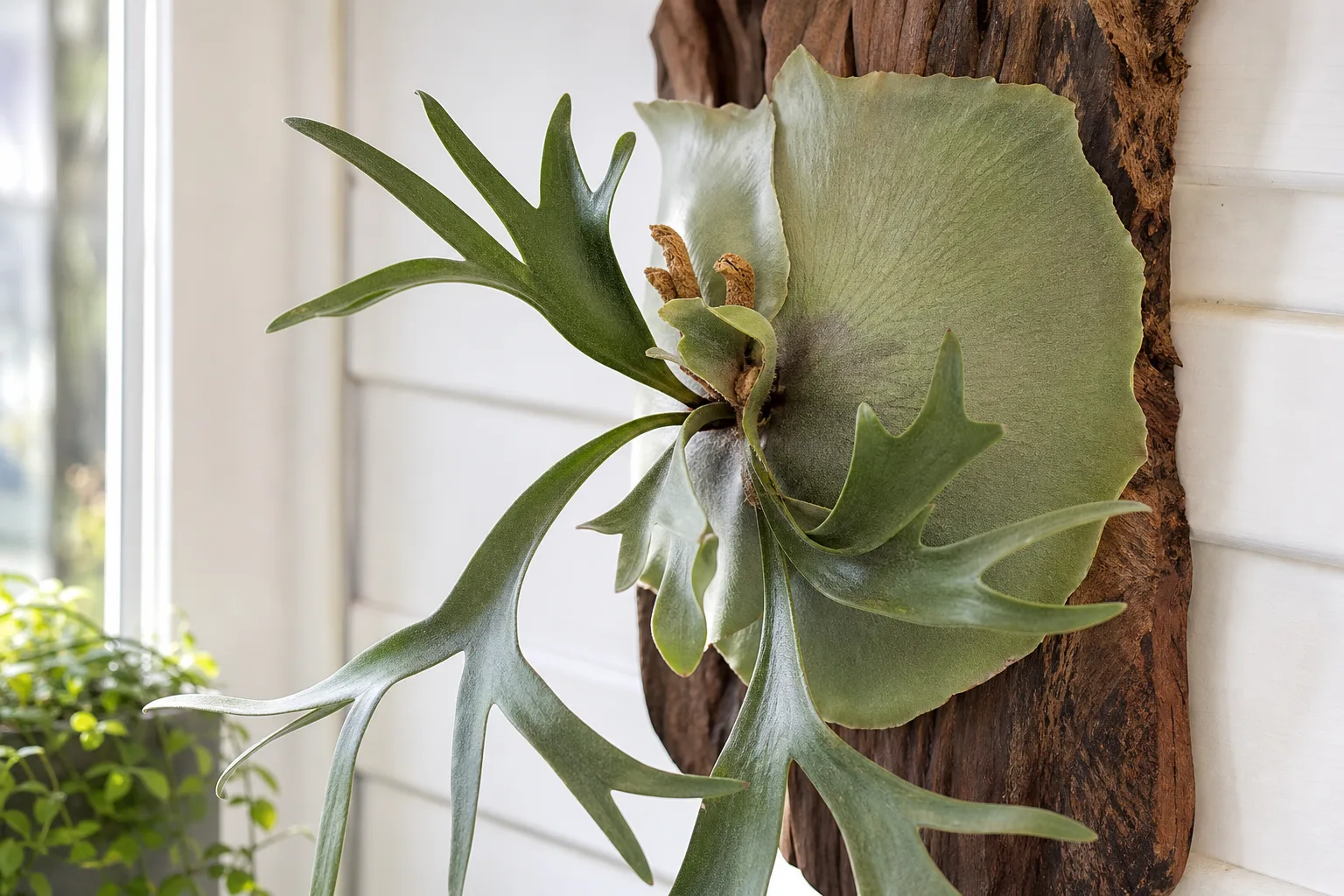
Slow Growth on Staghorn Fern: Causes, Checks & Fixes
This guide covers slow growth on Staghorn Fern. See also the general Slow Growth guide, watering, and light pages for this plant.
Slow Growth on Staghorn Fern: Causes, Checks & Fixes
Quick answer
Staghorn Fern (Platycerium bifurcatum) is a slow-growing epiphyte that builds mass gradually-layering shield fronds at the mount and extending antler fronds from the crown. A mature specimen may reach two to three feet across over several years, not months. That pace is normal architecture for a wall-mounted fern, not a sign your plant is dying.
If your staghorn barely pushes new antler fronds through an entire warm season, the usual bottlenecks are too little light, underwatered roots in a feather-light mount, sparse feeding during active growth, or hidden waterlogging behind intact shield fronds. First step: move the mount gradually to brighter indirect light with some filtered sun over one to two weeks-see the Staghorn Fern light guide for placement. Then confirm soak-and-dry rhythm with the weight test before adding fertilizer.
Routing callout: Thin, stretched antlers leaning toward a window are leggy growth from shade-not the same as a compact plant that simply adds fronds slowly. Black mush at frond bases with foul smell points to root rot, not patience.
What slow growth looks like on Staghorn Fern
Staghorns display two frond types, and slow growth shows up differently on each. Shield fronds (basal fronds) press flat against the mount, trap moisture, and protect the crown. Antler fronds (fertile fronds) photosynthesize and carry spores. Shield fronds can look healthy while antler production stalls-root-zone stress hides behind papery brown shields that are normal aging, not proof that growth is fine.
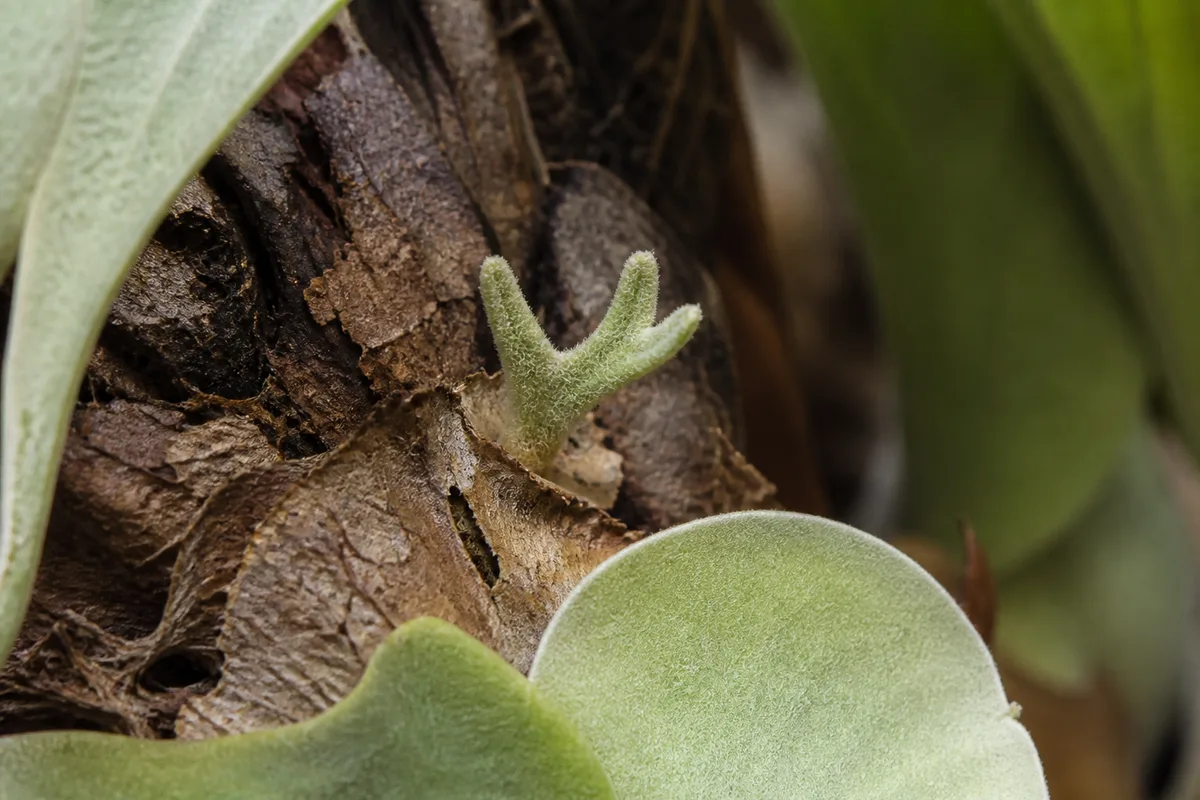
Slow Growth symptoms on Staghorn Fern - compare with healthy tissue on the same plant.
Normal epiphytic pace vs. problem stall
Normal slow growth means:
- Firm green shield fronds at the crown; older brown papery shields layered below are expected
- One to three new antler fronds during an active warm season (spring through early fall indoors)
- Quiet winter with little or no new tissue-see the overview guide for seasonal slowdown
- Antler fronds that unfurl with reasonable thickness and green-gray color in adequate light
- A mount that alternates between heavy after soaking and noticeably lightweight before the next soak
Problem slow growth adds warning signs:
- Zero new antler tips from April through October despite warm room temperatures
- Pale, thin antler fronds reaching toward glass without the long gaps typical of leggy etiolation
- A mount that stays heavy for two weeks or more after you thought it dried-roots may be waterlogged
- A mount feather-light for many days with limp, drooping antlers-underwatering at the moss core
- No fertilizer applied through the previous warm season when light and watering were already adequate
Compare year over year on the same mount. Comparing a staghorn to a fast tropical foliage plant sets unrealistic expectations and leads to over-fertilizing or unnecessary remounting.
Shield frond health vs. antler production
Wisconsin Horticulture Extension notes that tan or brown basal fronds should not be removed-they anchor the plant and protect roots. A stack of papery brown shields with stalled antlers often means the root zone in moss is stressed (too dry, too wet, or too dim) even though the visible shields look fine. Inspect antler tips and mount weight, not shield color alone.
Why Staghorn Fern grows slowly
Naturally slow-to-moderate epiphytic metabolism
Evolution set the pace. Epiphytic ferns in the genus Platycerium cling to tree bark and absorb moisture from rain, humid air, and trapped debris-not from a deep soil reservoir. NC State classifies P. bifurcatum with a slow growth rate and coarse texture. Wisconsin Extension describes fertile fronds growing up to about 18 inches long on a plant that may eventually span three feet across. Building that mass takes seasons, not weeks.
Insufficient light (most common indoor limiter)
Indoors, dim placement is the top reason antler production falls below an already slow baseline. Staghorn ferns need bright indirect light with up to several hours of filtered sun-not a dark hallway treated like a deep-shade maidenhair fern. Without enough photosynthesis, new antler fronds stay small, spaced out, or absent entirely. Low light also slows moss dry-down, which can mimic or worsen moisture problems. Full placement guidance lives in the light requirements guide.
Mount underwatering (feather-light mount, limp antlers)
Mounted staghorns drink through roots in sphagnum moss behind the shield frond and through frond tissue during deep soaks. Misting or light pouring rarely saturates that core. A mount that feels feather-light for many days with limp antlers is limiting growth through drought stress-even when brown shields look intact. The watering guide covers soak-and-dry technique and the weight test.
No seasonal fertilizer during active growth
Staghorns are not heavy feeders, but zero nutrition through spring and summer can cap antler size when light and water are already correct. Wisconsin Extension recommends monthly balanced diluted fertilizer during warmer months. UF/IFAS notes monthly feeding for young plants during warm months and reduced frequency when growth slows. See the fertilizer guide for dilution and timing-never feed a drought-stressed or rotting mount.
Post-winter idle weeks
After winter, many indoor staghorns sit idle for several weeks even when temperatures rise. Short days and reduced soak frequency (often every 14–21 days in winter per the watering guide) mean the plant is still waking up. One quiet March is normal; zero antler activity from April through June in a bright room is not.
Hidden waterlogging (heavy mount, intact shields)
Overwatered moss stays wet in cool, dim corners while shield fronds above look unchanged. Staghorn ferns rot easily if overwatered, and saturated roots cannot support new antler tissue. A mount that never feels lightweight between soaks stalls growth through hidden root stress-sometimes with no obvious blackening until the problem is advanced. Compare with overwatering and root rot escalation paths.
Cool dim winter conditions
UF/IFAS notes staghorn ferns generally cannot tolerate temperatures below about 55°F and need less frequent irrigation during cool or cloudy weather. A staghorn near a drafty window in a 60°F room grows slowly through winter by design-not because it needs more fertilizer.
How to confirm the cause
Work through these checks before changing light, water, and feed all at once:
- Season and timeline - Has the plant gone through a full warm season with zero new antler fronds? Quiet November through February is normal. No new growth from April through October warrants investigation.
- Light audit - Can you read comfortably without a lamp at the mount hook at midday? Is the plant more than three feet from any window or in a north room without supplemental light? Run the hand-shadow test described in the light guide.
- Mount weight - Lift the board after a full soak and drain cycle; note the heavy feel. Lift again when you think it is dry. Feather-light for many days with limp antlers points to underwatering. Heavy for ten or more days after the last soak points to waterlogging.
- Antler tip quality - Firm green-gray tips preparing to unfurl suggest acceptable conditions. Pale thin tips leaning toward glass suggest light limitation or drought. Black wet bases suggest rot.
- Feeding history - Did you apply any diluted fertilizer last spring and summer? Heavy feeding does not fix shade; salt buildup from over-fertilizing burns moss and roots on epiphytes.
- Shield vs. antler pattern - Papery brown shields alone are normal. Green shields softening at the crown with sour smell are not-see root rot.
- Leggy vs. stall check - Long thin antlers with wide segment gaps are leggy growth. Compact old fronds with no new pushes are stall or seasonal rest.
- Recent remount or pup division - Expect a multi-week pause after root disturbance while the plant re-establishes on fresh moss.
If the mount alternates weight correctly, light is bright indirect, and one or two antler fronds appear each warm season, you likely have a healthy slow staghorn-not a problem to force.
Lookalikes: winter rest vs. leggy stretch vs. root rot vs. low humidity
| Pattern | Mount weight | Antler appearance | Shield fronds | First action |
|---|---|---|---|---|
| Normal winter rest | Lightens on extended winter schedule | No new tips; existing fronds firm | Brown papery shields normal | Wait; resume spring soak rhythm per watering guide |
| Chronic light stall | Varies | Small or absent new antlers; not dramatically elongated | Often normal | Move to brighter indirect light per light guide |
| Leggy etiolation | Often lightens normally | Long thin antlers leaning toward window | Normal | See leggy growth guide |
| Underwatering stall | Feather-light many days | Limp, drooping antlers | May look normal | Deep soak per watering guide |
| Root rot / overwatering | Stays heavy; may smell sour | Black wet bases; stalled growth | Green shields may soften | Stop soaking; see root rot guide |
| Low humidity stress | Normal weight rhythm | Brown crispy antler tips only | Normal | Raise humidity; confirm soak depth-not a growth-rate fix alone |
First fix for Staghorn Fern
Move the mount gradually to the brightest appropriate indirect light available-over seven to fourteen days if it has lived in deep shade.
Pick a spot within one to three feet of an east-facing window, or a filtered south or west exposure with sheer curtain or distance from hot glass. Avoid jumping from a dim corner to harsh afternoon sun in one day; acclimated bright indirect light with filtered sun supports antler production without scorching fronds.
Do not fertilize, remount, or increase soaking on day one. Light is the single change most likely to produce visible new antler tips within one growing season once water rhythm is also correct.
Step-by-step recovery
After the light move, follow this sequence based on what your checks revealed:
- Calibrate soaking to the weight test - When the mount feels nearly lightweight, immerse the root mass and moss for 20–30 minutes, then drain face-up until dripping stops before rehanging. In brighter light, dry-down may speed up-adjust interval, not soak depth. Full protocol: watering guide.
- Hold fertilizer until watering is stable - After two to three soak cycles at the new light level with predictable weight change, apply diluted balanced liquid fertilizer monthly through spring and summer only. Details: fertilizer guide.
- Address underwatering before feeding - If the mount was feather-light with limp antlers, one thorough soak and drain cycle comes before any fertilizer.
- Dry out waterlogged mounts - If the board stayed heavy for weeks, stop soaking until weight drops substantially and airflow improves. Resume only when the weight test passes.
- Add supplemental light in winter - If natural light weakens October through March, a full-spectrum grow light on a 12- to 14-hour timer can prevent a seasonal stall from becoming a full-year drought of new fronds.
- Remount only when necessary - Failing board, anaerobic moss, or advanced rot require remounting per the repotting guide-not as a growth hack.
Recovery timeline
Expect gradual change, not overnight antler explosions. After a successful light improvement during active season, the first visible antler tip may take four to eight weeks to emerge. One to two new fertile fronds in a warm season is realistic progress on a slow-growing species. Winter months often bring no visible new tissue even after good fixes-that is normal dormancy, not failure.
Signs improvement is working:
- New antler fronds unfurling with firmer thickness and greener color than the previous season
- Mount weight dropping predictably between soaks in the brighter spot
- Longer intervals between soaks in winter without limp antlers
- Firm crown tissue where shields and antlers meet the moss
Signs the problem is worsening:
- Blackening spreading up antler bases while the mount stays heavy
- Sour or stagnant smell from moss at the crown
- Antler tips collapsing while you increase watering on a heavy mount
- Zero new fronds through an entire warm season after light, soak, and feed corrections
What not to do
- Over-fertilize to force growth. Salts accumulate in moss and burn fine epiphytic roots. Feed lightly in season only after water rhythm is stable.
- Remove brown shield fronds hoping to stimulate growth. Wisconsin Extension advises leaving basal fronds in place until they fall naturally-they protect the crown and regulate moisture.
- Keep the mount constantly wet. Soggy moss stalls roots and invites rot. Alternate deep soak with full dry-down.
- Remount to jump-start a slow plant. Unnecessary disturbance pauses growth for weeks.
- Rely on misting instead of soaking. Surface moisture does not replace root-zone hydration on wall mounts.
- Stack light, fertilizer, and remounting on day one. Change light first; read the mount’s response before adding variables.
How to prevent chronic slow growth
Match expectations to epiphytic biology before you worry. Hang new mounts where bright indirect light is realistic year-round, or plan for winter grow lights. Learn your mount’s weight rhythm across seasons rather than watering on a fixed calendar-weekly in warm bright rooms, every two to three weeks in cool winter dim rooms per the watering guide. Feed monthly at quarter to half strength during active growth per the fertilizer guide. Inspect antler tips and mount weight during each soak instead of waiting for obvious collapse.
Epiphytic ferns grow well in warm humid conditions when light and water rhythm stay steady-humidity supports frond quality but does not replace adequate light for antler production.
When to worry
Investigate promptly if slow growth pairs with black mush at antler bases, foul smell from the mount, or a board that stays heavy many days after you stop soaking-that pattern is rot, not patience. Escalate to the root rot rescue guide.
Also worry if no antler fronds appear through an entire warm season despite bright indirect placement, correct soak-and-dry weight cycling, and light seasonal feeding. In that case, inspect moss density, crown firmness, and possible hidden pest pressure (scale on shield undersides) before assuming the species is simply slow.
A quiet staghorn with firm shields, predictable mount weight, and one or two new antler fronds per warm season in moderate light is doing what Platycerium bifurcatum is built to do.
Conclusion
Slow growth on a mounted staghorn is often normal epiphytic patience-not a disease. The mount’s weight and your brightest appropriate window tell you more than a calendar ever will. Move light first, soak deep when lightweight, feed lightly in season, and compare this year to last-not to a pothos. When black mush or sour moss joins the stall, stop guessing and follow the root rot path.
When to use this page vs other Staghorn Fern guides
- Staghorn Fern watering guide - Use for routine moisture checks before assuming slow growth is the main issue.
- Staghorn Fern problems hub - Browse all 2 common issues on this species.