Wilting on Staghorn Fern: Causes, Checks & Fixes
Quick answer
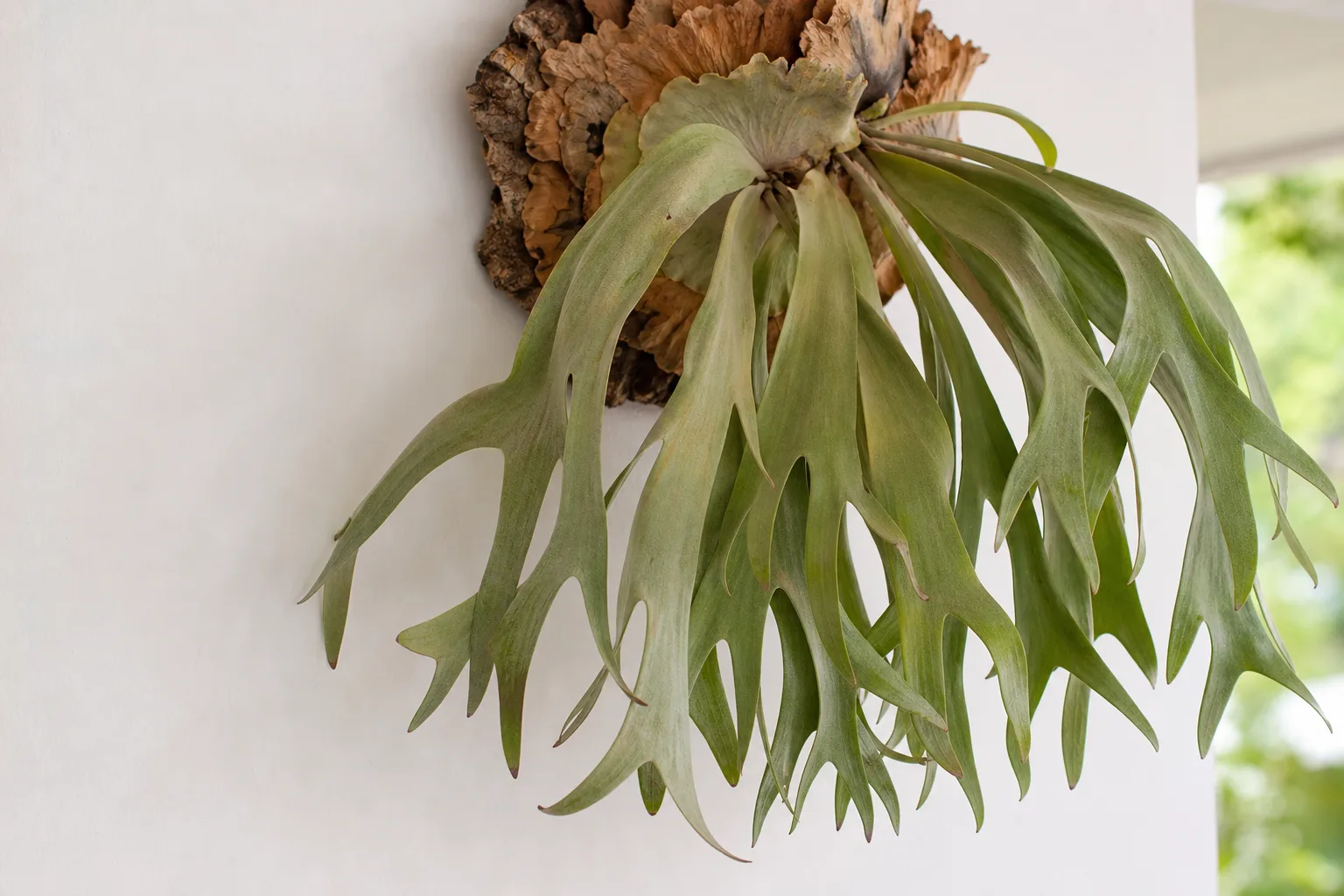
Wilting antler fronds on mounted Staghorn Fern (*Platycerium bifurcatum*) usually mean the moss dried out fast-or roots failed on a heavy wet mount. First step: lift the board before you soak. A feather-light mount needs water; a soggy heavy mount needs drying, not another soak.
Wilting on Staghorn Fern: Causes, Checks & Fixes
This guide covers wilting on Staghorn Fern. See also the general Wilting guide, watering, and light pages for this plant.
Wilting on Staghorn Fern: Causes, Checks & Fixes
Quick answer
Use this page for sudden collapse - when antler fronds on mounted Staghorn Fern (Platycerium bifurcatum) go limp within hours to a couple of days. For gradual sag over many days without a clear dry-down spike, see drooping leaves on staghorn fern. For soak rhythm and weight-test basics, see the staghorn fern watering guide.
Wilting means antler fronds have lost turgor fast-the forked fertile fronds hang limp and soft instead of arching outward. On wall-mounted plants, that collapse usually arrives when sphagnum moss at the crown dries out, or when soggy moss has already killed roots so the plant cannot drink despite wet moss.
First step: lift the mount before you change anything. A feather-light board with limp gray-green antler fronds needs a soak. A heavy, soggy mount with limp fronds needs drying and inspection-not another soak. Brown papery shield fronds at the base are normal aging, not wilt.
| What you find | Likely cause | First action |
|---|---|---|
| Light mount, dry moss at crown, limp antlers | Underwatering / fast dry-down | Soak root mass 20–30 min; drain fully |
| Heavy mount, soggy moss, sour smell | Root failure / overwatering | Stop soaking; air-dry; inspect crown |
| Collapse after heat spike or window move | Heat stress | Soak if mount is light; stabilize placement |
| Wilt days after remount, even moist moss | Remount stress | Light soaks; avoid moving again for a week |
| Light mount but no perk after soak | Damaged roots | Inspect moss; see root rot |
Wilting vs drooping on this plant
Both trace to mount moisture failure, but urgency differs:
- Wilting (this page) - Acute collapse: antler fronds go limp quickly, often within hours to a couple of days. Owners often arrive panicked after a weekend away or a sudden dry-down spike.
- Drooping - Gradual sag over many days, or chronic limpness without sudden collapse. The drooping-leaves guide walks the full long-form protocol and remount-stress branches.
The diagnostic path is the same-lift the mount, check moss, branch dry versus wet. Start here when collapse felt sudden; switch to drooping-leaves when the plant has been limp for a week and mount weight already looked borderline normal.
Severity ladder
Use this before you soak or withhold water:
| Stage | What you see | Urgency | First move |
|---|---|---|---|
| Mild | Tips soft; mount moderate weight; perks slightly by morning | Low | Recheck weight; plan soak if light tomorrow |
| Moderate | Most antlers limp; light dry mount OR heavy wet mount | Medium | Dry mount → soak once; wet mount → stop soaking |
| Severe | Plant-wide limp antlers; dusty moss OR sour crown smell | High | Soak if light; air-dry and inspect if heavy |
| Critical | Black mush at antler bases; crown softening | Urgent | Stop water; peel moss; see root rot |
Mounted epiphytic ferns show collapse faster than potted houseplants because moss dries on every exposed face-when root supply fails, the whole antler mass drops at once.
What wilting looks like on Staghorn Fern
Acute wilt hits antler (fertile) fronds first. Healthy ones arch up and out with firm tissue. When turgor drops suddenly, they hang downward, feel soft rather than springy, and may look dull gray-green. Tips may curl on a thirsty plant; bases turn black and mushy when rot is involved. Newer antler growth near the crown usually collapses before older outer segments.
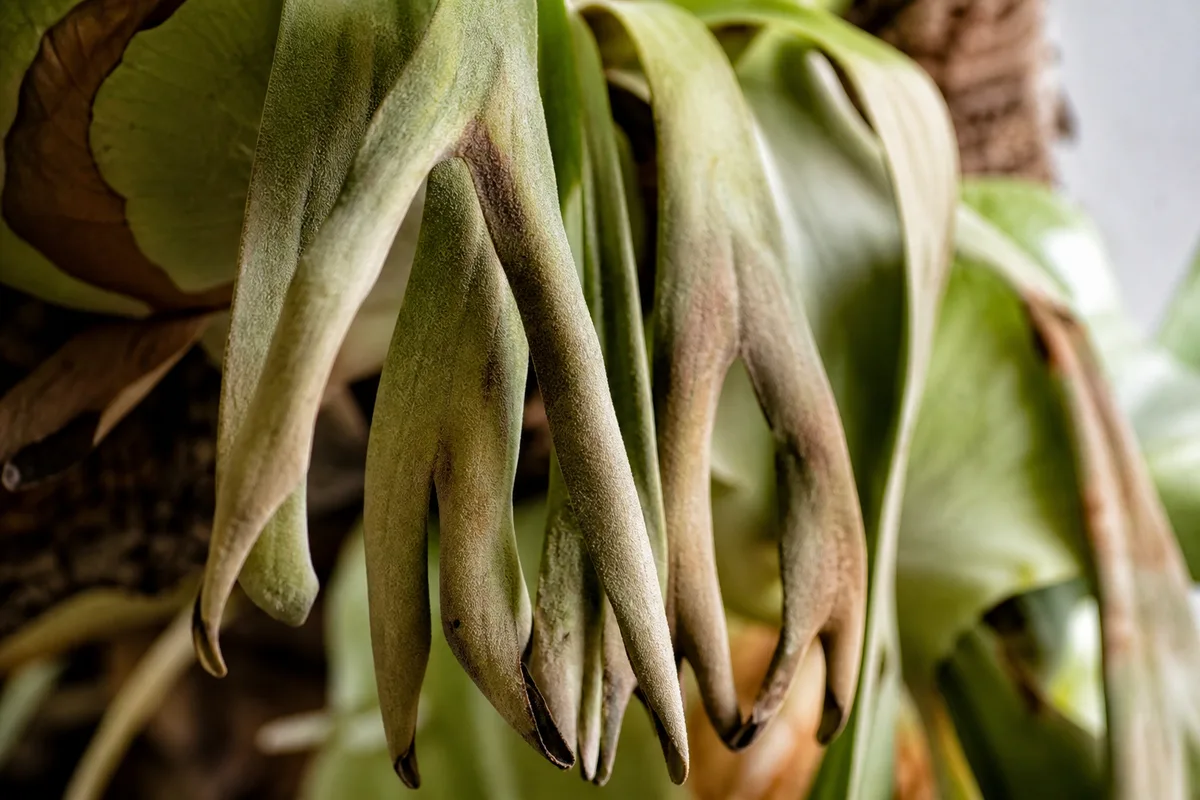
Wilting symptoms on Staghorn Fern - compare with healthy tissue on the same plant.
Shield (sterile) fronds clasp the mount like rounded plates. They start green and become papery tan to brown with age-that is normal, not wilt. Do not remove brown shields; they anchor the plant and protect roots. Soft, wet, blackening shields signal crown trouble, not ordinary wilting.
Antler vs shield at a glance
| Frond type | Normal appearance | Wilting signal |
|---|---|---|
| Antler (fertile) | Green, forked, firm, arching outward | Sudden limpness, soft tissue, dull gray-green |
| Shield (sterile) | Flat against mount; ages to papery brown | Soft, wet, blackening at crown-not normal aging |
Acute wilt patterns
Dry-mount wilt (underwatering): Antler fronds limp across much of the plant within one to two days; mount feels noticeably light; moss at the crown is dusty or crumbly; frond bases stay green or tan. Often follows skipped soaks, winter dry air, heating vents, or misting tips instead of soaking the root mass.
Wet-mount wilt (overwatering / root failure): Antler fronds limp while moss stays wet and mount feels heavy; sour smell at the crown; black or brown mushy tissue climbing from antler bases-the wilt paradox.
Heat-stress wilt: Sudden limpness after moving to a hotter or sunnier window; mount may still feel moderate weight; collapse often in afternoon heat.
Remount-stress wilt: Collapse within days after division or remounting on fresh moss; moss stays evenly moist; no foul smell if rot is not already present.
Why Staghorn Fern wilts suddenly
Fast dry-down in the mount is the most common cause of acute wilt. Epiphytic roots in sphagnum moss lose moisture faster than soil in a conventional pot-especially near heating vents, in bright windows, during winter when indoor air is dry, or when you mist antler tips instead of soaking the root mass behind the shield frond.
Overwatering and root failure produce the opposite emergency: fronds wilt while moss feels wet. Saturated moss displaces air; damaged roots cannot take up water even though the mount is heavy.
Low humidity accelerates dry-down between soaks-see low humidity on staghorn fern when tips crisp after recovery.
Heat and light stress after a placement change increases water loss through antler fronds faster than roots replace it-temporary wilt until the mount is rehydrated on a proper schedule.
Recent remounting or division can cause short-term wilt while roots reattach. If weight and smell stay normal, watch one week before escalating.
Cold drafts or chilling slow root function abruptly. Wilting after a plant sits near an AC vent or cold window often resolves once temperature stabilizes.
How to confirm the cause
Work through these checks in order-you are separating thirst from uptake failure before changing anything:
- Mount weight - Light and dry confirms thirst; heavy and wet for many days points to overwatering.
- Moss at the crown - Dusty, crumbly moss supports underwatering. Soggy, sour-smelling moss supports rot.
- Frond base color - Dry wilt: bases stay green or tan, fronds feel thin and limp. Wet wilt: black or brown mushy tissue climbing from the base.
- Soak test (dry mount only) - Submerge the root mass in room-temperature water for 20–30 minutes, drain fully, and recheck in two to four hours. Thirsty plants perk noticeably; rot-related wilt does not improve.
- Shield frond check - Firm brown shields with dry wilt mean soak. Soft black shields with wet wilt mean stop watering and inspect the crown.
- Recent care changes - Weekend travel, new placement, remount, or a shift from summer to winter watering frequency often explains sudden timing.
First fix for Staghorn Fern
Lift the mount. If it feels nearly lightweight and moss at the crown is dry, soak the entire root mass-not just the antler fronds-in room-temperature water for 20–30 minutes, then drain until dripping stops before rehanging. Soak the basal fronds and growing medium, not the hanging tips alone.
If the mount is heavy, moss stays wet, or you smell sourness at the crown, do not soak. Move the plant to bright indirect light with good airflow, withhold water until the mount lightens, and inspect for mushy moss or blackened frond bases. Treat confirmed rot by removing wet moss, trimming dead tissue, and remounting on fresh sphagnum and bark once the crown is firm.
Do not remove brown shield fronds during recovery. Do not mist antler tips as a substitute for soaking the root mass on mounted plants.
Step-by-step recovery
For dry wilt:
- Soak the mount in a basin or sink so water reaches the shield fronds and moss, not only the hanging antler segments.
- Drain 15–30 minutes; rehang only when the mount stops dripping-standing water behind a wall mount keeps moss soggy.
- Recheck weight in two to three days during active growth; extend intervals in winter when growth slows.
- Raise ambient humidity if fronds crisp at tips after recovering from wilt.
For wet wilt:
- Stop all soaking immediately.
- Gently peel back moss at the crown; remove mushy material and trim blackened antler bases with clean scissors.
- Air-dry the mount in bright indirect light for several days to a week before any light rehydration.
- Remount on a fresh board with open sphagnum moss and orchid bark if the old moss compacted or smells.
- Resume soak-dry rhythm only when the mount feels light and crown tissue is firm.
For remount stress:
Keep moss evenly moist with lighter soaks-not constant saturation-and avoid moving the plant again until new green antler growth appears firm.
Documented recovery example
A wall-mounted P. bifurcatum returned from a four-day weekend with antler fronds fully limp and gray-green. The board felt feather-light; moss at the crown was dusty. Shield fronds remained papery brown and firm-no black mush or sour smell.
Friday 6 p.m.: Full soak 25 minutes in a sink basin with shield fronds submerged; drained 20 minutes face-up before rehanging.
Friday 10 p.m.: Outer antler segments still soft but center fronds showed slight firmness when gently lifted.
Saturday 8 a.m.: Visible perk on most antler fronds; mount weight increased from soak.
Saturday 6 p.m.: Full turgor on center growth; one older outer segment stayed slightly limp but bases stayed green.
Monday: Weight check normal for the room; next soak scheduled when the mount lightened again-not on a calendar. Recovery was judged by firm new center growth, not every outer segment.
This pattern matches thirst wilt on a healthy mount. A heavy wet mount with no perk after the same soak would point to root failure instead.
Recovery timeline
Thirst-related wilt on a healthy mount often shows visible firming within two to six hours after a proper soak and drain. Full turgor on all antler fronds may take 12–24 hours. Severely desiccated moss sometimes needs two soak cycles a few days apart before weight checks feel normal again.
Rot-related wilt improves only after the crown dries and bad tissue is removed-expect days before fronds stop declining, and one to three weeks before new firm growth confirms stability. Antler fronds with blackened bases do not revert; judge recovery by new center growth, not old damaged segments.
Temporary wilt from heat shock or remounting usually resolves within three to seven days once water rhythm and placement stabilize.
Lookalike symptoms to rule out
Normal brown shield fronds look dead but are healthy aging. They stay papery and firm against the mount-not limp antler tissue.
Natural pendulous old antler fronds on long-established plants can hang downward while new center fronds stay firm. No treatment needed if mount weight and moss moisture are normal.
Gradual droop without sudden collapse over many days fits chronic underwatering or low humidity rather than acute wilt-see drooping leaves for that slower pattern.
Brown crispy tips without overall wilt often mean low humidity or uneven drying. Soak if the mount is light; add humidity if moss moisture is fine but edges desiccate.
Yellowing antler fronds can overlap with wilt but may also signal chronic overwatering or age. Pair color change with mount weight and crown smell before deciding.
Mistakes to avoid
Do not soak automatically because fronds hang limp-wet-mount wilt worsens with more water.
Do not pull off brown shield fronds thinking the plant is dying.
Do not rely on misting alone; mounted staghorns need periodic full saturation of the root mass and shield fronds.
Do not leave the mount dripping wet against a wall; trapped moisture rots the board and crown from behind.
Do not fertilize a wilting plant before you fix water balance-stressed roots cannot use feed and salt buildup adds stress.
Do not compare watering to potted houseplants on a calendar; lift the mount instead.
Staghorn Fern care cross-check
Bright indirect light helps moss dry predictably between soaks-dim rooms keep mounts wet longer and invite rot wilt. Epiphytic ferns prefer temperatures between 16°C (60°F) and 30°C (85°F); cold snaps can wilt fronds even when moss feels adequate.
Mounted culture with sphagnum moss and orchid bark should drain freely. Potted staghorns in dense mix without drainage wilt from rot more often than mounted specimens-check drainage holes and top-inch dryness if yours is in a pot.
In winter, reduce soak frequency when growth slows; in summer, check weight more often when light and heat increase dry-down. Full soak-and-dry rhythm is in the watering guide.
How to prevent wilting next time
Build a habit of lifting the mount before every soak. Soak when it feels nearly lightweight-typically every 7–10 days in active growth, every two to three weeks in winter, adjusted to your room’s light and humidity. Allow roots to dry slightly between waterings; always drain fully after soaking.
Target moderate humidity in dry homes without keeping moss constantly wet. Keep the plant in stable bright indirect light rather than bouncing between dark corners and hot windows.
Remount every three to five years before boards deteriorate and moss compacts into a water-holding mass that suffocates roots. Watch for soft, spongy board edges, moss that never lightens between soaks, or water pooling behind the mount on the wall.
Secure wall mounts if cats climb-the plant is non-toxic to cats and dogs, but a falling mount damages fronds and crown tissue.
When to worry
Escalate when wilting pairs with black mushy frond bases, sour smell, or moss that stays soggy for more than a week despite withheld water-crown rot can spread quickly on epiphytic mounts.
Also worry when repeated soaks on a light mount no longer perk fronds; roots may be damaged even if rot signs are subtle. Contact your local cooperative extension office if soak failure repeats after remounting on fresh moss.
A wilting plant with firm crown tissue and dry moss is low urgency-correct watering usually resolves it within a day.
If the entire crown softens and antler fronds blacken from the base upward across the plant, recovery is unlikely; salvage pups with firm tissue if present-see staghorn fern propagation for division and pup rescue steps.
Related Staghorn Fern guides
- Staghorn fern overview - species basics and mount culture
- Watering - weight test, soak-and-dry rhythm, seasonal schedule
- Drooping leaves - gradual limpness and full long-form protocol
- Underwatering - dry-mount failure patterns
- Overwatering - wet-mount failure before rot advances
- Root rot - crown rescue and remount steps
- Propagation - pup salvage when crown fails
- Low humidity - dry air accelerating wilt between soaks