Pale Leaves on Polka Dot Plant: Causes, Checks & Fixes
Quick answer
Pale leaves on polka dot plant usually mean light mismatch-spots shrink toward plain green in dim rooms, or bleach and scorch under harsh direct sun. First step: note whether fade is even on the shady side or patchy with brown margins on sun-facing leaves, then move to bright filtered light (east window or filtered south) without jumping into afternoon sun.
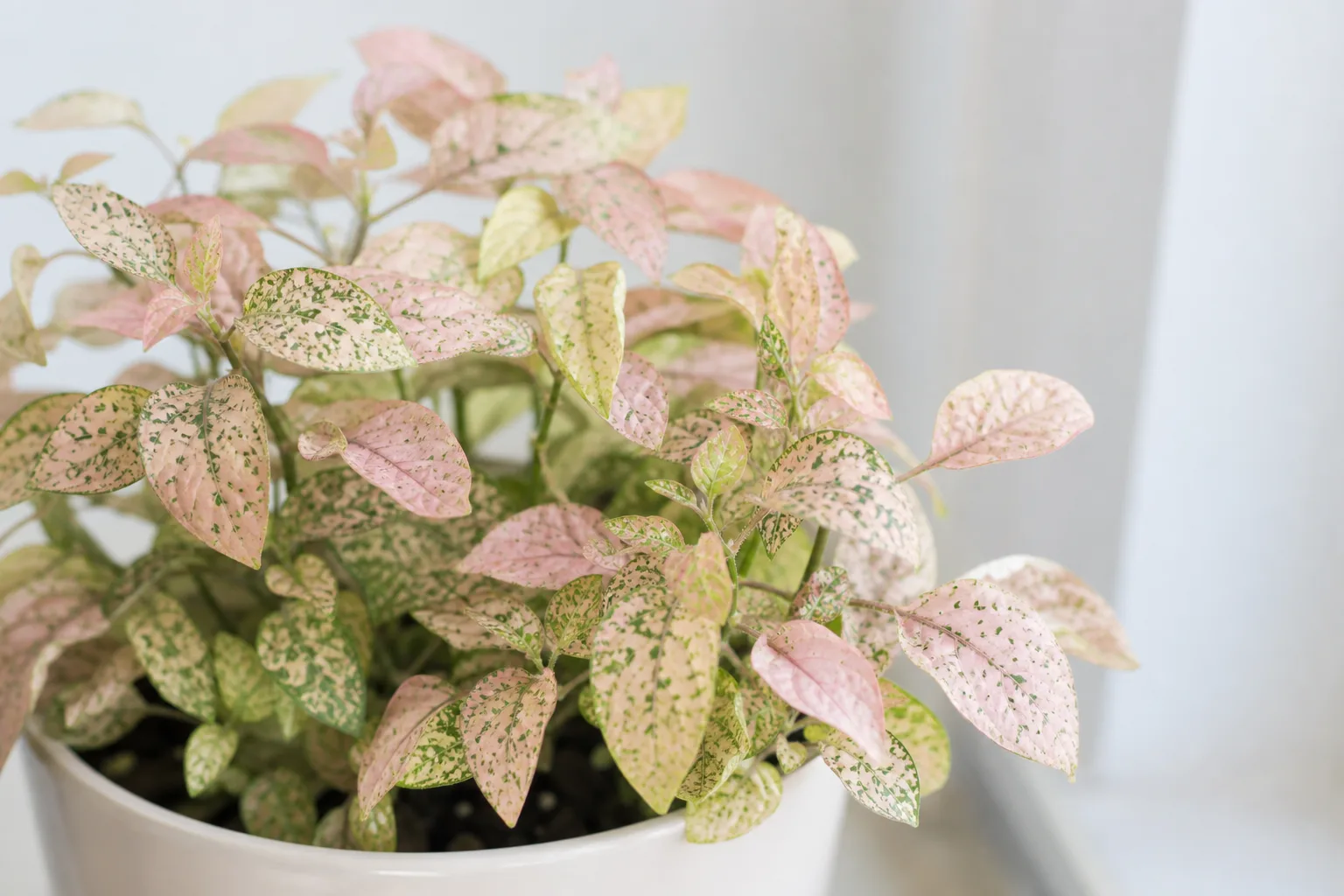
Pale Leaves on Polka Dot Plant: Causes, Checks & Fixes
This guide covers pale leaves on Polka Dot Plant. See also the general Pale Leaves guide, watering, and light pages for this plant.
Pale Leaves on Polka Dot Plant: Causes, Checks & Fixes
Quick answer
Your polka dot plant’s pink or white splashes are shrinking to plain green, or bleached patches with brown edges appeared after a move closer to south glass-that is the Hypoestes phyllostachya pale-leaf pattern, and light level is almost always the lever. Polka Dot Plant overview is grown for ovate green leaves spotted with rose, pink, or lavender; vivid spotting depends on bright, filtered lighting, not the dim shelf culture many small houseplants tolerate.
First step: decide whether fade is even on the shady side of the plant (dim room) or patchy with crispy margins on sun-facing leaves (excess direct sun). Then move to bright filtered light-an east-facing windowsill or 30–60 cm behind a sheer curtain on a south window-without jumping straight into harsh afternoon sun to “boost color.”
This page owns color wash without the full low-light stretch triad and sun bleach after overcorrection. If spots fade with long bare internodes, strong window lean, and stalled growth in a dim room, start with not enough light on polka dot plant. If stems are long but spotting stays vivid under decent light, see leggy growth and our pruning guide. When pale leaves pair with chartreuse-yellow lower leaves on wet soil, see yellow leaves or overwatering before adjusting light alone.
Why polka dot plant gets pale leaves
Polka dot plant is not a low-light foliage plant despite its compact size. Pale leaves here almost always trace to too little photosynthetic light or too much direct sun on thin, soft leaves-not random aging or a mystery nutrient gap.
Low light fades spotting toward green
In dim corners the plant increases chlorophyll production and decorative pigment fades-leaves may become green due to insufficient light while the plant still looks upright. NC State Extension notes too little lighting fades leaves as the plant reaches for brighter conditions; on a spotted foliage plant that reads as shrinking pink, red, or white splashes rather than uniform yellowing.
Decorative splashes are anthocyanin-rich tissue over green chlorophyll. When light drops below what Hypoestes needs, the plant prioritizes chlorophyll to capture scarce energy. Spots shrink or disappear on new leaves first; older foliage may keep partial color for weeks. Fade is often more pronounced on the side away from the window-the shady face turns greener while the lit side still shows some spotting.
Cultivar baseline matters when judging fade. ‘Splash’ and ‘Confetti’ forms can run almost entirely pink or white when healthy; a pink-dominant plant turning evenly green in a north room is low light. A naturally greener cultivar with only light freckling may look “pale” without true spot loss-compare new leaves against how the plant looked in its first month in your home, not against nursery photos of a different variety.
Terrariums and closed jars amplify humidity but do not replace photons. A polka dot plant in a decorative terrarium across the room from a window often fades even when condensation looks healthy. Open pots on a bright sill outperform sealed displays in dim corners-see our light guide for placement by window orientation.
Too much sun bleaches and scorches thin leaves
The opposite stress washes out color fast. RHS warns too much sun can fade vibrant colours and scorch leaves. Too much direct sunlight can cause leaves to crinkle and curl on this species. South-facing glass without a sheer curtain often produces washed-out pink patches with brown crispy edges within days-especially on thin leaves that sat in dim light first, then were moved into afternoon sun to “fix” the fade.
Pink cultivars often bleach to near-white patches before green reversion; white-spotted forms may show paper-thin translucent areas. Unlike low-light fade, sun bleach is patchy on the sun-facing leaf surface, may arrive suddenly after a window move, and often pairs with crinkled or curled leaf texture-not the gradual even greening of a north room.
What pale leaves look like on polka dot plant
On polka dot plant, pale leaves are a color problem, not always a survival crisis. Look for these patterns:
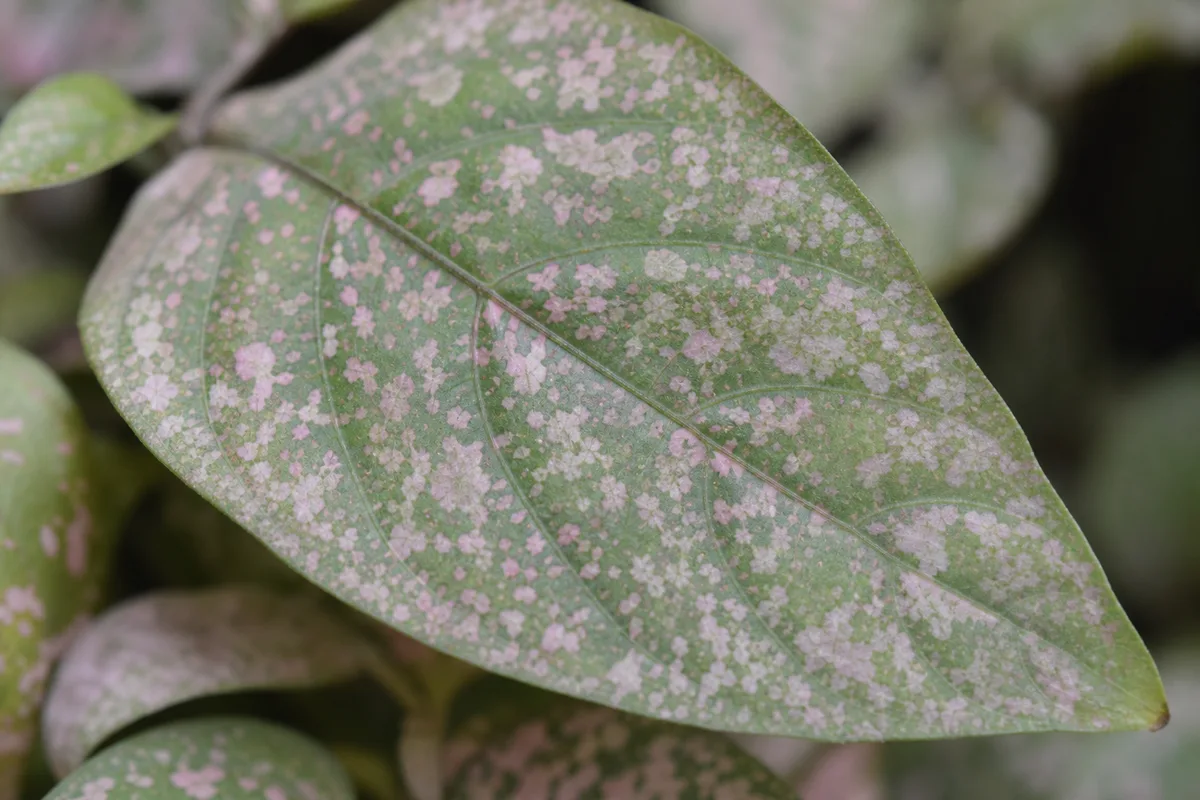
Pale Leaves symptoms on Polka Dot Plant - compare with healthy tissue on the same plant.
- Shrinking or vanishing spots - pink, red, or white splashes shrink on newest foliage; leaves read as mostly green
- Even fade on the shady side - the face away from glass greens first while the lit side retains partial spotting (low light)
- Bleached patches with brown margins - washed-out color on sun-facing leaves, often within days of a harsh move (excess sun)
- Lighter new growth than older leaves - newest leaves arrive paler; older spotted tissue may persist weeks unchanged
- No chartreuse sickly yellow - true yellowing on wet soil is a different page; pale is spot wash, not lemon tissue
Unlike nitrogen deficiency, pale spotting from light usually affects the whole plant’s color balance rather than lower-leaf yellowing alone-and fertilizer will not restore spots without correcting light. See our fertilizer guide only after ruling out light and water stress.
Compare with not-enough-light, yellow leaves, and leggy growth
Use this table when symptoms overlap-polka dot plant has separate pages because the first fix differs.
| What you see | Pattern on the plant | Most likely cause | Start here |
|---|---|---|---|
| Even green reversion, long internodes, window lean, slow growth | Fade + stretch together in a dim room | Insufficient light | Not enough light |
| Color wash only-spots fade without long bare stems | Even shady-side fade or mild greening | Low light or sun bleach (this page) | Confirm sun vs. dim using checks below |
| Bleached patches + brown crispy edges on sun-facing leaves | Sudden after south-window move | Excess direct sun (this page) | Filter light; do not add afternoon sun |
| Chartreuse-yellow lower leaves, heavy wet pot, limp stems | Yellow first, spotting secondary | Root stress / overwatering | Yellow leaves or overwatering |
| Long stems, vivid spotting, never pinched | Stretch with good color | Missed pinching | Leggy growth + pruning |
| Fine bronze stippling + webbing underside | Speckled damage, not smooth fade | Spider mites | Spider mites |
Rule of thumb: fade without dramatic stretch in a dim placement = pale leaves (low-light half of this page). Fade + lean + stretch = not enough light. Bleach + brown margins after sunny move = sun stress (this page).
How to confirm the cause
Work through these checks in order-light before water, pattern before fertilizer:
- Direct sun hours on leaves - Note whether afternoon sun hits foliage through glass. Same-day washout with brown edges after a move confirms sun bleach; gradual even fade over weeks in a dim room confirms low light.
- Distance from glass - Pots more than about 1 m from a bright window, or receiving only weak north exposure, rarely sustain Hypoestes spotting indoors. See light guide for window-by-window placement.
- Shadow test at canopy - Hold your hand between plant and window at midday. A soft, diffused shadow for several hours daily suggests usable light. No shadow or only a faint outline means dim-room fade is likely.
- Newest leaf color vs. older growth - New leaves greener than older spotted leaves confirms ongoing fade. Sudden bleach on outer leaves only points to sun.
- Soil moisture and pot weight - Press the top 1–2 cm. Heavy, damp soil with pale leaves and wilting is not a light-only problem-see overwatering. Firm stems on normal-moisture mix keep the diagnosis on light.
- Pest scan - Hold leaves to light; spider mite stippling and fine webbing mimic stress patterns-see spider mites if insects are present.
Confirmed low-light fade: even greening, shady side paler, gradual over weeks, no brown scorch margins, pot in dim placement. Confirmed sun bleach: patchy washout on sun-facing leaves, brown crispy edges, possible crinkling, recent move to harsh exposure. Escalate away from this page: pale + chartreuse lower yellow on wet soil, or soft stem bases-yellow leaves first.
First fix for polka dot plant
Pick one path based on your confirmed pattern-do not fertilize, repot, and move light on the same day.
For dim-room fade (low light)
Move the pot to bright filtered light-an east-facing windowsill or 30–60 cm behind a sheer curtain on a south window. Missouri Botanical Garden recommends part shade with bright indoor light and some direct sun from morning only. Rotate the pot a quarter-turn weekly so all sides receive similar exposure.
Acclimate gradually if the plant lived in a very dim spot for months-do not jump into unfiltered south afternoon sun. Increase brightness over seven to ten days to avoid sun bleach on leaves adapted to shade.
Once you see firmer new spotting, pinch extending tips above opposite leaf pairs so fresh foliage develops in the lighted zone-technique in our pruning guide. Do not fertilize in the dim spot; fertilizer deepens green chlorophyll without restoring decorative pigment.
For sun bleach (excess light)
Pull back from harsh direct sun immediately-move to filtered east light or behind a sheer curtain on south glass. Trim brown, crispy leaf tips only after the plant is stable in corrected light; scorched tissue will not re-pigment.
If you must increase light after dim-room fade, filter first, direct sun never as a shortcut-afternoon sun on thin Hypoestes leaves bleaches faster than it restores spots.
Winter supplementation
When spotting fades seasonally on a north window, add a full-spectrum grow lamp. Hypoestes can be grown under artificial light; position the lamp 30–60 cm (12–24 inches) above the leaf canopy and run it 10–12 hours daily to match short winter days. Pair with our light guide for distance and duration detail.
Recovery timeline
Existing pale or bleached leaves may not fully regain pigment-judge success by new leaves over the next two to three weeks, not by old tissue re-coloring. Sun-scorched patches with brown margins will not recover; trim damaged tips once growth stabilizes.
Signs of improvement: new leaves show stronger pink, white, or red spotting; fade stops spreading to the newest foliage; crinkling from sun stress eases on fresh growth.
Signs the problem is worsening: continued washout on every new leaf after light correction; brown margins spreading; pale leaves plus wilting on continuously wet soil-re-check overwatering. If fade pairs with long internodes despite good filtered light, see leggy growth.
What not to do
- Do not blast the plant with direct afternoon sun to “boost color” - thin leaves bleach and scorch; filtered bright light restores spots, harsh sun destroys them
- Do not fertilize heavily in dim light - nitrogen deepens green without restoring pink or white splashes
- Do not assume pale leaves mean more water - check light and soil moisture separately; wet soil with wilting is overwatering, not a light fix
- Do not change light, repot, and feed on the same day - one variable at a time so you can read the plant’s response
- Do not judge recovery on old leaves - wait for new spotted growth from pinched nodes
- Do not ignore simultaneous fade and stretch - that pattern belongs on not enough light, not pale-leaf cosmetic fade alone
How to prevent pale leaves
- Place polka dot plant where bright, indirect light reaches the leaf surface most of the day-not just a bright room with the pot in a corner
- Use sheer curtains on harsh south or west exposures; morning sun through east glass is safer than afternoon bake
- Rotate the pot weekly so spotting stays even on all sides
- Pinch extending tips every one to two weeks so new foliage develops inside the lighted zone
- Supplement winter light with a timed grow lamp when seasonal fade hits north windows
- Remove flower spikes early - cutting off flowers directs more energy to foliage on this short-lived perennial; see pruning for refresh technique
- Cross-check baseline culture in our light and watering guides
Practical checks
Urgency check
Low urgency for gradual cosmetic fade-polka dot plant will not die overnight from dim-room greening, but prolonged wrong light weakens color and can lead to stretch or post-flowering decline on leggy growth.
Higher urgency when:
- Pale leaves pair with wilting on wet, heavy soil-root stress, not light alone; see overwatering
- Brown margins spread quickly after a sunny move-pull back from direct sun today
- Fine webbing and bronze stippling appear under leaves-spider mites, not light fade
- Fade continues on every new leaf through a full warm season despite filtered light-re-check distance from glass and winter supplementation
Best inspection order
- Direct sun hours and recent window moves
- Newest leaf color vs. older spotted growth
- Shady-side vs. sun-facing fade pattern
- Leaf edges for scorch (brown, crispy)
- Internode length and window lean (if stretch present, add not-enough-light checks)
- Top 1–2 cm soil moisture and pot weight
- Undersides for pest stippling
Lookalike symptoms
Overwatering yellowing differs-chartreuse-yellow lower leaves on heavy wet pots with limp stems, not smooth spot wash. Spider mite stippling adds fine webbing and bronze dots on undersides. Nitrogen deficiency can pale entire new leaves on old depleted mix, but polka dot pale from light usually shows a placement story (dim room or sunny move) before a fertilizer story-rule out light and water first.
What to read next on polka dot plant color problems
- Not enough light - fade with stretch, slow growth, and grow-lamp setup when dim placement is the main limiter
- Yellow leaves - chartreuse sickly yellow on wet or dry soil; pale vs. yellow differentiation
- [Leggy growth on Polka Dot Plant](/plants/polka-dot-plant/leggy-growth/) - long internodes when pinching was missed or light is a co-factor
- Light guide - window placement, terrarium limits, seasonal adjustment, grow-lamp distance
- Pruning - pinching for fresh spotted regrowth after light correction
- Overwatering and spider mites - when pale leaves pair with wet soil, wilting, or stippling
Polka dot plant rewards bright filtered light with dense, speckled foliage-pale leaves are fixable culture signals when you match the fade pattern to the right light level. Move the pot, acclimate gradually, pinch for fresh growth, and judge recovery by new spotted leaves over the next two to three weeks.
When to use this page vs other Polka Dot Plant guides
- Polka Dot Plant watering guide - Use for routine moisture checks before assuming pale leaves is the main issue.
- Polka Dot Plant problems hub - Browse all 17 common issues on this species.