Watering Philodendron Melanochrysum: Schedule, Soil Checks
Watering Philodendron Melanochrysum: Schedule, Soil Checks & Mistakes
Watering Philodendron Melanochrysum: Schedule, Soil Checks & Mistakes
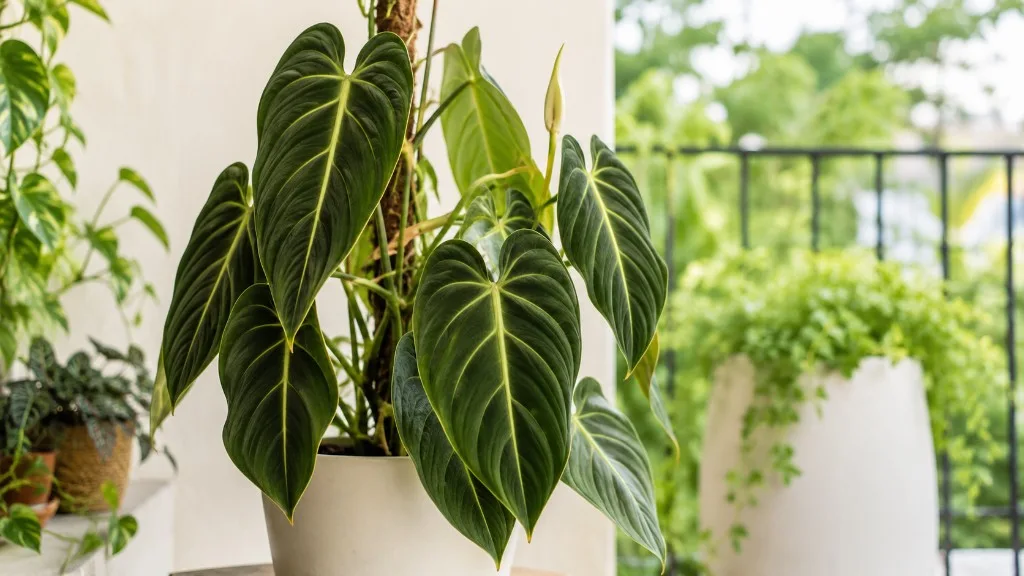
Philodendron melanochrysum watering starts with two zones most houseplant guides ignore: the pot root ball and the moss pole your aerial roots are trying to colonize. The Black Gold philodendron - a Colombia-native scandent climber with large dark velvet leaves - transpires heavily when bright and warm, yet its chunky aroid mix can hold moisture longer than a calendar suggests. Iowa State Extension lists Philodendron melanochrysum among collectible climbing philodendrons whose aerial roots grip trellises and moss poles; those roots drink from vertical support, not just from soil. Water when the top 3–5 cm of mix is dry, soak until runoff drains, empty the saucer, and hydrate the pole in the same session.
The main failure mode on velvet climbers is not forgetting to water. It is watering the pot on autopilot while the moss pole desiccates, a decorative cachepot traps runoff, or low light keeps the root zone wet for days after each drink. Melanochrysum wants consistent root-zone moisture without ever sitting soggy - a balance that only works with chunky aroid mix and drainage, bright filtered light, and a check-first rhythm from Clemson HGIC indoor watering guidance.
This guide walks through how often to water, a numbered moisture-check workflow, over- and underwatering diagnostics with recovery steps, seasonal adjustments, moss-pole watering, velvet-leaf cautions, and the mistakes that send collectors from a healthy climber to root rot in one overeager week. For the full species environment - humidity targets, pole setup, and acclimation - see the overview watering section and return here for the step-by-step routine.
Quick Answer: Check the Pot, Not the Calendar
Water Philodendron melanochrysum when the top 3–5 cm of potting mix feels dry at your fingertip or on a dry chopstick probe - then water thoroughly until excess drains, and empty standing water within 30 minutes. Expect roughly every 7–14 days in warm, bright active growth and longer intervals in winter, but large velvet leaves slow surface dry-down, so always verify before pouring. If the pot is still heavy and cool at depth, wait. A brief dry spell beats another soak on already-wet roots.
Why Melanochrysum Watering Is Different
Generic philodendron advice - keep soil evenly moist, do not let plants stand in water - applies to melanochrysum at the root zone, but the geometry of a large-leaf velvet climber changes how you read dryness and where water needs to go. The RHS notes that climbing philodendrons root into moist moss poles when trained vertically; that rooting triggers mature leaf size. Melanochrysum is not a crawler with a rhizome on the soil surface - it is a vine whose drinking zones split between pot and pole.
Large Velvet Leaves Change Dry-Down Speed
Melanochrysum leaves are thick, velvety, and large relative to the pot. In bright, warm conditions they transpire heavily and can pull a small pot dry in under a week. In a cool, humid corner the same leaf mass slows evaporation from the soil surface, so the mix stays damp longer than a calendar suggests. Velvet texture also changes wilt cues: leaves often dull and feel less supple before they collapse dramatically - a subtler signal than on thin-leaved heartleaf philodendrons.
Large leaves do not automatically mean “water less.” They mean check more carefully. Pair finger depth with pot weight so you are not fooled by a dry-looking top layer over a wet root zone, or a damp surface over roots that have already gone too long without a drink.
Climbing Habit and Uneven Vine Drying
Without support, melanochrysum trails and dries unevenly along the vine - upper nodes in bright air lose moisture faster than shaded sections near the pot. Vertical growth on a moss pole makes the plant structurally balanced and makes watering response more predictable because the root ball and aerial roots share one vertical column. Watering only the pot while the pole desiccates starves aerial roots and stalls upward growth even when the soil moisture looks fine.
How Often to Water Philodendron Melanochrysum
There is no honest universal interval. Clemson HGIC is explicit: how often depends on species, pot size, soil mix, light, and season - not a fixed Tuesday reminder (Indoor Plants – Watering). For melanochrysum, use this framework as a starting range, then let dryness checks override it:
| Conditions | Typical check interval | Action when dry at 3–5 cm |
|---|---|---|
| Bright indirect light, warm room, 6-inch pot on moss pole | Every 7–10 days | Full soak-and-drain; water pole |
| Medium light, average humidity, trailing without pole | Every 10–14 days | Soak-and-drain; expect uneven vine drying |
| Cool winter room, shorter days | Every 14–21+ days | Reduce volume slightly; never soak cold soggy mix |
| Recently repotted into larger pot | Add 3–7 days to prior rhythm | Roots have not filled new volume yet; no fertilizer 4–6 weeks |
| Cabinet/tent at 65%+ humidity | Often 10–16 days | Pot dries slower; weight check essential |
Observed dry-down (LeafyPixels grow setup, March 2026): A pole-grown melanochrysum in a 6-inch nursery pot, bright cabinet at ~68% RH, needed a full soak every 9 days through late March. The same plant moved to an open shelf at ~48% RH and identical light needed water every 17 days - nearly double the interval despite the humidity meter reading only 20 points lower. The pole fiber dried faster on the open shelf, which pulled more water through aerial roots and accelerated pot dry-down. Track two full wet-dry cycles in your home and you will beat any blog’s generic schedule.
Iowa State recommends watering philodendrons when the top of the soil is dry and never letting plants sit in soggy soil or saucers of water (Growing Philodendrons at Home). Melanochrysum fits that pattern with the melano-specific twist: probe 3–5 cm deep, not just the surface crust.
Grow tent vs open room: A tent at 70% RH can make the pot feel slow to dry while the upper pole still loses moisture to fan airflow. Probe at depth and squeeze the pole fiber - do not trust a single humidity reading alone. Open rooms dry the pole faster; tents often need deliberate pole misting between full pot soaks.
The Moisture Check Workflow
Treat watering as a short inspection, not a reflex. Run the same four steps every time:
- Lift the pot. A dry root ball is noticeably lighter than a wet one. Learn your container’s light weight after a full dry-down.
- Probe 3–5 cm down with a finger or dry wooden chopstick. Cool, clinging soil means wait. Clean, dry wood means proceed.
- Look at the plant. Dull, less supple velvet leaves plus a light dry pot confirm drought. Limp leaves with heavy wet soil point to overwatering or root damage - not thirst.
- Check the moss pole if you use one. Sphagnum or coco fiber should feel evenly damp, not dust-dry at the aerial roots.
| Reading | Soil at 3–5 cm | Pot weight | Action |
|---|---|---|---|
| Dry | Crumbly, no coolness | Light | Water thoroughly; empty saucer; dampen pole |
| Borderline | Slight coolness, few crumbs cling | Medium | Wait 24–48 hours; re-probe |
| Wet | Clumps stick, dark and cool | Heavy | Do not water; improve light/airflow if chronic |
Finger and Chopstick Probes
Insert your finger or a dry skewer to the second knuckle - about 3–5 cm. This depth matches Clemson HGIC’s end-of-winter guidance to check the top 1–2 inches before resuming spring watering frequency. Surface color lies on chunky aroid mix; bark stays pale while the center holds moisture. The chopstick test is especially useful on velvet plants you prefer not to disturb with bare fingers - dry wood pulled out clean is your green light; darkened or soil-clinging wood means wait.
Pot Weight as a Backup Signal
Pot weight is the cheat code for large-leaf climbers in deep pots. After a proper soak, lift the pot once and notice the heft - Clemson HGIC notes a definite loss in weight as mix dries. When it feels substantially lighter and the probe confirms dry soil at depth, water. Moisture meters can help in 8-inch+ containers, but they misread chunky bark; weight plus probe beats either alone.
Signs You Are Watering Too Much (and What to Do)
Overwatering on melanochrysum is more likely when chunky aroid mix sits in low light, a pot has no drainage, or a decorative outer pot holds stale runoff - not because the mix is inherently too airy. Watch for these combined signals (Clemson HGIC - Houseplant Diseases & Disorders):
- Yellowing leaves beyond a single old leaf at the base
- Limp foliage despite wet, heavy soil
- Soft stems or sour-smelling mix when you unpot
- Fungus gnats hovering persistently over always-damp surface
- Blackened, mushy roots when inspected
Escalate same-day if the mix smells sour at the drainage hole, the stem base feels soft, or more than one-third of roots are mushy on a gentle tip-out - those are root-rot thresholds, not wait-and-see signals. Stop watering immediately and unpot for surgery rather than hoping another dry day fixes anaerobic tissue.
Recovery protocol:
- Stop watering immediately. Do not “give it a little” to perk leaves - wet roots cannot breathe.
- Inspect the root zone within a few days if multiple signs appear. Tip the plant out gently; healthy aroid roots are firm and white to tan.
- Trim black, mushy roots with sterile shears. Let the root ball air in warm indirect light for several hours if rot is mild.
- Repot into fresh airy mix in a clean pot with drainage if more than a third of roots are compromised. See the root rot guide for numbered surgery steps when sour smell or widespread mush confirms advanced decay.
- Resume watering only when the new mix dries at 3–5 cm - often one to two weeks after repot. No fertilizer until new growth confirms recovery.
Chronic overwatering is the primary driver of yellow leaves on multiple nodes at once. One lower yellow leaf on an otherwise firm vine is often normal turnover, not a watering emergency.
Signs You Waited Too Long (and How to Rehydrate)
Underwatering shows as limp leaves, crispy brown edges, stalled cataphylls, and mix that has shrunk away from the pot wall. Velvet leaves dull before they wilt dramatically - by the time a large melano leaf collapses, the root zone has been dry long enough to damage fine roots.
A single dry episode is usually recoverable. Repeated drought cycles make the plant react badly when water returns - fine roots die, and the next soak sits in mix the damaged roots cannot use.
Rehydration steps:
- Water thoroughly once until runoff flows, then drain completely.
- If mix has gone hydrophobic - water runs down the sides without wetting the center - use the double-watering method Clemson describes: soak once, wait 30 minutes, soak again; or bottom-water in a sink until the surface glistens, then drain (Indoor Plants – Watering).
- Soak the moss pole at the same time so aerial roots rehydrate with the pot.
- Do not compensate with daily sips afterward. Return to the normal dry-down cycle.
If a cataphyll has been stuck for weeks in dry air, raising humidity and consistent moisture at the growing tip helps more than forcing another flood. Forced tearing damages velvet permanently.
Seasonal Watering Changes
Philodendron melanochrysum usually needs less water during cooler, darker months and more during active warm growth. The same pot can dry in a few days under bright summer sun and take two to three times longer in a north-facing winter room. Clemson HGIC’s end-of-winter guidance: as days lengthen, ease back into growing-season frequency - check the top layer, then increase only when probes confirm faster dry-down (End-of-Winter Houseplant Care).
Summer Active Growth vs Winter Rest
| Season | Light/temp | Watering shift |
|---|---|---|
| Spring–summer | Longer days, active new leaves | Shorter intervals; full soak-and-drain; water pole |
| Fall | Slowing growth | Stretch intervals by 2–4 days; verify weight |
| Winter | Cool room, dim window | Longest intervals; avoid soaking cold stagnant mix |
| Heat wave (32°C+) | Rapid surface dry | Check every 2–3 days; increase humidity, not blind volume |
Winter mistake to avoid: keeping summer frequency because the calendar says so. A melano in a 18°C room with short days may need water half as often as in July - still using the 3–5 cm probe, not a date.
How to Water Cleanly
Soak-and-drain is the standard for container philodendrons: apply water evenly until it runs freely from drainage holes, confirming the bottom two-thirds of the pot - where most roots live - received moisture (Clemson HGIC - Indoor Plants – Watering). Then empty the saucer within 30 minutes. Never let melanochrysum stand in drained water; wicking refills the root zone with stale, oxygen-poor liquid.
Velvet-leaf cautions: Avoid splashing water on dark velvety foliage when possible. Wet velvet overnight in cool corners invites fungal spotting. Water the soil surface and moss pole, not the leaves. The RHS recommends rainwater or filtered water in hard-water areas to protect acidity and reduce mineral deposits - critical on melano where white spots are nearly impossible to remove without damaging texture.
Water quality: Hard tap water leaves pale mineral crust on leaves and soil. Filtered, rain, or distilled water reduces spotting. If you must use tap water, direct it at the mix only and flush the pot monthly with plain water until runoff runs clear, discarding salts per Clemson guidance on brown tips and salt buildup. Use room-temperature water; cold splashes can cause pale spots on sensitive foliage.
Cachepots: If the nursery pot sits inside a decorative sleeve, remove it to water in the sink, drain fully, then replace. Watering into a sealed outer pot is one of the fastest routes to overwatering on velvet aroids.
Water the Moss Pole, Not Just the Pot
Melanochrysum is grown for mature-sized velvet leaves, and those leaves size up when aerial roots attach to a moist vertical support. Watering only the pot while the pole dries to dust tells aerial roots to abort - growth slows even when soil moisture looks acceptable.
Moss-pole protocol:
- When the pot is due for water, pour slowly down the pole until the sphagnum or coco fiber is evenly damp - not flooding the room.
- Alternatively, mist the pole in the morning in bright conditions so fiber dries by evening; morning moisture is safer on velvet than overnight wetness.
- Keep ties loose so stems contact damp fiber; aerial roots should face the pole, not hang in dry air.
- A dry decorative stake gives shape only. Textured, moisture-holding poles perform better for leaf progression.
If you do not use a pole, expect smaller leaves and less predictable dry-down along trailing vines - adjust probes toward the root ball, not the dangling tips.
Common Philodendron Melanochrysum Watering Mistakes
Following a weekly schedule without checking soil. Fix: set a “check moisture” reminder, not a “water” reminder.
Small top-up drinks instead of soak-and-drain. Fix: one full watering per dry cycle; chronic sips keep the upper layer damp while deep roots starve.
Ignoring pot weight after repotting. Fix: add days to your interval until roots fill the new volume; withhold fertilizer four to six weeks; see the repotting guide for timing.
Watering when leaves wilt without checking moisture. Limp + wet soil = overwatering or root failure, not drought. Limp + light dry pot = underwatering.
Letting the cachepot hold runoff. Fix: always drain after soaking.
Soaking cold, stagnant winter mix repeatedly. Fix: longer intervals; verify probe at depth; improve light before adding water volume.
Wetting velvet leaves with hard tap water. Fix: water the mix; use filtered water; flush salts monthly.
Dry moss pole, wet pot. Fix: hydrate pole every time the pot gets a full drink.
Melanochrysum vs Crawler Philodendrons
Crawler philodendrons like Philodendron gloriosum spread horizontally; their stems and roots stay near the soil surface, so moisture readings at the pot center match the plant’s main drinking zone. Melanochrysum climbs vertically; aerial roots on a dry pole create a second drought zone unrelated to the pot probe. Crawlers also lack melano’s large velvet leaf transpiration swing - they may dry faster on the surface in bright light but do not stall cataphylls as dramatically when humidity drops.
Practical difference: on a crawler, pot-only watering can suffice. On melanochrysum, pot + pole moisture is one system. Compare with philodendron gloriosum watering if you grow both - the check depth is similar, the geometry is not.
How We Wrote and Verified This Guide
Author: sai-ananth · Reviewed by: LeafyPixels Review Board · Reviewed: 2026-06-15
Care topic guidance is reviewed against the plant’s natural rhythm, soil type, and seasonal growth phase before publication. Recommendations were checked against Clemson HGIC houseplant watering and disease references, Iowa State Extension philodendron guidance (including P. melanochrysum as velour philodendron), RHS philodendron growing advice, and Kew POWO botanical data. Dry-down intervals in the “Observed dry-down” paragraph reflect a March 2026 cabinet-vs-shelf comparison on a pole-grown specimen. See our editorial methodology for the full review process.
When to use this page vs other Philodendron Melanochrysum guides
- Philodendron Melanochrysum overview - Start here for whole-plant context before deep-diving this topic.
- Philodendron Melanochrysum problems hub - Jump to symptom-specific fix guides when this care topic does not resolve the issue.
- Root Rot on Philodendron Melanochrysum - Escalate here when watering adjustments are not enough.
Related Philodendron Melanochrysum guides
- Philodendron Melanochrysum overview
- Philodendron Melanochrysum light
- Philodendron Melanochrysum soil
- Philodendron Melanochrysum propagation
- Philodendron Melanochrysum fertilizer
- Philodendron Melanochrysum repotting
- Root Rot on Philodendron Melanochrysum
- Philodendron Melanochrysum problems
Conclusion
Philodendron melanochrysum watering succeeds when you treat the pot, the pole, and the plant as one system. Check the top 3–5 cm of mix and pot weight before every drink - not the calendar. Soak and drain thoroughly, empty saucers, keep the moss pole evenly damp, and use filtered water when hard tap leaves velvet spotted. Expect roughly 7–14 days between drinks in active growth and longer pauses in winter, always adjusted to your light, humidity, and container.
If limp leaves meet wet, sour-smelling soil or mushy roots on inspection, stop watering and escalate to the root rot guide the same day - do not wait for another dry-down cycle. Underwatering dulls velvet and stalls cataphylls; overwatering in low light with poor drainage causes yellow leaves and decay. Run the fast decision check - limp with wet soil versus limp with a light dry pot - before you pour.
Frequently Asked Questions
Should I water the moss pole when I water the pot?
Yes. On Philodendron melanochrysum, aerial roots that attach to a moss or coco pole need consistent moisture from that support - not just from the pot. When the pot is due for a full soak-and-drain, pour slowly down the pole until the fiber is evenly damp, or mist the pole in bright morning light. A wet pot with a dust-dry pole still starves aerial roots and slows mature leaf development.
Why is my Melanochrysum drooping but the soil is wet?
Limp leaves with heavy, cool soil usually mean overwatering, root rot, or damaged roots - not thirst. Saturated mix deprives roots of oxygen, so the plant cannot take up water even though the soil is wet. Stop watering, check root-zone moisture at depth, and inspect roots if yellowing spreads or the mix smells sour. Limp leaves with a light, dry pot point to underwatering instead.
Can I use tap water on velvet Melanochrysum leaves?
Avoid wetting velvet foliage when you water. Hard tap water splashed on dark velvety leaves leaves white mineral spots that are difficult to remove without damaging texture. Direct water at the soil and moss pole; use filtered or rain water in hard-water areas, as the RHS recommends for philodendrons. Room-temperature water reduces cold-spot risk on sensitive leaves.
How do I water Philodendron melanochrysum after repotting?
After repotting, expect the mix to dry more slowly until roots explore the new volume - often adding several days to your previous interval. Water once lightly from the top to settle soil around roots, then wait until the top 3–5 cm is dry before the next full soak. Do not fertilize for four to six weeks. Keep the moss pole moist from the first watering so aerial roots do not desiccate during recovery.
How often should I water Philodendron melanochrysum in winter?
Reduce frequency during cooler, shorter days - many homes need water every 14–21 days or longer in winter, compared with roughly 7–14 days in active summer growth. Always probe the top 3–5 cm and lift the pot; a melano in a cool room can hold moisture two to three times longer than in bright July heat. Never soak cold, stagnant mix on a calendar schedule alone.