Philodendron Melanochrysum Light Needs: Best Window, Sun &
Philodendron Melanochrysum Light Needs: Best Window, Sun & Warning Signs
Philodendron Melanochrysum Light Needs: Best Window, Sun & Warning Signs
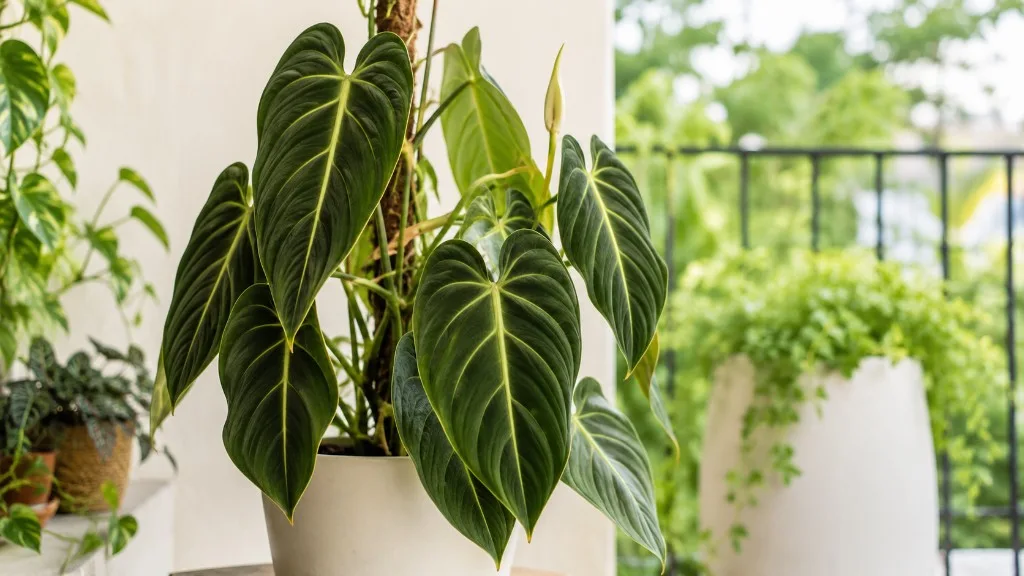
Philodendron melanochrysum is a Colombian velvet climber that sizes up leaves only when bright filtered light and vertical support arrive together. Indoors, the classic mistake is treating light like a room-decor decision - judging how bright the living space feels instead of how much usable light reaches the newest leaf on the climbing stem. A second mistake is assuming a dim corner will “fix itself” once you add fertilizer or a decorative stake. Melanochrysum tells the truth through internode length, cataphyll unfurl, and velvet color on the active growth point. Light also drives watering: a brighter vine transpires faster; a dim vine keeps mix wet longer and invites root trouble. For full species context - humidity, soil, toxicity, propagation - see the Melanochrysum overview guide. This page is the dedicated light hub that overview summarizes.
Quick Answer
Philodendron melanochrysum grows best in bright, indirect light for most of the day - typically 1–2 metres (3–6 feet) from an east-facing window, or behind a sheer curtain on south- or west-facing glass. A few hours of gentle morning sun is tolerable on acclimated plants; midday or afternoon direct sun bleaches velvet tissue and produces crisp brown patches that do not revert. When natural light is weak, run a full-spectrum LED grow light 10–12 hours daily at roughly 30–45 cm (12–18 inches) above the canopy, raising the fixture if leaf surfaces feel warm. Judge success by the newest leaf on a supported vine: firm dark velvet, clean unfurl, and size equal to or larger than the prior blade. Long internodes with small leaves mean insufficient light; pale bleached zones on the upper velvet surface mean too much direct sun or heat.
Why Melanochrysum Light Depends on Window and Pole Together
Human eyes adapt to dim interiors. Plants do not. A room that looks adequately lit may deliver only 75–150 foot-candles at a shelf three metres from glass - the lower band Clemson HGIC associates with low to medium indoor light. Melanochrysum on that shelf may keep old leaves alive while the vine searches for photons with longer internodes and smaller new blades.
Melanochrysum adds a climber-specific wrinkle generic philodendron light pages skip: leaf size tracks both light intensity and aerial-root attachment to a moist support. A well-lit vine dangling without a textured pole still produces juvenile-sized hearts. A supported vine in moderate light often outperforms a bright but unsupported one. Before you move the pot again, ask two questions: Is the newest growth getting filtered brightness at the leaf surface? and Can aerial roots grip a moist pole? If both are wrong, fix light first - then confirm support - because etiolation from dim placement masquerades as a “small leaf cultivar” for months.
Bright Indirect Light Defined Once
Bright indirect light means strong ambient brightness at the leaf without prolonged harsh direct beams - the light quality on a rainforest tree trunk below the canopy, not the open sky at noon. Translate it with a field test: on a clear day, hold your hand between the plant and the window. A soft, readable shadow with defined edges usually signals the right zone. A faint or absent shadow means low light - survivable short term, poor for sizing velvet leaves. If the leaf surface feels hot within an hour of sun hitting it, you are in direct exposure that needs filtering or distance.
Clemson HGIC notes that about 200 foot-candles for 12 hours begins to support fertilized foliage houseplant growth indoors; very few interior spots exceed that without window proximity. Melanochrysum collectors should treat window distance as the primary lever, not ceiling brightness.
Best Light for Philodendron Melanochrysum Indoors
In habitat, Philodendron melanochrysum climbs wet Colombian forest trunks where light is bright but filtered - brighter than the forest floor, dimmer than canopy gaps at midday. Indoors, replicate that gradient: place the moss pole where the top leaves receive steady filtered brightness through most of the day, not where the pot looks best on a side table.
Iowa State Extension recommends bright light near a window for philodendrons grown as houseplants, with protection from hot direct sun. That guidance fits melanochrysum well, with extra caution for velvet texture: the tiny surface hairs that create the suede look also trap heat and lose water faster than glossy philodendron leaves under the same sunbeam.
The New-Growth Test for Velvet Climbers
Week to week, only the active growth point matters:
- Correct light (with support): newest leaf emerges equal or larger than the previous one; golden or silvery veins stay crisp against dark velvet; internodes on the supported section shorten relative to leaf size; cataphyll unfurls without tearing.
- Too dim: progressively smaller blades; long internodes; vine leans hard toward glass; stuck cataphylls in dry or low-humidity air; no meaningful leaf-size jump despite “bright room” assumptions.
- Too bright: bleached white-yellow patches on the upper velvet surface; crisp brown scorch on the sun-facing zone; curling or dulling during peak sun hours after a recent move.
Old shipping scars and prior sunburn never heal green. Photograph the newest leaf weekly during any placement change so you compare unfurl progress, not legacy damage.
Best Window Placement by Direction
Window compass gives a reliable first guess in the northern hemisphere. Outdoor tree shade, tint, wall color, and how high the moss pole sits still matter - treat direction as a starting point, then confirm with the new-growth test.
East-facing windows are the default sweet spot. Morning sun is bright but relatively cool; melanochrysum 1–2 metres back from an unobstructed east pane often receives excellent bright indirect light the rest of the day. This is the placement I recommend when recovering a vine from a dim interior shelf: filtered east exposure, stable humidity near 60–70% per RHS philodendron guidance, and patience for one full new leaf before declaring success.
North-facing windows supply gentle indirect light all day. In a bright room with pale walls, north can maintain an established supported vine. In a typical apartment north window, expect slower growth, smaller leaves, and higher overwatering risk because transpiration drops - see not enough light if growth stalls for months.
South-facing windows deliver the highest total daily light. Use sheer curtains or place the pole 1.5–2 metres (5–6 feet) back from the glass so velvet blades never receive harsh midday beams. Pull farther back in summer when sun angle is high.
West-facing windows work in spring and fall and become risky in midsummer when afternoon sun carries heat through the pane. Treat west like south with extra distance or diffusion; watch for scorch on the leaf face closest to glass.
Rotate the pot a quarter turn every week or two if the vine leans. Keep the moss pole oriented so new leaves do not tangle into a wall or shelf.
East vs Filtered South and West
| Window | Typical pole placement | Expected melanochrysum performance | Warning signs |
|---|---|---|---|
| East | 1–2 m (3–6 ft) from glass | Strong default; firm new velvet leaves | Reflected summer afternoon glare off nearby walls can still bleach tips |
| North | As close as possible | Maintenance growth; smaller new leaves | No leaf-size increase 4+ months - add grow light |
| South (filtered) | 1.5–2 m with sheer curtain | Large leaves when pole roots are moist | Bleached velvet upper surface; crisp brown patches |
| West (filtered) | 1.5–2 m; monitor summer | Good spring/fall vigor on supported vines | Afternoon heat scorch July–August |
| Interior shelf | Not recommended long-term | Old leaves hold; vine etiolates | Long internodes + tiny leaves - see leggy growth |
Worked scenario: A supported melanochrysum sat 4 metres from a west window on a dim shelf - one old leaf held, internodes stretched to 12–15 cm, new blades stayed juvenile-sized. Moving the pole to 1.5 metres from a sheer-curtained east window with the moss pole kept moist produced a firm new cataphyll in two weeks and a visibly wider leaf on the third flush. Watering interval dropped from 14 days to 9 days because transpiration increased - pair any move with the watering guide.
Can Melanochrysum Take Direct Sun?
Brief, gentle direct sun - chiefly early morning on an east sill - can work for acclimated plants with good humidity. Midday or afternoon direct sun through south or west glass is where velvet melanochrysum leaves fail. The textured upper surface heats and loses moisture faster than glossy foliage; combined with dry indoor air, blades bleach, then crisp brown, often permanently on the affected tissue.
Leaves developed under lower light lack tolerance for sudden high irradiance. A plant coming from a nursery shade house, import quarantine corner, or dim shop display needs gradual acclimation (below), not an immediate south windowsill in June.
If you want more intensity without scorch, increase filtered brightness - move closer to curtained south glass, add a grow light, or use a pale wall reflection - rather than exposing velvet to raw sunbeams.
Morning Sun on Velvet vs Afternoon Scorch
Morning east sun differs from afternoon west sun in both intensity curve and leaf temperature. Many acclimated melanochrysum vines tolerate one to three hours of cool morning rays while the cataphyll is still tight; the same duration of mid-July west exposure commonly produces irreversible pale patches on dark velvet. Clemson HGIC houseplant disorders guidance links bleached patches and crisp sun-facing areas to excessive light - on melanochrysum, check the upper velvet surface first; damage often appears there before marginal burn shows on glossy philodendrons.
Low-Light Limits and Etiolation
Melanochrysum may persist in low light longer than demanding velvet species like verrucosum, but it will not produce collector-grade foliage there. Iowa State Extension notes philodendrons in insufficient light lose vigor over time - stems stretch, leaves shrink, and growth slows. Low light also reduces transpiration, so the same watering rhythm that worked near a window leaves mix wet longer, compounding root stress while older leaves still look acceptable.
Etiolation - long internodes, small pale new leaves, vine leaning aggressively toward glass - is a light problem, not a nutrient problem. Increasing fertilizer on a dim vine does not compact internodes; brighter filtered placement does.
Small Leaves in Bright Light: Pole vs Light
| Observation | Likely primary cause | First fix |
|---|---|---|
| Small leaves + long internodes + dim room feel | Insufficient light | Move toward filtered east; add LED 10–12 h |
| Small leaves + short internodes + bright window + bare stake | Missing pole attachment | Install moist textured pole; tuck aerial roots |
| Small juvenile hearts on dangling vine tip | Unsupported juvenile habit (normal) + needs pole | Train vine to pole in brighter filtered spot |
| Stuck cataphyll weeks + dry air | Low humidity ± low light | Humidifier; brighten; see overview humidity section |
| Pale bleach patches on newest leaf | Too much direct sun | Pull back; filter glass |
If you already have excellent window placement and a moist moss pole but leaves stay small, check soil and root health before chasing more light.
Using Grow Lights for Melanochrysum
When natural light is weak - north rooms, winter short days, or collector cabinets - a full-spectrum grow light replaces missing photons. UMN Extension recommends 12–14 hours daily for foliage houseplants and placing lamps 30–60 cm (12–24 inches) above the canopy for typical LED fixtures. Iowa State supplemental light guidance similarly suggests 12–14 hours for most species, with LEDs often 12–24 inches from foliage.
Hours, Distance, and Heat Check
Starting setup for melanochrysum:
- Duration: 10–12 hours on a timer for maintenance; up to 14 hours in dim winters if growth is slow - avoid exceeding 16 hours because plants need a dark rest period.
- Distance: 30–45 cm (12–18 inches) for most LED bars above the top supported leaves; raise the fixture if leaf surfaces feel warm after an hour.
- Coverage: Center light over the active growth tip and upper pole, not just the oldest leaf at the pot rim.
- Heat check: Velvet blades near hot bulbs curl and bleach like sun scorch - raise the lamp or reduce intensity before permanent damage.
Pair supplemental light with 60–70% humidity so cataphylls unfurl cleanly under added intensity. Rotate the pot weekly for even exposure along the pole.
How to Move or Acclimate Safely
Sudden jumps from dim to bright exposure cause bleached patches, crisp edges, and stalled cataphylls on velvet aroids. Treat acclimation as a two- to three-week project when the light increase is large - especially for imported plants that arrived from high-humidity shade houses.
Step-by-step acclimation:
- Baseline: Note current placement and the condition of the newest leaf and cataphyll.
- Week 1: Move 30 cm (one foot) closer to the target window or add a grow light at the far end of the recommended distance range. Hold watering and repotting steady.
- Week 2: If no scorch on the emerging leaf, advance another 30 cm or lower the lamp 5–10 cm.
- Week 3: Reach final position - typically 1–2 m from filtered east or behind sheer south glass. Wait for one full new leaf before further changes.
- Retreat rule: If bleach or crisp edges appear on the unfurling leaf, step back immediately and wait for the next cataphyll before advancing.
Do not stack light moves with repotting or heavy feeding. One variable at a time.
Warning Signs on Velvet Foliage
| Signal | Likely cause | First response |
|---|---|---|
| Bleached white-yellow on upper velvet | Too much direct sun or fixture heat | Pull back; filter glass; raise grow light |
| Crisp brown sun-facing patch | Direct sun scorch | Shade; slower acclimation |
| Long internodes + small new leaves | Etiolation / insufficient light | Move toward filtered east; add LED |
| Vine leans hard to window | Low plant-facing light at pole tip | Move pole closer; elevate if below sill |
| Stuck cataphyll + dry edges | Low light and/or low humidity | Brighten; humidify; check pole moisture |
| Sudden leaf drop after move | Light shock ± watering mismatch | Stabilize light; adjust watering per brightness |
Velvet-specific note: sun damage is permanent on affected tissue - the dark velvet does not “green back.” Judge recovery by the next leaf after you fix placement, not by old blades.
Light Changes Watering
Every light change changes evaporation rate and therefore watering frequency. Brighter placement or added grow lights mean shorter intervals between moisture checks; dimmer placement means longer dry-down before soaking.
When you move melanochrysum closer to a window, probe the top 3–5 cm of mix every few days for the first two weeks and expect the pot to lighten faster. When you move it dimmer, extend the interval and confirm dryness with finger or pot weight before watering - wet mix in low light is a common root-rot setup while older velvet leaves still look fine.
Full watering mechanics - soak-and-drain, moss pole watering, winter slowdown - live on the Melanochrysum watering guide. Light and water are one system on a large-leaf climber.
Pole Support and Light Together
Melanochrysum is a true climber: aerial roots attach to bark in nature and draw moisture from the support surface. A dry decorative stake gives shape; a textured moss or coco pole kept evenly moist gives the root contact that triggers larger leaf morphogenesis on the attached section.
Light still comes first in the troubleshooting order. If internodes stretch, fix filtered brightness before increasing fertilizer - fertilizer does not make a weak vine compact. Install support while the plant is manageable: tie stems loosely at nodes, keep aerial roots facing the pole, and avoid forcing brittle sections.
Position the pole so top leaves sit in the brightest filtered zone. A vine trained low on a short pole in a bright room may still etiolate at the growth tip if the active meristem sits below the window light pool.
Know Your Plant: Colombian Velvet Climber
Philodendron melanochrysum is a scandent climber native to Colombia in wet tropical forest, documented as widely cultivated but endemic to northwest South American rainforests on Kew’s Plants of the World Online. Mature leaves on well-grown supported vines can reach roughly 60 cm long in botanical descriptions - far beyond what unsupported trailing stems produce indoors.
The Black Gold common name refers to dark velvet blades with luminous golden venation, not a separate cultivar. Juvenile leaves on young or unsupported vines are small and heart-shaped by design; that is not automatically a light failure. The question is whether supported new growth sizes up after you correct light and pole together.
Velvet texture increases scorch sensitivity and stuck-cataphyll risk in dry air. Handle leaves gently when dusting; a soft dry brush beats a wet cloth on suede-like surfaces.
Seasonal Light Adjustments
Day length and sun angle shift indoor light more than many growers account for. Winter lowers total photons beside the same window; a June placement may need the pole moved closer or a grow light added from November through February in mid-latitude homes. Summer increases heat load through south and west glass - pull melanochrysum back or diffuse even if winter position was perfect.
Re-check the new-growth test at each solstice season and adjust watering when you adjust light. Cabinet growers running high humidity should still increase LED duration in winter rather than assuming glass sides pass enough photons.
Before You Buy: Import Light Acclimation
Buy for active nodes and firm new growth, not a single dramatic mature leaf in a photo. Imported or recently shipped melanochrysum may drop older leaves while roots rebuild; yellowing at the newest growth point is more concerning than cosmetic marks on mature blades. Quarantine new arrivals two to three weeks in moderate filtered light - not a dim corner, not a south windowsill - while you watch for pests hidden on dark matte foliage.
Import acclimation light ramp: week 1 hold in bright indirect quarantine; weeks 2–3 move 30 cm closer to target east or filtered south every few days if new growth stays firm; only then match long-term window placement. Pair the ramp with stable humidity so cataphylls do not tear during the transition.
When to use this page vs other Philodendron Melanochrysum guides
- Philodendron Melanochrysum overview - Start here for whole-plant context before deep-diving this topic.
- Philodendron Melanochrysum problems hub - Jump to symptom-specific fix guides when this care topic does not resolve the issue.
- Leaf Drop on Philodendron Melanochrysum - Escalate here when light adjustments are not enough.
Related Philodendron Melanochrysum guides
- Philodendron Melanochrysum overview
- Philodendron Melanochrysum watering
- Philodendron Melanochrysum soil
- Philodendron Melanochrysum propagation
- Philodendron Melanochrysum fertilizer
- Philodendron Melanochrysum repotting
- Leaf Drop on Philodendron Melanochrysum
- Philodendron Melanochrysum problems
Conclusion
Philodendron melanochrysum light success is filtered brightness at the supported growth tip, not room aesthetics: east or sheer-filtered south/west, 1–2 metres from glass for most homes, 10–12 hours of supplemental LED when natural light is weak, and two- to three-week acclimation before harsh exposure. Read velvet leaves for irreversible scorch versus etiolation, confirm a moist textured pole before blaming light for small juvenile leaves, and pair any placement change with an updated watering check. Get light and support aligned and melanochrysum delivers the long dark velvet blades that justify the moss pole in your brightest filtered corner.