Leaf Drop on Philodendron Melanochrysum: Causes, Checks &
Quick answer
Leaf drop on Philodendron Melanochrysum is usually caused by watering imbalance, root stress, or acclimation after a move-not normal growth. First step: probe soil moisture 3–5 cm deep and match your next watering to wet vs dry before repotting or fertilizing.
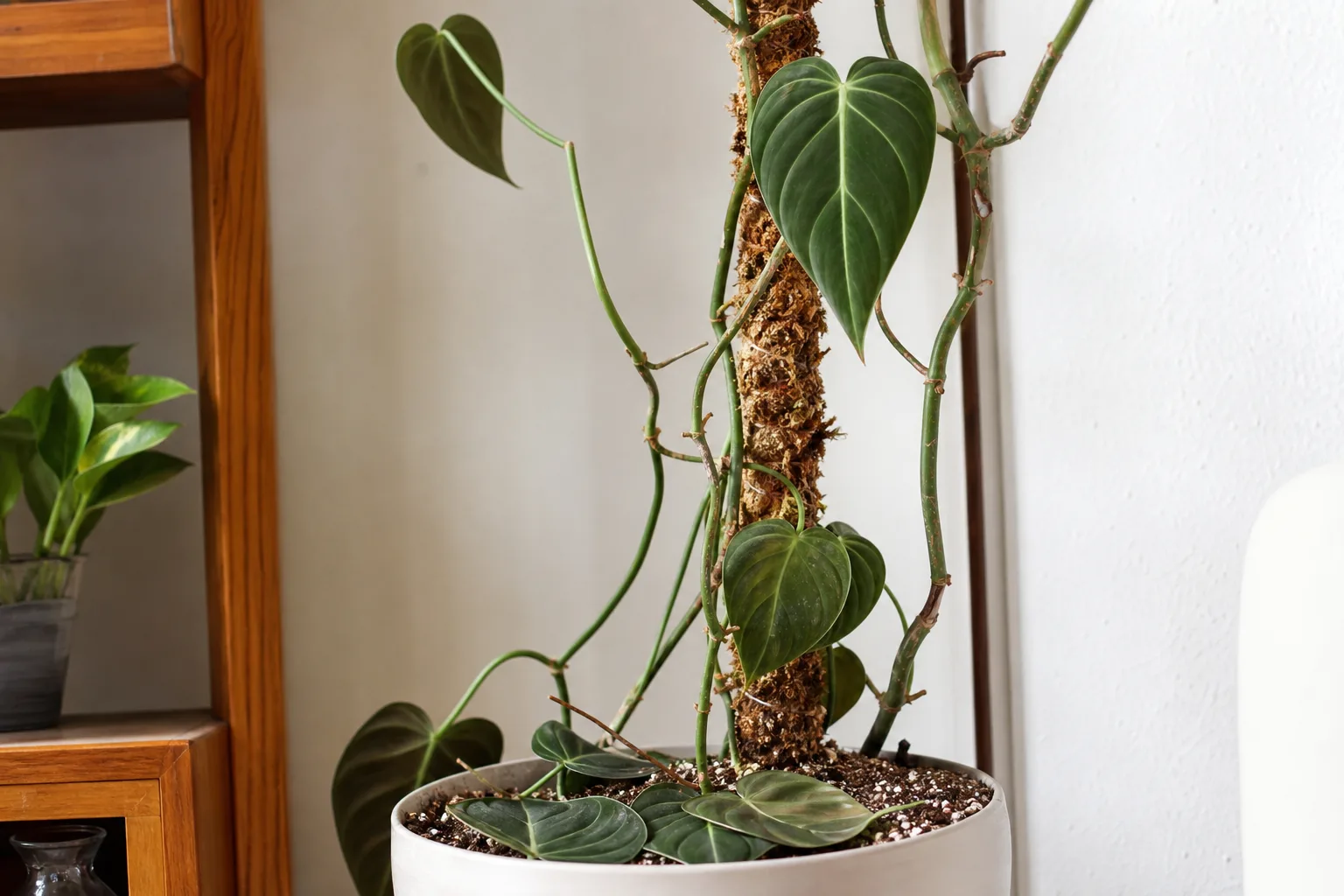
Leaf Drop on Philodendron Melanochrysum: Causes, Checks & Fixes
This guide covers leaf drop on Philodendron Melanochrysum. See also the general Leaf Drop guide, watering, and light pages for this plant.
Leaf Drop on Philodendron Melanochrysum: Causes, Checks & Fixes
Quick answer
Leaf drop on Philodendron Melanochrysum is usually caused by watering imbalance, root stress, or acclimation after a move-not normal growth. First step: probe soil moisture 3–5 cm deep and match your next watering to wet vs dry before Philodendron Melanochrysum repotting guide or fertilizing.
Philodendron melanochrysum is a climbing velvet aroid with heart-shaped leaves that can reach three feet long on a supported vine. Those heavy blades make leaf loss more visible than on small-leaved philodendrons, but the underlying triggers are still moisture, roots, and environment. Clemson HGIC notes that either over- or under-watering can cause leaf drop on houseplants-and on Melanochrysum, large foliage plus slow surface drying makes both extremes common indoors.
Why Philodendron Melanochrysum drops leaves
Overwatering and root stress lead the list. When chunky aroid mix stays saturated, roots lose oxygen and begin to fail. The plant sheds leaves it can no longer support, often starting on the lower vine while the tip still looks dark. Clemson HGIC links yellowing of lower leaves and death of growing tips to too little light or overwatering on philodendrons-Melanochrysum in a dim corner with a heavy wet pot fits both patterns at once.
Underwatering causes drop too, especially after a long dry spell on a vine with many large leaves. Maryland Extension describes yellowing and leaf drop from prolonged drought when roots cannot supply enough moisture. A very light pot, dusty dry mix throughout, and limp velvet blades between waterings point here-not a swampy heavy pot.
Acclimation after shipping, repotting, or relocation is normal on Philodendron Melanochrysum overview for a limited time. Imported or recently moved Melanochrysum often sheds older leaves while rebuilding roots; plant detail notes that established plants recover faster than fresh arrivals. Clemson HGIC states that some leaf drop occurs after a significant environment change but should last only about three weeks if conditions stabilize.
Light shifts change how fast the pot dries and how much foliage the plant can maintain. Reduced light lowers photosynthesis, so the vine may drop leaves it cannot sustain-especially if Philodendron Melanochrysum watering guide does not adjust. RHS guidance for philodendrons recommends bright light but not direct sun and letting the compost surface dry between waterings; Melanochrysum moved from a bright grow tent to an average room often drops leaves while the mix stays wet too long.
Cold drafts and chilling also trigger shedding. Clemson HGIC lists chilling as a cause of leaf drop on houseplants. Melanochrysum near AC vents, cold windows in winter, or brief exposure below comfortable room range can drop leaves suddenly even when soil moisture looks fine.
Low humidity below 50% more often causes brown tips on velvet philodendrons, but chronic dry air plus uneven watering can weaken petioles until older leaves detach. Iowa State Extension notes philodendrons prefer evenly moist but not wet soil; Melanochrysum in dry winter heat with irregular watering loses lower leaves faster than the vine replaces them.
Pests and disease are less common but worth ruling out when drop is unexplained. Penn State Extension notes that insects and mites can stress indoor plants; spider mites on dark velvet are easy to miss until stippling and webbing appear. Sticky residue on new growth suggests sap feeders before you blame water alone.
Natural aging sheds the lowest leaf on a long climbing vine occasionally. One old leaf yellowing and falling while new velvet foliage unfurls higher on the moss pole is low concern. Worry when drop climbs the vine or hits cataphylls around new growth.
What leaf drop looks like on Philodendron Melanochrysum
Problematic drop differs from slow turnover on a healthy climber:
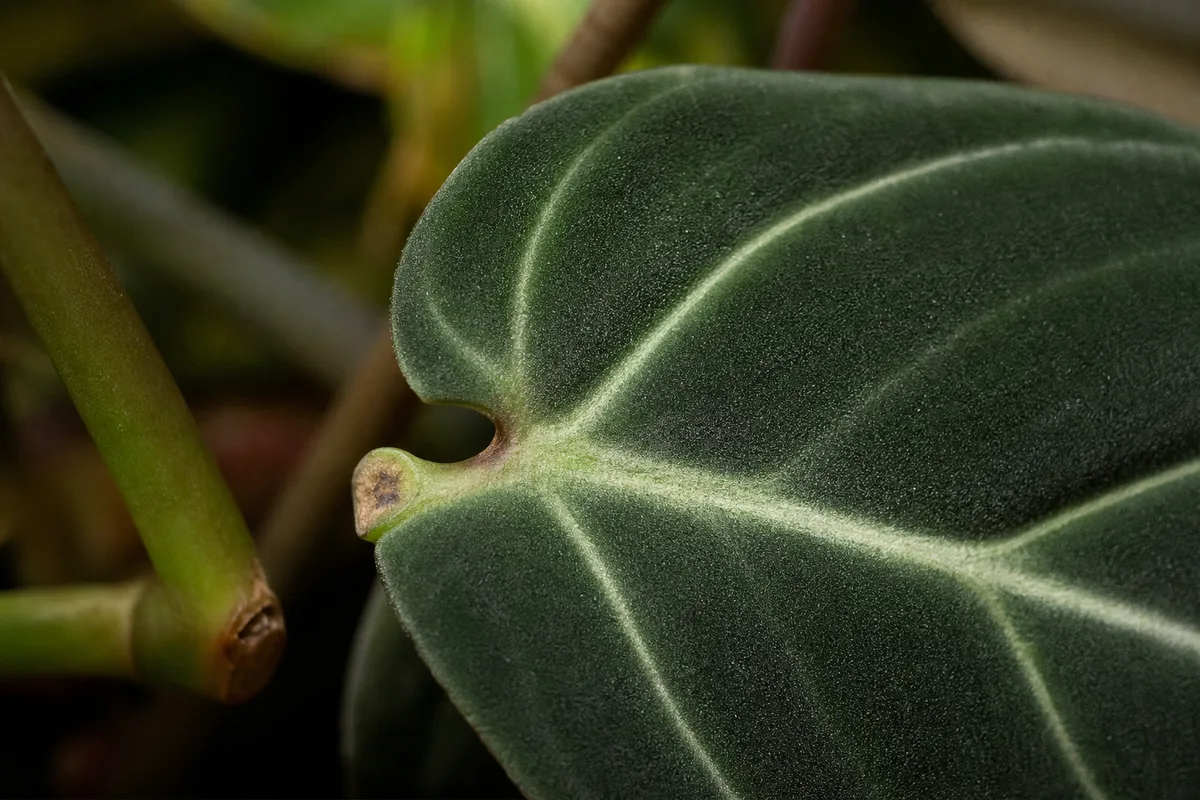
Leaf Drop symptoms on Philodendron Melanochrysum - compare with healthy tissue on the same plant.
- Leaves detach with little tug-petiole base dry or soft depending on cause
- Multiple leaves fall within days, not one oldest leaf every few weeks
- Green or partially green velvet blades drop before full yellowing
- Lower third thins while upper leaves still look firm-or tip leaves fall too
- Yellowing precedes drop when roots are failing in wet mix
- Limp blades drop after the pot went very light and dry
- Drop clusters after repotting, shipping, or moving to a new room
Dark velvet can hide early chlorosis; compare the newest leaf to leaves two nodes below it. A sour smell or soft node at the soil line with wet mix means root stress, not harmless aging.
How to confirm the cause
Read the vine from base to tip before changing three variables at once:
- Moisture at depth - Probe 3–5 cm into chunky mix. Wet with dropping leaves suggests pause watering; bone dry with limp leaves suggests soak after checking ties.
- Pot weight and drainage - Heavy days after watering supports excess moisture; blocked holes or standing saucer water keep roots saturated.
- Timing of care changes - Repot, ship, or move within the last three weeks? Stabilize light and water first per Clemson’s acclimation window.
- Which leaves fall - Lowest only often means aging or mild underwatering; tip plus lower together means systemic stress.
- Stem and smell - Firm stems and neutral odor narrow to water balance or light; mushy base with sour smell means inspect roots.
- Light and drafts - Philodendron Melanochrysum light guide for most of the day is the baseline; cold AC blasts or dark corners implicate environment.
- Root check if mixed signals - Partially unpot when wet soil and progressive drop persist after one dry-down cycle.
Lookalike symptoms to rule out
Drooping often precedes drop-both need wet-vs-dry checks first. Yellow leaves may stay attached longer before falling; yellowing without drop can mean early light stress. Spider mites cause stippling before wholesale shedding. Repotting shock drops leaves with firm roots and no sour smell-wait before unpotting again.
First fix for Philodendron Melanochrysum
Probe soil 3–5 cm deep and stabilize watering before repotting, fertilizing, or heavy pruning.
Wet heavy pot with yellowing lower leaves: Stop watering until the top 3–5 cm dries. Empty saucers. If drop continues over seven to ten days, unpot, trim mushy roots, repot into fresh chunky mix.
Very light dry pot with limp leaves: Soak thoroughly, drain fully, and confirm moss pole ties are not kinking petioles.
Recent move or repot with firm roots: Hold placement and watering steady for two to three weeks. Do not stack fertilizer, extra misting, and another repot in the same month.
Draft or cold exposure: Move away from vents and cold glass; keep day temperatures in the range philodendrons prefer-Clemson HGIC cites 65–70 °F nights and 75–85 °F days as ideal for philodendrons.
Make one primary correction, then watch weekly drop rate before the next intervention.
Step-by-step recovery
After the first fix:
- Place the plant in bright indirect light with steady 60–70% humidity and gentle airflow-not stagnant damp corners.
- Water when the top 3–5 cm of chunky aroid mix is dry if you corrected overwatering; avoid letting the entire root ball go dust-dry if you corrected drought.
- Extend moss pole height and retie nodes so aerial roots contact moist support-unsupported long vines stress petioles on heavy leaves.
- Remove fallen debris from soil surface; snip fully yellow spent leaves only after the vine stabilizes.
- Track drop count weekly-improvement means fewer leaves falling each week and new velvet leaves unfurling cleanly.
If only one old lower leaf fell on an otherwise vigorous vine with correct dry-down, observation may be enough without repotting.
Recovery timeline
Single-leaf aging turnover needs no timeline-watch that new growth continues. Acclimation drop after shipping or repotting often slows within about three weeks once light and water stay stable. Drought-related drop may stop within days after one thorough soak and corrected schedule. Root-stress drop can need four to eight weeks and some permanent leaf loss before new firm foliage appears. Fallen blades do not reattach; success is measured by stopped shedding and healthy new leaves.
What not to do
- Do not repot on day one unless roots are clearly failing-extra disruption adds stress during active drop.
- Do not fertilize to force new leaves on a stressed root system.
- Do not water a heavy wet pot because leaves are falling-saturated roots often cause the drop.
- Do not change light, pot, and watering rhythm in the same week during acclimation.
- Do not strip every yellow leaf immediately; partially green tissue still photosynthesizes until the plant sheds it naturally.
How to prevent leaf drop next time
Water when the top 3–5 cm dries, use drainage holes and empty saucers, and keep bright indirect light so mix dries predictably. Maintain 60–70% humidity for velvet texture without saturating roots. Install a tall moss pole early and retie as internodes lengthen-Melanochrysum leaves enlarge for years on stable vertical support per Clemson HGIC.
Quarantine new plants before placing them near established vines. After shipping, support the vine, monitor moisture daily for two weeks, and expect occasional older-leaf loss while roots recover. Keep plants away from pets; philodendron parts are toxic to cats and dogs.
When to worry
Escalate leaf drop when:
- Green leaves fall from the growing tip while soil is wet and sour-smelling
- Stem bases soften at soil level
- More than one leaf drops per week for over two weeks after care stabilized
- New cataphylls abort before leaves unfurl across multiple cycles
- Drop continues past three weeks after a single move with no other care changes
One oldest leaf yellowing and falling on a firm vine with active new growth is low urgency. Systemic drop from base to tip with root symptoms is not.
Conclusion
Leaf drop on Philodendron Melanochrysum is a stress signal on a heavy velvet climber-not a reason to panic-repot. Check wet vs dry at depth, stabilize watering and placement, and give acclimation time after moves. When sour soil or soft stems appear, inspect roots and repot into fresh chunky mix. Prevent drop by matching water to how the pot dries in your light, supporting the vine early, and avoiding stacked care shocks. Success means shedding slows and new dark velvet leaves keep unfurling-not every old blade staying on the vine forever.
When to use this page vs other Philodendron Melanochrysum guides
- Philodendron Melanochrysum watering guide - Use for routine moisture checks before assuming leaf drop is the main issue.
- Philodendron Melanochrysum problems hub - Browse all 10 common issues on this species.
- Yellow Leaves on Philodendron Melanochrysum - Different entry point when symptoms overlap with leaf drop.
- Root Rot on Philodendron Melanochrysum - Different entry point when symptoms overlap with leaf drop.