Yellow Leaves on Philodendron Melanochrysum: Causes, Checks
Quick answer
Yellow leaves on Philodendron Melanochrysum are usually caused by overwatering or insufficient light slowing water use in the pot. First step: let the top 3–5 cm of mix dry before watering again and move the plant to brighter indirect light.
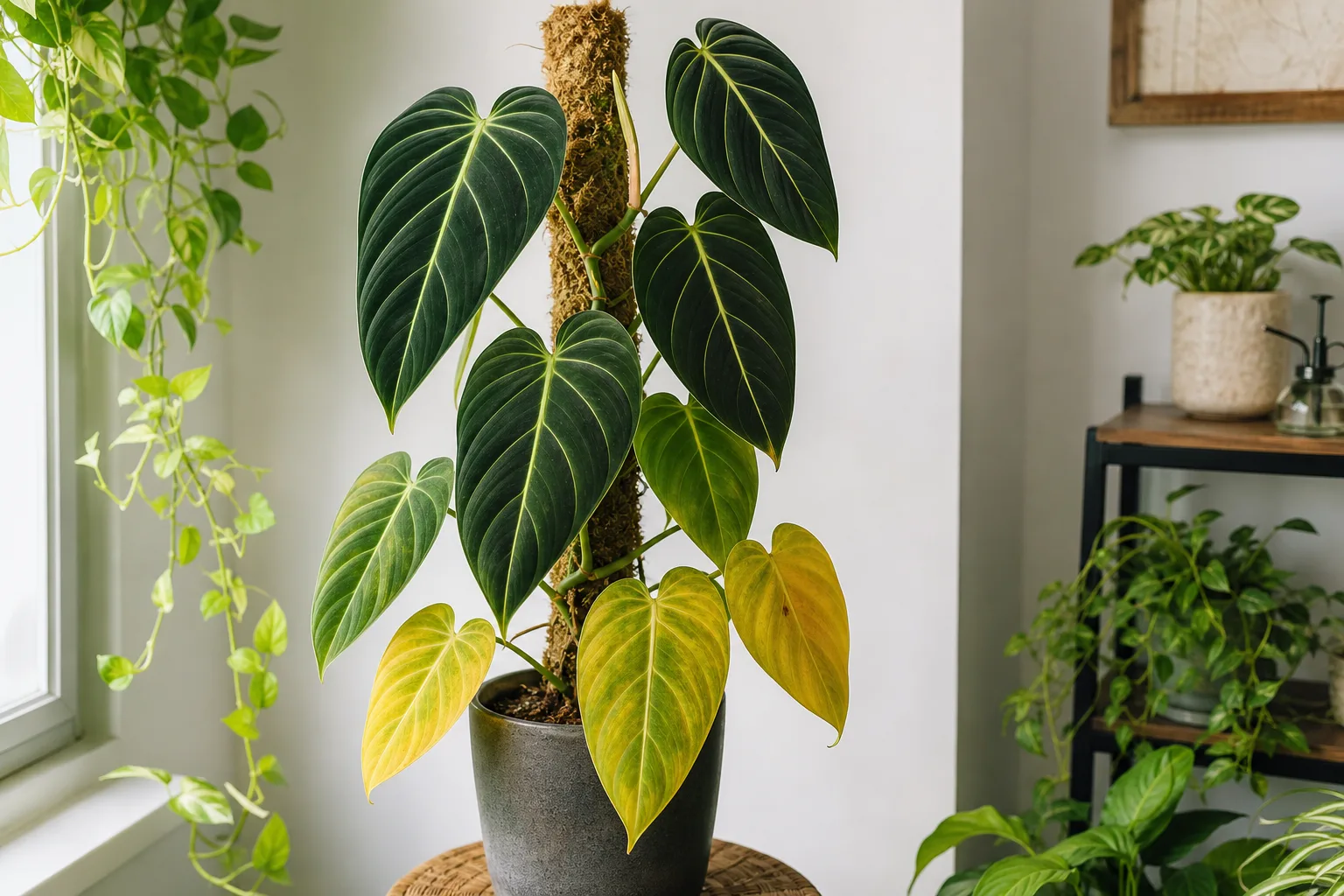
Yellow Leaves on Philodendron Melanochrysum: Causes, Checks & Fixes
This guide covers yellow leaves on Philodendron Melanochrysum. See also the general Yellow Leaves guide, watering, and light pages for this plant.
Yellow Leaves on Philodendron Melanochrysum: Causes, Checks & Fixes
Quick answer
Yellow leaves on Philodendron Melanochrysum are usually caused by overwatering or insufficient light slowing water use in the pot. First step: let the top 3–5 cm of mix dry before watering again and move the plant to brighter indirect light.
Philodendron melanochrysum is a climbing tropical aroid with large velvet leaves that change how fast soil dries. Yellowing is a stress signal, not a single diagnosis. On Philodendron Melanochrysum overview, the combination of wet mix plus dim placement is especially common-low light reduces photosynthesis and water use, so an otherwise reasonable Philodendron Melanochrysum watering guide keeps roots saturated too long.
Why Philodendron Melanochrysum gets yellow leaves
Overwatering is the most frequent cause. Philodendrons need water only when the top inch of soil is dry, but Melanochrysum’s large leaves can make the surface look ready while the root zone stays wet. Constantly saturated chunky mix deprives roots of oxygen; stressed roots cannot deliver nutrients, and foliage yellows starting on older leaves lower on the vine. NC State Extension notes that overwatering can cause root rot on philodendrons-yellow leaves with wet soil and sour smell mean inspect roots, not add more water.
Insufficient light compounds the pattern. Maryland Extension explains that too-wet plants drop leaves or turn yellow when care does not match conditions. Melanochrysum in a dim corner uses little water, so soil that would dry in a week near a bright window may stay damp for two weeks. Stretched internodes, smaller new leaves, and pale green tone on velvet blades often accompany light-related yellowing.
Dense or degraded soil holds water too long even when you water less often. Melanochrysum needs moist, well-drained soil with good organic matter-not compacted peat that has lost structure. When mix breaks down after a year or two in a warm indoor pot, drainage fails silently and yellow leaves follow.
Natural aging affects the lowest leaves on long vines. One or two bottom leaves yellowing slowly on an otherwise vigorous Melanochrysum may be normal turnover, especially after the plant redirects energy to new growth higher on the moss pole. Concern starts when yellowing climbs the vine or hits new cataphylls.
Chronic underwatering is less common but possible. Maryland Extension describes yellowing and leaf drop from prolonged drought when roots cannot supply moisture. A very light pot, dusty dry mix throughout, and limp leaves between waterings point here-not a heavy wet pot.
What yellow leaves look like on Philodendron Melanochrysum
Patterns that help separate causes on this species:
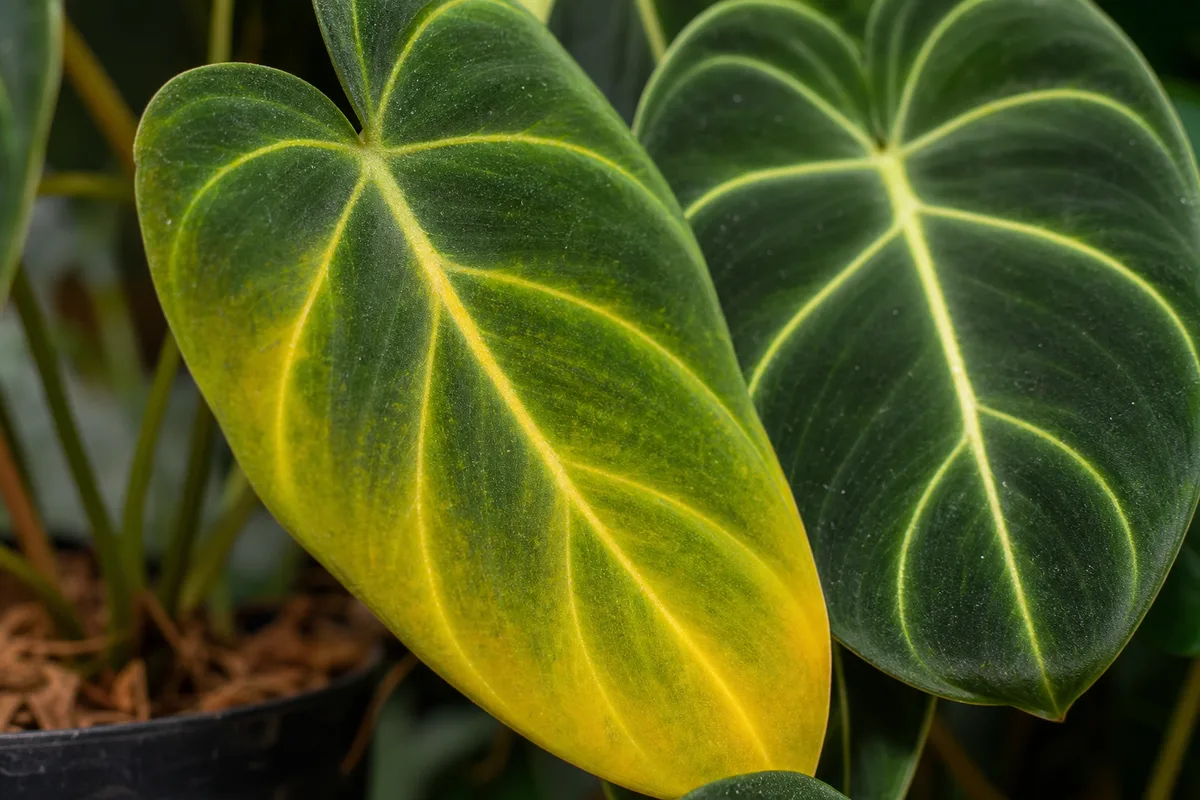
Yellow Leaves symptoms on Philodendron Melanochrysum - compare with healthy tissue on the same plant.
- Overwatering / root stress - Lower and older leaves yellow first; soil stays damp; pot feels heavy; possible soft stem base or sour smell
- Low light - General pale tone, stretched nodes, smaller new leaves, yellowing on multiple leaves while soil dries slowly
- Normal aging - One oldest leaf yellows at a time on a otherwise healthy climbing vine
- Advanced rot - Yellowing plus blackening at soil line, mushy nodes, wilting despite wet mix per Penn State root rot guidance
Dark velvet foliage can hide early chlorosis; compare new versus old leaves and check the underside for pests before assuming water alone is wrong.
How to confirm the cause
Use this inspection order:
- Moisture at depth - Probe 3–5 cm into the mix. If wet while lower leaves yellow, pause watering.
- Pot weight - Heavy days after watering supports excess moisture; very light pot with limp leaves suggests drought.
- Light on the vine - Philodendron Melanochrysum light guide for most of the day is the Melanochrysum baseline; dim stretchy growth implicates light.
- Stem bases - Firm nodes are good; soft wet tissue at soil line is urgent.
- Root check if needed - Unpot only if smell, softness, or spreading yellowing warrant it. Mushy roots confirm rot; firm pale roots suggest adjust water and light first.
If only the lowest leaf is yellowing on a vigorous vine with appropriate dry-down, aging may be the answer. If new growth yellows or multiple leaves fail within a week, treat as active stress.
Lookalike symptoms to rule out
Spider mite damage shows stippling and fine webbing on undersides before uniform yellowing. Cold drafts can darken or yellow patches after exposure; stems stay firm and soil odor neutral. Nutrient deficiency can yellow leaves but usually shows patterned chlorosis on new growth-fix water and light before assuming fertilizer deficiency on Melanochrysum.
First fix for Philodendron Melanochrysum
Let the top 3–5 cm of chunky mix dry before watering again, and move the plant to brighter indirect light the same week. These two corrections address the most common combined cause on this species: excess moisture in a pot that is not drying because light is too low.
While soil dries:
- Empty saucers so standing water does not wick back into the mix.
- Do not fertilize stressed yellowing plants-salts stress damaged roots further.
- Remove fully yellow leaves that detach easily; keep partially green leaves for photosynthesis.
If soil smells sour or stem bases soften while you dry the pot, unpot and inspect roots immediately rather than waiting for a full dry cycle.
Step-by-step recovery
- Relocate to bright indirect light-east or shaded west window, or a few feet from a grow light-matching partial shade preferences for philodendrons.
- Water only when the top 3–5 cm is dry; roughly every 7–14 days in active growth for many homes, less in winter.
- If mix stays wet too long in the new spot, repot into fresh chunky aroid blend with more perlite and bark.
- Watch for two to three weeks. Stable stems and a new cataphyll progressing cleanly signal recovery.
- Resume half-strength fertilizer monthly only after new growth appears and watering rhythm is predictable.
Yellow leaves will not revert to green. Progress means no new yellowing and healthy new velvet foliage.
Recovery timeline
Light and watering corrections often stabilize yellowing within one to two weeks if roots are still firm. Cases with moderate root damage may need four to six weeks before confident new growth. Advanced rot with mushy stems requires pruning and Philodendron Melanochrysum repotting guide; recovery extends to eight weeks or longer.
Judge Melanochrysum recovery by new leaf color and size, firm nodes, and neutral-smelling soil-not by old yellow blades greening up.
What not to do
- Do not water more because leaves look pale while soil is still wet.
- Do not fertilize heavily to “green up” yellow leaves on stressed roots.
- Do not leave the plant in low light after adjusting water-both must align for this climber.
- Do not repot repeatedly without fixing light and watering; unnecessary repotting adds stress.
- Do not pull every yellow leaf immediately if partial green remains-it still supports recovery.
How to prevent yellow leaves next time
Water when the pot dries at 3–5 cm depth, not on a calendar. Maryland Extension recommends checking soil with your finger rather than scheduled watering because humidity, temperature, and light all change dry speed.
Keep Melanochrysum in bright indirect light year-round and reduce watering in winter when growth slows. Use chunky aroid mix in a pot with drainage holes only slightly larger than the root ball. Refresh tired mix every one to two years. A moss pole keeps vines in better light as they climb rather than trailing into dim floor air.
When to worry
Escalate immediately if:
- New growth yellows or fails to unfurl
- Stem bases soften or blacken at soil level
- Soil smells sour despite drying attempts
- Multiple leaves yellow within seven to ten days
- Yellowing pairs with wilting and wet heavy soil
Those patterns point to root rot-switch to unpotting, pruning mushy tissue, and repotting in dry chunky mix rather than only drying the old substrate.
Conclusion
Yellow leaves on Philodendron Melanochrysum usually trace to wet soil, low light, or both slowing the balance this climber needs. Confirm with moisture at depth, pot weight, and vine stretch; fix by drying the top 3–5 cm before watering and improving bright indirect light. Prevent repeat yellowing by matching water to how fast your pot dries in your actual light conditions. Success is firm stems and dark new velvet leaves-not old yellow foliage turning green again.
When to use this page vs other Philodendron Melanochrysum guides
- Philodendron Melanochrysum watering guide - Use for routine moisture checks before assuming yellow leaves is the main issue.
- Philodendron Melanochrysum problems hub - Browse all 10 common issues on this species.
- Root Rot on Philodendron Melanochrysum - Different entry point when symptoms overlap with yellow leaves.