How to Propagate Philodendron Melanochrysum: Moss, Perlite
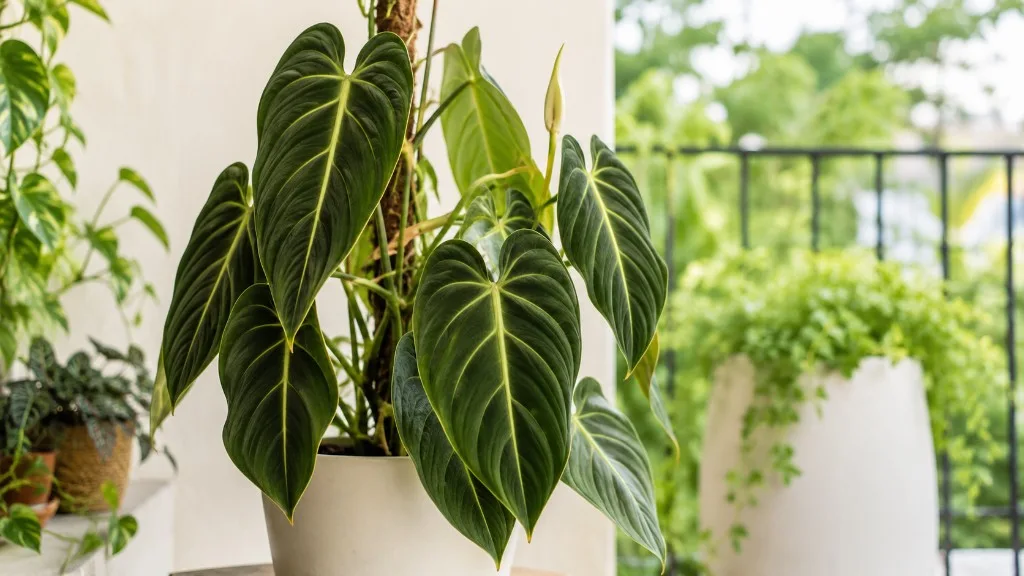
How to Propagate Philodendron Melanochrysum: Moss, Perlite & Water
How to Propagate Philodendron Melanochrysum: Moss, Perlite & Water
Author: sai-ananth · Reviewed by: LeafyPixels Review Board · Reviewed: 2026-06-15
Philodendron melanochrysum propagation rewards growers who treat the Black Gold philodendron like the Colombian velvet climber it is - not like a generic pothos in a jar. This URL is the full method guide for the melanochrysum cluster; the overview covers identification and daily care at hub depth. Roots form from stem cuttings that include at least one node, and cuttings that already carry aerial roots at that node often root faster because the tissue is primed for attachment. The practical default for most homes is moist sphagnum moss inside a clear humidity box at warm room temperatures; perlite with a dome and water propagation also work, but velvet leaves desiccate or rot more easily than smooth green philodendrons when humidity or water hygiene slips.
Quick Answer: Velvet Climber, Node Required, Moss Default
For most indoor collectors, node cuttings in a sealed moss box are the safest default for expensive velvet melanochrysum tissue. Take a stem section with at least one node - preferably one that already shows a pale aerial root nub - cut just below the node, callus the wound for four to twelve hours, then bury the node in damp (not dripping) sphagnum inside a clear container at 22–28°C (72–82°F) with bright indirect light and 60% or higher relative humidity. Under those conditions, melanochrysum cuttings commonly root in two to four weeks before you pot into chunky aroid mix and install a moss pole. Perlite with a humidity dome is the best alternative when you want roots in a medium closer to potting mix. Water works only with strict jar hygiene and a node that already shows aerial root initials - and you should pot up promptly once roots reach roughly 3–5 cm. A detached velvet leaf without stem and node cannot become a plant, no matter how long it stays green.
Why Propagation Starts With Nodes and Aerial Roots
Philodendron melanochrysum is a scandent climber native to Colombia in the wet forests of the Andean foothills. In cultivation it behaves as a hemiepiphytic Araceae vine: it produces a slender stem with nodes spaced along the vine, and at each node it can push leaves, cataphylls (protective sheaths around new growth), and aerial roots that grip bark in the wild. Propagation copies that biology. Adventitious roots emerge from node meristem tissue, not from a detached leaf blade or from smooth internodal stem alone.
That matters because the most expensive beginner mistake on melanochrysum is rooting a single velvet leaf without stem and node. The leaf may stay green for weeks and never become a plant. Every valid cutting needs stem tissue with at least one node; two nodes on the buried or moss-wrapped portion improves redundancy if one fails. This is a climbing philodendron - unlike Philodendron gloriosum, a crawler with a horizontal rhizome that propagates differently. If your plant trails along the soil surface without climbing nodes on a vertical stem, confirm you have melanochrysum and not a mislabeled micans or gloriosum before investing in expensive propagation gear.
Scandent Velvet Climber Anatomy
Melanochrysum is a true climber, not a self-heading rosette philodendron. Unsupported vines produce smaller juvenile leaves; supported vines with attached aerial roots size up the dark velvety foliage people buy the plant for. When you propagate, you are cloning that climbing habit. Plan for a textured moss pole or plank soon after pot-up so the first new leaves do not stall on a trailing cutting in dry air.
On a thick melano vine, nodes look like slight swellings on the stem - often with a leaf petiole, a cataphyll scar, and sometimes a pale aerial root nub already pointing outward. The node is the knobby junction where the petiole meets the stem; the aerial root emerges from that same zone. Include that node in your cutting. Aerial roots that touch moist sphagnum or moss on a pole convert to functional roots quickly; cuttings that arrive with aerial roots at the node frequently root in 10–14 days under warm bright conditions, while bare nodes on the same setup may need three to four weeks - a realistic collector observation, not a guarantee.
Why Velvet Leaves Need Higher Humidity During Rooting
Velvet texture on aroids holds a thin humid micro-layer against the leaf surface in forest conditions. Indoors, unrooted cuttings lose water through those leaves faster than the stem can replace it until roots form. 60–70% relative humidity during rooting is a realistic target for melanochrysum - higher than many green philodendrons tolerate without complaint. Below that, leaves dull, cataphylls stick, and aerial roots shrivel while the moss still looks moist.
High humidity must pair with air movement. A closed box or bag helps, but vent it briefly every two to three days so stagnant damp does not invite fungal spotting on velvet. A small humidifier near the propagation zone beats misting alone for this species. Keep propagation trays away from ripening fruit in the kitchen - ethylene gas from apples and bananas can stress sealed cuttings in small boxes.
Method Selection: Moss Box, Perlite Dome, or Water Jar
All three home methods use the same cutting prep; they differ in moisture delivery, rot risk, and how easily you inspect progress.
| Factor | Sphagnum moss box | Perlite + humidity dome | Water jar |
|---|---|---|---|
| Typical timeline (warm, bright home) | Often 2–4 weeks | Often 2–4 weeks | Often 2–4 weeks; variable on velvet |
| Rot risk | Low if moss is moist, not soggy | Low with airy perlite | Higher if node sits in stale water |
| Humidity for velvet leaves | Excellent in sealed box | Good under dome | Leaf must stay above waterline |
| Root visibility | Limited unless you unwrap | Limited | Excellent |
| Best for | Default for velvet aroids | Growers who pot up directly | Quick trials; strong aerial-root nodes |
Choose sphagnum moss if you want the safest default for expensive velvet tissue and easy humidity control. Choose perlite if you prefer rooting in a medium closer to the final aroid mix. Choose water only with strict hygiene and a node that already shows aerial root initials - and move to mix promptly once roots are a few centimetres long. If water fails twice on the same cutting type, switch to moss rather than retrying the jar.
Best Time to Propagate Philodendron Melanochrysum
Propagate during active growth when the parent pushes firm new leaves and cataphylls unfurl cleanly - usually spring through early autumn in temperate homes. Warmth and bright indirect light matter more than calendar date alone. Room temperatures in the low to mid 20s °C support steady rooting better than a cold windowsill that drops at night.
Avoid taking cuttings immediately after shipping, repotting, pest treatment, or obvious root rot on the parent. Propagation multiplies whatever condition the vine already carries. If the plant is recovering, wait until new growth at the tip looks stable for two to three weeks. Fresh imports often need two to three weeks of quarantine and acclimation before the first cut - shipping stress shows up as yellowing at the newest growth point, and cutting then spreads weakness into every new piece.
Tools, Materials, and Safety
Gather sharp bypass pruners or a sterile blade, 70% isopropyl alcohol for disinfecting between cuts, sphagnum moss (rehydrated and squeezed to damp - not dripping), perlite or chunky aroid mix, clear propagation boxes or bags, small pots with drainage, soft plant ties, labels, and optional rooting hormone (helpful but not required on healthy melano nodes with aerial roots).
Philodendron melanochrysum is toxic to cats and dogs if chewed. Like other philodendrons, it contains insoluble calcium oxalate crystals that irritate mouth tissue. The ASPCA lists philodendrons as toxic to pets. Keep cuttings, trimmings, and propagation trays out of reach; wear gloves if sap irritates your skin; wash hands after handling. US pet owners can contact ASPCA Animal Poison Control at 888-426-4435 if ingestion is suspected.
Choosing the Best Parent Stem
Start from a healthy, pest-free vine with firm stems and normal velvety color - not yellowing at the growing tip, not coated in sticky honeydew, and not sitting in sour wet mix. Weak parent tissue produces weak cuttings.
Prefer sections with at least one node and one aerial root on a stem that has recently hardened but is still actively growing. When refreshing a long leggy melano, you can take multiple single-node cuttings from one vine rather than one oversized section with long bare internodes - bare internode tissue rots instead of rooting.
Reject stems with black mush at the node, mealybug cotton at leaf axils, thrips-scarred new leaves, or active root rot smell from the parent pot. If the parent shows root rot, fix culture or take clean tissue well above the rot zone only after confirming the upper stem is firm. Quarantine new imports before propagating so you do not spread pests across your collection.
Preparing Stem Cuttings Step by Step
Work quickly once blades are clean; dehydration starts at the cut.
Step 1 - Select and cut. Choose a stem section with at least one node. Cut just below the node with a single clean slice. Many growers take 10–15 cm (4–6 inches) including one or two leaves above the node; single-node sections are valid when dividing a long vine.
Step 2 - Strip lower tissue. Remove any leaf that would sit below the moss, perlite, or waterline. Keep one or two upper leaves for photosynthesis; remove excess large velvet leaves if the cutting wilts badly - energy balance matters on unrooted tissue.
Step 3 - Orient aerial roots. Point existing aerial roots toward the moss or medium, not folded under the stem.
Step 4 - Callus (recommended). Let the cut end dry for a few hours to overnight in a shaded spot before enclosing in moss or water. A brief callus reduces bacterial entry at the wound - a standard precaution for stem-tip cuttings on soft-stemmed houseplants.
Step 5 - Insert immediately after callus. Place into pre-moistened moss, perlite, or water within minutes of the callus period ending.
Callus Step Before Rooting
The callus is not optional folklore on velvet aroids in humid boxes - it is cheap insurance. A wet fresh wound pressed into warm moss invites mushy stem base rot, the fastest way to lose a melano cutting. Four to twelve hours on a clean tray at room temperature is enough for most home setups. Do not callus so long that the cutting wilts; if leaves go limp, proceed to moss with slightly drier moss around the cut only.
Method 1: Rooting in Sphagnum Moss (Humidity Box)
This is the default method for Philodendron melanochrysum in most collector setups.
Step 1. Rehydrate sphagnum moss and squeeze until damp like a wrung sponge - no free water dripping.
Step 2. Fill a clear plastic box or jar with a 3–5 cm layer of moss. Lay the cutting horizontally or at a slight angle so the node is buried in moss and aerial roots contact moss fibres. Upper leaves stay above the moss line.
Step 3. Close the lid or bag most of the way, leaving a small air gap, or open briefly every two to three days. Place in bright indirect light - not direct sun that cooks the box.
Step 4. Keep moss consistently moist by misting when the top looks dry; never flood the box. Expect white to tan root tips emerging from the node in roughly two to four weeks at 22–28°C.
Step 5. When roots are several centimetres long and cling lightly to moss, pot up (see Transplanting section). Do not leave mature roots trapped in a sealed box indefinitely - they need fresh air and mix.
Method 2: Rooting in Perlite With Humidity Dome
Perlite rooting suits growers who want roots formed in a porous, airy medium similar to mature aroid mix.
Fill a small pot or tray with pre-moistened perlite or half perlite / half peat or coco coir. Make a hole with a pencil; insert the cutting so at least one node is buried. Firm lightly. Water once to settle, then maintain even dampness - like a wrung sponge, not mud.
Cover with a clear humidity dome or bag supported so plastic does not crush velvet leaves. Vent daily. Bright indirect light and warmth match the moss method. Check roots after three weeks with a gentle tug test - resistance suggests anchoring. Iowa State Extension recommends burying one or two nodes on stem cuttings and checking progress after several weeks rather than disturbing roots daily.
Method 3: Rooting in Water (Velvet-Rot Caveats)
Water propagation is possible on melanochrysum but demands more discipline than on pothos. Submerge only the node and lower stem; keep all velvet leaves above the waterline. Use a clean jar and room-temperature water; change water when cloudy or every few days in warm rooms.
Velvet-leaf caveat: stems sitting in stale water develop mushy bases and sour jars faster than smooth philodendrons because the wound surface and any submerged cataphyll tissue decay quickly. Prefer water only when the node already shows aerial root initials, work in warm bright conditions, and pot into airy mix as soon as roots reach roughly 3–5 cm - waiting for long fragile water roots makes the soil transition harder. If the base turns soft after two water attempts, discard the jar method and restart with a fresh cut in moss.
Air Layering on Thick Stems
On a large established vine where you want a rooted top without removing the whole cutting upfront, use air layering. Iowa State Extension describes air layering as inducing roots on a stem while it remains attached to the parent plant - especially useful for lanky stems that do not bend well for pots.
Select a healthy node on a thick stem. Wrap moist sphagnum around the node, seal with plastic wrap or a propagation ball, and keep the moss damp through the plastic. Roots fill the moss in several weeks under warm bright conditions. Cut below the rooted node once roots are dense, then pot the top section. Air layering beats a risky top cut on a single expensive specimen with one thick vine because the parent keeps feeding the section until roots form - you only commit the scissors after roots are visible.
Do not air layer stems with active pests or rot. For monocot-style soft stems, extension guides recommend propping a shallow cut open with a toothpick before wrapping moss; melanochrysum’s semi-woody vine usually roots from a node wrapped in moss without girdling, especially when an aerial root is already present.
Building the Right Rooting Environment
Roots respond to warmth, oxygen, filtered light, and stable moisture more than to rooting powder alone. Target 22–28°C (72–82°F) and bright, indirect light - an east window, filtered south or west light, or a moderate grow light run 10–12 hours daily. Direct sun through glass overheats closed boxes and bleaches velvet.
For rooms without good windows, a full-spectrum LED grow bar roughly 30–45 cm (12–18 inches) above the propagation box at moderate intensity (avoid leaf heat) supports steady rooting. Grouping moss boxes raises local humidity a few points. Humidity at 60% or higher stabilizes velvet leaves while roots form; a humidifier near the zone outperforms occasional misting. Avoid cold drafts below 15°C (59°F) - tropical cuttings stall or rot.
Transplanting Rooted Cuttings
Pot up when roots are several centimetres long and hold moss or perlite lightly on a gentle tug test - typically after the two- to four-week window in warm homes. Use a small pot with drainage - only slightly larger than the root mass - filled with chunky aroid mix (potting mix, perlite, and orchid bark). See the soil guide for mix ratios and the repotting guide for pot sizing logic.
Make a hole, place roots naturally without cramming, and bury the node that rooted. Water once to settle, then let the top 3–5 cm of mix approach dryness before watering again - matching mature watering rhythm but slightly gentler for the first month. Do not fertilize until new growth is obvious. Oversized pots stay wet in the centre and recreate the rot conditions that killed the cutting in water.
Installing Pole Support After Rooting
Melanochrysum sizes leaves to how it grows. Install a firm moss pole or textured plank at pot-up or within the first few weeks - not after the vine has already tangled. Tie the stem loosely at nodes with aerial roots facing the pole. Keep the pole moist when you water the pot so aerial roots attach. See the overview guide for pole selection and the pruning guide if you need to shape the parent vine before or after taking cuttings.
Without support, propagated plants live but often produce smaller juvenile leaves on tangled vines - fine for backup stock, frustrating if you propagated for display foliage. After pot-up, keep humidity high for the first month while soil roots establish. Place in bright indirect light without harsh direct sun on fresh velvet. Hold fertilizer until new cataphylls unfurl cleanly.
Common Propagation Problems and Recovery
Use this decision table when progress stalls:
| Symptom | Likely cause | Fix | Urgency |
|---|---|---|---|
| Black mush at node | Wet moss, stale water, skipped callus | Trim to firm tissue above next node; fresh moss; drier setup | High - discard if node is gone |
| Green stem, no roots 4+ weeks | Node dry, too cold, too dim | Re-seat node in damp moss; move to 22–28°C and brighter filtered light | Medium |
| Velvet leaves crisp while moss is wet | Ambient humidity below 60% | Humidifier or tighter box with periodic venting | Medium |
| Sour water, soft base | Poor jar hygiene | Clean jar, recut, or switch to moss after second failure | High |
| Roots in moss, collapse after pot-up | Pot too large or mix too wet | Repot smaller with airy mix; water lightly | Medium |
| White spots on velvet in sealed box | Stagnant humidity, no airflow | Vent box; reduce misting; move slightly cooler | Low–medium |
| Pests on new cuttings | Hidden parent infestation | Discard infested cuttings; treat parent before next round | High |
When not to propagate: Do not propagate as a rescue for active root rot, severe dehydration, or pest outbreaks on the parent unless you can take clean tissue well above the problem zone and quarantine it. Do not propagate immediately after import while the plant is dropping leaves from shipping stress. Do not take cuttings from vines showing yellowing at the newest growth point - fix culture first using the overview and related care pages. Tissue-culture juveniles from nurseries are already clonal plantlets; home node cuttings from an established vine are the normal collector path - do not expect TC lab results from a kitchen moss box.
How We Wrote and Verified This Guide
Recommendations were cross-checked against Kew POWO taxonomy, RHS philodendron culture, Clemson HGIC aroid and rot guidance, Iowa State Extension stem-cuttings and air-layering protocols, UMD Extension active-growth timing, and ASPCA philodendron toxicity data, then aligned with LeafyPixels melanochrysum cluster guides. Rooting timelines (2–4 weeks moss default; 10–14 days with aerial roots under warm bright conditions) reflect common indoor collector practice. A claims-validation pass documents inline citations and any flagged statements at the end of this file.
Author: sai-ananth · Reviewed by: LeafyPixels Review Board · Review date: 2026-06-15 · Methodology: Guide recommendations are reviewed against botanical or extension references, LeafyPixels plant-care data, and practical indoor growing constraints before publication.
FAQs
Which propagation method works best for Philodendron melanochrysum? For most homes, node cuttings in moist sphagnum moss inside a clear humidity box are the safest default for velvet melanochrysum tissue. The node - preferably with an existing aerial root - stays in damp moss at 22–28°C with bright indirect light and 60% or higher humidity. Perlite with a dome is a strong alternative if you want roots in a medium closer to potting mix. Water works only with excellent jar hygiene and prompt pot-up once roots form.
Can I propagate Philodendron melanochrysum in water? Yes, if the cutting includes at least one viable node and you keep all velvet leaves above the waterline. Change water when it clouds, avoid stale submerged cataphyll tissue, and pot into airy aroid mix once roots reach roughly 3–5 cm. Water is riskier than sphagnum moss for velvet aroids because stem bases rot faster in sour jars - prefer water when the node already shows aerial root initials, and switch to moss if water fails twice.
Should I air layer or take a top cutting on a thick melano vine? Air layer when you have one expensive specimen and cannot afford a failed top cut. Wrapping moist sphagnum around a node while the stem stays attached lets the parent feed the section until roots are visible - then cut below the rooted node. Take a top cutting when you have redundant healthy vine length or multiple nodes to spare. Air layering is slower but safer on a single thick stem with high sentimental or monetary value.
Can I propagate melanochrysum right after importing? Wait two to three weeks after arrival unless the plant is clearly established with firm new growth at the tip. Imports often drop older leaves while rebuilding roots; cutting during that stress multiplies weakness across every new piece. Quarantine for pests on dark velvet foliage, then propagate once cataphylls unfurl cleanly and the mix dries on a normal schedule.
Is Philodendron melanochrysum toxic to pets during propagation? Yes. Philodendron melanochrysum contains insoluble calcium oxalate crystals like other philodendrons. The ASPCA lists philodendrons as toxic to cats and dogs, causing oral irritation, drooling, vomiting, and difficulty swallowing if chewed. Keep cuttings, jars, and trimmings out of reach during propagation. Contact your veterinarian or ASPCA Poison Control at 888-426-4435 (US) if ingestion is suspected.
Conclusion
Use this escalation ladder when a melano propagation attempt stalls:
If moss is damp, leaves are firm, and you are inside week two: Hold steady. Velvet aroids root on their own schedule; disturbance kills more cuttings than patience.
If water propagation failed twice with soft stem bases: Switch to sphagnum moss in a humidity box with a fresh callused cut - do not return to the jar on the same wound.
If the parent tests positive for pests or active root rot: Quarantine and treat the parent first; take no cuttings until new growth at the tip is clean for two to three weeks.
If you imported the plant within the last two to three weeks: Wait for acclimation before cutting - shipping stress multiplied across five wet cuttings is worse than one patient month on the mother vine.
If you have one thick prized vine and fear a failed top cut: Air layer the node while it stays attached; cut only after roots fill the moss wrap.
If roots are several centimetres and pass a gentle tug test: Pot small, install a pole early, and keep humidity at 60%+ through the first month - then resume normal watering and light from the cluster guides.
For hub context and identification, see the melanochrysum overview; this page is the dedicated propagation workflow. Related guides: soil, repotting, pruning.
When to use this page vs other Philodendron Melanochrysum guides
- Philodendron Melanochrysum overview - Start here for whole-plant context before deep-diving this topic.
- Philodendron Melanochrysum problems hub - Jump to symptom-specific fix guides when this care topic does not resolve the issue.