Philodendron Melanochrysum Pruning: When, How, and Mistakes
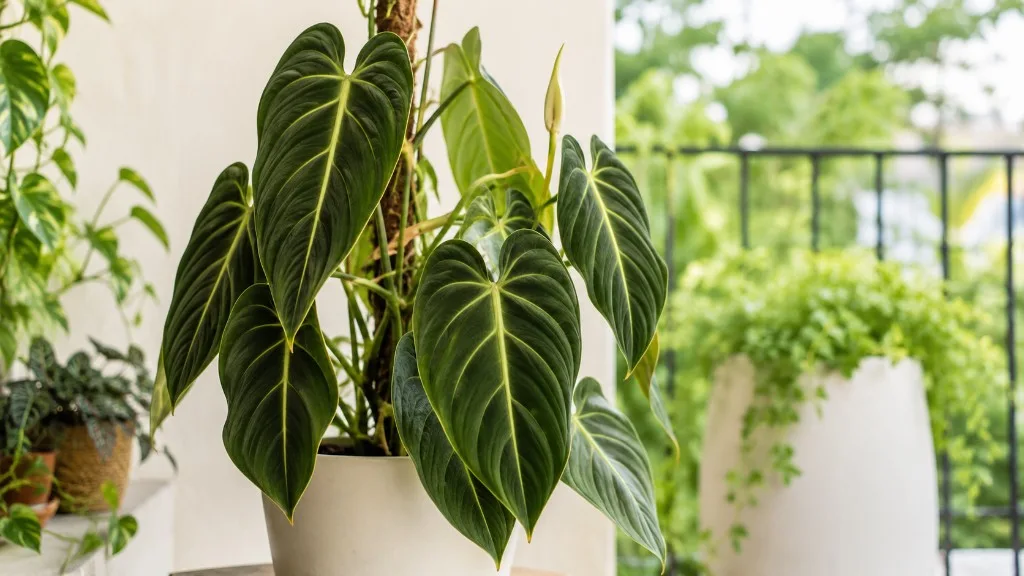
Philodendron Melanochrysum Pruning: When, How, and Mistakes to Avoid
Philodendron Melanochrysum Pruning: When, How, and Mistakes to Avoid
Philodendron Melanochrysum (Philodendron melanochrysum) is a true climber with dark velvet leaves that size up only when stems attach to textured support in Philodendron Melanochrysum light guide. A long dangling vine with small juvenile leaves is not a fertilizer problem - it is a structure and light signal. Philodendron Melanochrysum pruning shortens leggy stems above nodes, removes damaged velvet foliage, activates lateral buds for a fuller supported plant, and supplies propagation cuttings. Unlike Philodendron Gloriosum crawlers, melanochrysum does not advance on a horizontal rhizome - every meaningful stem cut happens on a vertical or angled vine at a node.
NC State Extension lists melanochrysum among rare vining philodendrons with large velvet-like foliage. RHS philodendron guidance recommends cutting climbing philodendrons back in spring just after a leaf node when they outgrow indoor space. The sections below walk through assessment, the first cut, node placement, safe volume, pole setup, propagation, and recovery - tied to Philodendron Melanochrysum overview’ velvet climber habit.
Quick Answer - What Melanochrysum Pruning Actually Fixes
Pruning can:
- Remove dead, yellow, or pest-damaged velvet leaves without waiting for a season
- Shorten leggy vines above nodes so lateral buds produce side stems
- Harvest stem sections with nodes and aerial roots for propagation
- Tip pinch soft new growth during active months to slow apical stretch
Pruning cannot:
- Enlarge leaves on a vine that still dangles without support
- Replace bright indirect light and 60–70% humidity when those are the real stretch drivers
- Reverse shipping leaf drop faster - heavy cuts during acclimation compound stress
Install or adjust a moss pole before major stem renovation, not after the vine is stiff and brittle.
Assess the Vine Before You Cut
Climber vs Crawler - Why Cut Placement Differs
Melanochrysum grows as an upright or angled vine with nodes spaced along the stem. New leaves and aerial roots emerge from those nodes. Side branching happens when apical tips are removed or shortened and lateral buds below activate - the same physiology RHS describes for climbing philodendrons pruned in spring.
Do not apply gloriosum rhizome logic here. There is no crawling stem tip to keep above soil - instead, trace each vine from base to tip and note where leaves shrink, where internodes lengthen, and where aerial roots already face empty air instead of a pole.
What to Inspect on Dark Velvet Foliage
Before any stem cut, check:
- Leaf size gradient - small leaves on the lower half with only tip growth often mean the vine lost support or light
- Node health - firm swellings with leaf scars or aerial roots; dormant nodes on bare sections may still activate after a cut
- Pests - thrips and spider mites hide on matte undersides; pruning pest-heavy tips without treatment spreads the problem
- Newest leaf - a leaf still unfurling is fragile; wait until it hardens before cutting that stem section
- Shipping stress - yellowing of older leaves while the newest leaf stays firm is common after import; avoid renovation until drop stabilizes
When to Prune Philodendron Melanochrysum
Routine Cleanup Any Time
Remove fully yellow, brown, or mechanically torn leaves once you confirm watering and light are stable. Cut at the petiole base where it meets the stem - not through the velvet blade, which scars permanently.
Shaping and Renovation Timing
Schedule stem cutbacks, tip pinches, and multi-node renovation for late spring through early summer when warmth and humidity support new bud break. Missouri Botanical Garden philodendron culture notes recommend pinching trailing stems and propagating by cuttings in spring - the same window suits melanochrysum indoors.
When to Delay Pruning
Hold major cuts when:
- The plant is newly shipped or repotted and still dropping older leaves
- Winter growth is slow and humidity drops in your home
- A new leaf is unfurling on the stem you planned to cut
- You have not yet addressed leggy stretch from low light - pruning alone repeats the pattern
The First Cut to Make
First, remove only dead, damaged, or clearly yellow leaves at the petiole base with clean bypass snips. Sterilize blades between cuts if you removed diseased tissue.
Do not shorten long vines on the same day until you have cleared damaged foliage and confirmed pests are absent. One calm inspection pass prevents stacking stress from simultaneous leaf stripping and hard stem renovation.
Where to Cut - Nodes, Angles, and What to Skip
Identify nodes as slightly swollen sections where leaves, cataphylls, or aerial roots attach. The internode is the smooth stem between nodes - it cannot produce new shoots.
Cut 6–10 mm above a node at a slight angle with sharp bypass pruners. Disinfect tools with alcohol between stems, especially on velvet plants where pest damage can be subtle.
Never cut mid-internode. The stub dries without activating a bud and leaves an ugly dead segment on a show plant.
Avoid cutting the only remaining leaf on a short stem unless you are discarding that section entirely for propagation - a node with zero leaves struggles to photosynthesize through recovery.
Leggy Vine Cutbacks
For a long bare vine with small leaves at the tip, shorten back toward the pot in stages:
- Follow the vine to the first node with a healthy leaf or aerial root facing your moss pole
- Cut 6–10 mm above that node
- Assess for two weeks before removing the next section
Multiple moderate cuts beat one drastic chop on slow velvet climbers. Target the longest stems first - they pull the visual balance off-center even when shorter stems still look acceptable.
Tip Pinching During Active Growth
During active growth, you can pinch or snip the top one to two leaves on soft new tip growth to slow apical dominance without removing entire vines. This suits maintenance on supported plants already climbing well - not bare trailers that need structural cutbacks lower on the stem.
How Much You Can Safely Remove
Limit each session to one-third of total foliage or vine length. Melanochrysum replaces large velvet leaves more slowly than pothos or heartleaf philodendron. Fully dead leaves do not count toward the limit.
For a severely leggy specimen, plan two spring sessions three to four weeks apart rather than one hard renovation. Each remaining leaf is an energy source while nodes wake below.
Step-by-Step Melanochrysum Pruning
- Inspect stems, nodes, and leaf undersides in good light
- Sterilize bypass pruners with rubbing alcohol
- Remove dead or damaged leaves at petiole bases - the first action
- Install or adjust a moss pole or textured totem; orient aerial roots toward the surface
- Shorten the longest leggy vine 6–10 mm above a chosen node
- Tie the stem loosely below the cut so the node sits near the pole - do not crush velvet petioles
- Repeat on additional vines only if you are still within the one-third limit
- Root healthy cuttings in water, sphagnum, or airy mix with the node submerged or buried
- Pause fertilizer for two to three weeks while wounds callus and buds activate
- Maintain 60–70% humidity and bright indirect light without hot direct sun on dark leaves
Moss Pole Integration - Support Belongs in the Plan
Melanochrysum is a climber whose mature leaf form depends on attachment. NC State Extension describes it as vining with distinctive velvet foliage - in home cultivation that habit needs a moist moss pole or coir totem aerial roots can grip.
Tie stems at nodes while still flexible. Forcing a woody, long-unstaked section flat against a pole often snaps the stem. If a lower section is too stiff, prune above a lower node and train the new soft growth instead.
A dry decorative stake gives shape; a textured, moisture-retaining pole gives better leaf progression. Pruning redirects growth - support determines whether redirected growth produces the large dark leaves you expect.
Propagation from Pruning Trimmings
Stem sections from pruning are the standard propagation path. Iowa State Extension notes that trailing philodendron sections 3 to 6 inches long with lower leaves removed root readily in water or perlite, and sections with aerial roots tend to root more reliably.
For each cutting:
- Include at least one node and preferably one healthy leaf
- Cut just below or 6–10 mm above the bottom node depending on whether you root in water or moss
- Remove leaves that would sit underwater or buried in soggy mix
- Keep humidity high until roots form - velvet cuttings wilt faster than heartleaf philodendron in dry air
Single-node cuttings work but take longer than multi-node sections with aerial roots already formed.
Aftercare and Recovery Timeline
After pruning, keep conditions boring and stable:
- Water when the top 3–5 cm of mix dries - large leaves transpire heavily but rot follows soggy mix
- Humidity at 60–70% reduces tip browning on new velvet
- Light bright and indirect; avoid direct sun on dark leaves
- No Philodendron Melanochrysum repotting guide the same week as a major cut unless root failure forced your hand
Signs Pruning Worked
Within three to six weeks during active growth, look for:
- Swollen buds or cataphylls emerging from nodes below the cut
- Side shoots with new leaves sized closer to the parent stem’s recent growth
- Aerial roots attaching to the pole near the cut node
- Stable older leaves - no continued yellowing beyond normal acclimation drop
Signs You Cut Too Hard or Too Early
- Wilting on remaining leaves with no new bud movement after four weeks in warm conditions
- Blackening at the cut beyond a thin callus line - possible infection; improve airflow and check watering
- Continued leaf drop from the base while the tip stays static - may indicate root stress unrelated to pruning; do not remove more foliage until the plant stabilizes
- New leaves staying tiny on a still-unstaked vine - light or support still missing; pruning did not fail, follow-up care did
Mistakes to Avoid
Pruning a dangling vine and expecting larger leaves. Support and light enlarge foliage; cuts only redirect stems.
Cutting mid-internode. Dead stubs, no branching.
Renovating during shipping stress. Compounds leaf drop while roots rebuild.
Forcing brittle old stems onto a pole. Snap risk - cut lower and train soft growth.
Stripping more than one-third in one session. Slow velvet recovery and long bare poles.
Skipping gloves. RHS warns Araceae sap irritates skin; philodendron is toxic to pets when chewed.
Pruning without fixing low light. Internodes stretch again on the new tip.
Rooting cuttings in dim, dry rooms. Melanochrysum cuttings need warmth, humidity, and bright indirect light.
Conclusion
Philodendron Melanochrysum rewards node-level cuts on supported vines, not mid-stem hacks or gloriosum-style rhizome trimming. Start by removing damaged leaves, confirm the plant is stable, install pole support, then shorten leggy sections 6–10 mm above nodes within the one-third limit during late spring or early summer. Tie new growth to textured support, root healthy trimmings with at least one node, and judge success by side shoots and aerial root attachment over the next month - not by instant leaf enlargement. When in doubt, cut less, wait two weeks, and assess again.
When to use this page vs other Philodendron Melanochrysum guides
- Philodendron Melanochrysum overview - Start here for whole-plant context before deep-diving this topic.
- Philodendron Melanochrysum problems hub - Jump to symptom-specific fix guides when this care topic does not resolve the issue.
- Plant Leaning on Philodendron Melanochrysum - Escalate here when pruning adjustments are not enough.
- Slow Growth on Philodendron Melanochrysum - Escalate here when pruning adjustments are not enough.
- Brown Tips on Philodendron Melanochrysum - Escalate here when pruning adjustments are not enough.
Related Philodendron Melanochrysum guides
- Philodendron Melanochrysum overview
- Philodendron Melanochrysum watering
- Philodendron Melanochrysum light
- Philodendron Melanochrysum soil
- Philodendron Melanochrysum propagation
- Philodendron Melanochrysum fertilizer
- Plant Leaning on Philodendron Melanochrysum
- Slow Growth on Philodendron Melanochrysum
- Brown Tips on Philodendron Melanochrysum
- Philodendron Melanochrysum problems